From Surf Wiki (app.surf) — the open knowledge base
Communion cup
Liturgical vessel
Liturgical vessel
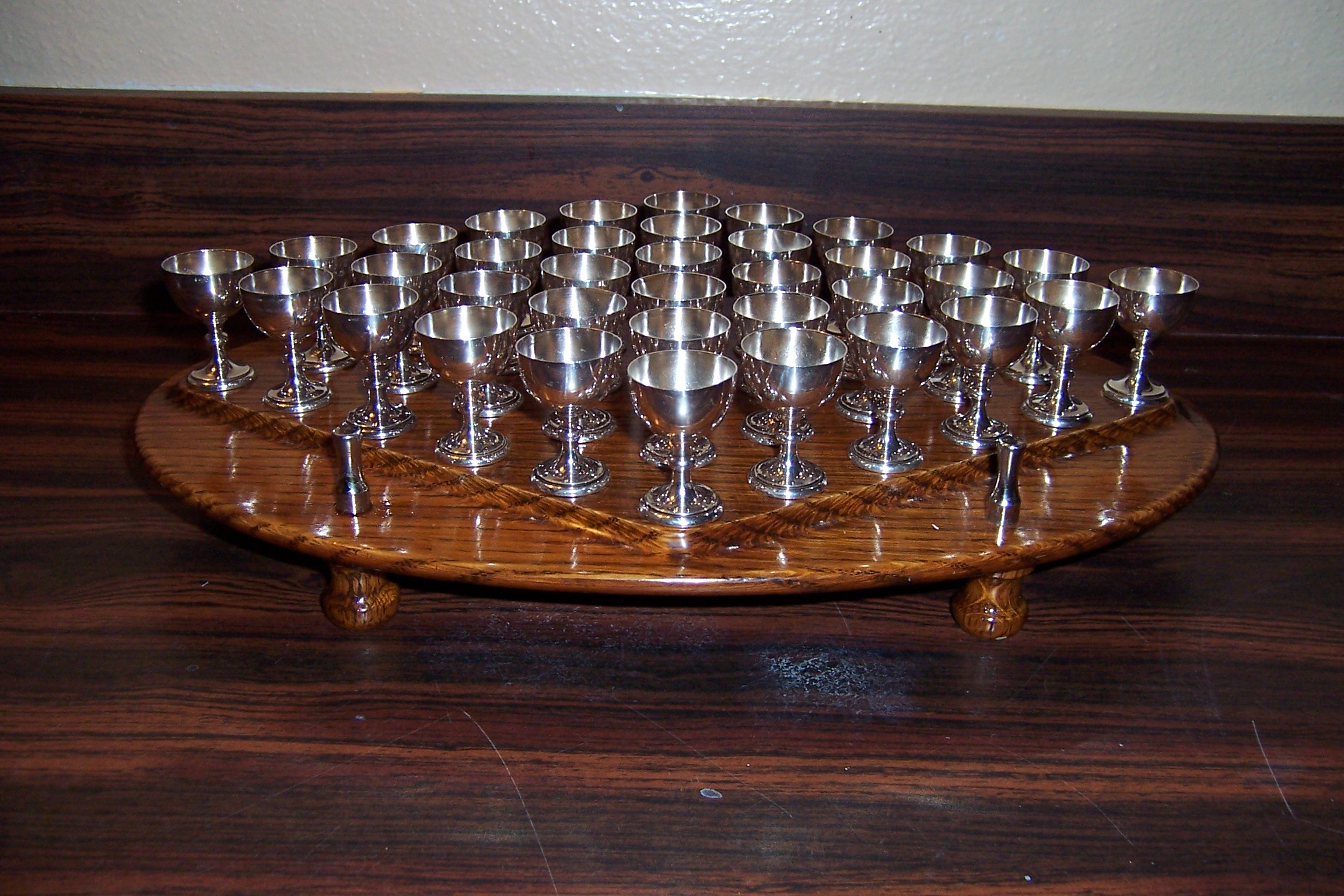
A communion cup is a ritual vessel, a variant of a chalice, used by only one member of the congregation. A communion cup is usually quite small; it can be as small as a shot glass. They may be designed as small beakers or as miniature versions of the usual liturgical chalice. This manner of administering consecrated wine at Holy Communion has become established in various Christian denominations, either as a general practice or as a temporary arrangement; for example, during epidemics.
In churches such as the Catholic Church, which generally offer communion without wine, or where intinction (dipping the host in the chalice) is the custom, communion cups are not known.
North America
Communion cups were also introduced in North American churches in the 1890s. As in Scandinavia, the new practice was motivated by sanitary concerns and accompanied by debate over whether it was ritually acceptable. Newspaper headlines of the time warned of danger and contagion associated with the shared chalice.
United Kingdom

In the UK they appear to have been invented by John Henry Jowett around the turn of the 20th century in response to health concerns related to the size of his congregation.
References
References
- "Særkalk".
- (2011). "Veiledning til gudstjenestens hoveddeler". Den norske kirke.
- "Fredrikke Marie Qvam - grunnlegger av Norske kvinners sanitetsforening".
- (2012). "Lademoen kirke. En veileder".
- (1993). "Tro, viden og politik. Et sammenstød mellem sundhedspolitik og kirkepolitik i begyndelsen af det 20. århundrede". Historie, Jyske Samlinger.
- (November 16, 2017). "The Complicated 'Science' of Individual Communion Cups". WHYY.
- (March 30, 2011). "Who First Adopted Individual Cups as a Regular Communion Practice?".
- (July 1, 1991). "History of Individual Cups". Old Paths Advocate.
- (February 14, 1898). "Unclean Communion Cups". The Baltimore Sun.
- (June 27, 1894). "Danger in the Communion Cup". Hamilton Evening Journal.
- (April 28, 1895). "Contagion in the Cup". News and Observer.
- (2 February 2005). "Communion Set". V&A.
This article was imported from Wikipedia and is available under the Creative Commons Attribution-ShareAlike 4.0 License. Content has been adapted to SurfDoc format. Original contributors can be found on the article history page.
Ask Mako anything about Communion cup — get instant answers, deeper analysis, and related topics.
Research with MakoFree with your Surf account
Create a free account to save articles, ask Mako questions, and organize your research.
Sign up freeThis content may have been generated or modified by AI. CloudSurf Software LLC is not responsible for the accuracy, completeness, or reliability of AI-generated content. Always verify important information from primary sources.
Report