From Surf Wiki (app.surf) — the open knowledge base
Common logarithm
Mathematical function
Mathematical function
In mathematics, the common logarithm (aka "standard logarithm") is the logarithm with base 10. It is also known as the decadic logarithm, the decimal logarithm and the Briggsian logarithm. The name "Briggsian logarithm" is in honor of the British mathematician Henry Briggs who conceived of and developed the values for the "common logarithm". Historically, the "common logarithm" was known by its Latin name logarithmus decimalis or logarithmus decadis.
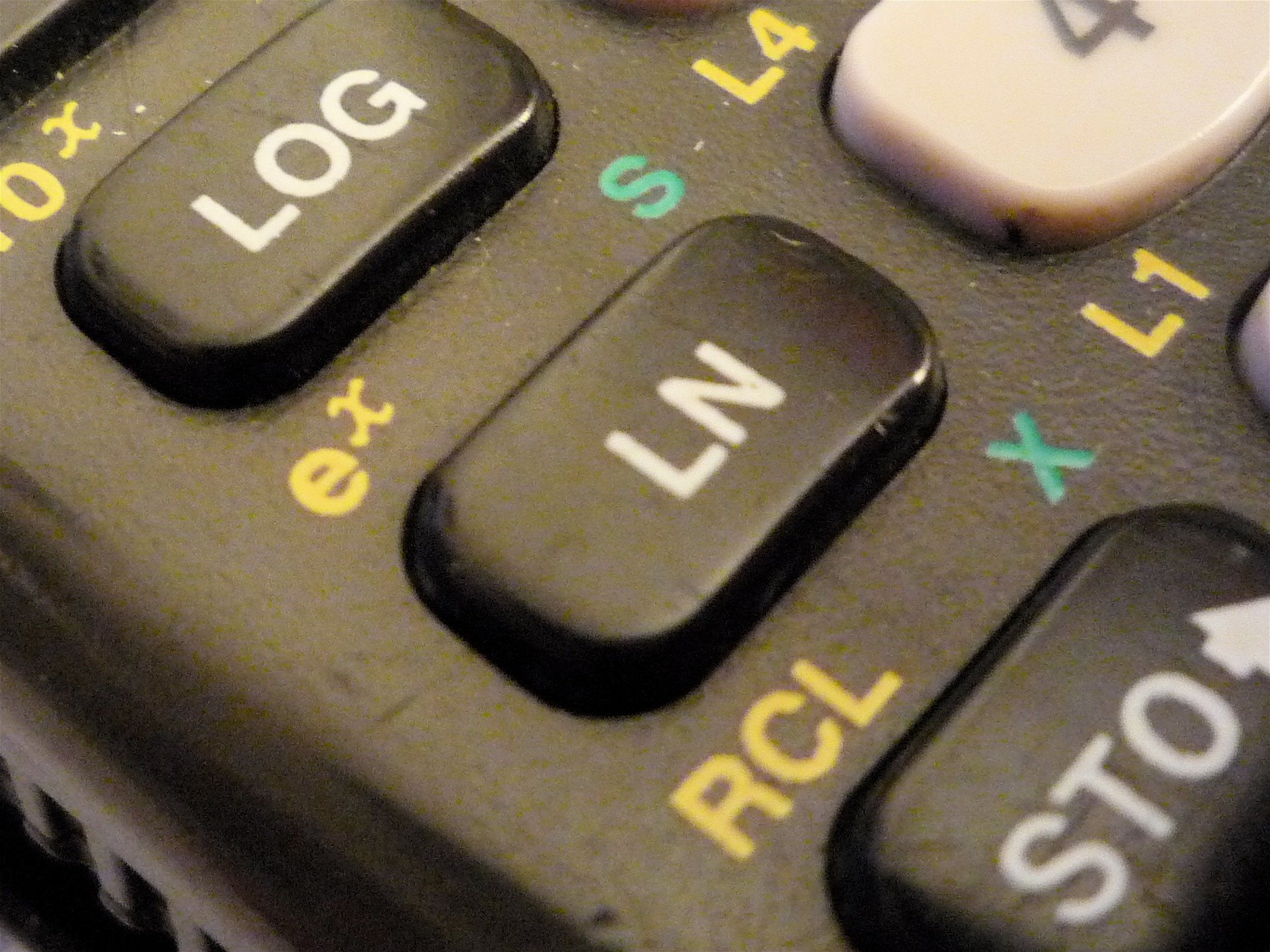
The mathematical notation for using the common logarithm is log(x), log10(x), or sometimes Log(x) with a capital L; on calculators, it is printed as "log", but mathematicians usually mean natural logarithm (logarithm with base e ≈ 2.71828) rather than common logarithm when writing "log", since the natural logarithm is – contrary to what the name of the common logarithm implies – the most commonly used logarithm in pure math.
Before the early 1970s, handheld electronic calculators were not available, and mechanical calculators capable of multiplication were bulky, expensive, and not widely available. Instead, tables of base-10 logarithms were used in science, engineering and navigation—when calculations required greater accuracy than could be achieved with a slide rule. By turning multiplication and division to addition and subtraction, use of logarithms avoided laborious and error-prone paper-and-pencil multiplications and divisions. Because logarithms were so useful, tables of base-10 logarithms were given in appendices of many textbooks. Mathematical and navigation handbooks included tables of the logarithms of trigonometric functions as well. For the history of such tables, see log table.
Mantissa and characteristic
An important property of base-10 logarithms, which makes them so useful in calculations, is that the logarithm of numbers greater than 1 that differ by a factor of a power of 10 all have the same fractional part. The fractional part is known as the mantissa. Thus, log tables need only show the fractional part. Tables of common logarithms typically listed the mantissa, to four or five decimal places or more, of each number in a range, e.g. 1000 to 9999.
The integer part, called the characteristic, can be computed by simply counting how many places the decimal point must be moved, so that it is just to the right of the first significant digit. For example, the logarithm of 120 is given by the following calculation:
:\log_{10}(120) = \log_{10}\left(10^2 \times 1.2\right) = 2 + \log_{10}(1.2) \approx 2 + 0.07918.
The last number (0.07918)—the fractional part or the mantissa of the common logarithm of 120—can be found in the table shown. The location of the decimal point in 120 tells us that the integer part of the common logarithm of 120, the characteristic, is 2.
Negative logarithms
Positive numbers less than 1 have negative logarithms. For example,
:\log_{10}(0.012) = \log_{10}\left(10^{-2} \times 1.2\right) = -2 + \log_{10}(1.2) \approx -2 + 0.07918 = -1.92082.
To avoid the need for separate tables to convert positive and negative logarithms back to their original numbers, one can express a negative logarithm as a negative integer characteristic plus a positive mantissa. To facilitate this, a special notation, called bar notation, is used:
:\log_{10}(0.012) \approx \bar{2} + 0.07918 = -1.92082.
The bar over the characteristic indicates that it is negative, while the mantissa remains positive. When reading a number in bar notation out loud, the symbol \bar{n} is read as "bar n", so that \bar{2}.07918 is read as "bar 2 point 07918...". An alternative convention is to express the logarithm modulo 10, in which case
:\log_{10}(0.012) \approx 8.07918 \bmod 10,
with the actual value of the result of a calculation determined by knowledge of the reasonable range of the result.{{refn|group=lower-alpha|For example, {{cite journal gives (beginning of section 8) \log b = 6.51335464, \log e = 8.9054355. From the context, it is understood that b = 10^{6.51335464}, the minor radius of the earth ellipsoid in toise (a large number), whereas e = 10^{8.9054355-10}, the eccentricity of the earth ellipsoid (a small number).}}
The following example uses the bar notation to calculate 0.012 × 0.85 = 0.0102:
:\begin{array}{rll} \text{As found above,} & \log_{10}(0.012) \approx\bar{2}.07918\ \text{Since};;\log_{10}(0.85) &= \log_{10}\left(10^{-1}\times 8.5\right) = -1 + \log_{10}(8.5) &\approx -1 + 0.92942 = \bar{1}.92942\ \log_{10}(0.012 \times 0.85) &= \log_{10}(0.012) + \log_{10}(0.85) &\approx \bar{2}.07918 + \bar{1}.92942\ &= (-2 + 0.07918) + (-1 + 0.92942) &= -(2 + 1) + (0.07918 + 0.92942)\ &= -3 + 1.00860 &= -2 + 0.00860;^*\ &\approx \log_{10}\left(10^{-2}\right) + \log_{10}(1.02) &= \log_{10}(0.01 \times 1.02)\ &= \log_{10}(0.0102). \end{array}
- This step makes the mantissa between 0 and 1, so that its antilog (10) can be looked up.
The following table shows how the same mantissa can be used for a range of numbers differing by powers of ten:
| Number | Logarithm | Characteristic | Mantissa | Combined form | i}} | log(n) | 10}}(n)) | log(n) − i |
|---|---|---|---|---|---|---|---|---|
| 5 000 000 | 6.698 970... | 6 | 0.698 970... | 6.698 970... | ||||
| 50 | 1.698 970... | 1 | 0.698 970... | 1.698 970... | ||||
| 5 | 0.698 970... | 0 | 0.698 970... | 0.698 970... | ||||
| 0.5 | −0.301 029... | −1 | 0.698 970... | .698 970... | ||||
| 0.000 005 | −5.301 029... | −6 | 0.698 970... | .698 970... |
Note that the mantissa is common to all of the 5 10i. This holds for any positive real number x\times 10^i because :\log_{10}\left(x \times10^i\right) = \log_{10}(x) + \log_{10}\left(10^i\right) = \log_{10}(x) + i.
Since i is a constant, the mantissa comes from \log_{10}(x), which is constant for given x. This allows a table of logarithms to include only one entry for each mantissa. In the example of 5 10i, 0.698 970 (004 336 018 ...) will be listed once indexed by 5 (or 0.5, or 500, etc.).
History
Main article: History of logarithms
Common logarithms are sometimes also called "Briggsian logarithms" after Henry Briggs, a 17th century British mathematician. In 1616 and 1617, Briggs visited John Napier at Edinburgh, the inventor of what are now called natural (base-e) logarithms, in order to suggest a change to Napier's logarithms. During these conferences, the alteration proposed by Briggs was agreed upon; and after his return from his second visit, he published the first chiliad of his logarithms.
Because base-10 logarithms were most useful for computations, engineers generally simply wrote "log(x)" when they meant log10(x). Mathematicians, on the other hand, wrote "log(x)" when they meant loge(x) for the natural logarithm. Today, both notations are found. Since hand-held electronic calculators are designed by engineers rather than mathematicians, it became customary that they follow engineers' notation. So the notation, according to which one writes "ln(x)" when the natural logarithm is intended, may have been further popularized by the very invention that made the use of "common logarithms" far less common, electronic calculators.
To mitigate the ambiguity, the ISO 80000 specification recommends that loge(x) should be ln(x), while log10(x) should be written lg(x), which unfortunately is used for the base-2 logarithm by CLRS and Sedgwick and The Chicago Manual of Style.{{citation | orig-year = 1990 | title-link = Introduction to Algorithms }}{{citation | title-link=The Chicago Manual of Style
Numeric value
The numerical value for logarithm to the base 10 can be calculated with the following identities:
: \log_{10}(x) = \frac{\ln(x)}{\ln(10)} \quad or \quad \log_{10}(x) = \frac{\log_2(x)}{\log_2(10)} \quad or \quad \log_{10}(x) = \frac{\log_B(x)}{\log_B(10)} \quad
using logarithms of any available base , B ~.
as procedures exist for determining the numerical value for logarithm base e (see ) and logarithm base 2 (see Algorithms for computing binary logarithms).
Derivative
The derivative of a logarithm with a base b is such that
{d \over dx}\log_b(x)={1 \over x\ln (b)}, so {d \over dx}\log_{10}(x)={1 \over x\ln(10)}.
Notes
References
Bibliography
References
- "Introduction to Logarithms".
- Weisstein, Eric W.. "Common Logarithm".
- "Using a calculator - Laws of logarithms and exponents - Higher Maths Revision". [[BBC]].
- "Introduction to Logarithms".
- Schwartzman, Steven. (1994-12-31). "The Words of Mathematics: An Etymological Dictionary of Mathematical Terms in English". American Mathematical Soc..
- (2021-04-14). "Derivatives of Logarithmic Functions".
- (1748). "Introductio in Analysin Infinitorum (Part 2)". Marcum-Michaelem Bousquet.
- (1772). "Institutionum Analyticarum Pars Secunda de Calculo Infinitesimali Liber Secundus de Calculo Integrali". Joannis Thomæ Nob. De Trattnern.
- (1909). "Trigonometry". [[Henry Holt and Company]].
- (1913). "Logarithmic and Trigonometric Tables". [[Macmillan Publishers.
This article was imported from Wikipedia and is available under the Creative Commons Attribution-ShareAlike 4.0 License. Content has been adapted to SurfDoc format. Original contributors can be found on the article history page.
Ask Mako anything about Common logarithm — get instant answers, deeper analysis, and related topics.
Research with MakoFree with your Surf account
Create a free account to save articles, ask Mako questions, and organize your research.
Sign up freeThis content may have been generated or modified by AI. CloudSurf Software LLC is not responsible for the accuracy, completeness, or reliability of AI-generated content. Always verify important information from primary sources.
Report