From Surf Wiki (app.surf) — the open knowledge base
Commemorative coin
Coins issued to commemorate some particular event or issue

Coins issued to commemorate some particular event or issue
A commemorative coin is a coin issued to commemorate some particular event or issue with a distinct design with reference to the occasion on which they were issued. Some coins of this category serve as collector's items only, while most commemorative coins are for regular circulation.
Subcategories
Commemorative coins can be seen as being of one of three types:
- Regular issue coinage are the normal coins intended to be used in commerce every day and are typically issued with the same design for several years, e.g. euro coins.
- Circulating commemoratives are intended to be used for commerce, but the design will only be issued for a limited time to commemorate an event, anniversary, person or location, among other items. Examples include the €2 commemorative coins and U.S. 50 State Quarters.
- Non-circulating legal tender (NCLT) are coins which are legal tender, and thus can in theory be used to purchase goods or services, but are not intended to be used in such a manner. Rather, they are intended as collector's items with numismatic value, and are often produced in gold or silver, either in uncirculated condition or with a proof finish.
History
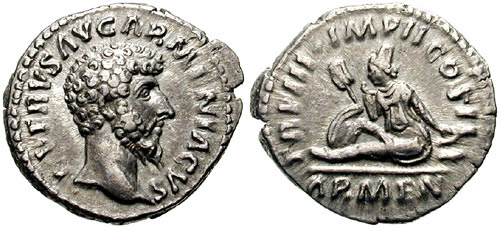
Historically, the coins issued by any state have always reflected the current political or economic situation. Many ancient and pre-modern coins certainly commemorate events in contemporary times. For instance, Roman coins often have references to military campaigns and the defeat of foreign powers. These reverse types often symbolically represent the subordination of recently conquered territories to Roman authority. Such coins are examples of ancient political propaganda. The Roman Empire may be represented by a proud warrior 'raising' an undersized figure, representing the defeated enemy.
Throughout history, coins have commonly been issued on special occasions, without necessarily citing that occasion explicitly. In some cases, emergency money have been issued under unfavourable conditions, such as a city under siege. Such emergency coins were issued in Vienna in 1529, while the city was besieged by the troops of the Ottoman Empire. Due to the conditions at the time, such coins are frequently minted on square flans, rather than round ones (it was easier and quicker to produce a square flan than a round one). European square coins of this era are known by their German name 'klippe'. Coins might also be issued with the specific purpose of financing a military campaign, or for the payment of tribute or war indemnity by a feudal lord to his sovereign.
During recent centuries, specially prepared coins have been issued to proclaim the coronation of a new monarch. Such coins are known as 'largesse' coins. This type of coins were issued in India during the Mughal era (the 'nisar' coinage), and in Europe in the age of absolutism. In Europe, such coins were scattered from the royal chariot, to achieve attention and applause from the public. In Sweden, coins of this type were issued as late as 1873 (known as "kastpenning").
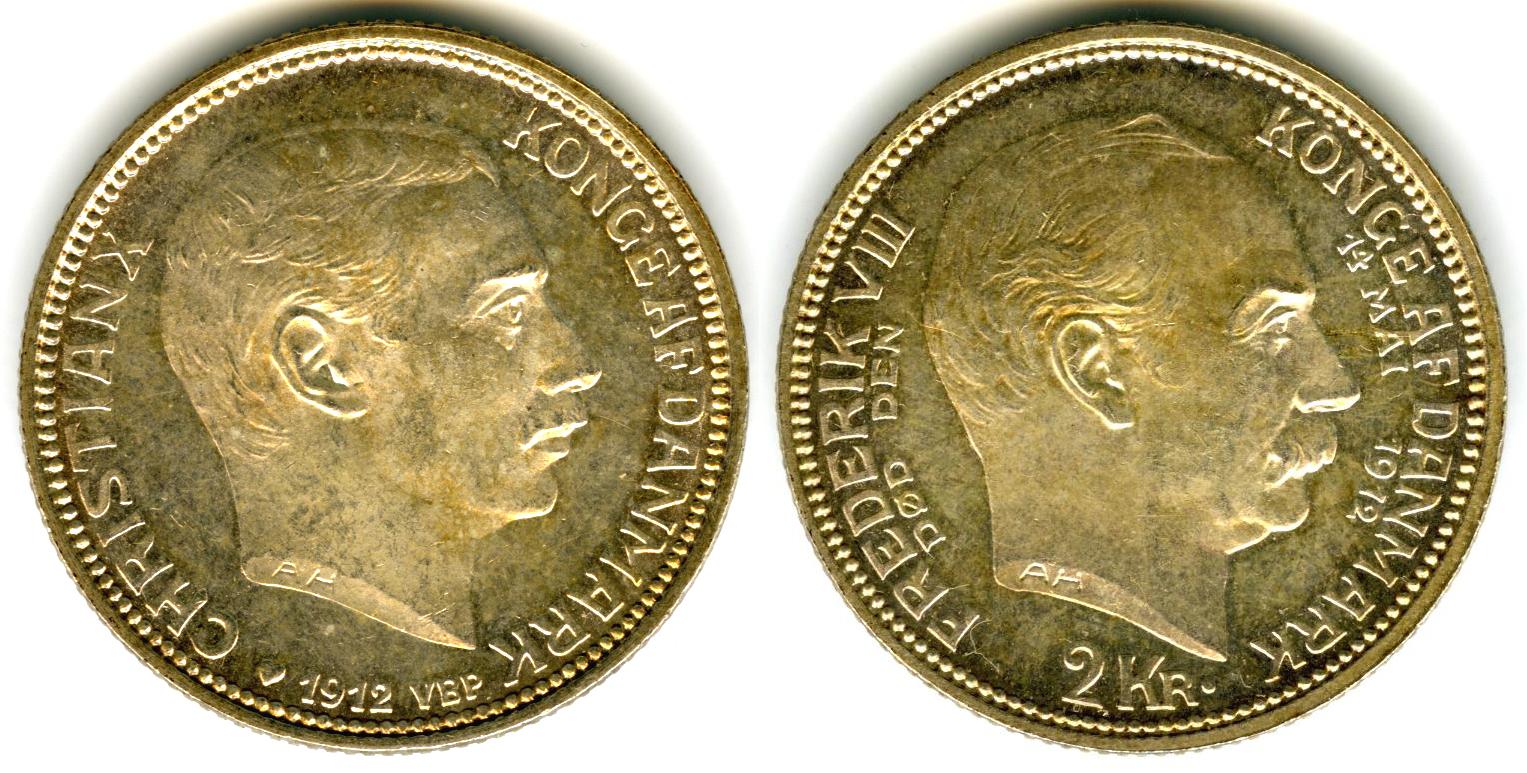
Before World War II, commemorative coins were always made of precious metals. The base metal coins were probably not considered appropriate for, or worthy of, honoring the nation or the ruling dynasty. However, during the 20th century, the use of precious metals for circulating currency became increasingly scarce. World War I and the world economic crisis of the 1930s brought about temporary or permanent abolition of the convertibility of bank notes to silver and gold coins. Gradually, the issuance of precious metal coins became increasingly restricted, and definitively abandoned about 1970. While the commemoratives of these decades continued to be issued predominantly in precious metals, their use as circulating currency became scarce or ceased entirely. Thus, the commemoratives developed into a separate class of coins with no immediately recognisable link to the coins and notes used in everyday transactions. This class of coins were collector's items, or in some cases objects for economic investment.

In the United Kingdom, before decimalisation of the money system in 1971, the usual commemorative coin was a crown, or five shilling piece. These were issued to mark coronations of monarchs; one was also issued on the occasion of the death of Winston Churchill. Some decimal crowns (worth 25 pence) were issued, but since 1990 the £5 has been the usual non circulating commemorative coin. Other denominations such as the 50 pence and £2 are issued as circulating commemoratives.

Significance of non-circulating commemoratives
Many countries issue large quantities of non-circulating legal tender purely for seigniorage as a profit-making exercise. The events that these coins commemorate are often chosen based on a perceived market, rather than events of significance to the country. Technology developed for non circulating coins has moved to circulation issues - coloured coins were first issued as non-circulating legal tender, but Canada and Australia have issued coloured commemorative coins into circulation.
References
References
- "Bicentennial Quarter Value and Price Chart".
- Suchy, Vladimir. (2006-10-27). "#36592: Emergency AV ducat struck in Wien under the Ottoman siege, 1529".
- Standard Catalog of World Coins, 1996 edition, p. 1807. Krause Publications 1995, {{ISBN. 0-87341-357-1.
This article was imported from Wikipedia and is available under the Creative Commons Attribution-ShareAlike 4.0 License. Content has been adapted to SurfDoc format. Original contributors can be found on the article history page.
Ask Mako anything about Commemorative coin — get instant answers, deeper analysis, and related topics.
Research with MakoFree with your Surf account
Create a free account to save articles, ask Mako questions, and organize your research.
Sign up freeThis content may have been generated or modified by AI. CloudSurf Software LLC is not responsible for the accuracy, completeness, or reliability of AI-generated content. Always verify important information from primary sources.
Report