From Surf Wiki (app.surf) — the open knowledge base
Columbine High School massacre
1999 mass shooting in Colorado, U.S.

1999 mass shooting in Colorado, U.S.
| Field | Value | |||||||||
|---|---|---|---|---|---|---|---|---|---|---|
| title | Columbine High School massacre | |||||||||
| image | Columbine Shooting Security Camera.jpg | |||||||||
| caption | Harris (left) and Klebold (right) in the cafeteria at 11:57 a.m. | |||||||||
| coordinates | ||||||||||
| mapframe | yes | |||||||||
| mapframe-zoom | 15 | |||||||||
| location | Columbine, Colorado, U.S. | |||||||||
| target | Students and staff at Columbine High School, first responders | |||||||||
| date | ||||||||||
| time-begin | 11:19a.m. | |||||||||
| time-end | 12:08p.m. | |||||||||
| timezone | MDT; UTC−06:00 | |||||||||
| type | School shooting, mass shooting, mass murder, murder–suicide, arson, attempted bombing, shootout | |||||||||
| fatalities | 16 (total, including both perpetrators and a victim who died in 2025) | |||||||||
| injuries | 23 (3 indirectly; combined total) | |||||||||
| perps | Eric Harris and Dylan Klebold | |||||||||
| weapons | Harris: | |||||||||
| * 1 25-pound propane bomb<ref>{{Cite news | last | Brooke | first=James | date=1999-05-11 | title=Teacher of Colorado Gunmen Alerted Parents | url=https://www.nytimes.com/1999/05/11/us/teacher-of-colorado-gunmen-alerted-parents.html | access-date=2025-06-19 | work=The New York Times | language=en-US | issn=0362-4331}} |
| motive | See ** | |||||||||
| convicted | Mark Manes and Philip Duran (weapons suppliers) | |||||||||
| child | yes | |||||||||
| sentence | Manes: | |||||||||
| 6 years imprisonment | ||||||||||
| Duran: | ||||||||||
| years imprisonment | ||||||||||
| litigation | Multiple lawsuits against the perpetrators' families and suppliers of the weapons | |||||||||
| convictions | Manes and Duran: | |||||||||
| Supplying a handgun to a minor, possession of an illegally sawed-off shotgun |
| mapframe-zoom = 15 | time-begin = 11:19a.m. | time-end = 12:08p.m.
- Harris: 9
- Klebold: 5
- Harris: 13
- Klebold: 10
- 9mm Hi-Point 995 carbine
- 12-gauge Savage 67H pump-action shotgun (sawed-off)
- 2 knives (unused) Klebold:
- 9mm Intratec TEC-9 Mini pistol
- 12-gauge Stevens 311D double-barreled shotgun (sawed-off)
- 2 knives (unused) Both:
- 48 cartridge bombs
- 27 pipe bombs
- 11 1.5-gallon propane bombs
- 7 gas or napalm bombs
- 4 20-pound propane bombs (including 2 car bombs)
- 1 25-pound propane bomb
6 years imprisonment Duran: years imprisonment
Supplying a handgun to a minor, possession of an illegally sawed-off shotgun
On April 20, 1999, a school shooting and attempted bombing occurred at Columbine High School in Columbine, Colorado, United States. The perpetrators, twelfth-grade students Eric Harris and Dylan Klebold, murdered 13 students and one teacher; ten were killed in the school library, where Harris and Klebold subsequently died by suicide. Twenty additional people were injured by gunshots, and gunfire was exchanged several times with law enforcement with neither side being struck. Another three people were injured trying to escape. The Columbine massacre was the deadliest mass shooting at a K–12 school in U.S. history until the Sandy Hook Elementary School shooting in December 2012. It is still considered one of the most infamous massacres in the United States, and it is known for inspiring many other school shootings and bombings, dubbed the 'Columbine effect'; the word Columbine has since become a byword for modern school shootings. , Columbine remains the deadliest mass shooting in Colorado.
Harris and Klebold, who planned for roughly a year, intended the attack to be primarily a bombing and only secondarily a shooting. The pair launched a shooting attack after the homemade bombs they planted in the school failed to detonate. Their motive remains uncertain. The police were slow to enter the school and were heavily criticized for not intervening during the shooting. The incident resulted in the introduction of the immediate action rapid deployment (IARD) tactic, which is used in active-shooter situations, and an increased emphasis on school security with zero-tolerance policies. The violence sparked debates over American gun culture and gun control laws, high school cliques, subcultures (e.g. goths), outcasts, and school bullying, as well as teenage use of pharmaceutical antidepressants, the Internet, and violence in video games and film.
Many makeshift memorials were created after the massacre, including ones using victim Rachel Scott's car and John Tomlin's truck. Fifteen crosses for the victims and the shooters were erected on top of a hill in Clement Park. The crosses for Harris and Klebold were later removed after controversy. The planning for a permanent memorial began in June 1999, and the resulting Columbine Memorial opened to the public in September 2007.
As of June 2025, the shooting has inspired more than 70 copycat attacks, and its impact has been dubbed the Columbine effect.
Perpetrators
Main article: Eric Harris and Dylan Klebold
Eric Harris
Eric David Harris (April 9, 1981– April 20, 1999) was born in Wichita, Kansas. The Harris family relocated often, as Harris's father was a US Air Force transport pilot. The family moved from Plattsburgh, New York, to Littleton, Colorado, in July 1993, when his father retired from military service.
Harris attended Ken Caryl Middle School, where he met Klebold.
Dylan Klebold
Dylan Bennet Klebold ( ; September 11, 1981– April 20, 1999) was born in Lakewood, Colorado. His parents were pacifists and attended a Lutheran church with their children. Both Dylan and his older brother attended confirmation classes in accordance with the Lutheran tradition. Klebold was named after poet Dylan Thomas.
Klebold attended Normandy Elementary for first and second grade before transferring to Governor's Ranch Elementary, and became part of the CHIPS ("Challenging High Intellectual Potential Students") program.
Background
Criminal history
In 1996, 15-year-old Harris created a private website on America Online (AOL),{{efn|Once the website was made public after the massacre, AOL permanently deleted it from its servers. On the site, Harris began a blog, which included details of mischief and vandalism, such as lighting fireworks with Klebold and others. Harris referred to these acts as "rebel missions" and the blog posts as "mission logs". In early 1997, the blog posts showed signs of Harris's anger against society. By the end of the year, the site contained instructions on how to make explosives. In August 1997, Harris wrote on the blog "All I want to do is kill and injure as many of you as I can, especially a few people. Like Brooks Brown." Brown was a friend and classmate of his. After Brown's parents viewed the site, they contacted the Jefferson County Sheriff's Office on August 7, 1997. An investigator drafted an affidavit requesting a search warrant for the Harris household, but it was never submitted to a judge.
On January 30, 1998, Harris and Klebold were arrested for breaking into a white van parked near Littleton and stealing tools and computer equipment. In a joint court hearing they pled guilty to felony theft. The judge sentenced them to a 12-month juvenile diversion program.}} They were both released from the program a month early.
Writings
Shortly after the court hearing for the van break-in, Harris reverted his website back to just hosting user-created levels of Doom and began keeping a journal. Klebold had already been keeping a personal journal since March 1997. In both their journals, Harris and Klebold later plotted the attack. Harris's plan for an attack included possibly escaping to a foreign country or hijacking an aircraft at Denver International Airport and crashing it into a building in New York City.
Klebold and Harris both made entries in their journals on topics related to sexuality. Klebold expressed shame for his sexual interests, which included bondage and foot fetishism, stating that, "My humanity has a foot fetish, & bondage exteme liking. I try to thwart it..." Harris described his desire for raping and torturing women in his bedroom. Harris also expressed interest in cannibalism, stating that he would like to dismember a woman with whom he could have "animalistic sex" and eat her flesh.
Harris and Klebold's schoolwork displayed themes of violence. In December 1997, Harris wrote a paper on school shootings titled "Guns in School", and a poem from the perspective of a bullet. Klebold wrote a short story about a man killing students which worried his teacher so much that she alerted his parents, when Klebold was confronted about it, he said it was "just a story". For one project, Harris wrote a paper on Nazi Germany and Klebold wrote a paper on Charles Manson. In a psychology class, Harris wrote that he dreamed of going on a shooting spree with Klebold. Harris's journals described several experimental bomb detonations.
Nearly a year before the massacre, Klebold wrote a message in Harris's 1998 yearbook: "killing enemies, blowing up stuff, killing cops!! My wrath for January's incident will be godlike. Not to mention our revenge in the commons"; "the commons" was slang for the school cafeteria.
Tapes
Basement tapes
Harris and Klebold were both enrolled in video-production classes and kept five video tapes that were recorded with school video equipment. Only two of these, "Hitmen for Hire" and "Rampart Range", and part of a third known as "Radioactive Clothing", have been released. The remaining three tapes detailed their plans and reasons for the massacre, including the ways they hid their weapons and deceived their parents. Most were shot in the Harris family basement, and are thus known as the basement tapes. Thirty minutes before the attack, they made a final video saying goodbye and apologizing to their friends and families.
In December 1999, before anyone besides investigators had seen them, Time magazine published an article on these tapes. The victims' family members threatened to sue Jefferson County. As a result, select victim families and journalists were allowed to view them, though the tapes were then withheld from the public and, in 2011, destroyed for fear of inspiring future massacres. Transcripts of some of the dialogue and a short clip recorded surreptitiously by a victim's father still exist, with the transcripts being online via various resources. The pair claimed they were going to make copies of the tapes to send to news stations but never did so.
When an economics class had Harris make an ad for a business, he and Klebold made a video called Hitmen for Hire on December 8, 1998, which was released in February 2004. It depicts them as part of the Trench Coat Mafia, a clique in the school who wore black trench coats and opposed jocks, Klebold and Harris themselves were apparently not a part of the Trench Coat Mafia but were friends with some of its members. However, Harris's father stated that his son was "a member of what they call the Trench Coat Mafia" in the 9-1-1 call he made on April 20, 1999.}} They wore black trench coats on the day of the massacre, and the Hitmen for Hire video seemed a kind of dress rehearsal, showing them walking the halls of the school, and shooting bullies outside with fake guns.
On October 21, 2003, a video was released showing the pair doing target practice on March 6, 1999, in nearby foothills known as Rampart Range, with the weapons they would use in the massacre.
Nixon tape
Before the massacre, Harris left a micro cassette labeled "Nixon" on the kitchen table. On it, Harris said "It is less than nine hours now," placing the recording at some time around 2:30 a.m. He went on to say "People will die because of me," and "It will be a day that will be remembered forever."
Weaponry
Guns
In the months prior to the attacks, Harris and Klebold acquired two 9mm firearms and two 12-gauge shotguns. Harris had a Hi-Point 995 carbine with thirteen 10-round magazines and a Savage-Springfield 67H pump shotgun. Klebold used a 9mm Intratec TEC-DC9 semi-automatic handgun with one 52-, one 32-, and one 28-round magazine and a Stevens 311D double-barreled shotgun. Harris' shotgun was sawed-off to around 26 in and Klebold shortened his shotgun's length to 23 in, a felony under the National Firearms Act. On November 22, 1998, their friend Robyn Anderson purchased a carbine rifle and the two shotguns for the pair at the Tanner Gun Show, as they were too young to legally purchase the guns themselves. After the attack, she told investigators that she had believed the pair wanted the weapons for target shooting and denied that she had prior knowledge of their plans. Anderson was not charged.
Harris and Klebold both held part-time jobs at a local Blackjack Pizza. Through Philip Duran, one of their coworkers, Klebold bought a TEC-9 handgun from Mark Manes for $500 at another gun show on January 23. Manes, Manes' girlfriend, and Duran are all in the Rampart Range video. After the massacre, Manes and Duran were both prosecuted. Each was charged with supplying a handgun to a minor and possession of a sawed-off shotgun. After both pled guilty, Manes and Duran were sentenced to a total of six years and four-and-a-half years, respectively, in prison.
Explosives
In addition to the firearms, the complex and highly planned attack involved several improvised explosive devices. Harris and Klebold constructed a total of 99 bombs. These included 27 pipe bombs, 48 carbon-dioxide cartridges filled with gunpowder (called "crickets"), 7 Molotov cocktails, and 15 propane tanks converted to bombs (five of which were 20-pounds or more). Two propane bombs were used in the cafeteria, two in the shooters' cars, and in another location intended as a diversion. For ignition, they used storm matches, cannon fuses, and model rocket igniters as well as timing devices built from mechanical alarm clocks for the propane bombs. During the massacre, they carried match strikers taped to their forearms for easy ignition of the pipe bombs and bombs.
Harris also experimented with napalm, and envisioned a kind of backpack and flamethrower. They both attempted to get another friend and coworker, Chris Morris, who was a part of the Trench Coat Mafia, to keep the napalm at his house, but he refused. Harris also tried to recruit him to be a third shooter but played it off as a joke when rebuked.
Pipe bombs
Harris's website contained instructions on making pipe bombs and Molotovs, and the extensive use of shrapnel. Harris's journal logged the creation of 25 pipe bombs.
Klebold scared his coworkers by once bringing a pipe bomb into work.
Cafeteria bombs
They had in their possession eight propane tanks all converted into bombs. The weekend before the shooting, Harris and Klebold bought two propane tanks and other supplies from a hardware store. They bought six propane tanks on the morning of the attack. Harris was caught on a Texaco gas station security camera at 9:12 a.m. buying a Blue Rhino propane tank. Both cafeteria bombs included a single 20-pound tank, attached pipe bombs, and supporting gasoline canisters alongside.
Car bombs
Both car bombs were made from two 20-pound propane tanks, pipe bombs, and various containers filled with gasoline were spread throughout the vehicles. Eight pipe bombs were placed in Klebold's car, and one in Harris'.
Knives
Harris and Klebold were both equipped with two knives each, but investigators have concluded that they were not used during the massacre. Harris had a boot knife on his belt and a "Khyber-pass" machete bowie knife taped to the back of his ankle. Both had an "R", referencing Harris's alias "REB", etched into the handle, and the machete had a swastika on the sheath. Klebold had a "Cobra" knife mounted to his belt on the left side as well as a switchblade in his right pocket.
The massacre
According to the shooters' respective journals and video tapes, it is believed by investigators that the pair intended to detonate their propane bombs in the cafeteria at the busiest lunch hour, killing hundreds of students. After this, they would shoot and stab survivors, as well as lob bombs. Bombs set in their cars in the parking lot would also eventually detonate, killing more students as well as any police officers, paramedics, firemen or reporters who had arrived at the school. However, the bombs in the cafeteria and cars failed to detonate.
Several official sources claim they planned to shoot the fleeing survivors from the parking lot, but when the bombs failed, they moved to the staircase on the hill at the west side. Other sources claim the top of the staircase where the massacre began was their preferred spot to wait for the bombs to go off all along.
A total of 188 rounds of ammunition were fired by the perpetrators during the massacre. Firing nearly twice as much as Klebold, Harris fired his carbine rifle a total of 96 times: 47 shots outside, 36 shots inside, and 13 shots in the library. Harris also discharged his shotgun 25 times: 21 times in the library and four times inside. He did not fire his shotgun outside the school. Klebold fired the TEC-9 handgun 55 times: three shots outside, 31 shots inside, and 21 shots in the library. Klebold also fired 12 rounds from his double-barreled shotgun: twice outside, four times inside, and six times in the library. Law enforcement officers fired 141 rounds during exchanges of gunfire with the shooters.
Planting the bombs
On Tuesday morning, April 20, 1999, Harris and Klebold placed two duffel bags in the cafeteria. Each bag contained propane bombs, set to detonate during the "A" lunch shift, which began at 11:15 a.m.
No witness recalled seeing the duffel bags being added to the 400 or so backpacks that were already in the cafeteria. The security staff at CHS did not observe the bags being placed in the cafeteria; a custodian was replacing the school security videotape at around 11:14 a.m. Shortly after the massacre, police speculated the bombs were placed during this "tape change". They also investigated whether the bombs were placed during the "after-prom" party held the prior weekend. Some Internet sleuths claim the bomb placement can be seen on the surveillance video at around 10:58 a.m.
Jefferson County Sheriff's Deputy Neil Gardner was assigned to the high school as a full-time school resource officer. Gardner usually ate lunch with students in the cafeteria, but on April 20 he was eating lunch in his patrol car at the northwest corner of the campus, watching students in the Smokers' Pit in Clement Park, a meadow adjacent to the school.
Two backpacks filled with pipe bombs, aerosol canisters, and small propane bombs were also placed in a field about 3 mi south of CHS, and 2 miles south of the fire station. The bombs were intended as a diversion to draw firefighters and emergency personnel away from the school. Only the pipe bombs and one of the aerosol canisters detonated, causing a small fire, which was quickly extinguished by the fire department. It went off after first having been moved. Bomb technicians immediately examined the bombs and relayed to police at the school the possibility of devices with motion activators.
Harris and Klebold changed clothes and returned separately to CHS. Harris parked his vehicle in the junior student parking lot, and Klebold parked in the adjoining senior student parking lot. The school cafeteria was their primary bomb target; the cafeteria had a long outside window-wall, ground-level doors, and was just north of the senior parking lot. The library was located above the cafeteria in the second-story of the window-wall. Each car contained bombs.
As Harris pulled into the parking lot, he encountered classmate Brooks Brown, with whom he had recently patched up a longstanding series of disputes. According to Brown, who was smoking a cigarette, he was surprised to see Harris, whom he earlier noted had been absent from a class test. Harris, a good student, was unlikely to miss school days with important academic obligation. Brown berated Harris for missing the test. Harris, acting unconcerned, replied "It doesn't matter anymore." Harris went on: "Brooks, I like you now. Get out of here. Go home." Brown, feeling uneasy and already prepared to skip his next class, walked away down South Pierce Street.
Meanwhile, Harris and Klebold armed themselves, using straps and webbing to conceal weapons beneath their trench coats. They lugged bags containing bombs and ammunition. Harris had concealed his shotgun in one of the bags. Beneath the trench coats, Harris wore a military bandolier and a white T-shirt with the inscription "Natural Selection" in black letters, a mantra he had adopted; Klebold wore a black T-shirt with "Wrath" in red letters.
The cafeteria bombs failed to detonate. Had these explosives detonated as intended, they would have killed or severely wounded the 488 students in the cafeteria and damaged the school's structure, collapsing the library into the cafeteria and possibly killing more students and staff.
11:19 a.m.: Shooting begins
At 11:19 a.m., 17-year-old Rachel Scott and her friend Richard Castaldo were having lunch and sitting on the grass next to the west entrance of the school. Klebold threw a pipe bomb towards the parking lot; the bomb only partially detonated, causing it to give off smoke. Castaldo thought it was no more than a crude senior prank. Likewise, several students during the incident first thought that they were watching a prank.
The two allegedly returned to where Rachel Scott and Richard Castaldo lay on the ground injured. Scott was killed instantly when she was hit four times with rounds fired from Harris's carbine; one shot was to the left temple. Castaldo was shot eight times in the chest, arm, and abdomen by both Harris and Klebold; he fell unconscious to the ground and was left paralyzed below the chest.
After firing twice, Klebold's TEC-9 jammed, and he was forced to temporarily cease shooting to fix it, which he did by reloading a new magazine into his pistol. Meanwhile, Harris took off his trenchcoat and aimed his carbine down the west staircase in the direction of three students: Daniel Rohrbough, Sean Graves, and Lance Kirklin. The students presumed they were paintball guns, and were about to walk up the staircase directly below the shooters. Harris fired ten times, killing Rohrbough and injuring Graves and Kirklin.
Harris turned west and fired seven shots in the direction of five students sitting on the grassy hillside adjacent to the steps and opposite the west entrance of the school: Michael Johnson was hit in the face, leg, and arm but ran and escaped; Mark Taylor was shot in the chest, arms, and leg and fell to the ground, where he faked death; the other three escaped uninjured.
Klebold fired down the stairs with his shotgun, injuring Nicholas "Nick" Foss with a graze wound, then walked down the steps toward the cafeteria. He came up to Lance Kirklin, who was already wounded and lying on the ground, weakly calling for help. Klebold said, "Sure. I'll help you," then shot Kirklin in the jaw with his shotgun. Although near-fatally injured, Kirklin would survive. Graves—paralyzed beneath the waist—had crawled into the doorway of the cafeteria's west entrance and collapsed. He rubbed his blood on his face and played dead.
Klebold then only briefly entered the cafeteria and did not shoot at the several people still inside. Officials speculated that Klebold went to check on the propane bombs. Harris was still on top of the stairs shooting, and severely wounded and partially paralyzed 17-year-old Anne Marie Hochhalter as she attempted to flee. }}
Klebold came out of the cafeteria and went back up the stairs to join Harris. They each shot at students standing close to a soccer field but did not hit anyone. They walked toward the west entrance, throwing pipe bombs in several directions, including onto the roof; only a few of these pipe bombs detonated. Witnesses heard one of them say, "This is what we always wanted to do. This is awesome!"
Meanwhile, art teacher Patti Nielson was inside the school; she had noticed the commotion and walked toward the west entrance with student Brian Anderson. Nielson had intended to walk outside to tell the two students, "Knock it off",
11:22 a.m.: Police response and West Entrance shootouts
At 11:22 a.m., a custodian called Deputy Neil Gardner, the assigned resource officer to Columbine, requested assistance in the senior parking lot on the school radio. The only paved route took him around the school to the east and south on Pierce Street, where at 11:23 a.m., he heard on his police radio that a female was down, and assumed she had been struck by a car. While exiting his patrol car in the senior lot at 11:24, he heard another call on the school radio, "Neil, there's a shooter in the school."
Harris, at the west entrance, immediately turned and fired ten shots from his carbine at Gardner, who was 60 yards away. Harris ducked back behind the building, and Gardner momentarily believed that he had hit him. Harris then reemerged and fired at least four more rounds at Gardner (which missed and struck two parked cars), before retreating into the building. No one was hit during the exchange of gunfire. Gardner reported on his police radio, "Shots in the building. I need someone in the south lot with me." By this point, Harris had shot 47 times, and Klebold 5. The shooters then entered the school through the west entrance, moving along the main north hallway, throwing pipe bombs and shooting at anyone they encountered. Klebold shot Stephanie Munson in the ankle, but she was able to walk out of the school. The pair then shot out the windows to the east entrance of the school. After proceeding through the hall several times and shooting toward—and missing—any students they saw, they went toward the west entrance and turned into the library hallway.
Deputies Paul Smoker and Paul Magor, motorcycle patrolmen for the Jefferson County Sheriff's Office, were writing a traffic ticket north of the school when the "female down" call came in at 11:23 a.m. Taking the shortest route, they drove their motorcycles over grass between the athletic fields and headed toward the west entrance. When they saw Deputies Scott Taborsky, Rick Searle, and Kevin Walker following them in their patrol car, they abandoned their motorcycles for the safety of the car. The six deputies had begun to rescue two wounded students near the ball fields when another gunfight broke out at 11:26, as Harris returned to the double doors and again began shooting at Deputy Gardner, who returned fire. From the hilltop, Deputy Smoker fired three rounds from his pistol at Harris, who again retreated into the building. As before, no one was hit.
Inside the school cafeteria, Dave Sanders and two custodians, Jon Curtis and Jay Gallatine, initially told students to get under the tables, then evacuated students up the staircase leading to the second floor of the school. The stairs were located around the corner from the library hallway in the main south hallway. Sanders then tried to secure as much of the school as he could. Harris and Klebold shot at them both, with Harris hitting Sanders twice in the back and neck, hitting his teeth on exit, but missing the student.
Sanders struggled toward the science area, and teacher Rich Long took him into a classroom where 30 students were located. Due to his knowledge of first aid, student Aaron Hancey was brought to the classroom from another by teacher Kent Friesen despite the unfolding commotion. With the assistance of fellow student Kevin Starkey and teacher Theresa Miller, Hancey administered first aid to Sanders for three hours, attempting to stem the blood loss using shirts from students in the room, and showing him pictures from his wallet to keep him talking. Using a phone in the room, Miller and several students maintained contact with police outside the school.
As the shooting unfolded, pipe bombs were tossed in the hallways and down into the cafeteria. Patti Nielson in the library called 9-1-1, telling her story and urging students in the library to take cover beneath desks. According to transcripts, her call was received by a 9–1–1 operator at 11:25:18 a.m. quotebox
11:29–11:36 a.m.: Library massacre
At 11:29 a.m., Harris and Klebold entered the library. Fifty-two students, two teachers and two librarians were inside.
Harris fired his shotgun twice at a desk. Student Evan Todd had been standing near a pillar when the shooters entered the library and had just taken cover behind a photocopier. Todd was hit by wood splinters in the eye and lower back but was not seriously injured. He then hid behind the administrative counter.
The gunmen walked into the library, towards the two rows of computers. Sitting at the north row was disabled student Kyle Velasquez. Klebold fired his shotgun, fatally hitting him in the head and back. They put down their ammunition-filled duffel bags at the south—or lower—row of computers and reloaded their weapons. They then walked between the computer rows, toward the windows facing the outside staircase.
Throughout the massacre in the library, they ordered everybody to get up, said how long they had been waiting for this, and seemed to be enjoying themselves, shouting things like "Woo!" after shooting. While ordering the jocks to stand up, one of the two said, "Anybody with a white hat or a sports emblem on it is dead." Wearing a white baseball cap at Columbine was a tradition among sports team members. Nobody stood up, and several students tried to hide their white hats.
Windows were shot out in the direction of the recently arrived police. Officers returned fire, and the gunmen retreated from the windows; no one was injured. Klebold removed his trench coat. He then fired his shotgun at a nearby table, injuring three students: Patrick Ireland, Daniel Steepleton, and Makai Hall.
Harris walked toward the lower row of computer desks with his shotgun and fired a single shot under the first desk while down on one knee. He hit 14-year-old Steven Curnow with a mortal wound to the neck. He then moved to the adjacent computer desk, injuring 17-year-old Kacey Ruegsegger with a shot which passed completely through her right shoulder, also grazing her neck and severing a major artery. When she started gasping in pain, Harris said, "Quit your bitching."
Harris then walked to a table south of the lower computer table, with two students underneath: Cassie Bernall and Emily Wyant. Harris slapped the surface of the table twice as he knelt, and said "Peek-a-boo" before shooting Bernall once in the head with the shotgun, killing her. Harris at this point held the gun with one hand, and the weapon hit his face in recoil, injuring his nose. He told Klebold he had done so, and Klebold responded "Why'd you do that?"
After fatally shooting Bernall, Harris turned toward the next table, where Bree Pasquale sat next to the table rather than under it. Harris's nose was bleeding; witnesses later reported that he had blood around his mouth. Harris asked Pasquale if she wanted to die, and she responded with a plea for her life. Harris laughed and responded "Everyone's gonna die." When Klebold said "shoot her," Harris responded "No, we're gonna blow up the school anyway."
Klebold noticed Ireland trying to provide aid to Hall, who had suffered a wound to his knee. As Ireland tried to help Hall, his head rose above the table. Klebold shot him a second time, hitting him twice in the head and once in the foot. Ireland was knocked unconscious but survived.
Harris left Pasquale and joined him. According to witnesses, they taunted Shoels for a few seconds, making derogatory racial comments. The gunmen both fired under the table; Harris shot Shoels once in the chest, killing him, and Klebold shot and killed Kechter. Though Shoels was not shot in the head, Klebold said: "I didn't know black brains could fly that far." Meanwhile, Scott was uninjured, lying in the blood of his friends, feigning death. Harris then yelled, "Who's ready to die next?!"
He turned and threw a "cricket" at the table where Hall, Steepleton, and Ireland were. It landed on Steepleton's thigh; Hall quickly noticed it and tossed it behind them, and it exploded in mid-air. Harris walked toward the bookcases between the west and center section of tables in the library. He jumped on one and shook it, apparently attempting to topple it, then shot at the books which had fallen.
Klebold walked to the east area of the library. Harris walked from the bookcase, past the central area to meet Klebold. The latter shot at a display case next to the door, then turned and shot toward the closest table, hitting and injuring 17-year-old Mark Kintgen in the head and shoulder. He then turned toward the table to his left and fired, injuring 18-year-olds Lisa Kreutz, Lauren Townsend, and Valeen Schnurr with the same shotgun blast. Klebold then moved toward the same table and fired several shots with the TEC-9, killing Townsend.
At this point, the seriously injured Valeen Schnurr began screaming, "Oh, my God! Oh, my God!" In response, Klebold asked Schnurr if she believed in the existence of God; when Schnurr replied she did, Klebold asked "Why?" and commented "God is gay." Klebold reloaded but walked away from the table.
Harris approached another table where two girls were hiding. He bent down to look at them and dismissed them as "pathetic". Harris then moved to another table where he fired twice, injuring 16-year-olds Nicole Nowlen and John Tomlin. Tomlin moved out from under the table. Klebold shot him repeatedly, killing him.
Harris then walked back over to the other side of the table where Townsend lay dead. Behind the table, 16-year-old Kelly Fleming had, like Bree Pasquale, sat next to the table rather than beneath it due to a lack of space. Harris shot Fleming with his shotgun, hitting her in the back and killing her. He shot at the table behind Fleming, hitting Townsend, who was already dead; Kreutz again; and wounding 18-year-old Jeanna Park. The shooters moved to the center of the library, where they reloaded their weapons at a table. Harris then pointed his carbine under a table, but the student he was aiming at moved out of the way. Harris turned his gun back on the student and told him to identify himself. It was John Savage, an acquaintance of Klebold's. He asked Klebold what they were doing, to which he shrugged and answered, "Oh, just killing people." Savage asked if they were going to kill him. Because of the background noise, Klebold said, "What?" Savage asked again whether they were going to kill him. Klebold said no, and told him to run. Savage fled, escaping through the library's main entrance and through the cafeteria.
After Savage left, Harris turned and fired his carbine at the table directly north of where he had been, hitting the ear and hand of 15-year-old Daniel Mauser. Mauser retaliated by either shoving a chair at Harris or grabbing at his leg; Harris fired again and hit Mauser in the center of the face at close range, killing him. Harris then moved south and fired three shots under another table, critically injuring two 17-year-olds, Jennifer Doyle and Austin Eubanks. Klebold then shot once, fatally wounding 17-year-old Corey DePooter, at 11:35. There were no further victims. They had killed 10 people in the library and wounded 12.
Klebold was quoted as saying they might start knifing people, but they never did. They headed towards the library's main counter. Harris threw a Molotov cocktail toward the southwestern end of the library, but it failed to explode. They converged close to where Todd had moved after having been wounded. Klebold pulled the chair out from the desk, then he pointed his TEC-9 at Todd, who was wearing a white hat. Klebold asked if he was a jock, and when Todd said no, Klebold responded "Well, that's good. We don't like jocks." Klebold then demanded to see his face; Todd partly lifted his hat so his face would remain obscured. When Klebold asked Todd to give him one reason why he should not kill him, Todd said: "I don't want trouble." Klebold responded back angrily "Trouble? You don't even know what fucking trouble is!" Todd tried to correct himself: "That's not what I meant! I mean, I don't have a problem with you guys. I never will and I never did." Klebold then told Harris he was going to let Todd live, but that Harris could kill him if he wanted.
Harris appeared to pay no attention and stated that he and Klebold should head to the cafeteria. Klebold fired into an open library staff break room, hitting a small television. While Harris was walking away, Klebold said, "One more thing!", then picked up the chair beside the library counter under which Patti Nielson was hiding, and slammed the chair down on top of the computer terminal and library counter. Klebold joined Harris at the library entrance. The two walked out of the library at 11:36. Cautiously, fearing the shooters' return, 10 injured and 29 uninjured survivors began to evacuate the library through the north emergency exit door, which led to the sidewalk next to the west entrance. Kacey Ruegsegger was evacuated from the library by Craig Scott. Had she not been evacuated at this point, Ruegsegger would likely have bled to death from her injuries. Patrick Ireland, unconscious, and Lisa Kreutz, unable to move, remained in the building. Patti Nielson crawled into the exterior break room, into which Klebold had earlier fired shots, and hid in a cupboard.
12:08 p.m.: Suicides
After leaving the library, Harris and Klebold entered the science area, where they caused a fire in an empty storage closet. It was extinguished by a teacher who had hidden in an adjacent room. The gunmen then proceeded toward the south hallway, where they shot into an empty science room. At 11:44 a.m., they were captured on the school security cameras as they re-entered the cafeteria. The recording shows Harris crouching against the rail on the staircase and firing toward the propane bombs left in the cafeteria, in an unsuccessful attempt to detonate them. As Klebold approached the propane bomb and examined it, Harris took a drink from one of the cups left behind. Klebold lit a Molotov cocktail and threw it at the propane bomb. About a minute later, the gallon of fuel attached to the bomb ignited, causing a fire that was extinguished by the fire sprinklers a few minutes later. They left the cafeteria at 11:46.
After leaving the cafeteria, they returned to the main north and south hallways of the school and fired several shots into walls and ceilings as students and teachers hid in rooms. They walked through the south hallway into the main office before returning to the north hallway. At 11:56, they returned to the cafeteria, and briefly entered the school kitchen.
They re-entered the library, which was empty of survivors except for the unconscious Ireland and the injured Kreutz. Once inside, at 12:02 p.m., police were shot at again through the library windows and returned fire. Nobody was injured in the exchange. Nielson later said that she had never spoken with either of the writers of the article.
In 2002, the National Enquirer published two post-mortem photos of Harris and Klebold in the library. Klebold's gun was underneath his body and so unseen in the photo, leading to speculation that Harris shot Klebold before killing himself. However, some of Klebold's blood was on Harris's legs, suggesting that he had fallen onto Harris after Harris had already killed himself. Also, just before shooting himself, Klebold lit a Molotov cocktail on a nearby table, underneath which Patrick Ireland was lying, which caused the tabletop to momentarily catch fire. Underneath the scorched film of material was a piece of Harris's brain matter, suggesting Harris had shot himself by this point.
|Rachel Scott (aged 17), killed on grass outside west entrance by Harris |Daniel Rohrbough (aged 15), killed at bottom of stairs leading to west entrance by Harris |Anne Marie Hochhalter (aged 17), shot and injured outside the school by Harris; died of injuries in February 2025 |William David Sanders (aged 47), shot in hallway adjacent library by Harris; died of blood loss in a science classroom |Kyle Velasquez (aged 16), killed while sitting in a chair near the middle of the north computer table in the library by Klebold |Steven Curnow (aged 14), killed at the west end of the south computer table in the library by Harris |Cassie Bernall (aged 17), killed under library table No. 19 by Harris |Isaiah Shoels (aged 18), killed under library table No. 16 by Harris |Matthew Kechter (aged 16), killed under library table No. 16 by Klebold |Lauren Townsend (aged 18), killed under library table No. 2 by Klebold |John Tomlin (aged 16), killed next to library table No. 6 by Klebold; after being wounded by Harris |Kelly Fleming (aged 16), killed next to library table No. 2 by Harris |Daniel Mauser (aged 15), killed under library table No. 9 by Harris |Corey DePooter (aged 17), killed under library table No. 14 by Klebold |Eric Harris (perpetrator) (aged 18), committed suicide via a self-inflicted gunshot wound |Dylan Klebold (perpetrator) (aged 17), committed suicide via a self-inflicted gunshot wound}}
Crisis ends
SWAT response
Leawood Elementary
Meanwhile, families of students and staff were asked to gather at nearby Leawood Elementary School to await information. All students, teachers, and school employees were taken away, questioned, and offered medical care in small holding areas before being bussed to meet with their family members at Leawood Elementary. In his book Walking in Daniel's Shoes, Tom Mauser, father of victim Daniel Mauser, recounts how several families who had still been waiting on word of the status of their children were informed by law enforcement that another bus from the school was on its way. However, this bus never arrived, and whether the comments from police stemmed from miscommunication or were an attempt to give distraught parents hope is unknown.
The boy in the window
Patrick Ireland had regained and lost consciousness several times after being shot by Klebold. Paralyzed on his right side, he crawled to the library windows where, on live television, at 2:38 p.m., he stretched out the window, intending to fall into the arms of two SWAT team members standing on the roof of an emergency vehicle, but instead falling directly onto the vehicle's roof in a pool of blood. He became known as "the boy in the window." The team members, Donn Kraemer and John Ramoniec, were later criticized for allowing Ireland to drop more than seven feet to the ground while doing nothing to try to ensure he could be lowered to the ground safely or break his fall.
"1 bleeding to death"
At 2:15 p.m., students placed a sign in the window: "1 bleeding to death", in order to alert police and medical personnel of Dave Sanders's location in the science room. As they did so, a paramedic arrived and found Sanders had no pulse. He had died of his injuries in the storage room before he could receive medical care. He was the only teacher to die in the shooting.
Suicide mission; estimated 25 dead
Lisa Kreutz, shot in the shoulder, arms, hand, and thigh, was evacuated at 3:22 p.m., along with Patti Nielson, Brian Anderson, and the three library staff who had hidden in the rooms adjacent to the library. Officials found the bodies in the library by 3:30.
By 4:00, Sheriff John P. Stone made an initial estimate of 25 dead students and teachers, 50 wounded, and referred to the massacre as a "suicide mission". President Bill Clinton later issued a statement.
Bomb squad response
Stone said that police officers were searching the bodies of the gunmen. They feared they had used their pipe bombs to booby-trap corpses, including their own. At 4:30 p.m., the school was declared safe. At 5:30, additional officers were called in, as more explosives were found in the parking lot and on the roof. By 6:15, officials had found a bomb in Klebold's car in the parking lot, set to detonate the gas tank. Stone then marked the entire school as a crime scene.
At 10:40 p.m., a member of the bomb squad, who was attempting to dispose of an un-detonated pipe bomb, accidentally lit a striking match attached to the bomb by brushing it against the wall of the ordnance disposal trailer. The bomb detonated inside the trailer but no one was injured.
The bomb squad disarmed the car bomb. Klebold's car was repaired and, in 2006, put up for auction.
Immediate aftermath
On the morning of April 21, bomb squads combed the high school. By 8:30 a.m., the official death toll of 15 was released. The earlier estimate was ten over the true death toll count, but close to the total count of wounded students. The total count of deaths was 12 students (14 including the shooters) and one teacher; 20 students and one teacher were injured as a result of the shootings. Three more victims were injured indirectly as they tried to escape the school. One of the survivors later died from her injuries, bringing the number of victim fatalities to fourteen.
At 10:00 a.m., the bomb squad declared the building safe for officials to enter. By 11:30 a.m., a spokesman of the sheriff declared the investigation underway. Thirteen of the bodies were still inside and around the high school as investigators photographed the building.
At 2:30 p.m., a press conference was held by Jefferson County District Attorney David Thomas and Sheriff John Stone, at which they said that they suspected others had helped plan the shooting. Formal identification of the dead had not yet taken place, but families of the children thought to have been killed had been notified.
Throughout the late afternoon and early evening, the bodies were gradually removed from the school and taken to the Jefferson County Coroner's Office to be identified and autopsied. By 5:00 p.m., the names of many of the dead were known. An official statement was released, naming the 15 confirmed deaths and 27 injuries related to the massacre.
On April 22, the cafeteria bombs were discovered.
In the days following the shootings, Rachel Scott's car and John Tomlin's truck became memorials, and impromptu memorials were held in Clement Park. On April 30, carpenter Greg Zanis erected fifteen 6-foot-tall wooden crosses to honor those who had died at the school. Daniel Rohrbough's father cut down the two meant for the gunmen. There were also fifteen trees planted, and he cut down two of those as well.
In November 2021, a report was leaked to NPR about that year's National Rifle Association convention in Denver. In a series of audio tapes, Wayne LaPierre and other top officials suggested raising one million dollars for the victims' families, and the cancellation of the convention was considered by some within the organization.
Search warrant press conference
Also on April 30, high-ranking officials of Jefferson County and the Jefferson County Sheriff's Office met to decide if they should reveal that Michael Guerra had drafted an affidavit for a search warrant of Harris's residence more than a year before the shootings, based on his previous investigation of Harris's website and activities. Since the affidavit's contents lacked the necessary probable cause, they decided not to disclose this information at a press conference held on April 30, nor did they mention it in any other way.
Over the next two years, Guerra's original draft and investigative file documents were lost. In September 1999, a Jefferson County investigator failed to find the documents during a secret search of the county's computer system. A second attempt in late 2000 found copies of the document within the Jefferson County archives. Their loss was termed "troubling" by a grand jury convened after the file's existence was reported in April 2001. It was concealed by the Jefferson County Sheriff's Office and not revealed until September 2001, resulting from an investigation by the TV show 60 Minutes. The documents were reconstructed and released to the public, but the original documents are still missing. The final grand jury investigation was released in September 2004.
Christian martyrdom
In the wake of the shooting, victims Rachel Scott and Cassie Bernall came to be regarded as Christian martyrs by Evangelical Christians.
The closest living witness to Scott's death, Richard Castaldo, has stated Harris asked Scott if she believed in God, and murdered her after she answered "You know I do", but this has been questioned, and Castaldo later stated he was not sure. Considerable media attention focused upon Bernall, who had been killed by Harris in the library and who Harris was reported to have asked, "Do you believe in God?" immediately prior to her murder. Bernall was reported to have responded "Yes" to this question before her murder. Emily Wyant, the closest living witness to Bernall's death, denied that Bernall and Harris had such an exchange. Joshua Lapp thought Bernall had been queried about her belief, but he was unable to correctly point out where Bernall was located, and was closer to survivor Valeen Schnurr during the shootings. Likewise, another witness, Craig Scott, claimed the discussion was with Bernall. However, when asked to indicate where the conversation had been coming from, he pointed to where Schnurr was shot. Schnurr herself claims that she was the one questioned as to her belief in God.
We are Columbine
Classes at Columbine were held at nearby Chatfield Senior High for the remaining three weeks of the 1999 school year. In August 1999, students returned to the school, and principal Frank DeAngelis led a rally of students clad in "We are Columbine" shirts.
Secondary casualties
In the years following the shooting, numerous individuals connected to the event experienced long-term physical and psychological effects. Survivors, including students and teachers, reported symptoms of post-traumatic stress disorder.
Six months after the shootings, Anne Marie Hochhalter's mother died by suicide. Hochhalter herself died on February 16, 2025, at the age of 43. According to Hochhalter's dad, she died due to medical complications from the paralysis and injuries sustained during the shooting. On March 13, 2025, the Jefferson County Coroner's Office released her autopsy report, officially ruling her cause of death as homicide. The ruling brought the total number of deceased victims resulting from the attack to 14.
Greg Barnes, a 17-year-old student at Columbine who had also witnessed Sanders's shooting, and also a close friend of Kechter, died by suicide on May 4, 2000.
Survivor Austin Eubanks, who was injured during the shooting, became heavily medicated, developing an opioid addiction. He eventually overcame and later spoke publicly about the addiction, but died from an accidental overdose in 2019 at the age of 37.
Conspiracy theories and misinformation
In the immediate aftermath, conspiracy theories and unfounded claims were made by several anti-government movements and extremist religious and political movements, such as the Westboro Baptist Church and televangelist Jerry Falwell Sr.
Westboro's founder and then-leader, Fred Phelps, unfoundedly claimed that both Harris and Klebold were gay, saying: "Two filthy fags slaughtered 13 people at Columbine High." Falwell also claimed that Harris and Klebold were gay, though he retracted afterward.
Conspiracy theories also arose from anti-gun control activists and extremists, claiming that the massacre had either been staged or that both Harris and Klebold had been government agents, aiming at promoting tougher gun control legislation. Other conspiracy theories point to a mysterious third shooter that has never been identified.
Other antisemitic conspiracy theories pointed to the massacre being a Jewish conspiracy, due to Klebold's mother being Jewish.
Political commentator and conspiracy theorist Alex Jones once implied that the US government had "perpetrated" Columbine, and has claimed that "the Columbine school shootings were 100 percent false flag".
Multiple media outlets stated that the school was in Littleton; the school has a Littleton postal address, but is not in the city limits. Denver-area newspapers and outlets had more accurate information on the school's location. Because of the media reporting, the City of Littleton was linked in the minds of the public with the massacre.
Motive
The shooting was planned as a terrorist attack that would cause "the most deaths in US history", but the motive has never been ascertained with any degree of certainty. In a letter provided with the May 15 report on the Columbine attack, Sheriff John Stone and Undersheriff John A. Dunaway wrote they "cannot answer the most fundamental question—why?" In the days following the event, media speculation regarding the killers' motive was rife. Media reports were disseminated suggesting various motives of the killers, although all theories were largely unsubstantiated and turned out to be myths. These reports included blaming bullying, goth culture, video games, Marilyn Manson, and targeting jocks and minorities. Other rumors were spread in the local area but not largely disseminated by the media, such as the false claim spread by some students that the killers were bullied because they were homosexual.
Mental disorder
The FBI's theory
The FBI concluded that the killers had mental illnesses, that Harris was a clinical psychopath, and Klebold had depression. Dwayne Fuselier, the supervisor in charge of the Columbine investigation, would later remark: "I believe Eric went to the school to kill and didn't care if he died, while Dylan wanted to die and didn't care if others died as well."
In April 1998, a year prior to the shooting, as part of his diversion program, Harris wrote a letter of apology to the owner of the van he and Klebold broke into earlier that year. Around the same time, he derided the owner of the van in his journal, stating that he believed he had the right to steal something if he wanted to. By far the most prevalent theme in Klebold's journals is his wish for suicide and private despair at his lack of success with women, which he refers to as an "infinite sadness". Klebold had repeatedly documented his desires to kill himself, and his final remark in the Basement Tapes, shortly before the attack, is a resigned statement made as he glances away from the camera: "Just know I'm going to a better place. I didn't like life too much."
The FBI's theory was used by Dave Cullen for his 2009 book Columbine. Harris was depicted as the mastermind, having a messianic-level superiority complex and hoping to demonstrate his superiority to the world. Klebold was a follower who primarily participated in the massacre as a means to simply end his life.
This theory has been met with criticism. Critics cite the fact that Klebold, not Harris, was the first to mention a killing spree in his journal. They also cite evidence that Harris was depressed as well, such as his prescription for antidepressants mentioned below.
Medication
Opponents of contemporary psychiatry like Peter Breggin claim that the psychiatric medications prescribed to Harris may have exacerbated his aggressiveness. Harris had complained of depression, anger, and suicidal thoughts, for which he was prescribed antidepressants. Toxicology reports confirmed that Harris had fluvoxamine, sold under the brand name Luvox, in his bloodstream at the time of the shootings, whereas Klebold had no medications in his system. Harris continued his scheduled meetings with his psychologist until a few months before the massacre.
Other theories
There have been other attempts to diagnose Harris and Klebold with mental illness. Peter Langman believes Harris was a psychopath and Klebold was schizotypal. Professor Aubrey Immelman published a personality profile of Harris, based on journal entries and personal communication, and believes the materials suggested behavior patterns consistent with a "malignant narcissism...pathological narcissistic personality disorder with borderline and antisocial features, along with some paranoid traits, and unconstrained aggression."
Media speculation
Bullying
Early stories following the massacre charged that school administrators and teachers at Columbine had long condoned bullying by jocks and this explained the motive. The link between bullying and school violence has attracted increasing attention since.
Accounts from various parents and school staffers reported bullying in the school. Reportedly, Harris and Klebold were regularly called "faggots". Klebold said on the Basement Tapes, "You've been giving us shit for years;" however, they also stated several times on the tapes and in the journals that no one else was to blame, nor could have prevented the attack. Dylan when talking to his father about the jocks had stated, "They sure give Eric hell." but he also said that the jocks tended to leave him [Dylan] alone. Brown also noted Harris was born with mild chest indent. This made him reluctant to take his shirt off in gym class, and other students would laugh at him. Nathan Vanderau, a friend of Klebold, and Alisa Owen, who knew Harris, noted they were picked on. Vanderau recalled that a "cup of fecal matter" was thrown at them.
It has been alleged that Harris and Klebold were once both confronted by a group of students at CHS who sprayed them with ketchup while referring to them as "faggots" and "queers". Klebold told his mother it had been the worst day of his life. According to Brown, "That happened while teachers watched. They couldn't fight back. They wore the ketchup all day and went home covered with it." According to classmate Chad Laughlin, it involved seniors pelting Klebold with "ketchup-covered tampons" in the commons. Laughlin also stated, "A lot of the tension in the school came from the class above us...There were people fearful of walking by a table where you knew you didn't belong, stuff like that. Certain groups certainly got preferential treatment across the board."
A similar theory was expounded by Brooks Brown in his book on the massacre, No Easy Answers; he noted that teachers commonly ignored bullying and that when Harris and Klebold were bullied by the jocks at CHS, they would make statements such as: "Don't worry, man. It happens all the time!"
Cullen, as well as forensic psychologists, psychiatrists and criminologists dispute the theory of "revenge for bullying" as a motivation. While acknowledging the pervasiveness of bullying in high schools including CHS, Cullen claimed they were not victims of bullying. He noted Harris was more often the perpetrator than victim of bullying. In an entry by Eric Harris in his journal, he stated that even if he were complimented and respected more by his peers, the attack would have still, in all likelihood, occurred. In another entry by Eric in his journal he says not to blame the school's administration for the attack as the staff were doing a good job running the school. In a fact check published on April 19, 2019, on the eve of the commemoration of the 20th anniversary of the massacre, Gillian Brockell in The Washington Post underscored that, contrary to the popular view, their attack was not revenge for being bullied. Author Jeff Kass who has also published a book on the attack believes that bullying was not the cause. Peter Langman also argues against bullying being the cause of the attack. Other researchers have also argued against the bullying hypothesis.
Isolation
Rejection was also highlighted as a possible cause. Social cliques within high schools such as the Trench Coat Mafia were widely discussed. One perception formed was that Harris and Klebold were both outcasts who had been isolated from their classmates, prompting feelings of helplessness, insecurity, and depression, as well as a strong need for power and attention. Harris's last journal entry reads, "I hate you people for leaving me out of so many fun things", while Klebold wrote "The lonely man strikes with absolute rage." In an interview, Brown described them as the school's worst outcasts, "the losers of the losers".
This concept too has been questioned, as both Harris and Klebold had a close circle of friends and a wider informal social group. Cullen and Brockell both also say they were not in the Trench Coat Mafia and were not isolated outcasts or loners. Other close friends of the pair such as Chad Laughlin and Nathan Dykeman state the duo were not outcasts. Peter Langman also concurs by also arguing against the pair being loners and outcasts.
Political terrorism
Some peers, such as Robyn Anderson, stated that the pair were not interested in Nazism, and they did not worship or admire Hitler in any way. However, in retrospect, Anderson also stated that there were many things the pair did not tell friends. Harris at least did revere the Nazis, often praising them in his journal. While some sources claim that there is a connection to Hitler's birthday (20 April 1889), the theory is dismissed by others since the date of the attack had been delayed due to a munitions problem.
Sociologist Ralph Larkin has theorized that the massacre was to trigger a revolution of outcast students and the dispossessed: "[A]s an overtly political act in the name of oppressed students victimized by their peers. [...] The Columbine shootings redefined such acts not merely as revenge but as a means of protest of bullying, intimidation, social isolation, and public rituals of humiliation."
In contrast with the theory that the attack was political, one author argues Columbine was only increasingly linked to terrorism after the September 11 attacks.
Marilyn Manson
Main article: Marilyn Manson–Columbine High School massacre controversy
In the late 1990s, Marilyn Manson and his band established themselves as a household name, and as one of the most controversial rock acts in music history. Their two album releases prior to the massacre were both critical and commercial successes, and by the time of their Rock Is Dead Tour in 1999, the frontman had become a culture war iconoclast and a rallying icon for alienated youth.
Immediately after the massacre, a significant portion of blame was directed at the band and, specifically, at its outspoken frontman. In the weeks following the shootings, media reports about Harris and Klebold portrayed them and the Trench Coat Mafia as part of a gothic cult. Early media reports alleged that the shooters were fans, and were wearing the group's T-shirts during the massacre. Although these claims were later proven to be false, news outlets continued to run sensationalist stories with headlines such as "Killers Worshipped Rock Freak Manson" and "Devil-Worshipping Maniac Told Kids To Kill". Speculation in national media and among the public led many to believe that Manson's music and imagery were the shooters' sole motivation, despite reports that revealed that the two were not big fans.
Despite this, Marilyn Manson were widely criticized by religious, political, and entertainment-industry figures. Under mounting pressure in the days after Columbine, the group postponed their last five North American tour dates out of respect for the victims and their families. Manson published his response to these accusations in an op-ed piece for Rolling Stone, titled "Columbine: Whose Fault Is It?", in which he castigated America's gun culture, the political influence of the National Rifle Association, and the media's irresponsible coverage, which he said facilitated the placing of blame on a scapegoat. After concluding the European and Japanese legs of their tour on August 8, the band withdrew from public view to work on their next album, 2000's Holy Wood (In the Shadow of the Valley of Death) as an artistic rebuttal to the allegations leveled against them.
Video games
Violent video games were also blamed. Parents of some of the victims filed several unsuccessful lawsuits against video game manufacturers. Jerald Block believes their immersion in a virtual world best explains the massacre. While Brooks Brown disagrees that video games caused the massacre, he agrees elements of their plan came from video games.
Harris and Klebold were both fans of shooter video games such as Doom, Quake, Duke Nukem 3D and Postal. A file on Harris's computer read the massacre will "be like the LA riots, the Oklahoma bombing, WWII, Vietnam, Duke and Doom all mixed together." In his last journal entry, Harris wished to "Get a few extra frags on the scoreboard." After the massacre, it was alleged Harris created Doom and Duke Nukem 3D levels resembling CHS, but these were never found.
''Doom''
They were avid fans of Doom especially. Harris said of the massacre, "It's going to be like...Doom." He also wrote "I must not be sidetracked by my feelings of sympathy...so I will force myself to believe that everyone is just another monster from Doom." In Harris's yearbook, Klebold wrote "I find a similarity between people and Doom zombies." Harris named his shotgun Arlene after a character in the Doom novels. The TEC-9 Klebold used resembled an AB-10, a weapon from the Doom novels that Harris referenced several times.
Harris spent a great deal of time creating a large WAD, named Tier (German for 'animal', and a song by Rammstein), calling it his "life's work". The WAD was uploaded to the Columbine school computer and to AOL shortly before the attack, but appears to have been lost.
''Duke Nukem 3D''
The other game mentioned specifically by Harris for what the massacre would be like was Duke Nukem 3D. The game has pipe bombs and one of the enemies is the "pig cop". Brooks Brown wrote that pipe bombs were set in the halls of the school with the intention of causing a chain reaction, because that's what happens in Duke Nukem 3D. Brown also wrote they shot wildly because it works in Duke Nukem 3D.
Notoriety
In 2004, Dave Cullen argued that according to the FBI, Harris and Klebold committed the massacre in order to be infamous. Some scientists also reached the same conclusion.
Adam Lankford, a researcher for the Department of Criminology and Criminal Justice in Tuscaloosa, Alabama, who identified 24 fame-seeking mass shooters between 1966 and 2015, included both Harris and Klebold in the group, partially blaming the "American idolization of fame" as a root cause.
Legacy
Main article: Columbine effect
Following the Columbine shooting, schools across the United States instituted new security measures such as see-through backpacks, metal detectors, school uniforms, and security guards. Some schools implemented the numbering of school doors in order to improve public safety response. Several schools throughout the country resorted to requiring students to wear computer-generated IDs.
Schools also adopted a zero tolerance approach to possession of weapons and threatening behavior by students. Despite the effort, several social science experts feel the zero tolerance approach adopted in schools has been implemented too harshly, with unintended consequences creating other problems. Despite the safety measures that were implemented in the wake of the tragedy at Columbine, school shootings continued to take place in the United States, including at Virginia Tech, Sandy Hook Elementary School, Stoneman Douglas High School, and Robb Elementary School.
Some schools renewed existing anti-bullying policies. Rachel's Challenge was started by Rachel Scott's parents, and lectures schools about bullying and suicide.
In 2000, Sanders was posthumously given the Arthur Ashe Courage Award for his actions.
Police tactics
Police departments reassessed their tactics and now train for Columbine-like situations after criticism over the slow response and progress of the SWAT teams during the shooting.
Police followed a traditional tactic at Columbine: surround the building, set up a perimeter, and contain the damage. That approach has been replaced by a tactic known as the Immediate Action Rapid Deployment tactic. This tactic calls for a four-person team to advance into the site of any ongoing shooting, optimally a diamond-shaped wedge, but even with just a single officer if more are not available. Police officers using this tactic are trained to move toward the sound of gunfire and neutralize the shooter as quickly as possible. Their goal is to stop the shooter at all costs; they are to walk past wounded victims, as the aim is to prevent the shooter from killing or wounding more. Dave Cullen has stated: "The active protocol has proved successful at numerous shootings... At Virginia Tech alone, it probably saved dozens of lives." Secret Service launched the "Safe School Initiative": https://www2.ed.gov/admins/lead/safety/preventingattacksreport.pdf
Lawsuits
After the massacre, many survivors and relatives of those killed filed lawsuits. Most cases against the Jefferson County Sheriff's Office and school district were dismissed by the federal court on the grounds of government immunity. The case against the sheriff's office regarding the death of Dave Sanders was not dismissed due to the police preventing paramedics from going to his aid for hours after they knew the gunmen were dead. The case was settled out of court in August 2002 for $1,500,000.
In April 2001, the families of more than 30 victims received a $2,538,000 settlement in their case against the families of Harris, Klebold, Manes, and Duran. Under the terms of the settlement, the Harrises and the Klebolds contributed $1,568,000 through their homeowners' policies, with another $32,000 set aside for future claims; the Manes contributed $720,000, with another $80,000 set aside for future claims; and the Durans contributed $250,000, with an additional $50,000 available for future claims. In August 2003, the families of victims Fleming, Kechter, Rohrbough, Townsend, and Velasquez received undisclosed settlements in a wrongful death suit against the Harrises and Klebolds.
Parents of some of the victims filed several unsuccessful lawsuits against film companies, over films such as The Basketball Diaries, which includes a dream sequence with a student shooting his classmates in a trench coat. Both were fans of the film Lost Highway. Apocalypse Now was found in Harris's VCR.
Memorials
Many impromptu memorials were created after the massacre, including victims Rachel Scott's car and John Tomlin's truck.
In 2000, youth advocate Melissa Helmbrecht organized a remembrance event in Denver featuring two surviving students, called "A Call to Hope". The library where most of the massacre took place was removed and replaced with an atrium. In 2001, a new library, the HOPE memorial library, was built next to the west entrance.
On February 26, 2004, thousands of pieces of evidence from the massacre were put on display at the Jefferson County fairgrounds in Golden.
A permanent memorial "to honor and remember the victims of the April 20, 1999, shootings at Columbine High School" began planning in June 1999, and was dedicated on September 21, 2007, in Clement Park. The memorial fund raised $1.5 million in donations over eight years of planning. Designing took three and a half years and included feedback from victims' families, survivors, the high school's students and staff, and the community.
Soon after the massacre, music students at CU Boulder raised money to commission a piece of music to honor Columbine. The university band turned to Frank Ticheli, who responded by composing the wind ensemble work An American Elegy. The following year, the Columbine band premiered the piece at CU Boulder's concert hall. , Ticheli's sheet music publisher estimates An American Elegy has been performed 10,000 times.
Gun control
The shooting resulted in calls for more gun control measures. The gun show loophole and background checks became a focus of a national debate. It was the deadliest mass shooting during the era of the Federal Assault Weapons Ban. Victim Daniel Mauser's father Tom Mauser has become a gun control advocate.
In 2000, federal and state legislation was introduced that would require safety locks on firearms as well as ban the importation of high-capacity ammunition magazines. Though laws were passed that made it a crime to buy guns for criminals and minors, there was considerable controversy over legislation pertaining to background checks at gun shows. There was concern in the gun lobby over restrictions on Second Amendment rights in the United States. Frank Lautenberg introduced a proposal to close the gun show loophole in federal law. It was passed in the Senate, but did not pass in the House.
Michael Moore's 2002 documentary Bowling for Columbine focused heavily on the American obsession with handguns, its grip on Jefferson County, and its role in the shooting.
In 2019, the MyLastShot Project was launched as a student-led gun violence prevention resource. The campaign was created by students from Columbine High School, and involves students placing stickers on their driver's licenses, student IDs, or phones that states their wishes to have the graphic photos of their bodies publicized if they die in a shooting.
Popular culture
Since the advent of social media, a fandom for Harris and Klebold has had a documented presence on social media sites, especially Tumblr and TikTok. Fans of Harris and Klebold refer to themselves as "Columbiners". A qualitative study published in 2015 on the fan cultures surrounding Harris and Klebold found that "Columbiners" function similar to other fandoms, engaging in fan art, fan fiction, and cosplay.
Books and movies have also been inspired by the massacre . The games Super Columbine Massacre RPG! and Pico's School was also inspired by the massacre.
The massacre is referenced by rapper Eminem in the songs "The Way I Am", and "I'm Back". In the latter song, he references the perpetrators in the lyrics, "I take seven kids from Columbine, stand 'em all in a line, add an AK-47, a revolver, a nine, a MAC-11 and it oughtta solve the problem of mine. And that's a whole school of bullies shot up all at one time".
Copycats
The Columbine shootings influenced subsequent school shootings, with several such plots mentioning it. Fear of copycats has sometimes led to the closing of entire school districts. Since Columbine, over 74 copycat cases have been reported, 21 of which resulted in attacks, while the rest were thwarted by law enforcement. In many of them, the perpetrators cited Harris and Klebold as heroes or martyrs.
Analysis
Harris and Klebold have become what the Napa Valley Register have called "cultural icons" for troubled youth. According to psychiatrist E. Fuller Torrey of the Treatment Advocacy Center, a legacy of the Columbine shootings is its "allure to disaffected youth".
Sociologist Ralph Larkin examined twelve major school shootings in the US in the following eight years and found that in eight of those, "the shooters made explicit reference to Harris and Klebold". Larkin wrote that the Columbine massacre established a "script" for shootings. "Numerous post-Columbine rampage shooters referred directly to Columbine as their inspiration; others attempted to supersede the Columbine shootings in body count."
A 2015 investigation by CNN identified "more than 40 people...charged with Columbine-style plots". A 2014 investigation by ABC News identified "at least 17 attacks and another 36 alleged plots or serious threats against schools since the assault on Columbine High School that can be tied to the 1999 massacre." Ties identified by ABC News included online research by the perpetrators into the Columbine shooting, clipping news coverage and images of Columbine, explicit statements of admiration of Harris and Klebold, such as writings in journals and on social media, in video posts, and in police interviews, timing planned to an anniversary of Columbine, plans to exceed the Columbine victim counts, and other ties.
In 2015, Canadian journalist Malcolm Gladwell writing in The New Yorker magazine proposed a threshold model of school shootings in which Harris and Klebold were the triggering actors in "a slow-motion, ever-evolving riot, in which each new participant's action makes sense in reaction to and in combination with those who came before."
In February 2016, after Klebold's mother, Sue Klebold, spoke out on mental health and suicide prevention in an interview with Diane Sawyer, then-Attorney General of Colorado, Cynthia Coffman, tweeted that Klebold's interview had been "irresponsible and inflammatory, that Klebold had been "selfish", and that her interview could have "very negative consequences". Ted Zocco-Hochhalter, whose daughter Anne-Marie Hochhalter was a Columbine student paralyzed in the attack, countered that Klebold, as a remorseful mother, was productively sparking awareness on mental issues. Mental health organizations echoed Zocco-Hochhalter's remarks. The day before the interview, Anne-Marie Hochhalter had addressed a social media post to Sue Klebold, saying: "I have forgiven you".
Notes
References
Citations
Bibliography
Cited works
References
- Brooke, James. (1999-05-11). "Teacher of Colorado Gunmen Alerted Parents". The New York Times.
- Lindsay, Sue. (June 24, 2000). "Duran gets Prison Term". [[Rocky Mountain News]].
- Janofsky, Michael. (April 20, 2001). "$2.53 Million Deal Ends Some Columbine Lawsuits". [[The New York Times]].
- (September 19, 2013). "Columbine High School Shootings Fast Facts". [[CNN]].
- (May 27, 1999). "$250 million Columbine lawsuit filed". [[CNN]].
- "Columbine High School".
- "[http://www2.census.gov/geo/maps/dc10map/GUBlock/st08_co/place/p0816110_columbine/DC10BLK_P0816110_001.pdf 2010 Census – Census Block Map: Columbine CDP, CO] {{Webarchive. link. (March 4, 2016 " U.S. Census Bureau. Retrieved April 25, 2015. [[1990 U.S. census]] maps: [https://www2.census.gov/geo/maps/blk1990/st08_Colorado/08059_Jefferson/90B08059_000.pdf index] and pages [https://www2.census.gov/geo/maps/blk1990/st08_Colorado/08059_Jefferson/90B08059_030.pdf 30] and [https://www2.census.gov/geo/maps/blk1990/st08_Colorado/08059_Jefferson/90B08059_035.pdf 35].)
- Ralph W. Larkin. (January 1, 2007). "Comprehending Columbine". Temple University Press.
- Leitch, Will. (2009-04-16). "Everybody’s Columbine".
- "The Denver Post Online - Columbine - Tragedy and Recovery".
- (April 18, 2007). "Cho: Killers at Columbine "Martyrs"".
- (November 25, 2013). "Sandy Hook report reveals gunman obsessed with Columbine shootings".
- (October 17, 2018). "Crimea school shooting's chilling similarities to Columbine massacre". Mirror.
- "Florida shooting suspect Nikolas Cruz researched Columbine massacre, panel is told". [[Fox News]].
- Max Sebastian Zettl et al.: Ursachen. In: Matthias Böhmer (Hrsg.): ''Amok an Schulen. Prävention, Intervention und Nachsorge bei School Shootings''. Springer, Wiesbaden 2018, ISBN 978-3-658-22707-4, p. 71.
- (May 2, 1999). "A Boy With Many Sides". [[Denver Post]].
- "SUSPECTS_TEXT".
- Leppek, Chris. (April 30, 1999). "Dylan Klebold led life of religious contradictions".
- Shepard, C. (April 20, 1999). "CHIPS – Challenging High Intellectual Potential Students".
- "Columbine shooter Eric Harris's webpages". Acolumbinesite.com.
- Brown, Janelle. (April 23, 1999). "Doom, Quake and mass murder". Salon.
- Mikkelson, Barbara. (January 1, 2005). "The Harris Levels".
- "Columbine shooter Eric Harris' Journals and Writing".
- (1997). "Jefferson County Sheriff's Office".
- (April 22, 1999). "A clique within a clique, obsessed with guns, death and Hitler". The Guardian.
- {{Harvnb. Brown. 2002
- Prendergast, Alan. (April 19, 2001). "Chronology of a Big Fat Lie".
- (December 6, 2001). "Columbine killer envisioned crashing plane in NYC". CNN.
- Nicholson, Kieran. (April 25, 2005). "Jeffco attorneys' post-Columbine conduct upheld". The Denver Post.
- "Eric Harris' Big Lie".
- (November 6, 2002). "District attorney releases Columbine gunman's juvenile records". The Reporters Committee for Freedom of the Press.
- Block, Jerald. (July 2007). "Lessons From Columbine: Virtual and Real Rage". American Journal of Forensic Psychiatry.
- "Dylan Klebold journal entry, 1st January 1999".
- "Eric Harris Essay on School Shooters".
- {{Harvnb. Kass. 2009
- Basement Tapes, March 15, 1999
- "A Short Story by Dylan Klebold".
- {{Harvnb. Klebold. 2016
- "Eric Harris Nazis essay".
- Shepard, C. "Dylan Klebold's Creative Writing – Charles Manson Report".
- Langman, Peter. "Influences on the Ideology of Eric Harris".
- (April 25, 1999). "To Killers, Model School Was Cruel". [[The Washington Post]].
- {{Harvnb. Cullen. 2009
- "Eric Harris diversion files". Office of the District Attorney, First Judicial District, Jefferson and Gilpin Counties.
- {{Harvnb. Kass. 2009
- Cullen, Dave. (April 20, 2004). "The Depressive and the Psychopath".
- (December 12, 1999). "The Columbine Tapes".
- Prendergast, Alan. (February 2, 2015). "Columbine Killers' Basement Tapes Destroyed".
- "Transcript of the Columbine 'Basement Tapes'".
- extorting money for protecting [[Preppy. Kass. 2009
- Cullen, Dave. (September 23, 1999). "Inside the Columbine High investigation". [[Salon (website).
- Wilgoren, Jodi. (1999-04-25). "TERROR IN LITTLETON: THE GROUP; Society of Outcasts Began With a $99 Black Coat". The New York Times.
- "BBC News | Americas | Who are the Trenchcoat Mafia?".
- (April 21, 1999). "Columbine High School shooting focuses on "Trench Coat Mafia"".
- {{Harvnb. Kass. 2009
- "Hitmen For Hire · Eric Harris School Assignment".
- "All Columbine Evidence Released, w Commentary | Harris & Dylan Klebold".
- Cullen, 2009. p. 144.
- "Where'd They Get Their Guns? – Columbine High School, Littleton, Colorado".
- (May 15, 2000). "How they were equipped that day".
- {{Harvnb. Klebold. 2016
- Luzadder, Dan. (October 3, 1999). "Loophole protects Columbine 'witness'". [[Rocky Mountain News]].
- (August 18, 1999). "Gun provider pleads guilty in Columbine case". CNN.
- (May 15, 2000). "The Trench Coat Mafia & Associates".
- Shepard, C. "Rampart Range video quotes and screenshots".
- (November 13, 1999). "Columbine gun supplier jailed". BBC News.
- {{Harvnb. Cullen. 2009
- (1999-08-19). "Man Pleads Guilty to Selling Gun to Columbine Killers".
- staff, CBSNews com staff CBSNews com. (2000-05-08). "A Columbine Guilty Plea - CBS News".
- (May 15, 2000). "Bomb Summary". Sheriff's Office, Jefferson County, Colorado.
- Cullen, Dave. (April 16, 2009). "Columbine killer Eric Harris plans the massacre".
- "Wanton Violence at Columbine High School".
- {{Harvnb. Cullen. 2009
- Harris's father once discovered one of his pipe bombs.{{Harvnb. Kass. 2009
- They would give various nicknames to their pipe bombs. After the massacre, two pipe bombs had been left in Klebold's bedroom, one named "Vengeance" and another "[[Atlanta]]", presumably after the [[Centennial Olympic Park bombing. Kass. 2009
- "Index of Evidence Released".
- {{Harvnb. Cullen. 2009
- {{Harvnb. Krabbé. 2012
- "The Bombs: The Columbine Guide".
- Shepard, C. "Columbine High School shooting evidence exhibit".
- Battan, Kate. (10 May 2019). "Uncovering The Tragedy At Columbine High: A Mass Shooting Documentary".
- Toppo, Greg. (April 14, 2009). "10 years later, the real story behind Columbine". [[USA Today]].
- (April 27, 1999). "Columbine killers planned to kill 500". BBC News.
- ''The Columbine School Shootings'' {{ISBN. 978-1-420-50138-4 p. 65
- Cullen, Dave. (April 24, 2009). "The Reluctant Kller". [[The Guardian]].
- "Governor's Report".
- {{Harvnb. Krabbé. 2012
- "The Critical Incident Team". CNN.
- (May 16, 2000). "Report: 12 killed at Columbine in first 16 minutes". CNN.
- {{Harvnb. Cullen. 2009
- (May 15, 2000). "The Columbine High School Shootings: Narrative Time Line of Events 11:10 AM to 11:59 AM". CNN.
- "dufflebags".
- "Columbine - Tragedy and Recovery".
- Callahan, Patricia. "What happened on prom night?".
- Prendergast, Alan. (July 8, 2016). "Video: Did Police Investigation Miss Key Moment in Columbine Attack?".
- "Deputies on Scene".
- "Diversion_map".
- Columbine Report, Diagram 12
- {{Harvnb. Klebold. 2016
- Columbine Documents. (1999). ''Columbine Documents'' (Report no. JC-001-026323) Jefferson County Sherriff's Office. http://www.acolumbinesite.com/reports/cr/p25923-26859-936columbinedocs.pdf
- {{Harvnb. Brown. 2002
- {{Harvnb. Cullen. 2009
- "Columbine High School 99-7625 Evidence". Jefferson County Sheriff's Office.
- {{Harvnb. Cullen. 2009
- "Reinvestigation into the Death of Daniel Rohrbough at Columbine High School on April 20, 1999". El Paso County Sheriff's Office.
- "Coach William "Dave" Sanders".
- (June 13, 1999). "Through the Eyes of Survivors". The Denver Post.
- Simpson, Kevin. (April 16, 2000). "Lance Kirklin's story".
- (April 18, 2004). "Survivors push forward 5 years after Columbine shootings". The Item.
- (April 20, 2016). "Chaos at Columbine: Revisiting the Tragedy 17 Years Later - Pt. 2 - Crime Watch Daily".
- Willard, Heather. (12 March 2025). "Coroner report: Columbine survivor's death 'best classified as homicide'".
- Kass. 2009
- Seibert, Trent. (November 23, 2000). "Columbine: Deputy's eyesight in question". The Denver Post.
- "Science teacher died a hero". Rocky Mountain News.
- {{Harvnb. Klebold. 2016
- {{Harvnb. Cullen. 2009
- "PATTI". Jeffco 911.
- {{Harvnb. Larkin. 2007
- Shepard, C. "Injured Victims".
- {{Harvnb. Cullen. 2009
- {{Harvnb. Kass. 2009
- (July 17, 2014). "Remembering Columbine". MSN.
- (April 19, 2004). "Columbine Five Years Later". People.
- "Columbine Massacre Victims".
- Cullen, Dave. (September 30, 1999). "Who said "Yes"?".
- {{Harvnb. Kass. 2009
- {{Harvnb. Larkin. 2007
- {{Harvnb. Kass. 2009
- Larkin. 2007
- {{Harvnb. Kass. 2009
- (December 27, 2004). "Columbine survivor in Rose Parade". Casper Star Tribune.
- "Findings of Library Events". CNN.com.
- Patti Nielson's Statement, Columbine Report documents, p. JC-001-000071
- (24 September 1999). "Bomb's failure apparently changed Columbine killers' plans". Arizona Daily Sun.
- (2 May 1999). "Columbine High School: Anatomy of a Massacre". Newsweek.
- "NARRATIVE TIME LINE". CNN.
- [http://acolumbinesite.com/reports/cr/p0001-0100.pdf Progress Report, Case # 99-16215] {{Webarchive. link. (September 4, 2015 pp. 98–99)
- (June 4, 2002). "Columbine Killers". The National Enquirer.
- {{Harvnb. Krabbé. 2012
- {{Harvnb. Mauser. 2012
- Columbine Report, SWAT
- (April 20, 1999). "As many as 25 dead in Colorado school attack". CNN.
- (April 21, 1999). "Colorado school shooters identified".
- "Columbine Killer's Car Back on Market".
- "Columbine Shooting Aftermath – 1999". acolumbinesite.com.
- "Columbine High School Memorial Photo Gallery".
- (9 November 2021). "A secret tape made after Columbine shows the NRA's evolution on school shootings".
- (9 November 2021). "Recordings Of NRA Top Brass After 1999 Columbine Shootings Reveal They Reportedly Considered Canceling The Annual Meeting". [[Forbes]].
- "April 20, 1999". acolumbinesite.com.
- (2002-10-05). "Grand Jury Knocks Columbine Probe". CBS News.
- (September 1, 2004). "Columbine Grand Jury Report". District Court, City and County of Denver, Colorado.
- (December 16, 1999). "Who said 'yes' blurs with time". [[Denver Post]].
- (April 17, 2009). "The truth about Columbine". [[The Guardian]].
- (October 14, 1999). "Columbine Miracle: a Matter of Belief". [[The Washington Post]].
- "Columbine Student Cassie Bernall Said "Yes" When Asked By One of the Shooters if She Believed in God-Disputed!". TruthOrFiction.com.
- Hill, David. (November 1999). "Life After Death – Education Week Teacher". Education Week.
- Montero, Douglas. (August 17, 1999). "VICTIMS' KIN BITTER AT COLUMBINE RALLY: HS OPENS WITHOUT MENTION OF MASSACRE".
- Donaldson James, Susan. (April 13, 2009). "Columbine Shootings 10 Years Later: Students, Teacher Still Haunted by Post-Traumatic Stress". ABC News.
- (11 March 2025). "Cause of death for my daughter, Anne Marie Hochhalter, has been released by the Jefferson County Coroner's Office. I'm sharing this for family and friends who may see some things in the media that may be, or may not be, totally accurate. I thought folks might like to know.".
- (17 February 2025). "Columbine High School shooting survivor dies decades after tragedy. Her tenacious spirit is remembered.". The Denver Post.
- Slevin, Colleen. (18 February 2025). "Columbine survivor Anne Marie Hochhalter, who forgave gunman's mother, dies at 43". [[The Associated Press]].
- Associated Press.. (2025-03-13). "Columbine victim's death is ruled a homicide nearly 26 years after school shooting".
- (May 6, 2000). "Song only clue to student's despair".
- Vera, Amir. (May 19, 2019). "Columbine survivor Austin Eubanks found dead at 37". CNN.
- Stanglin, Doug. "Columbine survivor Austin Eubanks died of accidental heroin overdose, coroner says".
- (27 April 1999). "Gay leaders fear Littleton backlash". [[Salon.com]].
- (2013). "The Bully Society: School Shootings and the Crisis of Bullying in America's Schools". [[New York University Press]].
- (2003). "Conspiracy Theories in American History: An Encyclopedia, Volumen1". [[ABC-Clio]].
- (2017). "Legacies of the Degraded Image in Violent Digital Media". [[Springer Publishing]].
- (2018). "Tribalism: The Evolutionary Origins of Fear Politics". [[Springer Publishing]].
- (6 August 2022). "Alex Jones' very bad week exposes a toxic conservative evolution". MSNBC.
- (2018). "Modern American Extremism and Domestic Terrorism: An Encyclopedia of Extremists and Extremist Groups". ABC-Clio.
- {{Harvnb. Klebold. 2016
- {{Harvnb. Cullen. 2009
- Cullen, Dave. "Eric's big lie". Columbine Online.
- {{Harvnb. Klebold. 2016
- {{Harvnb. Cullen. 2009
- {{Harvnb. Klebold. 2016
- {{Harvnb. Klebold. 2016
- Roberts, Michael. (May 7, 2009). "Author Jeff Kass on how his Columbine theories differ from Dave Cullen's".
- (2001). "Sorrow's Web: Overcoming the Legacy of maternal Depression". Simon and Schuster.
- {{Harvnb. Larkin. 2007
- Breggin, Peter R.. (April 30, 1999). "Was School Shooter Eric Harris Taking Luvox?".
- {{Harvnb. Kass. 2009
- Schrader, Ann. (May 4, 1999). "Drug found in Harris' body". The Denver Post.
- Galloway, Dr.. "Dylan Klebold autopsy – page 8".
- {{Harvnb. Cullen. 2009
- Salvatore, Steve. (April 29, 1999). "Columbine shooter was prescribed anti-depressant". CNN.
- {{Harvnb. Langman. 2009
- Immelman, Aubrey. (August 2004). "Eric Harris: Personality Profile". College of Saint Benedict and Saint John's University.
- Kass, Jeff. (October 3, 2000). "Students tell of bullying at Columbine High". [[Rocky Mountain News]].
- (June 12, 1999). "Dissecting Columbine's Cult of the Athlete". The Washington Post.
- (7 November 2019). "Secret Service study: Most school shooters were badly bullied, showed warning signs". Colorado Sun.
- (20 October 2019). "Bullying and Its Correlation with School Violence". Austin Peay State University.
- "Colorado News and Denver News: The Denver Post".
- (April 30, 1999). "The Community: Columbine Students Talk of Disaster and Life". The New York Times.
- "Transcript of the Columbine "Basement Tapes"".
- Peter Langman. (31 July 2014). "The Search for Truth at Columbine".
- Peter Langman. (3 February 2016). "Eric Harris: The Search for Justification".
- {{Harvnb. Klebold. 2016
- {{Harvnb. Brown. 2002
- ''Investigative Reports: Columbine: Understanding Why''. A&E. 2002
- {{Harvnb. Klebold. 2016
- Prendergast, Alan. (April 17, 2009). "Forgiving my Columbine High School friend, Dylan Klebold". Denver Westword Post.
- (June 12, 1999). "Dissecting Columbine's Cult of the Athlete". The Washington Post.
- {{Harvnb. Cullen. 2009
- "Eric Harris: The Search for Justification".
- "Eric Harris: The Search for Justification".
- Brockell, Gillian. (April 19, 2019). "Bullies and Black Trench Coats: The Columbine Shooting's Most Dangerous Myths". Washington Post.
- "Debunking the myths of Columbine, 10 years later - CNN.com".
- Peter Langman. (3 February 2016). "Eric Harris: The Search for Justification".
- (2017). "Columbine Revisited: Myths and Realities About the Bullying–School Shootings Connection". Victims & Offenders.
- (1999-04-21). "Gunmen Recalled as Outcasts". The Washington Post.
- Harris journal, April 3, 1999
- Klebold's day planner
- Lynch, Jared. "Resurfacing Specters in the House of Media: The Ghosts of Columbine in American Horror Story: Murder House". Ball State University.
- {{Harvnb. Larkin. 2007
- Brooks, David. (2004-04-24). "Opinion | The Columbine Killers". The New York Times.
- {{Harvnb. Cullen. 2009
- (April 17, 2009). "Forgiving my Columbine High School friend, Dylan Klebold".
- Langman, Peter. (31 July 2014). "The Search For Truth at Columbine".
- Langman, Peter. (3 February 2016). "Eric Harris: The Search for Justification".
- (April 20, 2024). "It's 25 years since Columbine. This is why I can't leave the story behind". The Observer.
- Larkin, Ralph W.. (2009). "The Columbine legacy: Rampage shootings as political acts". American Behavioral Scientist.
- Altheide, David L.. (2009). "The Columbine Shootings and the Discourse of Fear". American Behavioral Scientist.
- Pearlman, Mischa. (January 21, 2015). "Marilyn Manson interview: 'I just think you have to be astonishing'". Time Out.
- Gasparek, Brian. (February 6, 2015). "25 Unexpected Facts About Marilyn Manson (Only One of Which Involves Mario Kart)". The Huffington Post.
- Barker, Emily. (June 12, 2015). "Marilyn Manson's Albums Ranked From Worst To Best". NME.
- "Marilyn Manson Rolling Stone Biography".
- France, Lisa Respers. (April 20, 2009). "Columbine left its indelible mark on pop culture". CNN.
- (February 9, 2001). "Never mind the headlines...". BBC News.
- . (November 9, 2009). ["Columbine Shooting"](http://www.history.com/topics/columbine-high-school-shootings).
- Goldberg, Carey. (May 1, 1999). "For Those Who Dress Differently, an Increase in Being Viewed as Abnormal". The New York Times.
- O'Connor, Christopher. (April 27, 1999). "Colorado Tragedy Continues To Spark Manson Bashing". MTV.
- (June 24, 2015). "Marilyn Manson: Media Storm After Columbine 'Really Shut Down My Career Entirely'".
- Bryant, Tom. (November 11, 2010). "Screaming For Vengeance".
- Jones, Steve. (2002). "''Pop music and the press''". Temple University Press.
- D'Angelo, Joe. (May 21, 2001). "Colorado Governor, Congressman Support Anti-Manson Group". MTV.
- Manson, Marilyn. (April 24, 1999). "Columbine: Whose Fault Is It?".
- Holland, Meegan. (April 20, 2009). "Columbine High School massacre on 10th anniversary: 5 myths surrounding deadliest school attack in U.S. history". The Grand Rapids Press.
- (September 9, 2000). "Marilyn Manson Goes Ape".
- Burk, Greg. (January 18, 2001). "Marilyn: A Re-Examination". Village Voice Media.
- Uhelszki, Jaan. (August 13, 1999). "Lynyrd Skynyrd Threaten Marilyn Manson With a Can of Whoop Ass".
- (April 28, 1999). "Marilyn Manson Postpones U.S. Tour Dates". MTV.
- (April 29, 1999). "Manson cancels rest of US tour". BBC News.
- (April 22, 1999). "Marilyn Manson Concert, Other Denver Events Cancelled in Wake of High School Shooting". MTV.
- Manson, Marilyn. (June 24, 1999). "Columbine: Whose Fault Is It?". Rolling Stone.
- (May 1, 1999). "Marilyn Manson: The Write To Be Wrong". NME.
- Cherkis, Jason. (2017-02-03). "Sen. Jeff Sessions Blamed Culture, Not Guns, For Columbine Massacre". HuffPost.
- Sessions, Jeff. (April 28, 1999). "Floor Statements: Violence in Colorado – Columbine". [[United States Senate]].
- JonKatz. (April 26, 1999). "Voices From The Hellmouth". Slashdot.
- "Lessons from Littleton (Part I)". National Association of Independent Schools.
- Wadhams, Nick. "Columbine lawsuit over video games dismissed". The Daily Camera.
- Ward, Mark. (May 1, 2001). "Columbine families sue computer game makers". BBC News.
- {{Harvnb. Brown. 2002
- {{Harvnb. Brown. 2002
- {{Harvnb. Kass. 2009
- Kushner. 2004
- Prendergast, Alan. (August 5, 1999). "Doom Rules".
- Bai, Matt. (May 2, 1999). "Columbine High School: Anatomy of a Massacre". Newsweek.
- {{Harvnb. Cullen. 2009
- {{Harvnb. Kushner. 2004
- Harris journal, October 23, 1998
- Miraldi, Rob. "Video games spur violence. How can we keep ignoring their impact on gun culture? {{!}} Miraldi".
- {{Harvnb. Cullen. 2009
- {{Harvnb. Brown. 2002
- {{Harvnb. ab Hugh. 1995
- Basement Tapes, March 18, 1999
- "Did Harris preview massacre on 'Doom?".
- Cullen, Dave. (April 20, 2004). "At last we know why the Columbine killers did it.".
- (May 8, 2023). "Fame through surprise: How fame-seeking mass shooters diversify their attacks". [[Psychological and Cognitive Sciences]].
- (March 2016). "Fame-seeking rampage shooters: Initial findings and empirical predictions". [[Elsevier]].
- Tuchman, Gary. (August 16, 1999). "Drills, new security measures mark return to schools". CNN.
- Khan, Daryl. (February 10, 2014). "A Plot with a Scandal: A Closer Look at 'Kids for Cash' Documentary". Juvenile Justice Information Exchange.
- "Five years after Columbine – is zero tolerance working?".
- (17 April 2001). "Preserving A Daughter's Spirit". [[CBS News]].
- (2000). "Rachel's Tears". Thomas Nelson Publishers.
- Payne, Marissa. (June 6, 2017). "ESPYs to honor Special Olympics founder Eunice Kennedy Shriver with posthumous courage award". [[The Washington Post]].
- Prendergast, Alan. (June 22, 2016). "SWAT Leader's Defense of Columbine Response: Too Little, Much Too Late".
- (August 18, 1999). "Columbine tragedy was wakeup call for nation's SWAT teams". CNN.
- Garrett, Ronnie. (June 2007). "Marching to the Sound of Gunshots: Virginia Tech Incident Puts Emphasis on Active Shooter Response". Law Enforcement Technology.
- Cullen, Dave. (April 29, 2009). "The Four Most Important Lessons of Columbine".
- Weller, Robert. (October 20, 1999). "School massacre spawns lawsuits". [[U-T San Diego]].
- (November 27, 2001). "Most Columbine Lawsuits Dismissed". [[CBS News]].
- (August 21, 2002). "Sanders settles Columbine suit". [[Rocky Mountain News]].
- Janofsky, Michael. (April 20, 2001). "$2.53 Million Deal Ends Some Columbine Lawsuits". [[The New York Times]].
- (September 19, 2013). "Columbine High School Shootings Fast Facts". CNN.
- (May 27, 1999). "$250 million Columbine lawsuit filed". CNN.
- (September 1999). "When Privacy Results in Tragedy". ABA Journal.
- (September 6, 2016 }}{{Dead link). "These Are The Favorite Movies Of The Most Evil Men In History".
- {{Harvnb. Kass. 2009
- (May 6, 1999). "Shrine and Its Removal Are Balms to Columbine". Los Angeles Times.
- Seibert, Trent. (April 12, 2000). "Young leaders to rally around volunteerism". [[The Denver Post]].
- (June 10, 2001). "ew Library at Columbine Draws Praise at Unveiling". The New York Times.
- Kelly, David. (February 26, 2004). "The Horrors of Columbine Are Laid Bare in Evidence".
- (21 September 2007). "'This place is about remembrance:' Columbine memorial opens".
- (2006-06-17). "A Memorial at Last for Columbine Killings". The New York Times.
- "Columbine Memorial —Overview". The Foothills Foundation.
- (19 April 2019). "'An American Elegy,' Composed In Columbine's Wake, Continues To Heal".
- (January 1, 2000). "The debate on gun policies in U.S. and midwest newspapers". [[Berkeley Media Studies Group]].
- National Conference of State Legislatures. (June 1, 2000). "Colorado After Columbine The Gun Debate.". [[Gale (publisher).
- (April 1, 2001). "No Questions Asked: Background Checks, Gun Shows, and Crime". [[Americans for Gun Safety Foundation]].
- "Tom's Activism for Gun Control". Danielmauser.com.
- "Clinton pushes Congress to pass new gun control legislation".
- (February 16, 2000). "Colorado Kills Gun Laws". [[CBS News]].
- (February 1, 2008). "Senators aim to close gun-show loophole". Los Angeles Times.
- "Kmart Kills Ammunition Sales".
- Paul, Jesse. (March 31, 2009). "Columbine students campaign to spread photos of mass-shooting victims as discussion of gun-violence physiology grows". The Colorado Sun.
- Ritchin, Fred. (April 18, 2019). "Columbine Students Are Asking: Will Sharing Photos of the Dead Change Our History of Violence?".
- John, Arit. (September 12, 2014). "How Tumblr's True Crime Fandom Reacted to the Escape of a School Shooter".
- Carless, Jessica Guynn and Will. "Columbine school shooters glorified by young followers: Inside the scary online obsession".
- "Columbine glorification content easy to find on TikTok, gaming sites".
- Monroe, Rachel. (October 5, 2012). "Killer Crush: The Horror of Teen Girls, from Columbiners to Beliebers".
- (15 September 2015). "Fans of Columbine shooters Eric Harris and Dylan Klebold". Transformative Works and Cultures.
- Beaumont, Hilary. (2015-02-24). "Inside the World of Columbine-Obsessed Tumblr Bloggers". Vice.
- (2020). "Prepare and Defend: Keep Yourself and Others Safe from Mass Murder Attacks". [[Rowman & Littlefield]].
- (2018). "The Wiley Handbook on Violence in Education: Forms, Factors, and Preventions". [[Wiley (publisher).
- (29 November 2014). "How Flash Games Shaped the Internet". The Atlantic.
- (28 May 2025). "'It punched a hole through political correctness': How Eminem's The Marshall Mathers LP sent shockwaves through the '00s".
- Weatherby, Taylor. (September 3, 2015). "15-Year-Old Boy Arrested After Instagramming Columbine-Related Eminem Lyrics".
- (April 18, 2007). "Shooter: 'You have blood on your hands'". CNN.
- "Intermittent Explosive Disorder". mayhem.net.
- (2015-10-05). "How Columbine Spawned Dozens of Copycats". Mother Jones.
- Elliott, Dan. "Columbine killers becoming cultural icons to some, researchers say".
- Drash, Wayne. (November 3, 2015). "The massacre that didn't happen". CNN.
- Gladwell, Malcolm. (October 19, 2015). "Thresholds of Violence, How school shootings catch on".
- Paton, Nathalie E.. (2012). "School shootings: Mediatized violence in a global age". [[Emerald Group Publishing]].
- (October 7, 2014). "Columbine Shootings' Grim Legacy: More Than 50 School Attacks, Plots". [[ABC News (United States).
- Weller, Chris. (October 13, 2015). "Malcolm Gladwell says the school shooting epidemic is like a slow-moving riot".
- (23 February 2016). "Cynthia Coffman's Columbine Tweets blasted as 'ignorant,' 'insensitive'". [[Colorado Independent]].
- Slevin, Colleen. (18 February 2025). "Columbine survivor Anne Marie Hochhalter, who forgave gunman's mother, dies at 43". [[The Associated Press]].
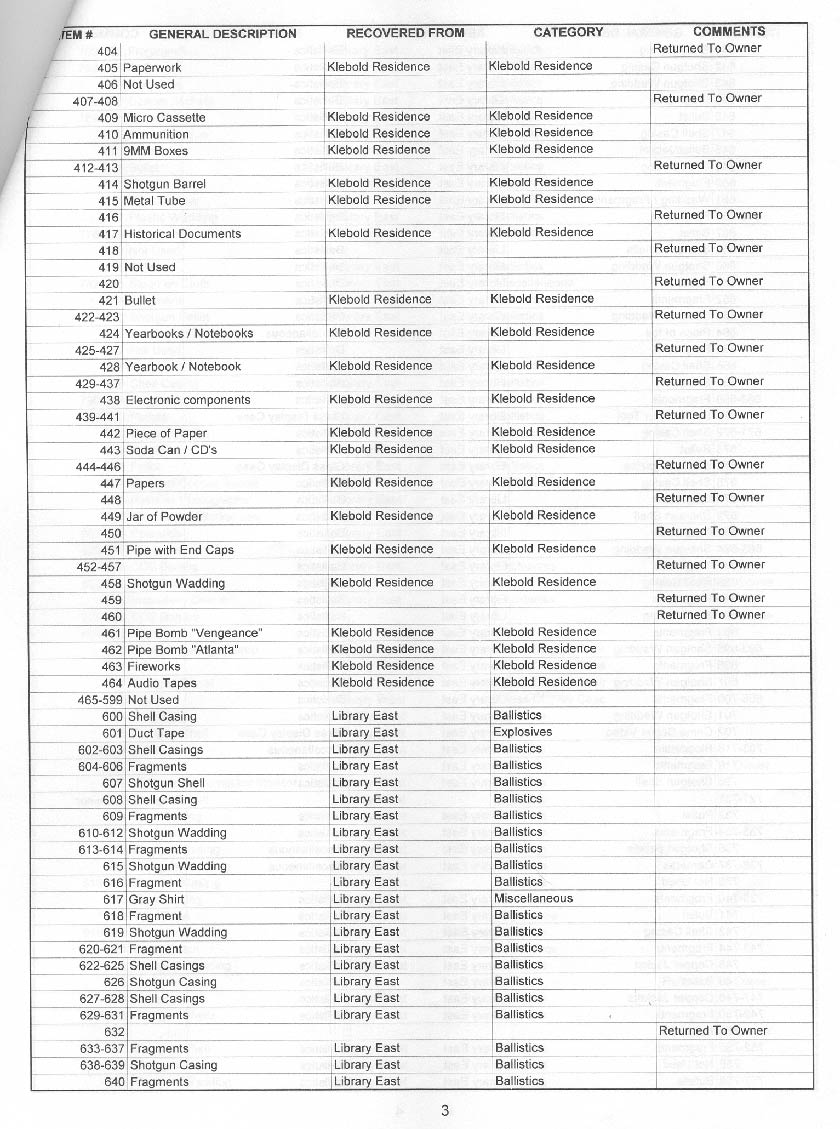

This article was imported from Wikipedia and is available under the Creative Commons Attribution-ShareAlike 4.0 License. Content has been adapted to SurfDoc format. Original contributors can be found on the article history page.
Ask Mako anything about Columbine High School massacre — get instant answers, deeper analysis, and related topics.
Research with MakoFree with your Surf account
Create a free account to save articles, ask Mako questions, and organize your research.
Sign up freeThis content may have been generated or modified by AI. CloudSurf Software LLC is not responsible for the accuracy, completeness, or reliability of AI-generated content. Always verify important information from primary sources.
Report