From Surf Wiki (app.surf) — the open knowledge base
Colloblast
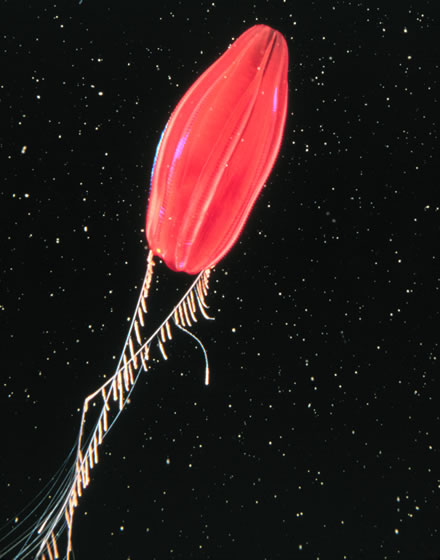
Like the cnidocytes of cnidarians, colloblasts are discharged from the animals’ tentacles, and are used to capture prey. However, unlike cnidocytes, which are venomous cells, colloblasts contain adhesives which stick to, rather than sting the prey.
Form, function, and occurrence
Colloblasts were first described in 1844.
The apical surface of colloblasts consist of numerous cap cells that secrete eosinophilic granules that are thought to be the source of adhesion. On contact, these granules rupture, and release an adhesive substance onto the prey. The spiral filament absorbs the impact of the rupture, preventing the ensnared prey from escaping. Colloblasts are found in all ctenophores except those of the order Beroida, which lack tentacles, and the species Haeckelia rubra, which use cnidocytes from cnidarian prey.
References
|editor1-last=Bereiter-Hahn |editor1-first=Jürgen |editor2-last=Matoltsy |editor2-first=A. Gedeon |editor3-last=Richards |editor3-first=K. Sylvia
This article was imported from Wikipedia and is available under the Creative Commons Attribution-ShareAlike 4.0 License. Content has been adapted to SurfDoc format. Original contributors can be found on the article history page.
Ask Mako anything about Colloblast — get instant answers, deeper analysis, and related topics.
Research with MakoFree with your Surf account
Create a free account to save articles, ask Mako questions, and organize your research.
Sign up freeThis content may have been generated or modified by AI. CloudSurf Software LLC is not responsible for the accuracy, completeness, or reliability of AI-generated content. Always verify important information from primary sources.
Report