From Surf Wiki (app.surf) — the open knowledge base
Coevorden
.jpg)
| Field | Value |
|---|---|
| name | Coevorden |
| native_name | nds-nl |
| settlement_type | City and municipality |
| image_skyline | Het kasteel en het gemeentehuis - Coevorden - 20410111 - RCE.jpg |
| image_caption | Castle and city hall of Coevorden in 2007 |
| image_flag | Flag of Coevorden.svg |
| flag_size | 100x67px |
| image_shield | Coat of arms of Coevorden.svg |
| shield_size | 100x80px |
| image_map | Map - NL - Municipality code 0109 (2009).svg |
| map_alt | Highlighted position of Coevorden in a municipal map of Drenthe |
| map_caption | Location in Drenthe |
| coordinates | |
| subdivision_type | Country |
| subdivision_name | Netherlands |
| subdivision_type1 | Province |
| subdivision_name1 | Drenthe |
| government_footnotes | {{cite web |
| url | http://www.coevorden.nl/bestuur-en-politiek/burgemeester-en-wethouders.html |
| title | Burgemeester en wethouders |
| trans-title | Mayor and aldermen |
| language | nl |
| publisher | Gemeente Coevorden |
| access-date | 6 October 2013 |
| archive-url | https://web.archive.org/web/20130921055954/http://www.coevorden.nl/bestuur-en-politiek/burgemeester-en-wethouders.html |
| archive-date | 21 September 2013 |
| url-status | dead |
| df | dmy-all |
| governing_body | Municipal council |
| leader_party | CDA |
| leader_title | Mayor |
| leader_name | Renze Bergsma |
| unit_pref | Metric |
| area_footnotes | |
| area_total_km2 | |
| area_land_km2 | |
| area_water_km2 | |
| elevation_footnotes | {{cite web |
| url | http://www.ahn.nl/postcodetool |
| title | Postcodetool for 7741GC |
| language | nl |
| author | |
| work | Actueel Hoogtebestand Nederland |
| publisher | Het Waterschapshuis |
| access-date | 6 October 2013}} |
| elevation_m | 12 |
| elevation_max_footnotes | tags -- |
| elevation_min_footnotes | tags -- |
| population_footnotes | |
| population_total | |
| population_as_of | |
| population_density_km2 | |
| population_demonym | Coevordenaar |
| timezone1 | CET |
| utc_offset1 | +1 |
| timezone1_DST | CEST |
| utc_offset1_DST | +2 |
| postal_code_type | Postcode |
| postal_code | 7740–7759, 7840–7869 |
| area_code_type | Area code |
| area_code | 0524, 0528, 0591 |
| website |
|trans-title = Mayor and aldermen |access-date = 6 October 2013 |archive-url = https://web.archive.org/web/20130921055954/http://www.coevorden.nl/bestuur-en-politiek/burgemeester-en-wethouders.html |archive-date = 21 September 2013 |url-status = dead tags -- |access-date = 6 October 2013}} Coevorden (; ) is a municipality and city in the province of Drenthe, in the northeast of the Netherlands. It shares a provincial border with Overijssel and an international one with Germany. The city itself is located between Emmen and Hardenberg on the N34 road, about 2 km from the German border.
Coevorden is the oldest city in Drenthe and was once a very important fortified city. The old part still has the star-shaped radial streets. It received city rights in the year 1408. The population of Coevorden today is 15.855 (1 January 2023) or 35.740 (2025) for the whole municipality. The largest town after Coevorden is Dalen.
Outside the Netherlands, the city is known for indirectly giving its name to the major Canadian city Vancouver, and also the American city Vancouver, Washington. The 18th-century British explorer George Vancouver had ancestors (and family name) originally came to England "from Coevorden" (van Coevern in Dutch Low Saxon). There is also a family of nobility with the surname van Coeverden, sometimes spelled with a K.
Etymology
The name Coevorden means "cow ford(s)" or "cow crossing", similar to Bosporus or Oxford. The first mention of the place name appears in 1036 in the name of Fredericus van Coevorden. The German name is Kuhfuhrt.
History
Viscounts
In 1141, Bishop Hartbert van Bierum appointed his brother, Ludolf van Bierum, to the hereditary position of Viscount of Coevorden. This made Hartbert a loyal vassal or perhaps even a puppet. After Hartbert's death, the bond between the bishopric of Utrecht and the city and lordship of Coevorden quickly weakened.
Ludolf was succeeded by his sons Volker van Coevorden and Rudolf I van Coevorden . They behaved as independent lords. This led to a siege in 1882 by Bishop Baldwin II of Holland, during which the city was largely destroyed. The bishop appointed Count Otto van Bentheim as the new lord of the castle. The Lords of Coevorden and Count Otto would dispute supremacy for many years. Between 1186 and 1192, war broke out again, during which Rudolf I van Coevorden was taken hostage. Meanwhile, Volker managed to capture the castle, with Otto's family inside. This gave the lords sufficient strength to claim power. Rudolf I van Coevorden was recognized as Viscount of Coevorden. Volker settled in Ansen and was the father of Rudolf II van Coevorden , who would become Viscount of Coevorden.
Rebellion against Utrecht
Main article: Battle of Ane, Drenther Crusade
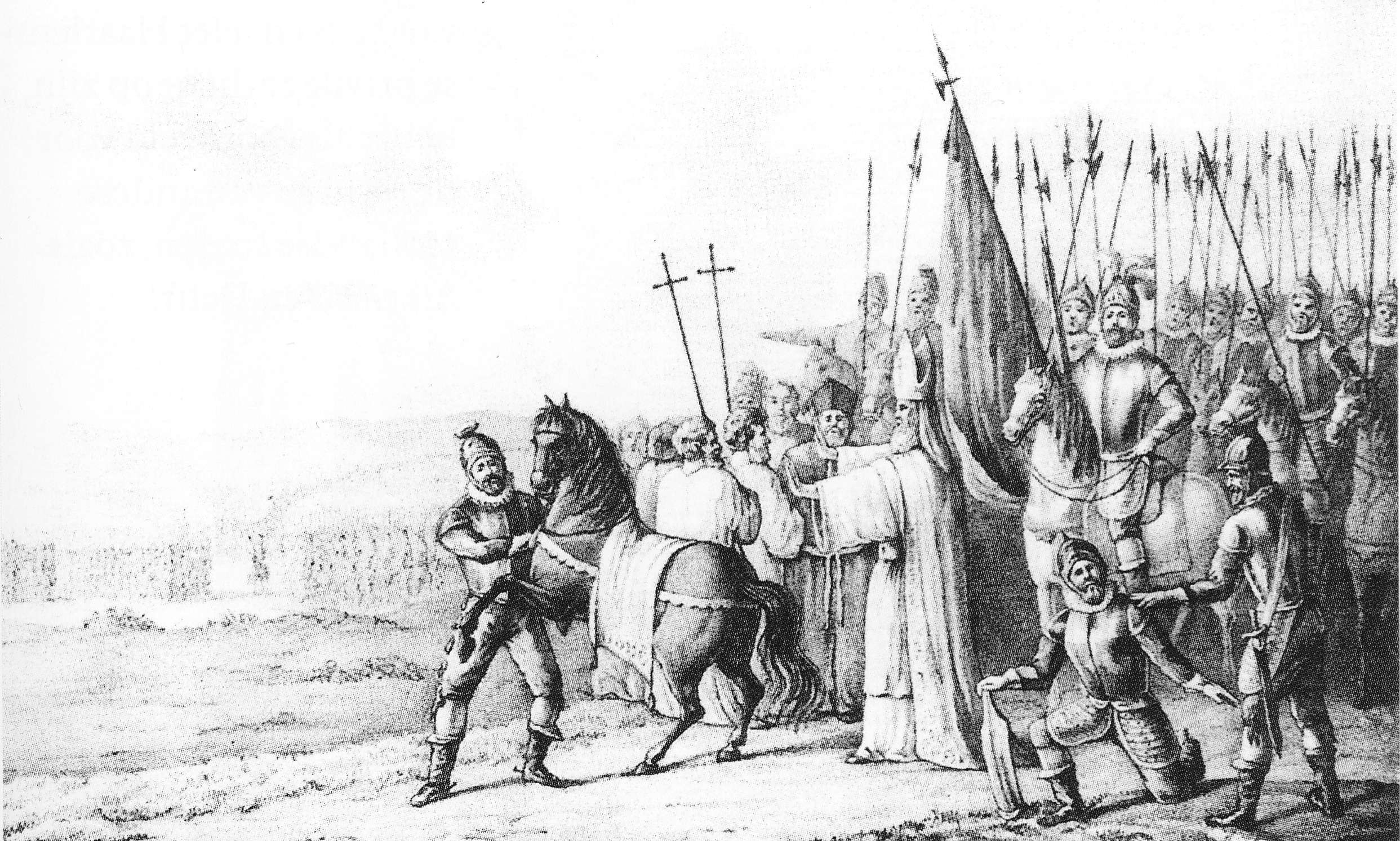
Coevorden was strategically located on the route from Groningen to Münster, making it a prosperous fortified town. Otto van Lippe, the bishop of Utrecht, decided to strengthen its claims over Coevorden, in part to increase income from the region. However, Otto faced a fierce rebellion because the peasants supported their lord, Rudolf II van Coevorden. This resulted in the Battle of Ane, where Otto was killed and the Drenthe peasants under the command of Rudolf II van Coevorden achieved a resounding victory.
After the death of Otto, Wilbrand of Oldenburg was consecrated bishop and he also went to war against Drenthe rebels with the help of Frisians. However, this battle, the Frisian-Drenthe War, was also won by the Drents. In a later battle, at Peize, the Drenthe were ultimately defeated. Rudolf II of Coevorden was lured to Hardenberg Castle where he was captured, tortured, and murdered on 25 July 1230.
Return and fall of the Van Coevorden lords
In 1288, a grandson of Rudolf returned to power, starting a series of powerful lords of Coevorden, a dynasty that would last until 1402. They controlled the judiciary in Drenthe and their sphere of influence extended to Borculo, Diepenheim, Lage (Germany), and Selwerd.
It wasn't until the end of the 14th century that Bishop Frederik van Utrecht put an end to the unrest by abolishing the hereditary castellany of Coevorden. In 1395, Frederik went to war against the Lord of Drenthe, but unlike at the Battle of Ane, the current lord Reinoud could not count on the support of the peasants because of his own misdeeds. On 4 April 1402, Reinoud renounced all his rights and the Van Coevordens withdrew to their possessions in Twente and the Achterhoek region. Frederik granted Coevorden city rights in 1408.
Gelderland control
At the beginning of the 16th century, both the chapel of Hulsvoort and the new church in Coevorden were destroyed. The city fell into the hands of Rudolf of Münster in 1518, but in 1522 it was recaptured by the Gelderlanders, under the command of Johan van Selbach. Selbach then governed all eastern areas, including Overijssel and Drenthe, up to the Groningen seacoast.
Selbach would remain castellan of Coevorden and bailiff of Drenthe until 1536, the end of Charles II, Duke of Guelders (Karel van Gelre)'s reign. Selbach was forced to hand over the castle and the fortress to Georg Schenck van Toutenburg, army commander in the region of Emperor Charles V (Karel V).
Spanish siege and reconstruction
Coevorden was besieged by the Spanish from September 1581 to 1592, led by George de Lalaing, Count of Rennenberg. Coevorden was one of the few fortified cities in the northern provinces that had not participated in Rennenberg's betrayal. The city was captured from the Spanish in 1592 by a Dutch and English force under the command of Maurice, Prince of Orange. The following year it was besieged by a Spanish force but the city held out until its relief in May 1594. [[File:Coevorden.jpg|thumb|Fortification plan of Coevorden, in [[Star fort]] style.]]
Coevorden had to be completely rebuilt. This started in early 16th century modeled to be an ideal city design, similar to Palmanova. The streets were laid out in a radial pattern within polygonal fortifications and extensive outer earthworks. The fortifications were designed by Menno van Coehoorn.
Second Münster siege
Main article: Siege of Coevorden (1672)
In the 18th century, population growth came to a halt. As a relatively large city, Coevorden still held an important regional role, but this was gradually taken over by Emmen.
French rule
In 1795, Coevorden was captured by the French, and the occupation would last until 1814. The French army was received as a liberating force, had built up sufficient support, and loyalty to the House of Orange was not particularly strong. Berend Slingenberg became secretary of the Revolutionary Committee and was appointed mayor in 1811. After Napoleon's abdication on 3 May 1814, the French left the city in a desolate state.
Since World War II
Even after the war, Emmen continued to grow into the most important city in the region, and several businesses and institutions relocated from Coevorden to Emmen. It wasn't until the 1980s and 1990s that Coevorden's reputation began to improve, with the arrival of an animal feed company and the construction of a NATO depot, now in use by the Dutch army. With Europark which bean construction in the mid-1990s and is partly located on German territory, Coevorden aims to give new impetus to industry and business in the region.
During the 1998 municipal reorganisation in the province, Coevorden merged with Dalen, Sleen, Oosterhesselen and Zweeloo, retaining its name.
Geography

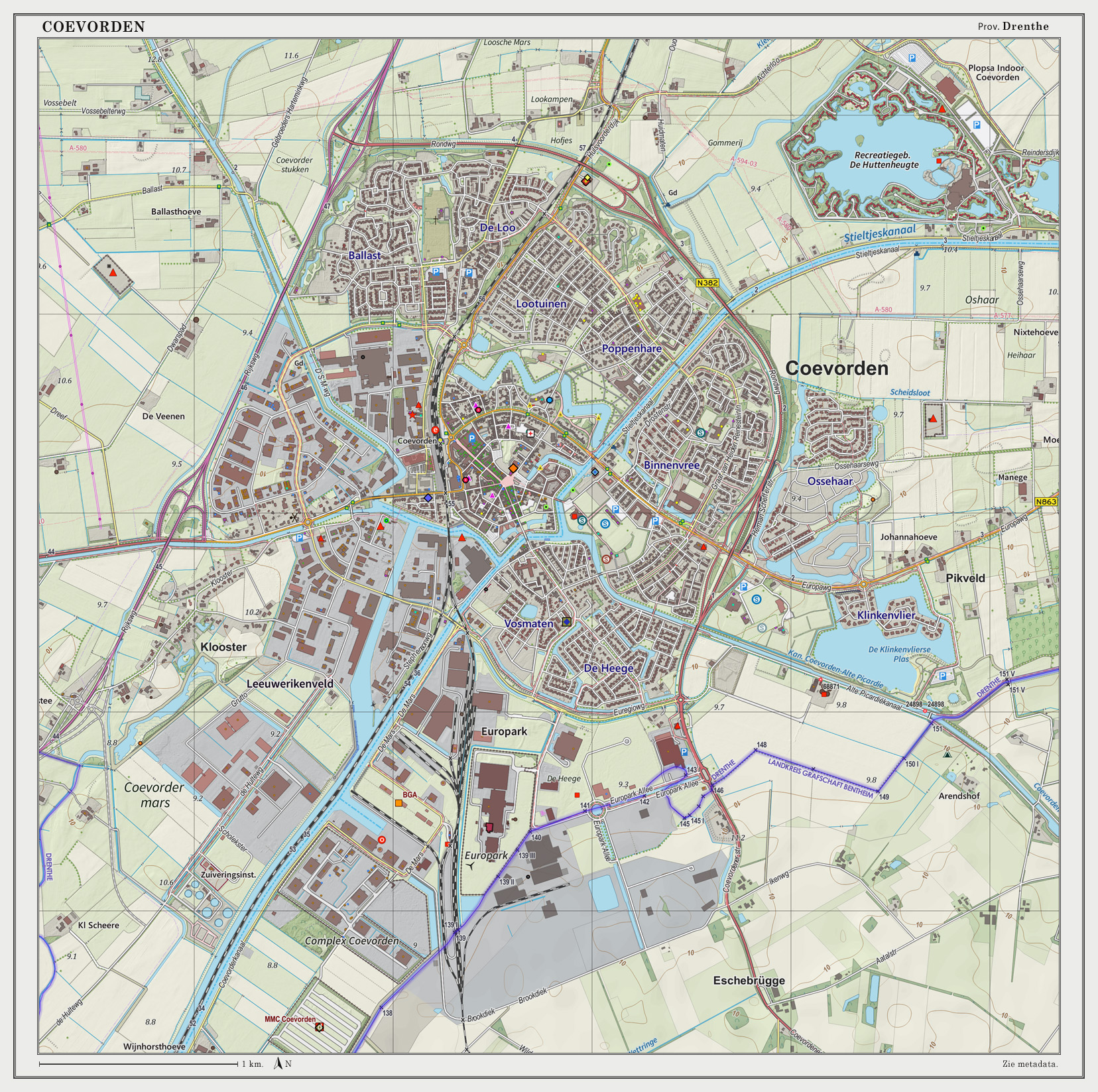
Coervorden is located at in the south of the province of Drenthe in the east of the Netherlands.
The population centres in the municipality are:
- Aalden
- Achterste Erm
- Ballast
- Benneveld
- Coevorden
- Dalen
- Dalerpeel
- Dalerveen
- De Kiel
- De Mars
- Den Hool
- Diphoorn
- Eldijk
- Erm
- Gees
- Geesbrug
- Grevenberg
- 't Haantje
- Holsloot
- Hoogehaar
- Kibbelveen
- Klooster
- Langerak
- Meppen
- Nieuwe Krim
- Nieuwlande
- Noord-Sleen
- Oosterhesselen
- Padhuis
- Pikveld
- Schimmelarij
- Schoonoord
- Sleen
- Steenwijksmoer
- Stieltjeskanaal
- Valsteeg
- Veenhuizen
- Vlieghuis
- Vossebelt
- Wachtum
- Weijerswold
- Wezup
- Wezuperbrug
- Zweeloo
- Zwinderen
Transportation

_in_Coevorden_(36846641214).jpg)
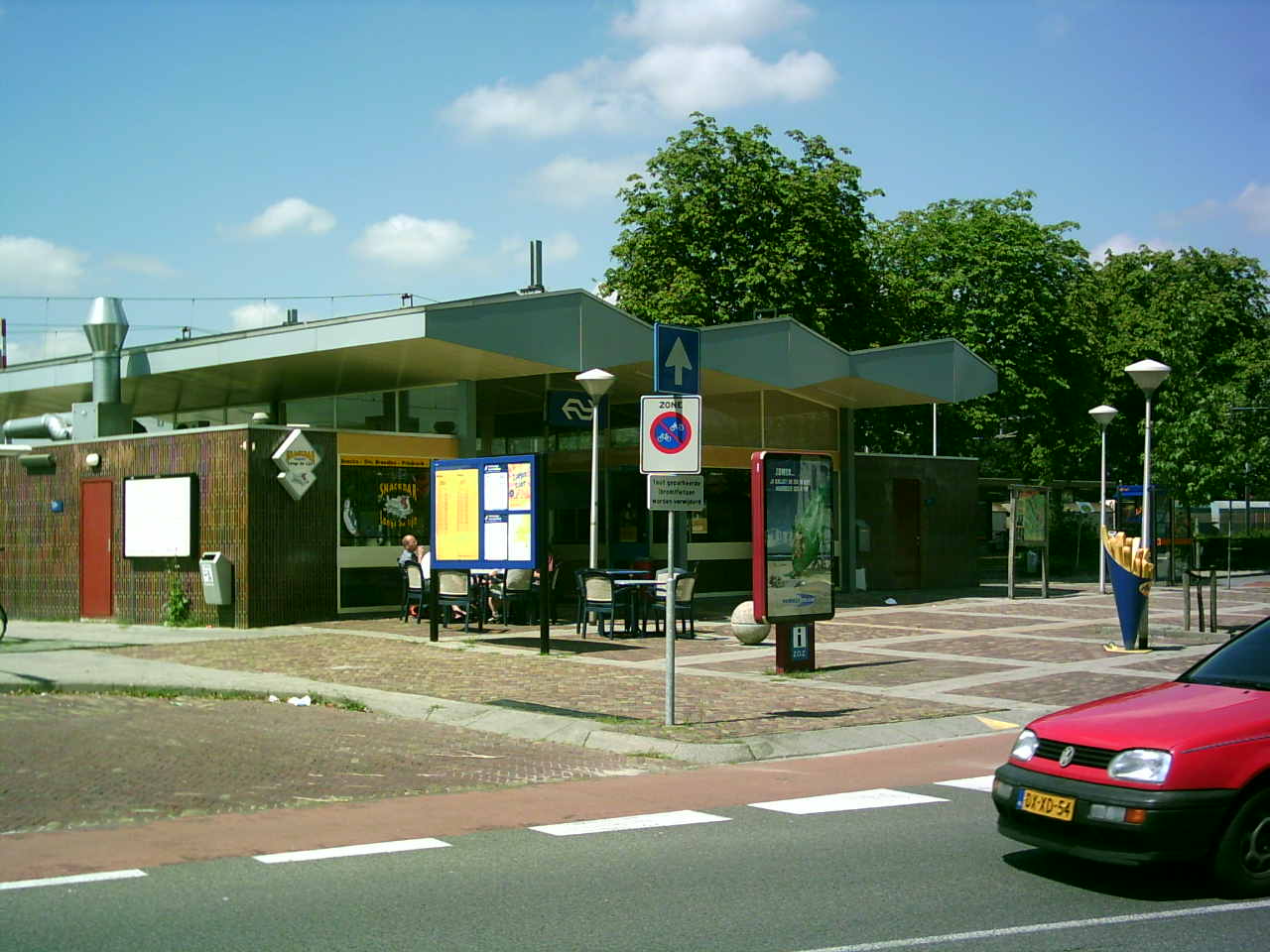
In 1897, Coevorden received its first steam tram connection when the Dedemsvaartsche Stoomtramweg-Maatschappij (DSM) company based in Dedemsvaart opened its station in Coevorden. Later the line extended on the other side towards Ter Apel. Steam tram service was discontinued in 1947. The building still exists today.
International relations
Coevorden is twinned with:
Notable people
- Johannes Benedictus van Heutsz (1851-1924). Gouverneur-generaal (1904-09), a Dutch military officer and governor general of the Dutch East Indies in 1904
- Albert Bouwers (1893 in Dalen – 1972) a Dutch optical engineer, worked with X-Rays
- Relus ter Beek (1944 in Coevorden – 2008) a Dutch politician
- Tim de Zeeuw (born 1956 in Sleen) a Dutch astronomer specializing in the galaxies
- Thijs Berman (born 1957 in Coevorden) a former journalist, a Dutch politician and a Member of the European Parliament
- Herman von Hebel (born 1961 in Coevorden) was a Registrar of the International Criminal Court
- Maxim Februari (born 1963 in Coevorden) a Dutch writer, philosopher and columnist
- Joël Voordewind (born 1965 in Sleen) a Dutch politician
- Don Pepijn Schipper (born 1980 in Coevorden) stage name Don Diablo is a Dutch DJ, record producer, musician and songwriter of electronic dance music
- Mark-Jan Fledderus (born 1982 in Coevorden) a Dutch retired footballer with 321 caps
Gallery
File:Coevorden Wilhelminastraat 2b Sint-Willibrordeuskerk.jpg|Coevorden Wilhelminastraat, Sint-Willibrordeus church File:Kasteel coevorden.jpg|Coevorden Castle File:Gracht bij Van Heutszpark.jpg|Moat at the Van Heutszpark File:Coevorden, Netherlands - panoramio (15).jpg|Coevorden city hall
References
References
- {{Dutch municipality total area. dataref
- {{Dutch municipality population. dataref
- "De geschiedenis van Coevorden".
- (2022-05-14). "Hoe Coevorden zijn naam gaf aan een Canadese miljoenenstad".
- "Coevorden". The History of Metropolitan Vancouver.
- "Geschiedenis Coevorden - Uit de geschiedenis van de stad Coevorden met jaartallen".
- [http://www.geheugenvandrenthe.nl/ane-slag-bij Geheugen van Drente:Slag bij Ane]
- "Geschiedenis Coevorden - De Heren van Coevorden".
- "Geschiedenis Coevorden - Johan van Selbach 1483-1563".
- "Geschiedenis Coevorden - Fransen te Coevorden, een omwenteling".
- "Gemeentegeschiedenis".
- (2025-03-20). "Nieuwe trein Coevorden - Bad Bentheim vanaf december 2026 (update - geen toelating nodig)". Treinreiziger.nl.
- "D.S.M I".
- (2011-05-16). "Embassy of the Republic of Belarus in the Kingdom of the Netherlands - News of the Embassy". Netherlands.mfa.gov.by.
This article was imported from Wikipedia and is available under the Creative Commons Attribution-ShareAlike 4.0 License. Content has been adapted to SurfDoc format. Original contributors can be found on the article history page.
Ask Mako anything about Coevorden — get instant answers, deeper analysis, and related topics.
Research with MakoFree with your Surf account
Create a free account to save articles, ask Mako questions, and organize your research.
Sign up freeThis content may have been generated or modified by AI. CloudSurf Software LLC is not responsible for the accuracy, completeness, or reliability of AI-generated content. Always verify important information from primary sources.
Report