From Surf Wiki (app.surf) — the open knowledge base
Cocoa solids
Mixture remaining after cocoa butter is extracted from cocoa beans

Mixture remaining after cocoa butter is extracted from cocoa beans
Dry cocoa solids are the components of cocoa beans remaining after cocoa butter, the fatty component of the bean, is extracted from chocolate liquor, roasted cocoa beans that have been ground into a liquid state. Cocoa butter is 46% to 57% of the weight of cocoa beans and gives chocolate its characteristic melting properties. Cocoa powder is the powdered form of the dry solids with a small remaining amount of cocoa butter. Untreated cocoa powder is bitter and acidic. Dutch process cocoa has been treated with an alkali to neutralize the acid.
Cocoa powder contains flavanols, amounts of which are reduced if the cocoa is subjected to acid-reducing alkalization.
Other definitions of cocoa solids, especially legal ones, include all cocoa ingredients (cocoa mass, cocoa powder and cocoa butter). In this case, cocoa solids without cocoa butter are specified as non-fat cocoa solids.
Production
Cocoa solids are what remains after cocoa butter is pressed from chocolate liquor. The liquor manufacturers choose to press is often of acidic beans they consider lower quality.
Physical properties
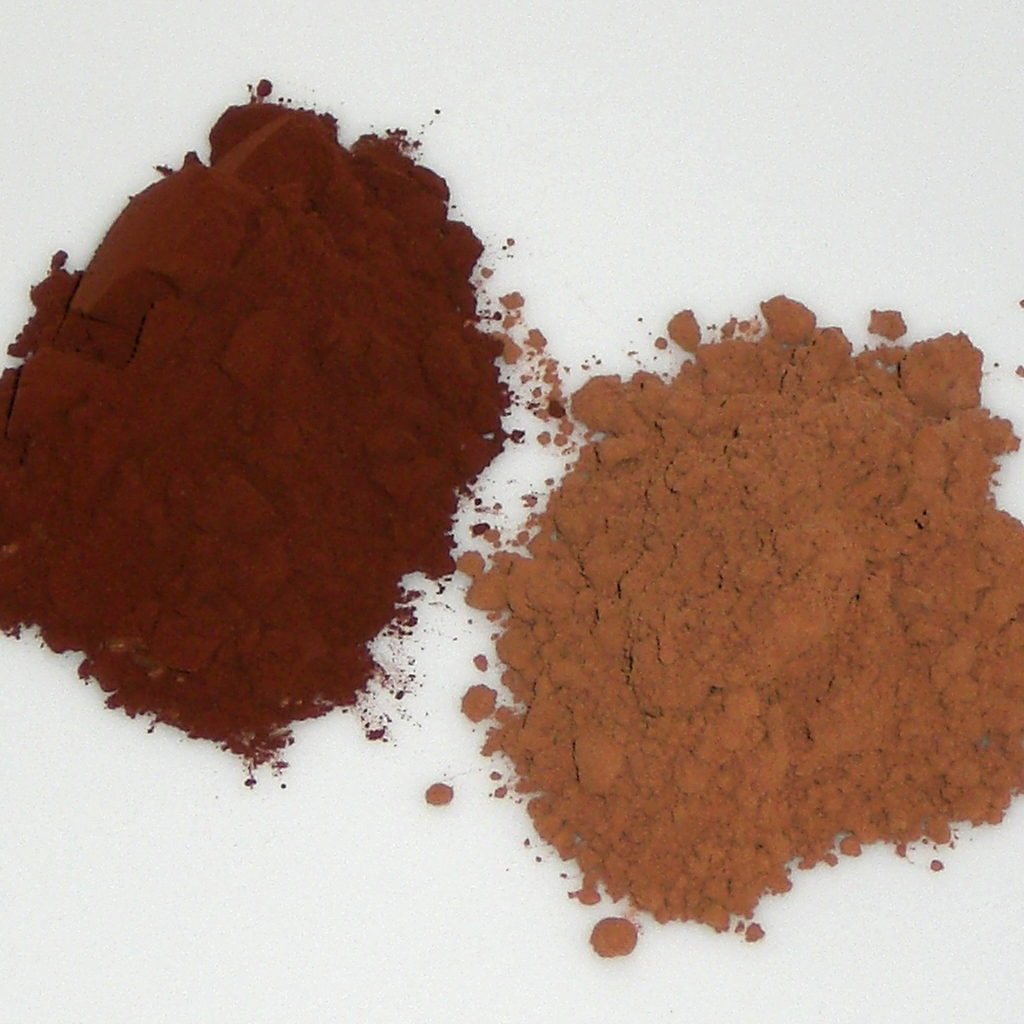
Natural cocoa
Natural cocoa powder is extracted with the Broma process where after the cocoa fats have been removed from the chocolate nibs the remaining dry cocoa beans are ground into cocoa powder, which is sold to consumers. Natural cocoa powder has a light-brown color and an extractable pH of 5.3 to 5.8.
Because of its acidity, natural cocoa is often paired in recipes with baking soda (sodium bicarbonate). This neutralizes the acidity and creates carbon dioxide which in cakes helps them rise.
Dutch process cocoa
Main article: Dutch process cocoa
Dutch process cocoa or Dutched cocoa is cocoa powder that has been treated with an alkalizing agent to modify its color, neutralize its pH and give it a milder taste compared to natural cocoa. It forms the basis for much of modern chocolate, and is used in ice cream, hot chocolate, and baking.
The alkalization process reduces bitterness and improves solubility, which is important for beverage product applications. Alkalizing agents employed vary, but include potassium carbonate and sodium carbonate.
Nutrition
Cocoa powder is 58% carbohydrates, 14% fat, 20% protein, and 3% water (table). It contains several minerals in rich content (having a Daily Value of 20% or higher), including manganese, magnesium, phosphorus, potassium, iron, and zinc, while calcium levels are moderate (table).
Flavonoids
Main article: Health effects of chocolate
Cocoa powder is rich in flavonoids (especially flavan-3-ols), a subset of polyphenols. The amount of flavonoids depends on the amount of processing and manufacturing the cocoa powder undergoes. Alkalization, also known as Dutch processing, causes its content of flavonoids to be substantially reduced.
Safety
Cadmium content
Cocoa powders may contain cadmium, a toxic heavy metal, found naturally in high levels in the soil of some regions of cocoa-producing countries. The European Union has imposed a limit (as of 1 January 2019) for cadmium in cocoa powder of 0.6 μg per gram of cocoa powder and 0.8 μg per gram for chocolate with ≥ 50% total dry cocoa solids. In Canada, a daily serving of a natural health product must contain no more than 6 μg of cadmium for an individual weighing 150 lb and 3 μg for a 75 lb individual. While the US government has not set a limit for cadmium in foods or health products, the state of California has established a maximum allowable daily level of oral cadmium exposure of 4.1 μg and requires products containing more than this amount per daily serving to bear a warning on the label.
References
References
- (2008). "Impact of Alkalization on the Antioxidant and Flavanol Content of Commercial Cocoa Powders". [[Journal of Agricultural and Food Chemistry]].
- Talbot, Geoff. (2009). "Science and Technology of Enrobed and Filled Chocolate, Confectionery and Bakery Products". [[Elsevier]].
- Greweling, Peter P. (2013). "Chocolates & Confections: Formula, Theory, and Technique for the Artisan Confectioner". [[John Wiley & Sons]].
- [http://www.flexicon.com/Materials-Handled/Cocoa-Powder.html Materials Handled Cocoa Powder: Overview] {{Webarchive. link. (2014-04-07 . Retrieved: 2 April 2014.)
- (2009-11-16). "Art of Darkness II: Cocoa : Good Eats". Food Network.
- (2020). "Cocoa, dry powder, unsweetened per 100 g". USDA FoodData Central.
- (2019). "Cardioprotective Mechanisms of Cocoa". [[American College of Nutrition.
- (17 May 2014). "Product Review: Cocoa Powders, Dark Chocolate, Extracts, Nibs, & Supplements". ConsumerLab.com LLC.
- "Chocolate Terms". Thenibble.com.
- [[United Nations]]. "Heavy Metals: Cadmium". [[United Nations Environment Programme]].
- [[United States Department of Health and Human Services]]. "Cadmium and Cadmium Compounds CAS No. 7440-43-9 (Cadmium)". [[National Toxicology Program]].
- (2014-05-12). "Commission Regulation (EU) No 488/2014 of 12 May 2014: Amending Regulation (EC) No 1881/2006 as regards maximum levels of cadmium in foodstuffs".
- (20 August 2012). "Quality of natural health products guide".
- "Proposition 65 Maximum Allowable Daily Level (MADL) for Reproductive Toxicity for Cadmium (Oral Route)".
This article was imported from Wikipedia and is available under the Creative Commons Attribution-ShareAlike 4.0 License. Content has been adapted to SurfDoc format. Original contributors can be found on the article history page.
Ask Mako anything about Cocoa solids — get instant answers, deeper analysis, and related topics.
Research with MakoFree with your Surf account
Create a free account to save articles, ask Mako questions, and organize your research.
Sign up freeThis content may have been generated or modified by AI. CloudSurf Software LLC is not responsible for the accuracy, completeness, or reliability of AI-generated content. Always verify important information from primary sources.
Report