From Surf Wiki (app.surf) — the open knowledge base
Coastal Andhra
Geographic region of Andhra Pradesh, India

Geographic region of Andhra Pradesh, India
| Field | Value |
|---|---|
| name | Coastal Andhra |
| native_name | Kōstā Āndhra |
| settlement_type | Geographic region of Andhra Pradesh |
| image_skyline | {{multiple image |
| border | infobox |
| total_width | 300 |
| perrow | 1/3/2/1 |
| caption_align | center |
| image1 | Vizag View from Kailasagiri.jpg |
| caption1 | Skyline of Visakhapatnam |
| image2 | Kanakadurga Temple gopuram.jpg |
| caption2 | Kanaka Durga Temple, Vijayawada |
| image3 | Machilipatnam beach at dusk11 09.jpg |
| caption3 | Machilipatnam beach |
| image4 | Dhyaan buddha Amaravthi.jpg |
| caption4 | Dhyana Buddha statue at Amaravathi |
| image5 | Konaseema .jpg |
| caption5 | Konaseema |
| image6 | Agriculture college bapatla.jpg |
| caption6 | Agricultural College, Bapatla |
| image7 | District Collectorate of West Godavari (May 2019) 3.jpg |
| caption7 | Eluru District Collectorate |
| image_map | Coastal Andhra in Andhra Pradesh.png |
| map_caption | Coastal Andhra region (old districts) highlighted in Andhra Pradesh |
| subdivision_type | Country |
| subdivision_name | |
| subdivision_type1 | State |
| subdivision_name1 | Andhra Pradesh |
| established_title | |
| subdivision_type2 | Districts |
| subdivision_name2 | *Srikakulam district |
| subdivision_type3 | Largest city |
| subdivision_name3 | *Visakhapatnam |
| subdivision_type4 | Major Cities |
| subdivision_name4 | *Vijayawada |
| unit_pref | Metric |
| area_footnotes | |
| area_total_km2 | 91915 |
| population_total | 34,195,655 |
| population_as_of | 2011 |
| population_footnotes | |
| demographics_type1 | Languages |
| demographics1_title1 | Official |
| timezone1 | IST |
| utc_offset1 | +05:30 |
| postal_code_type | |
| registration_plate | AP05, AP06, AP07, AP08, AP16, AP18, AP26, AP27, AP37, AP39 |
| blank1_name_sec1 | Largest airport |
| blank1_info_sec1 | Visakhapatnam Airport |
| demographics1_info1 | Telugu |
| demographics1_title2 | Others |
- Vizianagaram district
- Parvathipuram Manyam district
- Alluri district
- Visakhapatnam district
- Anakapalli district
- Kakinada district
- Konaseema district
- East Godavari district
- West Godavari district
- Eluru district
- NTR district
- Krishna district
- Guntur district
- Palnadu district
- Bapatla district
- Prakasam district
- SPSR Nellore district
- Guntur
- Nellore
- Rajamundry
- Kakinada
- Bhimavaram
- Eluru
- Tuni
Coastal Andhra, also known as Kosta Andhra (IAST: Kōstā Āndhra), is a geographic region in the Indian state of Andhra Pradesh, comprising the coastal districts of the state between the Eastern Ghats and the Bay of Bengal, from the northern border with Orissa to Rayalaseema in the south. It includes major cities Visakhapatnam, Vijayawada and Guntur City as well as the state capital Amaravati and is recognized for its fertile lands, rich cultural heritage, and economic importance. Coastal Andhra plays a significant role in the state's agricultural output, particularly in rice and tobacco production, supported by abundant water resources from the Godavari, Krishna, and Penna rivers.
While Coastal Andhra generally includes the districts along the Bay of Bengal, the Uttarandhra (Northern Andhra) area is sometimes regarded as distinct due to its unique cultural and historical background. Coastal Andhra shares borders with the Rayalaseema region of Andhra Pradesh and the state of Telangana. Covering an area of 91915 sqkm, Coastal Andhra accounts for 58% of Andhra Pradesh's total area and, as per the 2011 Census of India, hosts a population of over 3.4 crore, constituting 69.20% of the state's population. Coastal Andhra was formerly part of the Madras State until 1953 and then became part of Andhra State from 1953 to 1956.
Historically, Coastal Andhra has been a centre of trade and culture, featuring strong traditions in literature, music, and dance. The region contributed actively to the Indian independence movement and continues to impact the state's economy through industries such as information technology, petroleum, and pharmaceuticals. It is also home to major ports in Visakhapatnam and Kakinada, enhancing its status as a critical industrial and trading hub. Proximity to the Bay of Bengal, however, makes the region susceptible to tropical cyclones and coastal erosion, prompting investments in disaster preparedness and coastal management initiatives.
History
The region of Andhra emerged as a prominent political power during the Maurya Empire. Historical accounts by Greek ambassador Megasthenes () reference Andhra as a flourishing region under the Satavahanas before the Common Era. The Satavahana dynasty dominated the Deccan Plateau from the 1st century BCE to the 3rd century CE. It had trade relations with the Roman Empire. The Satavahanas made Dhanyakataka-Amaravathi their capital. According to historian Stanley Wolpert, it might have been the most prosperous city in India in 2nd century CE.
Coastal Andhra was subsequently governed by the Eastern Chalukya dynasty between the 7th and 12th centuries CE, followed by successive rule under the Chola, Kakatiya, and Vijayanagara empires. According to 11th-century inscriptions, the geographical boundaries of Coastal Andhra extended from the Mahendragiri mountains in the northeastern border near Orissa's Gajapati district, to the Kalahasti Temple in Tirupati district, and the Srisailam Temple in Nandyal district.
In the mid-18th century, the Gajapati and Ganjam districts, which were part of Coastal Andhra, were granted to the French East India Company in 1752 but were later transferred to British control. Nellore, including areas reaching up to Ongole Taluk, came under British administration after being acquired from the Nawab of Arcot. Additionally, certain parts of present-day Nellore and Chittoor were managed by the Venkatagiri Rajas until 1802, when the British entered into an arrangement with the Raja of Venkatagiri, consolidating their control over these territories.
The Coastal Andhra districts, historically known as the Northern Circars, along with the Rayalaseema region, were ceded by the Nizam of Hyderabad to the British colonial administration, becoming part of the Madras Presidency under British rule.
Geography
Coastal Andhra is situated in the eastern region of the Indian state of Andhra Pradesh, along the Circar Coast. It covers an area of 91915 sqkm. It comprises 20 districts: Srikakulam, Vizianagaram, Parvathipuram Manyam, Alluri Sitarama Raju,Polavaram, Visakhapatnam, Anakapalli, Kakinada, Konaseema, East Godavari, West Godavari, Eluru, Krishna, NTR, Guntur, Palnadu, Bapatla, Prakasam, Markapuram and Nellore.
The region borders the Rayalaseema region within Andhra Pradesh and shares boundaries with the state of Telangana. Fertile lands in Coastal Andhra are supported by the presence of three major rivers: the Godavari, Krishna, and Penna, which enhance agricultural productivity through extensive irrigation systems.
The coastal length of this region spans approximately 974 km, making it the second-longest coastline in India.
Demographics
According to the 2011 Census of India, Coastal Andhra has a total population of 34,195,655 constituting 69.20% of the state's population.
The majority of the population in Coastal Andhra practices Hinduism, accounting for approximately 93% of the residents. The Christian community represents around 1.51% of the region's population.
The primary language spoken across Coastal Andhra is Telugu.
Culture
Kuchipudi is the classical dance form of the state, which was originated in the Kuchipudi village of Krishna district.
Cuisine
Rice is the staple food in the coastal cuisine and is usually consumed with a variety of curries and lentil soups or broths. The cuisine of Coastal Andhra is influenced by various seafood varieties.
Politics
The Coastal Andhra region of Andhra Pradesh comprises 20 districts: Srikakulam, Vizianagaram, Parvathipuram Manyam, Polavarm, Alluri Sitharama Raju, Visakhapatnam, Anakapalli, Kakinada, Konaseema, East Godavari, West Godavari, Eluru, Krishna, NTR, Guntur, Palnadu, Bapatla, Prakasam, Markapuram and Nellore.
Many Chief Ministers from the region have held office in Andhra Pradesh and Andhra State. They are:
- Tanguturi Prakasam Panthulu – 1st Chief Minister of Andhra State (Prakasam)
- Bezawada Gopala Reddy – 2nd Chief Minister of Andhra State (Nellore)
- Kasu Brahmananda Reddy – 5th Chief Minister of Andhra Pradesh (Palnadu)
- Bhavanam Venkatarami Reddy – 10th Chief Minister of Andhra Pradesh (Guntur)
- N. T. Rama Rao – 12th Chief Minister of Andhra Pradesh (Krishna)
- Nadendla Bhaskara Rao – 13th Chief Minister of Andhra Pradesh (Guntur)
- K. Rosaiah – 17th Chief Minister of Andhra Pradesh (Bapatla)
Cities and towns
Visakhapatnam, Vijayawada, Guntur, Nellore, Kakinada, Rajahmundry, Tuni and Eluru are prominent cities in the Coastal Andhra region. Other major urban centers include Gudivada, Tenali, Narasaraopeta, Bhimavaram, Machilipatnam, Ongole, and Tadepalligudem. Important towns in the area include Chirala, Amalapuram, Palakollu, Narasapuram, Kavali, Chilakaluripet, and Kandukur.
Visakhapatnam is the most populous city in the region, while Amaravati, serving as the state capital, is also situated within Coastal Andhra.
Tourism
Buddhist hub
Coastal Andhra is a prominent hub for Buddhist heritage in India, second only to the Gangetic plains of Bihar and Uttar Pradesh. The region holds numerous ancient Buddhist sites, featuring remnants of large monasteries, stupas, and other significant artifacts that span from Srikakulam district in the north to Nellore district in the south. Key sites include Amaravathi, Salihundam, Ramatheertham, Thotlakonda, Bavikonda, Bojjannakonda, Kummarilova, Kodavali, and Bhattiprolu. Excavations at Gudiwada village in Vizianagaram district for instance, uncovered an ancient stupa mound, reflecting the depth of Buddhist influence across the region.
Rivers, lakes and wetlands
Coastal Andhra is also noted for its diverse landscapes of rivers, lakes, and wetlands. The region contains 259 coastal wetlands, covering approximately 18,552 square kilometers, including 88 man-made wetlands. Kolleru Lake, a significant natural freshwater lake situated in West Godavari district, functions as a flood-balancing reservoir for the Godavari and Krishna rivers and supports up to 50,000 resident and migratory birds. Recognized as a wildlife sanctuary in 1999 under India's Wildlife Protection Act, Kolleru Lake was designated a Ramsar wetland of international importance in 2002. Additionally, the Godavari River splits into distributaries such as the Gouthami, Vasishta, Vainatheya, and Vruddha Gouthami before reaching the Bay of Bengal, creating an intricate riverine landscape across Coastal Andhra.
Transport
.jpg)
Coastal Andhra is well-connected by various modes of transportation, including air, rail, and road networks, playing a crucial role in the region's connectivity and economy.
The region's railway infrastructure includes several major stations such as Vijayawada railway station, one of the busiest railway junctions in India, along with other key stations in Rajahmundry, Kakinada Town, Narsapuram, Machilipatnam, Guntur, Tenali, Nellore, and Repalle. Vijayawada serves as a central hub for numerous trains originating from and passing through the region.
In terms of road transport, Pandit Nehru Bus Station (PNBS) in Vijayawada is one of the largest bus terminals in the country, handling a high volume of passengers. Buses operate from various towns and cities in the region, further connecting the area with major destinations across Andhra Pradesh and beyond.[[File:KAKINADA STATION MAIN ENTRANCE.jpg|thumb|[[Kakinada Town railway station]] main entrance|220x220px]]Air connectivity is provided by Visakhapatnam International Airport, Vijayawada International Airport and Rajahmundry Airport, which serve both domestic and limited international flights. Additionally, Nellore Airport is currently under construction to enhance air travel access to the region.
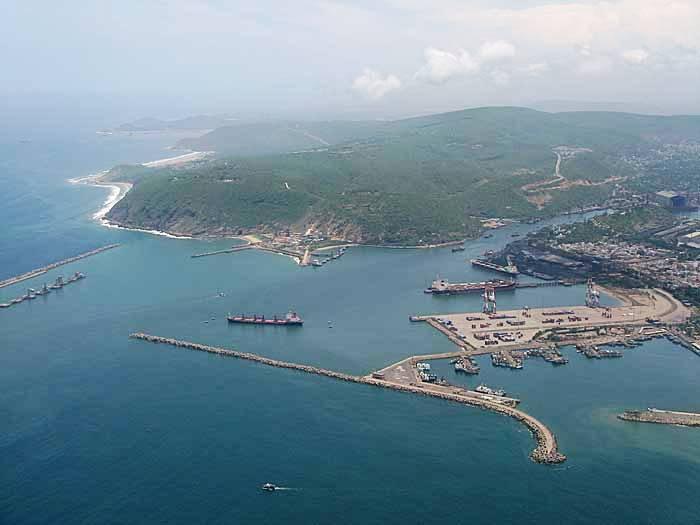
Coastal Andhra is also home to several major ports, vital for the region's trade and commerce. Kakinada Port is a significant seaport, while Visakhapatnam Port is one of the busiest cargo-handling ports in India. Krishnapatnam Port at Nellore is a major private port in the region, and smaller ports such as Machilipatnam Port and Nizampatnam Port in Bapatla district further contribute to maritime trade. Andhra Pradesh is the second-busiest maritime state in India in terms of cargo handled, following Gujarat.
Notable personalities
National flag design
- Pingali Venkayya
Singers
- M. Balamuralikrishna
- P. B. Srinivas
- S. P. Balasubrahmanyam
- S. Janaki
- P. Susheela
Telugu literature, arts and cinema
- Nannayya
- Tikkana
- Tenali Ramakrishna
- Gurajada Apparao
- Kandukuri Veeresalingam
- Devulapalli Venkata Krishna Sastri
- Tripuraneni Ramaswamy Chowdary
- Gurram Jashuva
- S. V. Ranga Rao
- Ghantasala
- Pingali Venkayya
- N. T. Rama Rao
- Akkineni Nageswara Rao
- Krishna
- Chiranjeevi
- Nandamuri Balakrishna
- Pawan Kalyan
- Goparaju Ramachandra Rao
- Prabhas
- S. S. Rajamouli
References
References
- "Andhra Pradesh Fact Sheet". mapsofindia.com.
- (2013-11-12). "Wayback Machine".
- Ojha, Shreya. (November 2019). "Demographic Profile of Coastal Andhra Pradesh, India". International Journal of Scientific & Engineering Research.
- Rao, Desari Panduranga. (1985). "Trends in Indian Transport System: A Districtwise Study". Inter-India Publications.
- "Indian States fish production".
- V. D., Mahajan. (2016). "Ancient India". [[S. Chand Group.
- "History of Andhra Pradesh". [[Government of Andhra Pradesh]].
- Charles Higham. (2009). "Encyclopedia of ancient Asian civilizations". Infobase Publishing.
- (1988). "Buddhist monks and monasteries of India: Their history and their contribution to Indian culture". Motilal Banarsidass.
- "History of Amaravati". Government of AP.
- Wolpert, Stanley A.. (1989). "A new history of India". [[Oxford University Press]].
- "About Eastern Chalukyas – Official AP state government portal – AP state portal".
- (1978). "A Historical atlas of South Asia". University of Chicago Press.
- Durga Prasad, J.. (1988). "History of the Andhras up to 1565 A. D.". P.G. Publisher.
- Austin Cynthia Talbot Assistant Professor of History and Asian Studies University of Texas. (23 August 2001). "Precolonial India in Practice : Society, Region, and Identity in Medieval Andhra: Society, Region, and Identity in Medieval Andhra". Oxford University Press.
- Alladi Jagannatha Sastri. (1922). "A family history of Venkatagiri Rajas". Addison Press, Madras.
- (30 July 2013). "Andhra Pradesh – end of an era". Business Standard.
- "Administrative and Geographic profile".
- "Census Reference Tables, C-Series Population by religious communities". Censusindia.gov.in.
- "AP Government Portal – Official Andhra Pradesh State Govt. Portal".
- "Art has to be nurtured to sustain". The Hindu.
- (19 April 2014). "Districts of Coastal Andhra". mapsofindia.
- B.V.S. Bhaskar. (16 February 2012). "Buddhist site found near Tuni". The Hindu.
- K.N. Murali Sankar. (29 November 2011). "ASI gets tough with encroachers". The Hindu.
- B. Madhu Gopal. (2012-10-09). "Evidence of Buddhist site found". The Hindu.
- Wetlands of India report, ISRO
- "Kolleru Water Lake".
- "Godavari River".
- "Howrah to Vijayawada: Explore India's 7 busiest railway stations - Howrah Junction".
- (2024-04-30). "Biggest Bus Stand in India".
- (13 July 2014). "AP to Set up Maritime Board to Develop Ports". International Business Times, India.
- (11 June 2012). "Chennai port loses out to new facility". The Hindu.
- "Andhra Sea Ports - Nizampatnam".
- Sridhar, G. Naga. (2024-10-02). "Machilipatnam port will be completed by December 2025: AP CM".
- (10 May 2013). "Dugarajapatnam in Andhra Pradesh to have new major port". Live Mint and The Wall Street Journal.
- (3 August 2022). "Pingali Venkayya, the man behind Tricolour, struggled to make ends meet and died penniless in 1963". The Economic Times.
- (1 March 2003). "Mangalampalli can't wait to come home". [[The Hindu]].
- (14 April 2013). "Chennai: Legendary singer Dr P B Sreenivas no more".
- Murali, S.. (25 September 2020). "S.P. Balasubrahmanyam: The end of an era". The Hindu.
- (29 June 2007). "Timeless voice". [[The Hindu]].
- "Melody Queen P. Susheela".
This article was imported from Wikipedia and is available under the Creative Commons Attribution-ShareAlike 4.0 License. Content has been adapted to SurfDoc format. Original contributors can be found on the article history page.
Ask Mako anything about Coastal Andhra — get instant answers, deeper analysis, and related topics.
Research with MakoFree with your Surf account
Create a free account to save articles, ask Mako questions, and organize your research.
Sign up freeThis content may have been generated or modified by AI. CloudSurf Software LLC is not responsible for the accuracy, completeness, or reliability of AI-generated content. Always verify important information from primary sources.
Report