From Surf Wiki (app.surf) — the open knowledge base
Cloud height
Thickness of a cloud
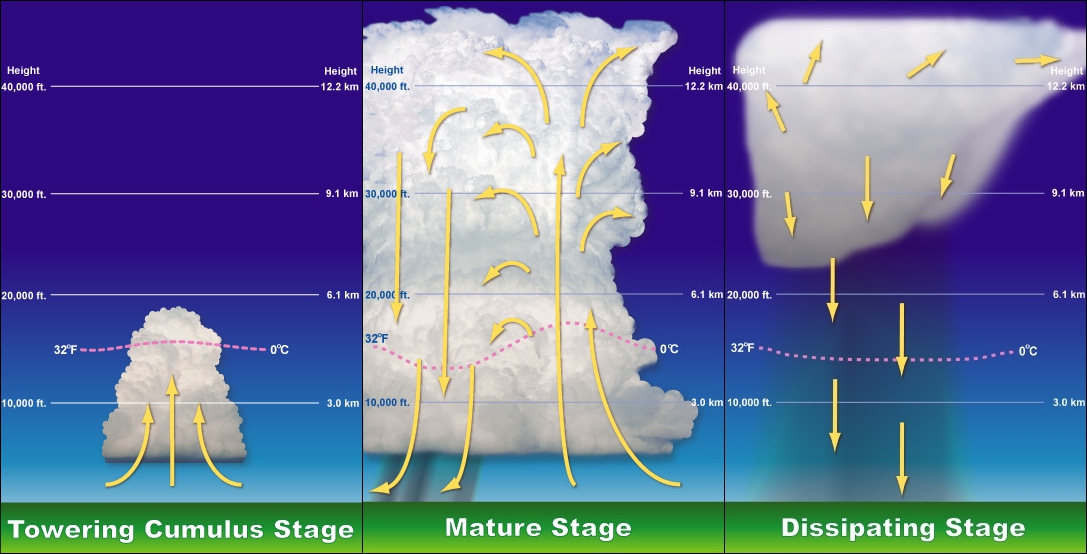
Thickness of a cloud
The cloud height, more commonly known as cloud thickness or depth, is the distance between the cloud base and the cloud top. It is traditionally expressed either in metres or as a pressure difference in hectopascal (hPa, equivalent to millibar). Sometimes, the expression cloud height is used instead of cloud base, in which case the context has to clarify whether the intent is to designate the height of the base of the cloud or the size of it.
Measurement
Cloud height is measured with a ceilometer, which takes laser or other light measurements of the cloud base and cloud top altitudes.
Weather and climate relevance
Cloud height is often related to the intensity of precipitation generated by a cloud: deeper clouds tend to produce more intense rainfall. For instance, cumulonimbus clouds can develop vertically through a substantial part of the troposphere and often result in thunderstorms with lightning and heavy showers. By contrast, very thin clouds (such as cirrus clouds) do not generate any precipitation at the surface of the Earth.
References
References
- Huschke, Ralph E.. (1970). "Glossary of Meteorology". [[American Meteorological Society]].
This article was imported from Wikipedia and is available under the Creative Commons Attribution-ShareAlike 4.0 License. Content has been adapted to SurfDoc format. Original contributors can be found on the article history page.
Ask Mako anything about Cloud height — get instant answers, deeper analysis, and related topics.
Research with MakoFree with your Surf account
Create a free account to save articles, ask Mako questions, and organize your research.
Sign up freeThis content may have been generated or modified by AI. CloudSurf Software LLC is not responsible for the accuracy, completeness, or reliability of AI-generated content. Always verify important information from primary sources.
Report