From Surf Wiki (app.surf) — the open knowledge base
Clitoral hood
Part of the vulva that covers and protects the glans of the clitoris
Part of the vulva that covers and protects the glans of the clitoris
| Field | Value |
|---|---|
| Name | Clitoral hood |
| Latin | preputium clitoridis |
| Image | File:Clitoral hood.jpg |
| Caption | A photograph of a human vulva with outlined clitoral hood |
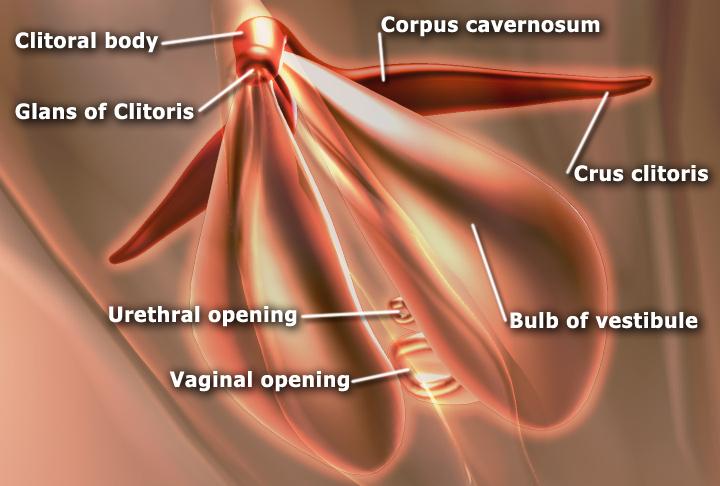
| Image2 | Clitoris_outer_anatomy.png |
| Caption2 | Outer anatomy of clitoris. |
| Precursor | Genital tubercle, urogenital folds |
| System | Reproductive system |
In female humans and other mammals, the clitoral hood (also called preputium clitoridis, clitoral prepuce, and clitoral foreskin) is a fold of skin that surrounds and protects the glans of the clitoris; it also covers the external clitoral shaft, develops as part of the labia minora and is homologous with the foreskin (also called the prepuce) in the male reproductive system. The clitoral hood is composed of mucocutaneous tissues; these tissues are between the mucous membrane and the skin, and they may have immunological importance because they may be a point of entry of mucosal vaccines.
Development and variation
The clitoral hood is formed during the fetal stage by the cellular lamella. The cellular lamella grows down on the dorsal side of the clitoris and is eventually fused with the clitoris.
The clitoral hood varies in the size, shape, thickness, and other aesthetic aspects. Some women have large clitoral hoods that completely cover the clitoral glans. Some of these can be retracted to expose the clitoral glans, such as for hygiene purposes or for pleasure; others do not retract. Other women have smaller hoods that do not cover the full length of the clitoral glans, leaving the clitoral glans exposed all the time. Sticky bands of tissue called adhesions can form between the hood and the glans; these stick the hood onto the glans so the hood cannot be pulled back to expose the glans and smegma can accumulate.
Stimulation
The clitoral glans itself is very sensitive and its direct stimulation, such as in cases where the hood is retracted, is often not enjoyable. Females with hoods covering most of the clitoral glans can often masturbate by stimulating the hood over the clitoral glans; those with smaller, or more compact, structures tend to rub the clitoral glans and hood together. The clitoral hood provides protection to the clitoral glans, analogous to the foreskin on the penile glans.
Modifications
In most of the world, clitoral modifications are uncommon. In some cultures, female genital mutilation (FGM) is practiced as a rite of passage into womanhood, is perceived as an improvement to the appearance of the genitalia, or is used to suppress or reduce female sexual desire and pleasure (including masturbation). During the late nineteenth and early twentieth centuries, FGM was performed on many children in Western countries, including the United States, to discourage masturbation and reduce diseases believed to relate to it.
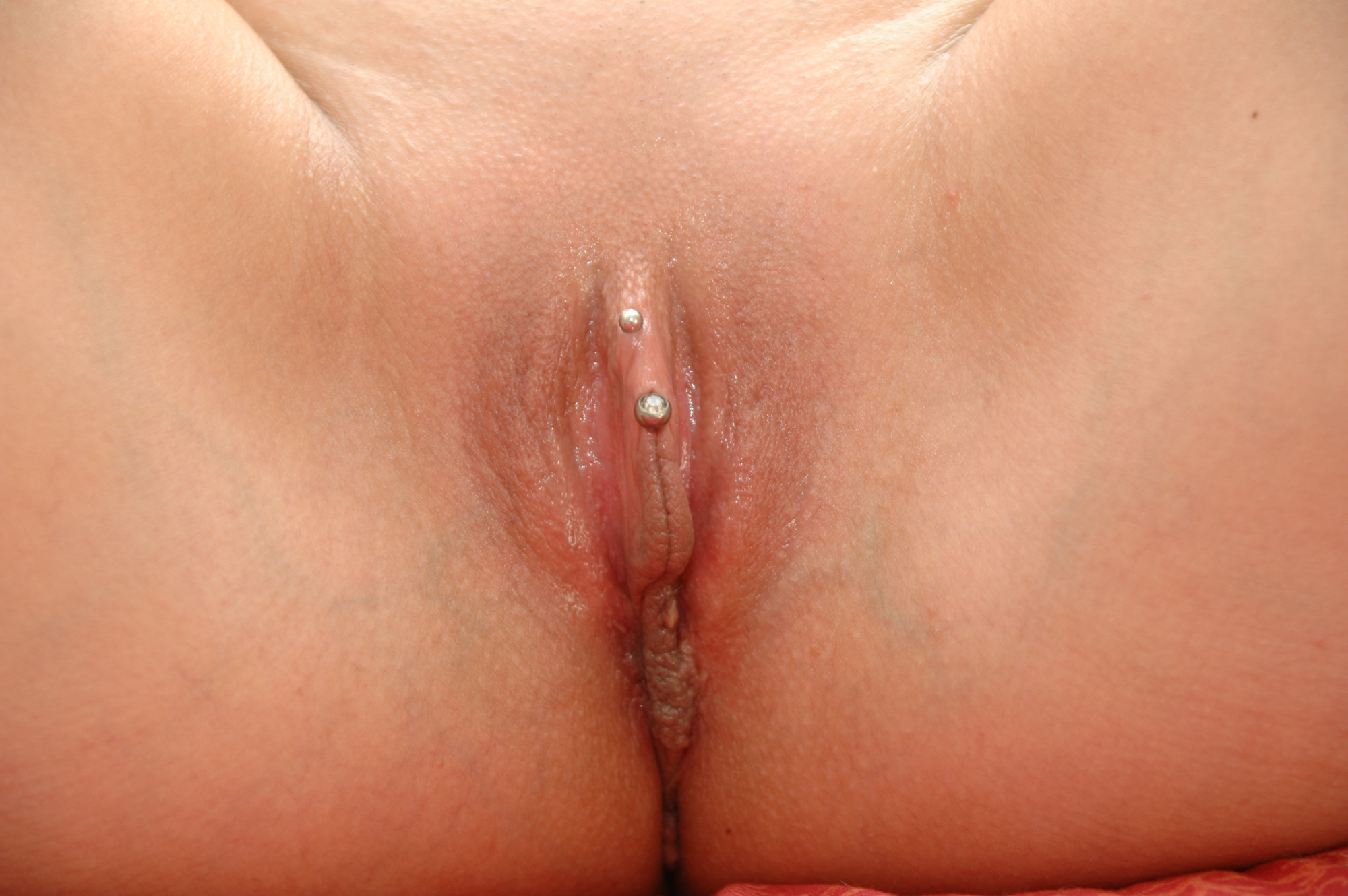
One modification that females sometimes choose is to have the hood pierced and insert jewelry, both for adornment and physical pleasure. Though less common, other females opt to have their own hood surgically trimmed or removed so as to permanently expose part or all of the clitoral glans.
Other animals
Regarding the clitoral prepuce in non-primate mammals, there is a similar structure typically referred to as the clitoral sheath, which is homologous to the penile sheath in male mammals.
References
References
- (2015). "Mucosal Immunology: Volume 2". Elsevier Science.
- (2012). "Anthony's Textbook of Anatomy & Physiology - E-Book". Elsevier Health Sciences.
- Sloane, Ethel. (2002). "Biology of Women". [[Cengage Learning]].
- (2010). "Our Sexuality". [[Cengage Learning]].
- Mulhall, John P.. (2011). "Cancer and Sexual Health". [[Springer Publishing.
- (1999). "The Prepuce". [[British Journal of Urology]].
- Carroll, Janell L.. (2009). "Sexuality Now: Embracing Diversity". [[Cengage Learning]].
- [https://books.google.com/books?id=DljvifEwf34C&dq=engaging+cultural+differences+chapter+11&pg=PA216 Link text], "Engaging Cultural Differences: The Multicultural Challenge in Liberal Democracies," Chapter 11, Schweder, et al., 2002.
- Momoh, Comfort. (2005). "Female Genital Mutilation". Radcliffe Publishing.
- Koroma, Hannah. (30 September 1997). "What is Female Genital Mutilation?". Amnesty International.
- (2012). "Female genital mutilation". [[World Health Organization]] (WHO).
- Duffy, John. (October 19, 1963). "Masturbation and Clitoridectomy: A Nineteenth-Century View". JAMA.
- Rodriguez, Sarah W.. (2008). "Rethinking the history of female circumcision and clitoridectomy: American medicine and female sexuality in the late nineteenth century". Journal of the History of Medicine and Allied Sciences.
- (2020). "Livestock and Wealth Creation: Improving the Husbandry of Animals Kept By Resource-Poor People in Developing Countries". 5m publishing.
- (2007). "Male and Female Circumcision: Medical, Legal, and Ethical Considerations in Pediatric Practice". Springer US.
This article was imported from Wikipedia and is available under the Creative Commons Attribution-ShareAlike 4.0 License. Content has been adapted to SurfDoc format. Original contributors can be found on the article history page.
Ask Mako anything about Clitoral hood — get instant answers, deeper analysis, and related topics.
Research with MakoFree with your Surf account
Create a free account to save articles, ask Mako questions, and organize your research.
Sign up freeThis content may have been generated or modified by AI. CloudSurf Software LLC is not responsible for the accuracy, completeness, or reliability of AI-generated content. Always verify important information from primary sources.
Report