From Surf Wiki (app.surf) — the open knowledge base
Claude Bourgelat
French veterinary surgeon (1712–1779)
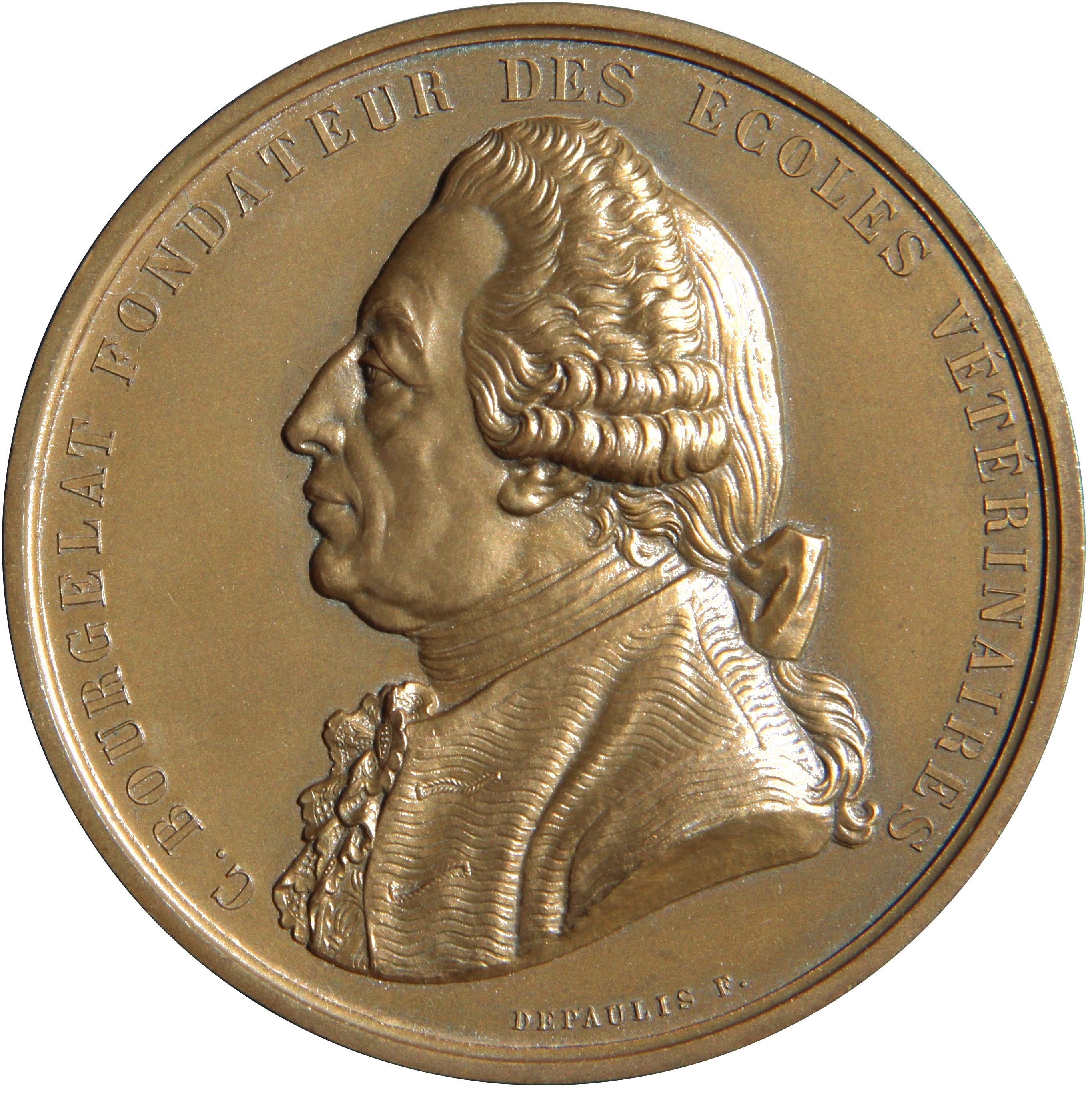
French veterinary surgeon (1712–1779)
| Field | Value |
|---|---|
| image | Bourgelat.png |
| birth_date | |
| birth_place | Lyon, France |
| death_date | |
| death_place | Paris |
| fields | Veterinary medicine |
| workplaces | Lyon Academy of Horsemanship, veterinary colleges at Lyon (founder) |
| known_for | Scientifically informed veterinary medicine |
| awards | French Academy of Sciences, Prussian Academy of Sciences |
Claude Bourgelat (27 March 1712 – 3 January 1779) was a French veterinary surgeon. He was a founder of scientifically informed veterinary medicine, and he created the world's first two veterinary schools for professional training.
Life and career
Bourgelat was born at Lyon. He initially studied law and worked as a barrister, but he became interested in veterinary medicine because of his interest in horses.
In 1740, at the age of 28, Bourgelat became the head of the Lyon Academy of Horsemanship. In 1750 Bourgelat wrote a book on the topic of veterinary medicine, in which he considered the idea of founding a veterinary school.
He followed through on this idea when he co-founded the first two veterinary schools in the world, the École nationale vétérinaire de Lyon in 1761 and the École nationale vétérinaire d'Alfort in 1765.
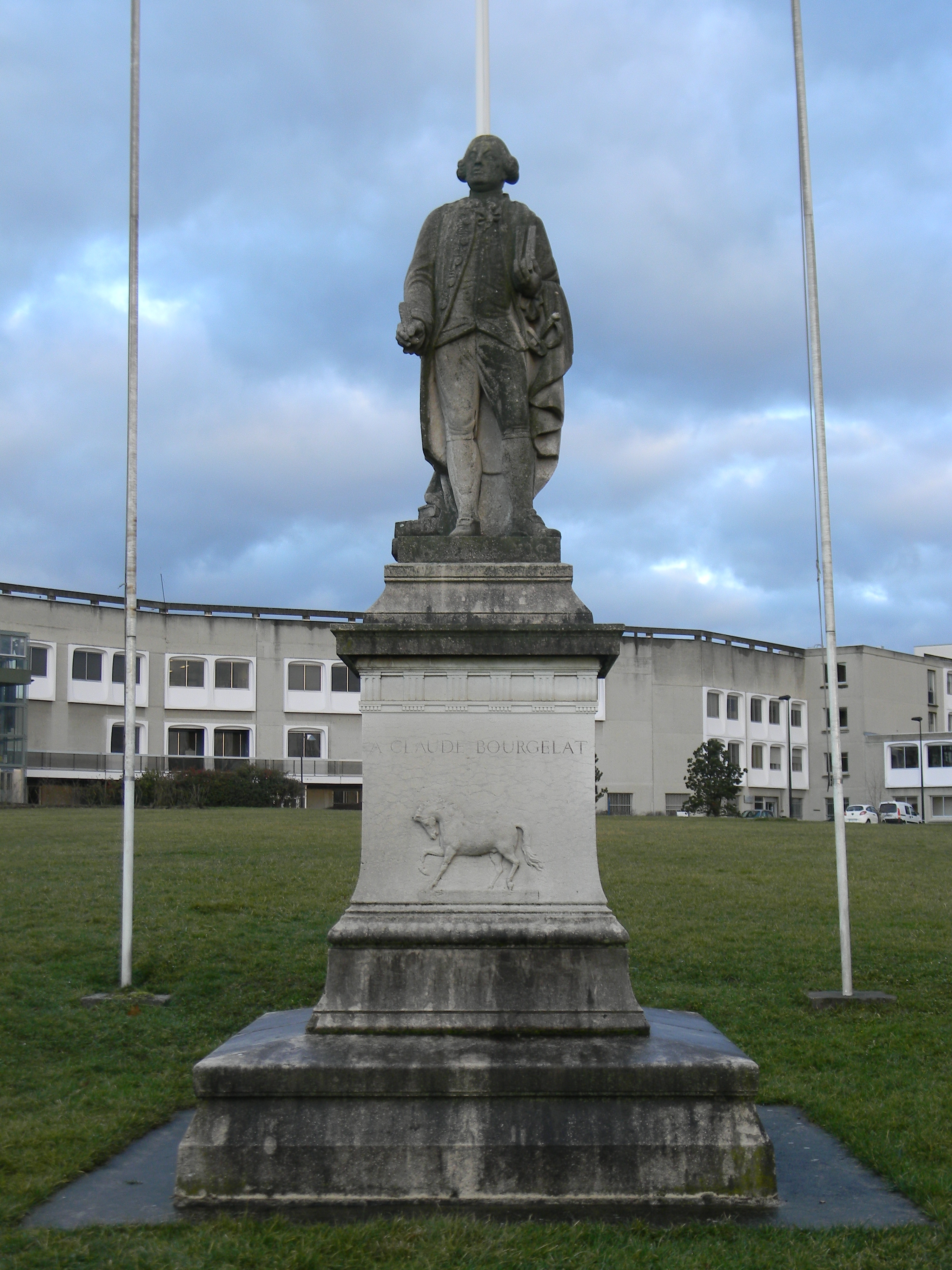
Bourgelat was noted for being an early practitioner of scientifically informed veterinary medicine, which incorporated ideas from natural history, chemistry, clinical medicine, and comparative anatomy.
Bourgelat was a member of the French Academy of Sciences and the Prussian Academy of Sciences. He also contributed more than 235 articles to Diderot and d'Alambert's Encyclopédie, ou dictionnaire raisonné des sciences, des arts et des métiers.
Selected works
- Élémens d'hippiatrique, ou, Nouveaux principes sur la connoissance et sur la médecine des chevaux (1750)
- L'art vétérinaire (1761)
- Matiere médicale raisonnée; ou, Précis des médicamens considérés dans leurs effets, a l'usage des éleves de l'Ecole royale vétérinaire; avec les formules médicinales. Lyon, Jean-Marie Bruyset (1765)
- Lehrbegriff der medicinischen Materie; oder, Beschreibung der einfachen Arzeneyen nach ihren Wirkungen; nebst den Medicinischen Formeln. Zum Gebrauche der Lehrlinge in der königl. Vieharzeneyschule zu Lyon. Aus dem Französischen übersetzt. Leipzig, M. G. Wiedmanns Erben und Reich (1766)
- Matiere médicale raisonnée, ou, Précis des médicamens considérés dans leurs effets. Lyon, Chez Jean-Marie Bruyset (1771)
- Elémens de l'art vétérinaire. Précis anatomique du corps du cheval, à l'usage des éleves des écoles vétérinaires. Paris, Vallat-la-Chapelle (1791)
Notes
References
References
- (March 11, 2019). "Claude Bourgelat". Michigan State University.
- (December 19, 2010). "Pioneering a profession: The birth of veterinary education in the Age of Enlightenment". American Veterinary Medical Association.
- (2018). "A cabinet of the ordinary: domesticating veterinary education, 1766–1799". The British Journal for the History of Science.
- [http://www.persee.fr/web/revues/home/prescript/article/rde_0769-0886_1989_num_7_1_1036 Frank A. Kafker: ''Notices sur les auteurs des dix-sept volumes de « discours » de l'Encyclopédie. Recherches sur Diderot et sur l'Encyclopédie.'' 1989, Volume 7, Numéro 7, p. 133]
This article was imported from Wikipedia and is available under the Creative Commons Attribution-ShareAlike 4.0 License. Content has been adapted to SurfDoc format. Original contributors can be found on the article history page.
Ask Mako anything about Claude Bourgelat — get instant answers, deeper analysis, and related topics.
Research with MakoFree with your Surf account
Create a free account to save articles, ask Mako questions, and organize your research.
Sign up freeThis content may have been generated or modified by AI. CloudSurf Software LLC is not responsible for the accuracy, completeness, or reliability of AI-generated content. Always verify important information from primary sources.
Report