From Surf Wiki (app.surf) — the open knowledge base
Ciutat Vella
| Field | Value |
|---|---|
| name | Ciutat Vella |
| settlement_type | District of Barcelona |
| coordinates | |
| subdivision_type | Country |
| subdivision_name | Spain |
| subdivision_type1 | Autonomous Community |
| subdivision_name1 | Catalonia |
| subdivision_type2 | Province |
| subdivision_name2 | Barcelona |
| subdivision_type3 | Comarca |
| subdivision_name3 | Barcelonès |
| subdivision_type4 | Municipality |
| subdivision_name4 | Barcelona |
| parts_type | Neighbourhoods |
| parts_style | para |
| p1 | El Raval |
| p2 | El Gòtic |
| p3 | La Barceloneta |
| p4 | Sant Pere, Santa Caterina i la Ribera |
| unit_pref | Metric |
| area_total_km2 | 4.37 |
| population_total | 107,426 |
| population_as_of | 2009 |
| population_density_km2 | auto |
| postal_code_type | |
| website | bcn.cat/ciutatvella |
| mapframe | yes |
| mapframe-zoom | 12 |
| mapframe-point | none |
| mapframe-zoom = 12 | mapframe-point = none
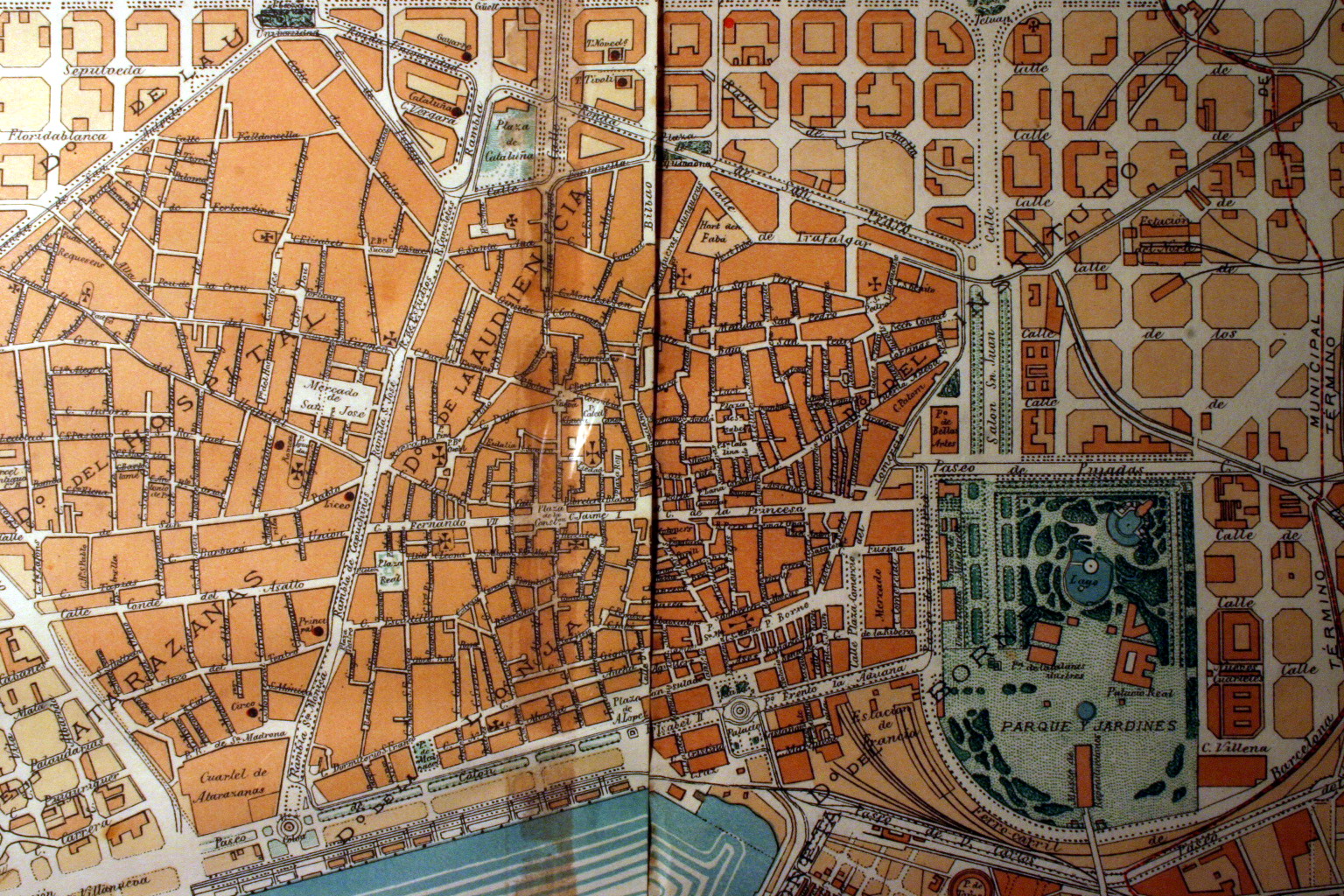
Ciutat Vella (, meaning in English "Old City") is a district of Barcelona, numbered District 1. The name means "old city" in Catalan and refers to the oldest neighborhoods in the city of Barcelona, Catalonia, Spain. Ciutat Vella is nestled between the Mediterranean Sea and the neighborhood called l'Eixample ("the Extension").
There are four administrative neighborhoods (some of them include former or traditional neighborhoods):
- La Barceloneta
- El Gòtic
- El Raval
- Sant Pere, Santa Caterina i la Ribera:
- Sant Pere
- Santa Caterina
- La Ribera
Les Rambles
Main article: La Rambla, Barcelona
Running down the center of the Ciutat Vella (dividing the Raval and Barri Gòtic) are the boulevards Les Rambles, popularly known as La Rambla (in singular) since they are continuous, like a single street. Les Rambles stretches from Plaça Catalunya to the Mediterranean Sea and, since the 1990s, now extends out over the sea into one of Barcelona's newest centers of entertainment, Maremàgnum. Each of Les Rambles has its own specialty. La Rambla de les Flors (The Flowers Rambla) is devoted to flower stands, another Rambla to animal vendors (selling mainly birds), and the lowest Rambla hosts temporary art fairs. El Mercat de Sant Josep (more commonly known as La Boqueria) and Gran Teatre del Liceu (Barcelona's Opera House) are both located here. Les Rambles are among the most frequently travelled streets by pedestrians in Barcelona.
At the bottom, there is the Museu Marítim (naval museum), which chronicles the history of life on the Mediterranean, including a full-scale model of a galley. The museum is housed in the medieval Drassanes (shipyards), where the ships that made Catalonia a great sea power in the Mediterranean were built.
Raval
Main article: El Raval
This portion of the city is often referred to as el Barri Xinès, or Chinatown. The Museu d'Art Contemporani de Barcelona (Contemporary Art Museum of Barcelona), the Rambla del Raval (a walkway to the sea) and the Filmoteca de Catalunya are in this neighborhood.
Gothic Quarter
Main article: Gothic Quarter, Barcelona
On the other side of La Rambla, is the Gothic Quarter. This neighborhood houses the Barcelona Cathedral, the Palau de la Generalitat de Catalunya, and the Barcelona City Hall. Tourists visit this neighborhood to see Royal Square (a Spanish-style plaza) and to shop in one of the tourist shops along Ferran street. The Museu Picasso can be found in the area known as el Born, within the Barri Gótic, in addition to the historic restaurant Els Quatre Gats (The Four Cats), which was a popular hang-out for artists, including Pablo Picasso.
To the north of the Gothic Quarter lie the Jardins de Fonseré i Mestre which contain modernist buildings housing zoological and geological collections. The adjacent Parc de la Ciutadella includes both the Parliament of Catalonia and the Barcelona Zoo whose most famous resident was an albino gorilla, Snowflake, who died in 2003 of skin cancer.
La Ribera and El Born
Main article: La Ribera
La Barceloneta
Main article: Barceloneta, Barcelona
References
References
- [https://www.routeyou.com/en-es/location/view/51240113/ciutat-vella?toptext=7602923 La Rambla] Retrieved 2023-12-15.
- [https://barcelonanavigator.com/raval/ El Raval Neighborhood Guide] Retrieved 2023-12-15.
- "Gothic Quarter". BarcelonaTurisme.
This article was imported from Wikipedia and is available under the Creative Commons Attribution-ShareAlike 4.0 License. Content has been adapted to SurfDoc format. Original contributors can be found on the article history page.
Ask Mako anything about Ciutat Vella — get instant answers, deeper analysis, and related topics.
Research with MakoFree with your Surf account
Create a free account to save articles, ask Mako questions, and organize your research.
Sign up freeThis content may have been generated or modified by AI. CloudSurf Software LLC is not responsible for the accuracy, completeness, or reliability of AI-generated content. Always verify important information from primary sources.
Report