From Surf Wiki (app.surf) — the open knowledge base
Circumcision controversy in early Christianity
None

None
The circumcision controversy in early Christianity played an important role in Christian theology.
The circumcision of Jesus is celebrated as a feast day in the liturgical calendar of many Christian denominations, while the teachings of the Apostle Paul asserted that physical circumcision was unnecessary for the salvation of Gentiles and their membership in the New Covenant. The first Council of Jerusalem (c. 50) declared that circumcision was not necessary for new Gentile converts (as recorded in ); Pauline Christianity was instrumental in the split of early Christianity and Judaism and eventually became Christians' predominant position. Covenant theology largely views the Christian sacrament of baptism as fulfilling the Jewish practice of circumcision, as both serve as signs and seals of the covenant of grace.
While historically circumcision is not observed by the majority of Christians in most parts of the Christian world, and mainstream Christian denominations neither require it for religious observance nor forbid it for medical or cultural reasons, it is practiced among some Christian countries and communities. Some Oriental Christian denominations retained the practice, as part of a rite of passage. According to Scholar Heather L. Armstrong of University of Southampton, about half of Christian males worldwide are circumcised, with most of them being located in Africa, Anglosphere countries (with notable prevalence in the United States) and the Philippines.
Background
Main article: Brit milah, Religious male circumcision
There are numerous references in the Hebrew Bible to the obligation for circumcision and the uncircumcised are to be cut off from the people in Genesis 17:14. :Any uncircumcised male, who has not been circumcised in the flesh, will be cut off from his people; he has broken my covenant.
During the 1st century BC, there was a controversy in Judaism relating to whether or not a proselyte who was already circumcised needed to be ritually re-circumcised. This is done via a pinprick creating a drop of blood and is still practiced to this day.
1st and 2nd century AD Judaism
Jewish sources vary on whether or not circumcision of proselytes was a universal practice in tannaitic times.
The disagreement centers on the correctness of contradictory passages in the Babylonian Talmud and Jerusalem Talmud and which passage is older. B. Yevamot 46a is summarized as follows: :Rabbi Joshua says that if a proselyte is immersed but not circumcised this is valid. Because our mothers were immersed but not circumcised. Rabbi Eliezer says the opposite. Because such was found regarding our fathers. However the sages say both are required.
P. Kiddushin 3:12 (3:14, 64d) is summarized as follows: :Rabbi Eliezer says only circumcision is required the same as in B. Yevamot 46a. Rabbi Joshua says both are required.
During tannaitic times uncircumcised semi-converts also existed, see God-fearer and Ger toshav.
Circumcision of Jesus
Main article: Circumcision of Jesus
According to the Gospel of Luke, Jesus was circumcised eight days after his birth, in accordance with Mosaic Law.
Mosaic Law in Early Christianity
Main article: Law of Moses, Christian views on the Old Covenant, Abrogation of Old Covenant laws
Similar differences and disputes existed within early Christianity, but disputes within Christianity extended also to the place of Mosaic Law or Old Covenant in general in Christianity. This is particularly notable in the mid-1st century, when the circumcision controversy came to the fore. Alister McGrath, an intellectual historian and proponent of paleo-orthodoxy, claims that many of the Jewish Christians were fully faithful religious Jews, only differing in their acceptance of Jesus as the Jewish Messiah. As such, they tended to be of the view that circumcision and other requirements of the Mosaic Law were required for salvation. Those in the Christian community who insisted that biblical law, including laws on circumcision, continued to apply to Christians were pejoratively labeled Judaizers by their opponents and criticized as being elitist and legalistic.
Council of Jerusalem
Main article: Council of Jerusalem
Jerusalem was the first center of the Christian Church according to the Book of Acts, The apostles lived and taught there for some time after Pentecost. James the Just, brother of Jesus was leader of the early Christian community in Jerusalem, and his other kinsmen likely held leadership positions in the surrounding area after the destruction of the city until its rebuilding as Aelia Capitolina in , when all Jews were banished from Jerusalem.
In , Barnabas and Paul went to Jerusalem to meet with the "Pillars of the Church": James the Just, Peter, and John. Later called the Council of Jerusalem, according to Pauline Christians, this meeting (among other things) confirmed the legitimacy of the Evangelizing mission of Barnabas and Paul to the Gentiles and the Gentile converts' freedom from most of the Mosaic Law, especially from the circumcision of males, a practice that was considered execrable and repulsive in the Greco-Roman world during the period of Hellenization of the Eastern Mediterranean, and was especially adversed in Classical civilization both from ancient Greeks and Romans, which instead valued the foreskin positively.
The primary issue which was addressed related to the requirement of circumcision, as the author of Acts relates, but other important matters arose as well, as the Apostolic Decree indicates. The dispute was between those, such as the followers of the "Pillars of the Church", led by James, who believed, following his interpretation of the Great Commission, that the church must observe the Torah, i.e. the rules of traditional Judaism, and Paul the Apostle, who called himself "Apostle to the Gentiles", who believed there was no such necessity. The main concern for the Apostle Paul, which he subsequently expressed in greater detail with his letters directed to the early Christian communities in Asia Minor, was the inclusion of Gentiles into God's New Covenant, sending the message that faith in Christ is sufficient for salvation. (See also: Supersessionism, New Covenant, Antinomianism, Hellenistic Judaism, and Paul the Apostle and Judaism).
The decision of the Council did retain the prohibitions against eating meat containing blood, or meat of animals not properly slain, and against "fornication" and "idol worship". The resulting Apostolic Decree in Acts 15 may simply parallel the seven Noahide laws found in the Old Testament, and thus be a commonality rather than a differential. However, modern scholars dispute the connection between Acts 15 and the seven Noahide laws. In roughly the same time period, rabbinic Jewish legal authorities made their circumcision requirement for Jewish boys even stricter."peri'ah", (Shab. xxx. 6)
Teachings of Paul
Main article: Apostolic Decree, Pauline epistles

While the issue was theoretically resolved, it continued to be a recurring issue among the early Christian communities. After the Council of Jerusalem, Paul wrote to the Galatians about the issue, which had become a serious controversy in their region. There was a burgeoning movement of Judaizers in the area that advocated strict adherence to traditional Jewish laws and customs, including circumcision for male converts. According to McGrath, Paul identified James the Just as the motivating force behind the movement. Paul considered it a great threat to his doctrine of salvation through faith and addressed the issue with great detail in Galatians 3.
According to the Acts of the Apostles, chapter 15, the Jewish Christian leaders of the early Church at the Council of Jerusalem rejected circumcision as a requirement for Gentile converts, possibly the first act of differentiation of Early Christianity from its Jewish roots (See also: List of events in early Christianity). The rite of circumcision was especially execrable in Classical civilization because it was the custom to spend an hour a day or so exercising nude in the gymnasium and in Roman baths, therefore Jewish men did not want to be seen in public deprived of their foreskins. Hellenistic and Roman culture both found circumcision to be cruel and repulsive.
Paul the Apostle, who called himself "Apostle to the Gentiles", attacked the practice but not consistently; for example, in one case he personally circumcised Timothy "because of the Jews" that were in town (Timothy had a Jewish Christian mother but a Greek father ). The 19th-century American Catholic priest and biblical scholar Florentine Bechtel noted in the Catholic Encyclopedia entry on Judaizers (1910): He also appeared to praise its value in , hence the topic of Paul the Apostle and Judaism is still debated.
Paul argued that circumcision no longer meant the physical, but a spiritual practice (). And in that sense, he wrote : "Is any man called being circumcised? let him not become uncircumcised"—probably a reference to the practice of epispasm. Paul was already circumcised ("on the eighth day", ) when he was "called". He added: "Is any called in uncircumcision? let him not be circumcised", and went on to argue that circumcision did not matter: "Circumcision is nothing and uncircumcision is nothing. Keeping God's commands is what counts" ().
Later he more explicitly denounced the practice, rejecting and condemning those who promoted circumcision to Gentile Christians. He accused those Judaizers who advocated circumcision of turning from the Spirit to the flesh. In the Epistle to the Galatians, Paul warned Gentile Christians that the advocates of circumcision were "false brothers" (), and wrote: "Are you so foolish, that, whereas you began in the Spirit, you would now be made perfect by the flesh?" (); he also wrote: "Listen! I, Paul, am telling you that if you let yourselves be circumcised, Christ will be of no benefit to you" (). He accused circumcision advocates of wanting to make a good showing in the flesh (), and of glorying or boasting of the flesh (). Paul in his letters fiercely criticized the Judaizers that demanded circumcision for Gentile converts, and opposed them; he stressed instead that faith in Christ constituted a New Covenant with God, a covenant which essentially provides the justification and salvation for Gentiles from the harsh edicts of the Mosaic Law, a New Covenant that did not require circumcision (see also Justification by faith, Pauline passages supporting antinomianism, Abrogation of Old Covenant laws).
Later views
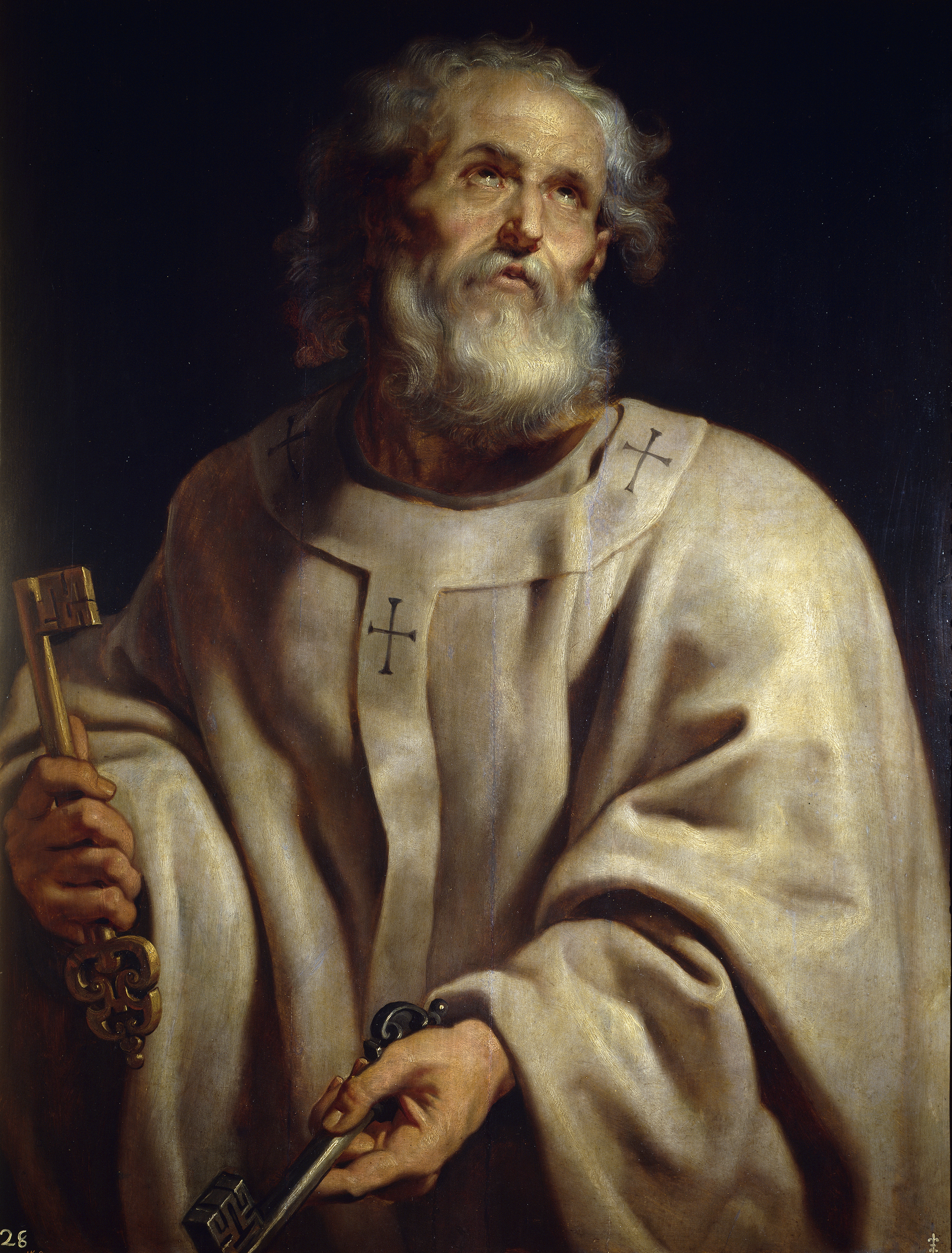
According to Acts, Simon Peter condemned required circumcision of converts. When the various passages from the New Testament regarding circumcision are gathered together, a strongly negative view of circumcision emerges, according to Michael Glass. Some Biblical scholars think that the Epistle to Titus, generally attributed to Paul, but see Authorship of the Pauline epistles, may state that circumcision should be discouraged among Christians, though others believe this is a reference to Jews. Circumcision was so closely associated with Jewish men that Jewish Christians were referred to as "those of the circumcision" or conversely Christians who were circumcised were referred to as Jewish Christians or Judaizers. These terms (circumcised/uncircumcised) are generally interpreted to mean Jews and Greeks, who were predominate, however it is an oversimplification as 1st century Iudaea Province also had some Jews who were not circumcised, and some Greeks (called Proselytes or Judaizers) and others such as Egyptians, Ethiopians, and Arabs who were.
A common interpretation of the circumcision controversy of the New Testament was, that it was over the issue of whether Gentiles could enter the Church directly or ought to first convert to Judaism. However, the Halakha of Rabbinic Judaism was still under development at this time, as the Jewish Encyclopedia notes: "Jesus, however, does not appear to have taken into account the fact that the Halakha was at this period just becoming crystallized, and that much variation existed as to its definite form; the disputes of the Bet Hillel and Bet Shammai were occurring about the time of his maturity." This controversy was fought largely between opposing groups of Christians who were themselves ethnically Jewish, see section Jewish background above. According to this interpretation, those who felt that conversion to Judaism was a prerequisite for Church membership were eventually condemned by Paul as "Judaizing teachers".
The source of this interpretation is unknown; however, it appears related to Supersessionism or Hyperdispensationalism (see also New Perspective on Paul). In addition, modern Christians, such as Ethiopian Orthodox and Coptic Orthodox still practice circumcision while not considering it a part of conversion to Judaism, nor do they consider themselves to be Jews or Jewish Christians.
The Jewish Encyclopedia article on Gentile: Gentiles May Not Be Taught the Torah notes the following reconciliation:
Contemporary practices
Main article: Religion and circumcision#Christianity
Today, many Christian denominations are neutral about male circumcision, not requiring it for religious observance, but neither forbidding it for medical or cultural reasons. Covenant theology largely views the Christian sacrament of baptism as fulfilling the Israelite practice of circumcision, both being signs and seals of the covenant of grace.
Since the Council of Florence, the Roman Catholic Church forbade the practice of circumcision among Christians; Roman Catholic scholars, including John J. Dietzen, David Lang, and Edwin F. Healy, argue that "elective male infant circumcision not only violates the proper application of the time-honored principle of totality, but even fits the ethical definition of mutilation, which is gravely sinful." Roman Catholicism generally is silent today with respect to its permissibility, though elective circumcision continues to be debated amongst theologians.
The practice, on the other hand, is customary among the Coptic, Ethiopian, and Eritrean Orthodox Churches, and also some other African churches,Customary in some Coptic and other churches, indicating that it has been regionally normative since ancient times:
- "The Coptic Christians in Egypt and the Ethiopian Orthodox Christians— two of the oldest surviving forms of Christianity— retain many of the features of early Christianity, including male circumcision. Circumcision is not prescribed in other forms of Christianity... Some Christian churches in South Africa oppose the practice, viewing it as a pagan ritual, while others, including the Nomiya church in Kenya, require circumcision for membership and participants in focus group discussions in Zambia and Malawi mentioned similar beliefs that Christians should practice circumcision since Jesus was circumcised and the Bible teaches the practice."
- "The decision that Christians need not practice circumcision is recorded in ; there was never, however, a prohibition of circumcision, and it is practiced by Coptic Christians." "circumcision", The Columbia Encyclopedia, Sixth Edition, 2001-05. and males are generally required to be circumcised shortly after birth as part of a rite of passage. The Ethiopian Orthodox Church calls for circumcision, with near-universal prevalence among Orthodox men in Ethiopia. Eritrean Orthodox practice circumcision as a rite of passage, and they circumcise their sons "anywhere from the first week of life to the first few year". Male circumcision is also widely practiced among Christian communities in Africa, certain Anglosphere countries, Oceania, South Korea, the Philippines and the Middle East. While Christian communities in Europe and South America have low circumcision rates. The United States and the Philippines are the largest majority Christian countries in the world to extensively practice circumcision. Some Christian churches in South Africa oppose circumcision, viewing it as a pagan ritual, while others, including the Nomiya church in Kenya, require circumcision for membership, despite St. Paul's warnings against those who required circumcision for salvation, in his epistle to the church of Galatia.
The Greek Orthodox Church and Lutheran Church do not advocate circumcision among their adherents, but celebrate the Feast of the Circumcision of Christ on 1 January, while Orthodox churches following the Julian calendar celebrate it on Gregorian 14 January. The Orthodox Church considers it one of the twelve "Great Feasts". In the Catholic, Lutheran and Anglican churches, the commemoration of the circumcision of Christ has been replaced by other commemorations, such as the Feast of the Holy Name in the Lutheran Churches and the Solemnity of Mary, Mother of God in the Catholic Church.
Even though mainstream Christian denominations do not require the practice and maintain a neutral position on it, it is practiced in certain Christian countries and communities, while it is not observed in other Christian countries and communities. Both religious and non-religious circumcision is common in some predominantly Christian countries such as the United States, but outside of the Jewish and Muslim communities, not for reasons of religious observance; see circumcision controversies. It may be significant that Jewish applicants to American medical schools comprised 60% of all applications in the 1930s, at a time when circumcision was becoming popular in the US. The prevalence of circumcision in the United States is approximately 80%. According to studies, American Evangelicals and Mormons have the highest rates of infant male circumcision among Christian denominations in the United States. According to Scholar Heather L. Armstrong of University of Southampton, about half of Christian males worldwide are circumcised, with most of them being located in Africa, Anglosphere countries (with notable prevalence in the United States) and the Philippines. Many Christians have been circumcised for reasons such as family preferences, medical or cultural reasons. Circumcision is also part of a traditional practice among the adherents of certain Oriental Christian denominations, including those of Coptic Christianity, the Ethiopian Orthodox Church and Eritrean Orthodox Church. Circumcision is common among Christians in the Philippines, South Korea, and Australia. Circumcision is near universal in the Christian countries of Oceania,{{cite web | archive-date = 2006-01-16 | archive-url = https://web.archive.org/web/20060116174702/http://www.necep.net/articles.php?id_soc=12&id_article=84 | url-status = usurped
References
References
- Stendahl, Krister. (July 1963). "The Apostle Paul and the Introspective Conscience of the West". [[Cambridge University Press]] on behalf of the [[Harvard Divinity School]].
- (2012). "Surgical Guide to Circumcision". [[Springer-Verlag]].
- Jacobs, Andrew. (2012). "Christ Circumcised: A Study in Early Christian History and Difference". [[University of Pennsylvania Press]].
- (2012). "Surgical Guide to Circumcision". [[Springer Science+Business Media.
- Dunn, James D. G.. (Autumn 1993). "Echoes of Intra-Jewish Polemic in Paul's Letter to the Galatians". [[Society of Biblical Literature]].
- (2005). "The Oxford Dictionary of the Christian Church". [[Oxford University Press]].
- (2007). "The New Perspective on Paul: Collected Essays". [[Mohr Siebeck]].
- (September 2014). "Paul's Argument against Gentile Circumcision in Romans 2:17-29". [[Brill Publishers]].
- (2016). "Paul and the Gentile Problem". [[Oxford University Press]].
- (January 2017). "Language, Religion and the Human Mind". [[Oxford University Press]].
- Bokenkotter, Thomas. (2004). "A Concise History of the Catholic Church". Doubleday.
- {{Bibleverse. Acts. 15:1-2. NRSV, {{Bibleverse-nb. Acts. 15:6-10. NRSV; {{Bibleverse. Galatians. 1:15-16. NRSV, {{Bibleverse-nb. Galatians. 2:7-9. NRSV, {{Bibleverse. Galatians. 5:2-3. NRSV, {{Bibleverse-nb. Galatians. 5:6-12. NRSV, {{Bibleverse-nb. Galatians. 6:12-15. NRSV; {{Bibleverse. Philippians. 3:2-3. NRSV; {{Bibleverse. 1 Corinthians. 7:17-21. NRSV; {{Bibleverse. Romans. 2:17-29. NRSV, {{Bibleverse-nb. Romans. 3:9-28. NRSV, {{Bibleverse-nb. Romans. 5:1-11. NRSV, {{Bibleverse. Romans. 11:13. NRSV; {{Bibleverse. 1 Timothy. 2:7. NRSV; {{Bibleverse. 2 Timothy. 1:11. NRSV; {{Bibleverse. Titus. 1:10-16. NRSV.
- (2019). "Anatomy of the New Testament". [[Fortress Press]].
- proselyte to Judaism]] (Yeb. 46b, 47b; Ker. 9a; 'Ab. Zarah 57a; Shab. 135a; Yer. Kid. iii. 14, 64d). Circumcision, however, was much more important, and, like baptism, was called a "seal" (Schlatter, "Die Kirche Jerusalems," 1898, p. 70). But as circumcision was discarded by Christianity, and the sacrifices had ceased, Baptism remained the sole condition for initiation into religious life. The next ceremony, adopted shortly after the others, was the [[Laying on of hands. imposition of hands]], which, it is known, was the usage of the Jews at the ordination of a rabbi. [[Anointing]] with oil, which at first also accompanied the act of Baptism, and was analogous to the anointment of priests among the Jews, was not a necessary condition."
- (29 June 2020). "Case Studies in Society, Religion, and Bioethics". Springer Nature.
- (12 March 2020). "Jesus the Jew in Christian Memory: Theological and Philosophical Explorations". Cambridge University Press.
- (2000). "Captivity, Flight, and Survival in World War II". Greenwood Publishing Group.
- Gruenbaum, Ellen. (2015). "The Female Circumcision Controversy: An Anthropological Perspective". University of Pennsylvania Press.
- (2019). "Female Genital Cosmetic Surgery: Solution to What Problem?". Cambridge University Press.
- Pitts-Taylor, Victoria. (2008). "Cultural Encyclopedia of the Body [2 volumes]". ABC-CLIO.
- {{bibleverse. Leviticus. 12:3. NIV says: on the eighth day a boy is to be circumcised.
- [http://www.ecmarsh.com/lxx/Esther/index.htm Brenton's translation of Esther in the Septuagint] 8:17: "in every city and province wherever the ordinance was published: wherever the proclamation took place, the Jews had joy and gladness, feasting and mirth: and many of the Gentiles were circumcised, and became Jews, for fear of the Jews."
- "CIRCUMCISION - JewishEncyclopedia.com".
- Lawrence H. Schiffman. (1985). "Who was a Jew?". Library of Congress Cataloging. Manufactured in the United States of America.
- {{bibleverse. Luke. 2:21-24. NIV
- McGrath, Alister E., Christianity: An Introduction. Blackwell Publishing (2006). {{ISBN. 1-4051-0899-1. Page 174: "In effect, they [Jewish Christians] seemed to regard Christianity as an affirmation of every aspect of contemporary Judaism, with the addition of one extra belief — that Jesus was the Messiah. Unless males were circumcised, they could not be saved (Acts 15:1)."
- McGrath, page 174: "Paul notes the emergence of a Judaizing party in the region — that is, a group within the church which insisted that Gentile believers should obey every aspect of the law of Moses, including the need to be circumcised. According to Paul [reference is made to Galatians, but no specific verse is given], the leading force behind this party was James ... the brother of Jesus ..."
- (2005). "The Oxford Dictionary of the Christian Church". [[Oxford University Press]].
- [http://www.newadvent.org/cathen/08280a.htm St. James the Less] ''Catholic Encyclopedia'': "Then we lose sight of James till St. Paul, three years after his conversion (A.D. 37), went up to Jerusalem. ... On the same occasion, the "pillars" of the Church, James, Peter, and John "gave to me (Paul) and Barnabas the [[Right hand of Christian fellowship. right hands of fellowship]]; that we should go unto the Gentiles, and they unto the circumcision" ({{bibleverse. Galatians. 2:9)."
- Hodges, Frederick M.. (2001). "The Ideal Prepuce in Ancient Greece and Rome: Male Genital Aesthetics and Their Relation to Lipodermos, Circumcision, Foreskin Restoration, and the Kynodesme". [[Johns Hopkins University Press]].
- (July 1980). "Celsus' Decircumcision Operation: Medical and Historical Implications". [[Elsevier]].
- (1998). "Uncircumcision: A Historical Review of Preputial Restoration". [[Lippincott Williams & Wilkins]].
- Fredriksen, Paula. (2018). "When Christians Were Jews: The First Generation". [[Yale University Press]].
- "Circumcision: In Apocryphal and Rabbinical Literature". [[Kopelman Foundation]].
- Neusner, Jacob. (1993). "Approaches to Ancient Judaism, New Series: Religious and Theological Studies". Scholars Press.
- (2002). "The Early Christian World". [[Routledge]].
- Seifrid, Mark A.. (1992). "Justification by Faith: The Origin and Development of a Central Pauline Theme". [[Brill Publishers]].
- [[Karl Josef von Hefele]]'s [http://www.ccel.org/ccel/schaff/npnf214.viii.v.iv.ii.html Commentary on canon II of Gangra] notes: "We further see that, at the time of the Synod of Gangra, the rule of the Apostolic Synod with regard to blood and things strangled was still in force. With the [[Greek Orthodox. Greeks]], indeed, it continued always in force as their Euchologies still show. [[Theodore Balsamon. Balsamon]] also, the well-known commentator on the canons of the Middle Ages, in his commentary on the sixty-third [[Canons of the Apostles. Apostolic Canon]], expressly blames the Latins because they had ceased to observe this command. What the Latin Church, however, thought on this subject about the year 400, is shown by [[Augustine of Hippo. St. Augustine]] in his work Contra Faustum, where he states that the Apostles had given this command in order to unite the heathens and Jews in the one ark of Noah; but that then, when the barrier between Jewish and heathen converts had fallen, this command concerning things strangled and blood had lost its meaning, and was only observed by few. But still, as late as the eighth century, Pope Gregory the Third 731 forbade the eating of blood or things strangled under threat of a penance of forty days. No one will pretend that the disciplinary enactments of any council, even though it be one of the undisputed [[Ecumenical council. Ecumenical Synods]], can be of greater and more unchanging force than the decree of that first council, held by the Holy Apostles at Jerusalem, and the fact that its decree has been obsolete for centuries in the West is proof that even Ecumenical canons may be of only temporary utility and may be repealed by disuse, like other laws."
- Vana, Liliane. (May 2013). "Les lois noaẖides: Une mini-Torah pré-sinaïtique pour l'humanité et pour Israël". Éditions in Press.
- Bockmuehl, Markus. (January 1995). "The Noachide Commandments and New Testament Ethics: with Special Reference to Acts 15 and Pauline Halakhah". [[Peeters Publishers]].
- Fitzmyer, Joseph A.. (1998). "The Acts of the Apostles: A New Translation with Introduction and Commentary". [[Yale University Press]].
- [[Stephen L Harris. Harris, Stephen L.]], Understanding the Bible. Palo Alto: Mayfield. 1985. p. 316-320. Harris cites {{bibleverse. Galatians. 6:11, {{bibleverse. Romans. 16:22, {{bibleverse. Colossians. 4:18, {{bibleverse. 2. Thessalonians. 3:17, {{bibleverse. Philemon. 19. [[Joseph Barber Lightfoot]] in his ''Commentary on the Epistle to the Galatians'' writes: "At this point [{{bibleverse. Galatians. 6:11] the apostle takes the pen from his [[amanuensis]], and the concluding paragraph is written with his own hand. From the time when letters began to be forged in his name ({{bibleverse. 2 Thessalonians. 2:2; {{bibleverse. 2 Thessalonians. 3:17) it seems to have been his practice to close with a few words in his own handwriting, as a precaution against such forgeries... In the present case he writes a whole paragraph, summing up the main lessons of the epistle in terse, eager, disjointed sentences. He writes it, too, in large, bold characters (Gr. ''pelikois grammasin''), that his handwriting may reflect the energy and determination of his soul."
- McGrath (2006). Pp 174-175
- "Circumcision: In Apocryphal and Rabbinical Literature". [[Kopelman Foundation]].
- {{Bibleverse. Galatians. 1:15-16. NRSV, {{Bibleverse-nb. Galatians. 2:7-9. NRSV; {{Bibleverse. Romans. 11:13. NRSV; {{Bibleverse. 1 Timothy. 2:7. NRSV; {{Bibleverse. 2 Timothy. 1:11. NRSV.
- [http://www.ccel.org/ccel/mcgarvey/acts.ch16.html McGarvey on Acts 16]: "Yet we see him in the case before us, circumcising Timothy with his own hand, and this 'on account of certain Jews who were in those quarters.'"
- Bechtel, Florentine. {{CathEncy
- Fredriksen 2018, pp. 157-160.
- [http://www.newadvent.org/cathen/03777a.htm Catholic Encyclopedia: Circumcision]: "To this epispastic operation performed on the athletes to conceal the marks of circumcision St. Paul alludes, me epispastho ({{Bibleverse. 1. Cor. 7:18)."
- {{bibleverse. Acts. 15:7-10. NIV
- [http://www.cirp.org/pages/cultural/glass1/ The New Testament and Circumcision]
- {{bibleverse. Titus. 1:10-16. NIV
- {{bibleverse. Colossians. 3:20. NIV
- [http://www.cirp.org/pages/cultural/glass1/ cultural/glass1]
- [http://jewishencyclopedia.com/view.jsp?artid=254&letter=J&search=Jesus article on Jesus] Jesus article on Jesus
- "GENTILE - JewishEncyclopedia.com".
- Slosar, J.P.. (2003). "The Ethics of Neonatal Male Circumcision: A Catholic Perspective". American Journal of Bioethics.
- (17 September 2012). "Baptism and Circumcision According to Colossians 2:11–12". The Heidelblog.
- Crowther, Jonathan. (1815). "A Portraiture of Methodism".
- (29 June 2020). "Case Studies in Society, Religion, and Bioethics". Springer Nature.
- (26 December 2016). "Circumcision: An Acceptable Practice?". [[The Catholic Thing]].
- Slosar, J.P.. (2003). "The Ethics of Neonatal Male Circumcision: A Catholic Perspective". American Journal of Bioethics.
- N. Stearns, Peter. (2008). "The Oxford Encyclopedia of the Modern World". [[Oxford University Press]].
- DeMello, Margo. (2007). "Encyclopedia of Body Adornment". [[ABC-Clio]].
- (March 30, 2008). "Circumcision protest brought to Florence". [[Associated Press]].
- Mattson CL, Bailey RC, Muga R, Poulussen R, Onyango T (2005) Acceptability of male circumcision and predictors of circumcision preference among men and women in Nyanza province Kenya. AIDS Care 17:182–194.
- Bible: Galatians ch 5 v2
- Bible: Galatians ch 6 v15
- (1970). "The Lutheran Church on the Coast of Tanzania 1887-1914: With Special Reference to the Evangelical Lutheran Church in Tanzania, Synod of Uzaramo-Uluguru". Gleerup.
- [https://web.archive.org/web/20080213044716/http://www.goarch.org/en/chapel/calendar.asp?Y=2007&M=1 Greek Orthodox Archdiocese calendar of Holy Days]
- "Year A 2019/2020". [[Evangelical Lutheran Church in America]].
- For example, "The Calendar of the Church Year" in The (Online) Book of Common Prayer (Episcopal Church in the United States of America), [http://www.bcponline.org/] retrieved 11 October 2006.
- S. Ellwood, Robert. (2008). "The Encyclopedia of World Religions". [[Infobase Publishing]].
- R. Wylie, Kevan. (2015). "ABC of Sexual Health". John Wiley & Sons.
- R. Peteet, John. (2017). "Spirituality and Religion Within the Culture of Medicine: From Evidence to Practice". Oxford University Press.
- Hunting, Katherine. (2012). "Essential Case Studies in Public Health: Putting Public Health Into Practice". Jones & Bartlett Publishers.
- Pfuntner A., Wier L.M., Stocks C. Most Frequent Procedures Performed in U.S. Hospitals, 2011. HCUP Statistical Brief #165. October 2013. Agency for Healthcare Research and Quality, Rockville, MD. [http://www.hcup-us.ahrq.gov/reports/statbriefs/sb165.jsp] {{Webarchive. link. (2013-10-24.)
- "March 30: Jewish Doctors".
- (July 2013). "Prevalence of Circumcision Among Men and Boys Aged 14 to 59 Years in the United States, National Health and Nutrition Examination Surveys 2005–2010". Sexually Transmitted Diseases.
- (2007). "Male and Female Circumcision: Medical, Legal, and Ethical Considerations in Pediatric Practice". Springer Science & Business Media.
- L. Armstrong, Heather. (2021). "Encyclopedia of Sex and Sexuality: Understanding Biology, Psychology, and Culture [2 volumes]". ABC-CLIO.
- Castellsagué, X. (2005). "Chlamydia trachomatis infection in female partners of circumcised and uncircumcised adult men". Am J Epidemiol.
- Lajous, M. (2006). "Human papillomavirus link to circumcision is misleading (author's reply)". Cancer Epidemiol Biomarkers Prev.
- Pang MG, Kim DS. Extraordinarily high rates of male circumcision in South Korea: history and underlying causes. BJU Int. 2002; p.89
- Richters J, Smith AM, de Visser RO, Grulich AE, Rissel CE. (August 2006). "Circumcision in Australia: prevalence and effects on sexual health". Int J STD AIDS.
- Nga, Armelle. (30 December 2019). "The Ritual of Circumcision in Africa: The Case of South Africa". Africanews.
- (2007). "Male circumcision: Global trends and determinants of prevalence, safety and acceptability". World Health Organization.
- Thomas Riggs. (2006). "Worldmark Encyclopedia of Religious Practices: Religions and denominations". Thomson Gale.
- (2011). "On Faith, Rationality, and the Other in the Late Middle Ages:: A Study of Nicholas of Cusa's Manuductive Approach to Islam". Wipf and Stock Publishers.
- (2017). "A History of Muslims, Christians, and Jews in the Middle East". Cambridge University Press.
- (17 Jan 2017). "Reported Male Circumcision Practices in a Muslim-Majority Setting". BioMed Research International.
This article was imported from Wikipedia and is available under the Creative Commons Attribution-ShareAlike 4.0 License. Content has been adapted to SurfDoc format. Original contributors can be found on the article history page.
Ask Mako anything about Circumcision controversy in early Christianity — get instant answers, deeper analysis, and related topics.
Research with MakoFree with your Surf account
Create a free account to save articles, ask Mako questions, and organize your research.
Sign up freeThis content may have been generated or modified by AI. CloudSurf Software LLC is not responsible for the accuracy, completeness, or reliability of AI-generated content. Always verify important information from primary sources.
Report