From Surf Wiki (app.surf) — the open knowledge base
Chylomicron
One of the five major groups of lipoprotein
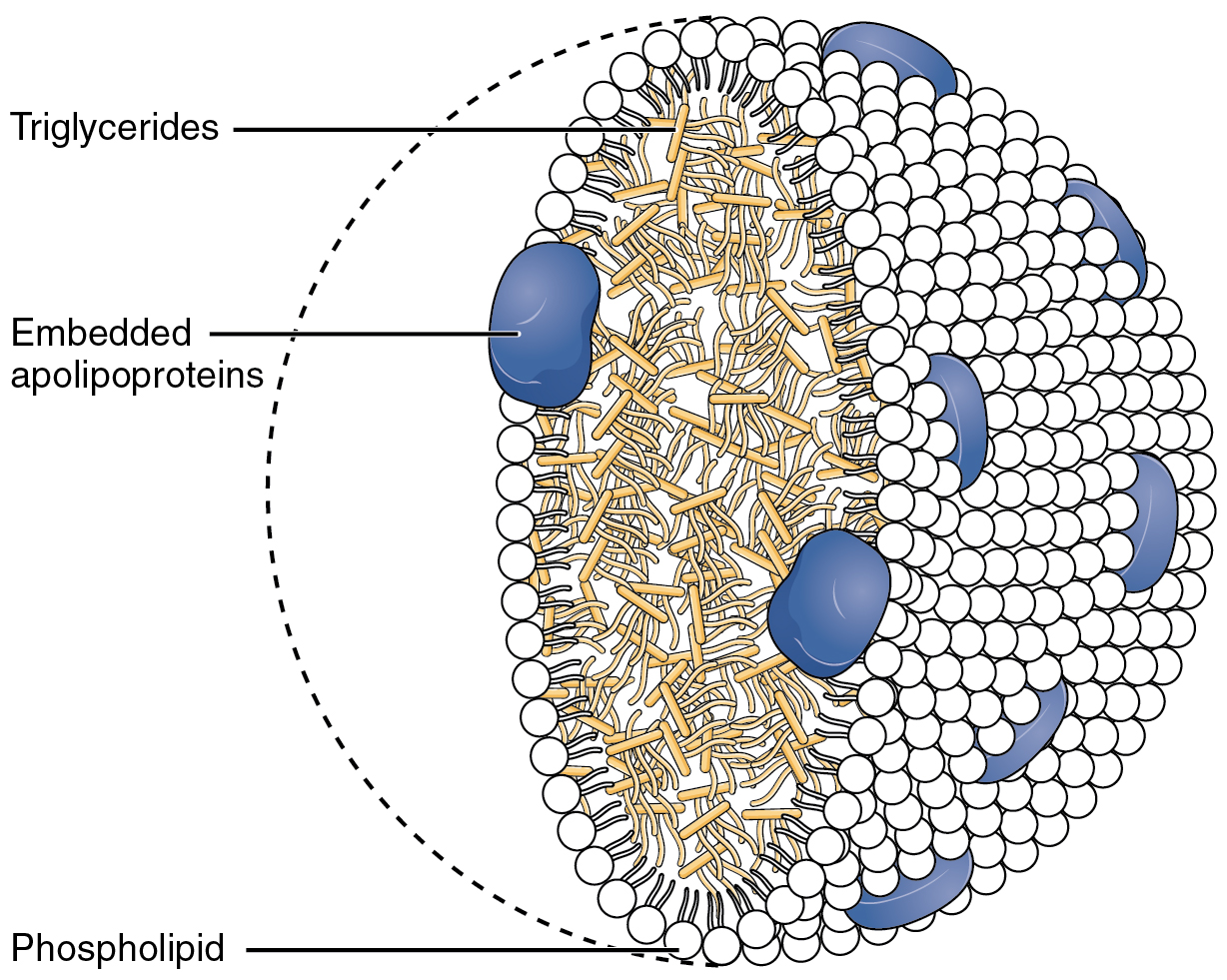
One of the five major groups of lipoprotein
Chylomicrons (from the Greek χυλός, chylós, meaning juice (of plants or animals), and micron, meaning small), also known as ultra low-density lipoproteins (ULDL), are lipoprotein particles that consist of triglycerides (83–92%), phospholipids (6–12%), cholesterol (1–3%), and proteins (1–2%). They transport dietary lipids, such as fats and cholesterol, from the intestines to other locations in the body, within the water-based solution of the bloodstream. ULDLs are one of the five major groups lipoproteins are divided into based on their density. A protein specific to chylomicrons is ApoB48.
There is an inverse relationship in the density and size of lipoprotein particles: fats have a lower density than water or smaller protein molecules, and the larger particles have a higher ratio of internal fat molecules with respect to the outer emulsifying protein molecules in the shell. ULDLs, if in the region of 1,000 nm or more, are the only lipoprotein particles that can be seen using a light microscope, at maximum magnification. All the other classes are submicroscopic.
Function
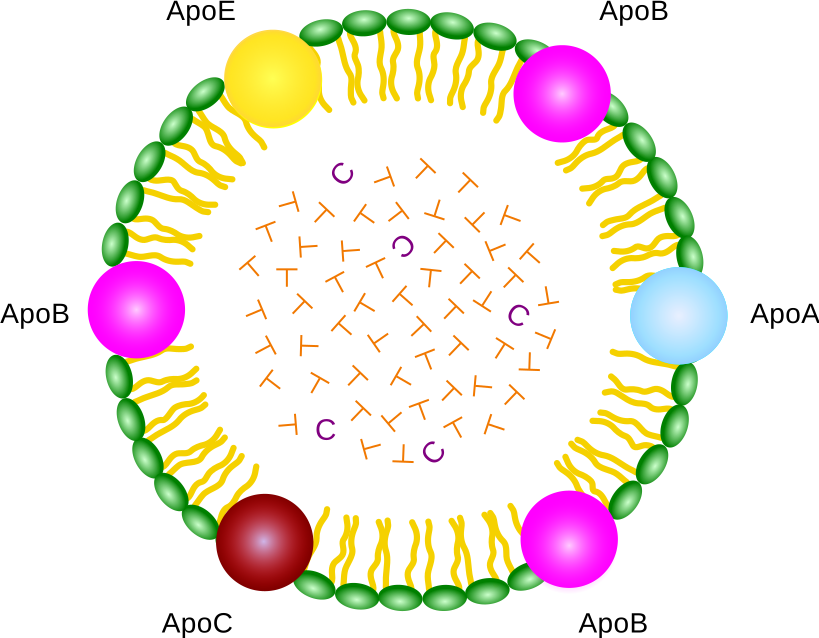
Chylomicrons transport lipids absorbed from the intestine to adipose, cardiac, and skeletal muscle tissue, where their triglyceride components are hydrolyzed by the activity of the lipoprotein lipase, allowing the released free fatty acids to be absorbed by the tissues. When a large portion of the triglyceride core has been hydrolyzed, chylomicron remnants are formed and are taken up by the liver, thereby also transferring dietary fat to the liver.
Stages
Nascent chylomicrons
In the small intestine, dietary triglycerides are emulsified by bile and digested by pancreatic lipases, resulting in the formation of monoglycerides and fatty acids. These lipids are absorbed into enterocytes via passive diffusion. Inside these cells, monoglycerides and fatty acids are transported to the smooth endoplasmic reticulum (smooth ER), where they are re-esterified to form triglycerides. These triglycerides, along with phospholipids and cholesterol, are added to apolipoprotein B48 to form nascent chylomicrons (also referred to as immature chylomicrons or pre-chylomicrons).
After synthesis in the smooth ER, nascent chylomicrons are transported to the Golgi apparatus by SAR1B proteins. The transport of nascent chylomicrons within the secretory pathway is facilitated by protein transport vesicles (PCTVs). PCTVs are uniquely equipped with v-SNARE and VAMP-7 proteins, which aid in their fusion with the cis-Golgi compartment. This transport is facilitated by COPII proteins, including Sec23/24, which select cargo and facilitate vesicle budding from the ER membrane.
During transit through the Golgi, nascent chylomicrons undergo enzymatic modification and lipidation processes, resulting in the formation of mature chylomicrons.
Mature chylomicrons
Mature chylomicrons are released through the basolateral membrane of enterocytes (via the secretory pathway) into lacteals, lymphatic capillaries in the villi of the small intestine. Lymph that contains chylomicrons (and other emulsified fats) is referred to as chyle. The lymphatic circulation carries chyle to the lymphatic ducts before it enters the venous return of the systemic circulation via subclavian veins. From here, chylomicrons can supply tissue throughout the body with fat absorbed from the diet. Because they enter the bloodstream in this way, digested lipids (in the form of chylomicrons) bypass the hepatic portal system and thus avoid first pass metabolism, unlike digested carbohydrates (in the form of monosaccharides) and proteins (in the form of amino acids).
While circulating in blood, high-density lipoproteins (HDLs) donate essential components including apolipoprotein C-II (APOC2) and apolipoprotein E (APOE) to the mature chylomicron. APOC2 is a crucial coenzyme for the activity of lipoprotein lipase (LPL), which hydrolyzes triglycerides within chylomicrons.
Chylomicron remnants
Once triglyceride stores are distributed, chylomicrons return APOC2 to HDLs while retaining APOE, transforming into a chylomicron remnant. ApoB48 and APOE are important to identify the chylomicron remnant in the liver for endocytosis and breakdown.
Pathology
Hyperchylomicronemia
Hyperchylomicronemia is characterized by an excessive presence of chylomicrons in the blood, leading to extreme hypertriglyceridemia. Clinical manifestations of this disorder include eruptive xanthomas, lipaemia retinalis, hepatosplenomegaly, recurrent abdominal pain, and acute pancreatitis. This condition can be caused by genetic mutations (see below) or secondary factors such as uncontrolled diabetes or alcohol use disorder.
Hypochylomicronemia
Hypochylomicronemia refers to abnormally low levels or complete absence of chylomicrons in the blood, particularly after a meal (postprandial). This condition can result from genetic mutations (see below), as well as certain malabsorption syndromes or deficiencies in dietary fat intake.
References
References
- "Definition of CHYLOMICRONS".
- (1950). "Blood Lipids and Human Atherosclerosis". Circulation.
- (2010-04-01). "Fatty acid transport across the cell membrane: Regulation by fatty acid transporters". Prostaglandins, Leukotrienes and Essential Fatty Acids.
- Kiani, Reza. (2018-01-01). "Chapter 18 - Dyslipidemia". Elsevier.
- "SAR1B gene: MedlinePlus Genetics".
- (2015-03-20). "The pathophysiology of intestinal lipoprotein production". Frontiers in Physiology.
- (2015). "Persistent Fat Malabsorption in Cystic Fibrosis". Elsevier.
- (2013). "Advanced nutrition and human metabolism". Wadsworth/Cengage Learning.
- (2016). "Chylomicrons: Advances in biology, pathology, laboratory testing, and therapeutics". Clinica Chimica Acta.
- (2012). "The Chylomicron: Relationship to Atherosclerosis". International Journal of Vascular Medicine.
- (2015-03-20). "The pathophysiology of intestinal lipoprotein production". Frontiers in Physiology.
This article was imported from Wikipedia and is available under the Creative Commons Attribution-ShareAlike 4.0 License. Content has been adapted to SurfDoc format. Original contributors can be found on the article history page.
Ask Mako anything about Chylomicron — get instant answers, deeper analysis, and related topics.
Research with MakoFree with your Surf account
Create a free account to save articles, ask Mako questions, and organize your research.
Sign up freeThis content may have been generated or modified by AI. CloudSurf Software LLC is not responsible for the accuracy, completeness, or reliability of AI-generated content. Always verify important information from primary sources.
Report