From Surf Wiki (app.surf) — the open knowledge base
Church Commissioners
Body managing Church of England properties
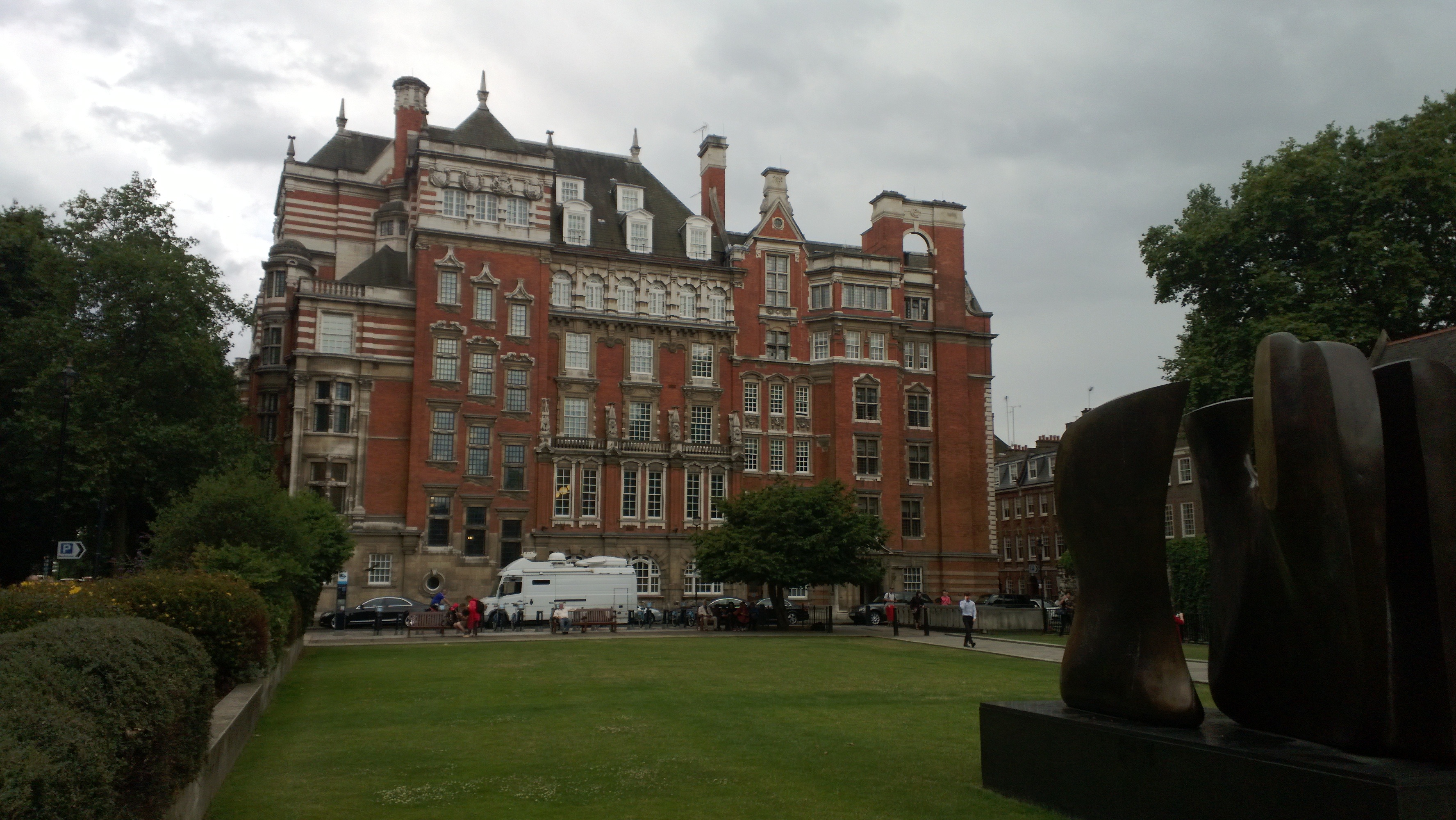
Body managing Church of England properties
| Field | Value |
|---|---|
| predecessor | Ecclesiastical Commissioners |
| Queen Anne's Bounty | |
| formation | |
| status | Registered charity |
| purpose | Investment |
| headquarters | Church House, Westminster, London |
| leader_title | Secretary and Chief Executive |
| leader_name | John Worth |
| leader_title2 | First Church Estates Commissioner |
| leader_name2 | Alan Smith |
| leader_title3 | Second Church Estates Commissioner |
| leader_name3 | Marsha de Cordova |
| leader_title4 | Third Church Estates Commissioner |
| leader_name4 | Sir Robert Buckland |
| parent_organization | General Synod of the Church of England |
| budget | |
| name | Church Commissioners for England |
| region_served | England |
| membership | 33 |
| num_staff | 66 |
| website | |
| budget_year | 2017 |
Queen Anne's Bounty
The Church Commissioners is a body which administers the assets of the Church of England. It was established in 1948 and combined the assets of Queen Anne's Bounty, a fund dating from 1704 for the relief of poor clergy, and of the Ecclesiastical Commissioners formed in 1836. The Church Commissioners are a registered charity regulated by the Charity Commission for England and Wales, and are liable for the payment of pensions to retired clergy whose pensions were accrued before 1998 (subsequent pensions are the responsibility of the Church of England Pensions Board).
The secretary (and chief executive) of the Church Commissioners is John Worth.
History
The Church Building Act 1818 granted money and established the Church Building Commission to build churches in the cities of the Industrial Revolution. These churches became known variously as Commissioners' churches, Waterloo churches or Million Act churches. The Church Building Commission became the Ecclesiastical Commissioners in 1836.
An earlier Ecclesiastical Duties and Revenues Commission had been set up under the first brief administration of Sir Robert Peel in 1835 with a wide remit, "to consider the State of the Established Church in England and Wales, with reference to Ecclesiastical Duties and Revenues"; this body redistributed wealth between the dioceses and changed diocesan boundaries, and the permanent Ecclesiastical Commission was formed the following year.
The Church Commissioners were established in 1948 as a merger of Queen Anne's Bounty and the Ecclesiastical Commissioners, following the passage, by the National Assembly of the Church of England, of the Church Commissioners Measure 1947 (10 & 11 Geo. 6. No. 2).
In 1992 it was revealed that the Church Commissioners had lost £500m through over-commitment of the fund leading to poor investment decisions. This figure was later revised up to £800m, a third of their assets.
The value of the commissioners' assets was around £5.5 billion as at the end of 2012. By September 2016, it was valued at £7 billion. The income is used for the payment of pensions to retired clergy whose pensions were accrued before 1998 (subsequent pensions are the responsibility of the Church of England Pensions Board) and a range of other commitments including supporting the ministries of bishops and cathedrals and funding various diocesan and parish missions initiatives.
In June 2022, the Commissioners acknowledged early links of Queen Anne's Bounty to the Atlantic slave trade. They and Justin Welby, the Archbishop of Canterbury, apologised. In January 2023 the Commissioners announced that they were setting up a fund of £100 million to be spent over the next nine years on addressing historic links with slavery.
The Commissioners also oversee pastoral reorganisation, the consent of the commissioners being required for establishing or dissolving team and group ministries, uniting, creating, or dissolving benefices and parishes, and the closing of consecrated church buildings and graveyards.
The Church Commissioners are now based at Church House, Westminster, London, having long occupied No. 1 Millbank. The Millbank building was sold in 2005 to the House of Lords for accommodation of members and staff; the commissioners completed the move to Church House in 2007. They used to be an exempt charity under English law, and is now a registered charity regulated by the Charity Commission for England and Wales.
The secretary (and chief executive) of the Church Commissioners is John Worth.
Responsibilities
The Church Commissioners have the following responsibilities:
- Funding mission in churches, dioceses and cathedrals.
- Pastoral reorganisation (including mergers of parishes and benefices); supported by the Pastoral Team.
- Clergy payroll ensuring clergy are paid their stipend.
- Managing the production of Crockford's Clerical Directory.
- Managing the Lambeth Palace Library and the Church of England Record Centre.
Portfolio
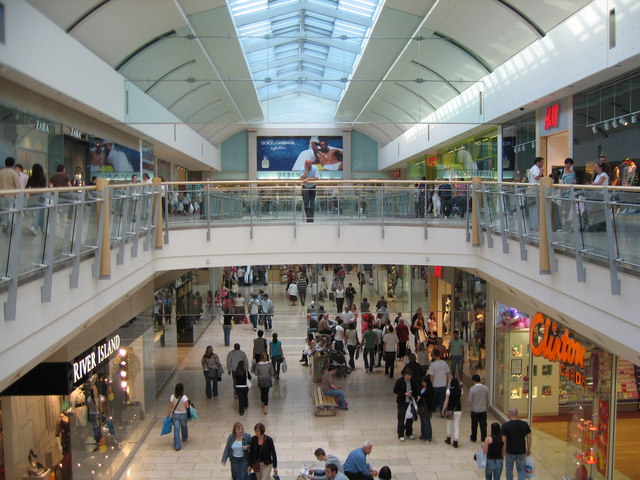
The CC portfolio in 2020 is extensive, worth around £9.2 billion and includes the Hyde Park Estate and a 10% stake in the MetroCentre shopping centre. The CC are the 13th largest landowner in the UK. The CC own a significant amount of rural land and sometimes promote this through Local Plan processes.
List of commissioners
There are 33 Church Commissioners, of whom 27 make up the board of governors as the main policy-making body, with a further 6 who are officers of state or Government ministers. Board members are either elected by the General Synod of the Church of England, or appointed by either the archbishops or the Crown. The board of governors is composed of all of the commissioners apart from the First Lord of the Treasury, the Lord President of the Council, the Lord Chancellor, the Secretary of State for Culture, Media and Sport, the Speaker of the House of Commons, and the Lord Speaker.
The 33 commissioners are as follows:
| Portfolio | Name | Notes | ||||
|---|---|---|---|---|---|---|
| Archbishop of Canterbury | Chairman ex officio | Sarah Mullally | ||||
| Archbishop of York | Stephen Cottrell | |||||
| First Church Estates Commissioner | Alan Smith | |||||
| Second Church Estates Commissioner | Marsha de Cordova | title=Appointment of Second Church Estates Commissioner: 7 October 2024 | url=https://www.gov.uk/government/news/appointment-of-second-church-estates-commissioner-7-october-2024 | access-date=2024-10-07 | website=GOV.UK | language=en}} |
| Third Church Estates Commissioner | Sir Robert Buckland | |||||
| Four bishops | Vivienne Faull | |||||
| Stephen Lake | ||||||
| Graham Usher | ||||||
| Pete Wilcox | ||||||
| Two deans elected by the deans | Mark Bonney | |||||
| Rogers Govender | ||||||
| Three clergy elected by those members of the House of Clergy who are not deans | Amatu Christian-Iwuagwu | |||||
| Sarah Geileskey | ||||||
| Christopher Smith | ||||||
| Four laypeople elected by the House of Laity | Richard Denno | |||||
| Nick Land | ||||||
| Cathy Rhodes | ||||||
| Robert Zampetti | ||||||
| Three members nominated by the Crown | Suzanne Avery | |||||
| Kif Hancock | ||||||
| Nigel Timmins | ||||||
| Three members nominated by the archbishops acting jointly | Busola Sodeinde | |||||
| Kate Barker | ||||||
| Morag Ellis | ||||||
| Three members nominated by the archbishops acting jointly after consultation with: | ||||||
| * the lord mayors of the cities of London and York | ||||||
| * the vice chancellors of the universities of Oxford and Cambridge | Jenny Buck | |||||
| Remi Olu-Pitan | ||||||
| Helen Steers | ||||||
| First Lord of the Treasury | Sir Keir Starmer | |||||
| Lord President of the Council | Sir Alan Campbell | |||||
| Lord High Chancellor of Great Britain | David Lammy | |||||
| Secretary of State for Culture, Media and Sport | Lisa Nandy | |||||
| Speaker of the House of Commons | Sir Lindsay Hoyle | |||||
| Lord Speaker | John McFall, Baron McFall of Alcluith |
Church Estates Commissioners
The Church Estates Commissioners are three lay people who represent the Church Commissioners in the General Synod of the Church of England. The first and second commissioners are appointed by the British monarch, and the third commissioner is appointed by the Archbishop of Canterbury. They are based at Church House, Westminster, having previously had offices at No. 1 Millbank, London.
First Church Estates Commissioners
The First Church Estates Commissioner is appointed by the British Monarch.
- 1850–1878: Henry Pelham, 3rd Earl of Chichester
- 1878–1905: Arthur Stanhope, 6th Earl Stanhope
- 1905–1931: Sir Lewis Dibdin
- 1931–1938: Sir George Middleton
- 1939–1954: Sir Philip Baker Wilbraham
- 1954–1969: Malcolm Trustram Eve, 1st Baron Silsoe
- 1969–1982: Sir Ronald Harris
- 1983–1993: Sir Douglas Lovelock
- 1993–1999: Sir Michael Colman, 3rd Baronet
- 1999–2001: John Sclater
- 2002–2017: Sir Andreas Whittam Smith
- 2017–2021: Loretta Minghella
- 2021–present: Alan Smith
Second Church Estates Commissioners
The Second Church Estates Commissioner is appointed by the Crown. They are now always a Member of Parliament from the party in government, and have additional duties as a link between the British Parliament and the Church.
- 1850–1858: Sir John Shaw Lefevre
- 1858–1859: Charles Shaw-Lefevre, 1st Viscount Eversley
- 1859–1865: Edward Pleydell Bouverie
- 1865–1866: Henry Austin Bruce
- 1866–1868: John Robert Mowbray
- 1869–1874: Sir Thomas Dyke Acland, 11th Baronet
- 1874–1879: George Cubitt
- 1879–1880: Thomas Salt
- 1880–1885: Evelyn Ashley
- 1885–1886: Sir Henry Selwin-Ibbetson
- 1886–1886: Thomas Dyke Acland
- 1886–1892: Sir Henry Selwin-Ibbetson
- 1892–1892: Charles Algernon Whitmore
- 1892–1895: George Leveson Gower
- 1895–1906: Sir Lees Knowles
- 1906–1906: Francis Stevenson
- 1906–1907: Charles Hobhouse
- 1907–1910: James Tomkinson
- 1910–1918: Sir Charles Nicholson
- 1919–1922: Sir William Mount, 1st Baronet
- 1923–1924: John Birchall
- 1924–1924: George Middleton
- 1924–1929: John Birchall
- 1929–1931: George Middleton
- 1931–1943: Richard Denman
- 1943–1945: Sir John Mills
- 1945–1950: Thomas Burden
- 1950–1951: Sir Richard Acland
- 1951–1957: Sir John Crowder
- 1957–1962: Sir Hubert Ashton
- 1962–1964: Sir John Arbuthnot, 1st Baronet
- 1964–1970: Lancelot Mallalieu
- 1970–1974: Sir Marcus Worsley, 5th Baronet
- 1974–1974: Edward Bishop
- 1974–1979: Terence Walker
- 1979–1987 Sir William van Straubenzee
- 1987–1997: Michael Alison
- 1997–2010: Sir Stuart Bell
- 2010–2015: Sir Tony Baldry
- 2015–2020: Dame Caroline Spelman
- 2020–2024: Andrew Selous
- 2024–: Marsha de Cordova
Third Church Estates Commissioners
The Third Church Estates Commissioner is appointed by the Archbishop of Canterbury.
- 1850–1856: Henry Goulburn
- 1856–1858: Spencer Horatio Walpole
- 1858–1862: William Deedes
- 1862–1866: Spencer Horatio Walpole
- 1866–1871: Edward Howes
- 1871–1892: Sir John Mowbray, 1st Baronet
- 1892–1895: Sir Michael Hicks Beach, 9th Baronet
- 1895–1926: Charles Stuart-Wortley, 1st Baron Stuart of Wortley
- 1926–1948: Herbert Pease, 1st Baron Daryngton
- 1948–1952: John Tovey, 1st Baron Tovey
- 1952–1954: Sir Malcolm Eve, 1st Baronet
- 1954–1962: Sir James Brown
- 1962–1972: Sir Hubert Ashton
- 1972–1981: Dame Betty Ridley
- 1981–1989: Betsy Howarth
- 1989–1999: Margaret Heather Laird
- 1999–2005: Gillian Joynson-Hicks, Viscountess Brentford
- 2006–2012: Timothy Walker
- 2013–2018: Andrew Mackie
- 2018–2022: Eve Poole
- 2022–2024: Canon Flora Winfield
- 2025–: Sir Robert Buckland
References
References
- Minutes of the Commission, 9 February 1835
- Williams, Hattie. (16 June 2022). "Church Commissioners acknowledge that slave trade boosted early funds". [[Church Times]].
- Plender, John: "Unholy Saga of the Church’s Missing Millions", ''Financial Times'', 11 July 1992.
- "Church Commissioners - The Church of England".
- (29 September 2016). "Sir Andreas Whittam Smith to step down from Church Commissioners". Church of England.
- "How we are governed {{!}} The Church of England".
- (10 January 2023). "Church of England announces £100m fund after slavery links". BBC.
- {{NHLE
- (29 March 2005). "Church Commissioners complete sale of Millbank site". The Church of England.
- "Exempt charities".
- {{EW charity. 1140097. Church Commissioners for England
- "About the Church Commissioners: Staff". Church of England.
- "Support {{!}} The Church of England".
- "What we fund {{!}} The Church of England".
- "Parish reorganisation {{!}} The Church of England".
- (7 April 2021). "The Church Commissioners for England Annual Report 2020".
- Hemming, Gary. "Who really owns the UK?".
- Church Commissioners for England. "Our approach to strategic land".
- "Church Commissioners Measure 1947".
- "About the Church Commissioners: Trustees". Church of England.
- "Church Commissioner trustees".
- who is appointed by the King and who represents the Church Commissioners in the [[General Synod of the Church of England. General Synod]]
- (2021-07-27). "Alan Smith announced as next First Church Estates Commissioner".
- who is an [[Member of Parliament (United Kingdom). MP]] appointed by the King and who represents the Church Commissioners in the General Synod and answers to Parliament for the business of the commissioners
- "Appointment of Second Church Estates Commissioner: 7 October 2024".
- who is appointed by the Archbishop of Canterbury and who represents the Church Commissioners in the General Synod
- elected by the House of Bishops from among their number
- "Commissioners".
- "History".
- {{London Gazette. (27 August 1850)
- {{London Gazette. (3 December 1878)
- {{London Gazette. (14 February 1905)
- {{London Gazette. (2 January 1931)
- (April 2014). "WILBRAHAM, Sir Philip Wilbraham Baker". [[Oxford University Press]].
- "Silsoe".
- (April 2014). "HARRIS, Sir Ronald (Montague Joseph)". Oxford University Press.
- (April 2016). "LOVELOCK, Sir Douglas (Arthur)". Oxford University Press.
- (November 2016). "COLMAN, Sir Michael (Jeremiah)". Oxford University Press.
- (9 January 2018). "Warrants Under the Royal Sign Manual". The London Gazette.
- (29 September 2016). "Sir Andreas Whittam Smith to step down from Church Commissioners". Church of England.
- (28 June 2017). "Church Commissioner Appointment: Loretta Minghella". Prime Minister's Office, 10 Downing Street.
- (27 July 2021). "Appointment of First Church Estates Commissioner: 27 July 2021". Prime Minister's Office, 10 Downing Street.
- "Second Church Estates Commissioner".
- {{London Gazette. (12 February 1858)
- {{London Gazette. (19 August 1859)
- {{London Gazette. (21 November 1865)
- {{London Gazette. (7 August 1866)
- {{London Gazette. (2 February 1869)
- {{London Gazette. (13 March 1874)
- {{London Gazette. (18 March 1879)
- {{London Gazette. (25 June 1880)
- "Rookwood".
- {{London Gazette. (12 March 1886)
- {{London Gazette. (10 September 1886)
- {{London Gazette. (21 June 1892)
- {{London Gazette. (8 November 1892)
- {{London Gazette. (27 September 1895)
- {{London Gazette. (23 February 1906)
- {{London Gazette. (3 April 1906)
- {{London Gazette. (22 March 1907)
- {{London Gazette. (3 May 1910)
- {{London Gazette. (11 March 1919)
- {{London Gazette. (2 March 1923)
- {{London Gazette. (29 February 1924)
- {{London Gazette. (9 December 1924)
- {{London Gazette. (9 July 1929)
- {{London Gazette. (27 January 1931)
- (April 2014). "MILLS, Col Sir John (Digby)". Oxford University Press.
- (April 2014). "BURDEN, 1st Baron". Oxford University Press.
- (April 2015). "ACLAND, Sir Richard Thomas Dyke". Oxford University Press.
- [[David Butler (psephologist). David Butler]] and Gareth Butler, ''Twentieth Century British Political Facts 1900–2000'', eighth edition (Macmillan, 2000) p. 70.
- (April 2016). "WORSLEY, Sir (William) Marcus (John)". Oxford University Press.
- "Bishopston".
- (April 2014). "van STRAUBENZEE, Sir William (Radcliffe)". Oxford University Press.
- "Bell, Sir Stuart".
- "Spelman, Rt Hon. Dame Caroline (Alice)".
- "Selous, Andrew Edmund Armstrong".
- {{London Gazette. (21 October 2024)
- Michael Stenton ed., ''Who's Who of British Members of Parliament, Volume I 1832–1885'' (Harvester, 1976) p. 162.
- {{London Gazette. (5 February 1856)
- {{London Gazette. (30 April 1858)
- {{London Gazette. (16 December 1862)
- {{London Gazette. (2 May 1871)
- {{London Gazette. (9 December 1892)
- {{London Gazette. (18 October 1895)
- {{London Gazette. (11 May 1926)
- (April 2014). "TOVEY, 1st Baron". Oxford University Press.
- (April 2014). "BROWN, Sir James (Raitt)". Oxford University Press.
- (April 2014). "ASHTON, Sir Hubert". Oxford University Press.
- "Ridley, Dame (Mildred) Betty".
- (April 2016). "LAIRD, Margaret Heather". Oxford University Press.
- (November 2016). "BRENTFORD, Viscountess". Oxford University Press.
- (November 2016). "WALKER, Timothy Edward Hanson". Oxford University Press.
- (27 December 2012). "Appointment of Third Church Estates Commissioner". Church of England.
- (6 March 2018). "Appointment of Third Church Estates Commissioner".
- (11 January 2022). "The Archbishop of Canterbury, Justin Welby, has announced the appointment of the Rev'd Canon Dr Flora Winfield as Third Church Estates Commissioner".
This article was imported from Wikipedia and is available under the Creative Commons Attribution-ShareAlike 4.0 License. Content has been adapted to SurfDoc format. Original contributors can be found on the article history page.
Ask Mako anything about Church Commissioners — get instant answers, deeper analysis, and related topics.
Research with MakoFree with your Surf account
Create a free account to save articles, ask Mako questions, and organize your research.
Sign up freeThis content may have been generated or modified by AI. CloudSurf Software LLC is not responsible for the accuracy, completeness, or reliability of AI-generated content. Always verify important information from primary sources.
Report