From Surf Wiki (app.surf) — the open knowledge base
Church attendance
Core practice in Christian denominations
.jpg)
Core practice in Christian denominations
Church attendance is a central religious practice for many Christians; some Christian denominations require church attendance on the Lord's Day (Sunday).
In addition to being based upon the spirit of the Ten Commandments ("Remember the Sabbath day, to keep it holy"), the importance of church attendance in Christian theology is delineated in , which implores the believers: "Let us not neglect our church meetings, as some people do, but encourage and warn each other, especially now that the day of his coming back again is drawing near." Certain early Christian saints emphasized the necessity of church attendance for the continuance of the faith, such as John Climacus, who declared that "a sure sign of the deadening of the soul is the avoidance of church services." The Lutheran theologian stated that church attendance is the "foundation for the Christian life" as "the Christian Bible and the sacraments provide the framework for the faith"; he also states that it is important for believers because it aids in the prevention of backsliding, as well as offers "the company of other believers". The Catholic Church teaches that on Sundays and other holy days of obligation, the faithful are required to attend Mass. The Westminster Confession of Faith held by many Reformed Churches teaches first-day (Sunday) Sabbatarianism and the duty of church attendance on this day. Similarly, Methodist Church also requires attending "the public worship of God".
Certain Christian countries prescribe church attendance in their civil laws. In Lutheran Scandinavia (particularly in Sweden and Finland), the Kyrkogångsplikt was the legal obligation for citizens to attend Mass on the Lord's Day. Until 1791, it was a legal requirement in the Kingdom of Great Britain to attend services of the Church of England (the state church) at least twice a year. About two-thirds of Latin American Christians and 90% of African Christians in Ghana, Nigeria, Rwanda and Zimbabwe said they attended church regularly. In South Africa, just 55% of Christians attend church regularly. According to a 2018 study by the Pew Research Center, Christians in Africa and Latin America and the United States have high levels of commitment to their faith. Data from the European Social Survey in 2012 showed that around a third of European Christians said they attend services once a month or more. Recent studies indicate that church attendance is increasing among young people —especially young men— while Christian self-identification has steadied across the Western world.
The Gallup International, a self-reporting survey conducted via telephone, indicates that 37% of Americans report that they attend religious services weekly or near-weekly in 2013. The Pew Research Center stated, however, that there is a "sharp increase in church attendance around the two most significant Christian holidays, Christmas and Easter". As such, on Christmas (a holy day of obligation in the Catholic Church, a Festival in the Lutheran Churches and a Principal Feast in the Anglican Communion), LifeWay Research found that "six out of 10 Americans typically attend church".
Countries that hold or have held a policy of state atheism have actively discouraged church attendance and church membership, often persecuting Christians who continued to worship.
Theology

The holding of church services pertains to the observance of the Lord's Day in Christianity. The Bible has a precedent for a pattern of morning and evening worship that has given rise to Sunday morning and Sunday evening services of worship held in the churches of many Christian denominations today, a "structure to help families sanctify the Lord’s Day." In and , "God commanded the daily offerings in the tabernacle to be made once in the morning and then again at twilight". In Psalm 92, which is a prayer concerning the observance of the Sabbath, the prophet David writes "It is good to give thanks to the Lord, to sing praises to your name, O Most High; to declare your steadfast love in the morning, and your faithfulness by night" (cf. ). Church father Eusebius of Caesarea thus declared: "For it is surely no small sign of God’s power that throughout the whole world in the churches of God at the morning rising of the sun and at the evening hours, hymns, praises, and truly divine delights are offered to God. God’s delights are indeed the hymns sent up everywhere on earth in his Church at the times of morning and evening." The early Christians attended two liturgies on the Lord's Day, worshipping communally in both a morning service and evening service, with the purpose of reading the Scriptures and celebrating the Eucharist. Throughout the rest of the week, Christians assembled at the church every day for morning prayer (which became known as lauds) and evening prayer (which became known as vespers), while praying at the other fixed prayer times privately; Christian monastics came to gather together to corporately pray all of the seven canonical hours communally.
In addition to being based upon the spirit of the Ten Commandments (which includes the injunction to "Remember the sabbath day, to keep it holy"), the importance of church attendance in Christian theology is delineated in , which implores the believers: "Let us not neglect our church meetings, as some people do, but encourage and warn each other, especially now that the day of his coming back again is drawing near." Among Sunday Sabbatarians (First-day Sabbatarians), observance of the Lord's Day often takes the form of attending the Sunday morning service of worship, receiving catechesis through Sunday School, performing acts of mercy (such as evangelism, visiting prisoners in jails and seeing the sick at hospitals), and attending the Sunday evening service of worship, as well as refraining from Sunday shopping, servile work, playing sports, viewing the television, and dining at restaurants.
The majority of Christian denominations hold church services on the Lord's Day (with many offering Sunday morning and Sunday evening services); a number of traditions have mid-week Wednesday evening services as well. In some Christian denominations, church services are held daily, with these including those in which the canonical hours are prayed, as well as the offering of the Mass, among other forms of worship. In addition to this, many Christians attend services of worship on holy days such as Christmas, Ash Wednesday, Good Friday, Ascension Thursday, among others depending on the Christian denomination.
Statistics
The Gallup International, a self-reporting survey conducted via telephone, indicates that 37% of Americans report that they attend religious services weekly or near-weekly in 2013. and methods of measurement that do not rely on self-reporting estimate even lower rates; for instance, a 2005 study published in the Journal for the Scientific Study of Religion found that just 22% of Americans attend services weekly. This compares to other countries' claims such as 15% of French citizens, 10% of British citizens, 8.8% of Australian citizens and 5.6% of Dutch citizens. In the U.K., in 2011, an average once-a-week attendance in Anglican churches went down by 0.3% compared with 2012, thus exhibiting a stabilizing trend. Previously, starting from 2000, an average rate of weekly church attendance in Britain was dropping down 1% annually. In 2013, the Pew Research Center reported that 37% of all Americans attended church on a weekly basis. In its turn, Gallup estimated the once-a-week church attendance of the Americans in 2013 as 39%.
Based on 1990–1991 data, it was estimated that the country with the highest rate of church attendance in the world was Nigeria (89%) and with the lowest – the Soviet Union (2%). Nigeria's data was notable, as Nigeria is very religiously diverse – the population is 50.1% Muslim and 48.2% Christian. The state authorities in the USSR, which dissolved in 1991, discouraged church construction; they had a hostile relationship with traditional organized religions and instead promoted Marxist-Leninist ideology, which espoused state atheism. A survey commissioned by the Época Magazine in 2005 showed that 29% of Brazilians attend church weekly, and indicated that it is lesser than in the United States but higher than in Western Europe and Japan, indeed showing that contrary to the local popular belief, Brazilians of the time could indeed be regarded as a religious people even in practice (though it is ponderable that the growth of the population declaring to be solely irreligious in nationwide censuses grew about 100% between 2000 and 2010, and 200% between 2000 and 2013, from 4% to 12%, and general secularization also grew among the portion of the population that remained religious).
A 2006 Financial Times (FT)/Harris Poll conducted online surveyed 12,507 adults over 16 years old in the United States (2,010 U.S. adults were surveyed) and five European countries (France, Italy, Germany, Great Britain and Spain). The survey found that only 26% of those polled attended religious services "every week or more often", 9% went "once or twice a month", 21% went "a few times a year", 3% went "once a year", 22% went "less than once a year", and 18% never attend religious services. Harris Interactive stated that the magnitude of errors cannot be estimated due to sampling errors and non-response bias. A previous nearly identical survey by Harris in 2003 found that only 26% of those surveyed attended religious services "every week or more often", 11% went "once or twice a month" 19% went "a few times a year", 4% went "once a year", 16% went "less than once a year", and 25% never attend religious services.
Calculating the church's average weekend attendance is important since it determines the size of a given church. For example, in the U.S., an average weekend attendance of more than 2,000 people separates a mega church from a large church, and an average weekend attendance between 51 and 300 people defines the large church; while a small church is the church with an attendance lower than 50 people. (Alternative definitions, such as house church, simple church, intentional community, were proposed by the Barna Group, an American private consulting firm). A narrow definition of a regular church attendee can be viewed as a synonym for a Sunday service visitation, while a broad definition, names as a regular attendee a person who comes to church during three out of eight weekends.
Attendance by country

The frequency with which Christians attend church services varies greatly around the world. In some countries weekly attendance at religious services is common among Christians, while in others weekly attendance is rare. The following attendance statistics are mostly based on self-reporting surveys and may not accurately reflect real attendance figures. |red|11}} |trans-title=Communities of Faith in Cuba: First part of WOLA's background series on religion in Cuba |language=es |website=wola.org |date=26 March 2012|access-date=11 April 2020 |title=Comunidades de Fe en Cuba: Primera parte de la serie de fondo de WOLA sobre la religión en Cuba}}|red|5}} language=da|title=Kun 2,4 procent går i kirke hver uge |access-date=12 April 2020|website=kristeligt-dagblad.dk |first1=Morten |last1=Rasmusse|date=10 June 2008}} |red|3}}
The following church attendance statistics are taken from the 2004 Gallup report, based on self-reporting telephone surveys. However, it is unclear whether the survey was solely of Christians in the respective country or the entire population (including non-Christians).
| Country | Year | Attendance (%) |
|---|---|---|
| Austria | 2004 | % |
| Cyprus | 2004 | % |
| Denmark | 2004 | % |
| Czech Republic | 2004 | % |
| Estonia | 2004 | % |
| Finland | 2004 | % |
| Greece | 2004 | % |
| Hungary | 2004 | % |
| Ireland | 2004 | % |
| Italy | 2004 | % |
| Latvia | 2004 | % |
| Lithuania | 2004 | % |
| Malta | 2004 | % |
| Norway | 2002 | % |
| Poland | 2004 | % |
| Portugal | 2004 | % |
| Slovakia | 2004 | % |
| Slovenia | 2004 | % |
| Spain | 2004 | % |
| Sweden | 2004 | % |
A study by the European Social Survey conducted in 2008 found these rates of respondents never attending religious service (excluding special occasions):
| Percentage | Countries | 10–20% | 20–30% | 30–40% | 40–50% | 50–60% | 60% |
|---|---|---|---|---|---|---|---|
| Cyprus, Greece, Poland, Bosnia-Herzegovina | |||||||
| Croatia, Italy, Ukraine | |||||||
| Turkey, Portugal, Russia | |||||||
| Estonia, Germany, Sweden | |||||||
| Israel, Spain, Netherlands | |||||||
| Belgium, United Kingdom, France | |||||||
| Czech Republic |
Attendance by U.S. state
The frequency by which adults attend church services also vary on a state-by-state basis in the United States.
Demographics
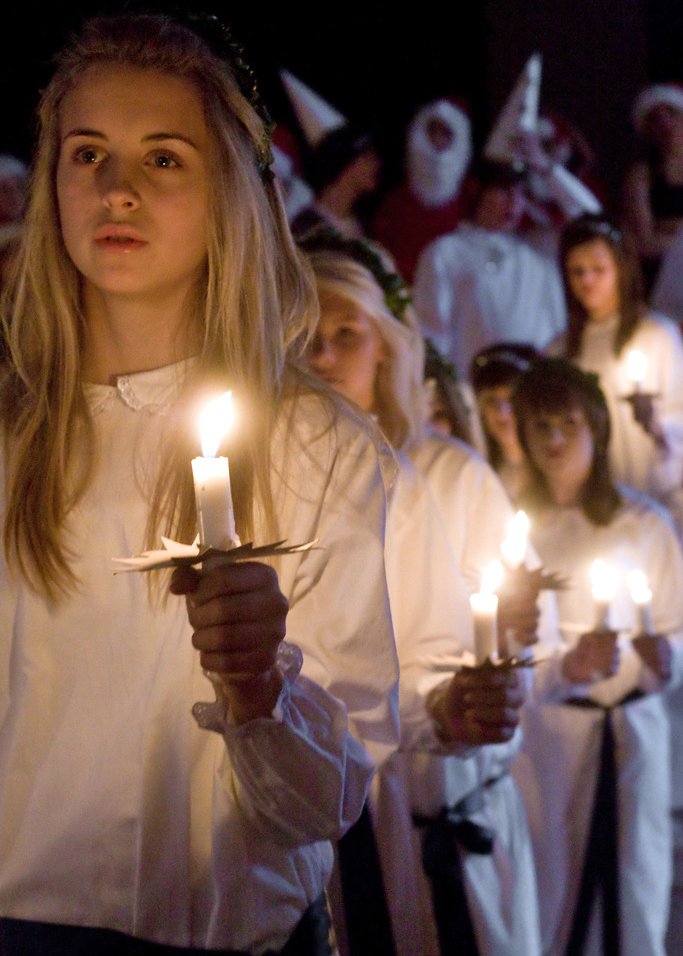
The Pew Research Center studied the effects of gender on religiosity throughout the world, finding that women are generally more religious than men, yet the gender gap is greater for Christians than Muslims. Pew Research Center data in 53 countries, found that 53% of Christian women and 46% of Christian men say they attend services at least once a week. While Christians of both genders in African countries are equally likely to regularly attend services.
Church attendance remains stronger among older demographics, and more common for women in the West. There is evidence that links church attendance with health benefits. The Pew Research Center, which conducts the extensive research and information program Pew Forum on Religion and Public Life, has linked regular church attendance with happiness. Several studies associated church attendance with decreased risk of Alzheimer's disease. Research by Rita W. Law and David A. Sbarra demonstrated that "church attendance was found to have a protective effect against the emergence of mood problems among older adults." Graham et al. discovered that "consistent pattern of lower systolic and diastolic blood pressures among frequent church attenders was found compared to that of infrequent attenders which was not due to the effects of age, obesity, cigarette smoking, or socioeconomic status". Oman D et al. found that "infrequent (never or less than weekly) attenders had significantly higher rates of circulatory, cancer, digestive, and respiratory mortality (p
A 2018 sociological survey found that in the United States, "Donald Trump voters who attend church regularly are more likely than nonreligious Trump voters to have warmer feelings toward racial and religious minorities, to be more supportive of immigration and trade, and to be more concerned about poverty." A 2005 European Union survey found that religious belief increased with age and was higher among women, those who were leaning towards right-wing politics, and those reflecting more upon philosophical and ethical issues. In particular, the Iona Institute, a socially conservative Christian advocacy group, stated that there was increasing church attendance there, despite sex-abuse scandals that plagued the Catholic Church.
Research shows that there is a correlation between church attendance and the level of education. For instance, in a Pew Research study from 1996, approximately 34% of high school dropouts went to church on a typical Sunday, while 44% of those with a college degree or higher did. 48% of married individuals attended church on a typical Sunday, compared with 29% of divorced and 31% of never-married individuals. While it is likely that the well-educated and married might over-report their church attendance more often, these findings nevertheless demonstrate that they have maintained a stronger church-going identity than other Americans. In the United Kingdom, research in 2018 demonstrated that "Students at Oxford, Cambridge and Durham are twice as likely to worship on a Sunday as the general population"—colleges at these universities maintain approximately fifty-six chapels for worship.
According to a 2017 study by the Pew Research Center, overall, American Christians are more likely to have college degrees than the general population. The study found that highly educated Christians in the United States are more likely to attend church than those with lower education levels. On a scale measuring levels of religious commitment, over 70% of Christians in the United States who are educated demonstrate high levels of religiosity.
Among youth

In recent years, several studies and reports have highlighted a strong trend among Generation Z (those born roughly between the late 1990s and early 2010s)—including a notable surge among young men—showing a renewed turn toward Christian religious practice, especially church attendance and deeper spiritual engagement. According to reports, younger generations—particularly Gen Z and Millennials—are driving what researchers call a "Christian resurgence," with belief in and commitment to Jesus rising compared with previous periods, while older age groups have remained more stable in their religious attitudes.
After years of steep decline, Christian affiliation across much of the Western world has leveled off. In the United States, for example, studies reports that since around 2020 the share of adults identifying as Christian has steadied at roughly 62 percent. Among Generation Z, the reversal is even clearer: church membership climbed from 45 percent to 51 percent between 2023 and 2024, while the proportion of religiously unaffiliated "nones" slipped from 45 percent to 41 percent. A similar pattern is evident in Australia, Austria, Canada, France, Ireland, New Zealand, and the United Kingdom, where studies report that church attendance is rising among young people —particularly young men— and that Christian self-identification has stabilized.
Many sociologists link this shift to the COVID-19 pandemic, arguing that months of isolation and heightened awareness of mortality spurred a renewed search for meaning, particularly among younger generations. Notably, young men—long underrepresented in church life—are now returning in unexpected numbers, a striking change after decades when women dominated weekly attendance. Events such as the 2023 Asbury Revival in the United States, which drew thousands of college students—many of them Gen Z—and spread widely on social media, underscore the digital dimension of this spiritual movement.
.jpg)
A contemporary revival of "muscular Christianity" links physical fitness with Christian faith, appealing to young men seeking discipline and purpose. Social-media platforms such as TikTok and Instagram amplify this aesthetic, circulating short videos that pair strength training with biblical themes. Surveys by the Barna Group, and Pew Research find that Gen Z men increasingly encounter religious content online and report greater interest in church life as a result. Some sociologists and religion scholars attribute part of the recent rise in church attendance among young men to this online movement, noting that figures such as podcast host Joe Rogan, apologist Wes Huff, and psychologist Jordan Peterson often serve as entry points that turn casual exposure into renewed participation in Christian practice.
Reports also note that young men are converting in notable numbers to what they see as more "masculine expressions" of Christianity, such as the Eastern and Oriental Orthodox churches, confessional branches of Evangelical Lutheranism and traditionalist branches of Catholicism. While exact figures are difficult to verify, Pew Research Center data indicate that the Orthodox Christian population is now about 64% male, up from 46% in 2007, suggesting a marked demographic shift toward men within these communities. Congregations of Conservative Anabaptist denominations have experienced continued growth, with Conservative Anabaptists having "large families and high retention rates".
Influence of parents

Several research studies in the US and Europe found that church attendance practices of parents, especially fathers, can be highly influential in forming the future church attendance practices of their children.
In Switzerland, the Fertility and Family Survey was commissioned by the Federal Statistical Office (Switzerland) to enable Switzerland to take part in this international project launched by the UNECE Population Activities Unit. The survey was conducted between October 1994 and May 1995, with the results being published in 2000 by the Council of Europe. The results are representative of Switzerland's permanent resident population aged 20–49 and presented in the table below.
Practice of religion according to practice of parents (%)
| Practice of parents | Practice of children |
|---|---|
| Father | Mother |
| Regular | Regular |
| Regular | Irregular |
| Regular | Non-practicing |
| Irregular | Regular |
| Irregular | Irregular |
| Irregular | Non-practicing |
| Non-practicing | Regular |
| Non-practicing | Irregular |
| Non-practicing | Non-practicing |
A non-practicing mother with a regular father will see a minimum of two-thirds of her children ending up at church. In contrast, a non-practicing father with a regular mother will see two-thirds of his children not attending church. If his wife is similarly non-practicing that figure rises to 80 percent.
An American study found similar results on the impact of fathers:
- When both parents attend Sunday school, 72% of the children attend Sunday school when grown.
- When only the father attends Sunday school, 55% of the children attend when grown.
- When only the mother attends Sunday school, 15% of the children attend when grown.
- When neither parent attends Sunday school, only 6% of the children attend when grown.
Invitations
Research on individuals residing in the United States and Canada concluded that "Ninety-six percent of the unchurched are at least somewhat likely to attend church if they are invited." In July 2018, LifeWay Research found that "Nearly two-thirds of Protestant churchgoers say they’ve invited at least one person to visit their church in the past six months".
Trends
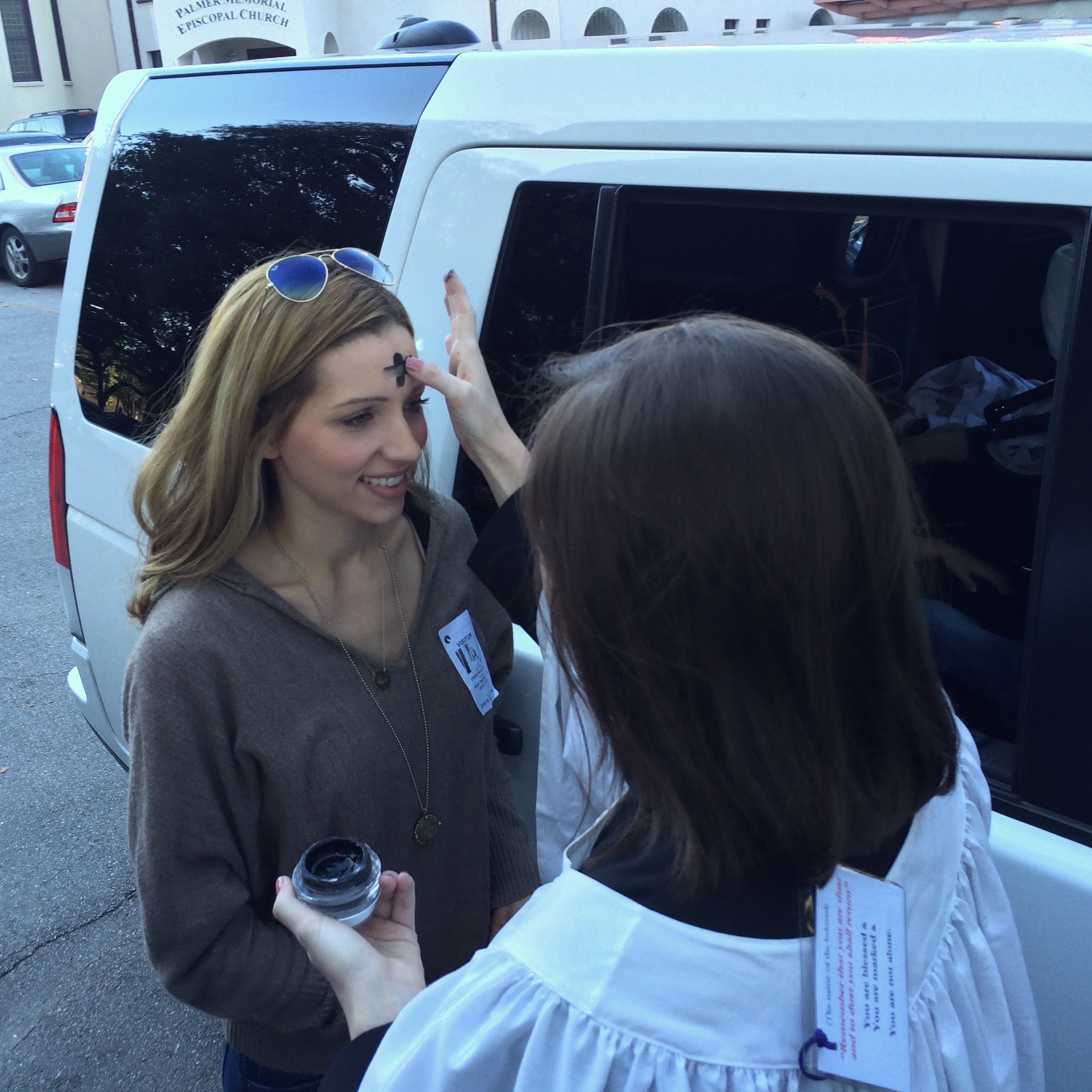
Church attendance in advanced industrial societies is in gradual general decline with people shifting from weekly to monthly or holiday attendance. Sociologists have attributed this trend to a number of reasons, starting from a simple boredom during services and lack of motivation, to generational incompatibility of belief systems and social changes attributed to modernity. Research across 65 different nations showed that out of 20 advanced industrial countries, 16 demonstrated a declining rate of monthly church attendance.
An article published in the Christianity Today Magazine in 2007 suggested that in America, church attendance since the 1990s had remained stable.
The percent of Americans who regularly attend religious services has fluctuated over time, but presently is at a low point. In Gallup Poll surveys, the yearly aggregate of those who answer "yes" to the question "Did you, yourself, happen to attend church or synagogue in the last seven days, or not?" was 36% in 2014, 2015, and 2016. This is a very long-running Gallup question: "In 1939, when Gallup first asked this question, 41% said 'yes.' That percentage dropped to 37% in 1940 and rose to 39% in 1950. It continued to climb, reaching as high as 49% at multiple points in the 1950s. Attendance then settled down to figures around 40% for decades, before dropping to 36%" beginning in 2014.
The decline in church attendance is more pronounced in developed European countries, where it is suggested that the secular culture overrides interest in religion. In Poland, church attendance has declined from more than 50% in 1979 to 40% in 2012.
Disparity between self reported and actual attendance
In the early 1990s, American sociologists Kirk Hadaway, Penny Marler, and Mark Chaves found that weekly attendance at Protestant and Catholic churches in one rural county in Ohio was only about 20%, whereas self-reported church attendance was 36%. The following studies confirmed a long-suspected gap between actual and self-reporting church attendance. The researchers have been wary of accusing over-reporters of dishonesty, as they found in the study that those who over-report do so mainly to maintain perceptions of themselves as "churched" Americans, not because they are afraid to reveal to the interviewer that they are "bad Christians". The findings point to a bigger issue as many people in the world may be over-reporting church attendance because of their self-perception and identity as churchgoing people, indicating a certain psychological aspect to the over-reporting of church attendance. Although surveys of church attendance are aimed to study religious behavior, many respondents view them as questions about their identity. This is especially true among Americans who consider themselves "regular churchgoers".
References
Notes
Citations
References
- Jespersen, Knud J. V.. (21 June 2011). "A History of Denmark". Macmillan International Higher Education.
- McKim, Donald K.. (2011). "More Presbyterian Questions, More Presbyterian Answers: Exploring Christian Faith". Westminster John Knox Press.
- (1 December 2011). "The Sabbath Complete: And the Ascendency of First-Day Worship". Wipf and Stock Publishers.
- (2014). "Traditional Christian Ethics 4". WestBow Press.
- (1966). "Christian Economics: Studies in the Christian Message to the Market Place". St. Thomas Press.
- (8 February 2017). "On Avoiding Church Services". [[Antiochian Orthodox Christian Archdiocese of North America]].
- Roos, Merethe. (2013-03-08). "Enlightened Preaching: Balthasar Münter's Authorship 1772-1793". [[Brill Academic Publishers]].
- (1 September 2022). "Even in Summer, You Must Go to Sunday Mass".
- Wigley, John. (1980). "The Rise and Fall of the Victorian Sunday". Manchester University Press.
- (24 September 2009). "The Oxford Handbook of Methodist Studies". OUP Oxford.
- Day, Cathy. (26 September 2014). "Wiltshire Marriage Patterns 1754-1914: Geographical Mobility, Cousin Marriage and Illegitimacy". Cambridge Scholars Publishing.
- Mitchell, Travis. (2018-06-13). "3. How religious commitment varies by country among people of all ages".
- (22 August 2018). "The world's most committed Christians live in Africa, Latin America – and the U.S.". Pew Research Center.
- [https://www.economist.com/news/international/21684679-march-christianity-future-worlds-most-popular-religion-african Christianity and church attendance]
- (12 June 2025). "The West has stopped losing its religion: After decades of rising secularism, Christianity is holding its ground—and gaining among the young". The Economist.
- (8 June 2007). "Religion: Gallup Historical Trends". Gallup, Inc..
- Kuriakose, Noble. (18 April 2014). "When Easter and Christmas near, more Americans search online for "church"". [[Pew Research Center]].
- Stetzer, Ed. (14 December 2015). "What Is Church Attendance Like During Christmastime? New Data From LifeWay Research". [[Christianity Today]].
- (1991). "Athena Magazine, Issues 41-55". International Studies Association.
- (8 December 2010). "Why an Evening Worship Service?". Christ United Reformed Church.
- (1 October 2008). "Daily Prayer in the Early Church: A Study of the Origin and Early Development of the Divine Office". Wipf and Stock Publishers.
- (30 June 2020). "Teach Us to Pray: The Lord's Prayer in the Early Church and Today". [[Wm. B. Eerdmans Publishing]].
- (28 December 2021). "Dictionary of Early Christian Beliefs: A Reference Guide to More Than 700 Topics Discussed by the Early Church Fathers". Tyndale House Publishers, Inc..
- (2005). "Calendar, Chronology And Worship: Studies in Ancient Judaism And Early Christianity". [[Brill Academic Publishers]].
- (2006). "The Sabbath: A Universal and Enduring Ordinance of God". [[Evangelical Presbyterian Church (United States).
- (12 June 2015). "Organized Sports on Sundays?". [[Alliance of Confessing Evangelicals]].
- (21 August 1896). "[[The Korean Repository]], Volume 3". Trilingual Press.
- "Times of Worship". Saint Paul's Free Methodist Church.
- (19 December 2019). "Ordinary Saints: Women, Work, and Faith in Newfoundland". McGill-Queen's Press.
- (1959). "The Living Church, Volume 138". Morehouse-Gorham Company.
- (2014-05-17). "Poll: Americans stretch the truth on attending church". Religion News LLC.
- (2005). "How Many Americans Attend Worship Each Week? An Alternative Approach to Measurement". Journal for the Scientific Study of Religion.
- [https://news.bbc.co.uk/2/hi/uk_news/6520463.stm One in 10 attends church weekly] ''BBC News''.
- [http://www.ncls.org.au/default.aspx?docid=2250&track=82083 NCLS releases latest estimates of church attendance]. ''National Church Life Survey, Media release''.
- Baker, David. [http://www.christiantoday.com/article/new.church.attendance.figures.do.the.numbers.add.up/32513.htm New church attendance figures – do the numbers add up?] ''Comment'', 16 May 2013.
- Lipka, Michael. [http://www.pewresearch.org/fact-tank/2013/09/13/what-surveys-say-about-worship-attendance-and-why-some-stay-home/ What surveys say about worship attendance – and why some stay home]. ''Pewresearch.org'', September 13, 2013.
- [http://www.gallup.com/video/166598/church-attendance-today-similar-1940s.aspx Church Attendance Today Similar to 1940s] {{Webarchive. link. (2014-01-22 . ''Gallup'', January 19, 2014.)
- {{usurped
- Bourdeaux, Michael. (2002). "Eastern Europe, Russia and Central Asia 2003". [[Taylor & Francis]].
- (2007). "Religion in the Public Sphere: A Comparative Analysis of German, Israeli, American and International Law".
- [http://revistaepoca.globo.com/Revista/Epoca/0,,EDR70422-6014,00.html Época – O brasileiro em números {{in lang. pt] {{webarchive. link. (2013-10-29)
- (2006-12-20). "Religious Views and Beliefs Vary Greatly by Country, According to the Latest Financial Times/Harris Poll". Harrisinteractive.com.
- [http://www.usachurches.org/church-sizes.htm Church Sizes]. ''USA Churches.org''. Accessed on January 19, 2014.
- [https://www.barna.org/barna-update/congregations/45-new-statistics-on-church-attendance-and-avoidance New Statistics on Church Attendance and Avoidance] {{Webarchive. link. (2014-01-20 . ''Barna Group'', March 3, 2008.)
- Barnes, Rebecca and Lindy Lowry. [http://www.churchleaders.com/pastors/pastor-articles/139575-7-startling-facts-an-up-close-look-at-church-attendance-in-america.html 7 Startling Facts: An Up Close Look at Church Attendance in America]. ''Churchleaders.com''. Accessed on 19 January 2014.
- Bilangan Research Center. "Gereja Sudah Tidak Menarik Bagi Kaum Muda".
- "Tolerance and Tension: Christianity and Islam in Sub-Saharan Africa".
- "Missions to East Asia's People".
- "Archived copy".
- "World's most committed Christians live in Africa, Latin America, U.S.".
- [http://assets.pewresearch.org/wp-content/uploads/sites/11/2016/03/Israel-Survey-Full-Report.pdf Israel’s Religiously Divided Society]
- "In Italy, views of Church from the papers and the pews seem very different".
- [http://www.independent.com.mt/articles/2019-01-31/local-news/Census-finds-increasingly-aging-church-going-population-only-36-1-of-Catholics-attend-Mass-6736202920 The Independent {{!Census finds increasingly aging church-going population; only 36.1% of Catholics attend Mass]
- "Caucasus Barometer 2017 Armenia".
- (23 August 2018). "After Francis: what's the future for the church in Ireland?". RTE.
- "Notes on International Mass Attendance".
- (April 2020). "Religious Belief and National Belonging in Central and Easter Europe".
- ''Centro de Investigaciones Sociológicas'' (Centre for Sociological Research). (October 2019). "Macrobarómetro de octubre 2019, Banco de datos - Document 'Población con derecho a voto en elecciones generales y residente en España, nacional (con Ceuta y Melilla)".
- "Missas dominicais perderam 23 mil fiéis desde 2001".
- (2019). "Sociedad y Religión en Movimiento. Segunda Encuesta Nacional sobre Creencias y Actitudes Religiosas en la Argentina". Centro de Estudios e Investigaciones Laborales (CEIL). [[National Scientific and Technical Research Council.
- (23 December 2013). "Church attendance in decline".
- (June 29, 2020). "Who Turns Off the Lights by 2050?: Evangelical Affiliation Dropping in Canada". Fellowship.ca.
- "The Religious Landscape of Sweden".
- "Christianity in the UK - Measuring the Christian population in the UK". Faith Survey.
- (5 December 2004). "Hvor mange aktive kristne finnes i Norge?".
- (23 August 2012). "Посещение служб, соблюдение поста, ношение креста и молитва".
- [http://www.gallup.com/poll/13117/religion-europe-trust-filling-pews.aspx Religion in Europe: Trust Not Filling the Pews], ''Gallup'', September 21, 2004.
- [http://viaintegra.wordpress.com/2009/09/15/norway-church-attendancewomen-priestswomen-bishops/ Norway: Church attendance].
- [https://www.economist.com/blogs/dailychart/2010/08/religious_attendance In which European countries are people least likely to attend religious services?] ''The Economist'', August 9, 2010. Based on a [http://www.europeansocialsurvey.org/ European Social Survey].
- "Religion in America: U.S. Religious Data, Demographics and Statistics".
- (2016-03-22). "The Gender Gap in Religion Around the World".
- [http://www.ncls.org.au/default.aspx?sitemapid=137 Gender profile of church attenders]. ''2013 NCLS Research''.
- [http://www.ncls.org.au/default.aspx?sitemapid=30 Attender Demographics]. ''2013 NCLS Research''.
- (2010-08-06). "Young Americans more loyal to religion than Boomers". Reuters.
- [http://www.pewsocialtrends.org/2006/02/13/are-we-happy-yet/5-3/ How Income and Church Attendance Affects Happiness]. ''Pewsocialtrends.org'', November 3, 2010.
- [http://geoconger.wordpress.com/2010/06/06/church-attendance-helps-combat-depression-study-finds/ Church attendance helps combat depression study finds], ''The Church of England Newspaper'', May 28, 2010 p. 7.
- (2009). "The Effects of Church Attendance and Marital Status on the Longitudinal Trajectories of Depressed Mood Among Older Adults". Journal of Aging and Health.
- (1978). "Frequency of church attendance and blood pressure elevation". Journal of Behavioral Medicine.
- (2002). "Religious attendance and cause of death over 31 years". International Journal of Psychiatry in Medicine.
- (2008). "Religious involvement and educational outcomes: The role of social capital and extracurricular participation". Sociological Quarterly.
- Stanton, Glenn. (22 March 2018). "Does Faith Reduce Divorce Risk?". The Witherspoon Institute.
- (5 February 2019). "Religious Trump Voters: How Faith Moderates Attitudes about Immigration, Race, and Identity". [[Cato Institute]].
- (24 September 2018). "How Faith Moderates Attitudes About Immigration, Race, Identity". [[RealClearReligion]].
- (2005). "Eurobarometer 225: Social values, Science & Technology". [[Eurostat]].
- [http://www.ionainstitute.eu/assets/files/Press_Release_by_The_Iona_Institute_2Nov2009-1.pdf ''Press Release by the Iona Institute'', 2 November 2009].
- [http://www.thearda.com/Archive/Files/Analysis/96KOHUT/96KOHUT_Var63_1.asp Religion and Politics Survey, 1996]. ''The Association of Religion Data Archives (ARDA)''. Accessed on 19 January 2014.
- (28 March 2018). "Holier than thou: students most likely to attend church". [[The Times]].
- "In America, Does More Education Equal Less Religion?". Pew Research Center.
- (2025-04-07). "New Research: Belief in Jesus Rises, Fueled by Younger Adults".
- (2025-09-15). "Faith is a hit among Gen Z. The Catholic Church may have influencers to thank".
- Graham, Ruth. (26 February 2025). "Christianity's Decline in U.S. Appears to Have Halted, Major Study Shows". The New York Times.
- Graham, Ruth. (23 September 2024). "In a First Among Christians, Young Men Are More Religious Than Young Women". The New York Times.
- Medhora, Shalailah. (19 April 2025). "Why more Australian Gen Z men are finding meaning in organised religion". ABC News (Australia).
- Wimmer, AC. (12 April 2025). "Record number of adult baptisms in France shows surge among youth". CNA.
- Mohdin, Aamna. (26 April 2025). "A revival is happening': Church hails resurgence among young in UK". The Guardian.
- Ash, Lamorna. (19 April 2025). "Young, liberal and embracing Christianity". Financial Times.
- Coffey, Helen. (20 April 2025). "Make Christianity cool again: Why Gen Z is flocking to church". The Independent.
- Young, Sarah. (20 April 2025). "Catholicism spreads amongst young Britons longing for 'something deeper'". Rreuters.
- "A nonstop Kentucky prayer 'revival' is going viral on TikTok, and people are travelling thousands of miles to take part".
- Millar, Abi. (16 December 2024). "The return of Muscular Christianity: Gym bros are repping for Jesus". UnHerd.
- Paz, Christian. (16 March 2025). "The surprising chasm splitting young Americans along political lines: Gen Z men are becoming more religious. The women, not so much.". Vox.
- (25 May 2025). "Young, single men are leaving traditional churches. They found a more 'masculine' alternative". The Daily Telegraph.
- McAlpine, Stephen. (21 February 2025). "Joe Rogan and Jordan Peterson are taking Gen Z men to Church". Premier Christianity.
- Schlott, Rikki. (3 December 2024). "Young men leaving traditional churches for 'masculine' Orthodox Christianity in droves". New York Post.
- "Are Your Pews Filling With Young and New Christians?". Ad Crucem.
- Schlott, Rikki. (17 April 2025). "Young people are converting to Catholicism en masse — driven by pandemic, internet, 'lax' alternatives". New York Post.
- Koch, M.J.. (17 May 2025). "As Young Catholics Move Toward Traditionalism, Views Are Mixed Whether Pope Leo XIV Can Lead the Way". New York Sunday News.
- (2024). "Helping Asian leaders remain faithful and fruitful amidst challenges". [[Wisconsin Evangelical Lutheran Synod]].
- (17 May 2025). "United States: Traditional Catholicism Interests Young People". Catholic Herald.
- Ash, Lucy. (25 May 2025). "Young US men are joining Russian churches promising 'absurd levels of manliness'". BBC.
- (30 December 2021). "T&T Clark Handbook of Anabaptism". Bloomsbury Publishing.
- (25 February 2016). "The Palgrave Companion to North American Utopias". Springer.
- (January 2000). "The Demographic Characteristics of National Minorities in Certain European States". Council of Europe.
- Low, Robbie. (June 2003). "The Truth About Men & Church". The Fellowship of St. James.
- Egan, Richard. (September 2002). "Church Attendance: The family, feminism and the declining role of fatherhood". AD2000.
- (1996). "Becoming Spiritual Soulmates With Your Child". Broadman & Holman Publishers.
- "Ten Surprises About the Unchurched". [[Christianity Today]].
- (12 July 2018). "Two-Thirds of Churchgoers Have Invited Someone to Church". LifeWay Research.
- [https://web.archive.org/web/20100801010204/http://www.cra.org.au/pages/00000242.cgi Why People Don't Go to Church... ]. Accessed through Internet Archives on 19 January 2014.
- (2000). "Modernization, Cultural Change, and the Persistence of Traditional Values". American Sociological Review.
- Hunter Baker. [http://www.christianitytoday.com/ct/2007/novemberweb-only/145-42.0.html Is Church Attendance Declining?], 11 August 2007.
- Frank Newport, [http://www.gallup.com/poll/200186/five-key-findings-religion.aspx Five Key Findings on Religion in the US], Gallup Poll (December 23, 2017).
- [http://www.gallup.com/poll/1690/religion.aspx Religion], Gallup Poll (last accessed May 12, 2017).
- "Praktyki niedzielne Polaków (dominicantes)".
- (December 1993). "What the polls don't show: A closer look at U.S. church attendance". American Sociological Review.
- (May 6, 1998). "Did You Really Go To Church This Week? Behind the Poll Data". The Christian Century.
- (February 1998). "Overreporting church attendance in America: Evidence that demands the same verdict". American Sociological Review.
- (1999). "Testing the Attendance Gap in a Conservative Church". Sociology of Religion.
- [http://hirr.hartsem.edu/about/news_and_notes_vol4no1.html The Church Attendance Gap: A look at two older studies whose findings should be taken more seriously] {{webarchive. link. (2013-11-30 . ''Hartford Institutes for Religious Research News and Notes'', Vol. IV, No. 1.)
- [https://web.archive.org/web/20080516014545/http://religions.pewforum.org/reports Pew Research: Religious Landscape Survey].
- (May 10, 2017). "Religious Belief and National Belonging in Central and Eastern Europe". [[Pew Research Center]].
This article was imported from Wikipedia and is available under the Creative Commons Attribution-ShareAlike 4.0 License. Content has been adapted to SurfDoc format. Original contributors can be found on the article history page.
Ask Mako anything about Church attendance — get instant answers, deeper analysis, and related topics.
Research with MakoFree with your Surf account
Create a free account to save articles, ask Mako questions, and organize your research.
Sign up freeThis content may have been generated or modified by AI. CloudSurf Software LLC is not responsible for the accuracy, completeness, or reliability of AI-generated content. Always verify important information from primary sources.
Report