From Surf Wiki (app.surf) — the open knowledge base
Christianity in Albania
none
.jpg)
none
Christianity in Albania began when Christians arrived in Illyria soon after the time of Jesus, with a bishop being appointed in Dyrrhachium (Epidamnus) in 58 AD.
When the Roman Empire was divided in 395 AD, modern Albania became part of the Byzantine Empire, but was under the jurisdiction of the Pope until 732, when Emperor Leo III placed the church under the Patriarch of Constantinople.
From 1100 AD, the Roman Empire carried out Church missions in the area. In relation to the increasing influence of Venice, the Franciscans started to settle down in the area in the 13th century. From the 15th century to the 19th century, under the rule of the Ottoman Empire, Christianity was replaced by Islam as the majority religion in Albania.
Demographics
Census in 2011
The 2011 population census, gives the percentages of religious affiliations with 58% Muslim, 10% Catholic, 7% Orthodox and 25% atheist, nonreligious or other since the fall of Communism in 1991. However the 2011 census is disputed due to poor counting of the population and the inability to reach most citizens. A 2015 study estimated some 13,000 conversions to Christianity from Muslim backgrounds.
Census in 2023
According to the 2023 census, there were 1,101,718 (45.86%) Muslims, 201,530 (8.38%) Catholics, 173,645 (7.22%) Eastern Orthodox, 115,644 (4.81%) Bektashi Muslims, 9,658 (0.4%) Evangelicals, 3 670 (0.15%) of other religions, 332,155 (13.82%) believers without denomination, 85,311 (3.55%) Atheists and 378,782 (15.76%) did not provide an answer.
Catholic Church
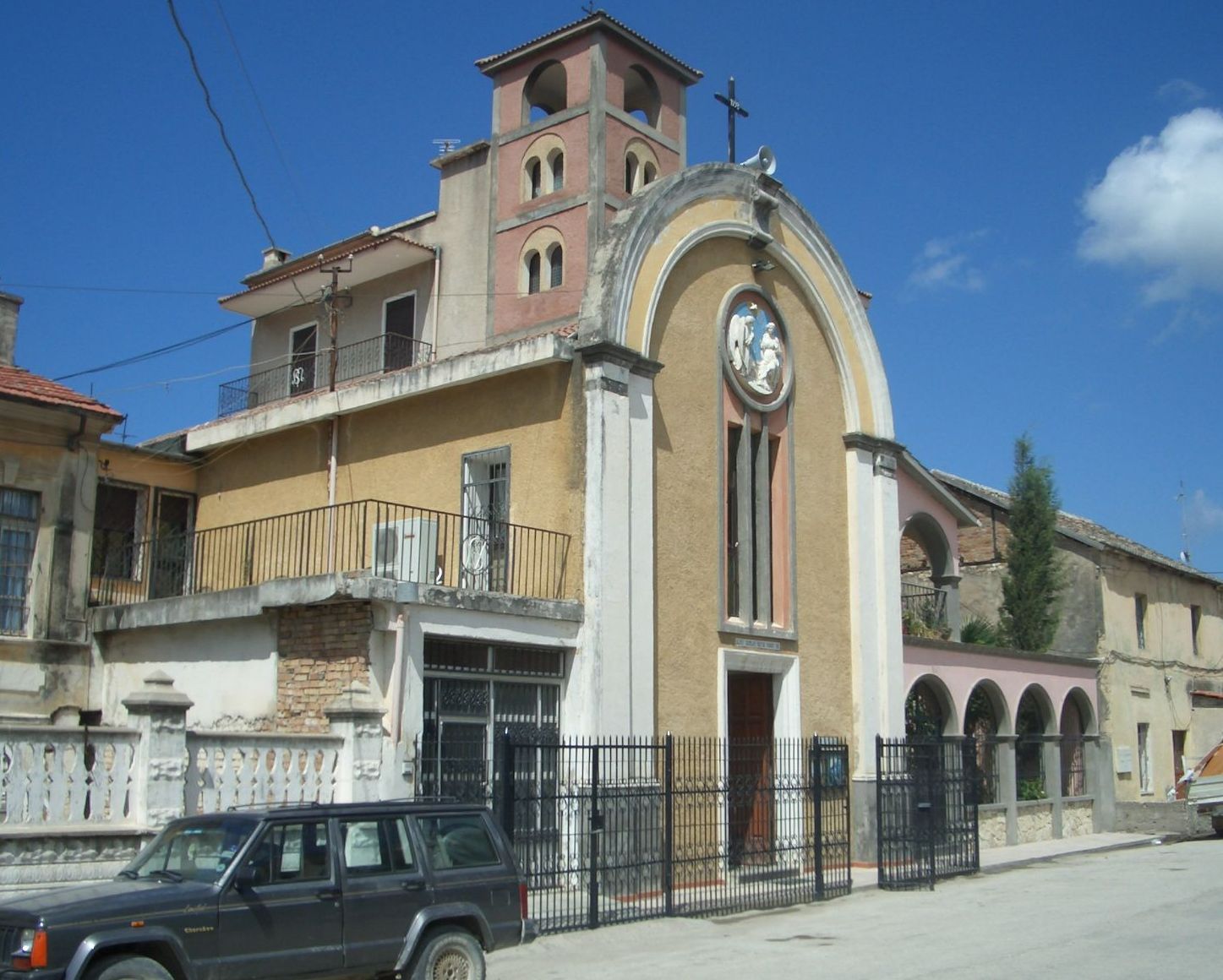
Main article: Catholic Church in Albania
The Catholic Church in Albania is part of the worldwide Catholic Church, under the spiritual leadership of the Pope in Rome. According to the numbers given by the government in 2011 it was stated that around 10.03% of the religious population is Catholic. The Albanian census in 2023 note that 8% of Albanians are Catholic.
There are five dioceses in the country, including two archdioceses plus an Apostolic Administration covering southern Albania.
Prior to the Ottoman invasion, Christianity was the religion of all Albanians. The northern Albanians adhered to Catholicism, whilst in the south they were followers of Eastern Orthodoxy.
Eastern Orthodoxy
Main article: Eastern Orthodoxy in Albania
According to the numbers given by the government in 2010 it was stated that Eastern Orthodoxy was practiced by about 20% of Albanians within Albania. In the disputed 2011 census the percentage of Orthodox believers was listed as 6.75% of the population. Albania is historically linked with both the Catholic Church and Eastern Orthodoxy. Albanians were among the first peoples of the region to receive missionaries and convert to Christianity. With the split of the Church in 1054, Orthodoxy become the religion for the Albanians inhabiting the areas under the Byzantine rule.
The first Orthodox liturgy in the Albanian language was held not in Albania, but in Pennsylvania and Massachusetts. Subsequently, when the Orthodox Church was not allowed an official existence in communist Albania, Albanian Orthodoxy survived in exile in Philadelphia with the church in Philadelphia being founded in 1913 and in Boston in 1965.
Protestantism
Main article: Protestantism in Albania
Figures in 2022 note that 0.45% of the population are Protestant. This is about 13,000 people. Many Protestant denominations come under the umbrella organisation, the Albanian Evangelical Alliance (VUSH).
Freedom of religion
In 2022, Albania scored 4 out of 4 for religious freedom.
References
References
- [https://www.britannica.com/topic/history-of-Albania Britannica website, ''History of Albania'']
- When the Christian church [[East-West Schism. split]] in 1054, the north followed Rome while the south of the country stayed with Constantinople.[https://www.encyclopedia.com/religion/encyclopedias-almanacs-transcripts-and-maps/albania-catholic-church Encyclopedia.com website, ''Albania, The Catholic Church In'']
- [https://www.usccb.org/committees/church-central-eastern-europe/albanias-history United States Conference of Catholic Bishops website, ''Albania's History'', article dated 2004]
- [http://www.instat.gov.al/media/177354/main_results__population_and_housing_census_2011.pdf Albanian census 2011] {{webarchive. link. (14 November 2014)
- Albanian Government. "L'Albania oggi". Ministry of Foreign Affairs of Albania.
- (2015). "Believers in Christ from a Muslim Background: A Global Census". IJRR.
- "Population and Housing Census 2023". [[Institute of Statistics (Albania).
- Ramet, Sabrina P.. (1989). "Religion and Nationalism in Soviet and East European Politics". Duke University Press.
- [https://www.thearda.com/world-religion/national-profiles?u=3c&u=111c The Archive of Religion Data Archives website, Retrieved 2023-07-18]
- [https://operationworld.org/locations/albania/ Operation World website, Retrieved 2023-07-18]
- [https://vush.al VUSH official website]
- [https://freedomhouse.org/country/albania/freedom-world/2022 Freedom House website, Retrieved 202-07-18]
This article was imported from Wikipedia and is available under the Creative Commons Attribution-ShareAlike 4.0 License. Content has been adapted to SurfDoc format. Original contributors can be found on the article history page.
Ask Mako anything about Christianity in Albania — get instant answers, deeper analysis, and related topics.
Research with MakoFree with your Surf account
Create a free account to save articles, ask Mako questions, and organize your research.
Sign up freeThis content may have been generated or modified by AI. CloudSurf Software LLC is not responsible for the accuracy, completeness, or reliability of AI-generated content. Always verify important information from primary sources.
Report