From Surf Wiki (app.surf) — the open knowledge base
China national football team
Men's association football team

Men's association football team
| Field | Value |
|---|---|
| Name | China |
| Nickname | 龙之队 (Dragon Team) |
| Badge | China national football team.svg |
| Badge_size | 135px |
| Association | Chinese Football Association (CFA) |
| Confederation | AFC (Asia) |
| Sub-confederation | EAFF (East Asia) |
| Coach | Shao Jiayi |
| Captain | Zhang Yuning |
| Most caps | Li Weifeng (112) |
| Top scorer | Hao Haidong (39) |
| Home Stadium | Various |
| FIFA Trigramme | CHN |
| FIFA Rank | |
| FIFA max | 37 |
| FIFA max date | December 1998 |
| FIFA min | 109 |
| FIFA min date | March 2013 |
| Elo Rank | |
| Elo max | 23 |
| Elo max date | May 1934 |
| Elo min | 92 |
| Elo min date | October 1992 |
| First game | As Republic of China (1912–1949) |
| 2–1 **** | |
| (Manila, Philippines; 1 February 1913) | |
| As People's Republic of China (1949–present) | |
| 4–0 | |
| (Helsinki, Finland; 4 August 1952) | |
| Largest win | 19–0 |
| (Ho Chi Minh City, Vietnam; 26 January 2000) | |
| Largest loss | 8–0 |
| (Recife, Brazil; 10 September 2012) | |
| World cup apps | 1 |
| World cup first | 2002 |
| World cup best | Group stage (2002) |
| Regional name | Asian Cup |
| Regional cup apps | 14 |
| Regional cup first | 1976 |
| Regional cup best | Runners-up (1984, 2004) |
| 2ndRegional name | EAFF E-1 Football Championship |
| 2ndRegional cup apps | 9 |
| 2ndRegional cup first | 2003 |
| 2ndRegional cup best | Champions (2005, 2010) |
| pattern_la1 | _chn24H |
| pattern_b1 | _chn24H |
| pattern_ra1 | _chn24H |
| pattern_sh1 | _chn24H |
| pattern_so1 | _chn24H |
| leftarm1 | FF0000 |
| body1 | FF0000 |
| rightarm1 | FF0000 |
| shorts1 | FF0000 |
| socks1 | FF0000 |
| pattern_la2 | _chn24A |
| pattern_b2 | _chn24A |
| pattern_ra2 | _chn24A |
| pattern_sh2 | _chn24a |
| pattern_so2 | _chn24A |
| leftarm2 | FFFFFF |
| body2 | FFFFFF |
| rightarm2 | FFFFFF |
| shorts2 | 000000 |
| socks2 | FFFFFF |
the men's team
| Sub-confederation = EAFF (East Asia) 2–1 **** (Manila, Philippines; 1 February 1913) As People's Republic of China (1949–present) 4–0 (Helsinki, Finland; 4 August 1952) (Ho Chi Minh City, Vietnam; 26 January 2000) (Recife, Brazil; 10 September 2012)
The China national football team (), recognised as China PR by FIFA, represents China in men's international association football and is governed by the Chinese Football Association (CFA).
China won the EAFF East Asian Cup in 2005 and 2010, was runner-up at the AFC Asian Cup in 1984 and 2004, and made its sole FIFA World Cup appearance in 2002, losing all matches without scoring a goal.
History
As Republic of China (1913–1949)
China's first-ever international representative match was arranged by Elwood Brown, president of the Philippine Athletic Association, who proposed the creation of the Far Eastern Championship Games, a multi-sport event considered to be a precursor to the Asian Games. He invited China (Republic of China) to participate in the inaugural 1913 Far Eastern Championship Games held in the Philippines, which included association football within the schedule. To represent them, it was decided that the winner of the football at the Chinese National Games in 1910 should have the honour to represent the country, where it was won by South China Football Club. The club's founder and coach Mok Hing (Chinese: 莫慶) would become China's first coach and on 4 February 1913 in a one-off tournament game held in the Manila he led China to a 2–1 defeat against the Philippines national football team.
The political unrest of the Xinhai Revolution that mired China's participation in the first tournament, especially in renaming the team as Republic of China national football team, did not stop Shanghai being awarded the 1915 Far Eastern Championship Games. Once again South China Football Club, now known as South China Athletic Association won the right to represent the nation. This time in a two legged play-off against the Philippines, China won the first game 1–0 and then drew the second 0–0 to win their first ever tournament. With the games being the first and only regional football tournament for national teams outside Britain, China looked to establish themselves as a regional powerhouse by winning a total of nine championships.
The Chinese Football Association was founded in 1924 and then was first affiliated with FIFA in 1931. With these foundations in place China looked to establish themselves within the international arena and along with Japan were the first Asian sides to participate in the Football at the Summer Olympics when they competed within the 1936 Summer Olympics held in Germany. At the tournament China were knocked out within their first game at the round of 16 when they were beaten by Great Britain Olympic football team 2–0 on 6 August 1936.
On 7 July 1937 the Second Sino-Japanese War officially erupted, which saw the relations between China and Japan completely eroded especially once it was announced that Japan would hold the 1938 Far Eastern Championship Games. The tournament would be officially cancelled while Japan held their own tournament called the 2600th Anniversary Celebrations of the Japanese Empire, which included the Japanese puppet states Manchukuo and the collaborationist National Reorganised Government of China based in occupied Nanjing. But none of the top Chinese players competed in the Japanese Empire anniversary games. None of the games during the Second Sino-Japanese War are officially recognized and once the war ended on 9 September 1945 China looked to the Olympics once again for international recognition. On 2 August 1948 China competed in the Football at the 1948 Summer Olympics where they were once again knocked out in the last sixteen, this time by Turkey national football team in a 4–0 defeat. When the players returned they found the country in the midst of the Chinese Civil War. When it ended, the team had been split into two, one called the People's Republic of China national football team and the other called Republic of China national football team (later renamed Chinese Taipei national football team).
Early People's Republic (1950–1979)
The newly instated People's Republic of China reformed CFA before having FIFA acknowledge their 1931 membership on 14 June 1952. Finland, who were one of the first nations to hold diplomatic relations with China's new government, invited the country to take part in the 1952 Summer Olympics. Li Fenglou would become the country's first permanent manager to lead them in the tournament, however the Chinese delegation was delayed and they missed the entire competition, nevertheless the Finland national football team would still greet Li and the Chinese team with a friendly game on 4 August 1952 making it People's Republic of China's official first game, which ended in a 4–0 defeat. In preparation for entering their first FIFA competition, China sent a young squad to train in Hungary in 1954. However, when they entered the 1958 FIFA World Cup qualification process China were knocked out by Indonesia.
On 7 June 1958, China stopped participating within any FIFA recognised football events when FIFA officially started to recognise the Republic of China as a different country. For years the People's Republic of China would only play in friendlies with nations who recognized them as the sole heir to the China name. On 25 October 1971 the United Nations would recognise the People's Republic country as the sole heir to the China name in their General Assembly Resolution 2758 act. Due to this hearing in 1973, the Nationalist Chinese team, which had been using the name "Republic of China", would stop using that name and would eventually rename themselves as "Chinese Taipei" in 1980. These acts would see China rejoin the international sporting community, first by becoming a member of the Asian Football Confederation in 1974 and by rejoining FIFA again in 1979.
Asian underdogs (1980–2009)
The 1974 Asian Games reintroduced the team back into international football while the 1976 AFC Asian Cup saw them came third.

In 1980, China participated in the 1982 FIFA World Cup qualifiers for a berth in the 1982 World Cup, but they lost a play-off game against New Zealand. During the 1986 FIFA World Cup qualifiers for the 1986 World Cup, China faced Hong Kong at home in the final match of the first qualifying round on 19 May 1985 where China only needed a draw to advance. However, Hong Kong produced a 2–1 upset win which resulted in riots inside and outside the stadium in Beijing. During the 1990 FIFA World Cup qualifiers, China again reached the final round. They just missed out on qualifying as they conceded two goals in the final three minutes against Qatar in their final group match. During the 1994 FIFA World Cup qualifiers – when they were led by their first-ever foreign manager, Klaus Schlapner – China failed to reach the final round of qualifying, coming second behind Iraq.
In 1987, the first Chinese footballers moved abroad when future national team player Xie Yuxin joined FC Zwolle (Netherlands) and ex-national teamer Gu Guangming joined SV Darmstadt 98 (Germany). In 1988, national team captain Jia Xiuquan and striker Liu Haiguang both joined FK Partizan (Yugoslavia).
After failing to reach the 1998 FIFA World Cup, China appointed Serbian manager Bora Milutinović as coach of the national team, and China saw its fortune increased. The country managed to take fourth-place finish in the 2000 AFC Asian Cup where the Chinese side performed well, and only fell to heavyweights Japan and South Korea by one goal margin. The good performance in Lebanon boosted the confidence of Chinese side, and in 2002 FIFA World Cup qualifiers, China lost only one and drew only one, winning all the remaining games, most notably an important 1–0 win over Oman, to finally reach the 2002 FIFA World Cup, its first and only World Cup up to date. In the 2002 World Cup, China was eliminated after three matches without gaining a single point nor even scoring a goal during their participation in the tournament.
China hosted the 2004 AFC Asian Cup, ultimately fell 1–3 to Japan in a final match. The match's outcome sparked anger among Chinese supporters, who rioted in response to bad refereeing. There were an estimated 250 million viewers for the match, the largest single-event sports audience in the country's history at that time.
After winning the 2005 East Asian Football Championship following a 2–0 win against North Korea, they started qualification for the 2007 AFC Asian Cup. During this time, the team became the subject of immense criticism and national embarrassment in the media when they had managed to score only one goal, Shao Jiayi's penalty kick during injury time, against Singapore at home and only managed a draw with Singapore in the away game. During preparations for the 2007 AFC Asian Cup, the team spent the weeks leading up to the tournament on a tour of the United States. While the 4–1 loss to the United States was unexpected, a 1–0 loss to Major League Soccer side Real Salt Lake which finished bottom of the league in the 2007 season caused serious concern.
During the 2007 AFC Asian Cup, the team played three group matches, winning against Malaysia, drawing with Iran after leading 2–1, and losing 3–0 to Uzbekistan. After high expectations, China's performance at the tournament drew criticism online which condemned the team's members and even the association. Zhu was later replaced as manager by Vladimir Petrović after these performances. Some commented that China's reliance on foreign managers for the past decade had been an indicator of its poor domestic manager development.
In June 2008, China failed to qualify for the 2010 FIFA World Cup, losing against Qatar and Iraq at home. After the 2008 Summer Olympics, Petrović was sacked as the manager and Yin Tiesheng was announced as the team's caretaker.
Stagnation (2010–present)
In April 2009, China appointed Gao Hongbo as the new manager, replacing Yin Tiesheng. His arrival saw China opt for a new strategy, turning towards ground passing tactics and adopting the 4–2–3–1 formation. It was noted that Chinese footballers had relied too heavily on the long ball tactic for almost a decade. Wei Di, the chief of the Chinese Football Association, stressed that, "Anytime, no matter win or loss, they must show their team spirit and courage. I hope, after one year's effort, the national team can give the public a new image." Gao was knocked out of the 2011 AFC Asian Cup's group stage. His winning percentage (65%), the highest for a Chinese manager since Nian Weisi (67.86%), did not defer the Chinese Football Association from replacing him with José Antonio Camacho in August 2011, less than a month before the qualification process for the 2014 FIFA World Cup.
Appointment of José Antonio Camacho
On 13 August 2011, José Antonio Camacho was appointed as the new manager of the team, signing a three-year deal for a reported annual salary of $8 million. Wei Di, CFA chief, explained the decision as being part of a long-term plan to help the country catch up with rivals Japan and South Korea. He noted that, "Compared with their neighbours Japan and South Korea, Chinese football is lagging far behind, we need to work with a long-term view and start to catch up with a pragmatic approach. The citizens expects heavily for China to qualify for the 2014 FIFA World Cup held in Brazil. They are afraid that changing the coach at the last moment may cause bad effect to the team's qualifying prospect. I can totally understand that. But we do not have any time to waste."
Yu Hongchen, the vice-president of the Chinese Football Administrative Centre, also stated, "The qualifying stage of 2014 World Cup is just a temporary task for him. Even if the task is failed, Camacho will not lose the job. When we started to find a new coach for the national team, we mainly focus on European countries such as Germany, the Netherlands and Spain. First of all, they have advanced football concepts, and secondly they have a productive youth training system, which we can learn from. We hope he can help us to find a suitable style."
Camacho managed the team to an 8–0 lost against Brazil in a friendly match on 10 September 2012 which would go on record as China's biggest ever international defeat. This massive loss also succumbed China to their worst ever FIFA ranking (109th).
Camacho then led China during their qualification process for the 2015 AFC Asian Cup whereby losing the first group match 2–1 to Saudi Arabia. After a 5–1 lost against Thailand in a friendly match, Camacho was sacked a week later and with Fu Bo assigned as the caretaker. In light of continued struggles, in 2015, General Secretary of the Chinese Communist Party Xi Jinping expressed the goal of having China's men's national team be the top team in Asia by 2030 and the following year China revealed its ambitious blueprint to be the best in the world by 2050.
Alain Perrin and Gao Hongbo returns

After Camacho, there was Alain Perrin, who finally led China to qualify for the 2015 AFC Asian Cup, which also included luck from the Thailand–Lebanon encounter, in which Thailand lost but salvaged an important goal by Adisak Kraisorn to help improve China's goal difference with the Lebanese. Soon after that, Perrin led China into a series of friendlies, where some positive results against Macedonia, Kuwait, Paraguay and Thailand boosted some optimism.
In the 2015 AFC Asian Cup, Perrin's China was placed in a group with Saudi Arabia, Uzbekistan and North Korea. China emerged victoriously in all three games, qualified for the knockout stage for the first time since the 2004 edition. The Chinese Dragons then lost to host Australia 0–2 with Tim Cahill scoring a brace.
Despite this, China's 2018 FIFA World Cup qualifiers immediately represented a huge problem for the Chinese side; they were held goalless by Hong Kong at home twice, and lost to Qatar. Perrin was sacked for the team's poor performance at the middle of the second round following another goalless draw to Hong Kong, and former coach Gao Hongbo returned to the role on 3 February 2016, where he had to face a task of guiding China in at the expense of North Korea which had a better second-place ranking than China. Gao's first two matches were consecutive wins against Maldives and Qatar, and with North Korea suddenly slipping out against the Philippines, these results secured the team's passage to the 2019 AFC Asian Cup and entering the final qualifying stage for the World Cup for the first time since 2002.
China continued their World Cup hunt by a 2–3 defeat to South Korea; and a goalless draw to AFC's then highest ranked Iran at home. However, China followed that with a 0–1 loss at home to Syria and 0–2 away to Uzbekistan next month. Gao Hongbo resigned. His team had been winless in the first four matches of the final qualifying stage for the World Cup, including a home loss to Syria which was criticised by a number of fans.
Marcello Lippi's tenure
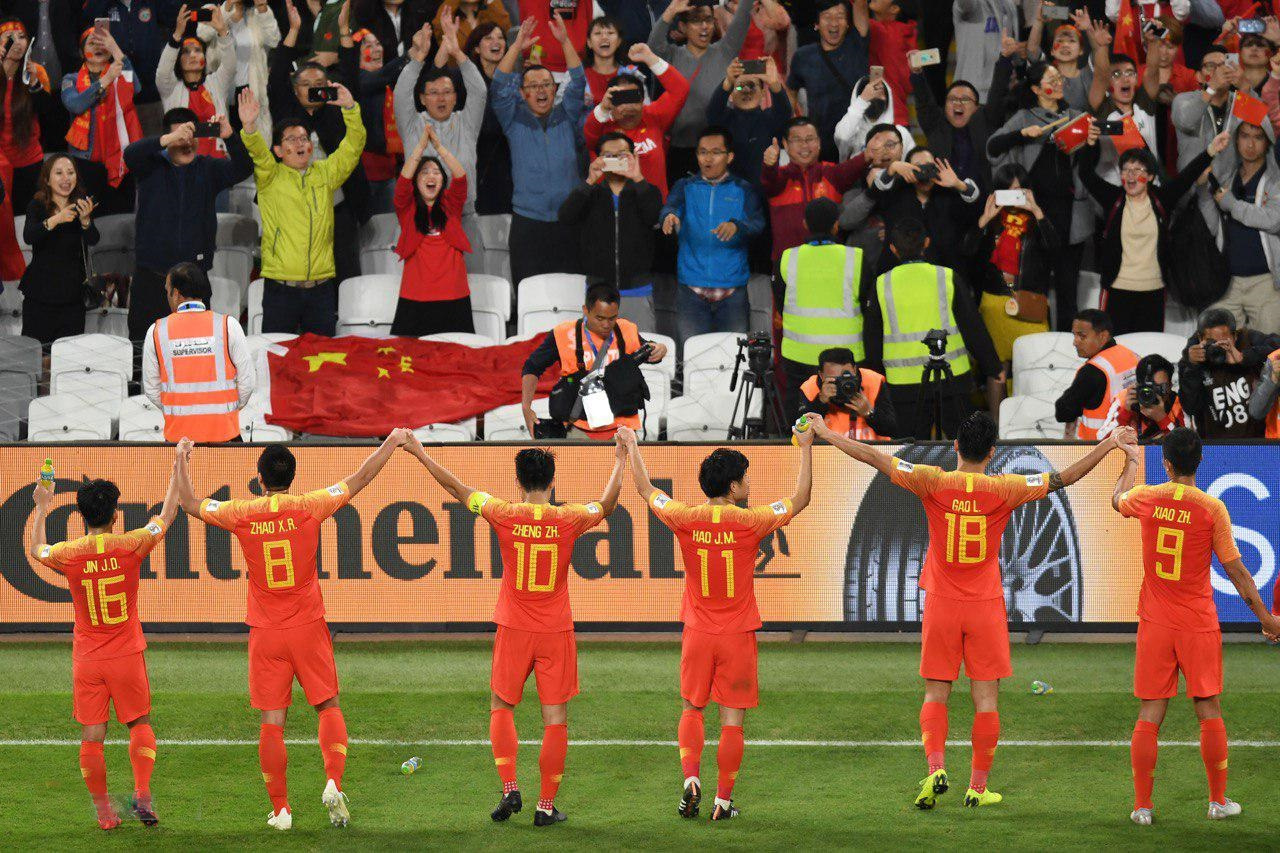
On 22 October 2016, Marcello Lippi was appointed manager of the team ahead for the last remaining matches. A match saw China defeat South Korea for the first time in a FIFA-sanctioned tournament, amidst the heat of tensions over South Korea's deployment of THAAD. However, China's away loss to Iran and a 2–2 draw to Syria meant China was unable to compete with and dragged behind by Syria who managed a 2–2 draw with Iran and not to be qualified for the 2018 World Cup under Lippi's tenure, but improvements could be seen following two late wins over Uzbekistan and Qatar.

Lippi led the side during the final stage of the 2019 AFC Asian Cup, where China won 2–1 to Kyrgyzstan and 3–0 to Philippines, before losing 2–0 to group leaders South Korea on 16 January. China then beat Thailand 2–1 to earn a place in the quarter-finals, where it was knocked 3–0 out by Iran; Lippi subsequently confirmed his departure from the team.
Another Italian and former Ballon d'Or winner, Fabio Cannavaro was appointed as the next China's manager in conjunction with coaching Guangzhou Evergrande but he stepped down after only two matches.
Lacking options when it came to searching for a new coach, CFA re-appointed Marcello Lippi. To improve the team, China had begun a series of naturalization on foreign-based players, with Nico Yennaris, an English-born Cypriot, and Tyias Browning, another English-born player, being naturalized. Subsequently, Elkeson, a Brazilian player with no Chinese ancestry, was naturalized. Despite the process of naturalization, the 2022 FIFA World Cup qualification for China proved to be rockier than expected, the team could only beat the Maldives and Guam, before being held goalless in the Philippines and followed with a denting 1–2 away lost to Syria, and Lippi resigned as coach.
Li Tie and Li Xiaopeng's era
2002 FIFA World Cup ace Li Tie was appointed as China's head coach on 2 January 2020. Trailing behind Syria by five points before Li took charge, China were still unable to reclaim their first place but nonetheless managed to win all of their remaining fixtures, including an important 2–0 win over the Philippines and notably a 3–1 win over Syria to guarantee them as the best second-placed team, thus reaching the third round.
In the third round, China shared Group B with Asian powerhouses Japan, Australia and Saudi Arabia, alongside Oman and Vietnam. The Chinese started poorly with two losses to Australia and Japan in Doha due to the COVID-19 pandemic at home preventing the country from hosting. After this poor start, China salvaged five points in the next four matches, including a hard-fought 3–2 win over Vietnam and two 1–1 draws to Oman and especially Australia, all occurring in Sharjah, the UAE. However, despite these improvements, Li Tie was sacked on 2 December 2021 amidst heavy criticism.
After Li Tie's resignation, his World Cup teammate Li Xiaopeng took the head coach position with immense pressure. China's first game under Li Xiaopeng, however, was a 0–2 away loss to Japan in Saitama, effectively ending China's hopes of finishing in the top two and could only rely on the play-offs. Yet, on 1 February 2022, coinciding with the traditional Lunar New Year, the Chinese stumbled to a shock 1–3 loss to Vietnam in Hanoi, officially extending China's hunt for a second World Cup appearance to 24 years. This defeat, the first in Chinese football history to Vietnam, triggered widespread anger and criticism amongst Chinese fans. With their World Cup hopes lost, China grabbed a solitary point coming from a 1–1 draw with the Saudis before losing to Oman 0–2 in Muscat, finishing fifth with two more points than Vietnam.
The Yugoslav era
After poor forms in the 2022 FIFA World Cup qualifications, China took part in the 2022 EAFF E-1 Football Championship under interim manager Aleksandar Janković. With the leadership of Janković, China won four points, finishing third after a 1–0 win over Hong Kong, though for the first time in 12 years, China did not lose to Japan away. Because of this result Janković was named the permanent coach of the China national team in 2023, with the aim to guide China to qualify for the 2026 FIFA World Cup.
On 1 January 2024, China suffered a 1–2 defeat to Hong Kong in an international friendly, marking their first loss in 39 years. Later, for the first time ever, China could not score in three consecutive matches at the AFC Asian Cup as they fell to third with only two points and later eliminated. This result and poor performance of the side triggered outrage in China, and Aleksandar Janković would lose the job on 31 January 2024.
On 25 February 2024, Branko Ivanković succeeded Janković as China's new coach. Under his tenure, China only managed to reach the third round of the World Cup qualification by the slimmest margin, thanks to China's superior head-to-head record against Thailand after both teams were equal on points, goals scored and goal difference. In the first match of the third round, China suffered a heavy 7–0 defeat to Japan. Ivanković was sacked by the CFA on 27 June 2025 , after the team's elimination from the qualifiers, finishing fifth with a goal difference of –13, the lowest in the round tied by Kuwait.
After failing to qualify for the 2026 World Cup, Dejan Đurđević took place as the caretaker manager of the national team. The team participated in the 2025 EAFF E-1 Football Championship, where they finished in third place after losing 0–3 to South Korea and 0–2 to Japan.
Shao Jiayi era
On 5 November 2025, Shao Jiayi was appointed as China's new head coach, stepping away from his managerial position at Qingdao West Coast.
Team image

The team is known as the "Dragon Team" (), "Team China" (), the "National Team" () or "Guózú" (, short for ). China's home kit is traditionally all-red with a white or yellow trim while their away kit is traditionally an inverted version of the home kit, fully white with a red trim. During the 1996 AFC Asian Cup, China employed a third kit which was all blue with a white trim and was used against Saudi Arabia during the tournament. The 2022–24 season marks the first time the team had a turquoise blue secondary kit, replace the white kit worn in previous seasons. The team has also started to use cooling vests in certain warmer climates. After decades of having Adidas producing the team's kits, China's current kit has been produced and manufactured by Nike since 2015.
| Kit supplier | Period | Contract | |||
|---|---|---|---|---|---|
| announcement | Contract | ||||
| duration | Value | Notes | |||
| GER Adidas | 1991–2014 | ||||
| USA Nike | 2015–present | 2015–2026 (11 years) | $16 million per year |
Rivalries
Japan
Main article: China–Japan football rivalry
Traditionally, China's greatest rival has been Japan. This rivalry was exemplified after their 3–1 defeat in the 2004 AFC Asian Cup Final on home soil. The subsequent rioting by Chinese fans at the Workers' Stadium was said to be provoked by controversial officiating during the tournament and the heightened anti-Japanese sentiment at the time.
South Korea
Main article: China–South Korea football rivalry
Another rivalry is with neighbour South Korea who China played 27 matches against between 1978 and 2010, without winning a single match. The media coined the term "Koreaphobia" to describe this phenomenon, but China finally registered its first win against South Korea on 10 February 2010, winning 3–0 during the 2010 East Asian Football Championship and eventually going on to win the tournament. Traced further, China met South Korea (then known as Korea) for the first time in 1949 in a friendly in British Hong Kong, where China clinched the first and only win over Korea in 61 years. There is also another political dimension behind the fuelling of this rivalry, mostly because of the long history of wars between the two states.
Hong Kong
Main article: China–Hong Kong football rivalry
A rivalry with Hong Kong has been created due to political tensions as well as issues during 2018 World Cup qualification. With Hong Kong fans booing the Chinese national anthem, which Hong Kong share with China, 2018 World Cup qualifier matches were also very tense with both matches resulting in 0–0 draws.
Results and fixtures
The following is a list of match results in the last 12 months, as well as any future matches that have been scheduled.
2025
- Irvine
- Velupillay
- Wang Yudong
- Lee Dong-gyeong
- Joo Min-kyu
- Kim Ju-sung
2026
- Xie Wenneng
- Karimov
- 1 : Non FIFA 'A' international match
Coaching staff
| Position | Name |
|---|---|
| Technical director | CHN Gao Hongbo |
| Head coach | CHN Shao Jiayi |
| Assistant coaches | GER Reiner Maurer |
| ESP Javi Morillas Jimenez | |
| CHN Zhou Ting | |
| Goalkeeping coach | CHN Yang Zhi |
| Trainer | CHN Liu Jian |
| CHN Yu Hanchao | |
| Fitness coach | ESP Telmo De Andrés |
| Analysts | ITA Sergio Gargelli |
| CHN Li Duliang | |
| Team doctor | CHN Wang Shucheng |
| CHN Jin Ri | |
| Team coordinator | CHN Sui Han |
| Physiotherapist | CHN Jiang Wenyu |
| CHN Xie Ziyan |
Coaching history
1930–1948
| # | Name | Game | Record |
|---|---|---|---|
| 1 | Hong KongRepublic of China (1912–1949) Tong Fuk Cheung | 1930 Far Eastern Games | Champions |
| 2 | Hong KongRepublic of China (1912–1949) Lee Wai Tong | 1934 Far Eastern Games | Champions |
| 3 | Hong Kong Ngan Shing Kwan | 1936 Summer Olympics | First round |
| 4 | Hong KongRepublic of China (1912–1949) Lee Wai Tong (2nd time) | 1948 Summer Olympics | First round |
1951–present
Recent call-ups
The following players have also been called up to the squad within the last twelve months.
INJ Withdrew due to injury
PRE Preliminary squad
RET Retired from the national team
SUS Serving suspension
WD Withdrew due to non-injury related reasons
Player records
:. :Players in bold are still active with China.
Most appearances

| Rank | Name | Caps | Goals | Career |
|---|---|---|---|---|
| 1 | Li Weifeng | 112 | 14 | 1998–2011 |
| 2 | Zhu Bo | 111 | 2 | 1983–1993 |
| 3 | Fan Zhiyi | 110 | 17 | 1992–2002 |
| 4 | Gao Lin | 109 | 22 | 2005–2019 |
| 5 | Zheng Zhi | 108 | 15 | 2002–2019 |
| 6 | Hao Haidong | 106 | 39 | 1992–2004 |
| 7 | Zhang Linpeng | 105 | 6 | 2009–2024 |
| 8 | Wu Lei | 99 | 36 | 2010–present |
| 9 | Li Ming | 96 | 6 | 1992–2004 |
| 10 | Li Tie | 93 | 5 | 1997–2007 |
Top goalscorers
| Rank | Name | Goals | Caps | Ratio | Career |
|---|---|---|---|---|---|
| 1 | Hao Haidong | 39 | 106 | 1992–2004 | |
| 2 | Wu Lei | 36 | 99 | 2010–present | |
| 3 | Liu Haiguang | 31 | 77 | 1983–1990 | |
| 4 | Ma Lin | 29 | 59 | 1985–1990 | |
| 5 | Yang Xu | 28 | 54 | 2009–2019 | |
| 6 | Su Maozhen | 27 | 55 | 1994–2002 | |
| 7 | Li Jinyu | 25 | 72 | 1997–2008 | |
| 8 | Li Bing | 22 | 74 | 1992–2001 | |
| Gao Lin | 22 | 109 | 2005–2019 | ||
| 10 | Zhao Dayu | 20 | 30 | 1982–1986 |
Competitive record
FIFA World Cup
Main article: China at the FIFA World Cup
China has only appeared at one World Cup with the appearance being in the 2002 FIFA World Cup where they finished bottom of the group which included a 4–0 loss to Brazil.
AFC Asian Cup
Summer Olympics
| Year | Result | Pos | Pld | W | D | L | GF | GA |
|---|---|---|---|---|---|---|---|---|
| FRA 1900 to NED 1928 | Did not enter | |||||||
| GER 1936 | First round | 12 | 1 | 0 | 0 | 1 | 0 | 2 |
| UK 1948 | 14 | 1 | 0 | 0 | 1 | 0 | 4 | |
| FIN 1952 to AUS 1956 | Withdrew after qualifying | |||||||
| ITA 1960 to CAN 1976 | Not an IOC member | |||||||
| SOV 1980 to USA 1984 | Did not qualify | |||||||
| KOR 1988 | First round | 14 | 3 | 0 | 1 | 2 | 0 | 5 |
| Total | 3/25 | - | 5 | 0 | 1 | 4 | 0 | 11 |
For 1992 to 2024, see China national under-23 football team
Asian Games
| Year | Result | Rank | Pld | W | D | L | GF | GA |
|---|---|---|---|---|---|---|---|---|
| IND 1951 | Did not enter | |||||||
| Philippines 1954 | ||||||||
| JPN 1958 | ||||||||
| Indonesia 1962 | ||||||||
| Thailand 1966 | ||||||||
| Thailand 1970 | ||||||||
| IRN 1974 | First round | 10 | 3 | 1 | 0 | 2 | 7 | 4 |
| THA 1978 | Third place | 3 | 7 | 5 | 0 | 2 | 16 | 5 |
| IND 1982 | Quarter-finals | 7 | 4 | 2 | 1 | 1 | 4 | 3 |
| KOR 1986 | 8 | 4 | 2 | 1 | 1 | 10 | 7 | |
| CHN 1990 | 6 | 4 | 2 | 0 | 2 | 8 | 4 | |
| JPN 1994 | Runners-up | 2 | 7 | 5 | 1 | 1 | 16 | 8 |
| THA 1998 | Third place | 3 | 8 | 6 | 0 | 2 | 24 | 7 |
| Total* | 7/13 | - | 37 | 23 | 3 | 11 | 85 | 38 |
- Including 1998 onwards (until 2010)
For 2002 to 2022, see China national under-23 football team
EAFF East Asian Cup
Head-to-head record
Since 1924
:As of 15 July 2025 after match against Hong Kong.
| Nations | First Played | Played | Win | Draw | Loss | Goals For | Goals Against | Goal Diff | Win Percentage | Confederation | 1925 | 665 | 326 | 145 | 204 | 1181 | 740 | +441 | % | ||||||||
|---|---|---|---|---|---|---|---|---|---|---|---|---|---|---|---|---|---|---|---|---|---|---|---|---|---|---|---|
| 1984 | 1 | 1 | 0 | 0 | 6 | 0 | +6 | % | AFC | ||||||||||||||||||
| 1973 | 1 | 0 | 1 | 0 | 1 | 1 | 0 | % | UEFA | ||||||||||||||||||
| 2004 | 1 | 1 | 0 | 0 | 1 | 0 | +1 | % | CAF | ||||||||||||||||||
| 2004 | 1 | 0 | 1 | 0 | 0 | 0 | 0 | % | UEFA | ||||||||||||||||||
| 1984 | 1 | 1 | 0 | 0 | 1 | 0 | +1 | % | CONMEBOL | ||||||||||||||||||
| 1927 | 17 | 5 | 3 | 9 | 23 | 32 | −9 | % | AFC | ||||||||||||||||||
| 1986 | 9 | 5 | 4 | 0 | 16 | 8 | +8 | % | AFC | ||||||||||||||||||
| 1980 | 5 | 5 | 0 | 0 | 15 | 0 | +15 | % | AFC | ||||||||||||||||||
| 2015 | 2 | 2 | 0 | 0 | 18 | 0 | +18 | % | AFC | ||||||||||||||||||
| 1997 | 1 | 1 | 0 | 0 | 3 | 0 | +3 | % | UEFA | ||||||||||||||||||
| 2009 | 1 | 1 | 0 | 0 | 4 | 1 | +3 | % | CAF | ||||||||||||||||||
| 2002 | 3 | 0 | 1 | 2 | 0 | 12 | −12 | % | CONMEBOL | ||||||||||||||||||
| 1975 | 3 | 3 | 0 | 0 | 22 | 1 | +21 | % | AFC | ||||||||||||||||||
| 1963 | 5 | 5 | 0 | 0 | 21 | 2 | +19 | % | AFC | ||||||||||||||||||
| 1986 | 2 | 2 | 0 | 0 | 3 | 0 | +3 | % | CONCACAF | ||||||||||||||||||
| 2003 | 1 | 0 | 1 | 0 | 0 | 0 | 0 | % | CONMEBOL | ||||||||||||||||||
| 1995 | 4 | 1 | 1 | 2 | 4 | 8 | −4 | % | CONMEBOL | ||||||||||||||||||
| 2002 | 5 | 1 | 2 | 2 | 6 | 8 | −2 | % | CONCACAF | ||||||||||||||||||
| 2017 | 1 | 0 | 1 | 0 | 1 | 1 | 0 | % | UEFA | ||||||||||||||||||
| 1971 | 1 | 1 | 0 | 0 | 1 | 0 | +1 | % | CONCACAF | ||||||||||||||||||
| 2018 | 1 | 0 | 0 | 1 | 1 | 4 | −3 | % | UEFA | ||||||||||||||||||
| 1963 | 2 | 0 | 1 | 1 | 0 | 2 | −2 | % | CAF | ||||||||||||||||||
| 2008 | 1 | 0 | 1 | 0 | 2 | 2 | 0 | % | CONCACAF | ||||||||||||||||||
| 1936 | 2 | 0 | 0 | 2 | 0 | 5 | −5 | % | UEFA | ||||||||||||||||||
| 2003 | 2 | 2 | 0 | 0 | 4 | 0 | +4 | % | UEFA | ||||||||||||||||||
| 1952 | 4 | 3 | 0 | 1 | 6 | 7 | −1 | % | UEFA | ||||||||||||||||||
| 2006 | 2 | 1 | 0 | 1 | 2 | 3 | −1 | % | UEFA | ||||||||||||||||||
| 2005 | 2 | 0 | 1 | 1 | 1 | 2 | −1 | % | UEFA | ||||||||||||||||||
| 1978 | 2 | 1 | 1 | 0 | 3 | 1 | +2 | % | CAF | ||||||||||||||||||
| 2000 | 3 | 3 | 0 | 0 | 33 | 0 | +33 | % | AFC | ||||||||||||||||||
| 1972 | 2 | 1 | 1 | 0 | 6 | 3 | +3 | % | CAF | ||||||||||||||||||
| 2003 | 2 | 0 | 1 | 1 | 5 | 6 | −1 | % | CONCACAF | ||||||||||||||||||
| 2006 | 3 | 1 | 1 | 1 | 3 | 1 | +2 | % | CONCACAF | ||||||||||||||||||
| 1975 | 28 | 19 | 7 | 2 | 49 | 7 | +42 | % | AFC | ||||||||||||||||||
| 2004 | 1 | 1 | 0 | 0 | 2 | 1 | +1 | % | UEFA | ||||||||||||||||||
| 2017 | 1 | 0 | 0 | 1 | 0 | 2 | −2 | % | UEFA | ||||||||||||||||||
| 1936 | 14 | 8 | 5 | 1 | 24 | 7 | +17 | % | AFC | ||||||||||||||||||
| 1934 | 19 | 12 | 3 | 4 | 44 | 16 | +28 | % | AFC | ||||||||||||||||||
| 1976 | 25 | 5 | 7 | 13 | 21 | 43 | −22 | % | AFC | ||||||||||||||||||
| 1976 | 19 | 7 | 3 | 9 | 19 | 19 | 0 | % | AFC | ||||||||||||||||||
| 1986 | 1 | 0 | 0 | 1 | 0 | 2 | −2 | % | UEFA | ||||||||||||||||||
| 1977 | 3 | 3 | 0 | 0 | 5 | 0 | +5 | % | CONCACAF | ||||||||||||||||||
| 1925 | 39 | 12 | 9 | 18 | 53 | 57 | –4 | % | AFC | ||||||||||||||||||
| 1984 | 12 | 6 | 5 | 1 | 25 | 9 | +16 | % | AFC | ||||||||||||||||||
| 1997 | 3 | 2 | 0 | 1 | 5 | 2 | +3 | % | UEFA | ||||||||||||||||||
| 1960 | 21 | 10 | 6 | 5 | 28 | 19 | +9 | % | AFC | ||||||||||||||||||
| 1978 | 39 | 2 | 13 | 24 | 26 | 59 | −33 | % | AFC | ||||||||||||||||||
| 1975 | 18 | 8 | 5 | 5 | 24 | 16 | +8 | % | AFC | ||||||||||||||||||
| 2009 | 2 | 2 | 0 | 0 | 5 | 1 | +4 | % | AFC | ||||||||||||||||||
| 2011 | 2 | 2 | 0 | 0 | 13 | 3 | +10 | % | AFC | ||||||||||||||||||
| 2010 | 1 | 1 | 0 | 0 | 1 | 0 | +1 | % | UEFA | ||||||||||||||||||
| 1998 | 6 | 4 | 2 | 0 | 13 | 1 | +12 | % | AFC | ||||||||||||||||||
| 1978 | 6 | 6 | 0 | 0 | 25 | 3 | +22 | % | AFC | ||||||||||||||||||
| 1948 | 15 | 10 | 4 | 1 | 35 | 8 | +27 | % | AFC | ||||||||||||||||||
| 2001 | 6 | 6 | 0 | 0 | 28 | 1 | +27 | % | AFC | ||||||||||||||||||
| 1963 | 3 | 2 | 0 | 1 | 8 | 4 | +4 | % | CAF | ||||||||||||||||||
| 1987 | 3 | 0 | 0 | 3 | 2 | 7 | −5 | % | CONCACAF | ||||||||||||||||||
| 1956 | 11 | 9 | 0 | 2 | 35 | 4 | +31 | % | AFC | ||||||||||||||||||
| 1972 | 4 | 4 | 0 | 0 | 31 | 2 | +29 | % | AFC | ||||||||||||||||||
| 1996 | 2 | 0 | 0 | 2 | 0 | 4 | −4 | % | UEFA | ||||||||||||||||||
| 1975 | 13 | 3 | 5 | 5 | 11 | 12 | −1 | % | OFC | ||||||||||||||||||
| 2004 | 5 | 3 | 2 | 0 | 4 | 0 | +4 | % | UEFA | ||||||||||||||||||
| 1992 | 1 | 1 | 0 | 0 | 2 | 1 | +1 | % | UEFA | ||||||||||||||||||
| 1998 | 10 | 4 | 1 | 5 | 15 | 13 | +2 | % | AFC | ||||||||||||||||||
| 1963 | 9 | 5 | 2 | 2 | 23 | 10 | +13 | % | AFC | ||||||||||||||||||
| 1966 | 7 | 5 | 2 | 0 | 17 | 2 | +15 | % | AFC | ||||||||||||||||||
| 1985 | 2 | 1 | 1 | 0 | 5 | 2 | +3 | % | OFC | ||||||||||||||||||
| 1996 | 3 | 1 | 1 | 1 | 3 | 4 | −1 | % | CONMEBOL | ||||||||||||||||||
| 1978 | 2 | 1 | 0 | 1 | 4 | 3 | +1 | % | CONMEBOL | ||||||||||||||||||
| 1925 | 13 | 12 | 1 | 0 | 50 | 3 | +47 | % | AFC | ||||||||||||||||||
| 1984 | 2 | 0 | 0 | 2 | 0 | 2 | −2 | % | UEFA | ||||||||||||||||||
| 2002 | 1 | 0 | 0 | 1 | 0 | 2 | −2 | % | UEFA | ||||||||||||||||||
| 1978 | 21 | 9 | 5 | 7 | 24 | 17 | +7 | % | AFC | ||||||||||||||||||
| 1984 | 2 | 0 | 0 | 2 | 0 | 2 | −2 | % | UEFA | ||||||||||||||||||
| 1959 | 3 | 1 | 0 | 2 | 3 | 5 | −2 | % | UEFA | ||||||||||||||||||
| 1959 | 1 | 0 | 0 | 1 | 0 | 1 | −1 | % | UEFA | ||||||||||||||||||
| 1978 | 21 | 6 | 5 | 10 | 23 | 29 | −6 | % | AFC | ||||||||||||||||||
| 1972 | 2 | 1 | 1 | 0 | 5 | 2 | +3 | % | CAF | ||||||||||||||||||
| 1956 | 5 | 0 | 0 | 5 | 0 | 11 | −11 | % | UEFA | ||||||||||||||||||
| 1974 | 1 | 1 | 0 | 0 | 4 | 1 | +3 | % | CAF | ||||||||||||||||||
| 1948 | 18 | 12 | 4 | 2 | 38 | 11 | +27 | % | AFC | ||||||||||||||||||
| 2002 | 1 | 0 | 1 | 0 | 0 | 0 | 0 | % | UEFA | ||||||||||||||||||
| 1972 | 2 | 2 | 0 | 0 | 10 | 5 | +5 | % | CAF | ||||||||||||||||||
| 1972 | 2 | 2 | 0 | 0 | 10 | 7 | +3 | % | AFC | ||||||||||||||||||
| 2005 | 2 | 0 | 0 | 2 | 0 | 4 | −4 | % | UEFA | ||||||||||||||||||
| 1980 | 2 | 2 | 0 | 0 | 10 | 0 | +10 | % | AFC | ||||||||||||||||||
| 2001 | 3 | 0 | 1 | 2 | 2 | 6 | −4 | % | UEFA | ||||||||||||||||||
| 2006 | 1 | 0 | 0 | 1 | 1 | 4 | −3 | % | UEFA | ||||||||||||||||||
| 1966 | 15 | 8 | 2 | 5 | 29 | 14 | +15 | % | AFC | ||||||||||||||||||
| 1997 | 6 | 4 | 2 | 0 | 9 | 1 | +8 | % | AFC | ||||||||||||||||||
| 1966 | 3 | 2 | 1 | 0 | 15 | 4 | +11 | % | CAF | ||||||||||||||||||
| 1948 | 32 | 21 | 5 | 6 | 72 | 25 | +47 | % | AFC | ||||||||||||||||||
| 2001 | 2 | 2 | 0 | 0 | 7 | 2 | +5 | % | CONCACAF | ||||||||||||||||||
| 1988 | 2 | 0 | 2 | 0 | 1 | 1 | 0 | % | CAF | ||||||||||||||||||
| 1948 | 2 | 0 | 0 | 2 | 0 | 7 | −7 | % | UEFA | ||||||||||||||||||
| 1994 | 4 | 3 | 1 | 0 | 10 | 3 | +7 | % | AFC | ||||||||||||||||||
| 1984 | 11 | 5 | 5 | 1 | 16 | 6 | +10 | % | AFC | ||||||||||||||||||
| 1948 | 9 | 2 | 2 | 5 | 10 | 19 | −9 | % | CONCACAF | ||||||||||||||||||
| 1982 | 6 | 1 | 2 | 3 | 2 | 9 | −7 | % | CONMEBOL | ||||||||||||||||||
| 1994 | 14 | 5 | 1 | 8 | 15 | 21 | −6 | % | AFC | ||||||||||||||||||
| 1978 | 1 | 1 | 0 | 0 | 1 | 0 | +1 | % | CONMEBOL | ||||||||||||||||||
| 1960 | 12 | 11 | 0 | 1 | 33 | 11 | +22 | % | AFC | ||||||||||||||||||
| 2018 | 1 | 0 | 0 | 1 | 0 | 6 | −6 | % | UEFA | ||||||||||||||||||
| 1966 | 5 | 3 | 1 | 1 | 11 | 1 | +10 | % | AFC | ||||||||||||||||||
| 1972 | 1 | 0 | 1 | 0 | 3 | 3 | 0 | % | CAF | ||||||||||||||||||
| 1997 | 1 | 1 | 0 | 0 | 3 | 1 | +2 | % | CAF | ||||||||||||||||||
| Total (105) |
1913–1923
:All matches before the founding of Chinese Football Association in 1924 are not counted as A-level match by FIFA:
| Nations | First Played | Played | Win | Draw | Loss | Goals For | Goals Against | Goal Diff | Win Percentage | Confederation |
|---|---|---|---|---|---|---|---|---|---|---|
| 1923 | 6 | 1 | 1 | 4 | 9 | 19 | −10 | % | AFC | |
| 1917 | 3 | 3 | 0 | 0 | 14 | 1 | +13 | % | AFC | |
| 1923 | 1 | 0 | 1 | 0 | 1 | 1 | 0 | % | AFC | |
| 1913 | 10 | 6 | 2 | 2 | 15 | 6 | +9 | % | AFC | |
| Total (4) | 1913 | 20 | 10 | 4 | 6 | 39 | 27 | +12 | 50% |
Honours
Continental
- AFC Asian Cup
- Asian Games****1
- Silver medal (1): 1994
- Bronze medal (2): 1978, 1998
Regional
- EAFF East Asian Cup / EAFF E-1 Football Championship
- Far Eastern Games
- Gold medal (9): 1915, 1917, 1919, 1921, 1923, 1925, 1927, 1930, 1934
- Silver medal (1): 1913
Friendly
- Dunhill Cup (1): 1997
- Four Nations Tournament (2): 2000-I, 2000-II
- King's Cup (1): 1993
- Lunar New Year Cup (1): 1978
- Merlion Cup (1): 1986
- Quaid-e-Azam International Tournament (1): 1986
Awards
- FIFA Best Mover of the Year (1): 2004
- AFC National Team of the Year (1): 2001
- AFC Asian Cup Fair Play Award (2): 1984, 2004
Summary
Only official honours are included, according to FIFA statutes (competitions organized/recognized by FIFA or an affiliated confederation).
| Competition | Total | Total | 0 | 2 | 2 | 4 |
|---|---|---|---|---|---|---|
| AFC Asian Cup | 0 | 2 | 2 | 4 |
;Notes:
- Competition organized by OCA, officially not recognized by FIFA.
- Shared titles.
References
References
- "Far Eastern Championship Games". ocasia.org.
- (22 October 2009). "China 1910".
- (2 December 2014). "南華體育會創辦人 莫慶". beyondnews852.com.
- (28 January 2011). "Second Far Eastern Games 1915 (Shanghai)".
- (12 December 2011). "Far Eastern Games".
- "China PR". FIFA.
- "Olympic Football Tournament Berlin 1936 > Great Britain – China PR 2:0 (0:0)". fifa.com.
- "OSAKA 1938". ocasia.org.
- (29 November 2012). "2600th Anniversary of the Japanese Empire 1940 (Tokyo)".
- "Olympic Football Tournament London 1948 > Turkey – China PR 4:0 (1:0)". fifa.com.
- Guoth, Nick. (April 6, 2012). "Sports around the World [4 volumes]: History, Culture, and Practice". ABC-CLIO.
- (19 March 2007). "1949年-1979年中国足球国家队大事记". sports.163.com.
- (31 October 2004). "China PR 0–4 Finland". teamchina.freehostia.com.
- (n.d.). "Matches". FIFA.
- Ross, Donald. (2018-03-26). "China sends U20s to train abroad, gets foreign coach, fails to qualify for World Cup – Wild East Football".
- "China National Football Team Database". China National Football Team Database.
- (30 March 2004). "10th–15th Olympic Summer Games: 1936–1952". en.olympic.cn.
- (2006). "FIFA and the "Chinese Question", 1954–1980: an exercise of statutes". Zeitschriftenartikel.
- (2006-11-02). "以足球名义纪念霍英东 为中国推开国际足联大门 (2)". sports.people.com.cn.
- (2006-11-02). "以足球名义纪念霍英东 为中国推开国际足联大门 (5)". sports.people.com.cn.
- (20 April 2011). "Chinese Taipei Football Association Introduction". www.ctfa.com.tw.
- Amadeu, Pedro. (2019-12-04). "TBT #04 – When Israel almost made history in Oceania". Oceania Football Center.
- (2017-04-03). "FIFA proposals on Israel settlements fall short: Palestinians". Yahoo! Sports.
- (19 January 2007). "Asian Nations Cup 1976".
- (14 March 2017). "Ninety minutes from glory: China's 1982 World Cup qualifying campaign – Wild East Football".
- (11 October 2017). "The 5.19 incident: China's doomed attempt to qualify for Mexico'86 – Wild East Football".
- (16 December 2017). "The black three minutes which denied China a place at Italia'90". Wild East Football.
- (16 January 2018). "Klaus Schlappner: China manager – Wild East Football".
- (18 January 2007). "Saga over As Dong Joins Man Utd". China.org.cn.
- Ross, Donald. "A FOREIGN FIELD: JIA XIUQUAN AND LIU HAIGUANG AT PARTIZAN". IBWM.
- (2000-09-10). "再次申办亚洲杯——中国明白了". CCTV.com.
- (n.d.). "Chinese football team qualifies for 2002 World Cup Finals". China.org.
- Chi, Samuel. (2014-06-12). "China and the World Cup". The Diplomat.
- (Aug 7, 2004). "Chinese riot after Japan win final". CNN International.
- (2004). "Asian Cup final smashes viewing records". Sports Business.
- (5 April 2007). "East Asian Championship 2005".
- (2 June 2007). "China National Football Team Database – China PR 1–4 USA". Teamchina.freehostia.com.
- "United States Major League Soccer".
- "MLS 2007 : Summary". Betexplorer.com.
- (14 September 2007). "China appoints Petrovic as national coach". Reuters.
- Xiangfeng, Chen. (20 November 2004). "Jobless Haan reflects China's football crisis". China Dailylast.
- (2 February 2010). "New boss vows to revive China's football in 5 years". CHINAdaily.
- (20 November 2013). "Camacho To Be New Coach of China National Football Team". The China Times.
- Somerford, Ben. (15 August 2011). "Jose Antonio Camacho's appointment is part of a long-term revival plan: China Football Association head Wei Di". Goal.com.
- "Match Report: Brazil 8–0 China". Goal.com.
- (9 January 2013). "Asian Cup Qualification". Soccerway.com.
- . (1 April 2022). ["China's Du Zhaocai elected as EAFF President"](https://english.news.cn/20220401/a77bc342fd44402db98d68d07811a4a9/c.html).
- (2014-03-05). "Asian Cup 2015 (Qs): Thailand 2–5 Lebanon". AFC.
- (2015-01-10). "Penalty save helps China shock Saudi Arabia at Asian Cup".
- (18 January 2015). "China beats North Korea to complete perfect Asian Cup group stage". ABC News.
- (2015-01-22). "Tim Cahill double against China sends Australia into Asian Cup semi-finals". The Guardian.
- (8 January 2016). "China dismiss head coach Perrin". Reuters.
- (September 2016). "South Korea 3 China 2: Hosts hang on to claim winning start". FourFourTwo.
- (6 September 2016). "China held by Iran in World Cup qualifier".
- (7 October 2016). "Chinese fans angry over loss to Syria". BBC News.
- Campanale, Susy. (22 October 2016). "Official: Lippi new China coach". Football Italia.
- Tan, Kenneth. (2018-05-05). "China beats South Korea 1–0 in 'football war' played in front of 10,000 police officers".
- (5 September 2017). "China's faint World Cup hopes vanish despite win in Qatar".
- Train, Rob. (2019-01-24). "South Korea lay down Asian Cup marker with Son to the fore". AS.
- (25 January 2019). "Lippi bows out as Iran send hapless China packing from the Asian Cup". The Sydney Morning Herald.
- (29 April 2019). "Cannavaro quits as China coach after two matches". FotMob.
- (24 May 2019). "里皮出任中国国家男子足球队主教练". CFA.
- Duerden, John. (2019-07-01). "From Nico Yennaris to Li Ke: the name change fuelling Chinese dreams". The Guardian.
- Zuo, Mandy. (2019-07-06). "Can China win the soccer World Cup with a handful of naturalised players? Probably not". Yahoo!.
- Lewis, Aimee. (2019-08-21). "Brazilian-born striker Elkeson set to play for China". CNN Sports.
- Church, Michael. (2019-11-14). "Lippi quits as China coach after Syria defeat". Reuters.
- (2020-02-01). "Li Tie appointed head coach of China's national football team". China Daily.
- (2021-06-08). "China beats the Philippines in World Cup Asian qualifier". XinhuaNet.
- (2021-06-16). "China beats Syria to reach final round of WC Asian Qualifiers". XinhuaNet.
- Smale, Simon. (2 September 2021). "Socceroos comfortably beat China 3–0 in World Cup qualifier". ABC News.
- (2021-09-08). "Football: Japan defeat China for 1st win in World Cup final qualifiers". Kyodo News.
- Chan Kin-wa. (12 November 2021). "Chinese coach Li Tie left disappointed as World Cup hopes hang by thread". South China Morning Post.
- (16 November 2021). "Australia pegged back by China as World Cup qualifying battle intensifies".
- "Former Everton star Li Tie quits as China coach". CNA.
- (5 December 2021). "New man Li Xiaopeng facing host of problems as China coach". South China Morning Post.
- Ball, Josh. (27 January 2022). "China's World Cup qualifying dreams all but over after Japan defeat". South China Morning Post.
- (2022-02-02). "China's World Cup hopes crushed by loss to Vietnam-Xinhua". XinhuaNet.
- Atkin, Nicholas. (2022-02-01). "Angry netizens blast China's 'embarrassing' and 'humiliating' defeat by Vietnam, with FIFA World Cup 2022 hopes over". South China Morning Post.
- "China draws with Japan in East Asian Football Championship - People's Daily Online".
- (2023-03-02). "'No time to waste' as China's new men's football coach targets 2026 World Cup".
- (2024-01-02). "Andersen hails Hong Kong's 'aggression' in historic win over China".
- (2024-02-24). "Chinese turn to Ivankovic after Jankovic contract terminated".
- "出場枠拡大もW杯予選敗退…中国代表が監督解任、E-1はU20代表指揮官の暫定体制に(サッカーキング)".
- "Mens Worldcup Canada Mexico".
- "もはや日韓戦以外意味がない?中国代表の「衰退」に韓国メディアはE-1選手権の"競争力低下"を指摘「日韓以外は差がある」(フットボールチャンネル)".
- (2025-11-05). "Shao Jiayi appointed new China coach".
- (2018-05-30). ""龙之队球迷会"助威超级企鹅足球名人赛 6月2日虹口约吗?_体育_腾讯网".
- "China PR: Profile". FIFA.
- (7 February 2009). "( السعودية 4 – 3 الصين ) ربع نهائي كأس آسيا 1996". YouTube.
- "Gulf Times- Qatar's top-selling English daily newspaper - Homepage".
- (2015-01-04). "Nike officially replaced Adidas as Chinese national football partner". YT Sports.
- Chen, Mu. (2015-01-21). "New sponsor Nike sparks national football team revival". China Daily.
- Yardley, Jim. (2004-08-09). "In Soccer Loss, a Glimpse of China's Rising Ire at Japan". The New York Times.
- "China PR v Korea Republic, 02 January 1949".
- (22 March 2017). "China ready for 'football war' with South Korea amid rising tensions".
- (13 August 2021). "The History War between China and South Korea".
- "主教练". Chinese Football Association.
- (1 January 2025). "中国足球协会关于组织国家男子足球队2026年第一期集训的通知". [[Chinese Football Association]].
- "球员-按出场次数排列". Chinese Football Association.
- Lawrence, Amy. (9 June 2002). "Brazil in the groove". [[The Guardian]].
- "阿富汗". Chinese Football Association.
- "阿尔巴尼亚". Chinese Football Association.
- "阿尔及利亚". Chinese Football Association.
- "安道尔". Chinese Football Association.
- "阿根廷". Chinese Football Association.
- "澳大利亚". Chinese Football Association.
- "巴林". Chinese Football Association.
- "孟加拉国". Chinese Football Association.
- "不丹". Chinese Football Association.
- "波黑". Chinese Football Association.
- "博茨瓦纳". Chinese Football Association.
- "巴西". Chinese Football Association.
- "文莱". Chinese Football Association.
- "柬埔寨". Chinese Football Association.
- "加拿大". Chinese Football Association.
- "智利". Chinese Football Association.
- "哥伦比亚". Chinese Football Association.
- "哥斯达黎加". Chinese Football Association.
- "克罗地亚". Chinese Football Association.
- "古巴". Chinese Football Association.
- "捷克". Chinese Football Association.
- "埃及". Chinese Football Association.
- "萨尔瓦多". Chinese Football Association.
- "英格兰". Chinese Football Association.
- "爱沙尼亚". Chinese Football Association.
- "芬兰". Chinese Football Association.
- "法国". Chinese Football Association.
- "德国". Chinese Football Association.
- "加纳". Chinese Football Association.
- "关岛". Chinese Football Association.
- "几内亚". Chinese Football Association.
- "海地". Chinese Football Association.
- "洪都拉斯". Chinese Football Association.
- "中国香港". Chinese Football Association.
- "匈牙利". Chinese Football Association.
- "冰岛". Chinese Football Association.
- "印度". Chinese Football Association.
- "印度尼西亚". Chinese Football Association.
- "伊朗". Chinese Football Association.
- "伊拉克". Chinese Football Association.
- "意大利". Chinese Football Association.
- "牙买加". Chinese Football Association.
- "日本". Chinese Football Association.
- "约旦". Chinese Football Association.
- "哈萨克斯坦". Chinese Football Association.
- "朝鲜". Chinese Football Association.
- "韩国". Chinese Football Association.
- "科威特". Chinese Football Association.
- "吉尔吉斯斯坦". Chinese Football Association.
- "老挝". Chinese Football Association.
- "拉脱维亚". Chinese Football Association.
- "黎巴嫩". Chinese Football Association.
- "中国澳门". Chinese Football Association.
- "马来西亚". Chinese Football Association.
- "马尔代夫". Chinese Football Association.
- "马里". Chinese Football Association.
- "墨西哥". Chinese Football Association.
- "缅甸". Chinese Football Association.
- "尼泊尔". Chinese Football Association.
- "荷兰". Chinese Football Association.
- "新西兰". Chinese Football Association.
- "北马其顿". Chinese Football Association.
- "挪威". Chinese Football Association.
- "阿曼". Chinese Football Association.
- "巴基斯坦". Chinese Football Association.
- "巴勒斯坦". Chinese Football Association.
- "巴布亚新几内亚". Chinese Football Association.
- "巴拉圭". Chinese Football Association.
- "秘鲁". Chinese Football Association.
- "菲律宾". Chinese Football Association.
- "波兰". Chinese Football Association.
- "葡萄牙". Chinese Football Association.
- "卡塔尔". Chinese Football Association.
- "爱尔兰". Chinese Football Association.
- "罗马尼亚". Chinese Football Association.
- "俄罗斯". Chinese Football Association.
- "沙特阿拉伯". Chinese Football Association.
- "塞内加尔". Chinese Football Association.
- "塞尔维亚". Chinese Football Association.
- "塞拉利昂". Chinese Football Association.
- "新加坡". Chinese Football Association.
- "斯洛文尼亚". Chinese Football Association.
- "索马里". Chinese Football Association.
- "民主也门". Chinese Football Association.
- "西班牙". Chinese Football Association.
- "斯里兰卡". Chinese Football Association.
- "瑞典". Chinese Football Association.
- "瑞士". Chinese Football Association.
- "叙利亚". Chinese Football Association.
- "塔吉克斯坦". Chinese Football Association.
- "坦桑尼亚". Chinese Football Association.
- "泰国". Chinese Football Association.
- "特立尼达和多巴哥". Chinese Football Association.
- "突尼斯". Chinese Football Association.
- "土耳其". Chinese Football Association.
- "土库曼斯坦". Chinese Football Association.
- "阿联酋". Chinese Football Association.
- "美国". Chinese Football Association.
- "乌拉圭". Chinese Football Association.
- "乌兹别克斯坦". Chinese Football Association.
- "委内瑞拉". Chinese Football Association.
- "越南". Chinese Football Association.
- "威尔士". Chinese Football Association.
- "也门". Chinese Football Association.
- "赞比亚". Chinese Football Association.
- "津巴布韦". Chinese Football Association.
This article was imported from Wikipedia and is available under the Creative Commons Attribution-ShareAlike 4.0 License. Content has been adapted to SurfDoc format. Original contributors can be found on the article history page.
Ask Mako anything about China national football team — get instant answers, deeper analysis, and related topics.
Research with MakoFree with your Surf account
Create a free account to save articles, ask Mako questions, and organize your research.
Sign up freeThis content may have been generated or modified by AI. CloudSurf Software LLC is not responsible for the accuracy, completeness, or reliability of AI-generated content. Always verify important information from primary sources.
Report