From Surf Wiki (app.surf) — the open knowledge base
Chin
Facial feature

Facial feature
the part of the face
The chin is the forward pointed part of the anterior mandible (mental region) below the lower lip. A fully developed human skull has a chin of between 0.7 cm and 1.1 cm.
Evolution
The presence of a well-developed chin is considered to be one of the morphological characteristics of Homo sapiens that differentiates them from other human ancestors such as the closely related Neanderthals. Early human ancestors have varied symphysial morphology, but none of them have a well-developed chin. The origin of the chin is traditionally associated with the anterior–posterior breadth shortening of the dental arch or tooth row; however, its general mechanical or functional advantage during feeding, developmental origin, and link with human speech, physiology, and social influence are highly debated.
Functional perspectives
Louis Robinson (1913) suggests that the demand to resist masticatory stresses triggered bone thickening in the mental region of the mandible and ultimately formed a prominent chin. Moreover, David J. Daegling (1993) explains the chin as a functional adaptation to resist masticatory stress that causes vertical bending stresses in the coronal plane. Others have argued that the prominent chin is adapted to resisting wishboning forces, dorso-ventral shear forces, and generally a mechanical advantage to resist lateral transverse bending and vertical bending in the coronal plane. On the contrary, others have suggested that the presence of the chin is not related to mastication. The presence of thick bone in the relatively small mandible may indicate better force resistance capacity. However, the question stands of whether the chin is an adaptive or nonadaptive structure.
Developmental perspectives
Recent works on the morphological changes of the mandible during development have shown that the human chin, or at least the inverted-T shaped mental region, develops during the prenatal period, but the chin does not become prominent until the early postnatal period. This later modification happens by bone remodeling processes (bone resorption and bone deposition). Coquerelle et al. show that the anteriorly positioned cervical column of the spine and forward displacement of the hyoid bone limit the anterior–posterior breadth in the oral cavity for the tongue, laryngeal, and suprahyoid musculatures. Accordingly, this leads the upper parts of the mandible (alveolar process) to retract posteriorly, following the posterior movement of the upper tooth row, while the lower part of the symphysis remained protruded to create more space, thereby creating the inverted-T shaped mental relief during early ages and the prominent chin later. The alveolar region (upper or superior part of the symphysis) is sculpted by bone resorption, but the chin (lower or inferior part) is depository in its nature. These coordinated bone growth and modeling processes mold the vertical symphysis present at birth into the prominent shape of the chin.
Recent research on the development of the chin suggests that the evolution of this unique characteristic was formed not by mechanical forces such as chewing but by evolutionary adaptations involving reduction in size and change in shape of the face. Holton et al. claim that this adaptation occurred as the face became smaller compared to that of other ancient humans.
Other perspectives
Robert Franciscus takes a more anthropological viewpoint: he believes that the chin was formed as a consequence of the change in lifestyle humans underwent approximately 80,000 years ago. As humans' hunter-gatherer societies grew into larger social networks, territorial disputes decreased because the new social structure promoted building alliances in order to exchange goods and belief systems. Franciscus believes that this change in the human environment reduced hormone levels, especially in men, resulting in the natural evolution of the chin.
Overall, human beings are unique in the sense that they are the only species among primates who have chins. In the paper The Enduring Puzzle of the Human Chin, evolutionary anthropologists James Pampush and David Daegling discuss various theories that have been raised to solve the puzzle of the chin. They conclude that "each of the proposals we have discussed falter either empirically or theoretically; some fail, to a degree, on both accounts… This should serve as motivation, not discouragement, for researchers to continue investigating this modern human peculiarity… perhaps understanding the chin will reveal some unexpected insight into what it means to be human."
Cleft chin


The terms cleft chin, dimple chin, or chin dimple Specifically, the chin fissure follows the fissure in the lower jaw bone that resulted from the incomplete fusion of the left and right halves of the jaw bone, or muscle, during the embryonal and fetal development. It can also develop during the later mandibular symphysis, due to growth of the mental protuberance during puberty, or as a result of acromegaly. In some cases, one mental tubercle may grow more than another, which can cause facial asymmetry.
A cleft chin is an inherited trait in humans and can be influenced by many factors. The cleft chin is also a classic example of variable penetrance with environmental factors or a modifier gene possibly affecting the phenotypical expression of the actual genotype. Cleft chins can be presented in a child when neither parent presents a cleft chin. Cleft chins are common among people originating from Europe, the Middle East and South Asia.
There is a possible genetic cause for cleft chins, a genetic marker called rs11684042, which is located in chromosome 2.
In Persian literature, the chin dimple is considered a factor of beauty and is metaphorically referred to as "the chin pit" or "the chin well": a well in which the poor lover is fallen and trapped.
Double chin
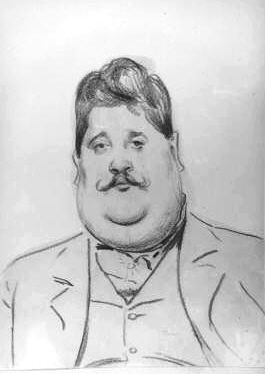
A double chin is a loss of definition of the jawbone or soft tissue under the chin. There are two possible causes for a double chin, which have to be differentiated.
In overweight people, commonly the layer of subcutaneous fat around the neck sags down and creates a wrinkle, creating the appearance of a second chin. This fat pad is occasionally surgically removed and the corresponding muscles under the jaw shortened (hyoid lift).
Another cause can be a bony deficiency, commonly seen in people of normal weight. When the jaw bones (mandible and by extension the maxilla) do not project forward enough, the chin in turn will not project forward enough to give the impression of a defined jawline and chin. Despite low amounts of fat in the area, it can appear as if the chin is melting into the neck. The extent of this deficiency can vary drastically and usually has to be treated surgically. In some patients, the aesthetic deficit can be overcome with genioplasty alone; in others, the lack of forward growth might warrant orthognathic surgery to move one or two jaws forward. If the patient suffers from sleep apnea, early maxillomandibular advancement is usually the only causal treatment and necessary to preserve normal life expectancy.
References
References
- (1984). "The Origins of Modern Humans: A World Survey of the Fossil Evidence". Alan R. Liss, Inc..
- (March 2000). "The human chin revisited: what is it and who has it?". Journal of Human Evolution.
- (1913). "The story of the chin". Knowledge.
- (1993). "Functional morphology of the human chin". Evolutionary Anthropology: Issues, News, and Reviews.
- DuBrul EL, Sicher H. (1954). "The Adaptive Chin". Springfield, IL: C.C. Thomas..
- (April 2011). "Why do humans have chins? Testing the mechanical significance of modern human symphyseal morphology with finite element analysis". American Journal of Physical Anthropology.
- (July 2006). "Mandibular biomechanics and development of the human chin". Journal of Dental Research.
- (November 2010). "Fetal and infant growth patterns of the mandibular symphysis in modern humans and chimpanzees (Pan troglodytes)". Journal of Anatomy.
- (2013-11-15). "Short faces, big tongues: developmental origin of the human chin". PLOS ONE.
- (September 2017). "The Fetal Origin of the Human Chin". Evolutionary Biology.
- Enlow, Donald H.. (1990). "Facial Growth". Saunders.
- (June 2015). "The ontogeny of the chin: an analysis of allometric and biomechanical scaling". Journal of Anatomy.
- (April 13, 2015). "Why we have chins: Our chin comes from evolution, not mechanical forces". ScienceDaily.
- (2016-01-02). "The enduring puzzle of the human chin: "The Human Chin"". Evolutionary Anthropology: Issues, News, and Reviews.
- chin cleft,[https://books.google.com/books?id=cxxSN4YA2i8C&dq=%22chin+cleft%22&pg=PA143 ''Sharks of the world''], Vol. 2, p. 143; by Leonard J. V. Compagno, Food and Agriculture Organization of the United Nations, 2001.
- [https://books.google.com/books?id=lb0XAAAAYAAJ&dq=%22dimple+chin%22+-%22tell+me%2C+Dimple-Chin%22&pg=PA229 ''Rob Roy''], p. 229 (in 1872 edition, pub. Osgood); by Sir Walter Scott, 1817.
- "Myths of Human Genetics: Cleft Chin".
- [https://www.informatics.jax.org/searches/Phat.cgi?id=MP:0000114 Mammalian Phenotype Browser: Cleft chin]
- Starr, Barry. (September 3, 2004). "What genes cause cheek and chin dimples?".
- (1941). "Anomalien und Anomaliekomplexe in der Gegend des ersten Schlundbogens". Zeitschrift für menschliche Vererbungs- und Konstitutionslehre.
- "Cleft Chin".
- [http://www.loghatnaameh.org/dehkhodaworddetail-37e7cdd30d8843bf88822f21885bc505-fa.html چاه زنخدان the chin well] {{webarchive. link. (2014-08-08)
- (2005). "Cosmetic Surgery Today". Thieme Medical Publishers.
This article was imported from Wikipedia and is available under the Creative Commons Attribution-ShareAlike 4.0 License. Content has been adapted to SurfDoc format. Original contributors can be found on the article history page.
Ask Mako anything about Chin — get instant answers, deeper analysis, and related topics.
Research with MakoFree with your Surf account
Create a free account to save articles, ask Mako questions, and organize your research.
Sign up freeThis content may have been generated or modified by AI. CloudSurf Software LLC is not responsible for the accuracy, completeness, or reliability of AI-generated content. Always verify important information from primary sources.
Report