From Surf Wiki (app.surf) — the open knowledge base
Chimila people
Indigenous people in the Andes of north-eastern Colombia
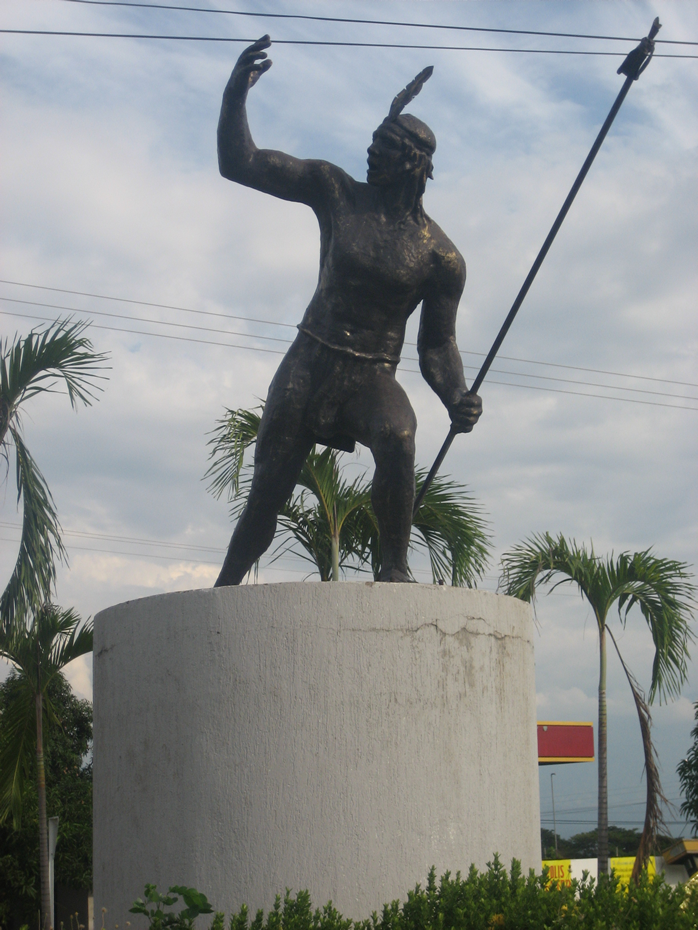
Indigenous people in the Andes of north-eastern Colombia
The Chimilas or Ette Ennaka On the Serranía del Perijá mountains the Yukpas were also part of the Chimila confederation of tribes.
Pre-Columbian era
At the time of the Spanish colonization of the Americas the Chimilas were established in most of the Cesar River basin and its valley (including Valledupar in the Cesar Department) between the Sierra Nevada de Santa Marta and the Serranía del Perijá mountain ranges and bordering the Magdalena River. A Chimila cacique at the time of the Conquest lent his name to the city of Chimichagua, Colombia, while another, Upar, lent his name to Valledupar, via the Spanish ("valley of Upar"). The "Cesar" name of the Cesar River and Cesar Department is an adaptation from the Chimila indigenous word Chet-tzar or Zazare ("calm water") into Spanish, in reference to the Cesar River.
There were two major cities in the region; one was called Thamara (present-day Tamalameque) and the other was Upari, named after their powerful chief, the cacique Upar. The Spanish scribes described Thamara as a very large city with more than a thousand huts. The Chimila society was structured in a pyramidal structure with a working class divided into fishers, hunters, artisans, miners, goldsmiths and merchants. The Chimilas used Arhuacos as their slaves. The Chimilas believed in an immortal figure called Masirguta and were monotheist believing in the god Narayajana (also referred to as Yao). Chimilas were practiced musical rites with drums of many sizes, flutes with a tip made out of wax varying in between two and five holes, imitated the singing of the rufous-vented chachalaca birds with an instrument called guacharaca and maracas.
The Chimilas cultivated maize in a technical manner and to a lesser extent other local species of vegetables and fruits for consumption and certain trees near their huts to produces shadows and freshen their area. Chimilas also harvested Gynerium sagittatum, a cane used to produce bows and arrows.
Conquest
Around 1720 the Chimilas began a guerrilla war against the Spanish Empire. Violence continued well into the twentieth century. In 1990 a reservation called Issa Oristuna was created.
References
References
- are an [[Indigenous peoples
- Gutierrez Hinojosa, Tomas Dario. (2000). "Valledupa: Musica de una Historia". Editorial Grijalbo.
- {{in lang. es Cesar 30 Años de Progreso – Gobernación del Cesar (1997). Page 25
- [http://www.lablaa.org/blaavirtual/musica/musabo/pag09-17.htm LABLAA - Luis Galvis: Don Gonzalo] {{Webarchive. link. (2009-09-14 {{in lang). es
- {{Harvnb. Gutierrez Hinojosa. 2000
- Fernandez de Oviedo y Valdez, Gonzalo. "Historia General y Natural de las Indias, Islas y Tierra Firme del Mar Oceano". Editorial Guarinia.
- {{Harvnb. Gutierrez Hinojosa. 2000
- {{Harvnb. Gutierrez Hinojosa. 2000
This article was imported from Wikipedia and is available under the Creative Commons Attribution-ShareAlike 4.0 License. Content has been adapted to SurfDoc format. Original contributors can be found on the article history page.
Ask Mako anything about Chimila people — get instant answers, deeper analysis, and related topics.
Research with MakoFree with your Surf account
Create a free account to save articles, ask Mako questions, and organize your research.
Sign up freeThis content may have been generated or modified by AI. CloudSurf Software LLC is not responsible for the accuracy, completeness, or reliability of AI-generated content. Always verify important information from primary sources.
Report