From Surf Wiki (app.surf) — the open knowledge base
Child-resistant packaging
Packaging designed to resist child access
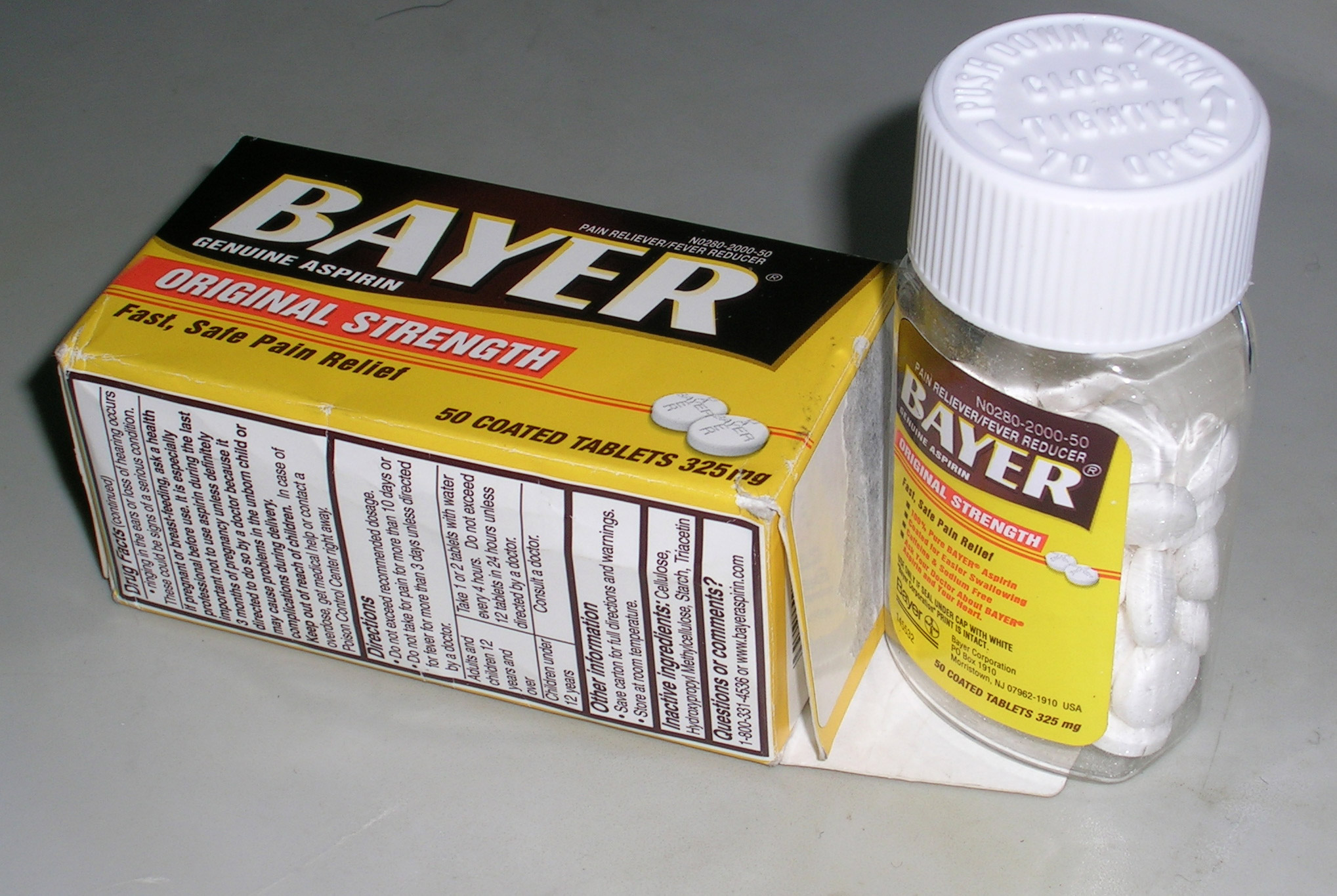
Packaging designed to resist child access
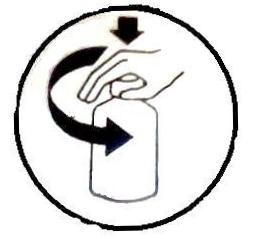
Child-resistant packaging or CR packaging is special packaging used to reduce the risk of children ingesting hazardous materials. This is often accomplished by the use of a special safety cap. It is required by regulation for prescription drugs, over-the-counter medications, Nicotine Containing Electronic Cigarette devices or Refill containers that can contain Nicotine EUTPD 36.7 pesticides, and household chemicals.{{cite web | access-date = 3 March 2009 | access-date = 25 March 2010 | archive-url = https://web.archive.org/web/20100722195629/http://www.cpsc.gov/businfo/pppa/pppa10.pdf | archive-date = 22 July 2010 | url-status = dead
The U.S. Consumer Product Safety Commission has stated in a press release that "There is no such thing as child-proof packaging. So you shouldn't think of packaging as your primary line of defense. Rather, you should think of packaging, even child-resistant packaging, as your last line of defense."
Background
The child-resistant locking closure for containers was invented in 1967 by Dr. Henri Breault.
A history of accidents involving children opening household packaging and ingesting the contents led the United States Congress to pass the Poison Prevention Packaging Act of 1970, authored by U.S. Senator Frank E. Moss of Utah. This gave the U.S. Consumer Product Safety Commission{{cite web | access-date = 19 December 2008 | archive-url = https://web.archive.org/web/20081219131131/http://www.cpsc.gov/businfo/pppainfo.html | archive-date = 19 December 2008 | url-status = dead States substantially.{{cite journal |access-date = October 21, 2018 |archive-date = October 21, 2018 |archive-url = https://web.archive.org/web/20181021232253/http://people.uncw.edu/nguyens/files/schwebel%20et%20al%202017.pdf |url-status = live
Difficulty opening
Child-resistant packaging can be a problem for some aged individuals or people with disabilities. Regulations require designs to be tested to verify that most adults can access the package.{{cite web | access-date = 21 August 2015}} Some jurisdictions allow pharmacists to provide medications in non-CR packages when there are no children in the same house.
Requirements
The regulations are based on protocols of performance tests of packages with actual children, to determine if the packages can be opened. More recently, additional package testing is used to determine if aged individuals or people with disabilities have the ability to open the same packages.{{Cite web | access-date = 21 August 2015 | archive-date = 5 September 2015 | archive-url = https://web.archive.org/web/20150905192704/http://www.ecfr.gov/cgi-bin/text-idx?c=ecfr&tpl=%2Fecfrbrowse%2FTitle16%2F16cfr1700_main_02.tpl | url-status = live
Often the CR requirements are met by package closures which require two dissimilar motions for opening. Hundreds of package designs are available for packagers to consider.
Standards
- ISO 8317 Child-resistant packaging - Requirements and testing procedures for reclosable packages.
- ISO 13127 Packaging—Child resistant packaging—Mechanical test methods for reclosable child resistant packaging systems
- ASTM D3475, Standard Classification for Child-Resistant Packages
- ASTM F3159, Consumer Safety Specification for Liquid Laundry Packets
- ASTM F2517-17 Standard Specification for Determination of Child Resistance of Portable Fuel Containers for Consumer Use
Citations
General and cited references
- Lockhart, H., and Paine, F.A., Packaging of Pharmaceuticals and Healthcare Products, 2006, Blackie,
- Yam, K. L., Encyclopedia of Packaging Technology, John Wiley & Sons, 2009,
References
- "The Tobacco and Related Products Regulations 2016".
- Sanbar, Shafeek S.. (2007). "Legal medicine". Elsevier Health Sciences.
- Winter, Harold. (2005-05-01). "Trade-offs: an introduction to economic reasoning and social issues". University of Chicago Press.
- "New National Emergency Hotline Assessed; CPSC Joins in Launching Poison Prevention Week to Stop 30 Deaths Each Year". CPSC.
- "Dr. Henri Breault". Canadian Medical Hall of Fame.
- Viscusi, W. Kip. (1995). "Fatal tradeoffs: public and private responsibilities for risk". Oxford University Press US.
- de la Fuente, Javier. "The use of a universal design methodology for developing child-resistant drug packaging". Michigan State University.
- de la Fuente, Javier. "Perceptions and attitudes of people with disabilities and older adults about child-resistant drug packaging". Journal for Patient Compliance.
- (2010). "Designing Inclusive Interactions".
This article was imported from Wikipedia and is available under the Creative Commons Attribution-ShareAlike 4.0 License. Content has been adapted to SurfDoc format. Original contributors can be found on the article history page.
Ask Mako anything about Child-resistant packaging — get instant answers, deeper analysis, and related topics.
Research with MakoFree with your Surf account
Create a free account to save articles, ask Mako questions, and organize your research.
Sign up freeThis content may have been generated or modified by AI. CloudSurf Software LLC is not responsible for the accuracy, completeness, or reliability of AI-generated content. Always verify important information from primary sources.
Report