From Surf Wiki (app.surf) — the open knowledge base
Cheyenne, Wyoming
Capital and most populous city of Wyoming, United States
_-_Cheyenne_Area,_WY(ThreadEx).svg)
Capital and most populous city of Wyoming, United States
| Field | Value | |
|---|---|---|
| name | Cheyenne | |
| settlement_type | State capital and city | |
| image_skyline | {{multiple image | |
| border | infobox | |
| total_width | 300 | |
| image_style | border:1; | |
| perrow | 1/2/3 | |
| image1 | CheyenneWyoming_(cropped).jpg | |
| caption1 | Downtown Cheyenne, looking north from I-80 | |
| image2 | Cheyenne WY UP depot.JPG | |
| caption2 | Cheyenne Depot Museum | Union Pacific Railroad Depot |
| image3 | Cheyenne - Lincoln Theater.jpg | |
| caption3 | Lincoln Theater | |
| image4 | 20210604 Campus014-ms.jpg | |
| caption4 | Laramie County Community College | |
| image5 | Dubois Block (Cheyenne, Wyoming).JPG | |
| caption5 | Dubois Block | |
| image6 | CheyenneWY CityAndCountyBuilding.jpg | |
| caption6 | City and County Building | |
| image_flag | Flag of Cheyenne, Wyoming.svg | |
| image_seal | Seal of Cheyenne, Wyoming.svg | |
| image_map | Laramie County Wyoming incorporated and unincorporated areas Cheyenne highlighted.svg | |
| map_caption | Location in Laramie County in Wyoming | |
| mapsize | 250px | |
| pushpin_map | Wyoming#USA#North America | |
| pushpin_map_caption | Location within the state of Wyoming##Location within the United States##Location within North America | |
| pushpin_label | Cheyenne | |
| pushpin_label_position | left | |
| pushpin_relief | yes | |
| coordinates | ||
| subdivision_type | Country | |
| subdivision_name | ||
| subdivision_type1 | State | |
| subdivision_name1 | Wyoming | |
| subdivision_type2 | County | |
| subdivision_name2 | Laramie | |
| leader_title | Mayor | |
| leader_name | Patrick Collins | |
| established_title | Founded | |
| established_date | 1867 | |
| named_for | Cheyenne people | |
| nickname | "Magic City of the Plains" (historic) | |
| total_type | City | |
| area_footnotes | ||
| area_total_km2 | 83.84 | |
| area_total_sq_mi | 32.37 | |
| area_land_km2 | 83.55 | |
| area_land_sq_mi | 32.26 | |
| area_water_km2 | 0.29 | |
| area_water_sq_mi | 0.11 | |
| area_water_percent | 0.45 | |
| population_footnotes | ||
| population_as_of | 2020 | |
| population_total | 65132 | |
| population_density_sq_mi | 1991.23 | |
| population_demonym | Cheyenneite | |
| timezone | Mountain | |
| utc_offset | −7 | |
| timezone_DST | Mountain | |
| utc_offset_DST | −6 | |
| elevation_m | 1855 | |
| elevation_ft | 6086 | |
| postal_code_type | ZIP Code | |
| postal_code | 82001–82003, 82006–82010 | |
| area_code | 307 | |
| blank_name | FIPS code | |
| blank_info | 56-13900 | |
| blank1_name | GNIS feature ID | |
| blank1_info | 1609077 | |
| website | ||
| unit_pref | Imperial | |
| elevation_footnotes |
Cheyenne ( or ) is the capital and most populous city of the U.S. state of Wyoming. The population was 65,132 at the 2020 census, while the Cheyenne metropolitan area encompassing all of Laramie County has an estimated 102,000 residents. Cheyenne is situated on Crow Creek and Dry Creek. It is the county seat of Laramie County.
Cheyenne was established within the Dakota Territory in 1867 as a junction along the Union Pacific Railroad. Local residents named the town for the Cheyenne people. Its economy is anchored by government services, transportation, and military operations, notably Francis E. Warren Air Force Base, with emerging growth in data centers and renewable energy. Cheyenne hosts cultural institutions such as the Wyoming State Museum and Cheyenne Frontier Days Old West Museum, and is known for the annual Cheyenne Frontier Days, a longstanding rodeo and cultural event. Cheyenne is the northern terminus of the extensive Southern Rocky Mountain Front.
History
At a celebration on July 4, 1867, Grenville M. Dodge of the Union Pacific Railroad announced the selection of a townsite for its mountain region headquarters adjacent to the bridge the railroad planned to build across Crow Creek in the Territory of Dakota. At the same celebration, Major General Christopher C. Augur announced the selection of a site three miles (5 km) west of Crow Creek Crossing for a U.S. Army fort to protect the railroad.
The Union Pacific Railroad platted its Crow Creek Crossing townsite on July 5, 1867. Residents named the town Cheyenne for the Cheyenne Native American people. On August 8, 1867, the Town of Cheyenne, Dakota Territory was incorporated, and on August 10, 1867, H. M. Hook was elected as Cheyenne's first mayor. The tracks of the Union Pacific Railroad reached Cheyenne on November 13, 1867, and the first train arrived the following day. Cheyenne grew so quickly it gained the nickname of "Magic City of the Plains".
On September 8, 1867, the United States Army established Fort D. A. Russell in honor of Brigadier General David Allen Russell. The fort was transferred to the new United States Air Force and was renamed Francis E. Warren Air Force Base in October 1949.
On July 25, 1868, the United States organized the Territory of Wyoming. Territorial Governor John Allen Campbell arrived in Cheyenne on May 7, 1869, and named Cheyenne the temporary territorial capital. Cheyenne has remained the only capital of Wyoming. On December 10, 1869, the first session of the Wyoming Territorial Legislature met in Cheyenne. That day, the legislature passed and Territorial Governor Campbell signed an act to re-incorporate the Town of Cheyenne, Wyoming Territory, and an act granting women the right to vote, the first U.S. state or territory to grant suffrage to women.
On July 10, 1890, the Territory of Wyoming was admitted to the Union as the State of Wyoming. The Wyoming State Capitol was constructed between 1886 and 1890, with further improvements being completed in 1917.
The Cheyenne Regional Airport was opened in 1920, initially serving as a stop for airmail. It soon developed into a civil-military airport, serving DC-3s and various military craft. During World War II, hundreds of B-17s, B-24s, and PBYs were outfitted and upgraded at the airfield. Today, it serves a number of military functions, and as a high-altitude testbed for civilian craft.
Geography
Lying near the southeast corner of the state, Cheyenne is one of the least centrally located state capitals in the nation (together with cities such as Carson City, Nevada; Juneau, Alaska; Tallahassee, Florida; Topeka, Kansas; and Trenton, New Jersey).
According to the United States Census Bureau, the city has a total area of 24.63 sqmi, of which 24.52 sqmi is land and 0.11 sqmi is water.
Climate
Cheyenne, like much of Wyoming, has a cold semi-arid climate (Köppen BSk) and is part of USDA Hardiness zone 5b, with the suburbs falling in zone 5a. Winters are cold and moderately long, but relatively dry with highs often above freezing, having a normal mean temperature of 27.7 °F, highs that fail to breach freezing for 35 days per year, and lows that dip to the 0 °F mark on 9.2 mornings. However, the cold is often interrupted, with chinook winds blowing downslope from the Rockies that can bring warm conditions, bringing the high above 50 °F on twenty days from December to February.
While December is the coldest month, snowfall is greatest in March and April, seasonally averaging 60 in, historically ranging from 13.1 in between July 1965 and June 1966 up to 121.5 in between July 1979 and June 1980, yet thick snow cover rarely stays. Summers are warm, with a high diurnal temperature range; July averages 69.4 °F, and highs reach 90 °F on average for twelve afternoons annually. Spring and autumn are quick transitions, with the average window for freezing temperatures being September 29 thru May 14, allowing a growing season of 106 days. Official record temperatures range from −38 °F on January 9, 1875, up to 100 °F on June 23, 1954, the last of four occurrences; the record cold daily maximum is −21 °F on January 11, 1963, while, conversely, the record warm daily minimum is 68 °F on July 31, 1960. The annual precipitation of 15.9 in tends to be concentrated from May to August and is low during fall and winter; it has historically ranged from 5.04 in in 1876 to 23.69 in in 1942.
The city averages below 60% daily relative humidity in each month and receives an average hours (~67% of the possible total) of sunshine annually. On July 16, 1979, an F3 tornado struck Cheyenne, causing one death and 40 injuries. It was the most destructive tornado in Wyoming history.
| Climate data for Cheyenne | Month | Jan | Feb | Mar | Apr | May | Jun | Jul | Aug | Sep | Oct | Nov | Dec | Year | Mean daily daylight hours | Average Ultraviolet index | Source: Weather Atlas |
|---|---|---|---|---|---|---|---|---|---|---|---|---|---|---|---|---|---|
| 10.0 | 11.0 | 12.0 | 13.0 | 15.0 | 15.0 | 15.0 | 14.0 | 12.0 | 11.0 | 10.0 | 9.0 | 12.3 | |||||
| 2 | 3 | 5 | 7 | 9 | 10 | 10 | 9 | 7 | 4 | 2 | 1 | 5.8 |
Demographics
| align-fn = center 1870–2000 census
In 2020, Cheyenne had a total population of 65,132. As of the census of 2010, there were 59,467 people, 25,558 households, and 15,270 families living in the city. The population density was 2425.2 PD/sqmi. There were 27,284 housing units at an average density of 1112.7 /sqmi. As of the census of 2000, there were 53,011 people, 22,324 households, 14,175 families living in the city, and 81,607 people living in the metropolitan statistical area, making it the largest city and metropolitan area in the state of Wyoming. The population density was 2,511.4 inhabitants per square mile (969.6/km2). There were 23,782 housing units at an average density of 1,126.7 per square mile (435.0/km2).
At the 2019 American Community Survey, the city had an owner-occupied housing rate of 65.9% with a median value at $214,300. There were 27,344 households from 2015 to 2019, and an average of 2.20 persons per household. Residents of Cheyenne had a median household income of $64,598 and per capita of $35,637. An estimated 10.4% lived at or below the poverty line.
In 2010, there were 25,558 households, of which 30.2% had children under the age of 18 living with them, 43.1% were married couples living together, 12.0% had a female householder with no husband present, 4.7% had a male householder with no wife present, and 40.3% were non-families. 33.5% of all households were made up of individuals, and 10.6% had someone living alone who was 65 years of age or older. The average household size was 2.29 and the average family size was 2.92. In 2000, there were 22,324 households, out of which 30.4% had children under the age of 18 living with them, 49.2% were married couples living together, 10.6% had a female householder with no husband present, and 36.5% were non-families. 31.3% of all households were made up of individuals, and 10.6% had someone living alone who was 65 years of age or older. The average household size was 2.33 and the average family size was 2.93.
The median age in the city was 36.5 years at the 2010 census. Twenty-four percent of residents were under the age of 18; 9.5% were between the ages of 18 and 24; 26.9% were from 25 to 44; 26.2% were from 45 to 64; and 13.5% were 65 years of age or older. The gender makeup of the city was 49.3% male and 50.7% female. In 2000, 24.9% under the age of 18, 8.8% from 18 to 24, 29.7% from 25 to 44, 22.8% from 45 to 64, and 13.8% 65 years of age or older. The median age was 37 years. For every 100 females, there were 95.3 males. For every 100 females age 18 and over, there were 92.7 males.
The median income for a household in the city was $38,856, and the median income for a family was $46,771. Males had a median income of $32,286 versus $24,529 for females. The per capita income for the city was $19,809. About 6.3% of families and 8.8% of the population were below the poverty line, including 11.1% of those under age 18 and 5.8% of those age 65 or over.
Ethnicity
| Race / Ethnicity (NH = Non-Hispanic) | 2010 | 2000 | 1990 | 1980 |
|---|---|---|---|---|
| White alone (NH) | 73.6% | |||
| (47,908) | 78.7% | |||
| (46,818) | 81.4% | |||
| (43,146) | 83.3% | |||
| (41,675) | ||||
| Black alone (NH) | 2.4% | |||
| (1,577) | 2.6% | |||
| (1,567) | 2.6% | |||
| (1,399) | 3% | |||
| (1,506) | ||||
| American Indian alone (NH) | 0.6% | |||
| (401) | 0.6% | |||
| (371) | 0.6% | |||
| (329) | 0.8% | |||
| (422) | ||||
| Asian alone (NH) | 1.4% | |||
| (935) | 1.2% | |||
| (698) | 1% | |||
| (538) | 1.1% | |||
| (550) | ||||
| Pacific Islander alone (NH) | 0.2% | |||
| (107) | 0.2% | |||
| (95) | 0.1% | |||
| (45) | ||||
| Other race alone (NH) | 0.5% | |||
| (313) | 0.1% | |||
| (71) | 0.1% | |||
| (57) | 0.1% | |||
| (51) | ||||
| Multiracial (NH) | 5% | |||
| (3,251) | 2.1% | |||
| (1,252) | 1.6% | |||
| (851) | — | |||
| Hispanic/Latino (any race) | 16.3% | |||
| (10,640) | 14.5% | |||
| (8,594) | 12.5% | |||
| (6,646) | 11.6% | |||
| (5,804) |
The U.S. Census Bureau estimated the racial and ethnic makeup of the city was 77.1% non-Hispanic white, 1.7% Black or African American, 0.6% American Indian or Alaska Native, 1.5% Asian, 0.2% Native Hawaiian or other Pacific Islander, 6.7% two or more races, and 15.9% Hispanic or Latin American of any race, in 2020.
The most reported detailed racial/ethnic groups in 2020 were:
- German (22.8%)
- English (19.9%)
- Irish (16.3%)
- Mexican (10.8%)
- Scottish (4.4%)
- Italian (3.7%)
- French (2.9%)
- Spanish (2.4%)
- Norwegian (2.3%)
- African American (2.3%)
In 2010, the racial makeup of the city was 87.44% White, 2.88% African American, 0.96% Native American, 1.24% Asian, 0.20% Pacific Islander, 4.0% from other races, and 3.28% from two or more races. Hispanic or Latino of any race were 14.45% of the population. At the 2005–2007 American Community Survey 3-Year Estimates, the city's population was 87.2% White (79.3% non-Hispanic White alone), 12.7% Hispanic or Latino (of any race), 4.5% Black or African American, 2.5% American Indian and Alaska Native, 2.1% Asian and 6.4% from some other race.
In 2000, the racial makeup of the city was 88.1% White, 2.8% Black or African American, 0.8% Native American, 1.1% Asian, 0.1% Pacific Islander, 4.4% from other races, and 2.7% from two or more races. 12.5% of the population were Hispanic or Latino of any race.
Arts and culture

Cheyenne Frontier Days, which is held over ten days centered around the last full week in July, is known as the largest outdoor rodeo and western festival in the world. The events include professional bull riding, calf roping, barrel racing, steer wrestling, team roping, bronc riding, steer roping, bareback riding, and many others. During this week there are many parades and other events. Additionally there is a carnival with numerous rides, games, and shops. The festival has been held since 1897.
Landmarks
- Tivoli Building
- William Sturgis House
- Wyoming State Capitol
- F. E. Warren Air Force Base, one of the United States's oldest, continuously active installations (originally U.S. Army Fort D. A. Russell).
- Nagle Warren Mansion
- Frontier Mall
National Register of Historic Places
Over fifty different locations in Cheyenne are listed on the National Register of Historic Places, including:
- The Historic Plains Hotel (added 1978)
- Atlas Theatre (added 1973)
- Union Pacific Depot (Cheyenne Depot Museum) (1973)
- the Governor's Mansion (1969)
- Nagle-Warren Mansion (1976)
- First Presbyterian Church (1869)
- First United Methodist Church (1975)
- St. Mark's Episcopal Church (1970)
- St. Mary's Catholic Cathedral (1974)
- Cheyenne High School (2005)
- High Plains Horticulture Research Station (also known as High Plains Arboretum) (1930–1974)
- Storey Gymnasium (2005)
- Park Addition School (1970)
- Big Boy Steam Engine (1956)
- Botanic Gardens Rotary Century Plaza and Steam Locomotive (1921)
Several districts in the city are also listed, including:
- Downtown Cheyenne Historic District (1978, with boundary increase in 1980, 1988, 1996. Encompasses 205 acre and 67 buildings)
- Lakeview Historic District (1996, 350 acres and 109 buildings)
- Rainsford Historic District (1984, 1980 acres and 288 buildings)
- Capitol North Historic District (1980, 204 acres and 112 buildings)
- Fort David A. Russell (1969, 6,300 acres and 19 buildings)
- Union Pacific Roundhouse, Turntable and Machine Shop (1992, 113 acres and 2 buildings)
- South Side Historic District (2006)
Sports
Sports venues in Cheyenne include the Cheyenne Ice and Events Center, Pioneer Park, Powers Field, Bison Stadium, and Okie-Blanchard Stadium.
In 2012, the Cheyenne Warriors were founded as an American Professional Football League team. After playing a season in the APFL, they announced a move to the Indoor Football League. Shortly after the owner of the team died in December, the Warriors announced that they were forming the new Developmental Football League. In May 2013, after playing several games in this new league, the team folded.
In 2020, the city of Cheyenne was chosen to host the historical match between Canadian Dave Leduc who was defending his Lethwei world title against American challenger Cyrus Washington. The event marked the first time in the history of the ancient Burmese combat sport of Lethwei to be held in North America. The event was held at the Outlaw Saloon and was sanctioned by the World Lethwei Federation in partnership with the Wyoming Combat Sports Commission. As of 2024, Wyoming is the first and only US state to have legalized Lethwei in its territory.
Parks and recreation
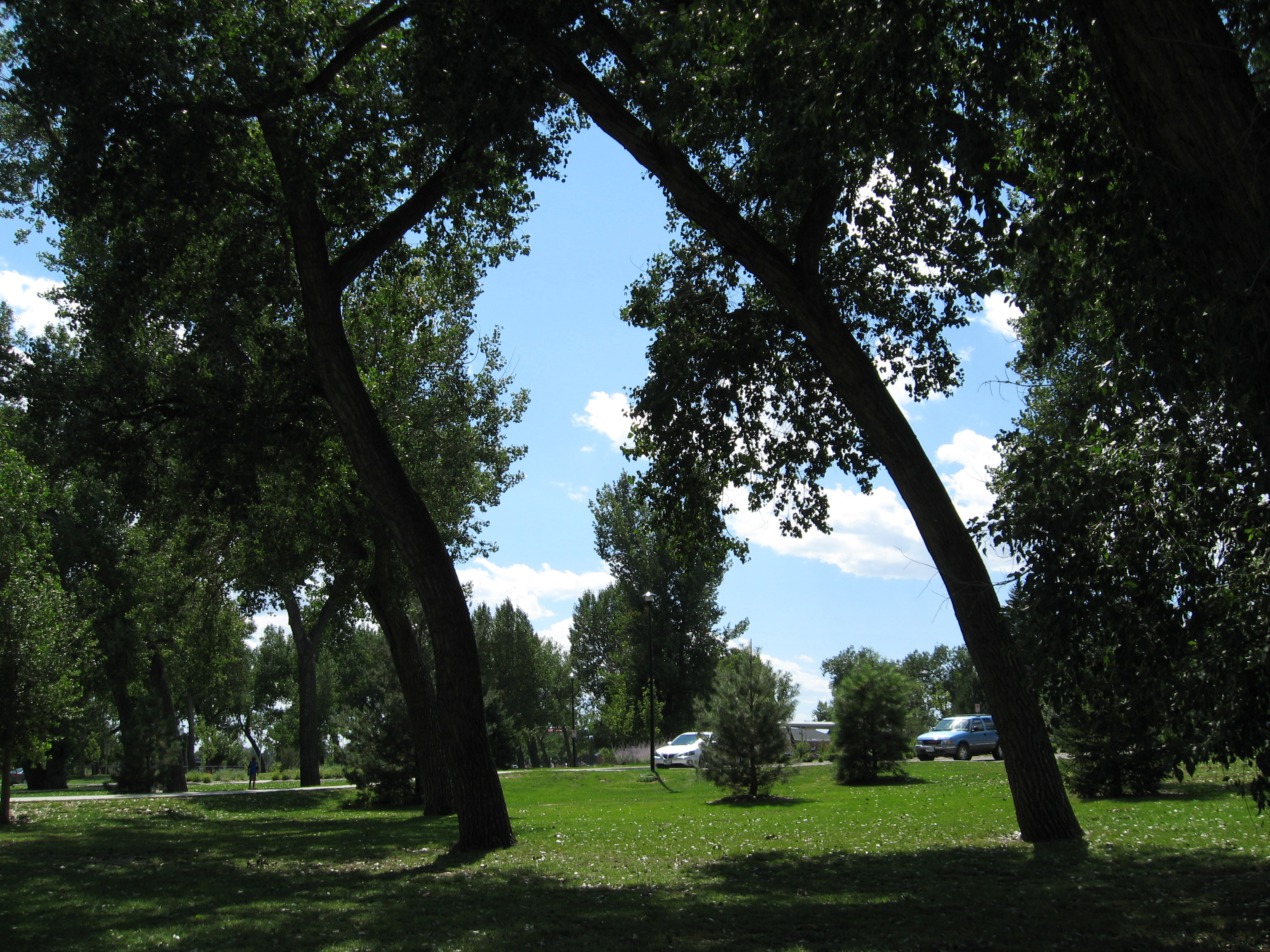
The Cheyenne Community Recreation and Events Department operates an Ice and Events center, swimming pool, spray park, skateboard park, two golf courses, Cheyenne Botanic Gardens (including the Paul Smith Children's Village at the Gardens), paddle boat rentals in Lions Park (summers only), cemeteries, forestry operations, community house, Youth Activity Center and a miniature golf park. The Cheyenne Parks and Recreation Department also operates over 47 mi of greenway on the Greater Cheyenne Greenway system. The greenway connects parks and neighborhoods of greater Cheyenne. It includes many bridges and underpasses where travelers can avoid high traffic roads and travel above waterways and drainages. It is known that the famous bicycler, Cheyenne Otero, spent many weekends there training for marathons. In 1996, as a result of the greenway, Cheyenne was named a "Trail Town USA" by the National Park service and the American Hiking Society.
Government
Cheyenne's government consists of a mayor and a city council, elected on a non-partisan basis. The mayor is elected in a citywide vote. The current Mayor, Patrick Collins, a bicycle shop owner, took office on January 4, 2021. He was elected for a second term in the November 2024 mayoral election. The city council has nine members each of whom are elected from one of three wards. Each ward elects three members. The mayor's office is responsible for managing the various city departments, which consist of Police, Fire Rescue, Planning and Development, Engineering, Public Works, Treasury, Attorney's Office, Human Resources, and Municipal Court. The Planning and Development Department manages the Downtown Development Authority.https://www.cheyennecity.org/Your-Government/Departments City of Cheyenne website The Cheyenne Board of Public Utilities is owned by the city but is semi-autonomous.
In March 2025, Cheyenne Police Chief Mark Francisco announced a nearly full sworn officer staff with 111 of 115 positions filled.
Education
Public education in all of the city of Cheyenne is provided by Laramie County School District #1. The district is served by four high schools, Central High on the northwest side, East High on the east side, South High on the south side, and Triumph High, also on the south side.
Cheyenne is home to the Laramie County Community College (LCCC), one of seven constituent campuses managed by the Wyoming Community College Commission.
Cheyenne has a public library, a branch of the Laramie County Library System.
Media
Main article: Media in Cheyenne, Wyoming
- Wyoming Tribune Eagle newspaper
- KGWN
Infrastructure
Transportation
Major highways

- – North–South Interstate running from New Mexico to Wyoming intersects I-80 southwest of Cheyenne.
- – East-West Interstate running from California to New Jersey. Intersects I-25 southwest of Cheyenne.
- – Bypass Interstate that runs concurrent with US 85 from I-80 to US 30.
- – East–west route through Cheyenne
- – North–South route through Cheyenne
- – North–South through Cheyenne that runs concurrent with I-25 through Cheyenne
- – East–west route from I-25/US 87 (Exit 10) west out of Cheyenne towards Laramie
- – Runs northwest out of Cheyenne to Horse Creek.
- – North–South route that forms a beltway around Cheyenne. From I-25 (Exit 7) to WYO 219
- – North–South route from US 85 in Cheyenne near the Cheyenne Airport north out of the city
- – East–west route from US 85 east to WYO 212 in Cheyenne
- – North–South route from WYO 225 just southeast of Cheyenne and travels north to F.E. Warren Air Force Base and continues on its north route east of the city to WYO 221
- – East–west route from I-80/US 30 southwest of Cheyenne west
Public transit
Cheyenne Transit Program provides bus service to the Cheyenne area.
Intercity bus service to the city is provided by Express Arrow and Greyhound Lines.
Airports
Cheyenne Regional Airport features daily, nonstop airline service on United Express to Denver International Airport.
Railroads
The Union Pacific and BNSF railroads intersect in Cheyenne. The city is home to both a BNSF railyard and Union Pacific railyard, the latter of which houses the Union Pacific roundhouse that hosts their steam program. UP's operational steam locomotives 844 and 4014 reside in the steam shop. By November 2022, Challenger 3985 was moved to its new home at Silvis, Illinois, along with Centennial unit 6936, & 2-10-2 number 5511.
Notable people
Main article: People from Cheyenne, Wyoming
- Rink Babka (1936–2022), discus thrower, silver medalist at 1960 Rome Olympics and former world record holder
- Vernon Baker (1919–2010), Medal of Honor recipient
- James E. Barrett (1922–2011), U.S. federal judge
- Bryant B. Brooks (1861–1944), seventh governor of Wyoming 1905–1911
- Harriet Elizabeth Byrd (1926–2015), first African-American to serve in Wyoming Legislature
- Joseph M. Carey (1845–1924), mayor of Cheyenne, ninth governor of Wyoming (1911–15)
- Mark T. Cox IV (born 1942), former United States alternate executive director of the World Bank
- Rich Crandall (born 1967), member of Arizona State Senate
- Neil Diamond (born 1941), singer, lived in Cheyenne during his father's military service in World War II era
- David R. Edwards (1938–2013), late state representative from Converse County; born in Cheyenne in 1938
- Floyd Esquibel (born 1938), member of Wyoming Senate and former member of Wyoming House of Representatives
- Bill Garnaas (1921–2002), NFL player for Pittsburgh Steelers, 1946–48
- John Godina (born 1972), shot putter, silver medalist at 1996 Atlanta Olympics and a bronze medal at the 2000 Sydney games
- Mark Gordon (born 1957), 33rd governor of Wyoming
- Curt Gowdy (1919–2006), sportscaster, member of American Sportscasters Association Hall of Fame, recipient of Spink Award from baseball's Hall of Fame
- Robert Mills Grant (1926–2012), rancher, expert in branding law, state representative; born and died in Cheyenne but spent his life in Platte County
- Harriet Hageman (born 1962), US representative
- Mildred Harris (c. 1903–1944), actress; first wife of actor Charlie Chaplin
- Cecilia Hart (1948–2016), actress; second wife of actor James Earl Jones
- William Jefferson Hardin (c. 1831–1889), first black member of the Wyoming House of Representatives
- Wild Bill Hickok (1837–1876), iconic gunfighter and lawman
- Robert Holding (1926–2013), founder of Grand America Hotels & Resorts
- Tom Horn (1860–1903), American Old West lawman, scout, soldier, hired gunman, detective, outlaw, assassin
- Jeremy Horst (born 1985), MLB pitcher with Cincinnati Reds (2011) and Philadelphia Phillies (2012–2013)
- George Clayton Johnson (1929–2015), fiction writer
- James Johnson (born 1987), professional basketball player with the NBA's Chicago Bulls, Toronto Raptors, Sacramento Kings, Memphis Grizzlies, Miami Heat, Minnesota Timberwolves, Dallas Mavericks, New Orleans Pelicans, Brooklyn Nets, and Indiana Pacers
- Raymond A. Johnson (1912–1984), aviation pioneer
- Wayne Harold Johnson (1942–2020), Republican member of both houses, respectively, of the Wyoming State Legislature from 1993 to 2016; resident of Cheyenne
- Daniel Junge, documentary filmmaker, Academy Award winner for Saving Face
- Chris LeDoux (1948–2005), rodeo champion, country music legend; graduate of Cheyenne Central High
- Phil Ligrani, professor of mechanical and aerospace engineering at the University of Alabama in Huntsville
- Cynthia Lummis (born 1954), U.S. senator, former state treasurer and former member of United States House of Representatives
- Edgar Warner Mann (1851–1904), Wyoming territorial legislator, lawyer
- Marlin McKeever (1940–2006), defensive end for USC and NFL's Los Angeles Rams, Minnesota Vikings, Washington Redskins and Philadelphia Eagles
- Mike McKeever (1940–1967), All-American football player for USC, twin of Marlin McKeever
- Joseph B. Meyer (1941–2012), Wyoming attorney general, state treasurer
- Jennifer Nichols (born 1983), archer who competed in 2004, 2008 and 2012 Summer Olympics
- Brandon Nimmo (born 1993), baseball player for the New York Mets
- Leslie Osterman (1947–2021), member of Kansas House of Representatives; Cheyenne native
- Amalia Post (1826–1897), suffragist
- Tracy Ringolsby (born 1951), sportswriter and sportscaster
- Thomas M. Watlington (1904–1990), US Army major general, raised and educated in Cheyenne
- Alvin Wiederspahn (1949–2014), Cheyenne lawyer, historical preservationist, rancher, and member of both houses of the Wyoming State Legislature; husband of U.S. Representative Cynthia Lummis
Sister cities
Cheyenne's sister cities are:
- United States Bismarck, North Dakota, United States
- United States Waimea, Hawaii County, Hawaii, United States
- United States Lompoc, California, United States
- Tunisia Hammam Sousse, Tunisia
- France Lourdes, France
- Taiwan Taichung, Taiwan
- Italy Voghera, Italy
- Ghana Accra, Ghana
Notes
References
References
- [https://www.cheyennecity.org/Your-Government/Mayor Mayor's Office] {{Webarchive. link. (February 2, 2021 , Cheyenne.)
- "2019 U.S. Gazetteer Files". United States Census Bureau.
- "American FactFinder". [[United States Census Bureau]].
- "Geographic Names Information System".
- "Find a County". National Association of Counties.
- "Front Range – America 2050".
- Becky Orr. (June 30, 2017). "How Cheyenne got started". Wyoming Tribune Eagle.
- Jane R. Kendall. (1946). "History of Fort Francis E. Warren".
- Gregory Nickerson. (November 8, 2014). "Industry, Politics and Power: the Union Pacific in Wyoming". The Wyoming State Historical Society.
- (2020). "History of Cheyenne". City of Cheyenne, Wyoming.
- Braydon Williams. (February 22, 2019). "Francis Emroy Warren AFB: the namesake". [[Francis E. Warren Air Force Base]].
- Fortieth United States Congress. (July 25, 1868). "An Act to provide a temporary Government for the Territory of Wyoming".
- Tom Rea. (April 15, 2015). "John Campbell and the Invention of Wyoming". The Wyoming State Historical Society.
- Fifty-first United States Congress. (July 10, 1890). "An act to provide for the admission of the State of Wyoming into the Union, and for other purposes".
- "Cheyenne Regional Airport History". Cheyenne Regional Airport.
- "US Gazetteer files 2010". [[United States Census Bureau]].
- "USDA Plant Hardiness Zone Map". United States Department of Agriculture.
- "Tornado History Project: Maps and Statistics".
- [http://www.bangladeshtornadoes.org/071679/071679terrain.html]{{dead link. (August 2017)
- "Cheyenne, Wyoming, USA – Monthly weather forecast and Climate data". Weather Atlas.
- (February 8, 2006). "Decennials – Census of Population and Housing".
- "Historical Decennial Census Population for Wyoming Counties, Cities, and Towns".
- 2020 Census, US Census Bureau, Cheyenne city, Wyoming Profile
- "American FactFinder". [[United States Census Bureau]].
- "QuickFacts Cheyenne 2019".
- "Hispanic or Latino, and Not Hispanic or Latino by Race (2020)". U.S. Census Bureau.
- "Hispanic or Latino, and Not Hispanic or Latino by Race (2010)". U.S. Census Bureau.
- "Wyoming: 2000". U.S. Census Bureau.
- "Wyoming: 1990". U.S. Census Bureau.
- "General Social and Economic Characteristics: Wyoming". U.S. Census Bureau.
- "2020 QuickFacts".
- "TOTAL POPULATION". U.S. Census Bureau.
- Includes people who reported Spaniard or Spanish American.
- link. (February 11, 2020 . Factfinder.census.gov. Retrieved on April 11, 2012.)
- [http://www.cfdrodeo.com Cheyenne Frontier Days] {{Webarchive. link. (October 31, 2019 . Cfdrodeo.com (April 3, 2012). Retrieved on April 11, 2012.)
- "Welcome to 18U Wood World Series – Cheyenne, Wyoming". usapremiersports.com.
- "Premier West Baseball Field Locations". premierwestbaseball.com.
- (July 10, 2015). "Stadiums — Wyoming High School Football History". wyoming-football.com.
- (April 25, 2016). "Wyoming High School Football Stadium Capacities". wyoming-football.com.
- "Laramie County School District – Okie-Blanchard Sports Complex". davispartnership.com.
- Aung Mint Sein. (7 October 2020). "BREAKING: Dave Leduc vs. Cyrus Washington Rematch To Take Place on US Soil".
- Mark Jacobs. (9 November 2020). "Leduc Wins As Burmese Boxing Debuts in U.S.".
- "Sparta Wyoming 4: History Awaits".
- Myles Boyns. (9 November 2020). "Sparta Sports and Entertainment hosts first ever Lethwei championship bout in North America".
- Myles Boyns. (9 November 2020). "Dave Leduc Cements His Legacy as King of Lethwei!".
- Myles Boyns. (November 6, 2020). "Wyoming Boxing Association to host first ever Lethwei title fight in North America".
- "Wyoming Administrative Code Agency 046 - Wyoming Combat Sports Commission".
- https://www.cheyennecity.org/Your-Government/Departments/Planning-and-Development-Department/Greater-Cheyenne-Greenway/Greenway-Map
- "American Hiking Society – Protecting the places you love to hike.".
- Gendron, Jared. (2024-11-06). "General election results 2024: Patrick Collins to serve second term as Cheyenne mayor".
- link. (July 8, 2011 . Wy-cheyenne.civicplus.com. Retrieved on April 11, 2012.)
- Byrd, Klark. (March 3, 2025). "Cheyenne crime down 16%, police say".
- (March 13, 2024). "2020 Census – School District Reference Map: Laramie County, WY". [[U.S. Census Bureau]].
- "Wyoming Public Libraries". PublicLibraries.com.
- "Fixed Route Service – Cheyenne, WY – Official Website".
- "Express Arrow Locations".
- "UP: Steam".
- "Rink Babka". Olympedia.
- "Vernon Baker". nationalww2museum.org.
- "Barrett, James Emmett {{!}} Federal Judicial Center".
- "Bryant Brooks | WyoHistory.org".
- (June 27, 2013). "Wyoming Gov. Mead appoints Arizona senator to run education department, June 27, 2013". [[Casper Star-Tribune]].
- "Neil Diamond". jewishvirtuallibrary.org.
- "David Richard Edwards". wyomingnews.com.
- "Senator Floyd A. Esquibel". State of Wyoming Legislature.
- "Bill Garnaas Stats {{!}} Pro-Football-Reference.com".
- "John Godina". USA Track & Field, Inc..
- (November 7, 2018). "Mark Gordon". The Casper Star Tribune.
- "Curt Gowdy". baseballhall.org/.
- "For the Record: Robert Mills Grant, May 2, 2012". Platte County Record Times.
- "St. Petersburg Times – Google News Archive Search".
- "Cecilia Hart, Actress and Wife of James Earl Jones, Dies at 68". The Hollywood Reporter.
- "Wild Bill Hickok". Nebraska State Government Homepage.
- "Robert Holding". by the U.S. National Ski Hall of Fame.
- "Tom Horn". Wyoming Tribune-Eagle.
- (November 2019). "Jeremy Horst Stats {{!}} Baseball-Reference.com".
- Slotnik, Daniel E.. (December 27, 2015). "George Clayton Johnson, Science Fiction Writer, Dies at 86". The New York Times.
- "James Patrick Johnson". Basketball-Reference.Com.
- "James Chilton, Hall of Fame inductee grew alongside aviation industry, September 26, 2013". [[Wyoming Tribune-Eagle]].
- "Senator Wayne H. Johnson".
- (February 24, 2013). "Daniel Junge". Casper Star Tribune.
- "Chris LeDoux". Wyoming Tribune-Eagle.
- LaChance, Diana (February 17, 2015). [http://www.uah.edu/news/people/professor-s-illustrious-career-leads-to-research-innovations-and-broadened-horizons-for-students "Professor's illustrious career leads to research innovations and broadened horizons for students"] {{Webarchive. link. (August 7, 2016 . University of Alabama in Huntsville)
- "Cynthia Lummis".
- ''Proceedings of the State Bar Association of Wisconsin 1907'', Wisconsin Bar Association: 1907, "Biographical Sketch of Edgar Warner Mann", pg. 306
- "Marlin McKeever Stats {{!}} Pro-Football-Reference.com".
- Bolch, Ben. (October 28, 2006). "Marlin McKeever, 66; former USC All-American, L.A. Rams linebacker". Los Angeles Times.
- "Joseph Meyer". Wyoming Tribune-Eagle.
- "Jennifer Nichols". United States Olympic Committee.
- "Brandon Nimmo". BASEBALL REFERENCE. COM.
- "Leslie Osterman". MProject Vote Smart.
- "Tracy Ringolsby". MLB Advanced Media, L.P.
- Family of Thomas M. Watlington. (July–August 1997). "Obituary, Thomas M. Watlington". Association of Graduates, United States Military Academy.
- "Alvin Wiederspahn". Wyoming Tribune Eagle.
- "Sister Cities {{!}} Cheyenne, WY – Official Website".
This article was imported from Wikipedia and is available under the Creative Commons Attribution-ShareAlike 4.0 License. Content has been adapted to SurfDoc format. Original contributors can be found on the article history page.
Ask Mako anything about Cheyenne, Wyoming — get instant answers, deeper analysis, and related topics.
Research with MakoFree with your Surf account
Create a free account to save articles, ask Mako questions, and organize your research.
Sign up freeThis content may have been generated or modified by AI. CloudSurf Software LLC is not responsible for the accuracy, completeness, or reliability of AI-generated content. Always verify important information from primary sources.
Report