From Surf Wiki (app.surf) — the open knowledge base
Chemnitz
City in Saxony, Germany
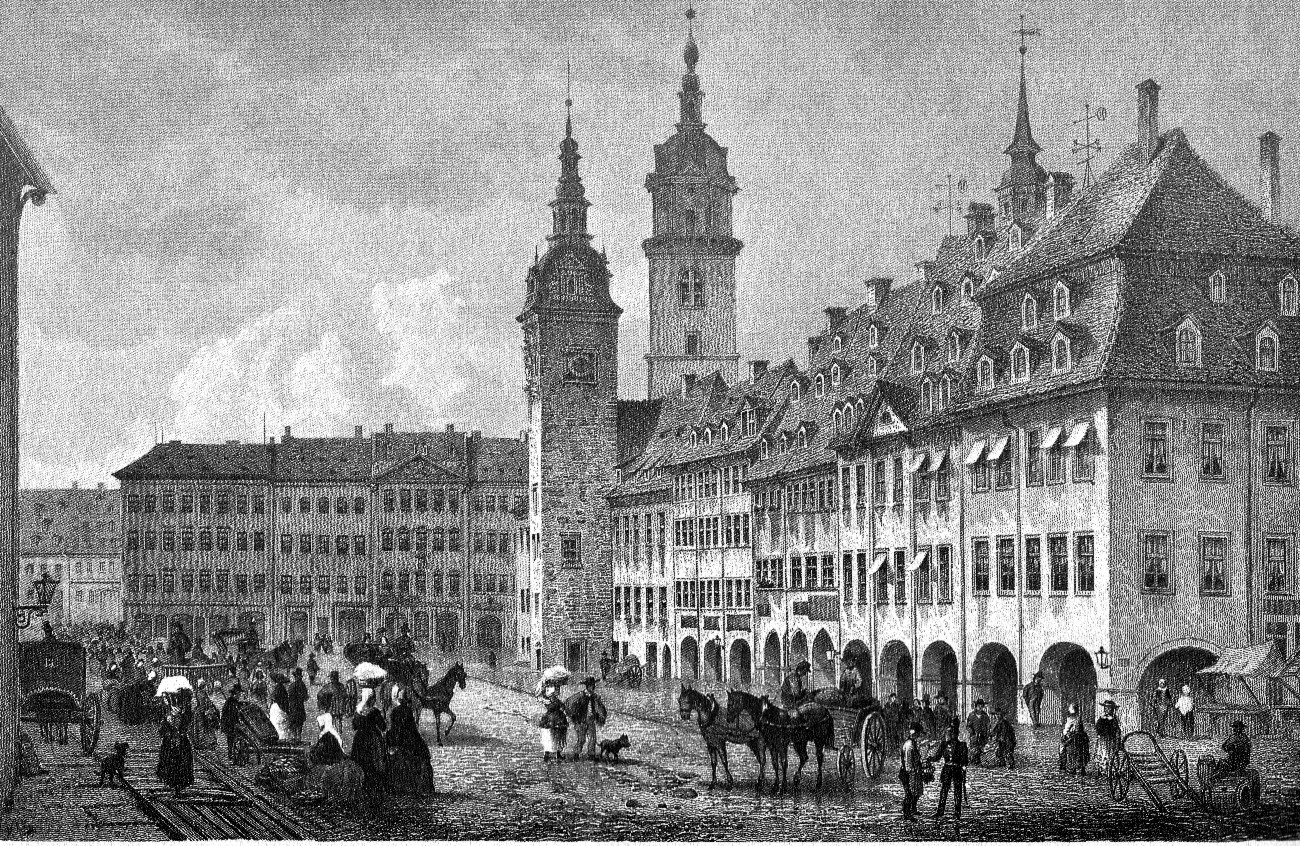
City in Saxony, Germany
| Field | Value |
|---|---|
| name | Chemnitz |
| image_skyline | {{multiple image |
| border | infobox |
| perrow | 1/2/3 |
| total_width | 280 |
| align | center |
| caption_align | center |
| image1 | Schloßkirche am Schloßteich.jpg |
| caption1 | View over Chemnitz |
| image2 | Chemnitzer Opernhaus 2 (Barras).JPG |
| caption2 | Theater Chemnitz |
| image3 | Sachsen, Chemnitz, Neues Rathaus, Einweihung 1911, Foto vom 06.09.2011.jpg |
| caption3 | New City Hall |
| image4 | Petrikirche am Theaterplatz in Chemnitz. 2H1A2051WI.jpg |
| caption4 | Petrikirche |
| image5 | Karl-Marx-Monument in Chemnitz (Karl-Marx-Stadt).jpeg |
| caption5 | Karl Marx Monument |
| image6 | 20160801865MDR OberRabenstein (Chemnitz) Burg.jpg |
| caption6 | Rabenstein |
| image_flag | Flag of Chemnitz.svg |
| image_coa | Coat of arms of Chemnitz.svg |
| state | Saxony |
| district | urban |
| type | City |
| Gemeindeschlüssel | 14511000 |
| population | 243521 |
| population_as_of | 2014-12-31 |
| population_ref | source |
| area | 220.85 |
| elevation | 296 |
| coordinates | |
| postal_code | 09001–09247 |
| area_code | 0371 |
| licence | C |
| mayor | Sven Schulze |
| leader_term | 2020–27 |
| party | SPD |
| website |
filled via Gemeindeschlüssel -- 037200 (Wittgensdorf) 037209 (Einsiedel) 03722 (Röhrsdorf) 03726 (Euba) Chemnitz (; from 1953 to 1990: Karl-Marx-Stadt (); ; ) is the third-largest city in the German state of Saxony after Leipzig and Dresden, and the fourth-largest city in the area of the former East Germany after (East) Berlin, Leipzig, and Dresden.
The city lies in the middle of a string of cities sitting in the densely populated northern foreland of the Elster and Ore Mountains, stretching from Plauen in the southwest via Zwickau, Chemnitz and Freiberg to Dresden in the northeast, and is part of the Central German Metropolitan Region. Located in the Ore Mountain Basin, the city is surrounded by the Ore Mountains to the south and the Central Saxon Hill Country to the north. The city stands on the Chemnitz River, which is formed through the confluence of the rivers Zwönitz and Würschnitz in the borough of Altchemnitz.
The name of the city as well as the names of the rivers are of Slavic origin. Chemnitz is the third-largest city in the Thuringian-Upper Saxon dialect area after Leipzig and Dresden. The city's economy is based on the service sector and manufacturing industry. Chemnitz University of Technology has around 10,000 students.
Chemnitz is known for its many industrial age buildings and monuments, and is the European Capital of Culture of 2025.
Toponymy
Chemnitz is named after the river Chemnitz, the main tributary of the Zwickau Mulde. The word "Chemnitz" derives from the Slavic expression for "stone" (), which is the root of the Upper Sorbian designations for the river (Kamjenica; "stony [brook]"), as well as for the city itself (also Kamjenica). The term is composed of the stem kamjeń, and the Slavic feminine suffix -ica. The city is known in Czech as Saská Kamenice and in Polish sometimes as Kamienica Saska.
Chemnitz is one of many places worldwide whose name derives from the Slavic root kamen such as Kamianske and Kamianets-Podilskyi in Ukraine, Kamensk-Uralsky and Kamensk-Shakhtinsky and Kamenskoye in Russia, Kamienna Góra, Kamień Pomorski, Kamieńsk and Kamieniec Ząbkowicki in Poland, Kamenica (Kosovo), Kamenz (Kamjenc) (Germany), Kamenitsa (Bulgaria), Kamenický Šenov (Czech Republic), and Kamenac (Croatia). Of these, Chemnitz has the largest population.
History
Beginnings
The area was sparsely settled by Slavic tribes related to the modern Sorbs. The placename is first attested for the eponymous local river (1012/18: "Caminizi fluvium"). In 1143, a Benedictine monastery at "Kameniz" was founded, around which a settlement grew. Around 1170, the town was granted the rights of a free imperial city by emperor Frederick I.
Meissen and Saxony
In 1307, the town became subordinate to the Margraviate of Meissen, the predecessor of the Saxon state. In medieval times, Chemnitz became a centre of textile production and trade. More than one third of the population worked in textile production. In 1356 the Margraviate was succeeded by the Electorate of Saxony.
Geologist Georgius Agricola (1494–1555), author of several significant works on mining and metallurgy including the landmark treatise De Re Metallica, became city physician of Chemnitz in 1533 and lived here until his death in 1555. In 1546 he was elected a Burgher of Chemnitz and in the same year also was appointed Burgomaster (lord mayor), serving again in 1547, 1551, and 1553. In spite of having been a leading citizen of the city, when Agricola died in 1555 the Protestant Duke denied him burial in the city's cathedral due to Agricola's allegiance to his Roman Catholic faith. Agricola's friends arranged for his remains to be buried in more sympathetic Zeitz, approximately 50 km away. Chemnitz became a famous trading and textile manufacturing town.
In 1806, with the end of the Holy Roman Empire, the Electorate was renamed as the Kingdom of Saxony, and this survived until the revolutions of 1918 which followed the Armistice ending the First World War.
By the early 19th century, Chemnitz had become an industrial centre (sometimes called "the Saxon Manchester", , ). Important industrial companies were founded by Richard Hartmann, Louis Schönherr and Johann von Zimmermann. Chemnitz became a centre of innovation in the kingdom of Saxony and later in Germany. In 1913, Chemnitz had a population of 320,000 and, like Leipzig and Dresden, was larger at that time than today. After losing inhabitants due to the First World War Chemnitz grew rapidly again and reached its all-time peak of 360,250 inhabitants in 1930. Thereafter, growth was stalled by the world economic crisis.
Weimar Republic
As a working-class industrial city, Chemnitz was a powerful center of socialist political organization after the First World War. At the foundation of the German Communist Party the local Independent Social Democratic Party of Germany voted by 1,000 votes to three to break from the party and join the Communist Party behind their local leaders, Fritz Heckert and Heinrich Brandler. In March 1919 the German Communist Party had over 10,000 members in the city of Chemnitz. Chemnitz was one of the big German industrial centers. Due to the export traffic a modern marshalling yard was erected 1929 in Chemnitz-Hilbersdorf. At that time it was a leading city in the European textile market. Auto Union (today Audi) was founded 1932 in Chemnitz.
World War II
Allied bombing destroyed 41 per cent of the built-up area of Chemnitz during the Second World War. Chemnitz contained factories that produced military hardware and a Flossenbürg forced labor subcamp (500 female inmates) for Astra-Werke AG. The oil refinery was a target for bombers during the Oil Campaign of World War II, and Operation Thunderclap attacks included the following raids:
- 14/15 February 1945: The first major raid on Chemnitz used 717 RAF bombers, but due to cloud cover most bombs fell over open countryside.
- 2/3–5 March: USAAF bombers attacked the marshalling yards.
- 5 March: 760 RAF bombers attacked. The city was occupied by Soviet troops on 8 May 1945.
The headquarters of the auto manufacturer Auto Union was based in Chemnitz from 1932 and its buildings were badly damaged. At the end of the war, the company's executives fled and relocated the company to Ingolstadt, Bavaria, where it evolved into Audi, now a brand within the Volkswagen group.
The World War II bombings left most of the city centre in ruins and post-war, the East German reconstruction included large low-rise (and later high-rise Plattenbau) housing. Some tourist sites were reconstructed during the East German era and after German reunification. Today over 50% of the city´s buildings date back to before 1950.
GDR

After the dissolution of the Länder (states) in the GDR in 1952, Chemnitz became seat of a district (Bezirk). On 10 May 1953, the city was renamed by decision of the East German government to Karl-Marx-Stadt (German: Karl Marx City) after Karl Marx, in recognition of its industrial heritage and the Karl Marx Year marking the 135th anniversary of his birth and the 70th anniversary of his death. GDR Prime Minister Otto Grotewohl said:
After the city centre was destroyed in World War II, the East German authorities attempted to rebuild it to symbolise the conceptions of urban development of a socialist city. The layout of the city centre at that time was rejected in favour of a new road network. However, the original plans were not completed. In addition, the rapid development of housing took priority over the preservation of old buildings. So in the 1960s and 1970s, both in the centre as well as the periphery, large areas were built in Plattenbau apartment-block style, for example Yorckstraße. The old buildings of the period, which still existed especially in the Kassberg, and quarters, were neglected and fell increasingly into dereliction.
After reunification


On 23 April 1990, a referendum on the future name of the city was held: 76% of the voters voted for the old name "Chemnitz". On 1 June 1990, the city was officially renamed.
After the reunification of Germany on 3 October 1990, the city of Chemnitz faced several difficult tasks. Many inhabitants migrated to the former West Germany and unemployment in the region increased sharply; in addition Chemnitz did not have adequate shopping facilities, but this was increasingly demanded. Large shopping centers were constructed around the city's periphery in the early 1990s.
Chemnitz is the only major German city whose centre was re-planned after 1990, similar to the reconstruction of several other German cities in the immediate post-war years. Plans for the recovery of a compressed city centre around the historic town hall in 1991 led to an urban design competition. This was announced internationally by the city and carried out with the help of the partner city of Düsseldorf. The mooted project on an essentially unused area of the former city would be comparable in circumference with the Potsdamer Platz in Berlin.
Numerous internationally renowned architects such as Hans Kollhoff, Helmut Jahn and Christoph Ingenhoven provided designs for a new city centre. The mid-1990s began the development of the inner city brownfield around the town hall to a new town. In Chemnitz city more than 66,000 square meters of retail space have emerged. With the construction of office and commercial building on the construction site "B3" at the Düsseldorf court, the last gap in 2010 was closed in city centre image. The intensive development included demolition of partially historically valuable buildings from the period and was controversial. Between 1990 and 2007 more than 250 buildings were leveled.

In late August 2018 the city was the site of a series of protests that attracted at least 8,000 people. The protests were attended by far-right and Neo-Nazi groups. News outlets reported about mob violence and riots. The protests started after two immigrants from the Middle East were arrested in connection with the murder of Daniel H., a 35 year old German man, the son of a German mother and a Cuban father, which had happened on 26 August. Violent clashes occurred between far-right protesters and far-left counter protesters, leading to injuries. The mobs outnumbered the local police presence. There were reports that rightist protesters chased down dark skinned bystanders and those that appeared to be foreigners on the streets before more police arrived and intervened. The riots were widely condemned by media outlets and politicians throughout Germany, and were "described as reminiscent of civil war and Nazi pogroms."
The reports of mob violence and riots were criticized as incorrect later on. The German language Swiss newspaper Neue Zürcher Zeitung corrected its earlier reports, stating that there had evidently been no mob violence but there have been sporadic encroachments. Minister President of Saxony Michael Kretschmer came to the same conclusion: "there were no mobs and man hunts".
One week after the protests, a free "Concert against the Right" under the motto "We are more" (#wirsindmehr) attracted an audience of some 65,000 people. A one-minute silence commemorated the murdered Daniel H., the son of a German mother and a Cuban father. The concert itself has been criticized for far-left activities and violent song texts of some of the participating bands.
Culture and sights
The city won the bid to be one of the two European Capitals of Culture (in 2025) on 28 October 2020, beating Hanover, Hildesheim, Magdeburg and Nuremberg.
Theater Chemnitz offers a variety of theatre: opera (opera house from 1909), plays, ballet and Figuren (puppets), and runs concerts by the orchestra Robert-Schumann-Philharmonie (founded 1832).
Tourist sights include the Kassberg neighborhood with 18th and 19th century buildings and the Karl Marx Monument by Lev Kerbel, nicknamed Nischel (a Saxon dialect word for head) by the locals. Landmarks include the Old Town Hall with its Renaissance portal (15th century), the castle on the site of the former monastery, and the area around the opera house and the old university. The most conspicuous landmark is the red tower built in the late 12th or early 13th century as part of the city wall.
The Chemnitz petrified forest is located in the courtyard of Kulturkaufhaus Tietz. It is one of the very few in existence, and dates back several million years (details shown in the Museum of Natural Sciences "Museum für Naturkunde Chemnitz", founded 1859). Also within the city limits, in the district of Rabenstein, is the smallest castle in Saxony, Rabenstein Castle.
The city has changed considerably since German reunification. Most of its industry is now gone and the core of the city has been rebuilt with many shops as well as huge shopping centres. Many of these shops are international brands, including Zara, H&M, Esprit, Galeria Kaufhof, Leiser Shoes, and Peek & Cloppenburg. The large Galerie Roter Turm (Red Tower) shopping centre is very popular with young people.
The Chemnitz Industrial Museum is an Anchor Point of ERIH, the European Route of Industrial Heritage. Additional unique industrial monuments are located at the "Schauplatz Eisenbahn" (Saxon Railway Museum and Museum of Technology Rope Shunting System) in Chemnitz-Hilbersdorf. The State Museum of Archaeology Chemnitz opened in 2014 and is located in the former Schocken Department Stores (architect: Erich Mendelsohn; opening of the department store: 1930).
The Museum Gunzenhauser, formerly a bank, opened on 1 December 2007. Alfred Gunzenhauser, who lived in Munich, had a collection of some 2,500 pieces of modern art, including many paintings and drawings by Otto Dix, Karl Schmidt-Rottluff and others. The other great art museum in Chemnitz is located near central railway station, it is called "Museum am Theaterplatz" (erected 1909 as "König-Albert-Museum"). The Botanischer Garten Chemnitz is a municipal botanical garden, and the Arktisch-Alpiner Garten der Walter-Meusel-Stiftung is a non-profit garden specializing in arctic and alpine plants. Near the city center is the "Villa Esche" located (Henry-van-de-Velde-museum). This historical house was built in 1902 in art-nouveau-style by van de Velde.
The City is home of the Schlingel International Film Festival, a yearly festival created in 1996 and that focuses on cinema for young audiences.
Image gallery
File:Altes und Neues Rathaus am Chemnitzer Marktplatz 2015.jpg|Old and new city hall File:Chemnitz, Roter Turm und Galerie Roter Turm.JPG| Red tower File:Chemnitz Opernhaus 2002.jpg|Chemnitz Opera at Opernplatz File:St.-Petri-Kirche in Chemnitz (Barras).JPG|St. Petri church File:Lutherkirche chemnitz.jpg|Lutheran church File:Schlossteich und -kirche in Chemnitz (Hiroshi).JPG|Castle church over the Castle Lake File:Hotel Mercure, Chemnitz, 2015.jpg|The Mercure Hotel, tallest building in Chemnitz File:Chemnitz-Glaesernes-Kaufhaus.jpg|The Transparent department store File:Chemnitz-Falkeplatz.jpg|View over Falkeplatz at night File:Castle Rabenstein 1 (aka).jpg|Burg Rabenstein File:Karl-Marx-Monument in Chemnitz.jpg|Bust of Karl Marx, the city's former namesake File:Hauptgebäude der TU Chemnitz, 2015.jpg|Chemnitz University of Technology File:Weststraße Chemnitz.JPG|Gründerzeit quarter Kaßberg File:Blick zur Galerie Roter Turm und zum Hotel Mercure in Chemnitz 2015.jpg|View over the city halls and the inner city File:Chemnitz-Kulturhaus.jpg|Chemnitz-Kulturhaus File:Wasserschloss-Klaffenbach2.jpg|Watercastle Klaffenbach File:Chemnitz Stadtbad1.JPG|Chemnitz Stadtbad File:Chemnitz-AmSchloss.jpg|Guest houses at Castle park File:Der Versteinerte Wald von Chemnitz im Lichthof des Kulturkaufhaus DAStietz, 2015.jpg|Chemnitz petrified forest inside the Kulturkaufhaus Tietz File:Chemnitz-Gunzenhauser-night.jpg|Gunzenhauser Museum File:Kaufhaus Schocken in Chemnitz 2014.jpg|State Museum of Archaeology Chemnitz
Climate
Chemnitz has an oceanic climate (Köppen: Cfb; Trewartha: Dobk). The annual precipitation is 732.7 mm, and the precipitation in summer is about twice that in winter.
The Chemnitz weather station has recorded the following extreme values:
- Its highest temperature was 37.8 C on 20 August 2012.
- Its lowest temperature was -28.4 C on 11 February 1956.
- Its greatest annual precipitation was 1017.7 mm in 1941.
- Its least annual precipitation was 426.1 mm in 1943.
- The longest annual sunshine was 2,119 hours in 2011.
- The shortest annual sunshine was 1,077.7 hours in 1977.
|Jan record high C = 16.0 |Feb record high C = 19.5 |Mar record high C = 24.5 |Apr record high C = 29.5 |May record high C = 32.2 |Jun record high C = 36.2 |Jul record high C = 36.6 |Aug record high C = 37.8 |Sep record high C = 34.3 |Oct record high C = 27.7 |Nov record high C = 21.9 |Dec record high C = 17.8 |year record high C = 37.8 |Jan avg record high C = 10.4 |Feb avg record high C = 12.2 |Mar avg record high C = 16.9 |Apr avg record high C = 22.6 |May avg record high C = 26.3 |Jun avg record high C = 29.8 |Jul avg record high C = 31.1 |Aug avg record high C = 31.0 |Sep avg record high C = 26.1 |Oct avg record high C = 21.8 |Nov avg record high C = 15.1 |Dec avg record high C = 11.0 |year avg record high C = 32.9 |Jan avg record low C = -12.2 |Feb avg record low C = -9.8 |Mar avg record low C = -5.3 |Apr avg record low C = -2.3 |May avg record low C = 2.3 |Jun avg record low C = 6.1 |Jul avg record low C = 8.6 |Aug avg record low C = 8.3 |Sep avg record low C = 4.6 |Oct avg record low C = -0.3 |Nov avg record low C = -4.5 |Dec avg record low C = -9.0 |year avg record low C = -14.1 |Jan record low C = -28.3 |Feb record low C = -28.4 |Mar record low C = -23.1 |Apr record low C = -10.6 |May record low C = -4.0 |Jun record low C = 0.5 |Jul record low C = 4.1 |Aug record low C = 3.3 |Sep record low C = -2.3 |Oct record low C = -8.7 |Nov record low C = -17.5 |Dec record low C = -25.6 |year record low C = -28.4 |Jan snow depth cm = 16.3 |Feb snow depth cm = 16.1 |Mar snow depth cm = 9.1 |Apr snow depth cm = 1.9 |May snow depth cm = 0 |Jun snow depth cm = 0 |Jul snow depth cm = 0 |Aug snow depth cm = 0 |Sep snow depth cm = 0 |Oct snow depth cm = 0.7 |Nov snow depth cm = 5.5 |Dec snow depth cm = 11.8 |year snow depth cm = 26.0 |archive-url = https://web.archive.org/web/20230916125246/https://www.nodc.noaa.gov/archive/arc0216/0253808/1.1/data/0-data/Region-6-WMO-Normals-9120/Germany/CSV/Chemnitz_10577.csv |archive-date = 16 September 2023 |access-date = 16 September 2023}} |access-date = 17 October 2024}}
Administrative divisions
The city of Chemnitz consists of 39 neighborhoods. The neighborhoods of Einsiedel, Euba, Grüna, Klaffenbach, Kleinolbersdorf-Altenhain, Mittelbach, Röhrsdorf and Wittgensdorf are at the same time localities within the meaning of Sections 65 to 68 of the Saxon Municipal Code. These neighborhoods came in the wake of the last incorporation wave after 1990 as formerly independent municipalities to the city of Chemnitz and therefore enjoy this special position compared to the other parts of the city. These localities each have a local council, which, depending on the number of inhabitants of the locality concerned, comprises between ten and sixteen members as well as a chairman of the same. The local councils are to hear important matters concerning the locality. A final decision is, however, incumbent on the city council of the city of Chemnitz. The official identification of the districts by numbers is based on the following principle: Starting from the city center (neighborhoods Zentrum and Schloßchemnitz), all other parts of the city are assigned clockwise in ascending order the tenth place of their index, the one-digit is awarded in the direction of city periphery in ascending order. Image:Chemnitz stadtteilnummern.svg|left|
The city area does not include a unified, closed settlement area after numerous incorporations. The rural settlements of mainly eastern districts are separated from the settlement area of the Chemnitz city center, whereas this partly continues over the western city limits to Limbach-Oberfrohna and Hohenstein-Ernstthal.
Politics
Mayor
The first freely elected mayor after German reunification was Dieter Noll of the Christian Democratic Union (CDU), who served from 1990 to 1991, followed by Joachim Pilz (CDU) until 1993. The mayor was originally chosen by the city council, but since 1994 has been directly elected. Peter Seifert of the Social Democratic Party (SPD) served from 1993 until 2006. Between 2006 and 2020 Barbara Ludwig (SPD) has served as mayor. Sven Schulze (SPD) was elected mayor in 2020.
The most recent mayoral election was held on 20 September 2020, with a runoff held on 11 October, and the results were as follows:
! rowspan=2 colspan=2| Candidate ! rowspan=2| Party ! colspan=2| First round ! colspan=2| Second round |- ! Votes ! % ! Votes ! % |- | 22,241 | 23.1 | 31,749
| 34.9 |
|---|
| 20,630 |
| 21.4 |
| 20,047 |
| 22.0 |
| - |
| 14,584 |
| 15.1 |
| 14,668 |
| 16.1 |
| - |
| 11,731 |
| 12.2 |
| 12,034 |
| 13.2 |
| - |
| 11,470 |
| 11.9 |
| 12,515 |
| 13.8 |
| - |
| 6,811 |
| 7.1 |
| - |
| 3,394 |
| 3.5 |
| - |
| 1,527 |
| 1.6 |
| - |
| ! colspan=3 |
| ! 96,428 |
| ! 99.5 |
| ! 91,017 |
| ! 99.7 |
| - |
| ! colspan=3 |
| ! 489 |
| ! 0.5 |
| ! 285 |
| ! 0.3 |
| - |
| ! colspan=3 |
| ! 96,917 |
| ! 100.0 |
| ! 91,302 |
| ! 100.0 |
| - |
| ! colspan=3 |
| ! 194,952 |
| ! 49.7 |
| ! 194,850 |
| ! 46.9 |
| - |
| } |
City council
The most recent city council election was held on 9 June 2024, and the results were as follows:
! colspan=2| Party ! Votes ! % ! +/- ! Seats ! +/- |- | 86,198 | 24.3 | 6.4 | 15
| 4 |
|---|
| 75,727 |
| 21.3 |
| 1.3 |
| 13 |
| 0 |
| - |
| 53,441 |
| 15.0 |
| New |
| 8 |
| New |
| - |
| 43,922 |
| 12.4 |
| 0.8 |
| 7 |
| 0 |
| - |
| 26,984 |
| 7.6 |
| 9.1 |
| 5 |
| 5 |
| - |
| 25,833 |
| 7.3 |
| 4.2 |
| 4 |
| 3 |
| - |
| 17,557 |
| 4.9 |
| 2.8 |
| 3 |
| 2 |
| - |
| 12,759 |
| 3.6 |
| 3.8 |
| 2 |
| 2 |
| - |
| | 2,656 | 0.7 | New | 0
| New |
|---|
| ! colspan=2 |
| ! 121,838 |
| ! 98.5 |
| ! |
| ! |
| ! |
| - |
| ! colspan=2 |
| ! 1,804 |
| ! 1.5 |
| ! |
| ! |
| ! |
| - |
| ! colspan=2 |
| ! 123,642 |
| ! 100.0 |
| ! |
| ! 59 |
| ! 1 |
| - |
| ! colspan=2 |
| ! 189,189 |
| ! 65.4 |
| ! 4.1 |
| ! |
| ! |
| - |
| } |
Urban renewal

Heavy destruction in World War II as well as post-war demolition to erect a truly socialist city centre left the city with a vast open space around its town hall where once a vibrant city heart had been. Because of massive investment in out-of-town shopping right after reunification, it was not until 1999 that major building activity was started in the centre. Comparable to Potsdamer Platz in Berlin, a whole new quarter of the city was constructed in recent years. New buildings include the Kaufhof department store by Helmut Jahn, Galerie Roter Turm with a façade by Hans Kollhoff and Peek & Cloppenburg clothing store by Ingenhofen and Partner.
Economy
Chemnitz is the largest city of the Chemnitz-Zwickau urban area and is one of the most important economic areas of Germany's new federal states. Chemnitz had a GDP of €8.456 billion in 2016, with GDP per capita at €34,166. Since about 2000, the city's economy has recorded high annual GDP growth rates; Chemnitz is among the top ten German cities in terms of growth rate. The local and regional economic structure is characterized by medium-sized companies, with the heavy industrial sectors of mechanical engineering, metal processing, and vehicle manufacturing as the most significant industries.
About 100,000 people are employed, of whom about 46,000 commute from other municipalities. 16.3% of employees in Chemnitz have a university or college degree, twice the average rate in Germany.
Image gallery
File:VW factory Mosel-Zwickau (aka).jpg|Volkswagen is the largest employer in the Chemnitz-Zwickau Agglomeration. File:Büro- und Wohnhaus der Deutschen Bundesbank - Filiale Chemnitz, Zschopauer Straße, 2015.jpg|Deutsche Bundesbank Chemnitz File:Anbau Dämmerung.jpg|The Klinikum Chemnitz GmbH is the largest hospital in the former East German states and the second biggest employer in Chemnitz. File:Kaufhaus Peek&Cloppenburg, Chemnitz, Neumarkt, 2015.jpg|Chemnitz is a shopping destination. Photo shows the Peek & Cloppenburg store in the city centre. File:View from Klínovec northwards.JPG|Chemnitz is the centerpiece of tourism in the Ore Mountains.
Demographics
|1466|3455 |1801|10835 |1852|35163 |1871|68229 |1885|110817 |1900|206913 |1905|244927 |1910|287807 |1913|326075 |1916|285285 |1920|313444 |1930|361200 |1933|348720 |1940|332200 |1945|243613 |1950|293373 |1955|290153 |1960|286329 |1965|295160 |1970|299411 |1975|305113 |1980|317644 |1985|315452 |1990|294244 |1995|266737 |2001|255798|2011|240253|2022|240078|footnote=Population size may be affected by changes in administrative divisions.
Source for 2001–2022:}}
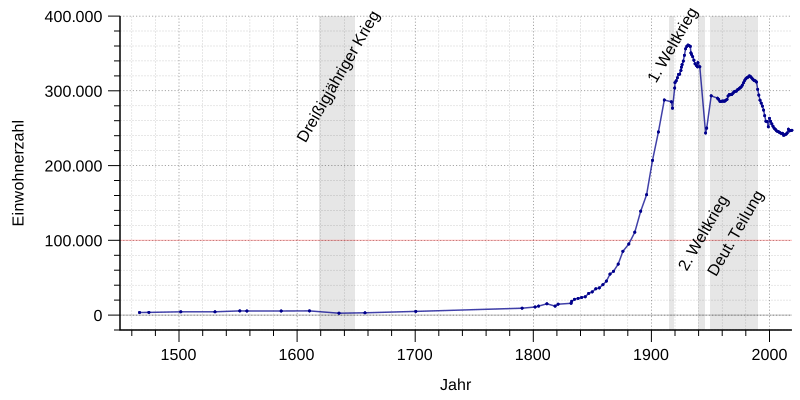
Chemnitz has a population of 246,000 people and is the 3rd largest city in Saxony. The population of Chemnitz grow rapidly since the early 1900s due to its industrialization. Chemnitz reached its highest peak of population in 1930 with population of about 362,000. Chemnitz in the East Germany era when the city was called "Karl-Marx-Stadt", it became a significant industrial city known for it textile and leather industries. Chemnitz was also the 4th largest city in then East Germany after East Berlin, Leipzig and Dresden. After the German Reunification Chemnitz faced a significant population decrease. Since 1988 Chemnitz has lost about 20 percent of its inhabitants. Chemnitz's population decreased from 300,000 in 1989 to under 250,000 in 2003, which made Chemnitz one of the cities with most population loss in Germany. Chemnitz's population started to grow again in the 2010s due to its immigration from mostly war active countries like Syria but it faced a problem due to many right-wing extremists and active Neo-Nazi groups where many foreigners experience racism and moved away from Chemnitz. The city had a fertility rate of 1.64 in 2015.
Foreign population in Chemnitz by nationality as of 31 December 2022:
| Rank | Nationality | Population (31.12.2022) |
|---|---|---|
| 1 | Ukraine | 3,465 |
| 2 | Syria | 2,915 |
| 3 | Poland | 2,340 |
| 4 | Afghanistan | 1,460 |
| 5 | Czech Republic | 1,384 |
| 6 | Romania | 1,287 |
| 7 | Hungary | 1,246 |
| 8 | India | 1,235 |
| 9 | Russia | 1,145 |
| 10 | Serbia | 1,077 |
A large contributor to the city's foreign population is Chemnitz University of Technology. In 2017, out of its 10,482 students, 2712 were foreign students, which equals to about 25%, making Chemnitz the most internationalised of the three major universities of Saxony.
Languages
- Standard German
- Chemnitz dialect, which is a variety of Upper Saxon German
Transport

Roads
Chemnitz is linked to two motorways (Autobahns), A4 Erfurt – Dresden and A72 Hof – Leipzig. The motorway junction Kreuz Chemnitz is situated in the northwestern area of the city. The motorway A72 between Borna and Leipzig is still under construction. Within the administrative area of Chemnitz there are eight motorway exits (Ausfahrt). The A4 motorway is part of the European route E40, one of the longest European E roads, connecting Chemnitz with the Asian Highway system to the east and France to the west.
Public transport
Public transport within Chemnitz is provided with tram and bus, as well as by the Stadtbahn. Nowadays, the city and its surroundings are served by one Stadtbahn line, five lines of the Chemnitz tramway network, 27 city bus lines, as well as several regional bus lines. At night, the city is served by two bus lines, two tram lines, and the Stadtbahn line.
Chemnitz Hauptbahnhof is the main station for the city. In June 2022, an intercity connection from Chemnitz via Dresden and Berlin to Rostock-Warnemünde was established again for the first time since 2006. Prior to this, Chemnitz was for a long time the largest German city without a connection of long-distance intercity services. 2 RegionalExpress routes connected Chemnitz to the larger cities of Saxony (RE3 from Dresden Hbf via Chemnitz to Hof & RE6 to Leipzig Hbf). In addition, 4 RegionalBahn and 4 CityBahn routes also operate from the Hauptbahnhof.
The length of the tram, Stadtbahn and bus networks is 28.73 km, 16.3 km and 326.08 km respectively. In August 2012, electro-diesel trams were ordered from Vossloh, to support an expansion of the light rail network to 226 km, with new routes serving Burgstädt, Mittweida and Hainichen.
Airports
Three airports are near Chemnitz, including the two international airports of Saxony in Dresden and Leipzig. Both Leipzig/Halle Airport and Dresden Airport are about 70 km from Chemnitz and offer numerous continental as well as intercontinental flights.
Chemnitz also has a small commercial airport ( about 13.5 km south of the city. When its current upgrade is completed it will have an asphalt runway 1400 m long and 20 m wide.
File:Hauptbahnhof Chemnitz und Bahnhofsvorplatz 2015.jpg|Chemnitz Hauptbahnhof, the main train station of Chemnitz File:Zentralhaltestelle Chemnitz, Innenstadt, 2015.jpg|Tram stop at the main tram and bus station at night File:Trams at Chemnitz Hauptbahnhof - geo.hlipp.de - 5066.jpg|A tram in Chemnitz File:Aerial image of the Chemnitz-Jahnsdorf airfield.jpg|The small commercial airport Flugplatz Chemnitz-Jahnsdorf
Sports


- BV Chemnitz 99 (basketball, men)
- Chemnitzer FC (football)
- Chemnitzer PSV (football, handball, volleyball)
- Chemcats Chemnitz (basketball, women)
- VfB Fortuna Chemnitz (football)
- Post SV Chemnitz (swimming)
- Schwimmclub Chemnitz v. 1892 e.V. (swimming)
- TSV Einheit Süd Chemnitz (swimming, gymnastics, volleyball, skittles)
- ERC Chemnitz e.V. (ice hockey, skater hockey)
- CTC-Küchwald (tennis)
- Floor Fighters Chemnitz (floorball)
- ESV LOK Chemnitz (luge)
- Chemnitzer EC (figure skating, ice dancing, curling)
- Chemnitz Crusaders (American football)
- Tower Rugby Chemnitz (rugby)
- SV Eiche Reichenbrand (football)
- USG Chemnitz e.V. abt Cricket Club (cricket)
Notable people
- Paul Oswald Ahnert (1897–1989), astronomer
- Brigitte Ahrens (born 1945), pop singer
- Olaf Altmann (born 1960), scenic designer
- Mark Arndt (born 1941), Russian Orthodox Archbishop
- Michael Ballack (born 1976), German footballer, former captain of Bayern Munich and Germany
- Veronika Bellmann (born 1960), politician
- Fritz Bennewitz (1926–1995), theater director
- Gerd Böckmann (born 1944), television actor and director
- Werner Bräunig (1934–1976), writer
- Marianne Brandt (1893–1983), artist, designer
- Valery Bykovsky (1934–2019), Soviet cosmonaut
- C418 (real name Daniel Rosenfeld, born 1989), music producer and sound engineer for Minecraft and Wanderstop
- Hans Carl von Carlowitz (1645–1714), forest scientist
- Max Eckert-Greifendorff (1868–1938), cartographer and professor
- Gerson Goldhaber (1924–2010), American nuclear and astrophysicist
- Friedrich Goldmann (1941–2009), composer and conductor
- Carl Hahn (1926–2023), businessman, head of the Volkswagen Group
- Johannes Hähle (1906–1944), military photographer
- Peter Härtling (1933-2017), writer
- Richard Hartmann (1809–1878), important entrepreneur ("Saxon locomotive king")
- Frank Heinrich (born 1964), politician, member of the Bundestag
- Stephan Hermlin (1915–1997), writer
- Stefan Heym (1913–2001), writer and member of the Bundestag of the PDS
- Christian Gottlob Heyne (1729–1812), classical scholar and archaeologist
- Sigmund Jähn (1937–2019), first German astronaut (Interkosmos flight of August 26, 1978)
- Eduard Johnson (1840-1903), local historian, journalist, author of Latin and Greek phrasebooks
- John Kluge (1921–2010), German-American billionaire and media mogul
- Eva Kunz (1947–2023), politician
- Helga Lindner (born 1951), swimmer; Olympic silver medalist
- Max Littmann (1862–1931), architect
- Anja Mittag (born 1985), footballer, World Champion 2007
- Frederick and William , founders of the Diamant bicycle brand
- Carsten Nicolai (born 1965), contemporary artist
- Frei Otto (1925–2015), architect, architectural theorist and professor of architecture, builder of the Munich Olympic Park
- Sylke Otto (born 1969), luge
- Siegfried Rapp (1917–1977), one-armed German pianist
- Frederick Emil Resche (1866–1946), U.S. Army brigadier general
- Frank Rost (born 1973), retired football goalkeeper
- Bruno Salzer (1859–1919), one of Chemnitz's leading entrepreneurs
- Aliona Savchenko, ice figure skater
- Helmut Schelsky (1912–1984), sociologist and university lecturer
- Karl Schmidt-Rottluff (1884–1976), painter and graphic artist of expressionism
- Maria Schüppel (1923–2011), composer and pioneering music therapist
- Christina Schultheiß (1918–2016), civil engineer, best known for her involvement in the Protestant church in East Germany.
- Matthias Schweighöfer (born 1981), actor and film director
- Jörg Schüttauf (born 1961), actor
- Nadja Stefanoff (born 1983), soprano
- Matthias Steiner (born 1982), German-Austrian weightlifter, Olympic gold medalist 2008
- Ingo Steuer (born 1966), figure skater
- Robin Szolkowy, ice figure skater
- Hans-Günther Thalheim (1924–2018), Germanist and linguist
- Johannes Thümmler (1906-2002), Obersturmbannführer
- (born 1998) actress
- Tom Unger (born 1985), politician (CDU)
- Siegfried Vogel (born 1937), operatic bass
- Kurt Wagner (1904–1989), German general
- Katarina Witt (born 1965), figure skater
- Mandy Wötzel (born 1973), figure skater
- Klaus Wunderlich (1931–1997), organist
Twin towns – sister cities
Chemnitz is twinned with:
- FIN Tampere, Finland (1961)
- SVN Ljubljana, Slovenia (1966)
- MLI Timbuktu, Mali (1968)
- CZE Ústí nad Labem, Czech Republic (1970)
- POL Łódź, Poland (1972)
- FRA Mulhouse, France (1981)
- England Manchester, England, UK (1983)
- RUS Volgograd, Russia (1988)
- GER Düsseldorf, Germany (1988)
- USA Akron, United States (1997)
- CHN Taiyuan, China (1999)
- ISR Kiryat Bialik, Israel (2022)
Former twin cities:
- FRA Arras, France (1967 to 2021)
References
Bibliography
References
- [https://wahlen.sachsen.de/buergermeisterwahl-2020-wahlergebnisse.php Wahlergebnisse 2020] {{Webarchive. link. (11 July 2021 , Freistaat Sachsen, accessed 10 July 2021.)
- "Industriekultur-Geschichte".
- "Chemnitz: Kulturhauptstadt mit Hindernissen".
- (2001). "Historisches Ortsnamenbuch von Sachsen. Band 1: A-L". Akademie.
- Agricola, Georgius. De re metallica. Translation by Hoover, Herbert Clark and Hoover, Lou Henry, 1912, reprinted by Dover Publications, New York, 1950, pp. vi-xii.
- (2006). "The German Revolution: 1917 - 1923". Haymarket Books.
- W. Berthold, 'Die Kämpfeti der Chemnitzer Arbeiter gegen die militaristiche Reaktion im August 1919', Beiträge zur Geschichte der deutschen Arbeiterbewegung, no. 1, 1962, p. 127.
- "Western Europe 1939–1945: Hamburg - Why did the RAF bomb cities?". [[The National Archives (United Kingdom).
- Victor, Edward. "Chemnitz, Germany".
- "Graduate Computing Resources - Department of Computer Science".
- (August 2024)
- (1983). "Travel Guide, German Democratic Republic". Zeit im Bild Publishing House.
- [http://www.chemnitz-tourismus.de/cmtdaten/downloads/chemnitz_inside.pdf ''Chemnitzer Tourismus-Broschüre'', Herausgeber: City-Management und Tourismus Chemnitz GmbH, 4. Jahrgang • Ausgabe 12 • Sommer 2010] {{webarchive. link. (26 August 2010 ; [http://www.chemnitz.de/chemnitz/de/stadt_chemnitz/geschichte/stadtarchiv/downloads/q_bildarchiv.pdf O-Ton-Nachweis im Chemnitzer Stadtarchiv]{{dead link). (August 2017)
- "East Germany invited to join EC Dublin summit", ''[[The Times]]'' page 9, 2 June 1990
- "Bauhaus-Universität Weimar: Institut für Europäische Urbanistik".
- {{lang. de. [[Dankwart Guratzsch]]: "[https://www.welt.de/print-welt/article214825/Einer_Stadt_die_Zaehne_herausgebrochen.html Einer Stadt die Zähne herausgebrochen]", ''[[Die Welt]]''
- {{lang. de. Gudrun Müller: "Der Abrissrausch ist tödlich für Chemnitz", ''[[Freie Presse (Saxony). Freie Presse]]''
- (31 August 2018). "Chemnitz Protests Show New Strength of Germany's Far Right". The New York Times.
- (28 August 2018). "German Far Right and Counterprotesters Clash in Chemnitz". The New York Times.
- Connolly, Kate. (2018-08-28). "German police criticised as country reels from far-right violence".
- Times, Oliver Moody, Berlin {{!}} The. (2018-09-02). "Germany: Weekend of riots as thousands clash at far-right march in Chemnitz". The Sunday Times.
- (2018-09-03). "Original wording: "Es gab, nach allem, was man weiss, lediglich vereinzelte Übergriffe, aber keine grossangelegte Menschenjagd (auch die NZZ hat hierüber zunächst in unzutreffender Weise berichtet)."". Neue Zürcher Zeitung.
- "Sachsens Ministerpräsident Kretschmer: "Es gab keinen Mob, keine Hetzjagd" - Freie Presse - Sachsen".
- "Original wording: "65.000 bei Konzert gegen Rechts"".
- "Original wording: "Totschlag in Chemnitz: Was wir über Tatverdächtige und Opfer Daniel H. wissen"". FOCUS online.
- (2018-09-03). "Original wording: "Die ostdeutsche Punkband Feine Sahne Fischfilet wurde jahrelang vom zuständigen Verfassungsschutz in Mecklenburg-Vorpommern beobachtet und tauchte unter dem Stichwort Linksextremismus (Rubrik: Autonome Antifa-Strukturen) in den Berichten der Staatsschützer auf."". Neue Zürcher Zeitung.
- (2018-09-27). "Original wording: "27 Minuten Hass auf Veranstaltung gegen Hass"".
- A3, EAC. (2020-10-28). "Chemnitz to be the European Capital of Culture 2025 in Germany".
- Chemnitz, Staatliches Museum für Archäologie. "Staatliches Museum für Archäologie Chemnitz".
- Chemnitz, City of. "SCHLINGEL International Film Festival".
- "Hauptsatzung der Stadt Chemnitz". Hauptsatzung der Stadt Chemnitz.
- Baden-Württemberg, Statistisches Landesamt. "Aktuelle Ergebnisse – VGR dL".
- (28 September 2007). "Detlef Müller".
- "Germany: States and Major Cities - Population Statistics, Maps, Charts, Weather and Web Information".
- (29 June 2017). "Statistisches Jahrbuch 2015/2016". chemnitz.de.
- "Statistical Office of Saxony, Statistical data of June 2018 for academic winter term 2017".
- (2013). "Upper Saxon (Chemnitz dialect)". Journal of the International Phonetic Association.
- "Chemnitz orders electro-diesel tram-trains". [[Railway Gazette International]].
- "Chemnitz Cricket Club".
- Davis, Henry Blaine Jr.. (1998). "Generals in Khaki". Pentland Press.
- "Partnerstädte". Chemnitz.
This article was imported from Wikipedia and is available under the Creative Commons Attribution-ShareAlike 4.0 License. Content has been adapted to SurfDoc format. Original contributors can be found on the article history page.
Ask Mako anything about Chemnitz — get instant answers, deeper analysis, and related topics.
Research with MakoFree with your Surf account
Create a free account to save articles, ask Mako questions, and organize your research.
Sign up freeThis content may have been generated or modified by AI. CloudSurf Software LLC is not responsible for the accuracy, completeness, or reliability of AI-generated content. Always verify important information from primary sources.
Report