From Surf Wiki (app.surf) — the open knowledge base
Charter of the Arab League
Founding treaty of the Arab League

Founding treaty of the Arab League
The Charter of the Arab League (also known as the Pact of the League of Arab States) is the founding treaty of the Arab League. Concluded in 1945, the agreement aims to strengthen relations and improve cooperation in various areas between signatory Arab countries, while also respecting and preserving their sovereignty. The internal regulations of the Council of the Arab League and the committees were agreed to in October 1951. Those of the Secretary-General were agreed to in May 1953.
Since then, governance of the Arab League has been based on the duality of supra-national institutions and the sovereignty of its member states. Preservation of individual statehood derived its strengths from the natural preference of ruling elites to maintain their power and independence in decision making. Moreover, the fear of the richer that the poorer may share their wealth in the name of Arab nationalism, the feuds among Arab rulers, and the influence of external powers that might oppose Arab unity can be seen as obstacles towards a deeper integration of the league.
Initial signatories

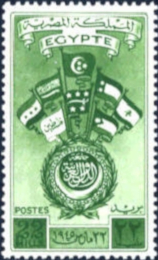
The Charter was concluded on 22 March 1945 by the governments of Syria, Transjordan, Iraq, Saudi Arabia, Lebanon, Egypt, and North Yemen. A state joins the Arab League by ratifying the Pact.
According to the Charter, "the League of Arab States shall be composed of the: independent Arab States that have signed this Pact."
Forms of government
The member states of the Arab League represent all forms of government, including monarchies, both absolute and constitutional, as well as republics.
| Name | Constitutional form | Head of state | Basis of executive legitimacy |
|---|
Autonomous entities

Officially, Iraqi Kurdistan is the only autonomous entity in the Arab League, but several countries view Palestine as an autonomous entity within Israel. The Palestinian Authority exercises certain sovereign powers within its borders, but is not a fully independent government. The Palestinian Authority administrated territories are internationally recognized as occupied by Israel. The Arab League on the other hand recognizes the State of Palestine as a fully independent state, with Jerusalem as its capital and with embassies in all of the other League member states, with the exception of Somalia.
References
References
- League of Arab States, Charter of Arab League, Article II, 22 March 1945, available at: https://www.refworld.org/docid/3ae6b3ab18.html
- "Pact of the League of Arab States, March 22, 1945". Yale Law School.
- Status of Palestine in the UN – Non-member observer State status – SecGen report, available at: https://www.un.org/unispal/document/auto-insert-182149/
This article was imported from Wikipedia and is available under the Creative Commons Attribution-ShareAlike 4.0 License. Content has been adapted to SurfDoc format. Original contributors can be found on the article history page.
Ask Mako anything about Charter of the Arab League — get instant answers, deeper analysis, and related topics.
Research with MakoFree with your Surf account
Create a free account to save articles, ask Mako questions, and organize your research.
Sign up freeThis content may have been generated or modified by AI. CloudSurf Software LLC is not responsible for the accuracy, completeness, or reliability of AI-generated content. Always verify important information from primary sources.
Report