From Surf Wiki (app.surf) — the open knowledge base
Charlton Athletic F.C.
Association football club in London, England

Association football club in London, England
| Field | Value |
|---|---|
| clubname | Charlton Athletic |
| current | 2025–26 Charlton Athletic F.C. season |
| image | Charlton Athletic FC crest.svg |
| image_size | 200px |
| fullname | Charlton Athletic Football Club |
| nickname | The Addicks |
| founded | |
| ground | The Valley |
| capacity | 27,111 |
| owner | Global Football Partners |
| manager | Nathan Jones |
| chairman | Gavin Carter |
| league | |
| season | |
| position | |
| website | |
| pattern_la1 | _charlton2526h |
| pattern_b1 | _charlton2526h |
| pattern_ra1 | _charlton2526h |
| pattern_sh1 | _charlton2526h |
| pattern_so1 | _whitetopl |
| leftarm1 | ff0000 |
| body1 | ff0000 |
| rightarm1 | ff0000 |
| socks1 | ff0000 |
the men's team
Charlton Athletic Football Club is a professional association football club based in Charlton, south-east London, England. The team competes in the Championship, the second tier of English football.
Their home ground is The Valley, where the club has played since 1919. They played at The Mount in Catford during the 1923–24 season. They also played a combined seven years divided between firstly Selhurst Park, and secondly at the former Upton Park (also known as the Boleyn Ground) between 1985 and 1992, due to both their financial problems and the local council's safety concerns. The club's traditional kit consists of red shirts, white shorts and red socks. Their most commonly used nickname is The Addicks. Charlton shares local rivalries with fellow South London clubs Crystal Palace and Millwall.
The club was founded on 9 June 1905 and turned professional in 1920. They spent one season in the Kent League and one season in the Southern League, before being invited to join the newly-formed Football League Third Division South in 1921. They won the division in the 1928–29 season, and again in 1934–35 following relegation in 1933. Charlton was promoted out of the Second Division in 1935–36, and finished second in the First Division the next season. Having been beaten finalists in 1946, they lifted the FA Cup the following year with a 1–0 victory over Burnley. The departure of Jimmy Seed in 1956, manager for 23 years, saw the club relegated out of the top-flight the following year. Relegated again in 1972, Charlton was promoted from the Third Division in 1974–75, and again in 1980–81 following relegation the previous season.
Charlton recovered from administration to secure promotion back to the First Division in 1985–86, and went on to lose in the 1987 final of the Full Members' Cup, though they won the 1987 play-off final to retain their top-flight status. Having been relegated in 1990, Charlton won the 1998 play-off final to make their debut in the Premier League. Though they were relegated the next year, manager Alan Curbishley took them back up as champions in 1999–2000. Charlton spent seven successive years in the Premier League, before suffering two relegations in three years. They topped League One with 101 points in 2011–12, but were relegated from the Championship in 2016. They were promoted again after winning the 2019 EFL League One play-off final, but were relegated a year later after finishing 22nd. The club eventually returned to the Championship in 2025, via the play-offs.
History
Early history (1905–1946)
Charlton Athletic was formed on 9 June 1905 by a group of 14 to 15-year-olds in East Street, Charlton, which is now known as Eastmoor Street and no longer residential.
Contrary to some histories, the club was founded as "Charlton Athletic" and had no connection to other teams or institutions such as East St Mission, Blundell Mission or Charlton Reds; it was not founded by a church, school, employer or as a franchise for an existing ground. Charlton spent most of the years before the First World War playing in local leagues but progressing rapidly, winning successive leagues promotions eight years in a row. In 1905–06 the team played only friendly games but joined, and won, the Lewisham League Division III for the 1906–07 season. For the 1907–08 season the team contested the Lewisham League, Woolwich League and entered the Woolwich Cup. It was also around this time the Addicks nickname was first used in the local press although it may have been in use before then. In the 1908–09 season Charlton Athletic were playing in the Blackheath and District League and by 1910–11 had progressed to the Southern Suburban League. During this period Charlton Athletic won the Woolwich Cup four times, the championship of the Woolwich League three times, won the Blackheath League twice and the Southern Suburban League three times.
They became a senior side in 1913, the same year that nearby Woolwich Arsenal relocated to North London.{{cite web | access-date = 20 September 2011 | url-status = dead | archive-url = https://web.archive.org/web/20110917171040/http://www.cafc.co.uk/page/History/0%2C%2C10267%2C00.html | archive-date = 17 September 2011
At the outbreak of World War I, Charlton were one of the first clubs to close down to take part in the "Greater Game" overseas. The club was reformed in 1917, playing mainly friendlies to raise funds for charities connected to the war and for the Woolwich Memorial Hospital Cup, the trophy for which Charlton donated. It had previously been the Woolwich Cup that the team had won outright following three consecutive victories.
After the war, they joined the Kent League for one season (1919–20) before becoming professional, appointing Walter Rayner as the first full-time manager. They were accepted by the Southern League and played just a single season (1920–21) before being voted into the Football League along with Aberdare Athletic. Charlton's first Football League match was against Exeter City in August 1921, which they won 1–0. In 1923, Charlton became "giant killers" in the FA Cup beating top flight sides Manchester City, West Bromwich Albion, and Preston North End before losing to eventual winners Bolton Wanderers in the Quarter-Finals. Later that year, it was proposed that Charlton merge with Catford Southend to create a larger team with bigger support. In the 1923–24 season Charlton played in Catford at The Mount stadium and wore the colours of "The Enders", light and dark blue vertical stripes. However, the move fell through and the Addicks returned to the Charlton area in 1924, returning to the traditional red and white colours in the process.
Charlton finished second bottom in the Football League in 1926 and were forced to apply for re-election which was successful. Three years later the Addicks won the Division Three championship in 1929 and they remained at the Division Two level for four years. After relegation into the Third Division south at the end of the 1932–33 season the club appointed Jimmy Seed as manager and he oversaw the most successful period in Charlton's history either side of World War II. Seed, an ex-miner who had made a career as a footballer despite suffering the effects of poison gas in the First World War, remains the most successful manager in Charlton's history. He is commemorated in the name of a stand at The Valley. Seed was an innovative thinker about the game at a time when tactical formations were still relatively unsophisticated. He later recalled "a simple scheme that enabled us to pull several matches out of the fire" during the 1934–35 season: when the team was in trouble "the centre-half was to forsake his defensive role and go up into the attack to add weight to the five forwards." The organisation Seed brought to the team proved effective and the Addicks gained successive promotions from the Third Division to the First Division between 1934 and 1936, becoming the first club to ever do so. Charlton finally secured promotion to the First Division by beating local rivals West Ham United at Upton Park, (which was also known as the Boleyn Ground), with their centre-half John Oakes playing on despite concussion and a broken nose.
In 1937, Charlton finished runners up in the First Division, in 1938 finished fourth and 1939 finished third. They were the most consistent team in the top flight of English football over the three seasons immediately before World War II. This continued during the war years and they won the Football League War Cup and appeared in finals.
Post-war success and fall from grace (1946–1984)
Charlton reached the 1946 FA Cup Final, but lost 4–1 to Derby County at Wembley. Charlton's Bert Turner scored an own goal in the 80th minute before equalising for the Addicks a minute later to take them into extra time, but they conceded three further goals in the extra period. When the full league programme resumed in 1946–47 Charlton could finish only 19th in the First Division, just above the relegation spots, but they made amends with their performance in the FA Cup, reaching the 1947 FA Cup Final. This time they were successful, beating Burnley 1–0, with Chris Duffy scoring the only goal of the day. In this period of renewed football attendances, Charlton became one of only 13 English football teams to average over 40,000 as their attendance during a full season. The Valley was the largest football ground in the League, drawing crowds in excess of 70,000. However, in the 1950s little investment was made either for players or to The Valley, hampering the club's growth. In 1956, the then board undermined Jimmy Seed and asked for his resignation; Charlton were relegated the following year.
|access-date = 10 July 2007 |archive-url = https://web.archive.org/web/20120204193340/http://www.rsssf.com/engpaul/FLA/1971-72.html |archive-date = 4 February 2012 |url-status = live |access-date = 10 July 2007 |archive-url = https://web.archive.org/web/20100125234218/http://www.rsssf.com/engpaul/FLA/1974-75.html |archive-date = 25 January 2010 |url-status = live |access-date = 10 July 2007 |archive-url = https://web.archive.org/web/20110604174826/http://www.rsssf.com/engpaul/FLA/1979-80.html |archive-date = 4 June 2011 |url-status = live |access-date = 10 July 2007 |archive-url = https://web.archive.org/web/20100125024638/http://www.rsssf.com/engpaul/FLA/1980-81.html |archive-date = 25 January 2010 |url-status = live
The "exiled" years (1985–1992)
In 1984 financial matters came to a head and the club went into administration, to be reformed as Charlton Athletic (1984) Ltd. although the club's finances were still far from secure. They were forced to leave The Valley just after the start of the 1985–86 season, after its safety was criticised by Football League officials in the wake of the Bradford City stadium fire. The club began to ground-share with Crystal Palace at Selhurst Park and this arrangement looked to be for the long-term, as Charlton did not have enough funds to revamp The Valley to meet safety requirements.
Despite the move away from The Valley, Charlton were promoted to the First Division as Second Division runners-up at the end of 1985–86,{{cite web |access-date = 10 July 2007 |archive-url = https://web.archive.org/web/20100127100741/http://www.rsssf.com/engpaul/FLA/1985-86.html |archive-date = 27 January 2010 |url-status = live Eventually, Charlton were relegated in 1990 along with Sheffield Wednesday and bottom club Millwall. Manager Lennie Lawrence remained in charge for one more season before he accepted an offer to take charge of Middlesbrough. He was replaced by joint player-managers Alan Curbishley and Steve Gritt. The pair had unexpected success in their first season finishing just outside the play-offs, and 1992–93 began promisingly and Charlton looked good bets for promotion in the new Division One (the new name of the old Second Division following the formation of the Premier League). However, the club was forced to sell players such as Rob Lee to help pay for a return to The Valley, while club fans formed the Valley Party, nominating candidates to stand in local elections in 1990, pressing the local council to enable the club's return to The Valley – finally achieved in December 1992.
In March 1993, defender Tommy Caton, who had been out of action because of injury since January 1991, announced his retirement from playing on medical advice. He died suddenly at the end of the following month at the age of 30.
Premier League years (1998–2007)
In the summer of 1995, new chairman Richard Murray appointed Alan Curbishley as sole manager of Charlton.{{cite web | access-date =26 August 2013 | archive-date=22 November 2007 | archive-url = https://web.archive.org/web/20071122135854/http://www.cafc.co.uk/AlanCurbishley.ink}} Under his sole leadership Charlton made an appearance in the play-offs in 1996 but were eliminated by Crystal Palace in the semi-finals and the following season brought a disappointing 15th-place finish. 1997–98 was Charlton's best season for years. They reached the Division One play-off final and battled against Sunderland in a thrilling game which ended with a 4–4 draw after extra time. Charlton won 7–6 on penalties,{{cite news |access-date = 26 August 2013 |archive-url = https://web.archive.org/web/20081208180824/http://news.bbc.co.uk/1/hi/sport/football/100195.stm |archive-date = 8 December 2008 |url-status = live
Charlton's first Premier League campaign began promisingly (they went top after two games) but they were unable to maintain their good form and were soon battling relegation. The battle was lost on the final day of the season but the club's board kept faith in Curbishley, confident that they could bounce back. Curbishley rewarded the chairman's loyalty with the Division One title in 2000 which signalled a return to the Premier League.{{cite news |access-date = 5 July 2007 |archive-url = https://web.archive.org/web/20160113005022/http://news.bbc.co.uk/sport1/hi/football/teams/c/charlton_athletic/808548.stm |archive-date = 13 January 2016 |url-status = live
After the club's Premier League comeback, Curbishley proved an astute spender, guiding the Addicks to a ninth place finish in the season after promotion and they were soon established as a mid table side who at times were in contention for a European place.
Charlton spent much of the 2003–04 Premier League season challenging for a Champions League place, but a late-season slump in form and the sale of star player Scott Parker to Chelsea, left Charlton in seventh place, which was still the club's highest finish since the 1950s. Charlton were unable to build on this level of achievement and Curbishley departed in 2006, with the club still established as a solid mid-table side.
In May 2006, Iain Dowie was named as Curbishley's successor,{{cite news |access-date = 5 July 2007 |archive-url = https://web.archive.org/web/20070522075636/http://news.bbc.co.uk/sport1/hi/football/teams/c/charlton_athletic/5027750.stm |archive-date = 22 May 2007 |url-status = live |access-date = 13 November 2006 |archive-url = https://web.archive.org/web/20070927193441/http://www.football.co.uk/charlton_athletic/dowie_exits_addicks_237138.shtml |archive-date = 27 September 2007 |url-status = live |access-date = 10 July 2007 |archive-url = https://web.archive.org/web/20160113005023/http://news.bbc.co.uk/sport1/hi/football/teams/c/charlton_athletic/6146620.stm |archive-date = 13 January 2016 |url-status = live |access-date = 5 July 2007 |archive-url = https://web.archive.org/web/20070112040217/http://news.bbc.co.uk/sport1/hi/football/teams/c/charlton_athletic/6208387.stm |archive-date = 12 January 2007 |url-status = live |access-date = 10 July 2007 |archive-url = https://web.archive.org/web/20070817210726/http://news.bbc.co.uk/sport1/hi/football/eng_prem/6602895.stm |archive-date = 17 August 2007 |url-status = live
Return to the Football League (2007–2014)
Charlton's return to the second tier of English football was a disappointment, with their promotion campaign tailing off to an 11th-place finish. Early in the following season the Addicks were linked with a foreign takeover,{{cite news |access-date = 10 July 2007 |archive-url = https://web.archive.org/web/20070819075948/http://news.bbc.co.uk/sport1/hi/football/teams/c/charlton_athletic/6633425.stm |archive-date = 19 August 2007 |url-status = live |access-date = 23 November 2008 |archive-url = https://web.archive.org/web/20160113005024/http://news.bbc.co.uk/sport1/hi/football/teams/c/charlton_athletic/7744263.stm |archive-date = 13 January 2016 |url-status = live |access-date = 18 April 2009 |archive-url = https://web.archive.org/web/20090421043741/http://news.bbc.co.uk/sport1/hi/football/eng_div_1/7990049.stm |archive-date = 21 April 2009 |url-status = live
The 2009–10 season, Charlton's first third-tier league campaign in 29 years, saw them occupy the top six for almost its entirety; they were defeated in the Football League One play-offs semi-final second leg on penalties against Swindon Town.{{cite news |access-date = 17 May 2010 |archive-url = https://web.archive.org/web/20100520235507/http://news.bbc.co.uk/sport2/hi/football/eng_div_2/8682146.stm |archive-date = 20 May 2010 |url-status = live

After a change in ownership, Parkinson and Charlton legend Mark Kinsella left after a poor run of results. Another Charlton legend, Chris Powell, was appointed manager of the club in January 2011, winning his first game in charge 2–0 over Plymouth at The Valley. This was Charlton's first league win since November. Powell's bright start continued with a further three victories, before running into a downturn which saw the club go 11 games in succession without a win. Yet the fans' respect for Powell saw him come under remarkably little criticism. The club's fortunes picked up towards the end of the season, but leaving them far short of the play-offs. In a busy summer, Powell brought in 19 new players and after a successful season, on 14 April 2012, Charlton Athletic won promotion back to the Championship with a 1–0 away win at Carlisle United. A week later, on 21 April 2012, they were confirmed as champions after a 2–1 home win over Wycombe Wanderers. Charlton then lifted the League One trophy on 5 May 2012, having been in the top position since 15 September 2011, and after recording a 3–2 victory over Hartlepool United, recorded their highest ever league points score of 101, the highest in any professional European league that year.
In the first season back in the Championship, the 2012–13 season saw Charlton finish ninth place with 65 points, just three points short of the play-off places to the Premier League.
Duchâtelet's ownership (2014–2019)
In early January 2014 during the 2013–14 season, Belgian businessman Roland Duchâtelet took over Charlton as owner in a deal worth £14million. This made Charlton a part of a network of football clubs owned by Duchâtelet. On 11 March 2014, two days after an FA Cup quarter-final loss to Sheffield United, and with Charlton sitting bottom of the table, Powell was sacked, private emails suggesting a rift with the owner.
New manager Jose Riga, despite having to join Charlton long after the transfer window had closed, was able to improve Charlton's form and eventually guide them to 18th place, successfully avoiding relegation. After Riga's departure to manage Blackpool, former Millwall player Bob Peeters was appointed as manager in May 2014 on a 12-month contract. Charlton started strong, but a long run of draws meant that after only 25 games in charge Peeters was dismissed with the team in 14th place. His replacement, Guy Luzon, ensured there was no relegation battle by winning most of the remaining matches, resulting in a 12th-place finish.
The 2015–16 season began promisingly but results under Luzon deteriorated and on 24 October 2015 after a 3–0 defeat at home to Brentford he was sacked. Luzon said in a News Shopper interview that he "was not the one who chose how to do the recruitment" as the reason why he failed as manager. Karel Fraeye was appointed "interim head coach", but was sacked after 14 games and just two wins, with the club then second from bottom in the Championship. On 14 January 2016, Jose Riga was appointed head coach for a second spell, but could not prevent Charlton from being relegated to League One for the 2016–17 season. Riga resigned at the end of the season. To many fans, the managerial changes and subsequent relegation to League One were symptomatic of the mismanagement of the club under Duchâtelet's ownership and several protests began.
After a slow start to the new season, with the club in 15th place of League One, the club announced that it had "parted company" with Russell Slade in November 2016. Karl Robinson was appointed on a permanent basis soon after. He led the Addicks to an uneventful 13th-place finish. The following season Robinson had the team challenging for the play-offs, but a drop in form in March led him to resign by mutual consent. He was replaced by former player Lee Bowyer as caretaker manager who guided them to a 6th-place finish, but lost in the play-off semi-final.
Bowyer was appointed permanently in September on a one-year contract and managed Charlton to third place in the 2018–19 EFL League One season, qualifying for the play-offs. In their first visit to the New Wembley Stadium and a repeat of their famous match in 1998, Charlton beat Sunderland 2–1 in the League One play-off final to earn promotion back to the EFL Championship after a three-season absence. Bowyer later signed a new one-year contract following promotion, which was later extended to three years in January 2020.
Multiple changes of ownership (2019–present)
ESI (2019–2020)
On 29 November 2019, Charlton Athletic were acquired by East Street Investments (ESI) from Abu Dhabi, subject to EFL approval. Approval was reportedly granted on 2 January 2020. However, on 10 March 2020, a public disagreement between the new owners erupted along with reports that the main investor was pulling out, and the EFL said the takeover had not been approved. The Valley and Charlton's training ground were still owned by Duchâtelet, and a transfer embargo was in place as the new owners had not provided evidence of funding through to June 2021. On 20 April 2020, the EFL said the club was being investigated for misconduct regarding the takeover. In June 2020, Charlton confirmed that ESI had been taken over by a consortium led by businessman Paul Elliott, and said it had contacted the EFL to finalise the ownership change. However, a legal dispute involving former ESI director Matt Southall continued. He attempted to regain control of the club to prevent Elliott's takeover from going ahead, but failed and was subsequently fined and dismissed for challenging the club's directors. On 7 August 2020, the EFL said three individuals, including ESI owner Elliott and lawyer Chris Farnell, had failed its Owners' and Directors' Test, leaving the club's ownership unclear; Charlton appealed against the decision. Meanwhile, Charlton were relegated to League One at the end of the 2019–20 season after finishing 22nd. Because of the COVID-19 pandemic, the final games of the season were played behind closed doors, which remained the case for the majority of the following season.
Later in August, Thomas Sandgaard, a Danish businessman based in Colorado, was reported to be negotiating to buy the club. After further court hearings, Elliott was granted an injunction blocking the sale of ESI until a hearing in November 2020.
Thomas Sandgaard (2020–2023)
On 25 September 2020, Thomas Sandgaard acquired the club itself from ESI, and was reported to have passed the EFL's Owners' and Directors' Tests; the EFL noted the change in control, but said the club's sale was now "a matter for the interested parties".
On 15 March 2021, with the club lying in eighth place, Bowyer resigned as club manager and was appointed manager of Birmingham City. His successor, Nigel Adkins, was appointed three days later. The club finished the 2020–21 season in seventh place, but started the following season by winning only two out of 13 League One matches and were in the relegation zone when Adkins was sacked on 21 October 2021.
After a successful spell as caretaker manager, Johnnie Jackson was appointed manager in December 2021, but, after Charlton finished the season in 13th place, he was also sacked. Swindon Town manager Ben Garner was appointed as his replacement in June 2022, but was sacked on 5 December 2022 with the team in 17th place. After the club was knocked out of the FA Cup by League Two side Stockport County on 7 December, supporters said Charlton was at its "lowest ebb in living memory", with fans "losing confidence" in owner Thomas Sandgaard. Dean Holden was appointed manager on 20 December 2022, and Charlton improved to finish the 2022–23 season in 10th place.
SE7 Partners (2023–present)
On 5 June 2023, the club announced that SE7 Partners, comprising former Sunderland director Charlie Methven and Edward Warrick, had agreed a takeover of Charlton Athletic, becoming the club's fourth set of owners in under four years. On 19 July, the EFL and FA cleared SE7 Partners to take over the club, and the deal was completed on 21 July 2023. On 27 August 2023, after one win in the opening six games of the 2023–24 season, Holden was sacked as manager, and succeeded by Michael Appleton. On 23 January 2024, following a 3–2 defeat at The Valley against Northampton Town - and no wins in 10 League One games - Appleton was sacked. He was replaced on 4 February 2024 by Nathan Jones, under whom Charlton lost one and drew three of their next four games as they matched the club's longest winless streak of 18 games. The winless run ended with a 2–1 win away to Derby County on 27 February 2024, extending what became a 14-match unbeaten run, Charlton's longest in 24 years. However, Charlton finished the disappointing season in 16th place, their worst finishing league position in 98 years, though Charlton striker Alfie May won the League One Golden Boot award for the 2023–24 EFL League One season, with his tally of 23 goals.
The following season, Charlton won promotion back to the Championship with a 1–0 victory over Leyton Orient in the League One play-off final on 25 May 2025. On 6 December 2025, Charlton's Championship match against Portsmouth at The Valley was abandoned after Charlton Athletic supporter of the year Norman Barker (known as "Headphones Norm") collapsed and later died in hospital.
Club identity
Colours and crest

In 1963, a competition was held to find a new badge for the club, and the winning entry was a hand holding a sword, which complied with Charlton's nickname of the time, the Valiants. Over the next five years modifications were made to this design, such as the addition of a circle surrounding the hand and sword and including the club's name in the badge. By 1968, the design had reached the one known today, and has been used continuously from this year, apart from a period in the 1970s when just the letters CAFC appeared on the team's shirts.{{cite web |access-date = 10 July 2007 |archive-url = https://web.archive.org/web/20070710231607/http://www.footballcrests.com/clubs/charlton-athletic-fc |archive-date = 10 July 2007 |url-status = live
With the exception of one season, Charlton have always played in red and white – colours chosen by the boys who founded Charlton Athletic in 1905 after having to play their first matches in the borrowed kits of their local rivals Woolwich Arsenal, who also played in red and white. The exception came during part of the 1923–24 season when Charlton wore the colours of Catford Southend as part of the proposed move to Catford, which were light and dark blue stripes. However, after the move fell through, Charlton returned to wearing red and white as their home colours.
The sponsors were as follows:{{cite web |access-date = 16 June 2008 |archive-url = https://web.archive.org/web/20080515145219/http://www.historicalkits.co.uk/Charlton_Athletic/Charlton_Athletic.htm |archive-date = 15 May 2008 |url-status = live
| Year | Kit manufacturer | Main shirt sponsor | Back of shirt sponsor | Shorts sponsor |
|---|---|---|---|---|
| 1974–80 | Bukta | None | None | |
| 1980–81 | Adidas | |||
| 1981–82 | FADS | |||
| 1982–83 | None | |||
| 1983–84 | Osca | |||
| 1984–86 | The Woolwich | |||
| 1986–88 | Adidas | |||
| 1988–92 | Admiral | |||
| 1992–93 | Ribero | None | ||
| 1993–94 | Viglen | |||
| 1994–98 | Quaser | |||
| 1998–00 | Le Coq Sportif | MESH | ||
| 2000–02 | Redbus | |||
| 2002–03 | All:Sports | |||
| 2003–05 | Joma | |||
| 2005–08 | Llanera | |||
| 2008–09 | Carbrini Sportswear | |||
| 2009 | Kent Reliance Building Society | |||
| 2010–12 | Macron | |||
| 2012–14 | Nike | Andrews Sykes | ||
| 2014–16 | University of Greenwich | Andrews Sykes | Mitsubishi Electric | |
| 2016–17 | BETDAQ | ITRM | Emmaus Consulting | |
| 2017–19 | Hummel | Gaughan Services | ||
| 2019–20 | Children with Cancer UK | Cannon Glass | ||
| 2020–21 | KW Holdings (home) | |||
| Vitech Services (away) | ||||
| 2021–22 | KW Holdings (home & third) | |||
| Walker Mower (away) | ||||
| 2022–25 | Castore | RSK (home) | ||
| University of Greenwich (away) | Generous Robots DAO | |||
| 2025– | Reebok | RSK Group | TBA | TBA |
Nicknames
Charlton's most common nickname is The Addicks. The origin of this name is from a local fishmonger, Arthur "Ikey" Bryan, who rewarded the team with meals of haddock and chips.
The progression of the nickname can be seen in the book The Addicks Cartoons: An Affectionate Look into the Early History of Charlton Athletic, which covers the pre-First World War history of Charlton through a narrative based on 56 cartoons which appeared in the now defunct Kentish Independent. The very first cartoon, from 31 October 1908, calls the team the Haddocks. By 1910, the name had changed to Addicks although it also appeared as Haddick. The club also have two other nicknames, The Robins, adopted in 1931, and The Valiants, chosen in a fan competition in the 1960s which also led to the adoption of the sword badge which is still in use. The Addicks nickname never went away and was revived by fans after the club lost its Valley home in 1985 and went into exile at Crystal Palace. It is now once again the official nickname of the club.
Charlton fans' chants have included "Valley, Floyd Road", a song noting the stadium's address to the tune of "Mull of Kintyre".
Stadium
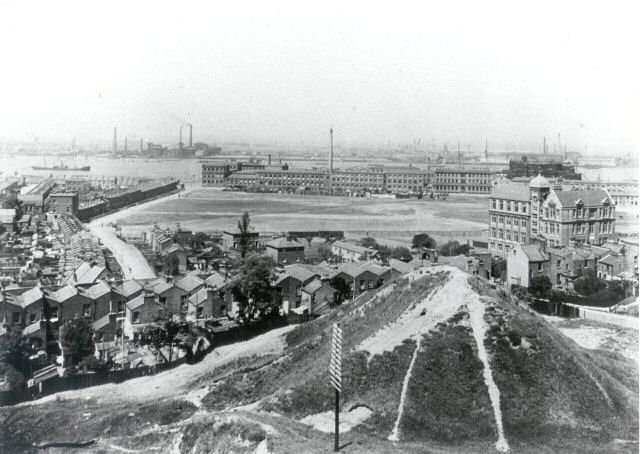
The club's first ground was Siemens Meadow (1905–1907), a patch of rough ground by the River Thames, over-shadowed by the Siemens Brothers Telegraph Works. Then followed Woolwich Common (1907–1908), Pound Park (1908–1913), and Angerstein Lane (1913–1915). After the end of the First World War, a chalk quarry known as the Swamps was identified as Charlton's new ground and, in the summer of 1919, work began to create the level playing area and remove debris from the site.
In September 1919, the first match was played at that site, now the club's current ground, known as The Valley. Charlton stayed at The Valley until 1923, when the club moved to The Mount stadium in Catford as part of a proposed merger with Catford Southend. However, after that move collapsed in 1924, Charlton returned to The Valley.
During the 1930s and 1940s, significant improvements were made to the ground, making it one of the largest in the country at that time. In 1938 the highest attendance to date at the ground was recorded at over 75,000 for a FA Cup match against Aston Villa. During the 1940s and 1950s the attendance was often above 40,000, and Charlton had one of the largest support bases in the country. However, after the club's relegation little investment was made in The Valley as it fell into decline.
In the 1980s matters came to a head as the ownership of the club and The Valley was divided. The large East Terrace had been closed down by the authorities after the Bradford City stadium fire and the ground's owner wanted to use part of the site for housing. In September 1985, Charlton made the controversial move to ground-share with South London neighbours Crystal Palace at Selhurst Park. This move was unpopular with supporters and, in the late 1980s, significant steps were taken to bring about the club's return to The Valley.
A single issue political party, the Valley Party, contested the 1990 local Greenwich Borough Council elections on a ticket of reopening the stadium, capturing 11% of the vote, aiding the club's return. The Valley Gold investment scheme was created to help supporters fund the return to The Valley, and several players were also sold to raise funds. For the 1991–92 season and part of the 1992–93 season, the Addicks played at West Ham's Upton Park{{cite web |access-date = 10 July 2007 |archive-url = https://web.archive.org/web/20070921182315/http://www.bbc.co.uk/london/content/articles/2005/05/18/charlton_athletic_team.shtml |archive-date = 21 September 2007 |url-status = live
Since the return to The Valley, three sides of the ground have been completely redeveloped turning the venue into a modern, all-seater stadium with a 27,111 capacity, which is the biggest in South London. There are plans in place to increase the ground's capacity to approximately 31,000 and even around 40,000 in the future.{{cite web | access-date = 5 July 2007 | url-status = dead | archive-url = https://web.archive.org/web/20070927175927/http://www.cafc.co.uk/newsview.ink?nid=21303&newstype=n | archive-date = 27 September 2007 In May 2024, a new Desso GrassMaster pitch was laid.
Supporters and rivalries
The bulk of the club's support base comes from South East London and Kent, particularly the London boroughs of Greenwich, Bexley and Bromley. Supporters played a key role in the return of the club to The Valley in 1992 and were rewarded by being granted a voice on the board in the form of an elected supporter director. Any season ticket holder could put themselves forward for election, with a certain number of nominations, and votes were cast by all season ticket holders over the age of 18. The last such director, Ben Hayes,{{cite web | access-date = 20 November 2011 | url-status = dead | archive-url = https://web.archive.org/web/20111113213627/http://www.cafc.co.uk/page/FansColumnsDetail/0%2C%2C10267~2498391%2C00.html | archive-date = 13 November 2011 | access-date = 20 November 2011 | url-status = dead | archive-url = https://web.archive.org/web/20111113104253/http://www.cafc.co.uk/page/FansColumnsDetail/0%2C%2C10267~2182317%2C00.html | archive-date = 13 November 2011

In 1985, Charlton were forced to ground-share with Crystal Palace after safety concerns at The Valley. They played their home fixtures at the Glaziers' Selhurst Park stadium until 1991. The arrangement was seen by Crystal Palace chairman Ron Noades as essential for the future of football, but it was unpopular with both sets of fans. Charlton fans campaigned for a return to The Valley throughout their time at Selhurst Park. In 2005, Palace were relegated by Charlton at The Valley after a 2–2 draw. Palace needed a win to survive. However, with seven minutes left, Charlton equalised, relegating their rivals. Post-match, there was a well-publicised altercation between the two chairmen of the respective clubs, Richard Murray and Simon Jordan. Since their first meeting in the Football League in 1925, Charlton have won 17, drawn 13 and lost 26 games against Palace. The teams last met in 2015, a 4–1 win for Palace in the League Cup.
Charlton are closest in proximity to Millwall than any other EFL club, with The Valley and The Den being less than four miles (4 mi) apart. They last met in January 2026, a 4–0 win for Millwall at The Den. Since their first Football League game in 1921, Charlton have won 11, drawn 27 and lost 38 league games (the two sides also met twice in the Anglo-Italian Cup in the 1992–93 season; Charlton winning one tie, and one draw).{{cite news |access-date = 28 September 2015 |url-status = live |archive-url = https://web.archive.org/web/20150928181753/http://www.statto.com/football/teams/charlton-athletic/millwall/head-to-head |archive-date = 28 September 2015
In popular culture
Film and TV
After promotion to Division 1 in 1936, the British Pathé company visited The Valley to film the players training. The commentary noted a "proud boast" that not a single player during their year in Division 2 was "cautioned". The subsequent film, Famous Football Teams at Home. No.5: Charlton Athletic (canister:PT 353, media URN: 39727), was released on 28 December 1936, and contains clear views of the early stadium.
British Movietone News filmed the sixth-round (quarter-final) FA Cup match versus Preston North End, at The Valley, on 1 March 1947, which Charlton won 2–1. The commentary was by Lionel Gamlin. It begins by showing German prisoners of war clearing snow from the former East terrace. (For identification purposes, the video i.d., is: BM48249. The film's Friendly Key, is: 470306131).
Charlton Athletic assumes a pivotal role in the film The Silent Playground (1963). Three children get in to trouble when their mother's boyfriend 'Uncle' Alan (John Ronane), gives them pocket money to wander off on their own, so that he can attend a Charlton football match. There is some footage from the ground which Ronane is later seen leaving.
In the long-running BBC sitcom Only Fools and Horses, Rodney Charlton Trotter (played by Nicholas Lyndhurst) is named after the club. In the BBC science-fiction series Doctor Who, the Seventh Doctor's companion Ace (played by Sophie Aldred from 1987 to 1989) wears a Charlton Athletic badge on her black bomber jacket and the club is mentioned in the episode Silver Nemesis. A Charlton Athletic match against Manchester United in the 1950s is depicted in BBC Two television film United (released in 2011).
The Valley and manager Alan Curbishley made cameo appearances in the Sky One sports drama Dream Team.
Charlton Athletic featured in the ITV one-off drama Albert's Memorial, shown on 12 September 2010 and starring David Jason and David Warner.
A young Billy Butcher has a Charlton flag in his room in Amazon Prime Video superhero series The Boys.
Books
Charlton Athletic has also featured in several book publications, in both fictional and factual sports writing. These include works by Charlie Connelly and Paul Breen's work of popular fiction which is entitled The Charlton Men. The book is set against Charlton's successful 2011–12 season when they won the League One title and promotion back to the Championship in concurrence with the 2011 London riots.
Timothy Young, the protagonist in Out of the Shelter, a 1970 novel by David Lodge, supports Charlton Athletic. The book describes Timothy listening to Charlton's victory in the 1947 FA Cup Final on the radio.
Records and statistics
-
Sam Bartram is Charlton's record appearance maker, having played a total of 623 times between 1934 and 1956. But for six years lost to the Second World War, when no league football was played, this tally would be far higher.
-
Keith Peacock is the club's second highest appearance maker with 591 games between 1962 and 1979 He was also the first-ever substitute in a Football League game, replacing injured goalkeeper Mike Rose after 11 minutes of a match against Bolton Wanderers on 21 August 1965.
-
Defender and midfielder Radostin Kishishev is Charlton's record international appearance maker, having received 42 caps for Bulgaria while a Charlton player.
-
In total, 12 Charlton players have received full England caps. The first was Seth Plum, in 1923 and the most recent was Darren Bent, in 2006. Luke Young, with seven caps, is Charlton's most capped England international.
-
Charlton's record goalscorer is Derek Hales, who scored 168 times in all competitions in 368 matches, during two spells, for the club.
-
Counting only league goals, Stuart Leary is the club's record scorer with 153 goals between 1951 and 1962.
-
The record number of goals scored in one season is 33, scored by Ralph Allen in the 1934–35 season.
-
Charlton's record home attendance is 75,031 which was set on 12 February 1938 for an FA Cup match against Aston Villa{{cite web |access-date = 15 January 2008 |url-status = dead |archive-url = https://web.archive.org/web/20111007081515/http://www.footballgroundguide.com/charlton_athletic/ |archive-date = 7 October 2011
-
The record all-seated attendance is 27,111, The Valley's current capacity. This record was first set in September 2005 in a Premier League match against Chelsea and has since been equalled several times.
| Achievement | Record (year, division) |
|---|---|
| Highest league finish | Runners-up in 1936–37 (First Division) |
| Most league points in a season | 101 in 2011–2012 (League One) |
| Most league goals in a season | 107 in 1957–58 (Second Division) |
| Record victory | 8–0 v. Stevenage, 9 October 2018 |
| Record away victory | 8–0 v. Stevenage, 9 October 2018 |
| Record defeat | 1–11 v. Aston Villa, 14 November 1959 |
| Record FA Cup victory | 7–0 v. Burton Albion, 7 January 1956 |
| Record League Cup victory | 5–0 v. Brentford, 12 August 1980 |
| Most successive victories | 12 matches (from 26 December 1999 to 7 March 2000) |
| Most games without a win | 18 matches (from 18 October 2008 to 13 January 2009; and 2 December 2023 to 24 February 2024) |
| Most successive defeats | 10 matches (from 11 April 1990 to 15 September 1990) |
| Most successive draws | 6 matches (from 13 December 1992 to 16 January 1993) |
| Longest unbeaten | 15 matches (from 4 October 1980 to 20 December 1980) |
| Record attendance | 75,031 v. Aston Villa, 17 October 1938 |
| Record league attendance | 68,160 v. Arsenal, 17 October 1936 |
| Record gate receipts | £400,920 v. Leicester City, 19 February 2005 |
Player records
| Achievement | Player (record) |
|---|---|
| Most appearances | Sam Bartram (623) |
| Most appearances (outfield) | Keith Peacock (591) |
| Most goals | Derek Hales (168) |
| Most hat-tricks | Johnny Summers and Eddie Firmani (8) |
| Most capped player | Dennis Rommedahl (126) |
| Most capped player while at the club | Radostin Kishishev (42) |
| Oldest player | Sam Bartram (42 years and 47 days) |
| Youngest player | Jonjo Shelvey (16 years and 59 days) |
| Oldest scorer | Chris Powell (38 years and 239 days) |
| Youngest scorer | Jonjo Shelvey (16 years and 310 days) |
| Quickest scorer | Jim Melrose (9 seconds) |
| Quickest sending off | Naby Sarr (1 minute) |
Players
Main article: List of Charlton Athletic F.C. players
Out on loan
Under-21s squad
Main article: Charlton Athletic F.C. Under-21s and Academy
Under-18s squad
Women's team
Main article: Charlton Athletic W.F.C.
Player of the Year
- 1971 ENG Paul Went
- 1972 ENG Keith Peacock
- 1973 ENG Arthur Horsfield
- 1974 ENG John Dunn
- 1975 ENG Richie Bowman
- 1976 ENG Derek Hales
- 1977 ENG Mike Flanagan
- 1978 ENG Keith Peacock
- 1979 ENG Keith Peacock
- 1980 ENG Les Berry
- 1981 ENG Nicky Johns
- 1982 ENG Terry Naylor
- 1983 ENG Nicky Johns
- 1984 ENG Nicky Johns
- 1985 WAL Mark Aizlewood
- 1986 WAL Mark Aizlewood
- 1987 ENG Bob Bolder
- 1988 ENG John Humphrey
- 1989 ENG John Humphrey
- 1990 ENG John Humphrey
- 1991 ENG Rob Lee
- 1992 ENG Simon Webster
- 1993 SCO Stuart Balmer
- 1994 ENG Carl Leaburn
- 1995 ENG Richard Rufus
- 1996 WAL John Robinson
- 1997 AUS Andy Petterson
- 1998 IRE Mark Kinsella
- 1999 IRE Mark Kinsella
- 2000 ENG Richard Rufus
- 2001 ENG Richard Rufus
- 2002 IRE Dean Kiely
- 2003 ENG Scott Parker
- 2004 IRE Dean Kiely
- 2005 ENG Luke Young
- 2006 ENG Darren Bent
- 2007 ENG Scott Carson
- 2008 IRE Matt Holland
- 2009 ENG Nicky Bailey
- 2010 SCO Christian Dailly
- 2011 POR José Semedo
- 2012 ENG Chris Solly
- 2013 ENG Chris Solly
- 2014 URU Diego Poyet
- 2015 ENG Jordan Cousins
- 2016 ENG Jordan Cousins
- 2017 ENG Ricky Holmes
- 2018 WAL Jay DaSilva
- 2019 Montserrat Lyle Taylor
- 2020 ENG Dillon Phillips
- 2021 ENG Jake Forster-Caskey
- 2022 ENG George Dobson
- 2023 ENG Jesurun Rak-Sakyi
- 2024 ENG Alfie May
- 2025 ENG Lloyd Jones
Club officials
Coaching staff
| Role | Name |
|---|---|
| First Team Manager | Wales Nathan Jones |
| First Team Assistant Manager | Ireland Curtis Fleming |
| Set Piece and First-Team Coach | ENG Danny Hylton |
| First Team Goalkeeping Coach | Ireland Stephen Henderson |
| Individual Development Coach | ENG Dave Huzzey |
| Head of Sports Science | England Luke Sanders |
| First-Team Doctor | England Toby Longwill |
| Head of Physical Performance | England Josh Hornby |
| First-Team Head Physiotherapist | England Adam Coe |
| First-Team Physiotherapist | Hong Kong Alex Ng |
| First-Team Assistant Therapist | England Steve Jackson |
| Head of Performance Analysis | England Pete Booker |
| First-Team Kit Manager | England Harry Williams |
| Head of Player Care | England Jack Tebbutt |
| Academy Manager | England Tom Pell |
| Academy Head of Coaching | England Rhys Williams |
| Senior Professional Development Phase Lead Coach | England Jason Pearce |
| Lead U21s Coach | ENG Chris Lock |
| Professional Development Phase Coach | England Chris Solly |
| Professional Development Phase Coach | England Kevin James |
| Head of Academy Sport Science and Medicine | England Danny Campbell |
| Senior Academy Scout | England Bert Dawkins |
| Academy Performance Analyst | England James Parker |
| Academy Physiotherapist | England Andriana Tsiantoula |
| Kit Assistant | England Ben Mehmet |
| Kit Assistant | England James Simmons |
Managerial history

Source: Main article: List of Charlton Athletic F.C. managers
| Name | Dates | Achievements |
|---|---|---|
| England Walter Rayner | June 1920 – May 1925 | |
| Scotland Alex MacFarlane | May 1925 – January 1928 | |
| England Albert Lindon | January 1928 – June 1928 | |
| Scotland Alex MacFarlane | June 1928 – December 1932 | Third Division champions (1929) |
| England Albert Lindon | December 1932 – May 1933 | |
| England Jimmy Seed | May 1933 – September 1956 | Third Division champions (1935); |
| Second Division runners-up (1936); | ||
| First Division runners-up (1937); | ||
| Football League War Cup co-winners (1944); | ||
| FA Cup runners-up 1946; | ||
| FA Cup winners 1947 | ||
| England David Clark (caretaker) | September 1956 | |
| England Jimmy Trotter | September 1956 – October 1961 | |
| England David Clark (caretaker) | October 1961 – November 1961 | |
| Scotland Frank Hill | November 1961 – August 1965 | |
| England Bob Stokoe | August 1965 – September 1967 | |
| Italy Eddie Firmani | September 1967 – March 1970 | |
| Ireland Theo Foley | March 1970 – April 1974 | |
| England Les Gore (caretaker) | April 1974 – May 1974 | |
| England Andy Nelson | May 1974 – March 1980 | Third Division 3rd place (promoted; 1975) |
| England Mike Bailey | March 1980 – June 1981 | Third Division 3rd place (promoted; 1981) |
| England Alan Mullery | June 1981 – June 1982 | |
| England Ken Craggs | June 1982 – November 1982 | |
| England Lennie Lawrence | November 1982 – July 1991 | Division Two runners-up (1986); |
| Full Members Cup runners-up (1987) | ||
| England Alan Curbishley & | ||
| England Steve Gritt | July 1991 – June 1995 | |
| England Alan Curbishley | June 1995 – May 2006 | First Division play-off winners (1998); |
| First Division champions (2000) | ||
| Northern Ireland Iain Dowie | May 2006 – November 2006 | |
| England Les Reed | November 2006 – December 2006 | |
| England Alan Pardew | December 2006 – November 2008 | |
| England Phil Parkinson | November 2008 – January 2011 | |
| England Keith Peacock (caretaker) | January 2011 | |
| England Chris Powell | January 2011 – March 2014 | League One champions (2012) |
| Belgium José Riga | March 2014 – May 2014 | |
| Belgium Bob Peeters | May 2014 – January 2015 | |
| England Damian Matthew & | ||
| England Ben Roberts (caretakers) | January 2015 | |
| Israel Guy Luzon | January 2015 – October 2015 | |
| Belgium Karel Fraeye | October 2015 – January 2016 | |
| Belgium José Riga | January 2016 – May 2016 | |
| England Russell Slade | June 2016 – November 2016 | |
| England Kevin Nugent (caretaker) | November 2016 | |
| England Karl Robinson | November 2016 – March 2018 | |
| England Lee Bowyer (caretaker) | March 2018 – September 2018 | |
| England Lee Bowyer | September 2018 – March 2021 | League One play-off winners (2019) |
| England Johnnie Jackson (caretaker) | March 2021 | |
| England Nigel Adkins | March 2021 – October 2021 | |
| England Johnnie Jackson (caretaker) | October 2021 – December 2021 | |
| England Johnnie Jackson | December 2021 – May 2022 | |
| England Ben Garner | June 2022 – December 2022 | |
| Ireland Anthony Hayes (caretaker) | December 2022 | |
| England Dean Holden | December 2022 – August 2023 | |
| England Jason Pearce (caretaker) | August 2023 – September 2023 | |
| England Michael Appleton | September 2023 – January 2024 | |
| Ireland Curtis Fleming (caretaker) | January 2024 – February 2024 | |
| Wales Nathan Jones | February 2024 – | League One play-off winners (2025) |
List of chairmen
| Year | Name |
|---|---|
| 1921–1924 | Douglas Oliver |
| 1924–1932 | Edwin Radford |
| 1932–1951 | Albert Gliksten |
| 1951–1962 | Stanley Gliksten |
| 1962–1982 | Michael Gliksten |
| 1982–1983 | Mark Hulyer |
| 1983 | Richard Collins |
| 1983–1984 | Mark Hulyer |
| 1984 | John Fryer |
| 1984–1985 | Jimmy Hill |
| 1985–1987 | John Fryer |
| 1987–1989 | Richard Collins |
| 1989–1995 | Roger Alwen |
| 1995–2008 | Richard Murray (PLC) |
| 1995–2008 | Martin Simons |
| 2008–2010 | Derek Chappell |
| 2008–2010 | Richard Murray |
| 2010–2014 | Michael Slater |
| 2014–2020 | Richard Murray |
| 2020 | Matt Southall |
| 2020–2023 | Thomas Sandgaard |
| 2024 | James Rodwell |
| 2024– | Gavin Carter |
Honours
Source:
League
- First Division (level 1)
- Runners-up: 1936–37
- Second Division / First Division (level 2)
- Third Division South / Third Division / League One (level 3)
Cup
References
Bibliography
- {{cite book
References
- "Update on structure of the club's board | Charlton Athletic Football Club".
- "We've Always Been Athletic – Charlton Athletic Museum".
- "England 1928/1929".
- Seed, Jimmy. (1947). "Soccer From the Inside". Thorsons.
- Colin Cameron, Home and Away with Chalton Athletic 1920–2004 (2004), p.69.
- "England 1936/1937".
- "England 1937/1938".
- "England 1938/1939".
- Cameron, Home and Away with Charlton Athletic 1910–2004, p.112.
- "Burnley 0 – 1 Charlton". Charlton Athletic FC.
- [http://greatestevent.wembleystadium.com/ Wembley's Greatest Events (1923–2010)] {{webarchive. link. (8 May 2013 Wembley Stadium)
- (15 May 2004). "Curbishley basks in glory". BBC.
- (29 April 2006). "Curbishley to leave Charlton". BBC.
- (29 August 2018). "The Demise Of Charlton Athletic Since 2014".
- "Bob Peeters sacked as Charlton coach after 25 league games". BBC Sport.
- "Charlton Athletic have sacked Bob Peeters after a dismal run of form". Daily Express.
- "Guy Luzon: Charlton Athletic sack manager after winless run". BBC Sport.
- (24 March 2016). "Former Charlton Athletic boss reveals he never had final say on transfers".
- "Karel Fraeye: Charlton Athletic appoint interim head coach". BBC Sport.
- "Karel Fraeye: Charlton Athletic sack interim head coach". BBC Sport.
- "Jose Riga: Charlton Athletic reappoint Belgian as head coach". BBC Sport.
- "Bolton Wanderers 0–0 Charlton Athletic". BBC Sport.
- "Jose Riga: Charlton Athletic head coach resigns following Burnley defeat".
- "Charlton Athletic fans call for Roland Duchatelet to sell club". BBC Sport.
- "Charlton Athletic fans protest against owners in England and Belgium". BBC Sport.
- (14 November 2016). "Charlton Athletic has today parted company with manager Russell Slade". Charlton Athletic F.C..
- (17 November 2016). "Kevin Nugent placed in caretaker charge of Charlton Athletic". BBC Sport.
- (26 May 2019). "Charlton 2–1 Sunderland – League One Play-off Final". BBC Sport.
- "Charlton boss Lee Bowyer signs new three-year contract". Sky Sports.
- (29 November 2019). "Charlton Athletic: Roland Duchatelet agrees sale to East Street Investments". BBC.
- (2 January 2020). "East Street Investments complete takeover of Charlton Athletic". Charlton Athletic.
- (10 March 2020). "Charlton takeover in chaos after public disagreement between new owners". Guardian.
- (10 March 2020). "Charlton Athletic: Majority shareholder Tahnoon Nimer claims he will remain as director". BBC.
- (20 April 2020). "Charlton Athletic takeover by East Street Investments under investigation by EFL". Sky Sports.
- (9 June 2020). "Charlton Athletic: Tahnoon Nimer agrees sale of club to consortium". BBC.
- "Consortium led by businessman Paul Elliott purchases East Street Investments".
- (12 June 2020). "Charlton Athletic to defend 'ridiculous' High Court insolvency action". BBC.
- (17 July 2020). "Matt Southall: Ex-Charlton chief executive told to pay £21,000 in costs". BBC Sport.
- (7 August 2020). "Charlton Athletic: English Football League rejects takeover by Paul Elliott". BBC Sport.
- "Update following EFL statement".
- (22 July 2020). "This is who is promoted and relegated from the Championship".
- (19 August 2020). "Charlton Athletic: Thomas Sandgaard says it will take time to earn fans' trust". BBC Sport.
- (1 September 2020). "Charlton Athletic can be taken over after Paul Elliott injunction refused". BBC Sport.
- (2 September 2020). "Charlton Athletic: League One club cannot be sold before 9 September". BBC Sport.
- (17 September 2020). "Charlton Athletic: Paul Elliott granted sale injunction of League One club". BBC Sport.
- Doyle, Tom. (25 September 2020). "Charlton Athletic confirm Thomas Sandgaard is the club's new owner". The Evening Standard.
- (25 September 2020). "Charlton Athletic: Thomas Sandgaard claims he has bought League One club". BBC Sport.
- (15 March 2021). "Lee Bowyer: Charlton Athletic manager resigns from League One club". BBC Sport.
- (16 March 2021). "Lee Bowyer: Going back to Birmingham 'the right thing to do', says new boss". BBC Sport.
- (18 March 2021). "Nigel Adkins: Charlton Athletic appoint ex-Southampton & Reading boss as new manager". BBC Sport.
- (21 October 2021). "Nigel Adkins: Charlton Athletic sack manager after poor run". BBC Sport.
- (17 December 2021). "Charlton Athletic fans' favourite Johnnie Jackson appointed permanent boss". South London Press.
- (3 May 2022). "Johnnie Jackson departs as club's manager".
- (8 June 2022). "Charlton appoint Ben Garner as Men's First-Team Manager | Charlton Athletic Football Club". Charltonafc.com.
- (5 December 2022). "Ben Garner departs as Men's First-Team Manager". Charlton Athletic Official Website.
- (7 December 2022). "Stockport County 3–1 Charlton Athletic". BBC Sport.
- (8 December 2022). "Charlton Athletic are at 'lowest ebb in living memory' say supporters' trust". BBC Sport.
- (20 December 2022). "HOLDEN, SCOTT, RODWELL AND WARRICK APPOINTED TO SENIOR ROLES".
- (7 May 2023). "Cheltenham Town 2–2 Charlton Athletic". BBC Sport.
- (5 June 2023). "Charlton Athletic: Charlie Methven's SE7 Partners agree deal to buy club from Thomas Sandgaard". BBC Sport.
- (19 July 2023). "SE7 Partners: Charlton Athletic takeover cleared for ex-Sunderland director Charlie Methven's firm". BBC Sport.
- (21 July 2023). "Charlton Athletic: SE7 Partners complete takeover from Thomas Sandgaard". BBC Sport.
- (27 August 2023). "Dean Holden: Charlton Athletic manager sacked by League One club". BBC Sport.
- (8 September 2023). "Michael Appleton: Charlton Athletic appoint former Oxford United boss as manager". BBC Sport.
- (23 January 2024). "CLUB STATEMENT : MICHAEL APPLETON".
- (23 January 2024). "Michael Appleton: Charlton Athletic sack head coach after 12-game winless run". BBC Sport.
- (4 February 2024). "Nathan Jones: Charlton Athletic appoint former Southampton and Luton manager". BBC Sport.
- (24 February 2024). "Charlton Athletic 0-0 Portsmouth". BBC Sport.
- (27 February 2024). "Charlton Athletic finally end wait for League One win as they secure 2-1 victory at Derby County".
- (25 April 2024). "Charlton Athletic owners fully intent on backing Nathan Jones in summer transfer window".
- "Wycombe end Addicks' unbeaten run {{!}} Charlton Athletic Football Club".
- (27 April 2024). "Alfie May wins Sky Bet League One Golden Boot award".
- Hashim, Taha. (25 May 2025). "Charlton Athletic 1–0". the Guardian.
- (8 December 2025). "Tributes paid to Charlton fan who died at match". BBC News.
- "Blackheath war memorial".
- "Charlton songs". Charlton Athletic FC.
- "Charlton 1 – 0 Portsmouth". Charlton Athletic FC.
- "Crystal Palace 4–1 Charlton: Dwight Gayle scores hat-trick in win".
- "Charlton head-to-head v Millwall".
- British Pathé. (2014-04-13). "Football Comes In - Charlton Athletic In Training (1936)".
- British Pathé. (2014-04-13). "Famous Football Teams At Home (1936)".
- British Movietone. (2015-07-21). "FA CUP - SIXTH ROUND - CHARLTON V PRESTON NORTH END".
- "Reelstreets {{!}} Silent Playground, The".
- (18 July 2014). "The Top 10 Football References In Only Fools And Horses".
- Wollaston, Sam. (24 April 2011). "TV review: Doctor Who; United". The Guardian.
- (14 October 2023). "Assassinations, Affairs & Alcohol: How Harchester United Won The FA Cup".
- "Albert's Memorial". ITV plc.
- Bojalad, Alec. (1 July 2022). "The Boys Season 3: All the Real Life References".
- "Many Miles.... A Season In The Life Of Charlton Athletic".
- "Paul Breen, Author of The Charlton Men speaks to The Football Hour's Dom Betts & Alex Mearns".
- (29 February 2012). "Out of the Shelter, by David Lodge on Google Books". Random House.
- "Radostin Kishishev – International Appearances".
- "Every Addick Who Wore the Three Lions".
- "First team". Charlton Athletic F.C..
- "U21 team". Charlton Athletic F.C..
- "U18 team". Charlton Athletic F.C..
- (7 August 2025). "2025/26 squad numbers confirmed". Charlton Athletic F.C.
- (4 February 2024). "NATHAN JONES APPOINTED MANAGER".
- (9 May 2022). "Tom Pell appointed Academy Manager as Steve Avory becomes Academy Director". Charlton Athletic.
- "Charlton Athletic Manager History".
- "Trophy Cabinet".
- "Charlton Athletic".
- "Charlton Athletic".
This article was imported from Wikipedia and is available under the Creative Commons Attribution-ShareAlike 4.0 License. Content has been adapted to SurfDoc format. Original contributors can be found on the article history page.
Ask Mako anything about Charlton Athletic F.C. — get instant answers, deeper analysis, and related topics.
Research with MakoFree with your Surf account
Create a free account to save articles, ask Mako questions, and organize your research.
Sign up freeThis content may have been generated or modified by AI. CloudSurf Software LLC is not responsible for the accuracy, completeness, or reliability of AI-generated content. Always verify important information from primary sources.
Report