From Surf Wiki (app.surf) — the open knowledge base
Charging station
Installation for charging electric vehicles
.jpg)
Installation for charging electric vehicles
- Top-left: a Tesla Roadster (2008) being charged at an electric charging station in Iwata city, Japan.
- Top-right: Brammo Empulse electric motorcycle at an AeroVironment charging station and Pay as you go electric vehicle charging point.
- Bottom-left: Nissan Leaf recharging from a NRG Energy eVgo station in Houston, Texas.
- Bottom-right: converted Toyota Priuses recharging at public charging stations in San Francisco, California (2009).
A charging station, also known as a charge point, chargepoint, or electric vehicle supply equipment (EVSE), is a power supply device that supplies electrical power for recharging the on-board battery packs of plug-in electric vehicles (including battery electric vehicles, electric trucks, electric buses, neighborhood electric vehicles, and plug-in hybrid vehicles).
There are two main types of EV chargers: alternating current (AC) charging stations and direct current (DC) charging stations. Electric vehicle batteries can only be charged by direct current electricity, while most mains electricity is delivered from the power grid as alternating current. For this reason, most electric vehicles have a built-in AC-to-DC converter commonly known as the "on-board charger" (OBC). At an AC charging station, AC power from the grid is supplied to this onboard charger, which converts it into DC power to recharge the battery. DC chargers provide higher-power charging (which requires much larger AC-to-DC converters) by building the converter into the charging station to avoid size, weight and cost restrictions inside vehicles. The station then directly supplies DC power to the vehicle, bypassing the onboard converter. Most modern electric vehicles can accept both AC and DC power.
Public charging stations
Public charging stations are typically found street-side or at retail shopping centers, government facilities, and other parking areas. Private charging stations are usually found at residences, workplaces, and hotels.
Standards
Charging stations provide connectors that conform to a variety of international standards. DC charging stations are commonly equipped with multiple connectors to charge various vehicles that use competing standards.
Multiple standards have been established for charging technology to enable interoperability across vendors. Standards are available for nomenclature, power, and connectors. Tesla developed proprietary technology in these areas and began building its charging network in 2012.
Nomenclature
.svg)
In 2011, the European Automobile Manufacturers Association (ACEA) defined the following terms:
- Socket outlet: the port on the electric vehicle supply equipment (EVSE) that supplies charging power to the vehicle
- Plug: the end of the flexible cable that interfaces with the socket outlet on the EVSE. The socket outlet and plug are not used in North America because the cable is permanently attached.
- Cable: a flexible bundle of conductors that connects the EVSE with the electric vehicle
- Connector: the end of the flexible cable that interfaces with the vehicle inlet
- Vehicle inlet: the port on the electric vehicle that receives charging power
The terms "electric vehicle connector" and "electric vehicle inlet" were previously defined in the same way under Article 625 of the United States National Electrical Code (NEC) of 1999. NEC-1999 also defined the term "electric vehicle supply equipment" as the entire unit "installed specifically for the purpose of delivering energy from the premises wiring to the electric vehicle", including "conductors ... electric vehicle connectors, attachment plugs, and all other fittings, devices, power outlets, or apparatuses".
Tesla, Inc. uses the term charging station as the location of a group of chargers, and the term connector for an individual EVSE.
Voltage and power
Early standards
| Method | Maximum supply | Current (A) | Voltage (V) | Power (kW) | Level 1 (1-phase AC) | Level 2 (1-phase AC) | Level 3 (3-phase AC) |
|---|---|---|---|---|---|---|---|
| 12 | 120 | 1.44 | |||||
| 16 | 120 | 1.92 | |||||
| 24 | 120 | 2.88 | |||||
| 32 | 208/240 | 7.68 | |||||
| 400 | 480 | 332.6 |
The US National Electric Transportation Infrastructure Working Council (IWC) was formed in 1991 by the Electric Power Research Institute with members drawn from automotive manufacturers and the electric utilities to define standards in the US; early work by the IWC led to the definition of three levels of charging in the 1999 National Electrical Code (NEC) Handbook.
Under the 1999 NEC, Level 1 charging equipment (as defined in the NEC handbook but not in the code) was connected to the grid through a standard NEMA 5-20R 3-prong electrical outlet with grounding, and a ground-fault circuit interrupter was required within 12 in of the plug. The supply circuit required protection at 125% of the maximum rated current; for example, charging equipment rated at 16 amperes ("amps" or "A") continuous current required a breaker sized to 20 A.
Level 2 charging equipment (as defined in the handbook) was permanently wired and fastened at a fixed location under NEC-1999. It also required grounding and ground-fault protection; in addition, it required an interlock to prevent vehicle startup during charging and a safety breakaway for the cable and connector. A 40 A breaker (125% of continuous maximum supply current) was required to protect the branch circuit. For convenience and speedier charging, many early EVs preferred that owners and operators install Level 2 charging equipment, which was connected to the EV either through an inductive paddle (Magne Charge) or a conductive connector (Avcon).
Level 3 charging equipment used an off-vehicle rectifier to convert the input AC power to DC, which was then supplied to the vehicle. At the time it was written, the 1999 NEC handbook anticipated that Level 3 charging equipment would require utilities to upgrade their distribution systems and transformers.
SAE
| Method | Maximum supply | Current (A) | Voltage (V) | Power (kW) | AC Level 1 | AC Level 2 | DC Level 1 | DC Level 2 |
|---|---|---|---|---|---|---|---|---|
| 12 | 120 | 1.44 | ||||||
| 16 | 120 | 1.92 | ||||||
| 80 | 208–240 | 19.2 | ||||||
| 80 | 50–1000 | 80 | ||||||
| 400 | 50–1000 | 400 |
The Society of Automotive Engineers (SAE International) defines the general physical, electrical, communication, and performance requirements for EV charging systems used in North America, as part of standard SAE J1772, initially developed in 2001. SAE J1772 defines four levels of charging, two levels each for AC and DC supplies; the differences between levels are based upon the power distribution type, standards and maximum power.
Alternating current (AC)
AC charging stations connect the vehicle's onboard charging circuitry directly to the AC supply.
- AC Level 1: Connects directly to a standard 120V North American outlet; capable of supplying 616A (0.71.92kilowatts or "kW") depending on the capacity of a dedicated circuit.
- AC Level 2: Uses 240V (single phase) or 208V (three phase) power to supply between 6 and 80A (1.419.2kW). It provides a significant charging speed increase over AC Level 1 charging.
Direct current (DC)
Commonly, though incorrectly, called "Level 3" charging based on the older NEC-1999 definition, DC charging is categorized separately in the SAE standard. In DC fast-charging, grid AC power is passed through an AC-to-DC converter in the station before reaching the vehicle's battery, bypassing any AC-to-DC converter on board the vehicle.
- DC Level 1: Supplies a maximum of 80kW at 501000V.
- DC Level 2: Supplies a maximum of 400kW at 501000V.
Additional standards released by SAE for charging include SAE J3068 (three-phase AC charging, using the Type 2 connector defined in IEC 62196-2) and SAE J3105 (automated connection of DC charging devices).
IEC
In 2003, the International Electrotechnical Commission (IEC) adopted a majority of the SAE J1772 standard under IEC 62196-1 for international implementation.
| Mode | Type | Maximum supply | Current (A) | Voltage (V) | Power (kW) | 1 | 2 | 3 | 4 |
|---|---|---|---|---|---|---|---|---|---|
| 1Φ AC | 16 | 250 | 4 | ||||||
| 3Φ AC | 16 | 480 | 11 | ||||||
| 1Φ AC | 32 | 250 | 7.4 | ||||||
| 3Φ AC | 32 | 480 | 22 | ||||||
| 1Φ AC | 63 | 250 | 14.5 | ||||||
| 3Φ AC | 63 | 480 | 43.5 | ||||||
| DC | 200 | 400 | 80 |
The IEC alternatively defines charging in modes (IEC 61851-1):
- Mode 1: slow charging from a regular electrical socket (single- or three-phase AC)
- Mode 2: slow charging from a regular AC socket but with some EV-specific protection arrangement (i.e. the Park & Charge or the PARVE systems)
- Mode 3: slow or fast AC charging using a specific EV multi-pin socket with control and protection functions (i.e. SAE J1772 and IEC 62196-2)
- Mode 4: DC fast charging using a specific charging interface (i.e. IEC 62196-3, such as CHAdeMO)
The connection between the electric grid and "charger" (electric vehicle supply equipment) is defined by three cases (IEC 61851-1):
- Case A: any charger connected to the mains (the mains supply cable is usually attached to the charger) usually associated with modes 1 or 2.
- Case B: an on-board vehicle charger with a mains supply cable that can be detached from both the supply and the vehicle – usually mode 3.
- Case C: DC dedicated charging station. The mains supply cable may be permanently attached to the charge station as in mode 4.
Tesla NACS
Main article: North American Charging System
The North American Charging System (NACS) was developed by Tesla, Inc. for use in the company's vehicles. It remained a proprietary standard until 2022 when its specifications were published by Tesla. The connector is physically smaller than the J1772/CCS connector, and uses the same pins for both AC and DC charging functionality.
As of November 2023, automakers Ford, General Motors, Rivian, Volvo, Polestar, Mercedes-Benz, Nissan, Honda, Jaguar, Fisker, Hyundai, BMW, Toyota, Subaru, and Lucid Motors have all committed to equipping their North American vehicles with NACS connectors in the future. Automotive startup Aptera Motors has also adopted the connector standard in its vehicles. Other automakers, such as Stellantis and Volkswagen had not made an announcement as of late 2023.
To meet European Union (EU) requirements on recharging points, Tesla vehicles sold in the EU are equipped with a CCS Combo 2 port. Both the North America and the EU port take 480V DC fast charging through Tesla's network of Superchargers, which variously use NACS and CCS charging connectors. Depending on the Supercharger version, power is supplied at 72, 150, or 250 kW, the first corresponding to DC Level 1 and the second and third corresponding to DC Level 2 of SAE J1772. As of Q4 2021, Tesla reported 3,476 supercharging locations worldwide and 31,498 supercharging chargers (about 9 chargers per location on average).
Development for higher power charging
An extension to the CCS DC fast-charging standard for electric cars and light trucks was being developed as of 2020, which was slated to provide higher power charging for large commercial vehicles (Class 8, and possibly 6 and 7 as well, including school and transit buses). When the Charging Interface Initiative e. V. (CharIN) task force was formed in March 2018, the new standard being developed was originally called High Power Charging (HPC) for Commercial Vehicles (HPCCV), later renamed Megawatt Charging System (MCS). MCS is expected to operate in the range of 2001500V and 03000A for a theoretical maximum power of 4.5megawatts (MW). The proposal calls for MCS charge ports to be compatible with existing CCS and HPC chargers. The task force released aggregated requirements in February 2019, which called for maximum limits of 1000V DC (optionally, 1500V DC) and 3000A continuous rating.
A connector design was selected in May 2019 The final connector requirements and specification was adopted in December 2021 as MCS connector version 3.2.
With support from Portland General Electric, on 21 April 2021 Daimler Trucks North America opened the "Electric Island", the first heavy-duty vehicle charging station, across the street from its headquarters in Portland, Oregon. The station is capable of charging eight vehicles simultaneously, and the charging bays are sized to accommodate tractor-trailers. In addition, the design is capable of accommodating 1MW chargers once they are available. A startup company, WattEV, announced plans in May 2021 to build a 40-stall truck stop/charging station in Bakersfield, California. At full capacity, it was slated to provide a combined 25MW of charging power, partially drawn from an on-site solar array and battery storage.
Connectors
Common connectors include Type 1 (Yazaki), Type 2 (Mennekes), CCS Combo 1 and 2, CHAdeMO, and Tesla. Many standard plug types are defined in IEC 62196-2 (for AC supplied power) and 62196-3 (for DC supplied power):
- Type 1: single-phase AC vehicle coupler – SAE J1772/2009 automotive plug specifications
- Type 2: single- and three-phase AC vehicle coupler – VDE-AR-E 2623-2-2, SAE J3068, and GB/T 20234.2 plug specifications
- Type 3: single- and three-phase AC vehicle coupler equipped with safety shutters – EV Plug Alliance proposal
- Type 4: DC fast-charge couplers
- Configuration AA: CHAdeMO
- Configuration BB: GB/T 20234.3
- Configurations CC/DD: (reserved)
- Configuration EE: CCS Combo 1
- Configuration FF: CCS Combo 2
| Power | |||||||
|---|---|---|---|---|---|---|---|
| supply | United States | European Union | Japan | China | 1-phase AC | ||
| (62196.2) | 3-phase AC | ||||||
| (62196.2) | DC | ||||||
| (62196.3) | |||||||
| [[File:J1772 connector.svg | 88px]] | ||||||
| Type 1 (SAE J1772) | [[File:IEC 62196-2 Type 2 (plug).svg | 109px]] | |||||
| Type 2 | |||||||
| [[File:J1772 connector.svg | 88px]] | ||||||
| Type 1 (SAE J1772) | [[File:GBT 20234 (AC).svg | 109px]] | |||||
| Type 2 (GB/T 20234.2) | |||||||
| [[File:IEC 62196-2 Type 2 (plug).svg | 109px]] | ||||||
| Type 2 (SAE J3068) | colspan=2 | ||||||
| [[File:J1772 (CCS1).svg | 104px]] | ||||||
| EE (CCS Combo 1) | [[File:IEC 62196 Type 2 (M, DC, CCS Combo 2).svg | 118px]] | |||||
| FF (CCS Combo 2) | [[File:CHAdeMO connector.svg | 140px]] | |||||
| AA (CHAdeMO) | [[File:GBT 20234 (DC).svg | 140px]] | |||||
| BB (GB/T 20234.3) | |||||||
| [[File:ChaoJi connector.svg | 126px]] | ||||||
| ChaoJi (planned) |
Quick Notes on EV Charger types ; Notes
CCS DC charging requires power-line communication (PLC). Two connectors are added at the bottom of Type 1 or Type 2 vehicle inlets and charging plugs to supply DC current. These are commonly known as Combo 1 or Combo 2 connectors. The choice of style inlets is normally standardized on a per-country basis so that public chargers do not need to fit cables with both variants. Generally, North America uses Combo 1 style vehicle inlets, while most of the rest of the world uses Combo 2.
The CHAdeMO standard is favored by Nissan, Mitsubishi, and Toyota, while the SAE J1772 Combo standard is backed by GM, Ford, Volkswagen, BMW, and Hyundai. Both systems charge to 80% in approximately 20 minutes, but the two systems are incompatible. Richard Martin, editorial director for clean technology marketing and consultant firm Navigant Research, stated:
The broader conflict between the CHAdeMO and SAE Combo connectors, we see that as a hindrance to the market over the next several years that needs to be worked out.
Historical connectors

In the United States, many of the EVs first marketed in the late 1990s and early 2000s such as the GM EV1, Ford Ranger EV, and Chevrolet S-10 EV preferred the use of Level 2 (single-phase AC) EVSE, as defined under NEC-1999, to maintain acceptable charging speed. These EVSEs were fitted with either an inductive connector (Magne Charge) or a conductive connector (generally AVCON). Proponents of the inductive system were GM, Nissan, and Toyota; DaimlerChrysler, Ford, and Honda backed the conductive system.
Magne Charge paddles were available in two different sizes: an older, larger paddle (used for the EV1 and S-10 EV) and a newer, smaller paddle (used for the first-generation Toyota RAV4 EV, but backwards compatible with large-paddle vehicles through an adapter). The larger paddle (introduced in 1994) was required to accommodate a liquid-cooled vehicle inlet charge port; the smaller paddle (introduced in 2000) interfaced with an air-cooled inlet instead. SAE J1773, which described the technical requirements for inductive paddle coupling, was first issued in January 1995, with another revision issued in November 1999.
The influential California Air Resources Board adopted the conductive connector as its standard on 28 June 2001, based on lower costs and durability, and the Magne Charge paddle was discontinued by the following March. Three conductive connectors existed at the time, named according to their manufacturers: Avcon (aka butt-and-pin, used by Ford, Solectria, and Honda); Yazaki (aka pin-and-sleeve, on the RAV4 EV); and ODU (used by DaimlerChrysler). The Avcon butt-and-pin connector supported Level 2 and Level 3 (DC) charging and was described in the appendix of the first version (1996) of the SAE J1772 recommended practice; the 2001 version moved the connector description into the body of the practice, making it the de facto standard for the United States. IWC recommended the Avcon butt connector for North America, As implemented, the Avcon connector used four contacts for Level 2 (L1, L2, Pilot, Ground) and added five more (three for serial communications, and two for DC power) for Level 3 (L1, L2, Pilot, Com1, Com2, Ground, Clean Data ground, DC+, DC−). By 2009, J1772 had instead adopted the round pin-and-sleeve (Yazaki) connector as its standard implementation, and the rectangular Avcon butt connector was rendered obsolete.
Charging time
File:2014 BYD E6.jpg|BYD e6. Able to recharge the battery in 15 minutes to 80% File:BSVAG Solaris Urbino 12 electric "EMIL" Hauptbahnhof.jpg|Solaris Urbino 12 electric, battery electric bus, inductive charging station
Charging time depends on the battery's capacity, power density, and charging power. The larger the capacity, the more charge the battery can hold (analogous to the size of a fuel tank). Higher power density allows the battery to accept more charge per unit time (the size of the tank opening). Higher charging power supplies more energy per unit time (analogous to a pump's flow rate). An important downside of charging at fast speeds is that it also adds stress to the mains electricity grid.
The California Air Resources Board specified a target minimum range of 150 mi to qualify as a zero-emission vehicle, and further specified that the vehicle should allow for fast-charging.
Charge time can be calculated as:
\text{Charging Time (h)} = \frac{ \text{Battery capacity (kWh)} }{ \text{Charging power (kW)} }
The effective charging power can be lower than the maximum charging power due to limitations of the battery or battery management system, charging losses (which can be as high as 25%), and vary over time due to charging limits applied by a charge controller.
In early 2025, two Chinese companies announced battery technology to enable electric vehicles to drive long distances on a five-minute charge.
Battery capacity
The usable battery capacity of a first-generation electric vehicle, such as the original Nissan Leaf, was about 20kilowatt-hours (kWh), giving it a range of about 100 mi. Tesla was the first company to introduce longer-range vehicles, initially releasing their Model S with battery capacities of 40kWh, 60kWh and 85kWh, with the latter lasting for about 480 km. plug-in hybrid vehicles typically had an electric range of 15 to(-).
AC-to-DC conversion
Batteries are charged with DC power. To charge from the AC power supplied by the electrical grid, EVs have a small AC-to-DC converter built into the vehicle. The charging cable supplies AC power directly from the grid, and the vehicle converts this power to DC internally and charges its battery. The built-in converters on most EVs typically support charging speeds up to 6–7kW, sufficient for overnight charging. This is known as "AC charging". To facilitate rapid recharging of EVs, much higher power (50–100+kW) is necessary. This requires a much larger AC-to-DC converter which is not practical to integrate into the vehicle. Instead, the AC-to-DC conversion is performed by the charging station, and DC power is supplied to the vehicle directly, bypassing the built-in converter. This is known as DC fast charging.
| Configuration | Voltage | Current | Power | Charging time | Comment |
|---|---|---|---|---|---|
| Single-phase AC | 120V | 12A | 1.44kW | 13hours | This is the maximum continuous power available from a standard US/Canadian 120V 15A circuit |
| Single-phase AC | 230V | 16A | 3.68kW | 5.1hours | This is the maximum continuous power available from a CEE 7/3 ("Schuko") receptacle on a 16A rated circuit |
| Single-phase AC | 240V | 30A | 7.20kW | 2.6hours | Common maximum limit of public AC charging stations used in North America, such as a ChargePoint CT4000 |
| Three-phase AC | 400V | 16A | 11.0kW | 1.7hours | Maximum limit of a European 16A three-phase AC charging station |
| Three-phase AC | 400V | 32A | 22.1kW | 51minutes | Maximum limit of a European 32A three-phase AC charging station |
| DC | 400V | 125A | 50kW | 22minutes | Typical mid-power DC charging station |
| DC | 400V | 300A | 120kW | 9minutes | Typical power from a Tesla V2 Tesla Supercharger |
Safety
File:ShanghaiExpo2010 Shuttle Bus.jpg|A Sunwin electric bus in Shanghai at a charging station File:TOSA Aeroport rail avec tête.JPG|A battery electric bus charging station in Geneva, Switzerland
Charging stations are usually accessible to multiple electric vehicles and are equipped with current or connection sensing mechanisms to disconnect the power when the EV is not charging.
The two main types of safety sensors:
- Current sensors monitor power consumed, and maintain the connection only while demand is within a predetermined range.
- Sensor wires provide a feedback signal such as specified by the SAE J1772 and IEC 62196 schemes that require special (multi-pin) power plug fittings.
Sensor wires react more quickly, have fewer parts to fail, and are possibly less expensive to design and implement. Current sensors however can use standard connectors and can allow suppliers to monitor or charge for the electricity actually consumed.
Public charging stations over the world
Longer drives require a network of public charging stations. In addition, they are essential for vehicles that lack access to a home charging station, as is common in multi-family housing. Costs vary greatly by country, power supplier, and power source. Some services charge by the minute, while others charge by the amount of energy received (measured in kilowatt-hours). In the United States, some states have banned the use of charging by kWh.
Charging stations may not need much new infrastructure in developed countries, less than delivering a new fuel over a new network. The stations can leverage the existing ubiquitous electrical grid.
Charging stations are offered by public authorities, commercial enterprises, and some major employers to address a range of barriers. Options include simple charging posts for roadside use, charging cabinets for covered parking places, and fully automated charging stations integrated with power distribution equipment.
, around 50,000 non-residential charging points were deployed in the US, Europe, Japan and China. , some 3,869 CHAdeMO quick chargers were deployed, with 1,978 in Japan, 1,181 in Europe and 686 in the United States, and 24 in other countries. As of December 2021 the total number of public and private EV charging stations was over 57,000 in the United States and Canada combined. As of May 2023, there are over 3.9 million public EV charging points worldwide, with Europe having over 600,000, China leading with over 2.7 million. United States has over 138,100 charging outlets for plug-in electric vehicles (EVs). In January 2023, S&P Global Mobility estimated that the US has about 126,500 Level 2 and 20,431 Level 3 charging stations, plus another 16,822 Tesla Superchargers and Tesla destination chargers.
Asia/Pacific
In 2012, there are 17,000 public charging stations in China, mostly built by State Grid as a pilot program in major cities such as Beijing, Shanghai, Hangzhou, Shenzhen and Hefei. , China's total number of charging stations have reached 10.6 million, which include 3.2 million public units and 7.4 million private units, with over 55% being DC charging stations according to CCTV News, making China the country with the largest and most diverse vehicle charging network in the world.
, Japan had 1,381 public DC fast-charging stations, the largest deployment of fast chargers in the world, but only around 300 AC chargers.
, the largest public charging networks in Australia were in the capital cities of Perth and Melbourne, with around 30 stations (7kW AC) established in both cities – smaller networks exist in other capital cities.
In India, public electric vehicle (EV) charging stations are commonly located street-side and at retail shopping centers, government facilities, and other parking areas. Private charging stations are typically found at residences, workplaces, and hotels.
File:Electric vehicle charging at Haidian theater 20160522.jpg|Charging park in Beijing (2016) File:EV charging station, Seogwipo, Jeju Island, South Korea (51645091087).jpg| EV charging station, Seogwipo, Jeju Island, South Korea (2021) File:BetterPlaceEVsCharging.JPG|Prototype modified Renault Laguna EVs charging at Project Better Place charging stations in Ramat Hasharon, Israel, north of Tel Aviv (2010)
Europe
As of December 2013, Estonia was the only country that had completed the deployment of an EV charging network with nationwide coverage, with 165 fast chargers available along highways at a maximum distance of between 40 -, and a higher density in urban areas.
File:Laddstation_Smålandsstenar.jpg|Swedish charging station with 400 kW fast chargers (2024) File:Seed & Greet Ladepark Kreuz-Hilden.jpg|Public charging park in Germany (2020) File:Reading Westbound Services High Power Gridserve EVSEs (Feb 2023).jpg|Electric-vehicle charging station near London (2023) File:EVolt Tri-Rapid Compact Charger and eVolt Standard Post.jpg|eVolt Tri-Rapid Compact Charger (left) and eVolt Standard Post charger with Type 1 and Type 2 ports in a car park in Arbroath, Scotland (2017) File:Moscow, Dubininskaya 98 charging station June 2024 02 (DXO).jpg|Car charging point in Moscow (2024) File:Aral Pulse Ladestationen.jpg|Aral Pulse charging stations in front of a Aral-branded BP gas station in Braunschweig, Germany (2021) File:Laddstation - Charging station - Ystad-2025.jpg|Charging station in Ystad 2025, each station with a capacity of 400 kW and space for two cars.
As of November 2012, about 15,000 charging stations had been installed in Europe. As of March 2013, Norway had 4,029 charging points and 127 DC fast-charging stations. As part of its commitment to environmental sustainability, the Dutch government initiated a plan to establish over 200 fast (DC) charging stations across the country by 2015. The rollout will be undertaken by ABB and Dutch startup Fastned, aiming to provide at least one station every 50 km for the Netherlands' 16 million residents. In addition to that, the E-laad foundation installed about 3000 public (slow) charge points since 2009.
Compared to other markets, such as China, the European electric car market has developed slowly. This, together with the lack of charging stations, has reduced the number of electric models available in Europe. In 2018 and 2019 the European Investment Bank (EIB) signed several projects with companies like Allego, Greenway, BeCharge and Enel X. The EIB loans will support the deployment of the charging station infrastructure with a total of €200 million. The UK government declared that it will ban the selling of new petrol and diesel vehicles by 2035 for a complete shift towards electric charging vehicles.
North America
As of February 2025, there are 84,191 charging stations, including the Level 1, Level 2 and DC fast-charging stations, across the United States and Canada.
As of October 2023, in the US and Canada, there are 6,502 stations with CHAdeMO connectors, 7,480 stations with SAE CCS1 connectors, and 7,171 stations with Tesla North American Charging System (NACS) connectors, according to the US Department of Energy's Alternative Fuels Data Center.
, 800,000 electric vehicles and 18,000 charging stations operated in the United States, up from 5,678 public charging stations and 16,256 public charging points in 2013. By July 2020, Tesla had installed 1,971 stations (17,467 plugs).
Colder areas in northern US states and Canada have some infrastructure for public power receptacles provided primarily for use by block heaters. Although their circuit breakers prevent large current draws for other uses, they can be used to recharge electric vehicles, albeit slowly. In public lots, some such outlets are turned on only when the temperature falls below −20°C, further limiting their value.
In June 2022, United States President Biden announced a plan for a standardized nationwide network of 500,000 electric vehicle charging stations by 2030 that will be agnostic to EV brands, charging companies, or location, in the United States. The US will provide US$5 billion between 2022 and 2026 to states through the National Electric Vehicle Infrastructure (NEVI) Formula Program to build charging stations along major highways and corridors. One such proposed corridor called Greenlane plans to establish charging infrastructure between Los Angeles, California and Las Vegas, Nevada. However, by December 2023, no charging stations had been built.
In July 2023, automakers General Motors, BMW, Honda, Hyundai, Kia, Mercedes and Stellantis announced they were building a North American network of fast-chargers. Toyota would later join, and the venture was named Ionna.
As of late 2023, a limited number of Tesla Superchargers started to open to non-Tesla vehicles through the use of a built in CCS adapter for existing superchargers. Other charging networks available for all electric vehicles include Electrify America, EVgo, and ChargePoint. In October 2023, Electrify America announced 15 agreements with various automakers for their electric vehicles to use its network of chargers.
Africa

South Africa
South Africa has a small, but expanding network of charging stations, and a growing number of EVs and PHEVs on the road. There is no direct government infrastructure spending on EV charging, and SA therefore has a patchwork of private charging sites. Investment in infrastructure is increasing.
There are already proof of concept high-capacity DC chargers installed at various sites across SA, including the three 400 kW chargers at Zero Carbon Charge's N12 North West facility, the 200 kW station at the Mall of Africa in Midrand, and the 150 kW one at Canal Walk in Cape Town.
The cost of installing a charging station is estimated to be between R500,0000 and R2 million. To reach profitability, SA will need around 100,000 EVs on the road.
As of 2025, there are around 3,500 new EVs sold per year in South Africa. Sales are expected to grow steadily, as new models are introduced into the market. At the same time, the industry was estimated to already be worth R2.8 billion.
There are plans to build around more charging stations over the next few years. Companies included in these developments are Eskom, BYD, the National Automobile Association of South Africa, and Cape Town-based Zero Carbon Charge, with its solar-powered passenger vehicle and electric truck charging stations, as part of a R100 million investment from the Development Bank of Southern Africa).
South America
In April 2017 YPF, the state-owned oil company of Argentina, reported that it will install 220 fast-load stations for electric vehicles in 110 of its service stations in the national territory.
Projects
Main article: Electric vehicle network
Electric car manufacturers, charging infrastructure providers, and regional governments have entered into agreements and ventures to promote and provide electric vehicle networks of public charging stations.
The EV Plug Alliance is an association of 21 European manufacturers that proposed an IEC norm and a European standard for sockets and plugs. Members (Schneider Electric, Legrand, Scame, Nexans, etc.) claimed that the system was safer because they use shutters. Prior consensus was that the IEC 62196 and IEC 61851-1 standards have already established safety by making parts non-live when touchable.
Home chargers
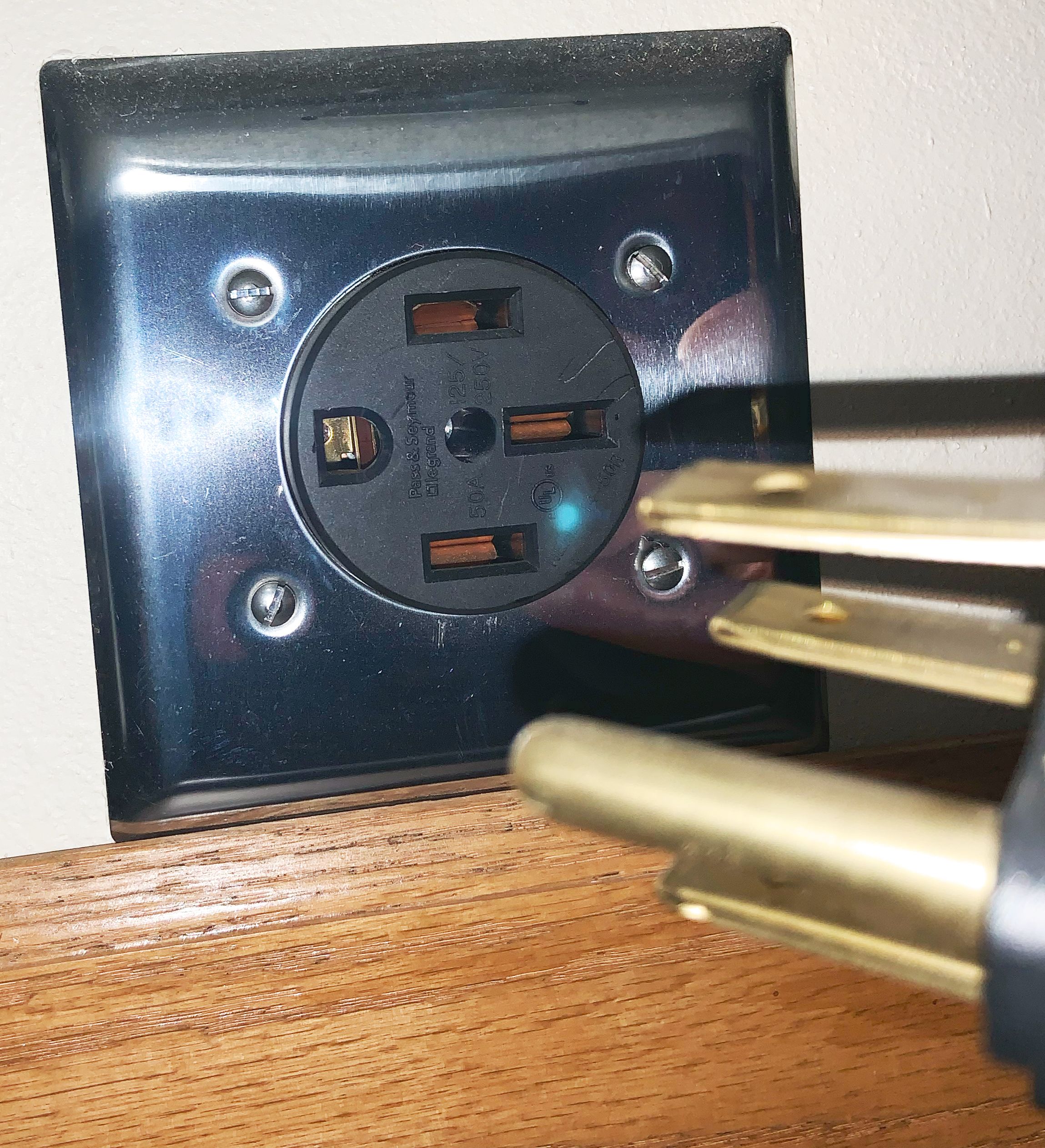
Over 80% of electric vehicle charging is done at home, usually in a garage. In North America, Level 1 charging is connected to a standard 120 volt outlet and provides less than 5 mi of range per hour of charging.
To address the need for faster charging, Level 2 charging stations have become more prevalent. These stations operate at 240 volts and can significantly increase the charging speed, delivering up to more than 30 mi of range per hour. Level 2 chargers offer a more practical solution for EV owners, especially for those who have higher daily mileage requirements.
Charging stations can be installed using two main methods: hardwired connections to the main electrical panel box or through a cord and plug connected to a 240-volt receptacle. A popular choice for the latter is the NEMA 14-50 receptacle. This type of outlet provides 240 volts and, when wired to a 50-ampere circuit, can support charging at 40 amperes according to North American electrical code. This translates to a power supply of up to 9.6 kilowatts, offering a faster and more efficient charging experience.
Battery swap
Main article: Battery swapping
A battery swapping (or switching) station allow vehicles to exchange a discharged battery pack for a charged one, eliminating the charge interval. Battery swapping is common in electric forklift applications.
History
The concept of an exchangeable battery service was proposed as early as 1896. It was first offered between 1910 and 1924, by Hartford Electric Light Company, through the GeVeCo battery service, serving electric trucks. The vehicle owner purchased the vehicle, without a battery, from General Vehicle Company (GeVeCo), part-owned by General Electric. The power was purchased from Hartford Electric in the form of an exchangeable battery. Both vehicles and batteries were designed to facilitate a fast exchange. The owner paid a variable per-mile charge and a monthly service fee to cover truck maintenance and storage. These vehicles covered more than 6 e6mi.
Beginning in 1917, a similar service operated in Chicago for owners of Milburn Electric cars. 91 years later, a rapid battery replacement system was implemented to service 50 electric buses at the 2008 Summer Olympics.
Better Place, Tesla, and Mitsubishi Heavy Industries considered battery switch approaches. One complicating factor was that the approach requires vehicle design modifications.
In 2012, Tesla started building a proprietary fast-charging Tesla Supercharger network. In 2013, Tesla announced it would also support battery pack swaps. A demonstration swapping station was built at Harris Ranch and operated for a short period of time. However customers vastly preferred using the Superchargers, so the swapping program was shut down.
Benefits
The following benefits were claimed for battery swapping:
- "Refueling" in under five minutes.
- Automation: The driver can stay in the car while the battery is swapped.
- Switch company subsidies could reduce prices without involving vehicle owners.
- Spare batteries could participate in vehicle-to-grid energy services.
Providers
The Better Place network was the first modern attempt at the battery switching model. The Renault Fluence Z.E. was the first car enabled to adopt the approach and was offered in Israel and Denmark.
Better Place launched its first battery-swapping station in Israel, in Kiryat Ekron, near Rehovot in March 2011. The exchange process took five minutes. Better Place filed for bankruptcy in Israel in May 2013.
In June 2013, Tesla announced its plan to offer battery swapping. Tesla showed that a battery swap with the Model S took just over 90 seconds. Elon Musk said the service would be offered at around to at June 2013 prices. The vehicle purchase included one battery pack. After a swap, the owner could later return and receive their battery pack fully charged. A second option would be to keep the swapped battery and receive/pay the difference in value between the original and the replacement. Pricing was not announced. In 2015 the company abandoned the idea for lack of customer interest.
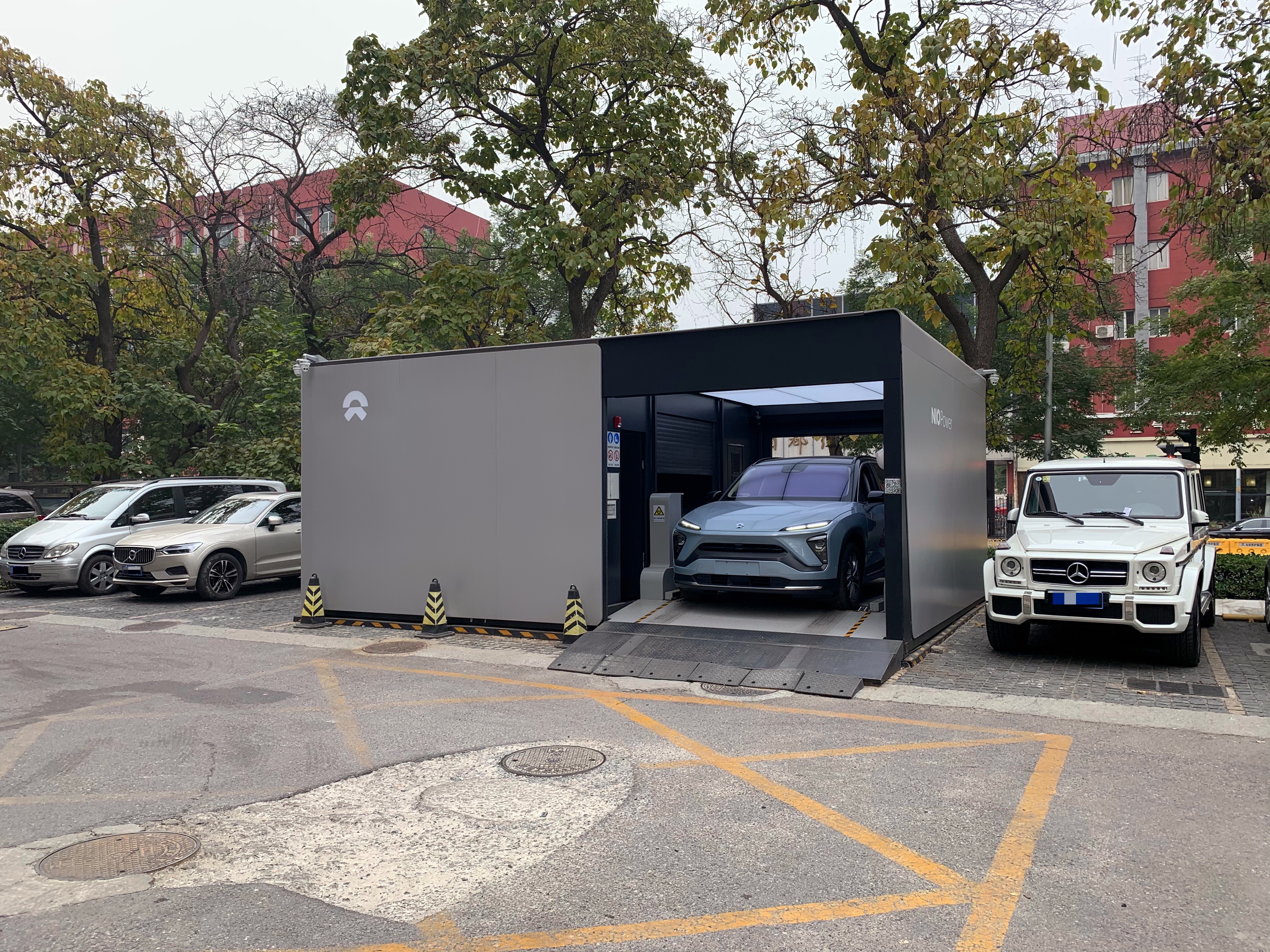
By 2022, Chinese luxury carmaker Nio had built more than 900 battery swap stations across China and Europe, up from 131 in 2020.
Sites

Unlike filling stations, which need to be located near roads that tank trucks can enter conveniently, charging stations can theoretically be placed anywhere with access to electric power and adequate parking.
Private locations include residences, workplaces, and hotels. Residences are by far the most common charging location. Residential charging stations typically lack user authentication and separate metering, and may require a dedicated circuit. Many vehicles being charged at residences simply use a cable that plugs into a standard household electrical outlet. These cables may be wall mounted.
Public stations have been sited along highways, in shopping centers, hotels, government facilities and at workplaces. Some gas stations offer EV charging stations. Some charging stations have been criticized as inaccessible, hard to find, out of order, and slow, thus slowing EV adoption.
Public charge stations may charge a fee or offer free service based on government or corporate promotions. Charge rates vary from residential rates for electricity to many times higher. The premium is usually for the convenience of faster charging. Vehicles can typically be charged without the owner present, allowing the owner to partake in other activities. Sites include malls, freeway rest areas, transit stations, and government offices. Typically, AC Type 1/Type 2 plugs are used.
Wireless charging uses inductive charging mats that charge without a wired connection and can be embedded in parking stalls or even on roadways.
Mobile charging involves another vehicle that brings the charge station to the electric vehicle; the power is supplied via a fuel generator (typically gasoline or diesel), or a large battery.
An offshore electricity recharging system named Stillstrom, to be launched by Danish shipping firm Maersk Supply Service, will give ships access to renewable energy while at sea.
Related technologies
Smart grid
A smart grid is a power grid that can adapt to changing conditions by limiting service or adjusting prices. Some charging stations can communicate with the grid and activate charging when conditions are optimal, such as when prices are relatively low. Some vehicles allow the operator to control recharging. Vehicle-to-grid scenarios allow the vehicle battery to supply the grid during periods of peak demand. This requires communication between the grid, charging station, and vehicle. SAE International is developing related standards. These include SAE J2847/1. ISO and IEC are developing similar standards known as ISO/IEC 15118, which also provide protocols for automatic payment.
Renewable energy
Electric vehicles (EVs) can be powered by renewable energy sources like wind, solar, hydropower, geothermal, biogas, and some low-impact hydroelectric sources. Renewable energy sources are generally less expensive, cleaner, and more sustainable than non-renewable sources like coal, natural gas, and petroleum power.
Charging stations are powered by whatever the power grid runs on, which might include oil, coal, and natural gas. However, many companies have been making advancements towards clean energy for their charging stations. As of November 2023, Electrify America has invested over $5 million to develop over 50 solar-powered electric vehicle (EV) charging stations in rural California, including areas like Fresno County. These resilient Level 2 (L2) stations aren't tied to the electrical grid, and they provide drivers in rural areas access to EV charging via renewable resources. Electrify America’s Solar Glow 1 project, a 75-megawatt solar power initiative in San Bernardino County, is expected to generate 225,000 megawatt-hours of clean electricity annually, enough to power over 20,000 homes.
Tesla's Superchargers and Destination Chargers are mostly powered by solar energy. Tesla's Superchargers have solar canopies with solar panels that generate energy to offset electricity use. Some Destination Chargers have solar panels mounted on canopies or nearby rooftops to generate energy. As of 2023, Tesla's global network was 100% renewable, achieved through a combination of onsite resources and annual renewable matching.

The E-Move Charging Station is equipped with eight monocrystalline solar panels, which can supply 1.76kW of solar power.
In 2012, Urban Green Energy introduced the world's first wind-powered electric vehicle charging station, the Sanya SkyPump. The design features a 4kW vertical-axis wind turbine paired with a GE WattStation.
In 2021, Nova Innovation introduced the world's first direct from tidal power EV charge station.
Alternative technologies
Along a section of the Highway E20 in Sweden, which connects Stockholm, Gothenburg and Malmö, a plate has been placed under the asphalt that interfaces with electric cars, recharging an electromagnetic coil receiver.
This allows greater vehicle autonomy and reduces the size of the battery compartment. The technology is planned to be implemented along 3,000 km of Swedish roads. Sweden's first electrified stretch of road, and the world's first permanent one, connects the Hallsberg and Örebro area. The work is scheduled for completion by 2025.
References
References
- (2 March 2011). "ACEA position and recommendations for the standardization of the charging of electrically chargeable vehicles". ACEA – European Automobile Manufacturers Association.
- (1999). "NEC 1999 Article 625 – Electric Vehicle Charging System". National Electrical Code.
- (January 2000). "Electric Vehicle Charging Equipment Installation Guide". State of Massachusetts, Division of Energy Resources.
- "Infrastructure Working Council". Electric Power Research Institute.
- (13 October 2017). "SAE Electric Vehicle and Plug in Hybrid Electric Vehicle Conductive Charge Coupler". SAE International.
- (1 July 2020). "What's the Difference Between EV Charging Levels?". FreeWire Technologies.
- "What is Fast Charging". CHAdeMO Association.
- "IEC 61851-1: 2017 Electrical vehicle conductive charging system, Part 1: General requirements". International Electrotechnical commission.
- "Charging modes (IEC-61851-1)". Circutor.
- Ferrari, Lorenzo. (20 December 2019). "Charging modes for electric vehicles". Daze Technology.
- (11 November 2022). "Opening the North American Charging Standard".
- Valdes-Dapena, Peter. (2022-11-11). "Tesla officially makes its charging standard available to other companies". CNN.
- (2023-10-20). "Ford, Toyota, Hyundai, and more – here's the full list of car companies adopting Tesla's charging technology". Business Insider.
- Roth, Emma. (2023-11-01). "Subaru is adopting Tesla's EV charging port as holdout numbers dwindle".
- Doll, Scooter. (2023-11-06). "Lucid Motors joins the 'in crowd,' will adopt NACS and offer access to Tesla's Supercharger network". Electrek.
- "Is Aptera Using Tesla's Charging Tech: 1,000-Mile, Supercharge-Capable EV?". InsideEVs.
- "Only 2 major car companies haven't joined Tesla's charging tech yet". Business Insider.
- (28 October 2014). "Directive 2014/94/EU on the deployment of alternative fuels".
- "TSLA Q4 Update".
- (April 2020). "CharIN HPCCV Task Force: High Power Plug Update [PDF]". CharIN.
- "CharIN Develops Super Powerful Charger With Over 2 MW Of Power".
- (18 February 2019). "CharIN High Power Commercial Vehicle Charging Task Force Aggregated Requirements". CharIN.
- (13 October 2020). "The CharIN path to Megawatt Charging (MCS): Successful connector test event at NREL.". CharIN.
- Gehm, Ryan. (27 May 2021). "Mega push for heavy-duty EV charging". Society of Automotive Engineers.
- Bohn, Theodore. (12 April 2022). "SAE J3271 Megawatt Charging System standard; part of MW+ multiport electric vehicle charging for everything that 'rolls, flies or floats'". EPRI Bus & Truck.
- (21 April 2021). "Daimler Trucks North America, Portland General Electric open first-of-its-kind heavy-duty electric truck charging site". Daimler Trucks North America.
- Edelstein, Stephen. (16 May 2021). "This electric truck stop won't offer gas or diesel—just 25 MW of solar-supplemented charging". Green Car Reports.
- Hosseini, Seyed Hossein. (May 2020). "An Extendable Quadratic Bidirectional DC–DC Converter for V2G and G2V Applications". IEEE Transactions on Industrial Electronics.
- "A Simple Guide to DC Fast Charging".
- Ireland, Electric Car Charger. (2023-02-15). "EV Charging Connector Types Demystified". Electric Car Chargers Ireland.
- (9 October 2019). "The Future of Bharat Charging Standard DC-001". EV Reporter.
- (2017). "Committee Report on Standardization of Public EV Chargers". Government of India, Ministry of Heavy Industries.
- Pyper, Juliet. (2013-07-24). "Charger standards fight confuses electric vehicle buyers, puts car company investments at risk". E&E Publishing.
- (December 2000). "News Archive 1". Magne Charge.
- (December 2000). "News Archive 2". Magne Charge.
- (28 June 2001). "ARB Amends ZEV Rule: Standardizes Chargers & Addresses Automaker Mergers". California Air Resources Board.
- (15 March 2002). "GM Pulls the Plug on Inductive Charging". GM Advanced Technology Vehicles – Torrance Operations.
- (11 May 2001). "Staff Report: Initial Statements of Reasons". California Air Resources Board.
- (2009). "SAE J1772 Overview based on the OLD 2001 version of SAE J1772". Modular EV Power.
- (28 June 2001). "Component Products". Avcon.
- "SAE J1772 Compliant Electric Vehicle Connector". Electric Vehicles News.
- Spendiff-Smith, Matthew. (2023-05-18). "The Comprehensive Guide to Level 2 EV Charging – EVESCO". Power Sonic.
- (10 March 2009). "Who killed the electric grid? Fast-charging electric cars".
- "California moves to accelerate to 100% new zero-emission vehicle sales by 2035 California Air Resources Board".
- (3 January 2018). "Guide to buy the right EV home charging station". Home Charging Stations.
- "Bordcomputer: Wie genau ist die Verbrauchsanzeige?".
- (19 August 2025). "Why Can't the U.S. Build 5-Minute E.V. Chargers?". The New York Times.
- Movement, Q. ai-Powering a Personal Wealth. "Tesla: A History Of Innovation (and Headaches)".
- "Plug-In Hybrid Electric Vehicles". United States Department of Energy.
- "EV charging: the difference between AC and DC {{!}} EVBox".
- "Fuel Efficiency for 2020 Tesla Model S Long Range". US Environmental Protection Agency.
- Benoit, Charles. (12 August 2019). "30 states allow kWh pricing, but non-Tesla EV drivers mostly miss benefits".
- (28 July 2008). "Plug-In 2008: Company News: GM/ V2Green/ Coulomb/ Google/ HEVT/ PlugInSupply".
- (October 2003). "From Home to Work, the Average Commute is 26.4 Minutes". OmniStats.
- (2009). "Electric vehicles – About electric vehicles – Charging – suppliers".
- (April 2013). "Global EV Outlook 2013 – Understanding the Electric Vehicle Landscape to 2020". International Energy Agency.
- "CHAdeMO Association".
- (August 2022). "Electric Vehicle (EV) Industry Statistics and Forecasts".
- "EVO Report 2024 {{!}} BloombergNEF {{!}} Bloomberg Finance LP".
- "EV Chargers: How many do we need?".
- (2024-08-19). "全国充电桩数量已达1060.4万台 其中大功率充电桩增幅明显". [[央视新闻]].
- (2024-08-19). "专家解读:2024年7月全国充电桩市场分析". [[搜狐网]].
- Bräunl, Thomas. (16 September 2013). "Setting the standard: Australia must choose an electric car charging norm". The Conversation Australia.
- Palin, Adam. (19 November 2013). "Infrastructure: Shortage of electric points puts the brake on sales". Financial Times.
- KredEx. (20 February 2013). "Estonia becomes the first in the world to open a nationwide electric vehicle fast-charging network". Estonian World.
- Vaughan, Adam. (20 February 2013). "Estonia launches national electric car charging network". The Guardian.
- Renault. (17 December 2012). "Renault delivers first ZOE EV". Green Car Congress.
- "Ladepunkter i Norge". Grønn bil.
- Toor, Amar. (10 July 2013). "Every Dutch citizen will live within 31 miles of an electric vehicle charging station by 2015". The Verge.
- (21 January 2014). "Ondersteuning laadinfrastructuur elektrische auto's wordt voortgezet".
- "The future of e-mobility is now". European Investment Bank.
- "Petrol and diesel car sales ban brought forward to 2035". BBC.
- "Electric Vehicle Charging Station Locations". United States Department of Energy.
- (13 August 2018). "Utilities, states work together to expand EV charging infrastructure". Daily Energy Insider.
- (9 April 2013). "Alternative Fueling Station Counts by State". United States Department of Energy.
- King, Danny. (10 April 2013). "US public charging stations increase by 9% in first quarter". Autoblog Green.
- "Supercharger". Tesla.
- "Electric Vehicles". Manitoba Hydro.
- (16 April 2009). "Park and Ride Locations". Calgary Transit.
- Newburger, Emma. (9 June 2022). "Biden announces standards to make electric vehicle charging stations accessible". CNBC.
- "Bipartisan Infrastructure Law – National Electric Vehicle Infrastructure (NEVI) Formula Program Fact Sheet".
- (27 March 2024). "Greenlane Announces 280-mile Corridor of Commercial EV Charging Stations from Los Angeles to Las Vegas". Daimler Truck North America.
- Bikales, James. (5 December 2023). "Congress provided $7.5B for electric vehicle chargers. Built so far: Zero.".
- Krisher, Tom. (26 July 2023). "New electric vehicle charging network being built by major automakers could lure more buyers to EVs".
- "Ionna plans $250M investment in EV charging infrastructure in California | Utility Dive".
- "Supercharging".
- bio, See full. "EVgo, Electrify America partner for cross-platform charging station use".
- Report, The EV. (5 October 2023). "Electrify America Joins "Brands That Matter" List".
- Yunus Kemp. (4 June 2025). "South Africa: 100,000 EVs needed for charging sector to make bank". ESI Africa.
- Hanno Labuschagne. (5 October 2025). "Important information for electric car owners in South Africa". MyBroadband.
- "Zero Carbon Charge - Homepage". Zero Carbon Charge.
- Terence Creamer. (26 May 2025). "DBSA invests R100m into EV charging station company". Engineering News.
- Hanno Labuschagne. (29 July 2025). "The former Naspers man and the farmer building South Africa's first Eskom-free electric car charging network". MyBroadband.
- (24 April 2017). "Repsol back on track on YPF road: now for electric cars".
- "EVPlug Alliance".
- "MENNEKES – Plugs for the world: The solution for Europe: type 2 charging sockets with or without shutter".
- IEC 62196-1.
- IEC 61851-1.
- "Guide on charging your electric vehicle at home".
- "Types of Electrical Outlets for Electric Car Chargers".
- "Industrial electrical vehicle stalwarts head out on the road".
- Cassidy, William B.. (30 September 2013). "Trucking's Eclipsed Electric Age". The Lost Annals of Transport.
- Kirsch, David A.. (2000). "The Electric Vehicle and the Burden of History". Rutgers University Press.
- (18 July 2008). "BIT Attends the Delivery Ceremony of the 2008 Olympic Games – Alternative Fuel Vehicles". Beijing Institute of Technology.
- Blanco, Sebastian. (27 September 2009). "REPORT: Tesla Model S was designed with battery swaps in mind". Autoblog Green.
- "Mitsubishi working on battery swapping for transit buses, Better Place not involved".
- (24 September 2012). "Tesla Motors Launches Revolutionary Supercharger Enabling Convenient Long Distance Driving {{!}} Tesla Investor Relations".
- Green, Catherine. (21 June 2013). "Tesla shows off its battery-swapping station: 90 seconds and less than $100". Silicon Valley Mercury News.
- (6 November 2016). "Tesla shuts down battery swap program in favor of Superchargers, for now".
- "Better Place, battery switch station description".
- "Better Place's Renault Fluence EV to sell for under $20,000".
- mnlasia. (10 July 2022). "What is Vehicle-to-grid technology {{!}} MNL Asia".
- (22 October 2010). "Better Place. The Renault Fluence ZE". Better Place.
- Udasin, Sharon. (24 March 2011). "Better Place launches 1st Israeli battery-switching station". The Jerusalem Post.
- Motavalli, Jim. (29 July 2011). "Plug-and-Play Batteries: Trying Out a Quick-Swap Station for E.V.'s". The New York Times.
- Kershner, Isabel. (26 May 2013). "Israeli Venture Meant to Serve Electric Cars Is Ending Its Run". The New York Times.
- Elis, Niv. (26 May 2013). "Death of Better Place: Electric car co. to dissolve". The Jerusalem Post.
- Rogowsky, Mark. (21 June 2013). "Tesla 90-Second Battery Swap Tech Coming This Year". Forbes.
- (21 June 2013). "Tesla Motors demonstrates battery swap in the Model S". Green Car Congress.
- Sorokanich, Robert. (10 June 2015). "Musk: Tesla "unlikely" to pursue battery swapping stations".
- (4 April 2022). "Could battery swapping replace EV charging?". Autocar.
- (31 May 2020). "NIO Completes More Than 500,000 Battery Swaps". CleanTechnica.
- (2 February 2022). "Site Hosts for EV Charging Stations".
- "Charging at Home".
- Stenquist, Paul. (11 July 2019). "Electric Chargers for the Home Garage". The New York Times.
- (3 February 2021). "2021 U.S. Electric Vehicle Experience (EVX) Home Charging Study".
- Peters, Adele. (8 October 2018). "Want electric vehicles to scale? Add chargers to gas stations". Fast Company.
- Shahan, Zachary. (22 July 2017). "Tesla Superchargers vs … Ugh". CleanTechnica.
- (16 August 2018). "Is it Time to Add Electric Vehicle Charging Stations to Your Retail Shopping Center?". Metro Commercial.
- "Workplace Charging for Plug-In Electric Vehicles". United States Department of Energy.
- Siddiqui, Faiz. (14 September 2015). "There are now more places to charge your electric vehicle in Maryland – for free". The Washington Post.
- (20 February 2022). "These floating charging points will let ships draw electricity from offshore wind farms – and could recharge battery-powered vessels of the future". Business Insider.
- (6 February 2013). "Tesla Motors Introduces Mobile App for Model S Sedan".
- (January 2010). "SAE Ground Vehicle Standards Status of work – PHEV +". SAE International.
- "J2931/1B (WIP) Digital Communications for Plug-in Electric Vehicles – SAE International".
- "Where Do Electric Car Charging Stations Get Their Power From".
- Shahan, Zachary. (2023-02-16). "Solar-Powered EV Charging from Electrify America — New Project".
- (2023-02-15). "FACT SHEET: Biden-Harris Administration Announces New Standards and Major Progress for a Made-in-America National Network of Electric Vehicle Chargers".
- "Eco Tech: E-Move Charging Station fuels just about everything with solar energy".
- (14 August 2012). "Sanya Skypump: World's first wind-fueled EV charging station – Digital Trends". Digital Trends.
- Vorrath, Sophie. (24 March 2021). "World's first tidal energy powered EV charger launched in Shetland".
- Pesce. (24 May 2023). "Addio colonnine, ecco la prima autostrada che ricarica le auto elettriche in movimento".
- "Sweden is building the world's first permanent electrified road for EVs to charge while driving".
- "Electric road E20, Hallsberg–Örebro".
This article was imported from Wikipedia and is available under the Creative Commons Attribution-ShareAlike 4.0 License. Content has been adapted to SurfDoc format. Original contributors can be found on the article history page.
Ask Mako anything about Charging station — get instant answers, deeper analysis, and related topics.
Research with MakoFree with your Surf account
Create a free account to save articles, ask Mako questions, and organize your research.
Sign up freeThis content may have been generated or modified by AI. CloudSurf Software LLC is not responsible for the accuracy, completeness, or reliability of AI-generated content. Always verify important information from primary sources.
Report