From Surf Wiki (app.surf) — the open knowledge base
Chamaesyce
Genus of flowering plants
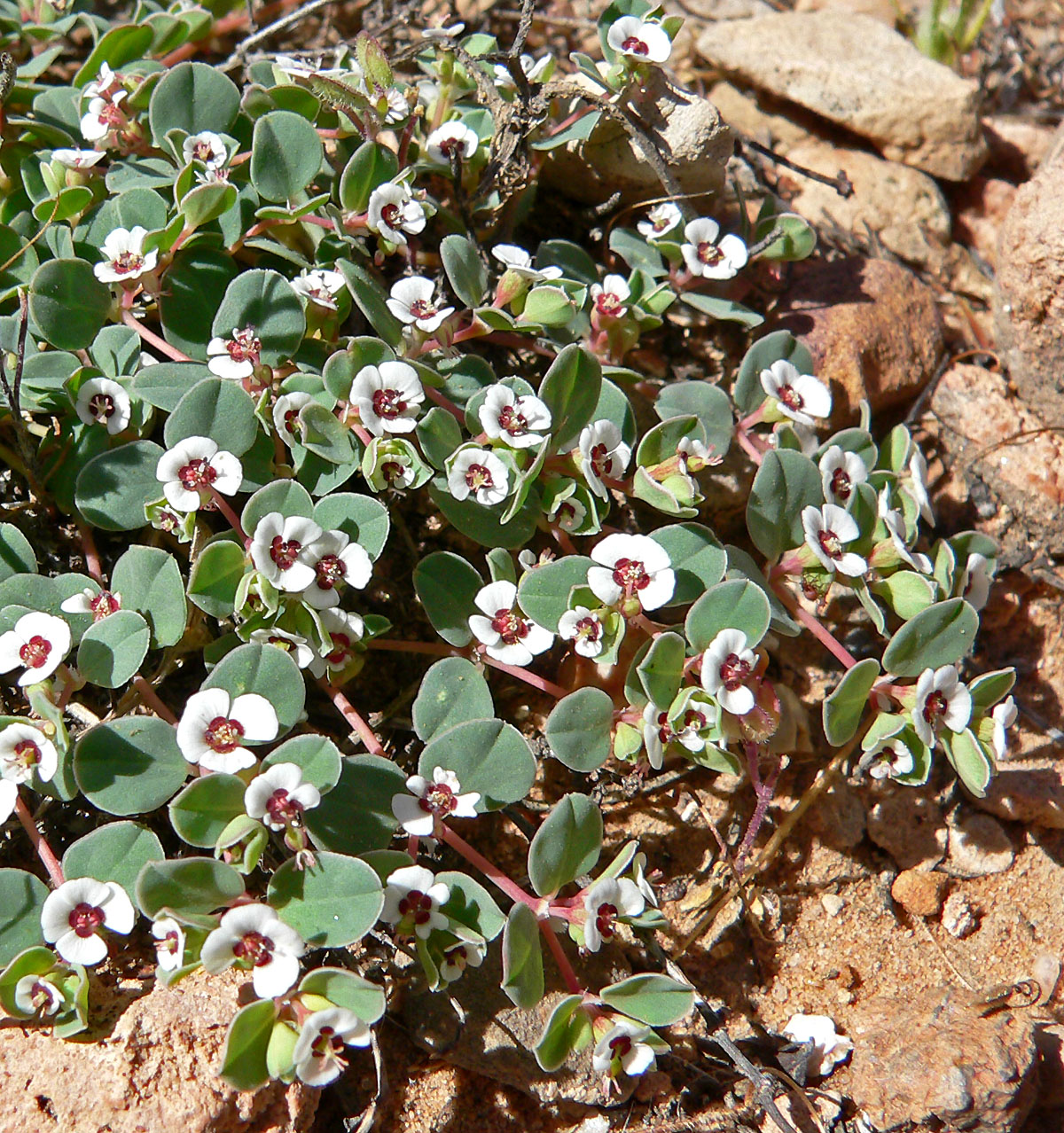
Genus of flowering plants
Chamaesyce is a subgenus (formerly considered a genus) of plants in the family Euphorbiaceae. Recent phylogenetic studies have shown that Chamaesyce is deeply nested within the broader Euphorbia. Specifically, Chamaesyce is very closely related to plants like Euphorbia pulcherrima, the popular poinsettia (this and related plants have also been given in their own genus, Poinsettia, but are also well nested within Euphorbia). Currently, all species have now been reclassified as species of Euphorbia. Specifically, this group now belongs to Euphorbia subgenus Chamaesyce section Anisophyllum (which can be abbreviated Euphorbia sect. Anisophyllym). Taxonomically speaking, Chamaesyce is considered a synonym of Euphorbia.
Euphorbia sect. Anisophyllum is a large group with about 365 species. Euphorbia sect. Anisophyllum differs from other Euphorbia species in a number of characteristics. Perhaps the most important is the presence of C4 photosynthesis in all but one subsection (subsection Acutae, which represents a basal clade that is made up of species with intermediate C2 photosynthetic pathways). Other characteristics include sympodial branching, dorsi-ventral stems, asymmetric leaves, non-glandular stipules, and ecarunculate seeds.
Plants in the group (as with all other species in the genus Euphorbia) bear tiny flowering structures that look like single true flowers, as if each one were a flower with many stamens surrounding a single ovary. In fact, the structure is a cyathium (sometimes called a pseudanthium, meaning a "false flower"). It is made up of many small flowers, but with each flower reduced to only the functional organs of sexual reproduction: a single stamen or a single pistil without petals or sepals. Under magnification it can be seen that what appear to be many stamens plus the gynoecium of a single flower, actually form an inflorescence surrounded with many staminate flowers surrounding a single pistillate flower. Each individual staminate flower contributes only a single stamen and retaining no other structure apart from a vestigial stalk below the base of the stamen's filament. That stalk joins the capitulum or base of the inflorescence — the flowering head. Similarly, what appears to be the flower's ovary is the gynoecium of a single pistillate flower that has lost all the other associated organs of a flower. What appear to be the petals of an individual flower are in fact appendages produced by glands that are produced by bracts (collectively called the involucre), adapted leaves attached below the cyathium. These bracts are fused into a cup-like structure. In some species, such as Euphorbia albomarginata, the glandular appendages are quite showy.


References
References
- (2012-05-01). "Phylogenetics and the evolution of major structural characters in the giant genus Euphorbia L. (Euphorbiaceae)". Molecular Phylogenetics and Evolution.
- (2011-09-01). "Phylogenetics of the Chamaesyce clade (Euphorbia, Euphorbiaceae): Reticulate evolution and long-distance dispersal in a prominent C4 lineage". American Journal of Botany.
- (May 2011). "The occurrence of C(2) photosynthesis in Euphorbia subgenus Chamaesyce (Euphorbiaceae)". Journal of Experimental Botany.
- George, Burch Derek. (1965). "A taxonomic revision of the genus Chamaesyce (Euphorbiaceae) in the Caribbean".
- (April 2015). "AJO PEAK TO TINAJAS ALTAS: A FLORA OF SOUTHWESTERN ARIZONA Part 13. EUDICOTS: EUPHORBIACEAE, SPURGE FAMILY". Phytoneuron.
This article was imported from Wikipedia and is available under the Creative Commons Attribution-ShareAlike 4.0 License. Content has been adapted to SurfDoc format. Original contributors can be found on the article history page.
Ask Mako anything about Chamaesyce — get instant answers, deeper analysis, and related topics.
Research with MakoFree with your Surf account
Create a free account to save articles, ask Mako questions, and organize your research.
Sign up freeThis content may have been generated or modified by AI. CloudSurf Software LLC is not responsible for the accuracy, completeness, or reliability of AI-generated content. Always verify important information from primary sources.
Report