From Surf Wiki (app.surf) — the open knowledge base
Chains (nautical)
Small platforms on the side of a ship
Small platforms on the side of a ship
part of a ship
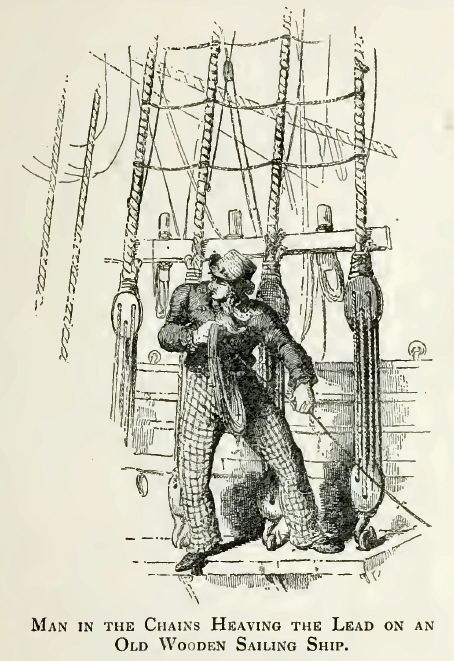
The chains, also called the chain-wales or channels, were small platforms, built on either side of the hull of a ship, used to provide a wide purchase for the shrouds, and to assist in the practice of depth sounding.
The chains provided a platform for a 'leadsman', the sailor assigned to swing the sounding line, or 'lead' into the water. The term originated from the practice of the sailor standing between the shrouds when casting the line, which were attached to the hull by chainplates, or, in earlier sailing ships, to lengths of chain along the ship's side. A length of chain was usually fixed at waist height to the stanchions above the chains, as an added safety measure. The chains were common on large sailing vessels, but the role of leadsman and swinging the lead to obtain depth soundings declined with developments in echo sounding, and ships are rarely now equipped with chains.
Notes
References
References
- "The Elements and Practice of Rigging And Seamanship".
- "The Oxford Companion to Ships and the Sea".
This article was imported from Wikipedia and is available under the Creative Commons Attribution-ShareAlike 4.0 License. Content has been adapted to SurfDoc format. Original contributors can be found on the article history page.
Ask Mako anything about Chains (nautical) — get instant answers, deeper analysis, and related topics.
Research with MakoFree with your Surf account
Create a free account to save articles, ask Mako questions, and organize your research.
Sign up freeThis content may have been generated or modified by AI. CloudSurf Software LLC is not responsible for the accuracy, completeness, or reliability of AI-generated content. Always verify important information from primary sources.
Report