From Surf Wiki (app.surf) — the open knowledge base
Chain gang
Group of prisoners chained together as a form of punishment
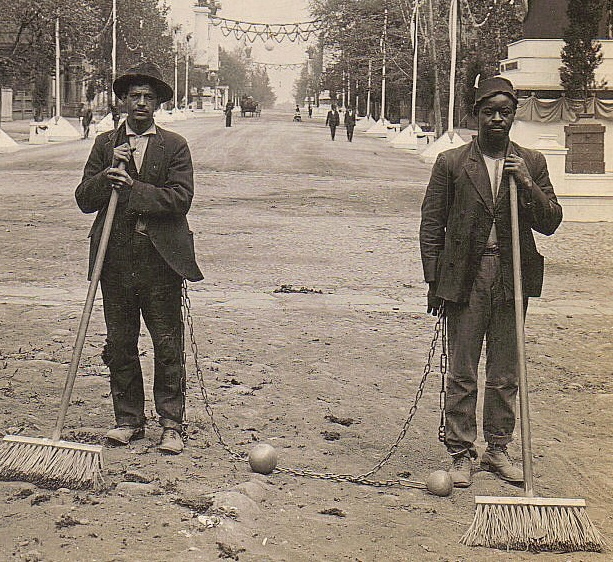
Group of prisoners chained together as a form of punishment

| url-access=registration |access-date=2009-06-07 |archive-date=2011-06-04 |archive-url=https://web.archive.org/web/20110604123739/http://transcripts.cnn.com/TRANSCRIPTS/0403/10/acd.00.html |url-status=live
Synonyms and disambiguation
A single ankle shackle with a short length of chain attached to a heavy ball is known as a ball and chain. It limited prisoner movement and impeded escape.
Two ankle shackles attached to each other by a short length of chain are known as a hobble or as leg irons. These could be chained to a much longer chain with several other prisoners, creating a work crew known as a chain gang. The walk required to avoid tripping while in leg irons is known as the convict shuffle.
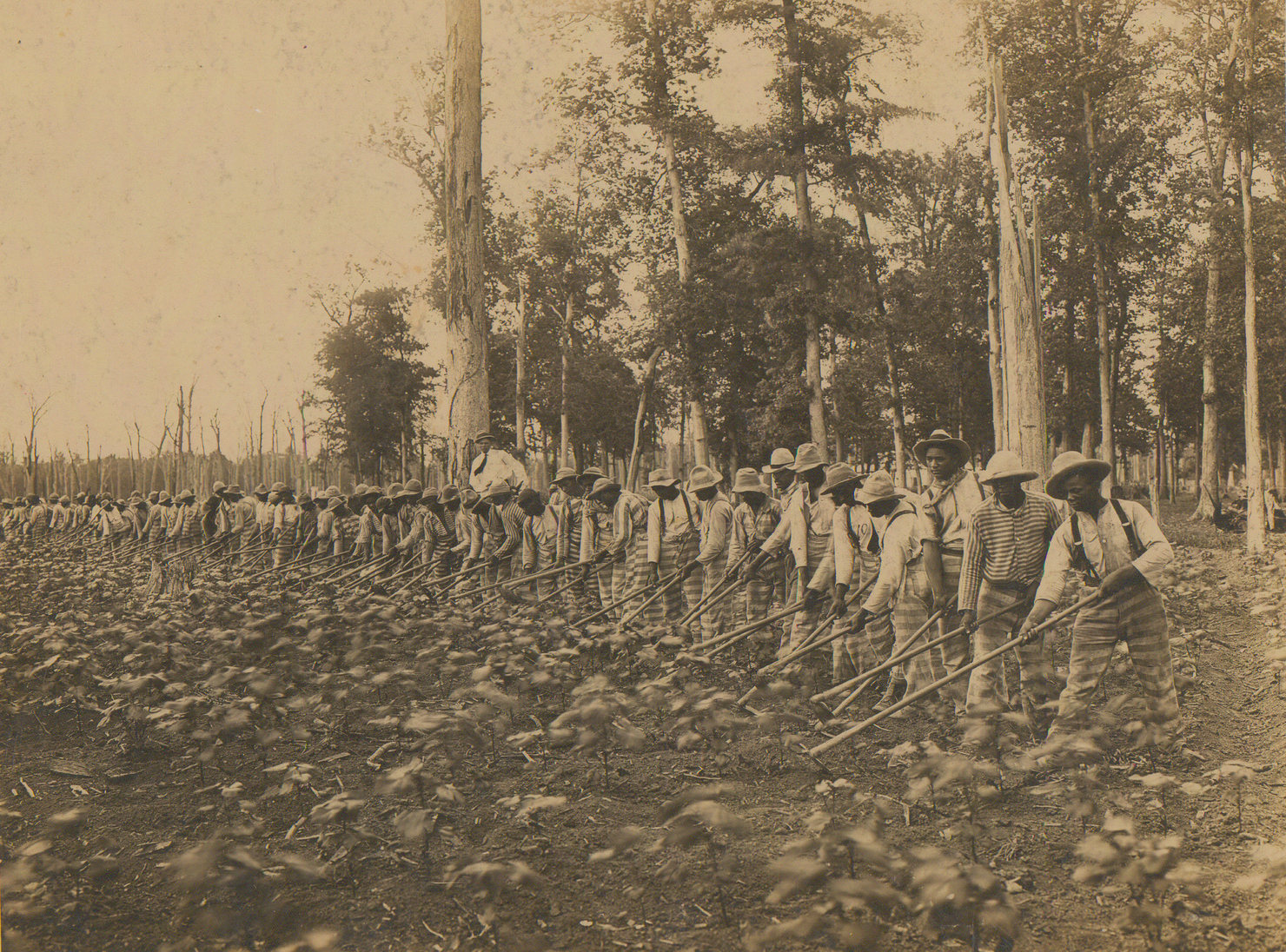
The use of chains could be hazardous. Some of the chains used in the Georgia system in the first half of the 20th century weighed 20 lb. Some prisoners suffered from shackle sores—ulcers where the iron ground against their skin. Gangrene and other infections were serious risks. Falls could imperil several individuals at once.
Modern prisoners are sometimes put into handcuffs or wrist manacles (similar to handcuffs, but with a longer length of chain) and leg irons, with both sets of manacles (wrist and ankle) being chained to a belly chain. This form of restraint is most often used on prisoners expected to be violent, or prisoners appearing in a setting where they may be near the public (a courthouse) or have an opportunity to flee (being transferred from a prison to a court). Although prisoners in these restraints are sometimes chained to one another during transport or other movement, this is not a chain gang—although reporters may refer to it as such—because the restraints make any kind of manual work impossible.
Purpose

Various claims as to the purpose of chain gangs have been offered. These include:
- punishment
- societal restitution for the cost of housing, feeding, and guarding the inmates. The money earned by work performed goes to offset prison expenses by providing a large workforce at no cost for government projects, and at minimal convict leasing cost for private businesses
- a way of perpetuating African-American servitude after the Thirteenth Amendment to the United States Constitution ended slavery outside of the context of punishment for a crime.
- reducing inmates' idleness
- to serve as a deterrent to crime
- to satisfy the needs of politicians to appear "tough on crime"
- to accomplish undesirable and difficult tasks
History
Australia
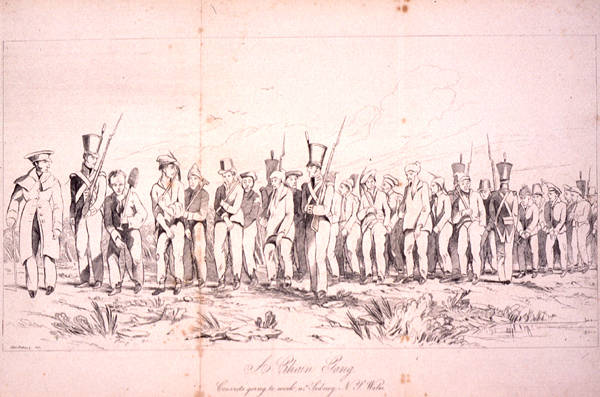
In the Australian penal colonies, chain gangs were also referred to as "iron gangs". They were used as a punishment for convicts who reoffended after being transported. Iron gangs were frequently employed on the construction of roads in remote areas where escape was a possibility, such as on the Great North Road from Sydney to the Hunter Valley and the road from Sydney to Bathurst over the Blue Mountains. The leg irons were installed by blacksmiths using hot rivets, and then attached to a single "gang chain" to allow for control by an overseer. The irons and chains could weigh as much as 4.5 kg or more. Some of the convicts on iron gangs were as young as 11 years old.
The use of iron gangs in the Colony of New South Wales was expanded by Governor Ralph Darling as part of his infrastructure program. Their tasks included "breaking rocks, clearing trees, [and] constructing stone culverts and bridges". Convicts who escaped from iron gangs were described as "bolters" and became some of the first bushrangers.
United States

The introduction of chain gangs into the United States began after the American Civil War. The Southern states needed finances and public works to be performed. Prisoners were a free way for these works to be achieved.
The use of chain gangs for prison labor was the preferred method of punishment in some Southern states like Florida, Georgia, Louisiana, Virginia, North Carolina, Arkansas, Texas, Mississippi, and Alabama.
Abuses in chain gangs led to reform and to their general elimination by 1955. There were still chain gangs in the South in December 1955.
Chain gangs experienced a resurgence when Alabama began to use them again in 1995; they still existed in 1997.
Reintroduction
Several jurisdictions in the United States have reintroduced prison labor. In 1995 Sheriff Joe Arpaio reintroduced chain gangs in Arizona.
A year after reintroducing the chain gang in 1995, Alabama was forced to again abandon the practice pending a lawsuit from the Southern Poverty Law Center, among other organizations. The SPLC's attorney, J. Richard Cohen, said, "They realized that chaining them together was inefficient; that it was unsafe". Alabama Prison Commissioner Ron Jones was fired in 1996 for trying to put female prisoners on chain gangs. However, as late as 2000, Jones had proposed reintroducing the chain gang.
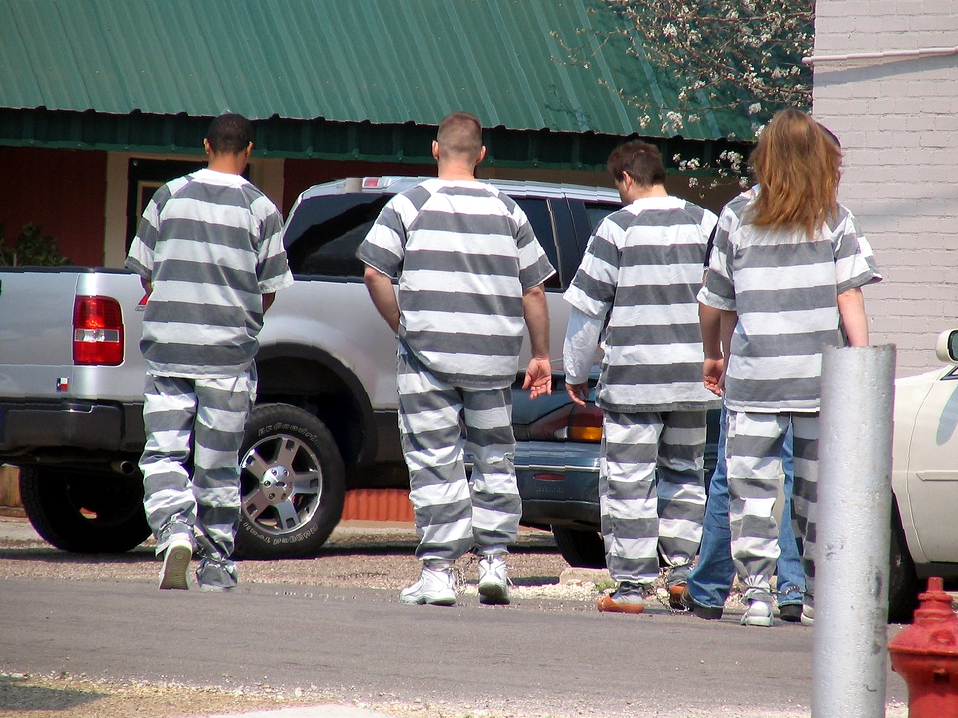
In 2011, Tim Hudak, former leader of the Progressive Conservative Party of Ontario in Canada, campaigned on introducing penal labour in the province, referred to by many as chain gangs. He lost seats to the provincial Liberals which formed another majority government in the subsequent general election.
According to their own policies, Britain First (a British far-right political organization) want to reintroduce chain gangs "to provide labour for national public works". This is part of their aim to turn prisons from "cosy holiday camps" into "a place of hard labour".
In 2013, Brevard County Jail in Sharpes, Florida reintroduced chain gangs as a deterrent on crime in a pilot project. Ex-convict Larry Lawton, critical of this move, said, "Chain gangs send a bad message about our county", adding "I don't think people want to come to this county as a tourist or a beach person and see people in chains." Instead he proposed a better use of law enforcement resources would be to combat drug addiction because he says it is a "contributing factor" to criminal activity.
Footnotes
References
- "Chain Gangs". Credo Reference.
- "Chain Gang {{!}} Clallam County, WA".
- "North Carolina: Voices from the Chain Gang | States of Incarceration".
- Wooten, James T.. (October 23, 1971). "Prison Road Gangs Fading Fast in South". [[The New York Times]].
- McShane, Marilyn D.. (1996). "Encyclopedia of American Prisons". Garland Publishing Inc..
- Gorman, Tessa M.. (March 1997). "Back on the Chain Gang: Why the Eighth Amendment and the History of Slavery Proscribe the Resurgence of Chain Gangs". California Law Review.
- "R4171 Convict chain gang at Hobart, 1833". NSW Department of Education.
- "Iron gang chain". Sydney Living Museums.
- "The convict experience". State Library of New South Wales.
- "A world of pain". Sydney Living Museums.
- Karskens, Grace. (1986). "Defiance, Deference and Diligence: Three Views of Convicts in New South Wales Road Gangs". Australasian Historical Archaeology.
- Wallenstein, Peter. "Chain Gangs". Credo Reference.
- McShane, Marilyn D.. (1996). "The Encyclopedia of American Prisons". Garland Publishing Inc..
- Fernández, Valeria. (August 21, 2017). "Arizona's 'concentration camp': why was Tent City kept open for 24 years?". Guardian Media Group.
- Times staff and wire report. (1996-04-27). "Nation IN BRIEF: ALABAMA: Official Fired Over Female Chain Gangs".
- (1996-07-15). "Alabama Prison Chief Fired over Women in Chains {{!}} Prison Legal News".
- Benzie, Robert. (July 18, 2011). "Hudak's chain-gang proposal is a danger to public, Liberals warn". Toronto Star.
- "BRITAIN FIRST OFFICIAL POLICIES".
- Ford, Andrew. (May 2, 2013). "Florida sheriff reintroduces chain gang". [[Gannett Satellite Information Network]].
This article was imported from Wikipedia and is available under the Creative Commons Attribution-ShareAlike 4.0 License. Content has been adapted to SurfDoc format. Original contributors can be found on the article history page.
Ask Mako anything about Chain gang — get instant answers, deeper analysis, and related topics.
Research with MakoFree with your Surf account
Create a free account to save articles, ask Mako questions, and organize your research.
Sign up freeThis content may have been generated or modified by AI. CloudSurf Software LLC is not responsible for the accuracy, completeness, or reliability of AI-generated content. Always verify important information from primary sources.
Report