From Surf Wiki (app.surf) — the open knowledge base
Chaat
Savoury Indian-originated snack

Savoury Indian-originated snack
| Field | Value |
|---|---|
| name | Chaat |
| image | Dahi puri, Doi phuchka.jpg |
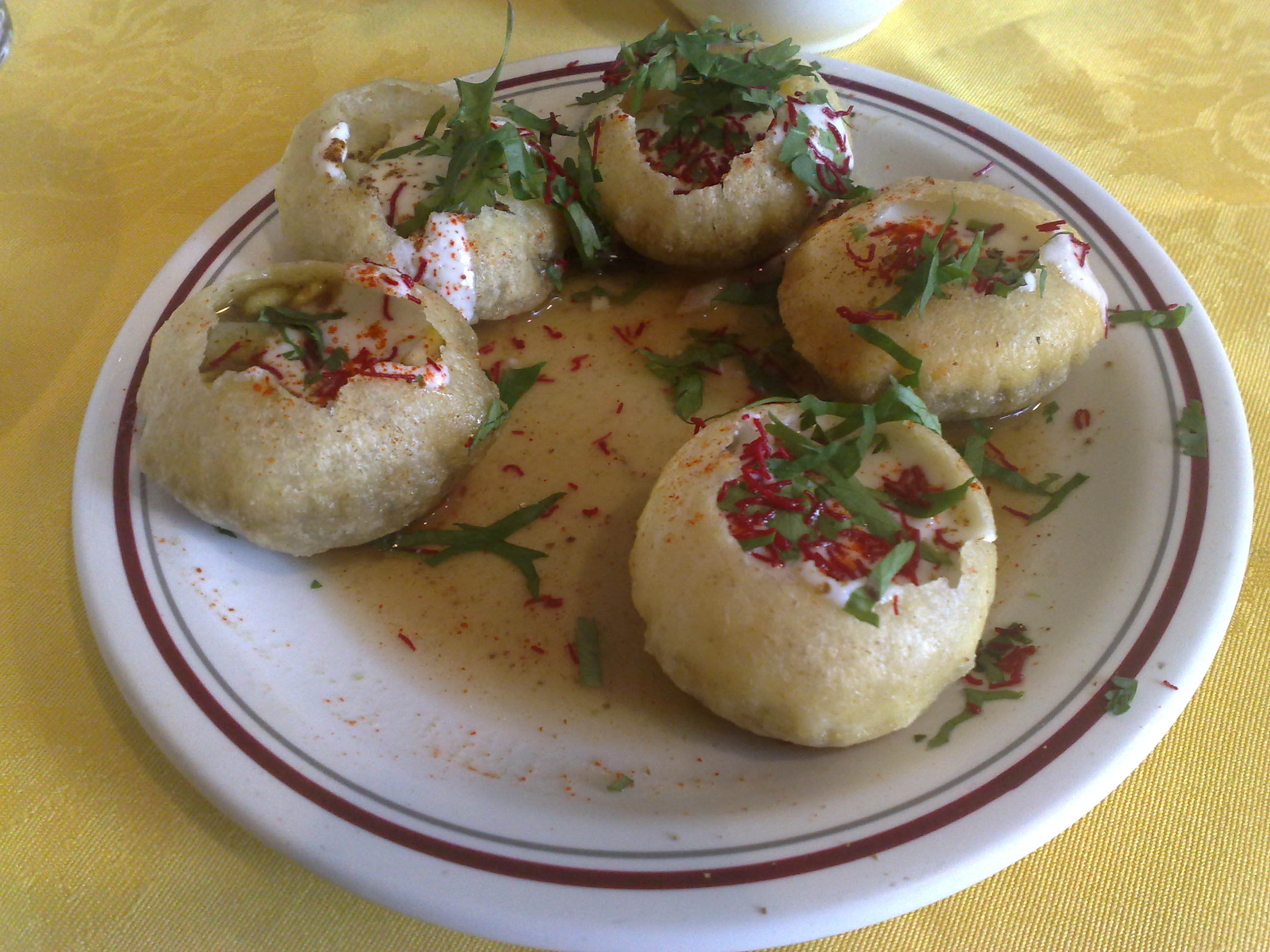
| caption | Dahi puri, a variation of panipuri |
| country | India |
| region | Uttar Pradesh, Delhi, Gujarat, Rajasthan, Odisha, West Bengal,Bihar and Madhya Pradesh |
| type | Snack |
Chaat, or chāt (IAST: cāṭ) () is a family of fried dough snacks that originated in India, typically served as an hors d'oeuvre or at roadside tracks from stalls or food carts across South Asia. With its origins in Uttar Pradesh, chaat has become popular in the rest of South Asia.
Etymology
The word derives from Hindi cāṭ चाट (tasting, a delicacy), from cāṭnā चाटना (to lick, as in licking one's fingers while eating), from Prakrit caṭṭei चट्टेइ (to devour with relish, eat noisily).
Overview
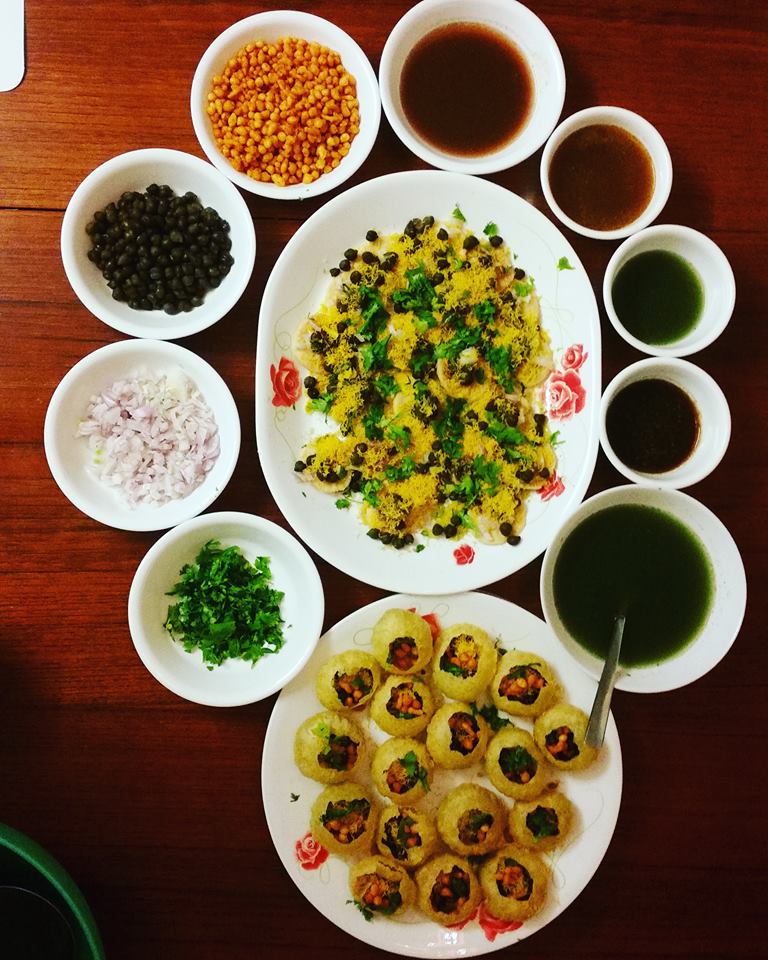

All chaat variants are based on fried dough. The original chaat is a mixture of potato pieces, crisp fried bread, dahi vada or dahi bhalla, gram or chickpeas and tangy-salty spices, with sour Indian chili and saunth (dried ginger and tamarind sauce), fresh green coriander leaves and yogurt for garnish. Other common variants include alu tikkis or samosa (garnished with onion, potatoes, coriander, peas, hot spices and a dash of yogurt), bhel puri, dahi puri, panipuri, dahi vada, papri chaat, and sev puri.
There are common elements among these variants including dahi (yogurt); chopped onions and coriander; sev (thin dried yellow salty noodles); and chaat masala, typically consisting of amchoor (dried mango powder), cumin, kala namak (Himalayan black rock salt), coriander, dried ginger, salt, black pepper, and red pepper. The ingredients are combined and served on a small metal plate or a banana leaf, dried and formed into a bowl.
History
Some of the dishes now categorized as chaats, such as dahi vada, can be traced back to ancient periods. A recipe for a dahi vada analogue called kshiravata is mentioned in Manasollasa, a 12th-century Sanskrit encyclopedia compiled by Someshvara III, who ruled from present-day Karnataka. According to food historian K.T Achaya, descriptions of dahi vada also appear in literature far earlier from 500 BC.
Another dish resembling chaat as an organized phenomenon or distinct group of dishes, according to culinary anthropologist Kurush Dalal, originated in northern India (now Uttar Pradesh) in the late 17th century during the reign of Mughal emperor Shah Jahan. The royal doctors had asked the people of Delhi to consume spicy and fried snacks, as well as dahi, as a countermeasure to the alkaline water of the Yamuna river that coursed through the city.
Most chaats originated in parts of Uttar Pradesh in India later in the 20th century, but they are now eaten all across South Asia and neighboring countries. Some are results of cultural syncretism.
Variations


- Alu chaat - Potatoes (alu in Hindi) cut into small pieces, fried until crisp and served with chutney
- Alu tikki
- Bedmi - Puri stuffed with dal and fried until crisp; typically served with alu sabji and eaten for breakfast
- Bhalla
- Bhelpuri
- Cheela- Besan (chickpea flour) pancakes served with chutney and sooth (sweet chutney)
- Chotpoti, mixture of boiled diced potatoes, boiled chickpeas and sliced onions and chillies with grated eggs on top. Many kinds of roasted spice powder are used in its preparation.
- Dahi puri
- Dahi vada
- Kachori- or kachauri, with variants such as khasta kachuari
- Mangode - Similar to pakora, but besan paste is replaced with yellow moong paste
- Masalapuri
- Pakora - Small pieces of paneer, vegetables, or meat dipped in besan paste and fried.
- Panipuri
- Papri chaat - This contains fried patties called papri as an extra ingredient.
- Ragda patties (alu tikki chaat)
- Samosa chaat - samosa is broken into pieces with green and sweet chutney added
- Sevpuri
- Vada pav
- Dahi bhallay ki chaat (bhallay, potatoes, chickpeas, imli chutney, chaat masala, onions, tomatoes, dahi, and other ingredients)
- Beetroot and potato chaat
- Dhaka chaat
- Thattu vadai set
- Dal ki chaat - Made with moong dal mixed with spices and chutney and accompanied with wheat biscuits. Popular in Meerut.
- Raj kachori - a hollow ball made with wheat and filled with sprouts, chickpeas, potatoes, bhalla and chutneys (sweet and green).
- Basket chaat - Edible bowl made with potato and filled with sprouts, chickpeas, potato and chutneys. Popular in Lucknow.
- Ram ladoo - Round fritters made from moong dal and served with radish and grey chutney.
- Dabeli - a sweet and sour burger made with potatoes, sev, groundnut and pomegranate
- Barule - whole potato coated with besan, deep-fried and served with green chutney
References
References
- Thumma, Sanjay. "Chaat Recipes". Vahrehvah.com.
- "The Chaat Business".
- (25 October 2013). "10 Best Recipes From Uttar Pradesh (Varanasi/ Agra / Mathura )". NDTV.
- Oxford English Dictionary. ''Chaat''. Mar. 2005 Online edition. Retrieved 18 February 2008.
- K.T. Achaya. (2003). "The Story of Our Food". Universities Press.
- Vishal, Anoothi. "Chaat Masala: Gourmet Indian street food". The Economic Times.
- Krishna, Priya. (17 August 2020). "Chaat Is More Than the Sum of Its Many Flavors". The New York Times.
- Ramadurai, Charukesi. (3 June 2020). "Pani Puri: India's favourite street food... at home?".
- (25 October 2013). "10 Best Recipes From Uttar Pradesh (Varanasi/ Agra / Mathura )". NDTV.
- Moghul, Sobiya N.. (25 October 2013). "Beetroot and potato chaat recipe". [[The Times of India]].
- D.Nath, Subha. "Dhaka chaat".
- Saravanan, S.P.. (28 October 2015). "Salem's own evening Snack". The Hindu.
- "Watch: Viral Video of a Famous Street Food Disapproved by the Internet; Here's Why".
This article was imported from Wikipedia and is available under the Creative Commons Attribution-ShareAlike 4.0 License. Content has been adapted to SurfDoc format. Original contributors can be found on the article history page.
Ask Mako anything about Chaat — get instant answers, deeper analysis, and related topics.
Research with MakoFree with your Surf account
Create a free account to save articles, ask Mako questions, and organize your research.
Sign up freeThis content may have been generated or modified by AI. CloudSurf Software LLC is not responsible for the accuracy, completeness, or reliability of AI-generated content. Always verify important information from primary sources.
Report