From Surf Wiki (app.surf) — the open knowledge base
Centrosymmetry
Type of symmetry
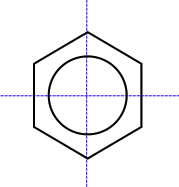
Type of symmetry
In crystallography, a centrosymmetric point group contains an inversion center as one of its symmetry elements.{{cite book | url-access = limited Crystals with an inversion center cannot display certain properties, such as the piezoelectric effect and the frequency doubling effect (second-harmonic generation). In addition, in such crystals, one-photon absorption (OPA) and two-photon absorption (TPA) processes are mutually exclusive, i.e., they do not occur simultaneously, and provide complementary information.
The following space groups have inversion symmetry: the triclinic space group 2, the monoclinic 10-15, the orthorhombic 47-74, the tetragonal 83-88 and 123-142, the trigonal 147, 148 and 162-167, the hexagonal 175, 176 and 191-194, the cubic 200-206 and 221-230.
Point groups lacking an inversion center (non-centrosymmetric) can be polar, chiral, both, or neither.
A polar point group is one whose symmetry operations leave more than one common point unmoved. A polar point group has no unique origin because each of those unmoved points can be chosen as one. One or more unique polar axes could be made through two such collinear unmoved points. Polar crystallographic point groups include 1, 2, 3, 4, 6, m, mm2, 3m, 4mm, and 6mm.
A chiral (often also called enantiomorphic) point group is one containing only proper (often called "pure") rotation symmetry. No inversion, reflection, roto-inversion or roto-reflection (i.e., improper rotation) symmetry exists in such point group. Chiral crystallographic point groups include 1, 2, 3, 4, 6, 222, 422, 622, 32, 23, and 432. Chiral molecules such as proteins crystallize in chiral point groups.
The remaining non-centrosymmetric crystallographic point groups , 2m, , m2, 3m are neither polar nor chiral.
References
ru:Центральная симметрия
References
- (2007). "Topological insulators with inversion symmetry". Physical Review B.
- "The 230 3-Dimensional Space Groups". Birkbeck College, University of London.
This article was imported from Wikipedia and is available under the Creative Commons Attribution-ShareAlike 4.0 License. Content has been adapted to SurfDoc format. Original contributors can be found on the article history page.
Ask Mako anything about Centrosymmetry — get instant answers, deeper analysis, and related topics.
Research with MakoFree with your Surf account
Create a free account to save articles, ask Mako questions, and organize your research.
Sign up freeThis content may have been generated or modified by AI. CloudSurf Software LLC is not responsible for the accuracy, completeness, or reliability of AI-generated content. Always verify important information from primary sources.
Report