From Surf Wiki (app.surf) — the open knowledge base
Central Armed Police Forces
Central Armed police forces of India

Central Armed police forces of India
| Field | Value | ||
|---|---|---|---|
| agencyname | Central Armed Police Forces | ||
| logo | [[File:Emblem of India.svg | class=skin-invert-image | 140px]] |
| budget | (2025–26) | ||
| legalpersonality | Government organisations | ||
| country | India | ||
| governingbody | Government of India | ||
| speciality1 | paramilitary | ||
| speciality2 | border | ||
| speciality3 | property | ||
| minister1name | Amit Shah | ||
| minister1pfo | Minister of Home Affairs | ||
| parentagency | Ministry of Home Affairs | ||
| child1agency | Assam Rifles Flag.svg Assam Rifles | ||
| child2agency | BSF Flag.svg Border Security Force | ||
| child3agency | CISF Flag.svg Central Industrial Security Force | ||
| child4agency | Flag of Central Reserve Police Forces.png Central Reserve Police Force | ||
| child5agency | ITBP Flag.svg Indo-Tibetan Border Police | ||
| child6agency | NSG Flag.svg National Security Guard | ||
| child7agency | Sashastra Seema Bal Flag.svg Sashastra Seema Bal | ||
| website |
The Central Armed Police Forces (CAPF) are a group of seven armed police units under the Ministry of Home Affairs (MHA), Government of India, tasked with maintaining internal security, law and order, counterinsurgency, and protecting borders. Previously referred to as "paramilitary" forces, the term was officially discontinued in 2011.
The CAPF is classified into three groups: Border Guarding Forces (Assam Rifles, Border Security Force, Indo-Tibetan Border Police, and Sashastra Seema Bal), Forces for Internal Security (Central Industrial Security Force and Central Reserve Police Force), and Special Task Force (National Security Guard). While the Assam Rifles is administratively under the MHA and part of the CAPF, its operational control is handled by the Indian Army. These forces are categorized under the "other armed forces" in the Union List of the Constitution of India and function in accordance with Article 355, which mandates the Union to protect states against "external aggression" and "internal disturbances". Since "police" and "public order" fall under the State List, CAPF units are deployed to support state governments as required, while their powers, jurisdiction, privileges, and liabilities remain under the control of the Union government as specified in the Union List.
Terminology
CAPF were formerly known as Central Para-Military Forces (CPMF), also variously referred to by Central Police Organisations (CPOs), Para-Military Forces (PMF), and Central Police Forces (CPF) interchangeably. In 2011, the Government of India released a circular adopting a uniform nomenclature to change the name of the forces to Central Armed Police Forces under the Ministry of Home Affairs. Initially, only five forces—BSF, CRPF, CISF, ITBP, and SSB were covered under the new nomenclature, since AR was under the operational control of the Indian Army, and NSG personnel were completely deputed from the Indian Army and other CAPFs.
The name change was made for political reasons, to improve the international impression of the force, since in some countries the paramilitary refers to militant groups. Currently, all the seven forces are listed under the CAPF definition by the Ministry.
Role
Central Armed Police Forces are organised with the primary role of border guarding for AR, BSF, ITBP, SSB; Security of sensitive establishments by CISF, Assisting Police to tackle Law & Order, Counter-Terrorist Operations, Counter-Naxal Operations by CRPF, NSG. Apart from the primary role, all CAPFs are involved in assisting the Police in Law & Order situations and also the Army in Counter-Terrorist Operations. BSF, ITBP, and CRPF have assisted the army during external aggression in the past. CAPFs work along with both Indian Army & Police in different roles assigned to them.
Central Armed Police Forces personnel also serve in various important organisations such as Research and Analysis Wing (RAW), Special Protection Group (SPG), National Investigation Agency (NIA), Intelligence Bureau (IB), Central Bureau of Investigation (CBI), National Disaster Response Force (NDRF), Narcotics Control Bureau (NCB), State Armed Police Force (Jharkhand Jaguars, Bihar Military Police, UP/MP STF, DRG, IRB, Chattishgarh Armed Police etc.) on deputation and have attachment/training in various levels/formations/courses along with the Indian Army. Their role and performance, therefore, assume a great significance due to the special features of an emergency force that is pressed in aid of the civil power to perform multiple roles in extremely difficult situations.
Organisations
Assam Rifles (AR)
The Assam Rifles is paramilitary force of india responsible for border security, counter-insurgency, and law and order in Northeast India. Its primary role is to guard the 1,643-kilometre-long Indo-Myanmar border. The AR comes under the administration of the Ministry of Home Affairs (MHA), while its operational control is maintained by the Indian Army. It is the oldest paramilitary force in India.
Border Security Force (BSF)
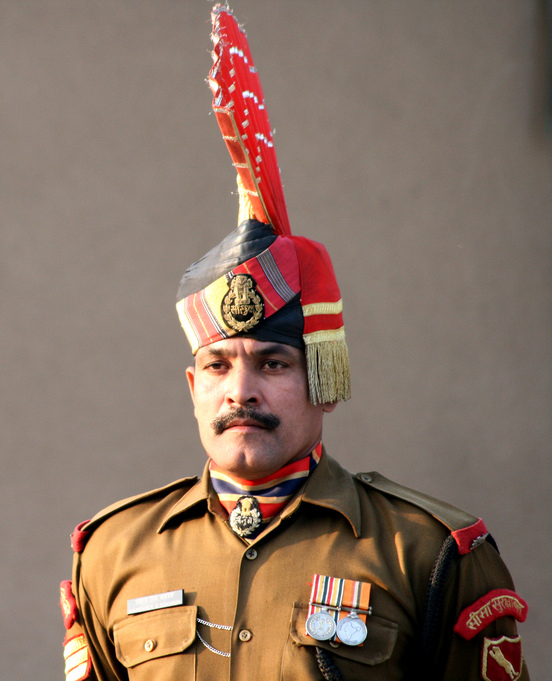
The primary role of the Border Security Force is to guard the Indo-Pakistan and Indo-Bangladesh borders; it is deployed both on the international border and the LOC. The BSF also has active roles during times of war. It has 292,000 personnel in 192 battalions. The 1, 2 and 7 battalion of NDRF are requisitioned from BSF. It is also known for being the largest dedicated border guarding force in the world.
Central Industrial Security Force (CISF)
One of the largest industrial security forces in the world, the Central Industrial Security Force provides security to various Public Sector Undertakings (PSUs) and other critical infrastructure installations, major airports across the country and provides security during elections and other internal security duties and VVIP protection. It has a total strength of about 160,500 personnel in 132 battalions, including 12 reserve battalions.
Central Reserve Police Force (CRPF)
The Central Reserve Police Force is the largest of the Central Armed Police Forces units with 313,678 personnel in 247 battalions. The Central Reserve Police includes:
- The Rapid Action Force (RAF), a 15 battalion anti-riot force trained to respond to sectarian violence.
- The Commando Battalion for Resolute Action (COBRA), a 10 battalion strong anti-Naxalite/COIN force.
Indo-Tibetan Border Police (ITBP)
The Indo-Tibetan Border Police is deployed for guarding duties on the Indo-China border from Karakoram Pass in Ladakh to Diphu Pass in Arunachal Pradesh covering a total distance of 3,488 km. It has 89,432 personnel in 56 fighting battalions, 2 DM and 4 specialised battalions.
National Security Guard (NSG)
The National Security Guard (NSG), commonly known as Black Cats, is a counter-terrorism unit under the Ministry of Home Affairs. It was founded on 16 October 1984 under the National Security Guard Act, 1986. All personnel are deputed from other CAPFs and the Indian Army.
Sashastra Seema Bal (SSB)
The objective of the Sashastra Seema Bal (English: Armed Border Force) is to guard the Indo-Nepal and Indo-Bhutan borders. It has 76,337 personnel and 73 battalions, as well as some reserve battalions.
Personnel
On 5 February 2019, the Supreme Court of India ruled that five CAPFs would be granted Non-Functional Financial Upgradation (NFFU), and the status of Organised Group ‘A’ Services (OGAS), ending a nearly decade-long battle for the central armed police. In the judgment by Rohinton Fali Nariman and M. R. Shah, the court said that officers from BSF, CRPF, SSB, ITBP, and CISF should be granted the NFFU and will be considered as Organised Group A Central Services.
In July 2019, the Union Cabinet granted Organised Group 'A' Service (OGAS) status to Group 'A' executive cadre officers of five Central Armed Police Forces (CAPF). It also extended the benefit of Non-Functional Financial Up-gradation(NFFU) and Non-Functional Selection Grade (NFSG) to the executive cadre officers at an enhanced rate of 30%.
However, the Ministry of Home Affairs (MHA) interpreted this judgment narrowly, clarifying that the OGAS status granted was for the limited purpose of extending the benefit of NFFU and NFSG to the eligible officers, and not for all purposes.
On 23 May 2025, the Supreme Court of India ruled that the Group 'A' Executive cadres of the five CAPFs are OGAS for all purposes, and that they cannot be granted one benefit and denied the other. In the judgment by Abhay S. Oka and Ujjal Bhuyan, the court held the view that the number of posts earmarked for deputation up to the level of the Senior Administrative Grade (SAG) in each of the five CAPFs should be progressively reduced within an outer limit of two years.
On 28 October 2025, the Supreme Court of India dismissed the review petition filed by the Ministry of Home Affairs against the judgment dated 23 May 2025.
As of January 2026, the Ministry of Home Affairs continues to appoint Indian Police Service officers to senior positions up to the level of the Senior Administrative Grade (SAG) in the five CAPFs without notifying any amendment in the service rules/recruitment rules of the Group 'A' Executive cadres of the CAPFs or carrying out a cadre review in any of the CAPFs which was due in the year 2021.
Several contempt petitions against the Union Home Secretary, Govind Mohan have been filed in the Supreme Court pending adjudication.
Recruitment
Recruitment of candidates to the CAPFs may be conducted by the Union Public Service Commission CAPF- AC exam, the Staff Selection Commission CPO exam, or the respective service HQs, depending on the post to be filled. The medical officers of the CAPFs, NSG, and AR are recruited via a common interview/personality test by the medical officers selection board (MOSB) constituted by the office of ADG(Medical), CAPFs, NSG, and AR. The allotment of the force to the officer in any above exams is based on the merit rank and preference list.
The Ministry of Home Affairs and the Staff Selection Commission of the Union Government of India allowed the recruitment examination of the CAPF be conducted in Assamese, Bengali, Gujarati, Marathi, Malayalam, Meitei (Manipuri), Kannada, Tamil, Telugu, Odia, Urdu, Punjabi, and Konkani, 13 of the 22 official languages of the Indian Republic, in addition to Hindi and English.
Rank structure
;Officers
| Director General of Police | Director General | Additional |
|---|---|---|
| Director General |
|- style="text-align:center;" |}
;Personnel other than officers
;Officers Officers in CAPFs are recruited through the Central Armed Police Forces (Assistant Commandants) Examination conducted by UPSC. They are appointed as Assistant Commandants and are Gazetted Officers generally referred to as DAGOs (Directly Appointed Gazetted Officers) in CRPF, AC (Direct Entry) in BSF. DEGOs (Departmental Entry Gazetted Officers) are those officers who have been promoted through departmental exams conducted internally for Subordinate Officers. They are known as encounter specialists among the police forces of India.
;Enlisted ranks Sub Inspectors are recruited through a competitive examination conducted by the Staff Selection Commission, and they are referred to as DASOs (Directly Appointed Subordinate Officers). DESOs (Departmental Entry Subordinate Officers) are those officers who have been promoted through departmental exams conducted internally for Constables, Head Constables, and Assistant Sub Inspectors. Constables are recruited through a competitive examination conducted by Staff Selection Commission. Apart from the above modes, CAPFs conduct recruitment for specialized posts such as Engineers, Doctors, etc., among DAGOs and Wireless operators, Technicians, Nursing Staff, etc., among subordinate officers and constables directly under their own authority (MHA).
Women in CAPF
Women were not recruited for the Central Armed Police Forces until 1992. Earlier, the role of women was limited to supervisory roles. The Parliamentary Committees of India for women's empowerment recommended expanding women's roles in CAPF. The Ministry of Home Affairs declared reservation for women in constabulary, and later declared that they can also be inducted as officers in combat roles in five CAPFs. The Union Home Minister announced that women's representation in the CRPF and CISF would be made 15 percent while it would be 5 percent in the BSF, ITBP and SSB. In 2016, it was decided that 33 percent of posts at the constabulary level would be reserved for women in the CRPF and the CISF, and 14-15 percent of posts at the constable level in the BSF, SSB and ITBP in a phased manner.
Notes
References
References
- The Hindu Bureau. (1 February 2022). "Union Budget 2022 {{!}} ₹1.85 lakh crore allocation to MHA; CAPF, police get funds for modernisation". [[The Hindu]].
- "Central Armed Police Forces (CAPFs) {{!}} Indian Police in Service of the Nation". Police.gov.in.
- (18 March 2011). "No.I-45020/2/2011-Pers-II, Government of India/Bharat Sarkar, Ministry of Home Affairs/Grih ManOtralaya, OFFICE MEMORANDUM, Adoption of new nomenclature of: Central Armed Forces (CAPFs)".
- Parliamentary Standing Committee on Home Affairs. (12 December 2018). "Working conditions in Border Guarding Forces Sashastra Seema Bal, Indo-Tibetan Border Police and Border Security Force)". [[Rajya Sabha]].
- (12 December 2018). "Two Hundred Fifteenth Report". [[Rajya Sabha]].
- (26 March 2011). "For the paramilitary, all's in a new name". The Telegraph.
- (23 November 2011). "Office Memorandum". Director (Personnel), MHA.
- (18 March 2011). "Office Memorandum". Director (Personnel), MHA.
- "Central Armed Police Forces {{!}} Ministry of Home Affairs {{!}} GoI". [[Ministry of Home Affairs (India).
- (25 May 2022). "MHA to explain functioning of Assam Rifles in northeastern states before Parliamentary panel". [[ANI News]].
- "Border Security Force".
- "MHA Annual Report 2016-2017".
- (2008-08-29). "COBRA to sting Naxal virus: new force gets Centre nod". Financial Express.
- "Indo-Tibetan Border Police". Archive.india.gov.in.
- "Home {{!}} Indo Tibetan Border Police, Ministry of Home Affairs".
- (2013-03-06). "Guarding the Nation's Frontiers | eGov Magazine". Egov.eletsonline.com.
- "Force Profile- SSB Ministry Of Home Affairs, Govt. Of India".
- "DEPARTMENT OF PERSONNEL AND TRAINING ESTT. (RR) DIVISION FREQUENTLY ASKED QUESTIONS ON NON-FUNCTIONAL UPGRADATION (NFU)".
- (6 February 2019). "Give paramilitary officers higher grade salary if you can't promote them when eligible: SC to Govt".
- "IN THE SUPREME COURT OF INDIA CIVIL APPELLATE JURISDICITON CIVIL APPEAL NO. 1474/2019 (Arising out of S.L.P. (Civil) NO. 12393 of 2013)".
- "Cabinet approves proposal for Grant of Organized Group 'A' Service (OGAS) to Group 'A' Executive Cadre Officers".
- (3 July 2019). "Centre gives nods to grant OGAS status to Group 'A' Executive Cadre Officers". Business Standard India.
- "CAPFs won't upgrade their Recruitment Rules for pay parity with IPS officers".
- "Supreme Court rules that CAPF officers to be ‘organised services’ for all purposes".
- "SC orders cadre review in CAPFs within 6 months, calls for IPS deputation cut".
- "IN THE SUPREME COURT OF INDIA CIVIL APPELLATE JURISDICTION CIVIL APPEAL NO. 13104 OF 2024 SANJAY PRAKASH & ORS. VERSUS UNION OF INDIA & ORS.".
- "Supreme Court rejects Centre’s plea against reduction of IPS deputation in CAPFs".
- "IPS appointments in CAPFs continue despite Supreme Court order against the move".
- "Appointment of Smt. Rekha Lohani, IPS (OD-1997) as IG, CRPF-reg".
- "Appointment of Shri Homkar Amol Vinukant, IPS(JH:2004) as Inspector General in Central Reserve Police Force(CRPF) on deputation basis".
- "Appointment of Shri Sudipta Das, IPS(TR:2012), presently working as Group Commander in NSG, as DIG in SSB on promotion - reg.".
- "Appointment of Shri Daljeet Singh, IPS (BH:2007) as IG, BSF on deputation basis".
- "Appointment of Shri Rajeev Mishra, IPS (BH:2010) as DIG, CISF on deputation basis".
- "Appointment of Shri Shalabh Mathur, IPS (UP:2006) as IG, CRPF on deputation basis".
- "Send more IPS officers to Centre, Union Home Secretary tells States despite Supreme Court order".
- "Depute more IPS officers to Centre, Union Home Secretary tells States despite SC order".
- "Ex-CAPF officials file contempt plea against Home Secretary for not implementing Supreme Court order".
- "Manipuri among 13 regional languages approved for CAPF exam".
- (2023-04-15). "CAPF Recruitment Examination In Assamese, Manipuri, Bengali, Odia & Other Regional Languages - NE India Broadcast".
- (11 July 2018). "Government allows women to be combat officers in all Central Armed Police Forces". The Economic Times.
- "Women quota in CRPF, CISF to be made 15 percent". telegraphindia.com.
- "Archana Ramasundram becomes first woman to head paramilitary forces". The Times of India.
This article was imported from Wikipedia and is available under the Creative Commons Attribution-ShareAlike 4.0 License. Content has been adapted to SurfDoc format. Original contributors can be found on the article history page.
Ask Mako anything about Central Armed Police Forces — get instant answers, deeper analysis, and related topics.
Research with MakoFree with your Surf account
Create a free account to save articles, ask Mako questions, and organize your research.
Sign up freeThis content may have been generated or modified by AI. CloudSurf Software LLC is not responsible for the accuracy, completeness, or reliability of AI-generated content. Always verify important information from primary sources.
Report