From Surf Wiki (app.surf) — the open knowledge base
Centaurea cyanus
Species of flowering plant

Species of flowering plant
Centaurea cyanus, for blue centaur, commonly known as cornflower or bachelor's button (among other names), is an annual flowering plant in the family Asteraceae native to Europe. In the past, it often grew as a weed in cornfields (in the broad sense of "corn", referring to grains, such as wheat, barley, rye, or oats), hence its name.
C. cyanus is now endangered in its native habitat by agricultural intensification, particularly by over-use of herbicides. However, it is now also naturalized in many other parts of the world, including North America and parts of Australia.
Description
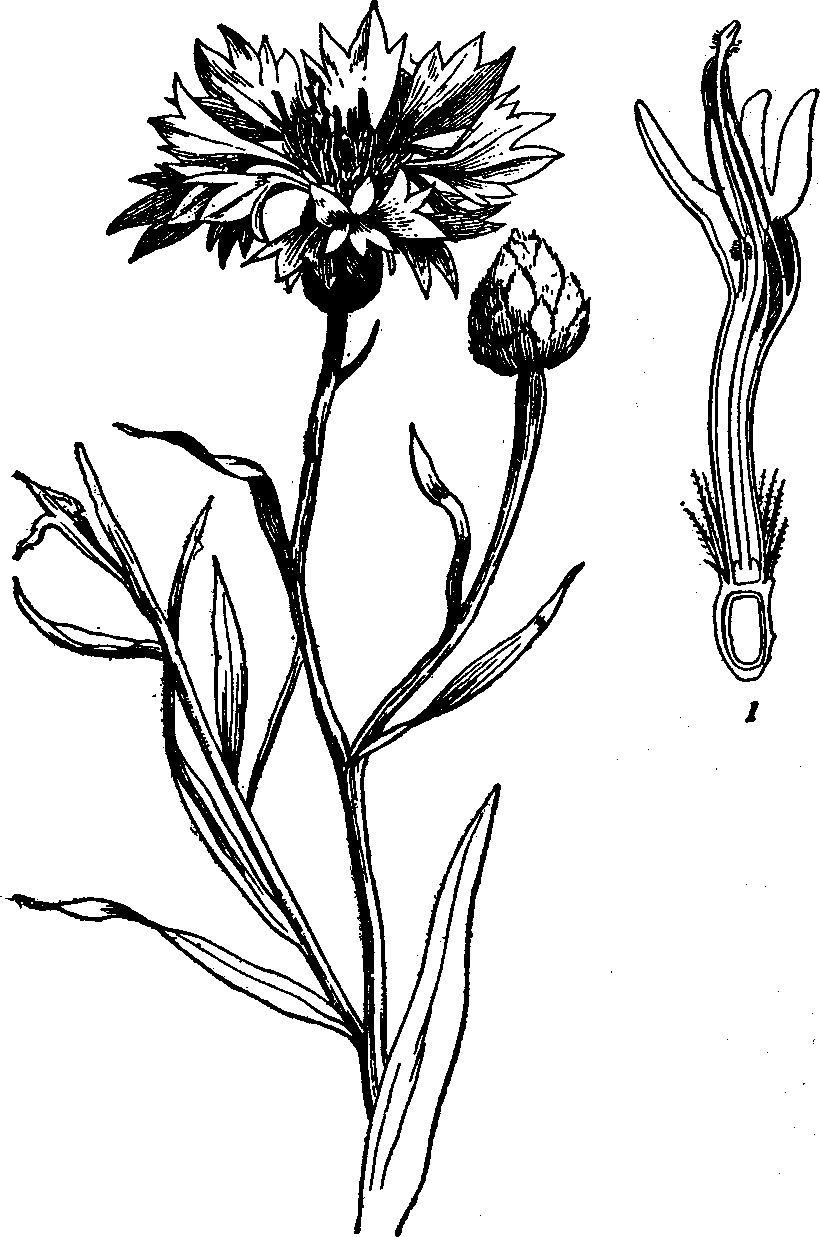
Centaurea cyanus is an annual plant growing to 20–100 cm tall, with grey-green branched stems. The leaves are lanceolate and 3–10 cm long. The flowers are most commonly an intense blue colour and arranged in flowerheads (capitula) of 1.5–3 cm diameter, with a ring of a few large, spreading ray florets surrounding a central cluster of disc florets. The blue pigment is protocyanin, which in roses is red. Fruits are approx. 3.5 mm long with 2–3 mm-long pappus bristles. It flowers all summer.
Genetics
Centaurea cyanus is a diploid flower (2n = 24). The genetic diversity within populations is high, although there could be a future decline in diversity due to population fragmentation and intensive agriculture. In general, Centaurea cyanus is a self-incompatible species. However, selfing still occurs occasionally, but results in inbreeding depression.
Distribution and habitat
Centaurea cyanus is native to temperate Europe, but is widely naturalized in many other parts of the world, including North America and parts of Australia through introduction as an ornamental plant in gardens and as a seed contaminant in crop seeds.
It has been present in Britain and Ireland as an archaeophyte (ancient introduction) since the Iron Age. In the United Kingdom, it has declined from 264 sites to just 3 sites in the last 50 years.
In reaction to this, the conservation charity Plantlife named it as one of 101 species it would actively work to bring 'back from the brink'.
In County Clare (VC H9), Ireland, C. cyanus is recorded in arable fields as very rare and almost extinct, while in northeast Ireland, it was abundant before the 1930s.
Ecology
Weed in arable crops
Centaurea cyanus is considered a noxious weed in arable crops, especially cereals and rapeseed. In winter wheat, one plant per m2 can cause a yield loss of up to 30 kg / ha. Centaurea cyanus produces around 800 seed per plant, which are either shed shortly before the harvest of cereals, or they are threshed together with the cereal grains, contributing to the further spread of the species by the harvesting machinery and contaminated seed. The occurrence of Centaurea cyanus strongly decreased during the last decades due to improved seed cleaning, more intensive nitrogen fertilization and herbicide use. However, Centaurea cyanus has become more common in cropland due to an increase in crop rotations dominated by winter cereals and rapeseed and the use of more selective herbicides with a low effectiveness against Centaurea cyanus. In addition, the emergence of resistance against the herbicide class of sulfonylureas has been reported recently. Due to its strong roots, Centaurea cyanus is difficult to control mechanically in spring.
Fodder for insects and birds

The pollen of Centaurea cyanus is used by several different insect species. Insects of the orders Hymenoptera and Diptera are particularly attracted by the flower. As Centaurea cyanus is a self-incompatible species, it needs external pollination. The nectar of Centaurea cyanus is very sweet with a sugar content of 34%. Due to its high sugar production of up to 0.2 mg sugar per day and flower, the species is highly appreciated by beekeepers.
The seeds of Centaurea cyanus are one of the favourite foods of the European goldfinch.
Control of insect pests
Centaurea cyanus was found to produce volatiles attracting Microplitis mediator, which is a major parasitoid of the cabbage moth (Mamestra brassicae), which is the most important pest of cabbage (Brassica oleracea) in central Europe. Planting Centaurea cyanus in cabbage fields as a companion plant was thus suggested as an alternative to the widespread use of insecticides to control Mamestra brassicae. Field experiments showed that planting Centaurea cyanus in cabbage fields at a density of 1 plant / m2 can result in a significant increase in parasitation of Mamestra brassicae larvae, predation of Mamestra brassicae eggs (e.g. by carabid beetles or spiders) and ultimately cabbage yield.
Cultivation
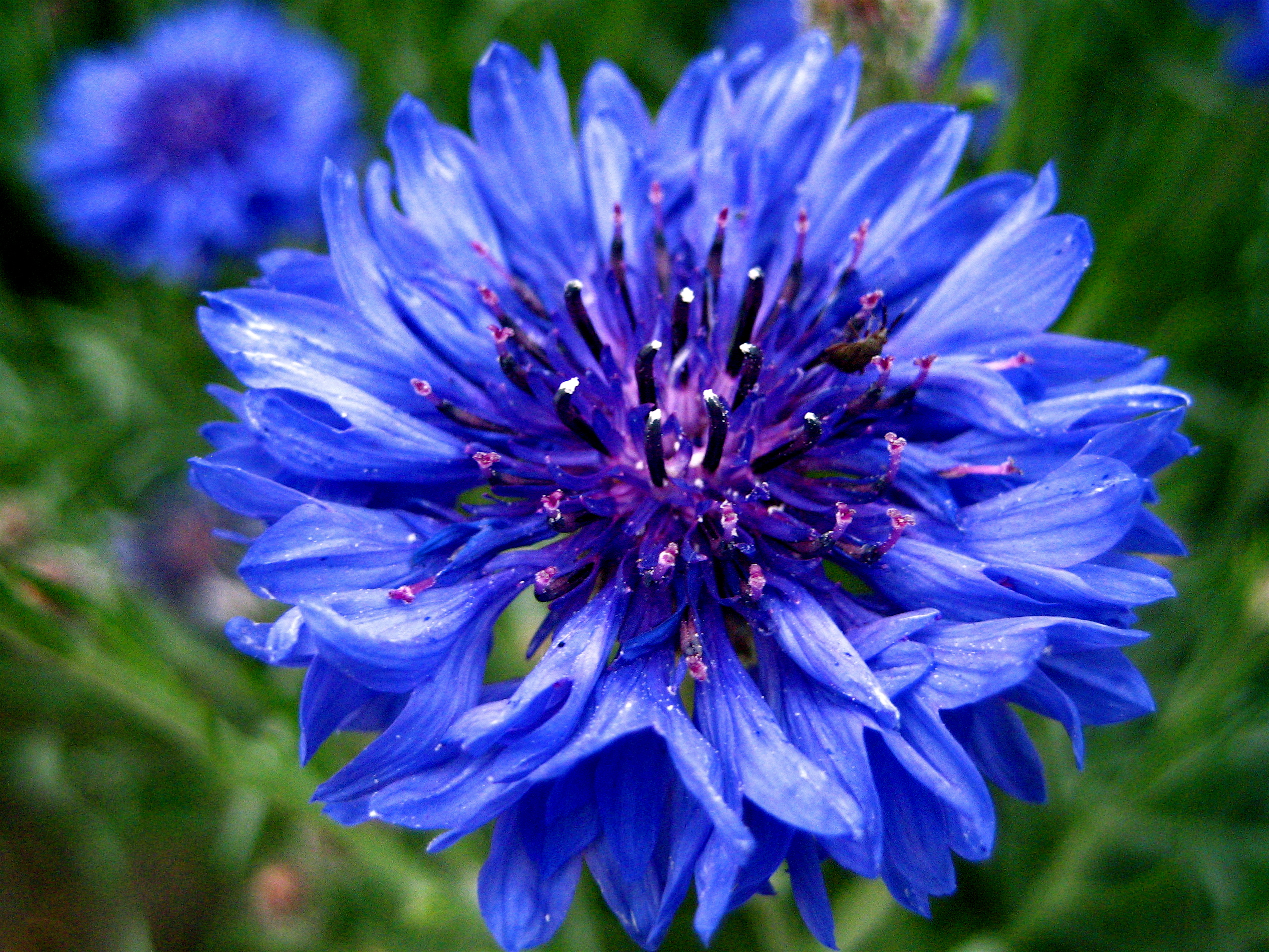
Several cultivars of Centaurea cyanus with varying pastel colours, including pink and purple, have been selected for ornamental purposes. The species is also grown for the cut flower industry in Canada for use by florists. Doubled blue cultivars (such as 'Blue Boy' or 'Blue Diadem') are most commonly used for this purpose, but white, pink, lavender and black (actually a very dark maroon) cultivars are also used, albeit to a lesser extent.
Breeding goals
As for all ornamental plants, important goals of Centaurea cyanus breeding include the induction of phenotypic variation (e.g. in flower coloration, size and shape, foliage characteristics or plant height), higher flower yield, resistance to pests and diseases as well as tolerance to abiotic stress (e.g., extreme temperatures, drought or salinity).
Soil and climate requirements
Centaurea cyanus requires full sun and neutral (pH 6.6–7.5) to mildly alkaline (pH 7.6–7.8), moist and well-drained soil. However, Centaurea cyanus is quite tolerant to drought once established.
Sowing
For summer-blooming plants, sowing should be executed in late spring. In moderate climates, however, it is also possible to sow Centaurea cyanus in early autumn. In this case, plants will already start to flower in the following spring. Recommended spacing between plants is approx. 20 to 30 cm. Centaurea cyanus can germinate from up to 10 cm depth, but the best result is obtained at 1 cm sowing depth. Germination occurs quickly after sowing.
Fertilization and cultural practices
High phosphorus fertilization in mid-summer will increase flower production. Mulching is recommended to prevent drying out of the soil and exposure of the root system to the sun.
Pests and diseases
In general, Centaurea cyanus is not very susceptible to pests and plant diseases. However, it may be affected by stem rot and stem rust if grown too tightly or by powdery mildew. Furthermore, aphids and leafhoppers can cause relevant damage to Centaurea cyanus.
Seed harvesting
Seeds are harvested either by hand or, in an agricultural setting, with a seed harvesting machine. On average there are 97,000 seeds in a pound of cornflower seeds.
Hand collecting can be time-consuming and yields are rather low.
A seed harvesting machine is more efficient than collecting the seeds by hand, but it is costly. The main principle of such a machine is that it brushes the ripe seeds off the plant and creates a cross flow fan action that generates sufficient air velocity to hold and gather the seeds into the seed bunker.
Pruning
Deadheading will encourage the plant to produce more blooms. Cornflowers are often used for ornamental purposes and by cutting them, up to their third leaves, they will produce more blooms and grow a bigger stem.
Uses
Culinary
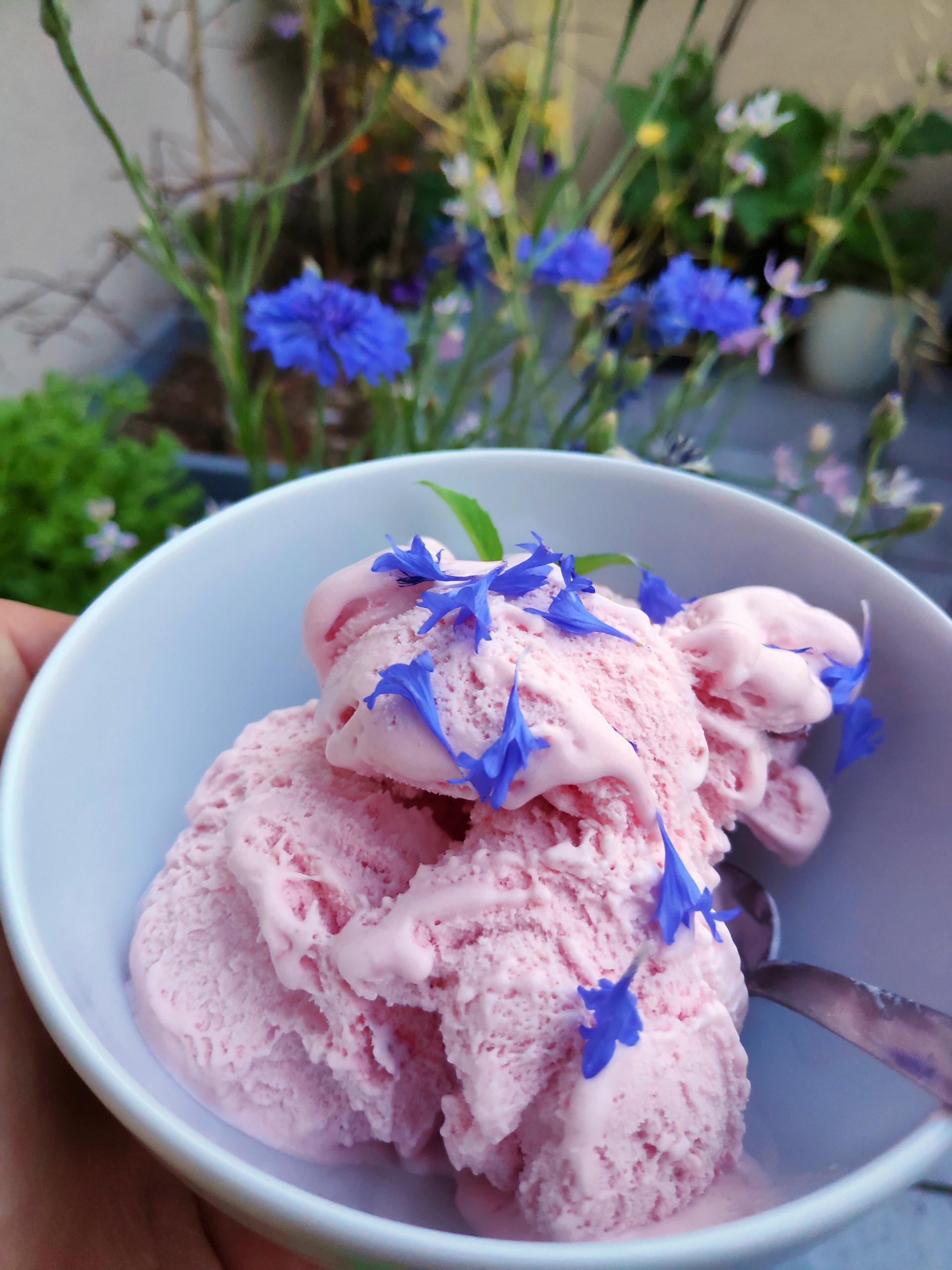
The flowers of Centaurea cyanus can be eaten raw, dried or cooked. Dried petals are used in foods, including in spices. Their main purpose is to add colour to food. There are cheeses or oils that contain raw petals. Petals can also be added to salads, drinks, and desserts for garnishing purposes in raw or dried form.
Dried petals are also used in teas and other beverages. Blue cornflower petals are sometimes one of the ingredients in Lady Grey tea.
Medicine
Centaurea cyanus contains a wide range of pharmacologically active compounds, such as flavonoids, anthocyanins and aromatic acids. Especially the flower head finds application in herbal medicine, but leaves and seeds are also used for pharmacological purposes, albeit to a lesser extent.
In particular, extracts from the flower heads have anti-inflammatory properties used in the treatment of minor ocular inflammations. Antioxidant properties are high due to ascorbic acid and phenolic compounds. Furthermore, extracts of the flower head and vegetative parts of the plant were shown to have gastroprotective effects due to their content of quercetin, apigenin and caffeic acid derivates.
Pigment
The blue color of Centaurea cyanus is due to protocyanin, an anthocyanin pigment that is also found in roses. Different anthocyanins derived from Centaurea cyanus are used as natural additives in food products, such as yoghurts.
Phytoremediation
Centaurea cyanus has been evaluated for phytoremediation of soils contaminated with lead. Inoculation of the contaminated soil with Glomus spp. (fungus) and Pseudomonas spp. (bacterium) would significantly enhance the biomass production and lead uptake of Centaurea cyanus.
In culture

In folklore, cornflowers were worn by young men in love; if the flower faded too quickly, it was taken as a sign that the man's love was not returned.
The blue cornflower was one of the national symbols of Germany. This is partly due to the story that when Queen Louise of Prussia was fleeing Berlin and pursued by Napoleon's forces, she hid her children in a field of cornflowers and kept them quiet by weaving wreaths for them from the flowers. The flower thus became identified with Prussia, not least because it was the same color as the Prussian military uniform. After the unification of Germany in 1871, it went on to become a symbol of the country as a whole. For this reason, in Austria the blue cornflower is a political symbol for pan-German and rightist ideas. It was worn as a secret symbol identifying members of the then-illegal NSDAP in Austria in the 1930s. Members of the Freedom Party wore it at the openings of the Austrian parliament since 2006. After the 2017 general election, they replaced it with the edelweiss.
It was also the favourite flower of Louise's son Kaiser Wilhelm I. Because of its ties to royalty, authors such as Theodor Fontane have used it symbolically, often sarcastically, to comment on the social and political climate of the time.
The cornflower is also often seen as an inspiration for the German Romantic symbol of the Blue Flower.
Due to its traditional association with Germany, the cornflower has been made the official symbol of the annual German-American Steuben Parade.

The blue cornflower has been the national flower of Estonia since 1969 and symbolizes daily bread to Estonians. It is also the symbol of the Estonian Conservative People's Party.
Cornflower is one of the symbols of Belarus and the Belarusian nation. It reflects the openness and sincerity of Belarusians and their place on planet Earth.
It is also the symbol of the Finnish National Coalition Party, and the Liberal People's Party of Sweden, where it has since the dawn of the 20th century been a symbol for social liberalism.
It is the official flower of the Swedish province of Östergötland and the school flower of Winchester College and also of Dulwich College, where it is said to have been the favourite flower of the founder, Edward Alleyn.
In France the bleuet de France is the symbol of the 11 November 1918 armistice and, as such, a common symbol for veterans (especially the now defunct poilus of World War I), similar to the Remembrance poppies worn in the United Kingdom and in Canada.
The cornflower is also the symbol for motor neurone disease and amyotrophic lateral sclerosis.
Cornflowers are sometimes worn by Old Harrovians, former pupils of the British Harrow School.
A blue cornflower was used by Corning Glass Works for the initial release of Corning Ware Pyroceram cookware. Its popularity in the United States, Canada, United Kingdom and Australia was so high that it became the symbol of Corning Glass Works.
In paintings
File:Vincent van Gogh - Wheat Field with Cornflowers.jpg|Vincent van Gogh, Wheat Field with Cornflowers, 1890 File:Левитан Васильки.jpg|Isaac Levitan, Cornflowers, 1894 File:Group portrait with cornflowers by Igor Grabar, 1914.jpg|Igor Grabar, Group Portrait with Cornflowers, 1914 File:Osipov-Cornflowers-7oci10bw.jpg|Sergei Osipov, Cornflowers, 1976 File:Stamps_Ukrainian_flowers.jpg|Ukrainian stamp set: "Ukrainian Flowers" (2000), with cornflowers on the right. Painting by Kateryna Shtanko.
Explanatory notes
References
References
- Rosamond Richardson, 2017, ''Britain's Wildflowers.'' Pavilion.
- Grigson, Geoffrey. (1975). "The Englishman's Flora". Paladin.
- (5 November 2020). "''Centaurea cyanus'' - FNA".
- (2005). "Structure of the blue cornflower pigment". Nature.
- (1996). "Flora Helvetica". Paul Haupt Verlag.
- Rose, Francis. (1981). "The Wild Flower Key". Frederick Warne & Co.
- Martin E., Dinç M., Duran A. (2009). "Karyomorphological Study of Eight Centaurea L. Taxa (Asteraceae) from Turkey". ''Turkish Journal of Botany'' '''33''':97–104.
- Le Corre V., Bellanger S., Guillemin J.-P., Darmency H. (2014). "Genetic diversity of the declining arable plant Centaurea cyanus: Population fragmentation within an agricultural landscape is not associated with enhanced spatial genetic structure". ''Weed Research'' '''54''':436–444.
- (2015). "Variation of inbreeding depression in Centaurea cyanus L., a self-incompatible species". Flora.
- (17 May 2021). "How and When to Plant Bachelor's Button".
- "Online atlas of the British & Irish flora: ''Centaurea cyanus'' (Cornflower)". Biological Records Centre and Botanical Society of Britain and Ireland.
- "Action plan for Centaurea cyanus". Ukbap.org.uk.
- "Plantlife website". Plantlife.org.uk.
- Skeffington, M.S.. (2015). "Cornflower (''Centaurea cynanus'' L.) and Good-king-henry (''Chenopodium bonus-henricus'' L.)". Irish Naturalists' Journal.
- Hackney, P.. (1992). "Stewart & Corry's Flora of the North-east of Ireland". Institute of Irish Studies and The Queen's University of Belfast.
- "Leitunkräuter in Getreide". Bayerische Landesanstalt für Landwirtschaft.
- (1998). "Variability of weed competitiveness in cereals and consequences for the correctness of thresholds". Journal of Plant Diseases and Protection.
- (2010). "Cornflower (Centaurea cyanus L.) cross resistant on ALS inhibitors.". Progress in Plant Protection.
- Carreck N., Williams I. (2002). "Food for insect pollinators on farmland: insect visits to flowers of annual seed mixtures". Journal of Insect Conservation 6:13–23.
- Helmut Horn, Cord Lüllmann: Das große Honigbuch, Kosmos, Stuttgart, 3. Auflage, 2006, {{ISBN. 3-440-10838-4, S. 31
- (2013). "Olfactory attractiveness of flowering plants to the parasitoid Microplitis mediator: potential implications for biological control". BioControl.
- (2014). "Wildflower companion plants increase pest parasitation and yield in cabbage fields: Experimental demonstration and call for caution". Biological Control.
- "Breeding and Seed Production of Ornamental Crops".
- "How to Grow Cornflower".
- Hanf, Martin. (1943). "Keimung von Unkrauterun unter verschiedenen Bedingungen im Boden.". Landwirtschaftliche Jahrbücher.
- (8 March 2019). "Centaurea Cyanus [sic]: Best Practices for Growing the Cornflower".
- (2021). "Tall Blue Cornflower Seeds".
- (2017). "Methods of seed harvesting".
- Rop O., Mlcek J., Jurikova T., Neugebauerová J., Vabkova J. (2012). "Edible Flowers-A New Promising Source of Mineral Elements in Human Nutrition". ''Molecules'' '''17''':6672–83.
- "Discovery Collection Orangery of Lady Grey - 15 Pyramid Tea Bags".
- Al-Snafi A. (2015). "The pharmacological importance of Centaurea cynus - A review". ''International Journal of Pharmacy Review and Research'' '''5:'''379–384.
- Garbacki N., Gloaguen V., Damas J., Bodart P., Tits M., Angenot L. (1999). "Anti-inflammatory and immunological effects of Centaurea cyanus flower-heads". ''Journal of ethnopharmacology'' '''68''':235–241.
- Lockowandt L., Pinela J., Roriz C., Pereira C., Abreu R., Calhelha R., Alves M., Barros L., Bredol M., Ferreira I. (2019). "Chemical features and bioactivities of cornflower (Centaurea cyanus L.) capitula: The blue flowers and the unexplored non-edible part". ''Industrial Crops and Products'' '''128''':496–503.
- Pirvu L., Dragomir C., Schiopu S., Mihul S. (2012). "Vegetal extracts with gastroprotective activity. Part. I. Extracts obtained from Centaurea cyanus L. raw material". ''Romanian Biotechnological Letters'' '''17''':7169-7176.
- Shiono M., Matsugaki N., Takeda K. (2005). "Structure of the blue cornflower pigment". ''Nature'' '''436''':791–791.
- (2018). "Microbial-Enhanced Phytoremediation of Lead Contaminated Calcareous Soil by Centaurea cyanus L.". CLEAN - Soil, Air, Water.
- Howard, Michael. (1987). "Traditional Folk Remedies". Century.
- (2002). "Compendium of Symbolic and Ritual Plants in Europe: Herbs". Man & Culture.
- Reid, Marilyn. (2007). "Mythical Flower Stories". Lulu.com.
- Whiteside, Andrew G.. (1993). "Current Research on Anti-Semitism: Hostages of Modernization". de Gruyter.
- Unowsky, Daniel L.. (2005). "The Pomp and Politics of Patriotism: Imperial Celebrations in Habsburg Austria, 1848–1916". Purdue University Press.
- "RIS Dokument".
- Josie Le Blond. (11 Jan 2019). "New far-right German party adopts former secret Nazi symbol". The Guardian.
- (30 October 2006). "Anklänge an illegale NSDAPler". ORF.at.
- "KPÖ".
- (2013-10-29). "Wirbel um Nazi-Blume bei der FPÖ".
- "FPÖ-Mandatare tragen heute Edelweiß statt Kornblume".
- Coulter, Lynn. (2009). "Gardening with Heirloom Seeds: Tried-and-True Flowers, Fruits, and Vegetables for a New Generation". ReadHowYouWant.com, Limited.
- "Symbols of Belarus".
- "Porter le Bleuet de France".
- (2004-05-31). "The Cornflower - an ALS symbol". Als.ca.
This article was imported from Wikipedia and is available under the Creative Commons Attribution-ShareAlike 4.0 License. Content has been adapted to SurfDoc format. Original contributors can be found on the article history page.
Ask Mako anything about Centaurea cyanus — get instant answers, deeper analysis, and related topics.
Research with MakoFree with your Surf account
Create a free account to save articles, ask Mako questions, and organize your research.
Sign up freeThis content may have been generated or modified by AI. CloudSurf Software LLC is not responsible for the accuracy, completeness, or reliability of AI-generated content. Always verify important information from primary sources.
Report