From Surf Wiki (app.surf) — the open knowledge base
CD154
Protein found in humans
Protein found in humans
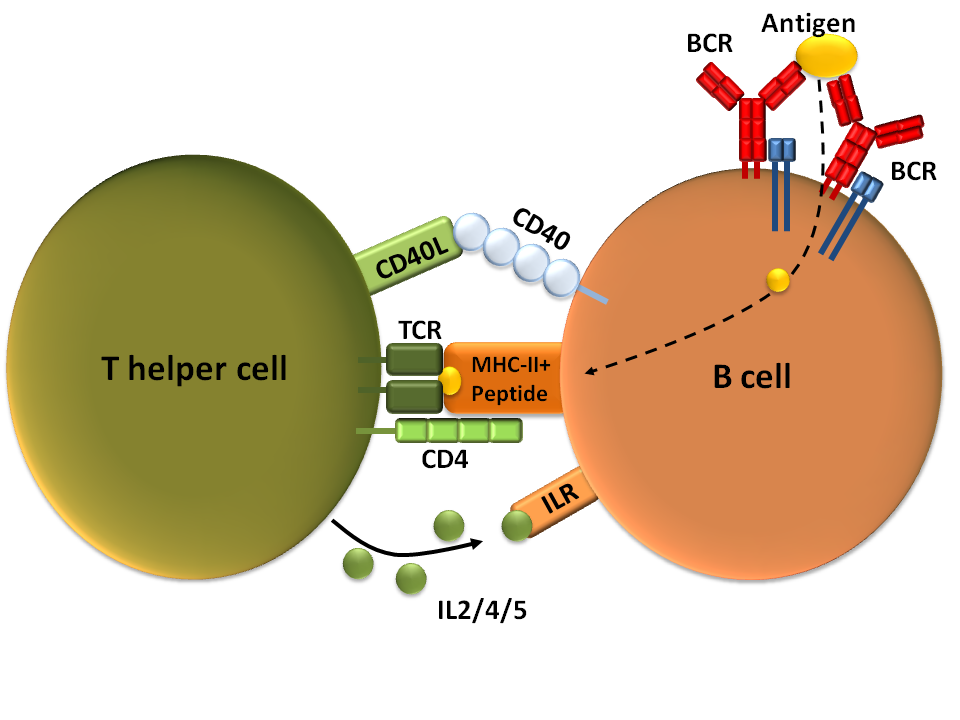
CD154, also called CD40 ligand or CD40L, is a protein that is primarily expressed on activated T cells and is a member of the TNF superfamily of molecules. It binds to CD40 on antigen-presenting cells (APC), which leads to many effects depending on the target cell type. In total CD40L has three binding partners: CD40, α5β1 integrin and integrin αIIbβ3. CD154 acts as a costimulatory molecule and is particularly important on a subset of T cells called T follicular helper cells (TFH cells). On TFH cells, CD154 promotes B cell maturation and function by engaging CD40 on the B cell surface and therefore facilitating cell-cell communication. A defect in this gene results in an inability to undergo immunoglobulin class switching and is associated with hyper IgM syndrome. Absence of CD154 also stops the formation of germinal centers and therefore prohibits antibody affinity maturation, an important process in the adaptive immune system.
History
In 1991, three groups reported discovering CD154. Seth Lederman, Michael Yellin, and Leonard Chess at Columbia University generated a murine monoclonal antibody, 5c8, that inhibited contact-dependent T cell helper function in human cells and which characterized a 32 kDa surface protein transiently expressed on activated CD4+ T cells. Richard Armitage at Immunex cloned a cDNA encoding CD154 by screening an expression library with CD40-Ig. Randolph Noelle at Dartmouth Medical School generated an antibody that bound a 39 kDa protein on murine T cells and inhibited helper function. Noelle contested Lederman's patent, but the challenge (called an interference) was rejected on all counts
Expression
CD40 ligand (CD154) is primarily expressed on activated CD4+ T lymphocytes but is also found in a soluble form. While CD40L was originally described on T lymphocytes, its expression has since been found on a wide variety of cells, including platelets, mast cells, macrophages, basophils, NK cells, B lymphocytes, as well as non-haematopoietic cells (smooth muscle cells, endothelial cells, and epithelial cells).
Specific effects on cells
CD40L plays a central role in costimulation and regulation of the immune response via T cell priming and activation of CD40-expressing immune cells. At least 46 disease-causing mutations in this gene have been discovered.
Macrophages
In the macrophage, the primary signal for activation is IFN-γ from Th1 type CD4 T cells. The secondary signal is CD40L on the T cell, which binds CD40 on the macrophage cell surface. As a result, the macrophage expresses more CD40 and TNF receptors on its surface, which helps increase the level of activation. The activated macrophage can then destroy phagocytosed bacteria and produce more cytokines.
B cells
B cells can present antigens to a specialized group of helper T cells called TFH cells. If an activated TFH cell recognizes the peptide presented by the B cell, the CD40L on the T cell binds to the B cell's CD40, causing B cell activation. The T cell also produces IL-4, which directly influences B cells. As a result of this stimulation, the B cell can undergo rapid cellular division to form a germinal center where antibody isotype switching and affinity maturation occurs, as well as their differentiation to plasma cells and memory B cells. The end-result is a B cell that is able to mass-produce specific antibodies against an antigenic target. Early evidence for these effects were that in CD40 or CD154 deficient mice, there is little class switching or germinal centre formation, and immune responses are severely inhibited.
Endothelial cells
Activation of endothelial cells by CD40L (e.g. from activated platelets) leads to reactive oxygen species production, as well as chemokine and cytokine production, and expression of adhesion molecules such as E-selectin, ICAM-1, and VCAM-1. This inflammatory reaction in endothelial cells promotes recruitment of leukocytes to lesions and may potentially promote atherogenesis. CD40L has shown to be a potential biomarker for atherosclerotic instability.
Interactions
CD154 has been shown to interact with RNF128 and RACK1.
References
References
- (April 1992). "Identification of a novel surface protein on activated CD4+ T cells that induces contact-dependent B cell differentiation (help)". The Journal of Experimental Medicine.
- (December 1992). "Molecular interactions mediating T-B lymphocyte collaboration in human lymphoid follicles. Roles of T cell-B-cell-activating molecule (5c8 antigen) and CD40 in contact-dependent help". Journal of Immunology.
- (March 1994). "T-BAM/CD40-L on helper T lymphocytes augments lymphokine-induced B cell Ig isotype switch recombination and rescues B cells from programmed cell death". Journal of Immunology.
- "Entrez Gene: CD40LG CD40 ligand (TNF superfamily, member 5, hyper-IgM syndrome)".
- (April 1992). "Identification of a novel surface protein on activated CD4+ T cells that induces contact-dependent B cell differentiation (help)". The Journal of Experimental Medicine.
- (May 1992). "Molecular and biological characterization of a murine ligand for CD40". Nature.
- (July 1992). "A 39-kDa protein on activated helper T cells binds CD40 and transduces the signal for cognate activation of B cells". Proceedings of the National Academy of Sciences of the United States of America.
- "Patent 5,474,771". U.S. Patent Office.
- (January 2001). "The CD40/CD154 receptor/ligand dyad". Cellular and Molecular Life Sciences.
- (1998). "CD40 and CD154 in cell-mediated immunity". Annual Review of Immunology.
- (December 2019). "Refinement of evolutionary medicine predictions based on clinical evidence for the manifestations of Mendelian diseases". Scientific Reports.
- (October 1995). "Opposing roles of CD95 (Fas/APO-1) and CD40 in the death and rescue of human low density tonsillar B cells". Journal of Immunology.
- (December 1995). "Impairment of antigen-specific T-cell priming in mice lacking CD40 ligand". Nature.
- (October 2003). "New markers of inflammation and endothelial cell activation: Part I". Circulation.
- (September 2013). "CD40 ligand as a potential biomarker for atherosclerotic instability". Neurological Research.
- (August 2008). "Cutting edge: The transmembrane E3 ligase GRAIL ubiquitinates the costimulatory molecule CD40 ligand during the induction of T cell anergy". Journal of Immunology.
- (December 2023). "CD40L modulates CD4+ T-cell activation through receptor for activated C kinase 1". European Journal of Immunology.
This article was imported from Wikipedia and is available under the Creative Commons Attribution-ShareAlike 4.0 License. Content has been adapted to SurfDoc format. Original contributors can be found on the article history page.
Ask Mako anything about CD154 — get instant answers, deeper analysis, and related topics.
Research with MakoFree with your Surf account
Create a free account to save articles, ask Mako questions, and organize your research.
Sign up freeThis content may have been generated or modified by AI. CloudSurf Software LLC is not responsible for the accuracy, completeness, or reliability of AI-generated content. Always verify important information from primary sources.
Report