From Surf Wiki (app.surf) — the open knowledge base
Catholic Church in the United States
none
none
| Field | Value |
|---|---|
| icon | Emblem_of_the_Papacy_SE.svg |
| icon_width | 25px |
| name | Catholic Church in the United States |
| image | Basilica of the National Shrine of the Immaculate Conception, Washington.jpg |
| imagewidth | 200px |
| caption | Basilica of the National Shrine of the Immaculate Conception in Washington, D.C., the largest Catholic church in North America |
| type | National polity |
| main_classification | Catholic |
| orientation | Latin and Eastern |
| scripture | Bible |
| theology | Catholic theology |
| polity | Episcopal |
| governance | United States Conference of Catholic Bishops |
| leader_title | Pope |
| leader_name | |
| leader_title1 | USCCB President |
| leader_name1 | Paul Coakley |
| leader_title2 | Prerogative of Place |
| leader_name2 | William E. Lori |
| leader_title3 | Apostolic Nuncio |
| leader_name3 | Christophe Pierre |
| area | United States and other territories of the United States, excluding Puerto Rico. |
| language | English, Spanish, French, Latin |
| congregations | 16,429 (2022) |
| members | 72,000,000+ (2020) |
| website |
The Catholic Church in the United States is part of the worldwide Latin Church and the wider Catholic Communion, in communion with the Pope. With between 19 percent to 22% of the adult United States' population , the Catholic Church is the country's second-largest religious grouping after Protestantism. The United States has the fourth-largest Catholic population in the world, after Brazil, Mexico, and the Philippines.
History
Main article: History of the Catholic Church in the United States
Catholicism has had a significant cultural, social, and political impact on the United States.
Early colonial period
Main article: Catholic Church in the Thirteen Colonies, Spanish missions in California
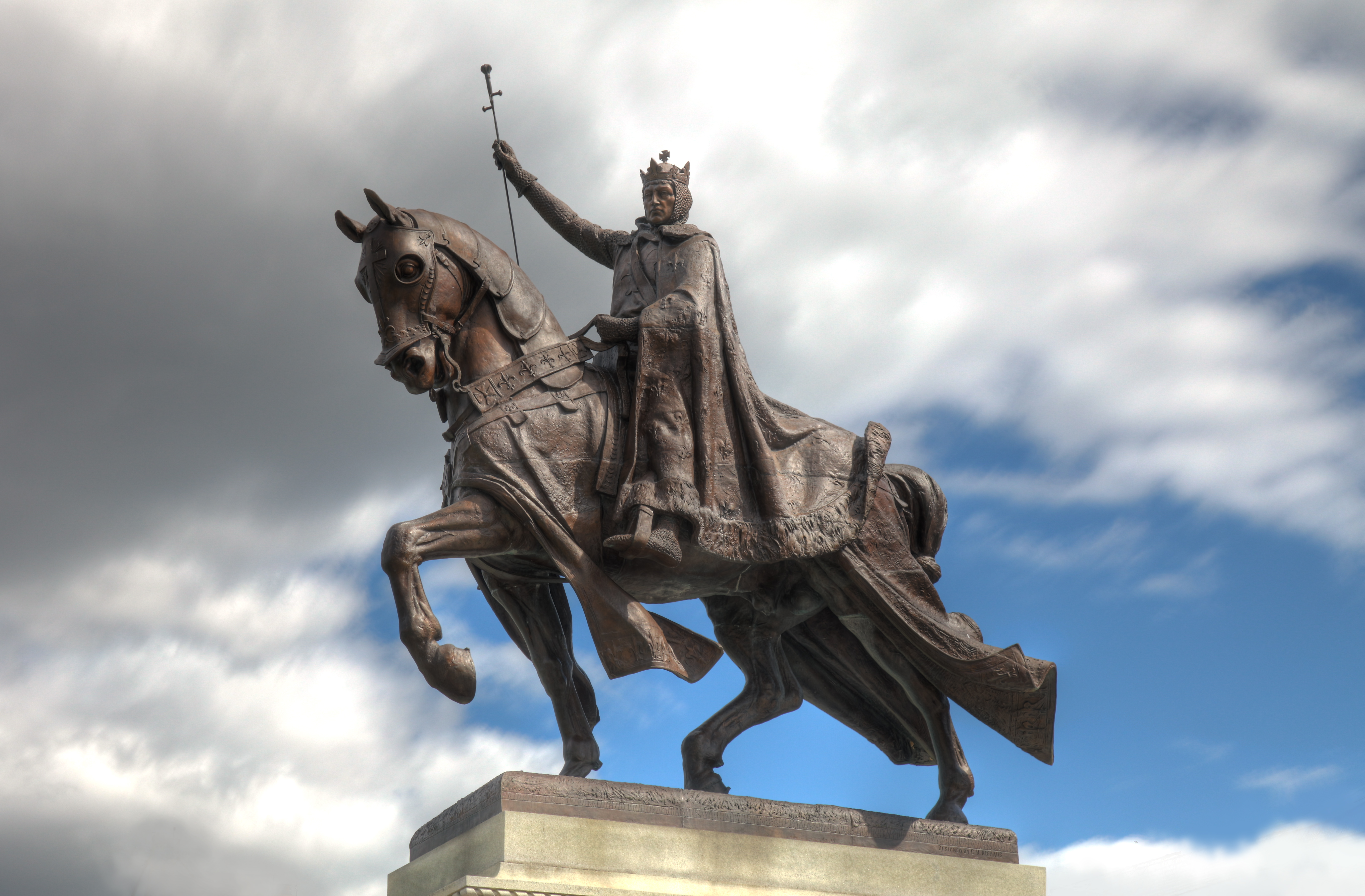
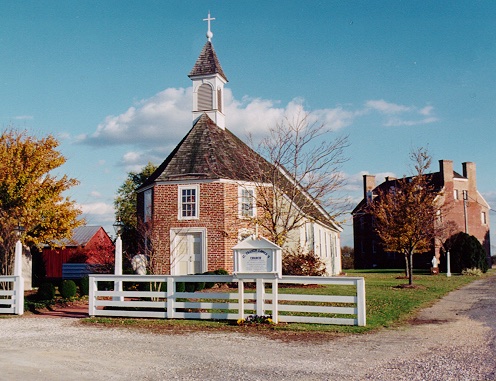
Catholicism first came to the territories now forming the United States by way of Spanish colonists in the present-day Virgin Islands (1493), Puerto Rico (1508), Florida (1513), South Carolina (1566), Georgia (1568–1684), and the southwest. The first known Catholic Mass held in what would become the United States was in 1526 by Dominican friars Antonio de Montesinos and Anthony de Cervantes, who ministered to the San Miguel de Gualdape colonists for the 3 months the colony existed. The influence of the Alta California missions (1769 and onwards) forms a lasting memorial to part of this heritage. Until the 19th century, the Franciscans and other religious orders had to operate their missions under the Spanish and Portuguese governments and military.
One of the Thirteen Colonies of British America, the Province of Maryland, "a Catholic Proprietary", was founded with an explicitly English Catholic identity in the 17th century, contrasting itself with the neighboring Protestant-dominated Massachusetts Bay Colony and Colony of Virginia. It was named after the Catholic Queen Henrietta Maria, the wife of Charles I of England. Politically, it was under the influence of Catholic colonial families of Maryland such as the Calvert Baron Baltimore and the Carroll family, the latter of Irish origin.
Much of the religious situation in the Thirteen Colonies reflected the sectarian divisions of the English Civil War. This predicament was especially precarious for Catholics. For this reason, Calvert wanted to provide "a refuge for his fellow Catholics" who were "harassed in England by the Protestant majority." King Charles I, as a "Catholic sympathizer", favored and facilitated Calvert's plan if only to make evident that a "policy of religious toleration could permit Catholics and Protestants to live together in harmony."
The Province of Pennsylvania, which was given to Quaker William Penn by the last Catholic King of England, James II, advocated religious toleration as a principle and some Catholics lived there. There were also some Catholics in the Province of New York, named after King James II.
In 1785, the estimated number of Catholics was at 25,000; 15,800 in Maryland, 7,000 in Pennsylvania and 1,500 in New York. There were only 25 priests serving the nation's Catholics. This was less than 2% of the total population in the Thirteen Colonies.
In 1776, after the Second Continental Congress unanimously adopted and issued the United States Declaration of Independence and the Continental Army prevailed over the British in the American Revolutionary War, the United States came to incorporate into itself territories with a pre-existing Catholic history under their previous governance by New France and New Spain, the two premier European Catholic powers active in North America. The territorial evolution of the United States since 1776 has meant that today more areas that are now part of the United States were Catholic in colonial times before they were Protestant.
Founding of the United States
Main article: History of the Catholic Church in the United States

Anti-Catholicism was the policy for the English who first settled the New England colonies, and it persisted in the face of warfare with the French in New France, now part of Canada. Maryland was founded by a Catholic, Lord Baltimore, as the first 'non-denominational' colony and was the first to accommodate Catholics. A charter was issued to him in 1632.
In 1650, the Puritans in the colony rebelled and repealed the Act of Toleration. Catholicism was outlawed and Catholic priests were hunted and exiled. By 1658, the Act of Toleration was reinstated and Maryland became the center of Catholicism into the mid-19th century. In 1689, Puritans rebelled and again repealed the Maryland Toleration Act. These rebels cooperated with the colonial assembly "dominated by Anglicans to endow the Church of England with tax support and to bar Catholics (and Quakers) from holding public office." New York proved more tolerant with its Catholic governor, Thomas Dongan, and other Catholic officials. Freedom of religion returned with the American Revolution.
In 1756, a Maryland Catholic official estimated seven thousand practicing Catholics in Maryland and three thousand in Pennsylvania. The Williamsburg Foundation estimates in 1765 Maryland Catholics at 20,000 and 6,000 in Pennsylvania. The population of these colonies at the time was approximately 180,000 and 200,000, respectively. By the time the American War for Independence started in 1776, Catholics formed 1.6%, or 40,000 persons of the 2.5 million population of the 13 colonies. Another estimate is 35,000 in 1789, 60% in Maryland with not many more than 30 priests. John Carroll, first Catholic Bishop, in 1785, two years after the Treaty of Paris (1783), reported 24,000 registered communicants in the new country, of whom 90% were in Maryland and Pennsylvania.
After the Revolution, Rome made entirely new arrangements for the creation of an American diocese under American bishops. Numerous Catholics served in the American army and the new nation had very close ties with Catholic France. General George Washington insisted on toleration; for example, he issued strict orders in 1775 that "Pope's Day", the colonial equivalent of Guy Fawkes Night, was not to be celebrated. European Catholics played major military roles, especially Gilbert du Motier, Marquis de Lafayette, Jean-Baptiste Donatien de Vimeur, comte de Rochambeau, Charles Hector, comte d'Estaing, Casimir Pulaski and Tadeusz Kościuszko. Irish-born Commodore John Barry from Co Wexford, Ireland, often credited as "the Father of the American Navy", also played an important military role. In a letter to Bishop Carroll, Washington acknowledged this unique contribution of French Catholics as well as the patriotic contribution of Carroll himself: "And I promise that your fellow-citizens will not forget the patriotic part which you took in the accomplishments of their Revolution, and the establishment of their government; nor the important assistance which they received from a nation in which the Roman Catholic religion is professed."
Beginning in approximately 1780 there was a struggle between lay trustees and bishops over the ownership of church property, with the trustees losing control following the 1852 Plenary Councils of Baltimore.
Historian Jay Dolan, writing on the colonial era in 2011, said: :They had lived as second-class citizens, discriminated against politically, professionally, and socially. The revolution changed all this. New laws and new constitutions gave them religious freedom.... [leading] John Carroll to observe in 1779 that Roman Catholics are members of Congress, assemblies, and hold civil and military posts.
President Washington promoted religious tolerance by proclamations and by publicly attending services in various Protestant and Catholic churches. The old colonial laws imposing restrictions on Catholics were gradually abolished by the states, and were prohibited in the new federal constitution.
In 1787, two Catholics, Daniel Carroll of the Irish O'Carrolls and Irish born Thomas Fitzsimons, helped draft the new United States Constitution. John Carroll was appointed by the Vatican as Prefect Apostolic, making him superior of the missionary church in the thirteen states. He formulated the first plans for Georgetown University and became the first American bishop in 1789.
19th century
Main article: 19th century history of the Catholic Church in the United States

In 1803, the Louisiana Purchase saw vast territories in French Louisiana transferred over from the First French Republic, areas that would become the following states; Arkansas, Iowa, Missouri, Kansas, Oklahoma, Nebraska, Minnesota, Louisiana, South Dakota, Wyoming and Montana, half of Colorado, parts of New Mexico, Texas, and North Dakota. The French named a number of their settlements after Catholic saints, such as St. Louis, Sault Ste. Marie, St. Ignace, St. Charles and others. The Catholic, culturally French population of Americans, descended from this colony are today known as the Louisiana Creole and Cajun people.
During the 19th century, territories previously belonging to the Catholic Spanish Empire became part of the United States, starting with Florida in the 1820s. Most of the Spanish American territories with a Catholic heritage became independent during the early 19th century, this included Mexico on the border of the United States. The United States subsequently annexed parts of Mexico, starting with Texas in the 1840s and after the end of the Mexican–American War an area known as the Mexican Cession, including what would become the states of California, Nevada, Utah, most of Arizona, the rest of New Mexico, Colorado and Wyoming. To an even greater extent than the French, the Spanish had named many settlements in the colonial period after Catholic saints or in reference to Catholic religious symbolism, names that they would retain after becoming part of the United States, especially in California (Los Angeles, San Francisco, San Diego, Sacramento, San Bernardino, Santa Barbara, Santa Monica, Santa Clarita, San Juan Capistrano, San Luis Obispo and numerous others), as well as Texas (San Antonio, San Juan, San Marcos and San Angelo), New Mexico (Santa Fe) and Florida (St. Augustine). In 1898, following the Spanish–American War, the United States took control of Puerto Rico, Guam and the Philippines, and Cuba for a time, all of which had several centuries of Spanish Catholic colonial history, though they were not made into states.
The number of Catholics surged starting in the 1840s as German, Irish, and other European Catholics came in large numbers. After 1890, Italians and Poles formed the largest numbers of new Catholics, but many countries in Europe contributed, as did Quebec. By 1850, Catholics had become the country's largest single denomination. Between 1860 and 1890, their population tripled to seven million.
Catholic revival


Historian John McGreevy identifies a major Catholic revival that swept across Europe, North America, and South America in the early 19th century. It was nurtured in the world of Catholic urban neighborhoods, parishes, schools, and associations, whose members understood themselves as arrayed against, and morally superior to the wider American society. The Catholic Revival is called "Ultramontanism". It included a new emphasis on Thomistic theology for intellectuals. For parishioners it meant a much deeper piety that emphasized miracles, saints, and new devotions such as, compulsory Sunday attendance, regular confession and communion, praying the rosary, a devotion to the Blessed Virgin, and meatless Fridays. There was a deeper respect for bishops, and especially the Pope, with more direct control by the Vatican over selecting bishops and less autonomy for local parishes. There was a sharp increase in Mass attendance, religious vocations soared, especially among women. Catholics set up a parochial school system using the newly available nuns, and funding from the more religious parents. Intermarriage with Protestants was strongly discouraged. It was tolerated only if the children were brought up Catholics. The parochial schools effectively promoted marriage inside the faith. By the late 19th century dioceses were building foreign language elementary schools in parishes that catered to Germans and other non-English speaking groups. They raised large sums to build English-only diocesan high schools, which had the effect of increasing ethnic intermarriage and diluting ethnic nationalism. Leadership was increasingly in the hands of the Irish. The Irish bishops worked closely with the Vatican and promoted Vatican supremacy that culminated in Papal infallibility proclaimed in 1870.
The bishops began standardizing discipline in the American Church with the convocation of the Plenary Councils of Baltimore in 1852, 1866 and 1884. These councils resulted in the promulgation of the Baltimore Catechism and the establishment of the Catholic University of America.
Jesuit priests who had been expelled from Europe found a new base in the U.S. They founded numerous secondary schools and 28 colleges and universities, including Georgetown University (1789), St. Louis University (1818), Boston College, the College of Holy Cross, the University of Santa Clara, and several Loyola Colleges. Many other religious communities like the Dominicans, Congregation of Holy Cross, and Franciscans followed suit.
In the 1890s, the Americanism controversy roiled senior officials. The Vatican suspected there was too much liberalism in the American Church, and the result was a turn to conservative theology as the Irish bishops increasingly demonstrated their total loyalty to the Pope, and traces of liberal thought in the Catholic colleges were suppressed. As part of this controversy, the founder of the Paulist Fathers, Isaac Hecker, was accused by the French cleric of subjectivism and crypto-Protestantism. Additionally some who sympathized with Hecker in France were accused of Americanism.
Nuns and sisters
Main article: Catholic sisters and nuns in the United States

Nuns and sisters played a major role in American religion, education, nursing and social work since the early 19th century. In Catholic Europe, convents were heavily endowed over the centuries, and were sponsored by the aristocracy. But there were very few rich American Catholics, and no aristocrats. Religious orders were founded by entrepreneurial women who saw a need and an opportunity, and were staffed by devout women from poor families. The numbers grew rapidly, from 900 sisters in 15 communities in 1840, 50,000 in 170 congregations in 1900, and 135,000 in 300 different congregations by 1930. Starting in 1820, the sisters always outnumbered the priests and brothers. Their numbers peaked in 1965 at 180,000 then plunged to 56,000 in 2010. Many women left their orders, and few new members were added.
On April 8, 2008, Cardinal William Levada, prefect of the Congregation for the Doctrine of the Faith under Pope Benedict XVI, met with the Leadership Conference of Women Religious leaders in Rome and communicated that the CDF would conduct a doctrinal assessment of the LCWR, expressing concern that the nuns were expressing radical feminist views. According to Laurie Goodstein, the investigation, which was viewed by many U.S. Catholics as a "vexing and unjust inquisition of the sisters who ran the church's schools, hospitals and charities", was ultimately closed in 2015 by Pope Francis.
Anti-Catholicism
Some anti-Catholic political movements appeared: the Know Nothings in the 1840s. American Protective Association in the 1890s, and the second Ku Klux Klan in the 1920s, were active in the United States. But even as early as 1884, in the face of outbreaks of anti-Catholicism, Catholic leaders like James Cardinal Gibbons were filled with admiration for their country: "The oftener I go to Europe," Gibbons said, "the longer I remain there, and the more I study the political condition of its people, I return home filled with greater admiration for our own country and [am] more profoundly grateful that I am an American citizen." Animosity by Protestants waned as Catholics demonstrated their patriotism in World War I, their commitment to charity, and their dedication to democratic values.
20th–21st centuries
Main article: 20th-century history of the Catholic Church in the United States
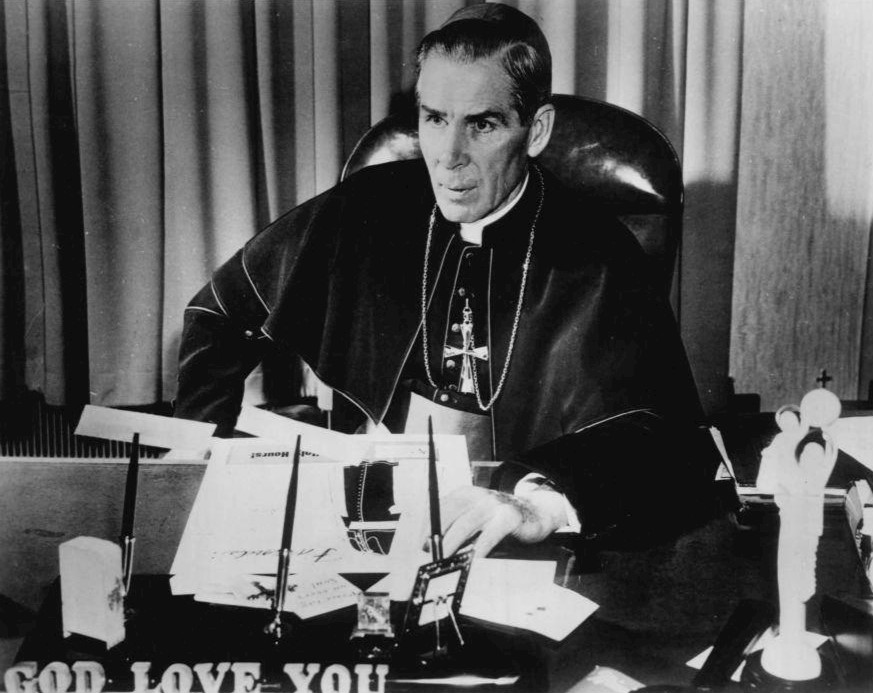
In the era of intense emigration from the 1840s to 1914, bishops often set up separate parishes for major ethnic groups, from Ireland, Germany, Poland, French Canada and Italy. In Iowa, the development of the Archdiocese of Dubuque, the work of Bishop Loras and the building of St. Raphael's Cathedral, to meet the needs of Germans and Irish, is illustrative. Noteworthy, too, was the contribution of 400 Italian Jesuit expatriates who, between 1848 and 1919, planted dozens of institutions to serve the diverse population out West. By century's end, they had founded colleges (later to become universities) in San Francisco, Santa Clara, Denver, Seattle and Spokane to meet the cultural and religious needs of people of that region. They also ministered to miners in Colorado, to Native Peoples in several states, and to Hispanics in New Mexico, "building churches [in the latter state], publishing books and newspapers, and running schools in both the public and private sectors."
By the beginning of the 20th century, approximately one-sixth of the population of the United States was Catholic. Modern Catholic immigrants come to the United States from the Philippines, Poland and Latin America, especially Mexico and Central America. This multiculturalism and diversity has influenced the conduct of Catholicism in the United States. For example, most dioceses offer Mass in a number of languages, and an increasing number of parishes offer Masses in the official language of the church, Latin, due to its universal nature.
Sociologist Andrew Greeley, an ordained Catholic priest at the University of Chicago, undertook a series of national surveys of Catholics in the late 20th century. He published hundreds of books and articles, both technical and popular. His biographer summarizes his interpretation: :He argued for the continued salience of ethnicity in American life and the distinctiveness of the Catholic religious imagination. Catholics differed from other Americans, he explained in a variety of publications, by their tendency to think in "sacramental" terms, imagining God as present in a world that was revelatory rather than bleak. The poetic elements in the Catholic tradition—its stories, imagery, and rituals—kept most Catholics in the fold, according to Greeley, whatever their disagreements with particular aspects of church discipline or doctrine. Despite the unchanging nature of church doctrine, Greeley insisted that Humanae Vitae, the 1968 papal encyclical upholding the Catholic ban on contraception is solely responsible for the sharp decline in weekly Mass attendance between 1968 and 1975.
In 1965, 71% of Catholics attended Mass regularly.
In the later 20th century "[...] the Catholic Church in the United States became the subject of controversy due to allegations of clerical child abuse of children and adolescents, of episcopal negligence in arresting these crimes, and of numerous civil suits that cost Catholic dioceses hundreds of millions of dollars in damages." Because of this, higher scrutiny and governance as well as protective policies and diocesan investigation into seminaries have been enacted to correct these former abuses of power, and safeguard parishioners and the church from further abuses and scandals.
One initiative is the "National Leadership Roundtable on Church Management" (NLRCM), a lay-led group born in the wake of the sexual abuse scandal and dedicated to bringing better administrative practices to 194 dioceses that include 19,000 parishes nationwide with some 35,000 lay ecclesial ministers who log 20 hours or more a week in these parishes.
According to a 2015 study by Pew Researchers, 39% of Catholics attend church at least once a week and 40%, once or twice a month.
Although the issue of trusteeism was mostly settled in the 19th century, there have been some related issues. In 2005, an interdict was issued to board members of St. Stanislaus Kostka Church (St. Louis, Missouri) in an attempt to get them to turn over the church property to the Archdiocese of St. Louis. In 2006, a priest was accused of stealing $1.4 million from his parish, prompting a debate over Connecticut Raised Bill 1098 as a means of forcing the Catholic church to manage money differently. Related to issues of asset ownership, some parishes have been liquidated and the assets taken by the diocese instead of being distributed to nearby parishes, which in violation of church financial rules.
In 2009, John Micklethwait, editor of The Economist and co-author of God Is Back: How the Global Revival of Faith Is Changing the World, said that American Catholicism, which he describes in his book as "arguably the most striking Evangelical success story of the second half of the nineteenth century," has competed quite happily "without losing any of its basic characteristics." It has thrived in America's "pluralism". In fact, six of nine Supreme Court justices are Catholic.
In 2011, an estimated 26 million American Catholics were "fallen-away", that is, not practicing their faith. Some religious commentators commonly refer to them as "the second largest religious denomination in the United States." Recent Pew Research survey results in 2014 show about 31.7% of American adults were raised Catholic, while 41% from among that group no longer identify as Catholic.
In a 2015 survey by researchers at Georgetown University, Americans who self identify as Catholic, including those who do not attend Mass regularly, numbered 81.6 million or 25% of the population, and 68.1 million or 20% of the American population are Catholics tied to a specific parish. About 25% of US Catholics say they attend Masses once a week or more, and about 38% went at least once a month. The study found that the number of US Catholics has increased by 3 to 6% each decade since 1965, and that the Catholic Church is "the most diverse in terms of race and ethnicity in the US," with Hispanics accounting for 38% of Catholics and blacks and Asians 3% each. It is as if it wishes to forge a broader ecclesial identity to give newcomers a more inclusive welcome, similar to the aspirations of 19th century church leaders like Archbishops John Ireland and James Gibbons who "wanted Catholic immigrants to become fully American, rather than 'strangers in a strange land.' " Only 2 percent of American Catholics go to confession on a regular basis, while three-quarters of them go to confession once a year or less often; a valid confession is required by the Church after committing mortal sin to return to the State of Grace, necessary to receive Holy Communion. As one of the precepts of the church, it is also required that every Catholic makes a valid confession at least once a year.
According to Matthew Bunsen's analysis of a Real Clear poll of American Catholics in late 2019: :Catholicism has been battered by the winds of secularism, materialism, and relativism. Failures in catechesis and formation have created wide gaps in practice and belief that stretch now into every aspect of Catholic life.
Since 1970, weekly church attendance among Catholics has dropped from 55% to 20%, the number of priests declined from 59,000 to 35,000 and the number of people who have left Catholicism has increased from under 2 million in 1975 to over 30 million today. In 2022, there were fewer than 42,000 nuns left in the United States, a 76% decline over 50 years, with fewer than 1% of nuns under age 40.
The RealClear poll data indicates that the Latino element has now reached 37 percent of the Catholic population, and growing. It is 60 percent Democratic, while the non-Latinos are split about 50-50 politically. Although many Americans still identify as Catholics, their religious participation rates are declining. Today only 39% of all Catholics go to Mass at least weekly. Nearly two-thirds of Catholics say that their trust in the church leadership has been undermined by the clergy sex abuse crisis. Nevertheless, 86% of all Catholics still consider religion important in their own lives.
Following the death of Pope Francis in 2025, the conclave elected Cardinal Robert Francis Prevost as the first United States-born pope in history. Prevost, an Augustinian, was born in Chicago and attended Villanova University outside of Philadelphia. He chose the papal name of Leo XIV upon his election.
Organization


Catholics gather as local communities called parishes, headed by a priest, and typically meet at a permanent church building for liturgies every Sunday, weekdays and on holy days. Within the 196 geographical dioceses and archdioceses (excluding the Archdiocese for the Military Services), there were 17,007 local Catholic parishes in the United States in 2018. The Catholic Church has the third highest total number of local congregations in the US behind Southern Baptists and United Methodists. However, the average Catholic parish is significantly larger than the average Baptist or Methodist congregation; there are more than four times as many Catholics as Southern Baptists and more than eight times as many Catholics as United Methodists.
In the United States, there are 197 ecclesiastical jurisdictions:
- 177 Latin Church dioceses
- including 32 Latin Catholic archdioceses
- 18 Eastern Catholic eparchies
- including 2 Eastern Catholic archeparchies
- including 1 Eparchy (for the Syro-Malankara Catholic Church)
- 2 ordinariates
- one personal ordinariate for former Anglicans who came into full Catholic communion
- one for members of the military (though equivalent to an archdiocese, it is technically a military ordinariate)
Eastern Catholic Churches are churches with origins in Eastern Europe, Asia and Africa that have their own distinctive liturgical, legal and organizational systems and are identified by the national or ethnic character of their region of origin. Each is considered fully equal to the Latin tradition within the Catholic Church. In the United States, there are 15 Eastern Church dioceses (called eparchies) and two Eastern Church archdioceses (or archeparchies), the Byzantine Catholic Archeparchy of Pittsburgh and the Ukrainian Catholic Archeparchy of Philadelphia.
The apostolic exarchate for the Syro-Malankara Catholic Church in the United States is headed by a bishop who is a member of the U.S. Conference of Catholic Bishops. An apostolic exarchate is the Eastern Catholic Church equivalent of an apostolic vicariate. It is not a full-fledged diocese/eparchy, but is established by the Holy See for the pastoral care of Eastern Catholics in an area outside the territory of the Eastern Catholic Church to which they belong. It is headed by a bishop or a priest with the title of exarch.
The Personal Ordinariate of the Chair of Saint Peter was established January 1, 2012, to serve former Anglican groups and clergy in the United States who sought to become Catholic. Similar to a diocese though national in scope, the ordinariate is based in Houston, Texas, and includes parishes and communities across the United States that are fully Catholic, while retaining elements of their Anglican heritage and traditions.
, 8 dioceses out of 196 are vacant (sede vacante).
The central leadership body of the Catholic Church in the United States is the U.S. Conference of Catholic Bishops, made up of the hierarchy of bishops (including archbishops) of the United States and the U.S. Virgin Islands, although each bishop is independent in his own diocese, answerable only to the Holy See. The USCCB elects a president to serve as their administrative head, but he is in no way the "head" of the church or of Catholics in the United States. In addition to the 195 dioceses and one exarchate represented in the USCCB, there are several dioceses in the nation's other four overseas dependencies. In the Commonwealth of Puerto Rico, the bishops in the six dioceses (one metropolitan archdiocese and five suffragan dioceses) form their own episcopal conference, the Puerto Rican Episcopal Conference (Conferencia Episcopal Puertorriqueña). The bishops in US insular areas in the Pacific Ocean—the Commonwealth of the Northern Mariana Islands, the Territory of American Samoa, and the Territory of Guam—are members of the Episcopal Conference of the Pacific.
No primate exists for Catholics in the United States. In the 1850s, the Archdiocese of Baltimore was acknowledged a Prerogative of Place, which confers to its archbishop some of the leadership responsibilities granted to primates in other countries. The Archdiocese of Baltimore was the first diocese established in the United States, in 1789, with John Carroll (1735–1815) as its first bishop. It was, for many years, the most influential diocese in the fledgling nation. Now, however, the United States has several large archdioceses and a number of cardinal-archbishops.
By far, most Catholics in the United States belong to the Latin Church of the Catholic Church. Rite generally refers to the form of worship ("liturgical rite") in a church community owing to cultural and historical differences as well as differences in practice. However, the Vatican II document, Orientalium Ecclesiarum ("Of the Eastern Churches"), acknowledges that these Eastern Catholic communities are "true Churches" and not just rites within the Catholic Church. There are 14 other churches in the United States (23 within the global Catholic Church) which are in communion with Rome, fully recognized and valid in the eyes of the Catholic Church. They have their own bishops and eparchies. The largest of these communities in the U.S. is the Chaldean Catholic Church. Most of these churches are of Eastern European and Middle Eastern origin. Eastern Catholic Churches are distinguished from Eastern Orthodox, identifiable by their usage of the term Catholic.
In recent years, particularly following the issuing of the apostolic letter Summorum Pontificum by Pope Benedict XVI in 2007, the United States has emerged as a stronghold for the small but growing Traditionalist Catholic movement, along with France, England and a few other Anglophone countries. There are over 600 locations throughout the country where the Traditional Latin Mass is offered.
Personnel
The church employs people in a variety of leadership and service roles. Its ministers include ordained clergy (bishops, priests, and deacons) and non-ordained lay ecclesial ministers, theologians, and catechists.
Some Catholics, both lay and clergy, live in a form of consecrated life, rather than in marriage. This includes a wide range of relationships, from monastic (monks and nuns), to mendicant (friars and sisters), apostolic (priests, brothers, and sisters), and secular and lay institutes. While many of these also serve in some form of ministry, above, others are in secular careers, within or without the church. Consecrated life – in and of itself – does not make a person a part of the clergy or a minister of the church.
Additionally, many lay people are employed in "secular" careers in support of church institutions, including educators, health care professionals, finance and human resources experts, lawyers, and others.
Bishops
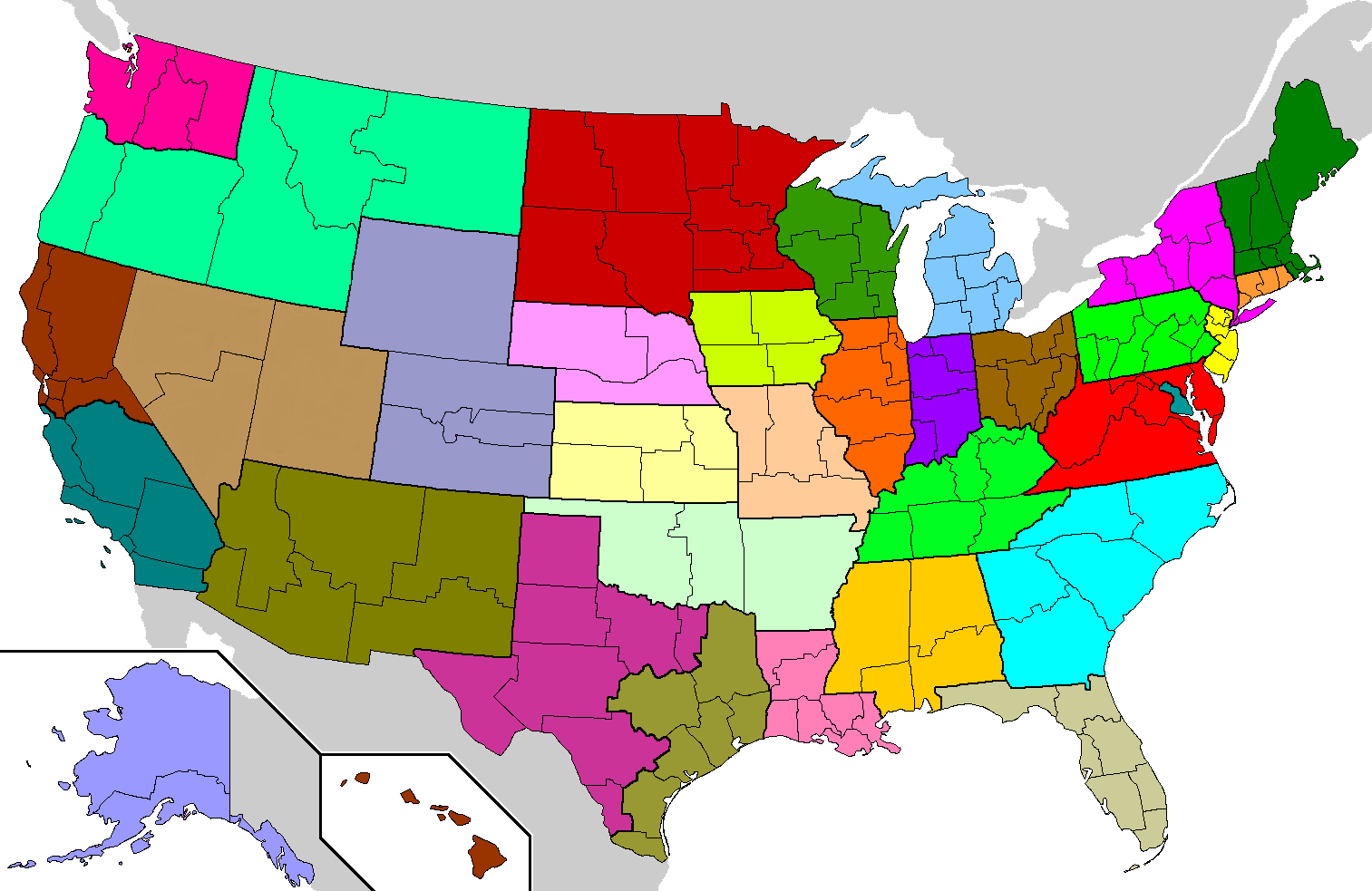
Leadership of the Catholic Church in the United States is provided by the bishops, individually for their own dioceses and collectively through the United States Conference of Catholic Bishops. There are some mid-level groupings of bishops, such as ecclesiastical provinces (often covering a state) and the fourteen geographic regions of the USCCB, but these have little significance for most purposes.
The ordinary office for a bishop is to be the bishop of a particular diocese, its chief pastor and minister, usually geographically defined and incorporating, on average, about 350,000 Catholic Christians. In canon law, the bishop leading a particular diocese, or similar office, is called an "ordinary" (i.e., he has complete jurisdiction in this territory or grouping of Christians).
There are two non-geographic dioceses, called "ordinariates", one for military personnel and one for former Anglicans who are in full communion with the Catholic Church.
Dioceses are grouped together geographically into provinces, usually within a state, part of a state, or multiple states together (see map below). A province comprises several dioceses which look to one ordinary bishop (usually of the most populous or historically influential diocese/city) for guidance and leadership. This lead bishop is their archbishop and his diocese is the archdiocese. The archbishop is called the "metropolitan" bishop who strives to achieve some unanimity of practice with his brother "suffragan" bishops.
Some larger dioceses have additional bishops assisting the diocesan bishop, and these are called "auxiliary" bishops or, if a "coadjutor" bishop, with right of succession.
Additionally, some bishops are called to advise and assist the bishop of Rome, the pope, in a particular way, either as an additional responsibility on top of their diocesan office or sometimes as a full-time position in the Roman Curia or related institution serving the universal church. These are called cardinals, because they are "incardinated" onto a second diocese (Rome). All cardinals under the age of 80 participate in the election of a new pope when the office of the papacy becomes vacant.
There are 428 active and retired Catholic bishops in the United States:
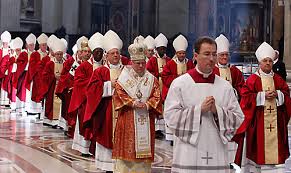
255 active bishops:
- 36 archbishops
- 144 diocesan bishops
- 67 auxiliary bishops
- 8 apostolic or diocesan administrators
173 retired bishops:
- 33 retired archbishops
- 95 retired diocesan bishops
- 45 retired auxiliary bishops
Cardinals
There are 16 U.S. cardinals.
Three archdioceses are currently led by archbishops who have been created cardinals:
- Blase J. Cupich – Chicago
- Robert W. McElroy – Washington, D.C.
- Joseph W. Tobin – Newark
Two cardinals are in service to the pope, in the Roman Curia or related offices:
- Kevin Farrell – Prefect of the Dicastery for Laity, Family and Life
- James Michael Harvey – Archpriest of the Basilica of Saint Paul Outside the Walls
Eleven cardinals are retired:
- Raymond Leo Burke – patron emeritus of the Sovereign Military Order of Malta and Prefect Emeritus of the Apostolic Signatura
- Daniel DiNardo – Archbishop Emeritus of Galveston-Houston
- Timothy M. Dolan – Archbishop Emeritus of New York and current Apostolic Administrator of the Archdiocese of New York
- Wilton Daniel Gregory – Archbishop Emeritus of Washington, D.C.
- Roger Mahony – Archbishop Emeritus of Los Angeles
- Adam Maida – Archbishop Emeritus of Detroit
- Edwin Frederick O'Brien – Grand Master Emeritus of the Equestrian Order of the Knights of the Holy Sepulchre of Jerusalem
- Seán Patrick O'Malley – Archbishop Emeritus of Boston
- Justin Francis Rigali – Archbishop Emeritus of Philadelphia
- James Stafford – Major Penitentiary Emeritus of the Apostolic Penitentiary and Archbishop Emeritus of Denver
- Donald Wuerl – Archbishop Emeritus of Washington, D.C.
Clergy and ministers
In 2018, there were approximately 100,000 clergy and ministers employed by the church in the United States, including:
- 36,580 presbyters (priests)
- 25,254 diocesan
- 11,326 religious/consecrated
- 18,291 ordinary (permanent) deacons
- 39,651 lay ecclesial ministers (2016)
- 23,149 diocesan
- 16,502 religious/consecrated
There are also approximately 30,000 seminarians/students in formation for ministry:
- 3,526 candidates for priesthood
- 2,088 candidates for diaconate
- 16,585 candidates for lay ecclesial ministry
Lay employees
The 630 Catholic hospitals in the U.S. have a combined budget of $101.7 billion, and employ 641,030 full-time equivalent staff.
The 6,525 Catholic primary and secondary schools in the U.S. employ 151,101 full-time equivalent staff, 97.2% of whom are lay and 2.3% are consecrated, and 0.5% are ordained.
The 261 Catholic institutions of higher (tertiary) education in the U.S. employ approximately 250,000 full-time equivalent staff, including faculty, administrators, and support staff.
Overall, the Catholic Church employs more than one million employees with an operating budget of nearly $100 billion to run parishes, diocesan primary and secondary schools, nursing homes, retreat centers, hospitals, and other charitable institutions.
Institutions
Parochial schools
Main article: Catholic schools in the United States, History of Catholic education in the United States
By the middle of the 19th century, the Catholics in larger cities started building their own parochial school system. The main impetus was fear that exposure to Protestant teachers in the public schools, and Protestant fellow students, would lead to a loss of faith. Protestants reacted by strong opposition to any public funding of parochial schools. The Catholics nevertheless built their elementary schools, parish by parish, using very low-paid sisters as teachers.
In the classrooms, the highest priorities were piety, orthodoxy, and strict discipline. Knowledge of the subject matter was a minor concern, and in the late 19th century few of the teachers in parochial (or secular) schools had gone beyond the 8th grade themselves. The sisters came from numerous denominations, and there was no effort to provide joint teachers training programs. The bishops were indifferent. Finally around 1911, led by the Catholic University of America in Washington, Catholic colleges began summer institutes to train the sisters in pedagogical techniques. Long past World War II, the Catholic schools were noted for inferior plants compared to the public schools, and less well-trained teachers. The teachers were selected for religiosity, not teaching skills; the outcome was pious children and a reduced risk of marriage to Protestants. However, by the later half the 20th century Catholic schools began to perform significantly better than their public counterparts. In 2024, the National Catholic Educational Association reported that 99% of the students in 1,174 Catholic secondary schools graduated on time and 85% of them went on to four-year colleges.
Universities and colleges
Main article: List of Catholic universities and colleges in the United States
According to the Association of Catholic Colleges and Universities in 2011, there are approximately 230 Catholic universities and colleges in the United States with nearly 1 million students and some 65,000 professors. In 2016, the number of tertiary schools fell to 227, while the number of students also fell to 798,006. The national university of the church, founded by the nation's bishops in 1887, is The Catholic University of America in Washington, D.C. The first Catholic college/university of higher learning established in the United States is Georgetown University, founded in 1789. The richest U.S. Catholic university is the University of Notre Dame (founded in 1842) with an endowment of over 20 billion in 2022. In the 2025 edition of U.S. News & World Report rankings, 9 of the top 100 national universities and 6 of the top national liberal arts colleges in the US were Catholic.
Seminaries
Main article: List of Catholic seminaries#United States
According to the 2016 Official Catholic Directory, there were 243 seminaries with 4,785 students in the United States; 3,629 diocesan seminarians and 1,456 religious seminarians. By the official 2017 statistics, there are 5,050 seminarians (3,694 diocesan and 1,356 religious) in the United States. In addition, the American Catholic bishops oversee the Pontifical North American College for American seminarians and priests studying at one of the Pontifical Universities in Rome.
Healthcare system
In 2002, Catholic health care system, overseeing 625 hospitals with a combined revenue of 30 billion dollars, was the nation's largest group of nonprofit systems. In 2008, the cost of running these hospitals had risen to $84.6 billion, including the $5.7 billion they donate. According to the Catholic Health Association of the United States, 60 health care systems, on average, admit one in six patients nationwide each year. According to Merger Watch (2018), Catholic facilities make up about 10% of all "sole community providers" in the US (49 out of 514). In some states, the percentage is much greater: in Wisconsin and South Dakota, for example, "Catholic hospitals account for at least 50% of sole community providers."
Catholic Charities
Main article: Catholic Charities USA
Catholic Charities is active as the largest voluntary social service networks in the United States. In 2009, it welcomed in New Jersey the 50,000th refugee to come to the United States from Burma. Likewise, the US Bishops' Migration and Refugee Services has resettled 14,846 refugees from Burma since 2006. In 2010 Catholic Charities USA was one of only four charities among the top 400 charitable organizations to witness an increase in donations in 2009, according to a survey conducted by The Chronicle of Philanthropy.
Demographics
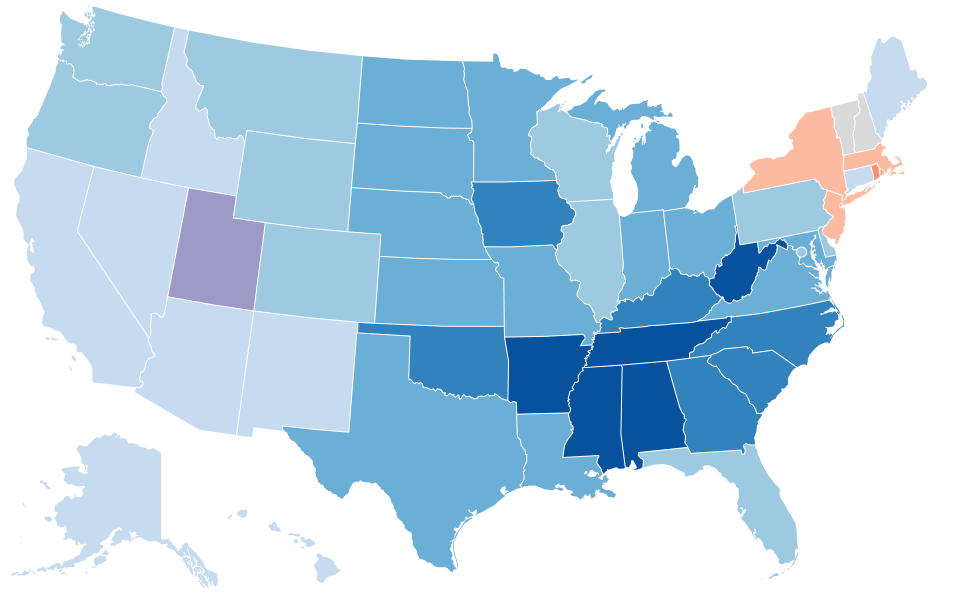
Protestant Catholic Mormon Unaffiliated ]] The number of Catholics grew rapidly in the 19th and 20th centuries through high fertility and immigration, especially from Ireland and Germany, and after 1880, Eastern Europe, Italy, and Quebec. Large scale Catholic immigration from Mexico began after 1910, and in 2019 Latinos comprised 37 percent of American Catholics.
Since 1960, the percentage of Americans who are Catholic has fallen from about 25% to 22%. In a 2021 Pew Research study, "21% of US adults described themselves as Catholic, identical to the Catholic share of the population in 2014." In absolute numbers, Catholics have increased from 45 million to 72 million. , 39% of American Catholics attend church weekly, compared to 45% of American Protestants.
About 10% of the United States' population are former Catholics or non-practicing, almost 30 million people. People have left for a number of reasons, factors which have also affected other denominations: loss of belief, disenchantment, indifference, or disaffiliation for another religious group or for none. Though Catholic adherents are present throughout the country, Catholics are generally more concentrated in the Northeast and urban Midwest. Currently, however, they are also clustered in the southwest. This is because of the continuing growth of the American Hispanic community as a share of the U.S. population is gradually shifting the geographic center of U.S. Catholicism from the Northeast and urban Midwest to the South and the West. Regional distribution of U.S. Catholics (as a percentage of the total U.S. Catholic population) is as follows: Northeast, 24%; Midwest, 19%; South, 32% (a percentage that has increased in recent years due to a growing number of Catholics mainly in Texas, Louisiana, and Florida, with the rest of the Southern states remaining overwhelmingly Protestant); and West, 25%. While the wealthiest and most educated Americans tend to belong to some Protestant American groupings as well as to Jewish and Hindu constituencies as a whole, more Catholics (13.3 million ), owing to their sheer numbers, reside in households with a yearly income of $100,000-or-more than any other individual religious group, and more Catholics hold college degrees (over 19 million) than do members of any other faith community in the United States when divided according to their respective denominations or religious designations.
There were 70,412,000 registered Catholics in the United States (22% of the US population) in 2017, according to the American bishops' count in their Official Catholic Directory 2016. This count primarily rests on the parish assessment tax which priests evaluate yearly according to the number of registered members and contributors. In July 2021, the Public Religion Research Institute issued its own report based on a new census of 500,000 people. It also noted that 22% of 330 million Americans identified as Catholic: 12%, white; 8%, Latino; and 2%, other (Black, Asian, etc.). Estimates of the overall American Catholic population from recent years generally range around 20% to 28%. According to Albert J. Menedez, research director of "Americans for Religious Liberty", many Americans continue to call themselves Catholic but "do not register at local parishes for a variety of reasons." According to a survey of 35,556 American residents (released in 2008 by the Pew Forum on Religion and Public Life), 23.9% of Americans identify themselves as Catholic (approximately 72 million of a national population of 306 million residents). The study notes that 10% of those people who identify themselves as Protestant in the interview are former Catholics and 8% of those who identity themselves as Catholic are former Protestants. In recent years, more parishes have opened than closed.
The northeastern quadrant of the US (i.e., New England, Mid-Atlantic, East North Central, and West North Central) has seen a decline in the number of parishes since 1970, but parish numbers are up in the other five regions (i.e., South Atlantic, East South Central, West South Central, Pacific, and Mountain regions) and are growing steadily. Catholics in the US are about 6% of the church's total worldwide 1.3 billion membership.
A poll by The Barna Group in 2004 found Catholic ethnicity to be 60% non-Hispanic white (includes Americans with historically Catholic ethnicities such as Irish, Italian, German, Polish, or French), 31% Hispanic of any nationality (mostly Mexicans but also many Cubans, Puerto Ricans, Dominicans, Salvadorans, Colombians, Guatemalans and Hondurans among others), 4% Black (including Africans, Haitians, black Latino and Caribbean), and 5% other ethnicity (mostly Filipinos, Vietnamese and other Asian Americans, Americans who are multiracial and have mixed ethnicities, and American Indians). Among the non-Hispanic whites, about 16 million Catholics identify as being of Irish descent, about 13 million as German, about 12 million as Italian, about 7 million as Polish, and about 5 million as French (note that many identify with more than one ethnicity). The roughly 7.8 million Catholics who are converts (mainly from Protestantism, with a smaller number from irreligion or other religions) are also mostly non-Hispanic white, including many people of British, Dutch, and Scandinavian ancestry.
Between 1990 and 2008, there were 11 million additional Catholics. The growth in the Latino population accounted for 9 million of these. They accounted for 32% of all American Catholics in 2008 as opposed to 20% in 1990. The percentage of Hispanics who identified as Catholic dropped from 67% in 2010 to 55% in 2013.
According to a more recent Pew Forum report which examined American religiosity in 2014 and compared it to 2007, there were 50.9 million adult Catholics (excluding children under 18), forming about 20.8% of the U.S. population, down from 54.3 million and 23.9% in 2007. Pew also found that the Catholic population is aging, forming a higher percentage of the elderly population than the young, and retention rates are also worse among the young. About 41% of those "young" raised Catholic have left the faith (as opposed to 32% overall), about half of these to the unaffiliated population and the rest to evangelical, other Protestant faith communities, and non-Christian faith. Conversions to Catholicism are rare, with 89% of current Catholics being raised in the religion; 8% of current Catholics are ex-Protestants, 2% were raised unaffiliated, and 1% in other religions (Orthodox Christian, Mormon or other nontrinitarian, Buddhist, Muslim, etc.), with Jews and Hindus least likely to become Catholic of all the religious groups surveyed. Overall, Catholicism has by far the worst net conversion balance of any major religious group, with a high conversion rate out of the faith and a low rate into it; by contrast, most other religions have in- and out-conversion rates that roughly balance, whether high or low. According to the 2015 Pew Research Center, "the Catholic share of the population has been relatively stable over the long term, according to a variety of other surveys. By race, 59% of Catholics are non-Hispanic white, 34% Hispanic, 3% black, 3% Asian, and 2% mixed or Native American. Conversely, 19% of non-Hispanic whites were Catholic in 2014 (down from 22% in 2007), whereas 55% of Hispanics were (versus 58% in 2007). In 2015, Hispanics were 38%, while blacks and Asians were at 3% each. Because conversion away from Catholicism as well as dropping out of religion completely is presently occurring much more quickly among Hispanics than among Euro-American whites, Black (2.9% of US Catholic population) and Asian-American Catholics, it is doubtful they will outnumber the latter three categories of Catholics in the foreseeable future. Pew Research Center predicts that by 2050 (when the Hispanic population will be 128 million), only 40% of "third generation Latinos" will be Catholic, with 22% becoming Protestant, 24% becoming unaffiliated, and the remainder, other. This corresponds to a sharp decline in the Catholic percentage among self-identified Democrats, who are more likely to be nonwhite than Republicans. In one study, three authors found that around 10% of US Catholics are "Secularists", "meaning that their religious identification is purely nominal."
By state (2017)

| State | % Catholic | Largest Christian denomination |
|---|---|---|
| Massachusetts | 34 | Catholic Church |
| Rhode Island | 42 | |
| New Jersey | 34 | |
| California | 28 | |
| New York | 31 | |
| New Hampshire | 26 | |
| Connecticut | 33 | |
| Texas | 23 | |
| Arizona | 21 | |
| Illinois | 28 | |
| Louisiana | 26 | |
| North Dakota | 26 | Evangelical Lutheran Church in America |
| Wisconsin | 25 | Catholic Church |
| Pennsylvania | 24 | |
| Nebraska | 23 | |
| Florida | 21 | |
| New Mexico | 34 | |
| Vermont | 22 | |
| Maine | 21 | |
| Minnesota | 22 | |
| South Dakota | 22 | Evangelical Lutheran Church in America |
| Colorado | 16 | Catholic Church |
| Hawaii | 20 | |
| Montana | 17 | |
| Nevada | 25 | |
| Ohio | 18 | |
| Iowa | 18 | |
| Maryland | 15 | |
| Michigan | 18 | |
| Washington | 17 | |
| Indiana | 18 | |
| Kansas | 18 | |
| Missouri | 16 | |
| Wyoming | 14 | |
| Idaho | 10 | The Church of Jesus Christ of Latter-day Saints |
| Oregon | 12 | Catholic Church |
| Kentucky | 10 | Southern Baptist Convention |
| Virginia | 12 | |
| Georgia | 9 | |
| Oklahoma | 8 | |
| Delaware | 22 | United Methodist Church |
| North Carolina | 9 | Southern Baptist Convention |
| Alaska | 16 | |
| Arkansas | 8 | |
| South Carolina | 10 | |
| Tennessee | 6 | |
| Utah | 5 | The Church of Jesus Christ of Latter-day Saints |
| West Virginia | 6 | Southern Baptist Convention |
| Mississippi | 4 | |
| Alabama | 7 |
Cultural, social, and political views
Main article: Catholic Church and politics in the United States, Catholic social activism in the United States
Politics
Catholicism has had a significant political impact on the United States, and the religion has historically been associated with left-wing politics and the Democratic Party. Since the 1970s, Catholics are often being regarded as swing voters.
The 1840s saw Catholics began to identify with the Democrats against the conservative and evangelical-influenced Whigs. In the 1890s, Catholics favored the Democratic Party over the Republicans. This continued into the 20th century, where Catholics formed a core part of the New Deal Coalition.
Al Smith governor of New York was the first Catholic nominated for president by a major party as the Democratic nominee in the 1928 election.
Two Catholics have been President of the United States: Democratic presidents John F. Kennedy (1961–1963) and Joe Biden (2021–2025), In 2016, Pope Francis said of Donald Trump: "A person who thinks only about building walls, wherever they may be, and not building bridges, is not Christian." According to the Pew Research Center, Catholics are the most likely of any major Christian group in the United States to support the morality of casual sex. Surveys have repeatedly indicated that laity are more culturally liberal than the median voter, including on abortion rights and same-sex marriage. However, the Catholic Church officially opposes both. Church leadership tends to lean more orthodox. There are also some fundamentalist-like activist conservative groups.
In 2023, Pope Francis criticized the Catholic Church in the United States as reactionary, saying that ideology had replaced faith in some parts of it. In November 2023, the Pope removed a conservative Texas bishop, Joseph E. Strickland of Tyler, Texas.
Notable American Catholics
Clergy
- Robert Barron – Bishop of Winona–Rochester
- Pope Leo XIV (b. Robert Francis Prevost) – 267th & current pope
- Timothy Dolan – Archbishop of New York
Entertainment
- Jim Caviezel
- Stephen Colbert – Television host
- Jimmy Fallon – Television host
- Lady Gaga – Singer
- Mel Gibson – Actor
- Madonna – Singer, songwriter, dancer, actress
- Grace Kelly – Actress & Princess of Monaco
- Jimmy Kimmel – Television host
- Conan O'Brien – Television host
- Frank Sinatra – Singer, actor
- Arnold Schwarzenegger – Actor
- Martin Sheen – Actor, activist
- Mark Wahlberg – Actor
- John Wayne – Actor
- Jane Wyman
Politics
- Samuel Alito – Associate Justice of the Supreme Court
- Amy Coney Barrett – Associate Justice of the Supreme Court
- Joe Biden – 46th President of the United States
- Charles Carroll of Carrollton – Founding Father of the U.S.
- Daniel Carroll – Founding Father of the U.S.
- Alexander Haig – 59th Secretary of State
- Brett Kavanaugh – Associate Justice of the Supreme Court
- Jacqueline Kennedy Onassis – First Lady of the United States
- John F. Kennedy – 35th President of the United States
- Ted Kennedy – U.S. Senator, brother of President Kennedy and Robert "Bobby" Kennedy
- Robert F. Kennedy – U.S. Attorney General, presidential candidate – 1968
- Edmund Muskie – 58th Secretary of State
- Nancy Pelosi – 52nd Speaker of the House of Representatives
- John Roberts – 17th Chief Justice of the United States
- Marco Rubio - 72nd Secretary of State
- Sonia Sotomayor – Associate Justice of the Supreme Court
- Clarence Thomas – Associate Justice of the Supreme Court
- Roger B. Taney – 5th Chief Justice of the United States
- Melania Trump – First Lady of the United States
- JD Vance – Vice President of the United States
- Edward Douglass White – 9th Chief Justice of the United States
Other
- Kobe Bryant – Professional basketball player
- John Carroll – Archbishop of Baltimore
- Toni Morrison – Novelist
Servants of God and those declared venerable, beatified, and canonized saints
The following are some notable Americans declared as Servants of God, venerables, beatified, and canonized saints:
Servants of God
- Thea Bowman
- Michelle Duppong
- Simon Bruté
- Vincent R. Capodanno
- Walter Ciszek
- Terence Cooke
- Dorothy Day
- Black Elk
- Demetrius Gallitzin
- Julia Greeley
- John Hardon
- Isaac Hecker
- Eusebio Francisco Kino
- Mary Elizabeth Lange
- Rose Hawthorne Lathrop
- Joseph Muzquiz
- Frank Parater
- Félix Varela
- Paul Wattson
- Annella Zervas
Venerables
- Nelson Baker
- Frederic Baraga
- Cornelia Connelly
- Henriette DeLille
- Emil Kapaun
- Samuel Charles Mazzuchelli
- Patrick Peyton
- Aloysius Schwartz
- Fulton J. Sheen
- Augustus Tolton
- Pierre Toussaint
Beatified
- Solanus Casey
- Teresa Demjanovich
- Michael J. McGivney
- James Alfred Miller
- Carlos Manuel Rodriguez
- Stanley Rother
- Francis Xavier Seelos
Saints
- Frances Xavier Cabrini
- Marianne Cope
- Jean de Lalande
- Damien De Veuster
- Katharine Drexel
- Rose Philippine Duchesne
- René Goupil
- Mother Théodore Guérin
- Isaac Jogues
- John Neumann
- Junípero Serra
- Elizabeth Ann Seton
- Kateri Tekakwitha
Top pilgrimage destinations in the United States
- National Shrine of The Divine Mercy (Stockbridge, Massachusetts)
- National Shrine of Our Lady of Czestochowa (Doylestown, Pennsylvania)
- National Shrine Grotto of Our Lady of Lourdes (Emmitsburg, Maryland)
- Shrine of Our Lady of Guadalupe (La Crosse, Wisconsin)
- National Shrine of St. Francis of Assisi (San Francisco, California)
- Saint Anthony's Chapel (Pittsburgh), Pennsylvania
- National Blue Army Shrine of the Immaculate Heart of Mary (Washington Township, Warren County, New Jersey)
- National Shrine of the North American Martyrs (Auriesville, New York)
- Basilica of the National Shrine of the Assumption of the Blessed Virgin Mary (Baltimore, Maryland)
- El Santuario de Chimayo (Chimayo, New Mexico; north of Santa Fe)
- Basilica of the National Shrine of St. Elizabeth Ann Seton (Emmitsburg, Maryland)
- Shrine of the Most Blessed Sacrament of Our Lady of the Angels (Hanceville, Alabama)
- Basilica of Our Lady of Victory (Lackawanna, New York)
- National Shrine of Saint John Neumann (in St. Peter the Apostle Church, Philadelphia, Pennsylvania)
- Basilica of the National Shrine of the Immaculate Conception (Washington, D.C.)
- National Shrine of Our Lady of Champion (Champion, Wisconsin)
- Blessed Stanley Rother Shrine (Oklahoma City, Oklahoma)
References
References
- "CENTER FOR APPLIED RESEARCH IN THE APOSTOLATE (CARA), Georgetown University > Frequently Requested Church Statistics > Parishes".
- (March 28, 2022). "Black Catholics seek worship spaces free of racism".
- (February 26, 2025). "2023-24 U.S. Religious Landscape Study Interactive Database".
- PRRI (Public Religion Research Institute). The PRRI report of May 5, 2025 provides a more nuanced picture of the make up and demographics of the Catholic Church in the US: 12%, white Catholics; 8%, Hispanic; and 2%, other Catholics of color. press@prri.org
- "The World Factbook — Central Intelligence Agency".
- "Catholic Data, Catholic Statistics, Catholic Research".
- (2012). "The End of Race? Obama, 2008, and Racial Politics in America". [[Yale University Press]].
- (April 24, 2017). "The Colonial Beginnings of North American Catholicism". America Magazine.
- [http://www.newadvent.org/cathen/10534b.htm Schroeder, Henry Joseph. "Antonio Montesino." The Catholic Encyclopedia. Vol. 10. New York: Robert Appleton Company, 1911. 26 Jun. 2014]
- Franzen, 362
- Richard Midddleton, ''Colonial America'', 94–103
- (July 7, 2016). "Roman Catholics, Not Papists: Catholic Identity in Maryland, 1689–1776". Beatrix Betancourt Hardy.
- "The United States' Catholic Beginnings in Colonial Maryland". NAPA Institute.
- "New England's God: Anti-Catholicism and Colonial New England". John Carroll University.
- Alan Taylor, ''American Colonies'' (New York: Viking, 2001), 137. {{ISBN. 0-670-87282-2
- (1994). ""Good Will to All Men... from the King on the throne to the beggar on the dunghill": William Penn, the Roman Catholics and Religious Toleration". Paul Douglas Newman.
- "Welfare and Conversion: The Catholic Church in African-American Communities in the U.S. South, 1884–1939". William Francis Collopy.
- (1938). "The Protestant Crusade: 1800–1860; a study of the origins of American nativism". [[The Macmillan Company]].
- (2002). "Colonial America 1565–1776". [[Blackwell Publishing]].
- (2001). "[[American Colonies]]". [[Viking Press.
- (1997). "The Writers' Guide to Everyday Life in Colonial America, 1607–1783". [[Writer's Digest Books]].
- (1992). "A History of Christianity in the United States and Canada". [[Society for Promoting Christian Knowledge]].
- (1996). "The Encyclopedia of Colonial and Revolutionary America". [[Da Capo Press]].
- (July 2016). "Conciliarism and the American Founding". William and Mary Quarterly.
- (1909). "Catholics and the American Revolution".
- (1997). "Christianity: A Social and Cultural History". [[Prentice Hall]].
- (2011). "The American Catholic Experience: A History from Colonial Times to the Present". Crown Publishing.
- (October 1960). "George Washington and Religious Liberty". Omohundro Institute of Early American History and Culture.
- (1910). "History of the Catholic Church in the Nineteenth Century (1789–1908)". M.H. Gill.
- (January 2011). "John Carroll and the Origins of an American Catholic Church, 1783–1815". Omohundro Institute of Early American History and Culture.
- "Louisiana Purchase {{!}} History, Facts, & Map".
- (July 7, 2016). "The Story Behind 54 American Cities Named After Catholic Saints". Epic Pew.
- "The Sociolinguistic Situation of Creoles in South Louisiana: Identity, Characteristics, Attitudes". Louisiana State University.
- (January 29, 2010). "The Catholic soul of Cajun Country". Catholic Digest.
- Gannon, "''The Cross in the Sand: The Early Catholic Church in Florida, 1513–1870''", University of Florida Press, 1983
- "Table 1.1 Acquisition of the Public Domain 1781–1867".
- "Spanish Place Names in the USA: from Colonial to Mainstream". Pascale Smorag.
- (2012). "Religion, the Spanish-American War, and the Idea of American Mission". Journal of Church and State.
- (1981). "The Twilight of Ethnicity Among American Catholics of European Ancestry". [[Annals of the American Academy of Political and Social Science]].
- John T. McGreevy, ''Catholicism and American Freedom: A History'' (2003) pp 12–28, 129.
- Peter McDonough, ''Men astutely trained: A history of the Jesuits in the American Century'' (2008).
- James Hennessy, S.J., ''American Catholics: A history of the Roman Catholic community in the United States'' (1981) pp 194–203
- (January 1959). "The Catholic Minority after the Americanist Controversy, 1899–1917: A Survey". [[Cambridge University Press]].
- (1983). "Hecker Studies: Essays on the Thought of Isaac Hecker". [[Paulist Press]].
- James M. O'Toole, ''The Faithful: A History of Catholics in America'' (2008) p 104
- Margaret M. McGuinness, ''Called to Serve'' (2013), ch 8
- Goodstein, Laurie. (April 16, 2015). "Vatican ends battle with U.S. Catholic nuns' group".
- John Tracy Ellis, ''The Life of James Cardinal Gibbons'', Volume I, (Milwaukee: The Bruce Publishing Company, 1952) p. 221.
- Tyler Anbinder, "Nativism and prejudice against immigrants" in Reed Ueda, ed., ''A companion to American immigration'' (2006) pp: 177–201.
- Gerard McKevitt, ''Brokers of Culture: Italian Jesuits in the American West, 1846–1919'' (Stanford: Stanford University Press, 2007), 1–11, 208–233.
- (April 2016). "Greeley, Andrew Moran".
- Peterson, Tom. (2013). "Catholics come home". Image.
- David Gibson, "Declaration of interdependence," ''The Tablet'' July 4, 2009, 8–9.
- "Attendance at Religious Service" in Religious Landscape Study, Pew Research, May 12, 2015.
- Austin Ivereigh, "God Makes a Comeback: An Interview with John Micklethwait, ''America'', October 5, 2009, 13–14.
- Inc, Gallup. (2022-04-08). "The Religion of the Supreme Court Justices".
- (February 23, 2011). "Why won't my kids go to church". Archdiocese of Milwaukee Catholic Herald.
- The Catholic Church in the US "represents perhaps the most multi-ethnic organization of any kind, and so is a major laboratory for cross-cultural cooperation and cross-cultural communication completely within the nation's borders."Mark A. Noll. THE NEW SHAPE OF WORLD CHRISTIANITY (Downers Grove, IL.: IVP Academic, 2009), 74
- Arthur Meyers, "Social Justice Warrior," Commonweal, July 6, 2018.
- (February 8, 2016). "American Sin: Why Pope Francis' Mercy is Not Our Mercy".
- "The Precepts of the Church". [[Catechism of the Catholic Church]].
- (December 11, 2019). "EWTN/RealClear Poll: U.S. Catholics Open to Reelecting Trump". [[Real Clear Politics]].
- (December 29, 2021). "Does Catholicism have a Future in Chicago? Traditionalism and Cardinal Cupich".
- (July 27, 2022). "Nun shortage is reaching crisis with fewer sisters in the US".
- Bunsen, 2019
- "World's Largest Cathedrals – Socrata".
- Zarcone, Patrick. (July 26, 2017). "Raleigh's Holy Name of Jesus Cathedral holds first mass".
- "Frequently Requested Church Statistics". Center for Applied Research in the Apostolate.
- ''Yearbook of American and Canadian Churches 2010''(Nashville: Abington Press, 2010), 12.
- On July 14, 2010, Pope Benedict XVI erected the [[Syro-Malankara Catholic Exarchate in the United States]].
- Cheney, David M.. "Catholic Church in Puerto Rico".
- Richard McBrien, THE CHURCH/THE EVOLUTION OF CATHOLICISM (New York: HarperCollins Publishers, 2009), 450. Also see: BASIC VATICAN COUNCIL II: THE BASIC SIXTEEN DOCUMENTS (Costello Publishing, 1996).
- "The Eastern Catholic Churches 2009". [[Catholic Near East Welfare Association]].
- McBrien, 241,281, 365,450
- Harlan, Chico. "These Americans are devoted to the old Latin Mass. They are also at odds with Pope Francis". [[Washington Post]].
- Wooden, Cindy. (July 20, 2021). "Traditional Latin Mass 'movement' sows division, archbishop says".
- Rocca, Francis. (September 9, 2021). "The Power of the Latin Mass: A new decree from Pope Francis discourages the use of an ancient liturgy that carries special meaning for some worshippers".
- (November 5, 2014). "Pope: Bishops must be servants, not vain careerists after power, honor {{!}} The Compass". The Compass.
- "Bishops and Dioceses".
- This number is conservative, as it only counts those in parish ministry, but there are many in deanery, diocesan, or chaplaincy work
- "Untitled Page".
- "Catholic School Data". [[National Catholic Educational Association]].
- "FAQs – Association of Catholic Colleges and Universities".
- Thomas Healy, "A Blueprint for Change," ''America'' September 26, 2005, 14.
- Thomas E. Buckley, "A Mandate for Anti-Catholicism: The Blaine Amendment," ''America'' September 27, 2004, 18–21.
- Jay P. Dolan, ''The American Catholic Experience'' (1985) pp 262–74
- Jay P. Dolan, ''The American Catholic Experience'' (1985) pp 286–91
- Baynham, Erin. (June 19, 2014). "Is the "Catholic School Effect" Real? New Research Challenges the Catholic Primary School Advantage".
- William McGurn, "Catholic Schools and Jewish Rye," ''Wall Street Journal'', Jan., 28, 2025, A 17.
- Jerry Filteau, "Higher education leaders commit to strengthening Catholic identity," NATIONAL CATHOLIC REPORTER, Vol 47, No. 9, February 18, 2011, 1
- "Diocese of Reno, 2016–2017 Directory".
- "Georgetown University: History".
- Christine Williamson, "Notre Dame's endowment skyrockets," ''Crain's Chicago Business'', Jan, 26, 2022
- "2025 Best National University Rankings" ''U.S. News & World Report'', September 2025.
- Arthur Jones, "Catholic health care aims to make 'Catholic' a brand name," ''National Catholic Reporter'' July 18, 2003, 8.
- Walsh, Sister Mary Ann. (September 10, 2009). "Catholic health care for a broken arm; a cast and new shoes". The Florida Catholic.
- Alice Popovici, "Keeping Catholic priorities on the table," ''[[National Catholic Reporter]]'' June 26, 2009, 7.
- Katie Hafner, "When the Religious Objection Comes From Your Local Hospital," ''The New York Times'', August 16, 2018, p. 14.
- "50,000th refugee settled," ''[[National Catholic Reporter]]'' July 24, 2009, 3.
- Michael Sean Winters, "Catholic giving bucks national trend," The Tablet, October 23, 2010, 32.
- Michael V. Gannon, "Before and after Modernism: The Intellectual Isolation of the American Priest," in ''The Catholic Priest In The United States: Historical Investigations'', edited by John Tracy Ellis (Collegeville: St. John's University Press, 1971) 300. Gannon notes: "The German states provided the second largest immigration of Catholics [after the Irish], clergy and lay, some 606,791 in the period 1815–1865, and another 680,000 between 1865 and 1900, while the Irish immigration in the latter period amounted to only 520,000."
- (December 15, 2010). "Is the Bottom Really Falling Out of Catholic Mass Attendance? A Recent CARA Survey Ponders the Question – Community in Mission".
- "About Three-In-Ten U.S. Adults Are Now Religiously Unaffiliated, Pew Research Center, December 14, 2021, 3.
- Saaf, Lydia. (April 9, 2018). "Catholics' Church Attendance Resumes Downward Slide". [[Gallup (company).
- David Gibson, "Five Myths about Catholic sexual abuse scandal", ''Washington Post'', April 18, 2010.
- "7 facts about American Catholics".
- "Where They Were And Where They Went," Commonweal, Volume 147, Number 4, April 2020, 43.
- (October 11, 2016). "How income varies among U.S. religious groups". [[Pew Research Center]].
- (October 16, 2016). "The most and least educated U.S. religious group". [[Pew Research Center]].
- Mark Pattison, "New census of 500,000 people reveals shifts in U.S. religious landscape," ''National Catholic Reporter'', July 13, 2021.
- Albert J. Mendedez, "American Catholics, A Social and Political Portrait," THE HUMANIST, September/October 1993, 17–20.
- Michael Paulson, "US religious identity is rapidly changing," ''[[Boston Globe]]'', February 26, 2008, 1
- Ted Olsen, "Go Figure," ''[[Christianity Today]]'', April 2008, 15
- Dennis Sadowski, "When parishes close, there is more to deal with than just logistics," ''[[National Catholic Reporter]]'' July 7, 2009, 6.
- Robert David Sullivan, "Parishes without pastors decline, but only because more churches have closed," ''AMERICA'', May 24, 2019, p.14
- "Catholics".
- Pew Report, March 17, 2012. 2.6% of all Americans (320 million) are former Protestants, currently Catholic. 7.8 million.
- Zapor, Patricia. (April 8, 2010). "Study finds Latinos who leave their churches are choosing no faith". the Florida Catholic.
- (May 7, 2014). "The Shifting Religious Identity of Latinos in the United States".
- (May 12, 2015). "America's Changing Religious Landscape". Pew Research.
- "Statistics on Religion in America Report," Pew Forum on Religion and Public Life, 3/17/12
- "America's Changing Religious Landscape," Pew Research Center, May 12, 2015.
- (September 23, 2015). "Immigration boosting US Catholic numbers". [[The Manila Times]].
- "Religion in Latin American [and among the US Hispanic population]" Pew Research Center, Nov. 13, 2014.
- "'Act Justly, love goodness': Black Catholics in America," AMERICAMAGAZINE.ORG
- pewresearch.org>hispanic>2008/02/11> us-population-projection
- Elizabeth Diaz, "The Rise of Evangelicos," TIME, July 4, 2013. 24.
- (2015-11-03). "U.S. Public Becoming Less Religious | Pew Research Center".
- Kenneth Woodward, "Beyond the Gummed Labels," ''Commonweal'', June 2021, 49–50. Woodward reviews the book, ''Secular Surge'', by David E, Campell, Geoffey C. Layman, and John C. Green (Cambridge: Cambridge University Press, 2021)
- "Religious Landscape Study".
- Richard Carwardine, ''Evangelicals and Politics in Antebellum America'' (1993) pp. 89, 106–7.
- Sullivan, Robert David. (October 20, 2020). "Explainer: A brief history of the Catholic Vote in the United States". [[Society of Jesus]].
- Yardley, Jim. (February 18, 2016). "Pope Francis Suggests Donald Trump Is 'Not Christian'". The New York Times.
- Diamant, Jeff. (August 31, 2020). "Half of U.S. Christians say casual sex between consenting adults is sometimes or always acceptable".
- (March 5, 2013). "U.S. Catholics in Poll See a Church Out of Touch". [[The New York Times]].
- (June 3, 2022). "AP-NORC poll details rift between lay Catholics and bishops".
- "Catechism of the Catholic Church on the Fifth Commandment". [[Holy See Press Office]].
- Arnett, George. (September 22, 2015). "How big is the impact of Catholicism on public life in the US?". The Guardian.
- (1991). ["Fundamentalisms Observed"]({{Google books). University of Chicago Press.
- "Pope Francis calls US Catholic Church 'reactionary' – DW – 08/28/2023".
- "Pope says there is a 'strong reactionary' element in U.S. Catholic Church {{!}} USCCB".
- (2023-08-28). "Pope Francis blasts "backwards" U.S. conservatives, "reactionary attitude" in U.S. church - CBS News".
- (2023-11-12). "Pope Francis removes a leading US conservative critic as bishop of Tyler, Texas".
- Cote, David. (June 9, 2005). "Joyce Words".
- (May 23, 2011). "Late Night 'Thank You Notes' From Jimmy Fallon".
- "Jimmy Fallon". Beliefnet.
- (November 22, 2014). "Bill Murray and Jimmy Fallon Miss the Old Latin Mass".
- (May 10, 2016). "Lady Gaga Thanks Priest for "Beautiful Homily" About the Eucharist on Facebook". ChurchPOP.
- (May 11, 2016). "Lady Gaga's Mass pics and posts on faith stir Catholic reaction". [[Crux (online newspaper).
- (September 18, 2017). "Lady Gaga Posts Photo of Herself Praying Rosary with Explanation for Tour Cancelation". ChurchPOP.
- Ward, Pete. (2019). "Celebrity Worship". [[Routledge]].
- (December 7, 2017). "Jimmy Kimmel Defends His Catholic Faith Against Attack from Roy Moore". ChurchPOP.
- (January 21, 2019). "The Last Word: Conan O'Brien on Catholicism, 'The Simpsons' and Life As Late Night's Elder Statesman".
- (September 8, 2003). "Maria Shriver Ends Her Silence On Husband's Campaign". NBC.
- Johnson, Reed. (August 25, 2010). "'Chamaco' a one-two punch of boxing, bilingualism". [[Los Angeles Times]].
- Zaimov, Stoyan. (January 18, 2012). "Mark Wahlberg talks central role of faith and prayer in his daily life". [[Christian Today]] Australia.
- "The religion of John Wayne, actor". Adherents.com.
- Kerr, David. (October 4, 2011). "My granddaddy John Wayne". California Catholic Daily.
- (April 22, 2014). "Everyone called him 'Duke': John Wayne's conversion to Catholicism".
- Escobar, Allyson. (September 21, 2020). "Why do Catholics make up a majority of the Supreme Court?".
- [https://archive.org/stream/americancatholic24philuoft#page/n189/mode/2up ''"Charles Carroll, of Carrollton,"''] The American Catholic Quarterly Review, Vol. XXIV, 1899.
- (July 9, 2018). "Five things to know about Supreme Court nominee Brett Kavanaugh". USA Today.
- Todd S. Purdum, Jodi Wilgoren, and Pam Belluck, "Court Nominee's Life Is Rooted in Faith and Respect for Law," ''New York Times'', July 21, 2005.
- Oppenheimer, Mark. (November 26, 2010). "Marco Rubio: Catholic or Protestant?". [[The New York Times]].
- Escobar, Allyson. (July 18, 2018). "Why do Catholics make up a majority of the Supreme Court?". America Press ([[Society of Jesus]]).
- (March 20, 2017). "Catholics and the Supreme Court". National Catholic Register.
- Sieczkowski, Cavan. (May 25, 2017). "Melania Trump Will Be The First Catholic To Live At The White House Since JFK". [[HuffPost]].
- (May 26, 2017). "US First Lady Melania Trump Is Catholic, Spokeswoman Confirms".
- Emma Brockes, "Interview: I want to feel what I feel. Even if it's not happiness," ''THE GUARDIAN'', April 13, 2012.
- Jon Sweeney, "The saint who danced for Queen Victoria," ''The Tablet'', 23, January 2021, 10–11.
- "Prayer Intentions – Father Paul of Graymoor Guild".
- Facebook.com/HCFM.org/
- "Beatification of Father Michael McGivney | Knights of Columbus".
- (February 15, 2012). "10 Top Catholic Shrines in the U.S.".
This article was imported from Wikipedia and is available under the Creative Commons Attribution-ShareAlike 4.0 License. Content has been adapted to SurfDoc format. Original contributors can be found on the article history page.
Ask Mako anything about Catholic Church in the United States — get instant answers, deeper analysis, and related topics.
Research with MakoFree with your Surf account
Create a free account to save articles, ask Mako questions, and organize your research.
Sign up freeThis content may have been generated or modified by AI. CloudSurf Software LLC is not responsible for the accuracy, completeness, or reliability of AI-generated content. Always verify important information from primary sources.
Report