From Surf Wiki (app.surf) — the open knowledge base
Catherine I, Latin Empress
Titular Latin Empress from 1283 to 1307
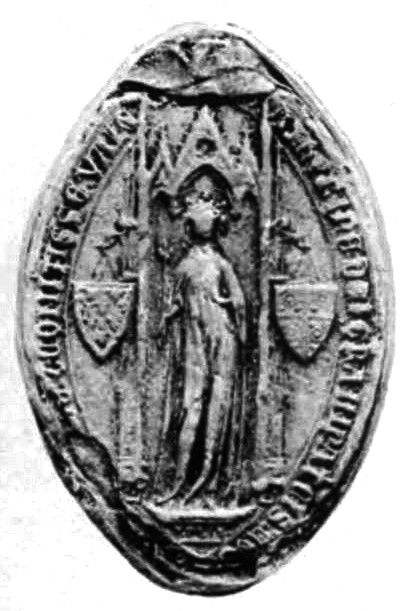
Titular Latin Empress from 1283 to 1307
| Field | Value | |
|---|---|---|
| name | Catherine I | |
| title | Marchioness of Namur | |
| Lady of Courtenay, Mortargis and Balcon | ||
| Empress and Autocratess of the Romans | ||
| image | Tombeau Catherine de Courtenay.jpg | |
| succession | Latin Empress of Constantinople | |
| reign | 15 December 1283 – 11 October 1307 | |
| regent1 | Charles (1301–1307) | |
| reg-type1 | Co-ruler | |
| spouse | Charles, Count of Valois | |
| issue | {{plainlist | |
| house | Courtenay | |
| father | Philip I, Latin Emperor | |
| mother | Beatrice of Sicily | |
| birth_date | 25 November 1274 | |
| death_date | 11 October 1307 (aged 32) | |
| death_place | Paris, France | |
| place of burial | Maubuisson Abbey, Paris | |
| predecessor | Philip I | |
| successor | Catherine II |
Lady of Courtenay, Mortargis and Balcon Empress and Autocratess of the Romans | reg-type1 = Co-ruler
- John, Count of Chartres
- Catherine II, Latin Empress
- Joanna, Countess of Beaumont
- Isabella of Valois}}
Catherine I, also Catherine of Courtenay (25 November 1274 – 11 October 1307), was the recognized Latin Empress of Constantinople from 1283 to 1307, although she lived in exile and only held authority over Crusader States in Greece. In 1301, she became the second wife of Charles of Valois, by whom she had one son and three daughters; the eldest of these, Catherine II, succeeded her as titular empress.
Life
She was born on 25 November 1274, the only daughter and heir of the titular Emperor of Constantinople, Philip of Courtenay, by Beatrice of Sicily.
Upon her father's death on 15 December 1283, Catherine inherited his claims to the Latin throne of Constantinople and was recognized as empress by the Latin states in Greece, despite the city having been re-taken by the Empire of Nicaea in 1261.
Catherine was betrothed three times before her marriage:
—Firstly, in 1288, with Michael IX Palaiologos, co-Byzantine Emperor; this union was proposed by the intended groom's father Emperor Andronikos II Palaiologos in the hope of reducing the threat of restoring the power of the Latins in the Byzantine Empire and reconciling with both the Holy See and the European monarchs, who frightened Constantinople with a new Crusade; however, after several years of fruitless negotiations and the decisive objection from the French king, the purposed union was abandoned by 1295, when Michael IX was already married.
—Secondly, in June 1295, with Infante Frederick of Aragon, son of King Peter III. As a condition of this betrothal, the intended groom promised to renounce his rights to the Kingdom of Sicily and give help to reconquer the Latin Empire of Constantinople, but this proposal was opposed by the French king and the betrothal was terminated.
—Thirdly, on 24 January 1299 to Infante James of Majorca, son of King James II. Since the couple were too closely related, the condition for the marriage was dispensation from Pope Boniface VIII, which was never granted. Instead, James decided to remove himself from the line of succession of the Kingdom of Majorca and take the habit.
Finally, on 28 February 1301 at the Priory of St. Cloud near Paris, Catherine became in the second wife of Count Charles of Valois, son of King Philip III of France. On 23 April 1301, Charles became titular Latin Emperor with Catherine until her death in Paris on 11 October 1307 at the age of 32. She was buried at the abbey of Maubuisson the following day, 12 October. Jacques de Molay, Grand Master of the Knights Templar served as one of her pallbearers.
Issue
By Charles of Valois, Catherine I had four children:
- John, Count of Chartres (1302–1308).
- Catherine II of Valois, Princess of Achaea, titular Empress of Constantinople (before 15 April 1303 – October 1346). She married Philip I of Anjou, Prince of Taranto and had issue.
- Joan of Valois (1304 – 9 July 1363), married Count Robert III of Artois
- Isabella of Valois (1305 – 11 November 1349), Abbess of Fontevrault.
References
Sources
This article was imported from Wikipedia and is available under the Creative Commons Attribution-ShareAlike 4.0 License. Content has been adapted to SurfDoc format. Original contributors can be found on the article history page.
Ask Mako anything about Catherine I, Latin Empress — get instant answers, deeper analysis, and related topics.
Research with MakoFree with your Surf account
Create a free account to save articles, ask Mako questions, and organize your research.
Sign up freeThis content may have been generated or modified by AI. CloudSurf Software LLC is not responsible for the accuracy, completeness, or reliability of AI-generated content. Always verify important information from primary sources.
Report