From Surf Wiki (app.surf) — the open knowledge base
Cat eye syndrome
Genetic partial duplication of chromosome 22
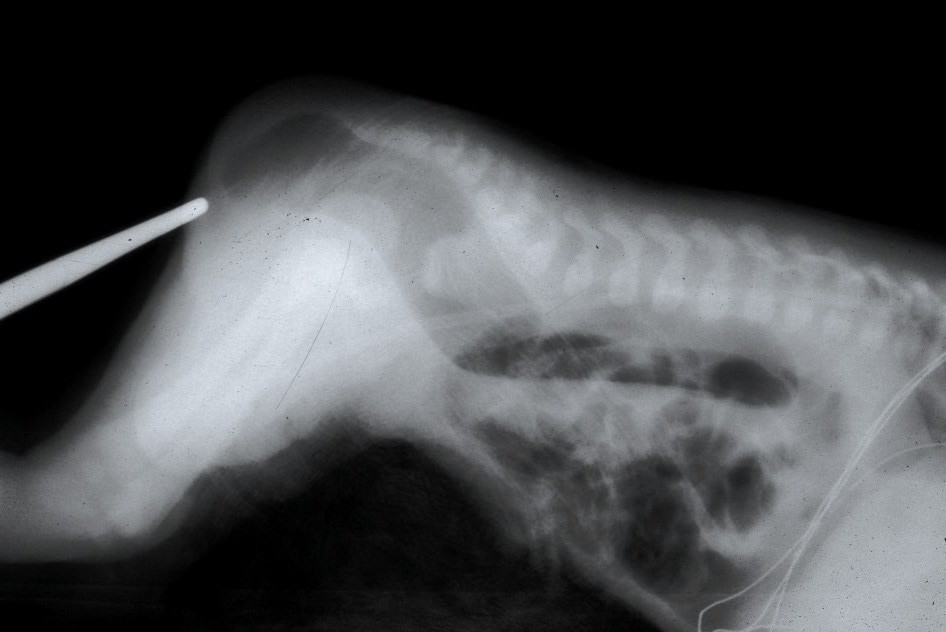
Genetic partial duplication of chromosome 22
| Field | Value |
|---|---|
| name | Cat eye syndrome |
| image | Coloboma-2.png |
| caption | An example of the defect after which CES is named |
| synonyms | CES |
| frequency | 1 in 74,000 |
Cat eye syndrome (CES) or Schmid–Fraccaro syndrome is a rare condition caused by an abnormal extra chromosome, i.e. a small supernumerary marker chromosome. This chromosome consists of the entire short arm and a small section of the long arm of chromosome 22. In consequence, individuals with the cat-eye syndrome have three (trisomic) or four (tetrasomic) copies of the genetic material contained in the abnormal chromosome instead of the normal two copies. The prognosis for patients with CES varies depending on the severity of the condition and their associated signs and symptoms, especially when heart or kidney abnormalities are seen.
Signs and symptoms
- Unilateral or bilateral iris coloboma (absence of tissue from the colored part of the eyes)
- Preauricular pits/tags (small depressions/growths of skin on the outer ears)
- Anal atresia (abnormal obstruction of the anus)
- Downward-slanting palpebral fissures (openings between the upper and lower eyelids)
- Cleft palate
- Kidney problems (missing, extra, or underdeveloped kidneys)
- Short stature
- Scoliosis/skeletal problems
- Cardiac defects (such as TAPVR)
- Micrognathia (smaller jaw)
- Hernias
- Biliary atresiaCongenital bile duct anomalies (biliary atresia) and chromosome 22 aneuploidy. Allotey J, Lacaille F, Lees MM, Strautnieks S, Thompson RJ, Davenport M. J Pediatr Surg. 2008 Sep;43(9):1736-40. doi: 10.1016/j.jpedsurg.2008.05.012.
- Rarer malformations can affect almost any organ
- Intellectual disability – many are intellectually normal; about 30% of CES patients have moderately impaired mental development, although severe intellectual disability is rare.
The term "cat eye" syndrome was coined because of the particular appearance of the vertical colobomas in the eyes of some patients, but over half of the CES patients in the literature do not present with this trait.
Genetics
The small supernumerary marker chromosome (sSMC) in CES usually arises spontaneously. It may be hereditary and parents may be mosaic for the marker chromosome, but show no phenotypic symptoms of the syndrome. This sSMC may be small, large, or ring-shaped, and typically includes 2 Mb, i.e. 2 million DNA base pairs, termed the CES critical region, located on its q arm(s) between its band 11 and terminus (area notated as 22pter→q11)(also see small supernumerary marker chromosomes in cat eye syndrome). This area contains the CECR1, SLC25A18, and ATP6V1E1 genes which are strong candidate genes for causing or promoting at least some of the birth defects in CES.
Diagnosis
An ultrasound exam may be used by a doctor to detect a birth defect that might be CES before a baby is born. An ultrasound creates an image of the fetus using sound waves. It might uncover specific CES-specific flaws. A follow-up test, like an amniocentesis, may be ordered by the doctor if they see these characteristics on an ultrasound. The doctor collects an amniotic fluid sample for analysis during amniocentesis. Extra chromosomal material from chromosome 22q11 helps doctors identify CES. The diagnosis can be verified through genetic testing. These tests could consist of:
- Karyotyping. A picture of a person's chromosomes is generated by this test.
- FISH, or fluorescence in situ hybridization. It is able to identify and pinpoint a particular DNA sequence on a chromosome.
The healthcare provider will likely order more testing when CES is identified to look for any potential extra problems, like heart or kidney disorders. These tests may include:
- X-rays and other imaging tests
- electrocardiography (EKG)
- echocardiography
- eye examination
- hearing tests
- cognitive function tests
History
The abnormalities common to CES were first cataloged in 1899, and described in association with a small marker chromosome in 1965. Early reports of CES discuss the possibility of chromosome 13 involvement. Now, CES is considered to be present with the chromosome 22 trisomy findings.
References
References
- "Cat eye syndrome".
- (2015). "Small supernumerary marker chromosomes and their correlation with specific syndromes". Advanced Biomedical Research.
- (2001). "Phenotypic variability of the cat eye syndrome. Case report and review of the literature". Genet. Couns..
- "Cat eye syndrome | Genetic and Rare Diseases Information Center (GARD) – an NCATS Program".
- (18 July 2017). "Disorders of chromosome 22: Cat Eye Syndrome/Schmid Fraccaro Syndrome". Chromosome 22 Central.
- "Cat eye syndrome {{!}} Genetic and Rare Diseases Information Center (GARD) – an NCATS Program".
- (December 2020). "Prenatal diagnosis and molecular cytogenetic identification of small supernumerary marker chromosomes: analysis of three prenatal cases using chromosome microarray analysis". Aging.
- (September 2012). "A 600 kb triplication in the cat eye syndrome critical region causes anorectal, renal and preauricular anomalies in a three-generation family". European Journal of Human Genetics.
- Haab, O. Albrecht v Graefes. [[Archives of Ophthalmology]], 24: 257 only, 1879
- Schachenmann G.. (1965). "Chromosomes in Coloboma and Anal Atresia". Lancet.
- (1972). "Cat-eye syndrome, a partial trisomy 22". Humangenetik.
This article was imported from Wikipedia and is available under the Creative Commons Attribution-ShareAlike 4.0 License. Content has been adapted to SurfDoc format. Original contributors can be found on the article history page.
Ask Mako anything about Cat eye syndrome — get instant answers, deeper analysis, and related topics.
Research with MakoFree with your Surf account
Create a free account to save articles, ask Mako questions, and organize your research.
Sign up freeThis content may have been generated or modified by AI. CloudSurf Software LLC is not responsible for the accuracy, completeness, or reliability of AI-generated content. Always verify important information from primary sources.
Report