From Surf Wiki (app.surf) — the open knowledge base
Cartonnage
Material used in ancient Egyptian funerary masks
Material used in ancient Egyptian funerary masks

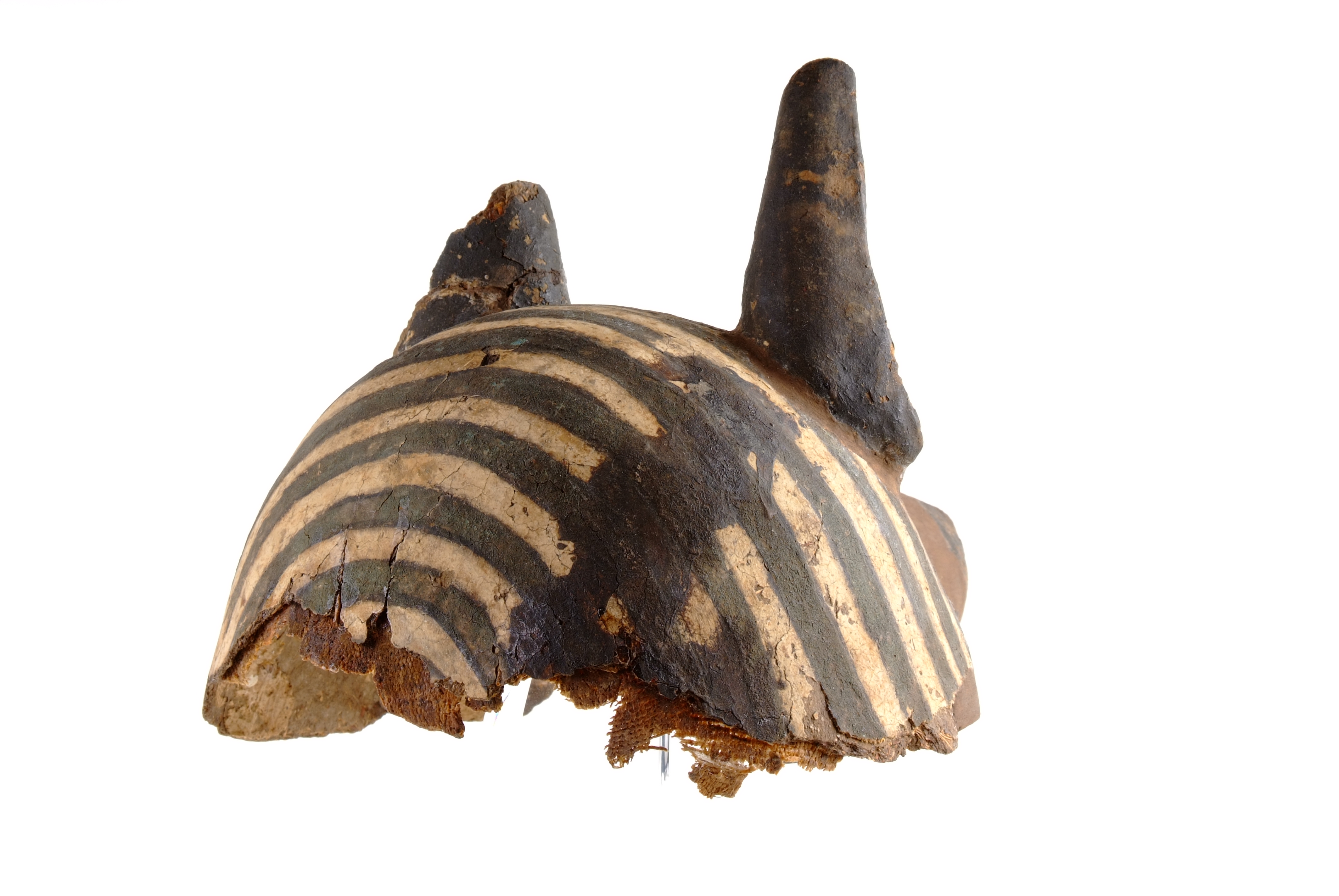
Cartonnage or cartonage is a type of material used in ancient Egyptian funerary masks from the First Intermediate Period to the Roman era. It was made of layers of linen or papyrus covered with plaster. Some of the Fayum mummy portraits are also painted on panels made of cartonnage.
Technique
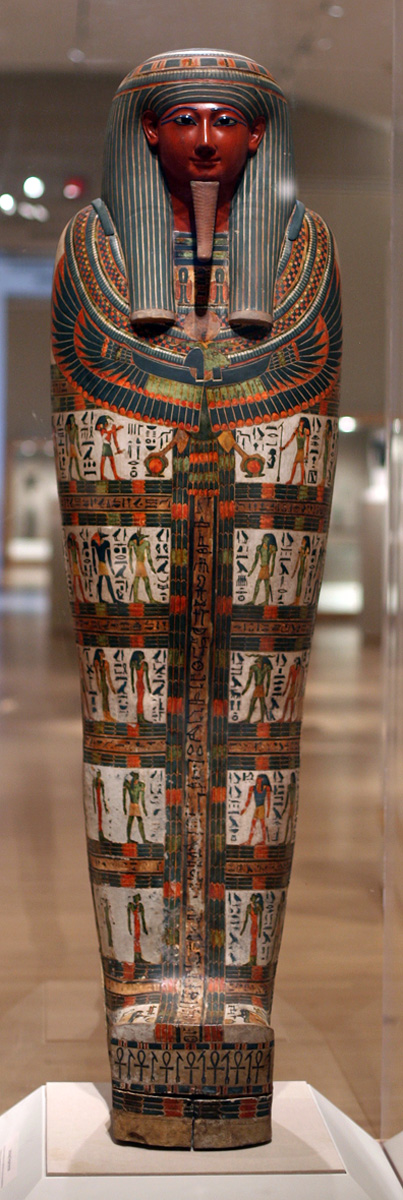
In a technique similar to papier-mâché, scraps of linen or papyrus were stuck together with plaster or resin and used to make mummy cases and masks. It could be molded to the shape of the body, forming a type of shell. After the material dried it could be painted or gilded. The shell could be decorated with geometric shapes, deities, and inscriptions. During the Ptolemaic era, the single shell method was altered to include four to six pieces of cartonnage. There would generally be a mask, pectoral, apron, and foot casing. In certain instances there were two additional pieces used to cover the ribcage and stomach.
Materials
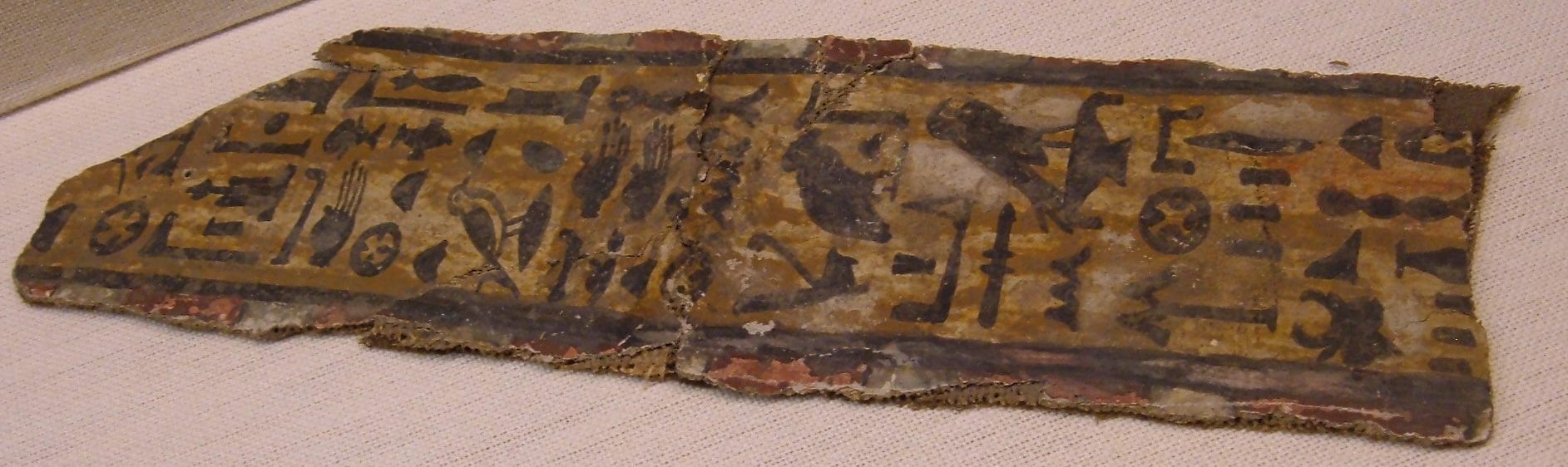
The materials used to produce cartonnage changed over time. In the Middle Kingdom it was common to use plastered linen; during the Third Intermediate Period, linen and stucco; during the Ptolemaic period, old papyrus scrolls; and during the Roman period, thicker fibrous materials.
Reusing papyrus that was considered waste was a common practice during the Ptolemaic period. Many discarded documents from the government and archives were used for this purpose.
Archeological significance
The preparation of cartonnage preserved the sections of papyrus; therefore, it is a prominent source of well-preserved manuscript sections. In 1993, the city of Helsinki received fourteen fragments of cartonnages from the Egyptian Museum of Berlin. Conservators at the University of Helsinki, working with specialists from the University of Michigan, were tasked with preserving the cartonnages and publishing all Greek papyrus texts derived from them.
More recently, advances in digital and metrological analysis have demonstrated that cartonnage also holds significant value for reconstructing archaeological provenance and workshop practices. High-resolution three-dimensional shape analysis has been used to compare fragmentary cartonnage remains with complete funerary masks, allowing researchers to re-identify artefacts with lost provenience and attribute them to specific production traditions or burial contexts. Such approaches show that cartonnage fragments can contribute not only to the study of reused papyri but also to broader questions of funerary manufacture, regional styles, and object circulation in Graeco-Roman Egypt.
References
References
- "Mummy and Painted Cartonnage of an Unknown Woman". [[The Walters Art Museum]].
- [https://www.sciencenews.org/article/new-clues-illuminate-mysteries-ancient-egyptian-portraits New clues illuminate mysteries of ancient Egyptian portraits - Same artist painted several lifelike paintings buried with mummies] by BRUCE BOWER, published by "Society for Science & the Public" on February 14, 2016
- Hayman, written by James Putnam; photographed by Peter. (2004). "Mummy". DK Pub..
- "Cartonnage".
- (2002). "Burial customs: cartonnages". Digital Egypt for Universities, University College London.
- "Cartonnage Papyri".
- Peterman, Glen L.. (1994). "Conservation of the Petra Papyri". University of Chicago Press.
- Rindi Nuzzolo, Carlo. (2025-12-20). "From fragments to faces: using metrological analysis for artefact re-identification and provenience attribution". npj Heritage Science.
This article was imported from Wikipedia and is available under the Creative Commons Attribution-ShareAlike 4.0 License. Content has been adapted to SurfDoc format. Original contributors can be found on the article history page.
Ask Mako anything about Cartonnage — get instant answers, deeper analysis, and related topics.
Research with MakoFree with your Surf account
Create a free account to save articles, ask Mako questions, and organize your research.
Sign up freeThis content may have been generated or modified by AI. CloudSurf Software LLC is not responsible for the accuracy, completeness, or reliability of AI-generated content. Always verify important information from primary sources.
Report