From Surf Wiki (app.surf) — the open knowledge base
Carboxylation
Chemical conversion reaction
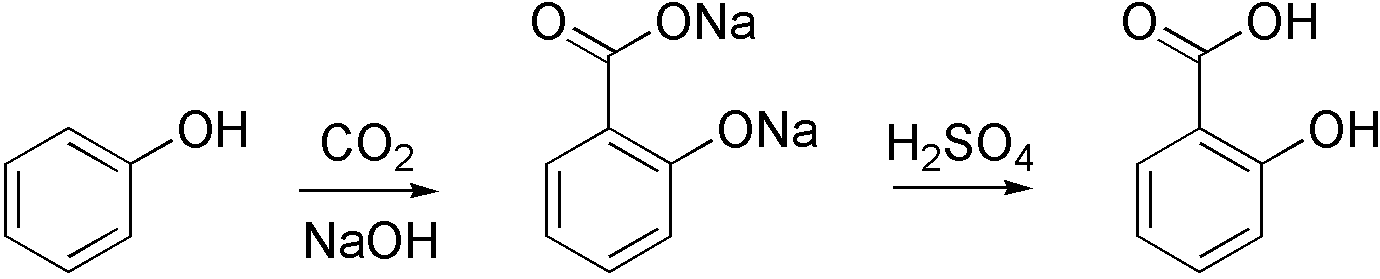
Chemical conversion reaction
Carboxylation is a chemical reaction in which a carboxylic acid is produced by treating a substrate with carbon dioxide. The opposite reaction is decarboxylation. In chemistry, the term carbonation is sometimes used synonymously with carboxylation, especially when applied to the reaction of carbanionic reagents with CO2. More generally, carbonation usually describes the production of carbonates."Carbonation: Impregnation or treatment with carbon dioxide; conversion into a carbonate."{{ cite book|title=Oxford English Dictionary|publisher=Oxford University Press|year=2018|url=http://www.oed.com}}
Organic chemistry
Carboxylation is a standard conversion in organic chemistry. Specifically carbonation (i.e. carboxylation) of Grignard reagents and organolithium compounds is a classic way to convert organic halides into carboxylic acids. This approach give carboxylate salts. Typically, these salts are converted to the carboxylic acid.{{cite journal |author=S. V. Puntambeker, E. A. Zoellner, L. T. Sandborn, E. W. Bousquet
Sodium salicylate, precursor to aspirin, is commercially prepared by treating sodium phenolate (the sodium salt of phenol) with carbon dioxide at high pressure (100 atm) and high temperature (390 K) – a method known as the Kolbe-Schmitt reaction. Acidification of the resulting salicylate salt gives salicylic acid.
Many detailed procedures are described in the journal Organic Syntheses.{{cite journal| title=Regio- and Stereoselective Carboxylation of Allylic Barium Reagents: (E)-4,8-Dimethyl-3,7-Nonadienoic Acid |author=Akira Yanagisawa |author2=Katsutaka Yasue |author3=Hisashi Yamamoto|journal=Organic Syntheses |volume=74|pages=178|year=1997|doi=10.15227/orgsyn.074.0178}}{{cite journal|title=1-Methylcyclohexanecarboxylic Acid|author=W. Haaf|journal=Organic Syntheses|volume=46|page=72|year=1966|doi=10.15227/orgsyn.046.0072
Carboxylation catalysts include N-Heterocyclic carbenes and catalysts based on silver.
Carboxylation in biochemistry
Carbon-based life originates from carboxylation that couples atmospheric carbon dioxide to a sugar. The process is usually catalysed by the enzyme RuBisCO. Ribulose-1,5-bisphosphate carboxylase/oxygenase, the enzyme that catalyzes this carboxylation, is possibly the single most abundant protein on Earth.


Many carboxylases, including Acetyl-CoA carboxylase, Methylcrotonyl-CoA carboxylase, Propionyl-CoA carboxylase, and Pyruvate carboxylase require biotin as a cofactor. These enzymes are involved in various biogenic pathways. In the EC scheme, such carboxylases are classed under EC 6.3.4, "Other Carbon—Nitrogen Ligases".
Another example is the posttranslational modification of glutamate residues, to γ-carboxyglutamate, in proteins. It occurs primarily in proteins involved in the blood clotting cascade, specifically factors II, VII, IX, and X, protein C, and protein S, and also in some bone proteins. This modification is required for these proteins to function. Carboxylation occurs in the liver and is performed by γ-glutamyl carboxylase (GGCX). GGCX requires vitamin K as a cofactor and performs the reaction in a processive manner. γ-carboxyglutamate binds calcium, which is essential for its activity. For example, in prothrombin, calcium binding allows the protein to associate with the plasma membrane in platelets, bringing it into close proximity with the proteins that cleave prothrombin to active thrombin after injury.
References
References
- (2018). "Oxford English Dictionary". Oxford University Press.
- (August 1988). "Reactions of Carbon Dioxide with Carbon-Carbon Bond Formation Catalyzed by Transition-Metal Complexes". Chemical Reviews.
- A. M. Appel. (2013). "Frontiers, Opportunities, and Challenges in Biochemical and Chemical Catalysis of CO2 Fixation". Chem. Rev..
- Henry Gilman R. H. Kirby. (1925). "''dl''-Methylethylacetic Acid". Organic Syntheses.
- H. Koch. (1964). "1-Adamantanecarboxylic Acid". Organic Syntheses.
- Zhang Liang. (2013). "N-Heterocyclic carbene (NHC)–copper-catalysed transformations of carbon dioxide". Chemical Science.
- K. Sekine. (2016). "Silver-catalyzed carboxylation". Chem. Soc. Rev..
- (April 2004). "Enhanced translation of a chloroplast-expressed RbcS gene restores small subunit levels and photosynthesis in nuclear RbcS antisense plants". Proc. Natl. Acad. Sci. U.S.A..
- (2008). "Rubiscolytics: fate of Rubisco after its enzymatic function in a cell is terminated". J. Exp. Bot..
- (April 2013). "Rubisco: still the most abundant protein of Earth?". New Phytologist.
- (8 December 2017). "Biotin – Fact Sheet for Health Professionals". Office of Dietary Supplements, US [[National Institutes of Health]].
- (July 2025)
- (1995). "Processive post-translational modification. Vitamin K-dependent carboxylation of a peptide substrate". J. Biol. Chem..
- (1975). "Direct identification of the calcium-binding amino acid, gamma-carboxyglutamate, in mineralized tissue". Proc. Natl. Acad. Sci. U.S.A..
- Berg JM, Tymoczko JL, Stryer L. ''Biochemistry'', 5th ed. New York: W. H. Freeman and Company, 2002.
This article was imported from Wikipedia and is available under the Creative Commons Attribution-ShareAlike 4.0 License. Content has been adapted to SurfDoc format. Original contributors can be found on the article history page.
Ask Mako anything about Carboxylation — get instant answers, deeper analysis, and related topics.
Research with MakoFree with your Surf account
Create a free account to save articles, ask Mako questions, and organize your research.
Sign up freeThis content may have been generated or modified by AI. CloudSurf Software LLC is not responsible for the accuracy, completeness, or reliability of AI-generated content. Always verify important information from primary sources.
Report