From Surf Wiki (app.surf) — the open knowledge base
Cape Mendocino
Cape in Mendocino County, California, United States
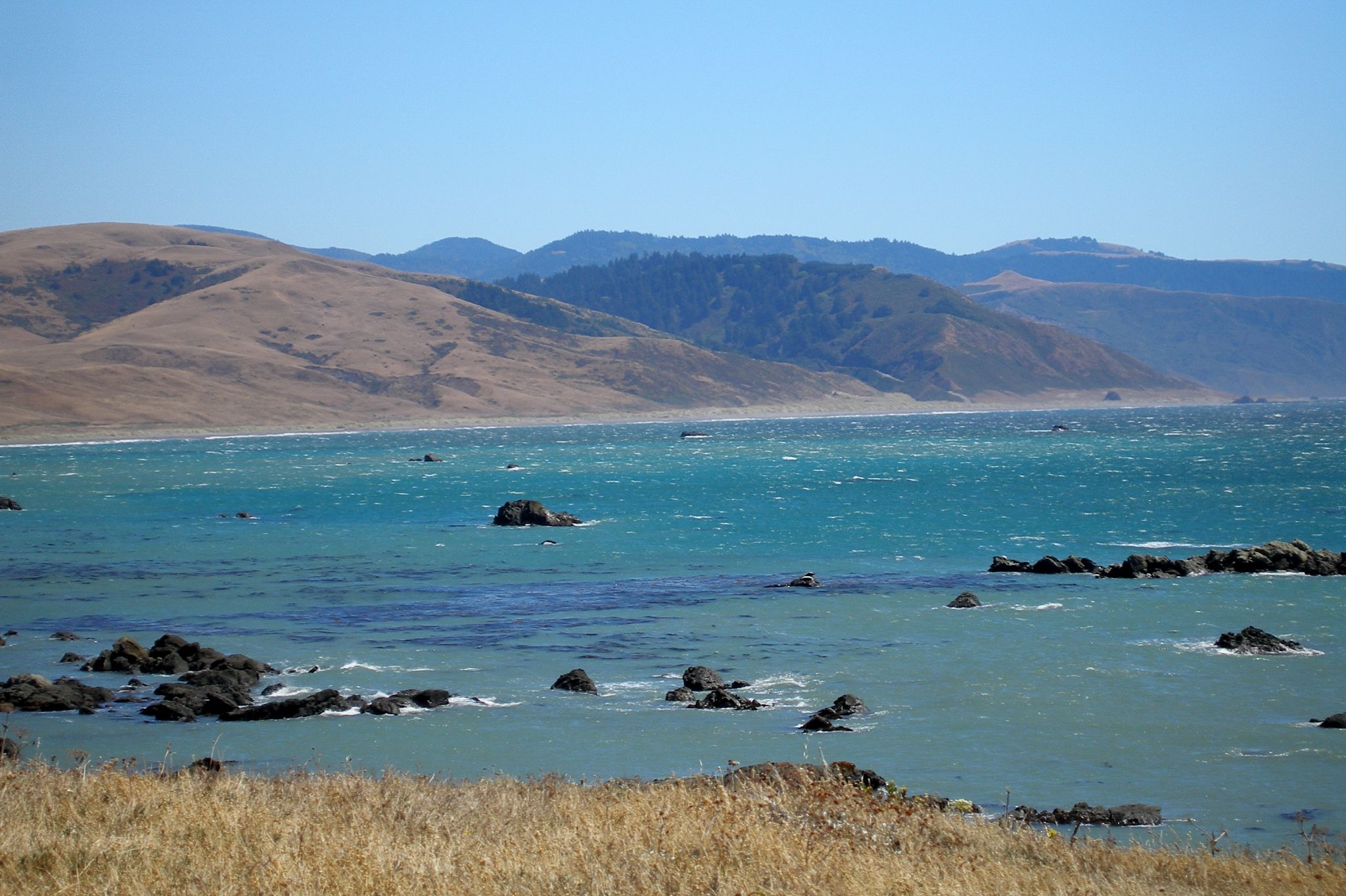
Cape in Mendocino County, California, United States
Cape Mendocino (Spanish: Cabo Mendocino, meaning "Cape of Mendoza"), which is located approximately 200 mi north of San Francisco, is located on the Lost Coast entirely within Humboldt County, California, United States. At 124° 24' 34" W longitude, it is the westernmost point on the coast of California. The South Cape Mendocino State Marine Reserve and Sugarloaf Island are immediately offshore, although closed to public access due to their protected status. Sugarloaf Island is cited as California's westernmost island.
History
.jpg)
It was named by 16th-century Spanish navigators to honor Antonio de Mendoza, Viceroy of New Spain, Cape Mendocino has been a landmark since the 16th century, when Manila Galleons followed the prevailing westerlies across the Pacific to the Cape, then followed the coast south to Acapulco, Mexico. The Cape Mendocino Light was lit on December 1, 1868, standing on eight prefabricated panels sent from San Francisco. An automated light stood near the original location but was removed in 2013.
Geology

The Cape Mendocino region of California's north coast is one of the most seismically active regions in the contiguous United States. Three earthquakes with epicenters nearby at the town of Petrolia and offshore west of Cape Mendocino, 25–26 April 1992, were outstanding, one reaching 7.2 Mw; shaking the town so badly, fires broke out and burned down historic buildings, including the 100-year old general store and the original post office. Even the fire station suffered so much shifting from the quakes, fire crews had a difficult time extinguishing the fires. The quakes demonstrated that the Cascadia subduction zone is both capable of producing large earthquakes and generating tsunamis. Many geologists and seismologists believe that the main shock in the 1992 sequence may be a forerunner of a much more powerful earthquake in the Pacific Northwest.
Offshore of Cape Mendocino lies the Mendocino triple junction, a geologic triple junction where three tectonic plates come together. The San Andreas Fault, a transform boundary, runs south from the junction, separating the Pacific plate and the North American plate. To the north lies the Cascadia subduction zone, where the Gorda plate is being subducted under the margin of the North American plate. Running west from the triple junction is the Mendocino Fault, the transform boundary between the Gorda plate and the Pacific plate. Cape Mendocino California is part of the Cascadia subduction zone.
References
References
- Sanchez, Nellie Van de Grift. (1914). "Spanish and Indian Place Names of California: Their Meaning and Their Romance". A.M. Robertson.
- {{cite gnis. 254709. Cape Mendocino
- California Department of Fish and Wildlife, [[commons:File:South_Cape_Mendocino_&_Sugarloaf_Island.jpeg,. California Protected Marine Areas, 14 March 2013]].
- California Department of Fish and Wildlife, [http://www.dfg.ca.gov/marine/mpa/ncmpas_list.asp Sugarloaf Island Special Closure] {{Webarchive. link. (2017-09-22, 2015.)
- [http://www.californiampas.org/pages/regions/northcoast/SurgarLoafIslandsc.html Sugarloaf Island Special Closure], {{Webarchive. link. (2015-07-13, California Marine Sanctuary Foundation, accessed July 12, 2015.)
- (1969). "California Place Names". University of California Press.
- {{Cite rowlett. ca
- "Cape Mendocino, California Earthquakes". United States Geological Survey.
- "Today in Earthquake History: Cape Mendocino 1992".
- Moley. "Why we have earthquakes: a unique geologic setting".
This article was imported from Wikipedia and is available under the Creative Commons Attribution-ShareAlike 4.0 License. Content has been adapted to SurfDoc format. Original contributors can be found on the article history page.
Ask Mako anything about Cape Mendocino — get instant answers, deeper analysis, and related topics.
Research with MakoFree with your Surf account
Create a free account to save articles, ask Mako questions, and organize your research.
Sign up freeThis content may have been generated or modified by AI. CloudSurf Software LLC is not responsible for the accuracy, completeness, or reliability of AI-generated content. Always verify important information from primary sources.
Report