From Surf Wiki (app.surf) — the open knowledge base
Canton of Fribourg
Canton of Switzerland
_Vanil_Noir_(hinten).jpg)
Canton of Switzerland
| Field | Value | ||||
|---|---|---|---|---|---|
| <!-- See Template:Infobox settlement for additional fields and descriptions --> | name | Canton of Fribourg | |||
| other_name | Canton of Freiburg | ||||
| native_name | fr | ||||
| de | |||||
| settlement_type | Canton | ||||
| image_flag | Flag of Canton of Fribourg.svg | ||||
| image_shield | Wappen Freiburg matt.svg | ||||
| shield_size | 80x80px | ||||
| mapframe | yes | ||||
| mapframe-zoom | 6 | ||||
| mapframe-point | none | ||||
| map_alt | Map of Switzerland, location of Fribourg highlighted | ||||
| map_caption | Location in Switzerland | ||||
| {{hidden | ta1 | left | border = 1px solid grey | header = Map of Fribourg | content = |
| [[File:Karte Kanton Freiburg 2010.png | 250px]] }} | ||||
| coordinates | |||||
| seat_type | Capital | ||||
| seat | Fribourg/Freiburg | ||||
| parts_type | Subdivisions | ||||
| parts_style | para | ||||
| p1 | 168 municipalities | ||||
| p2 | 7 districts | ||||
| leader_title1 | President | ||||
| leader_name1 | Jean-Pierre Siggen | ||||
| leader_title2 | Executive | ||||
| leader_name2 | Conseil d'Etat/Staatsrat (7) | ||||
| leader_title3 | Legislative | ||||
| leader_name3 | Grand Council of Fribourg (130) | ||||
| area_footnotes | |||||
| area_total_km2 | |||||
| population_footnotes | |||||
| population_total | |||||
| population_as_of | |||||
| population_density_km2 | auto | ||||
| demographics_type1 | GDP | ||||
| demographics1_footnotes | |||||
| demographics1_title1 | Total | ||||
| demographics1_info1 | CHF 19.180 billion (2020) | ||||
| demographics1_title2 | Per capita | ||||
| demographics1_info2 | CHF 59,263 (2020) | ||||
| iso_code | CH-FR | ||||
| blank_name_sec1 | Highest point | ||||
| blank_info_sec1 | 2389 m: Vanil Noir | ||||
| blank1_name_sec1 | Lowest point | ||||
| blank1_info_sec1 | 429 m: shore Lake Neuchâtel | ||||
| blank_name_sec2 | Joined | ||||
| blank_info_sec2 | 1481 | ||||
| blank1_name_sec2 | Languages | ||||
| blank1_info_sec2 | French, German | ||||
| website | |||||
| image_blank_emblem | Fribourg.svg | ||||
| blank_emblem_type | Brandmark | ||||
| blank_emblem_size | 120px |
de | mapframe-zoom = 6 | mapframe-point = none The canton of Fribourg, also canton of Freiburg, is located in western Switzerland. The canton is bilingual, with French spoken by more than two thirds of the citizens and German by a little more than a quarter. Both are official languages in the canton. The canton takes its name from its capital city of Fribourg.
History
On the shores of Lake Neuchâtel and Lake Morat significant traces of prehistoric settlements have been unearthed.
The canton of Fribourg joined the Swiss Confederation in 1481. The area is made up of lands acquired by the capital Fribourg. The present extent was reached in 1803 when Murten (Morat) was acquired. The canton of Fribourg joined the separatist league of Catholic cantons in 1846 (Sonderbund). The following year, its troops surrendered to the federal army.
Geography
The canton is bounded to the west by Lake Neuchâtel, to the west and the south by the canton of Vaud, and to the east by the canton of Bern. The canton includes two enclaves within Vaud and one within the canton of Bern, as well as a large exclave on the lake; it also enclaves the Bernese municipality of Münchenwiler. The area of the canton is 1669 km2, including the small enclaves.
The canton lies on the elevated Swiss Plateau. In the west the lands are flat, but towards the south east of the canton, the lands rise to a hilly region. This region is commonly called pre-Alps but is part of the Bernese Alps. The highest elevation in the canton is the Vanil Noir with 2389 m.
The river Saane/Sarine flows from the south to the north of the canton. Together with its tributaries it drains most of the lands in the canton, then joins the river Aare. The river Broye drains the west of the canton and flows northeast into Lake Morat (Murtensee). The southwest part of the canton is drained by the river Veveyse, which flows south into Lake Geneva ().
Political subdivisions
Districts

The Canton is divided into seven districts:
- Broye capital Estavayer-le-Lac
- Glâne capital Romont
- Gruyère () capital Bulle
- Sarine () capital Fribourg
- Lake (, ) capital Morat
- Sense () capital Tafers
- Veveyse () capital Châtel-Saint-Denis
Municipalities
There are 121 municipalities in the canton of Fribourg . The number is decreasing as the canton subsidizes mergers between municipalities.
Demographics
In contrast to the mainly Protestant cantons of Vaud to its west and Bern to its east, the canton of Fribourg is a predominantly Catholic enclave (, 70%) with a Protestant minority (15%). This explains why the canton straddles the French-German linguistic border, for in the past, denominational considerations were more important than linguistic when drawing Switzerland's cantonal borders.
The main centres of population are the capital Fribourg (34,300 inhabitants) and Bulle (18,200 inhabitants).
Two thirds of the population speak French; the remainder speak Alemannic dialects of German. The French-speaking areas are in the west of the canton, the Alemannic-speaking areas in the east. The number of bilingual towns, and consequently the large number of people who can speak both French and German fluently, has attracted businesses such as telesales companies. The population of the canton (as of ) is . , the population included 43,838 foreign-born residents, or about 16.65% of the total population.
Historical population
The canton’s historical population is given in the following table:
| Historic Population Data | Year | Total Population | Swiss | Non-Swiss | Population share | |||||||
|---|---|---|---|---|---|---|---|---|---|---|---|---|
| of total country | 1850 | 1870 | 1900 | 1950 | 1970 | 2000 | 2020 | |||||
| 99 891 | 98 556 | 1 335 | 4.2% | |||||||||
| 114 994 | 113 219 | 1 775 | 4.1% | |||||||||
| 127,951 | 123,579 | 4,372 | 3.9% | |||||||||
| 158,695 | 154,527 | 4,168 | 3.4% | |||||||||
| 180,309 | 163,503 | 16,806 | 2.9% | |||||||||
| 241,706 | 206,182 | 35,524 | 3.3% | |||||||||
| 325,496 | 3.8% |
Economics
Agriculture is important in the canton of Fribourg. The main agricultural activities are cattle breeding and dairy farming. The region is a major cheese producer, especially the district of Gruyère, home of the cheese of the same name. The chocolate industry is also well established in Broc, home to an international chocolate research centre. Other agricultural produces include tobacco, fruit and cereals. Agriculture is predominant in the north of the canton where the most fertile lands lie.
There is light industry concentrated around the capital Fribourg. Other centres of light industry are Bulle, Villars-sur-Glâne, Düdingen (Guin), Murten (Morat) and Estavayer-le-Lac. These five centers have also a large number of established small and medium-sized businesses, many of which are in the service sector. Forests are important in the La Gruyère (Greyerz) district.
Power plants in the district of Sarine export electricity. The mountain areas attract tourists all year round. The lake regions are frequented by tourists in summer and autumn.
Transport
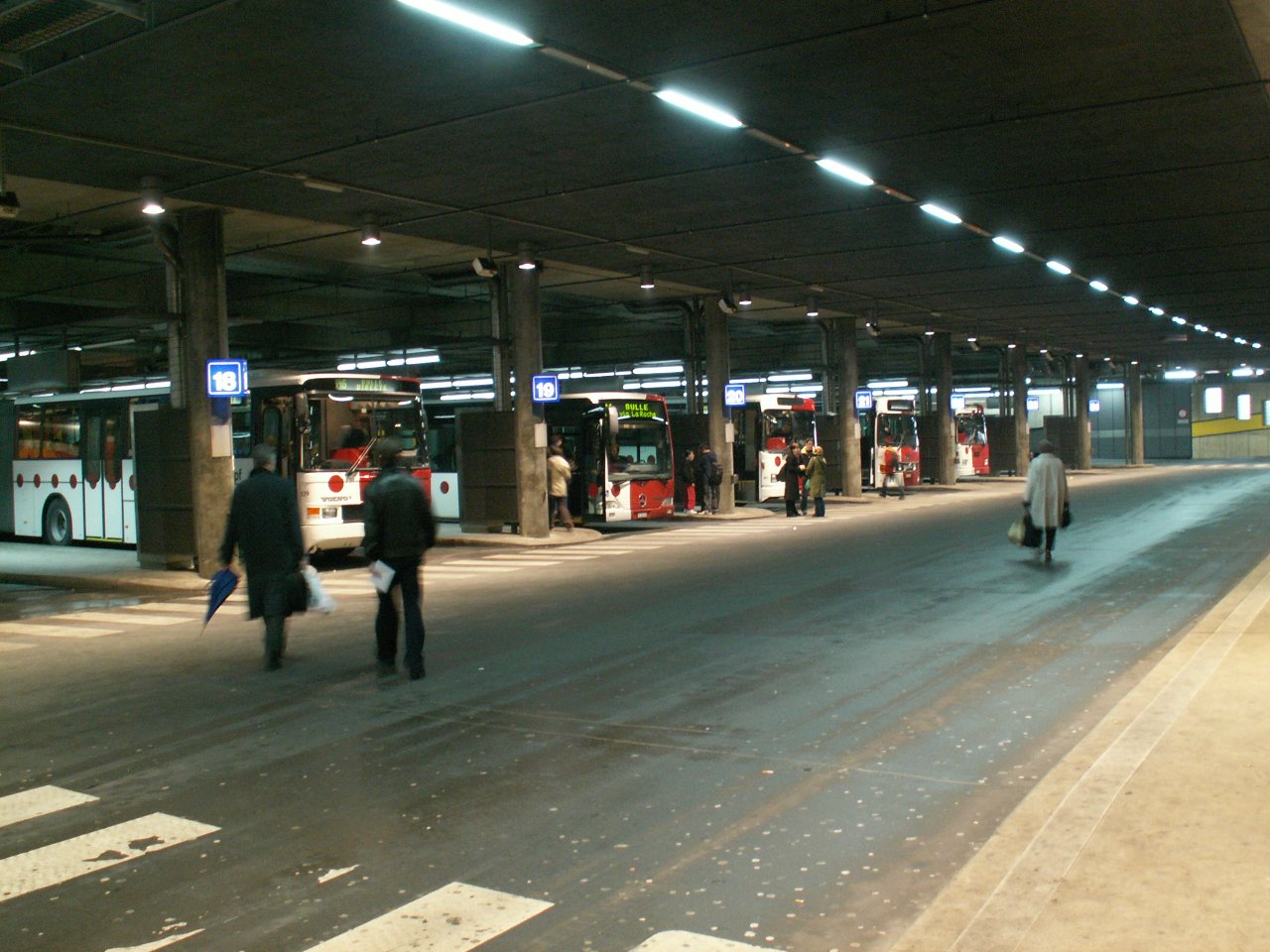
The canton of Fribourg is well connected to other areas of Switzerland with motorways A1, A12 and fast rail links. The main railway between Geneva and Lausanne in the south west to Bern and Zürich connects Fribourg with other centres of the country. Connections within the canton are mostly provided by the Transports Publics Fribourgeois, with numerous bus routes and trains connecting the main towns. The nearest airports to the canton are Geneva Airport, and Bern Airport.
Politics
Federal election results
| Percentage of the total vote per party in the canton in the Federal Elections 1971–2019 | Party | Ideology | 1971 | 1975 | 1979 | 1983 | 1987 | 1991 | 1995 | 1999 | 2003 | 2007 | 2011 | 2015 | 2019 | FDP.The Liberals | CVP/PDC/PPD/PCD | SP/PS | SVP/UDC | EVP/PEV | CSP/PCS | GLP/PVL | BDP/PBD | PdA/PST-POP/PC/PSL | GPS/PES | FGA | SD/DS | EDU/UDF | Other | Voter participation % | 53.5 | 47.7 | 48.6 | 52.9 | 46.3 | 45.0 | 39.5 | 41.2 | 45.4 | 48.0 | 47.2 | 47.2 | 43.0 | |||||||||||||||||
|---|---|---|---|---|---|---|---|---|---|---|---|---|---|---|---|---|---|---|---|---|---|---|---|---|---|---|---|---|---|---|---|---|---|---|---|---|---|---|---|---|---|---|---|---|---|---|---|---|---|---|---|---|---|---|---|---|---|---|---|---|
| FDP.The Liberals}}" | Classical liberalism | 24.7 | 22.1 | 23.0 | 20.0 | 16.7 | 16.1 | 15.9 | 14.8 | 12.8 | 13.8 | 12.8 | 14.2 | 14.4 | ||||||||||||||||||||||||||||||||||||||||||||||
| Christian Democratic People's Party of Switzerland}}" | Christian democracy | 41.5 | 46.9 | 39.9 | 38.0 | 37.7 | 36.8 | 36.0 | 33.7 | 25.4 | 24.8 | 20.3 | 22.7 | 14.4 | ||||||||||||||||||||||||||||||||||||||||||||||
| Social Democratic Party of Switzerland}}" | Social democracy | 19.9 | 25.7 | 30.7 | 24.0 | 22.2 | 18.6 | 17.3 | 20.3 | 21.5 | 22.7 | 26.7 | 24.2 | 17.4 | ||||||||||||||||||||||||||||||||||||||||||||||
| Swiss People's Party}}" | Swiss nationalism | 8.7 | 4.3 | 6.4 | 8.8 | 8.9 | 9.7 | 8.3 | 11.4 | 21.4 | 22.0 | 21.4 | 25.9 | 19.2 | ||||||||||||||||||||||||||||||||||||||||||||||
| Evangelical People's Party of Switzerland}}" | Christian democracy | * | * | * | * | * | * | * | * | 0.7 | 0.8 | 0.7 | 0.7 | 0.7 | ||||||||||||||||||||||||||||||||||||||||||||||
| Christian Social Party (Switzerland)}}" | Christian socialism | 5.3 | * | * | 7.5 | 6.9 | 7.7 | 8.7 | 10.9 | 10.4 | 7.1 | 5.5 | 1.8 | 3.3 | ||||||||||||||||||||||||||||||||||||||||||||||
| Green Liberal Party of Switzerland}}" | Green liberalism | * | * | * | * | * | * | * | * | * | * | 3.5 | 3.2 | 3.8 | ||||||||||||||||||||||||||||||||||||||||||||||
| Conservative Democratic Party of Switzerland}}" | Conservatism | * | * | * | * | * | * | * | * | * | * | 1.9 | 1.3 | 0.7 | ||||||||||||||||||||||||||||||||||||||||||||||
| Swiss Party of Labour}}" | Socialism | * | * | * | * | * | * | 0.9 | * | * | * | * | * | * | ||||||||||||||||||||||||||||||||||||||||||||||
| Green Party of Switzerland}}" | Green politics | * | * | * | * | 4.2 | 2.3 | * | 4.0 | 6.3 | 5.0 | 5.3 | 12.5 | |||||||||||||||||||||||||||||||||||||||||||||||
| Feminist | * | * | * | * | 1.7 | * | * | * | * | * | * | * | ||||||||||||||||||||||||||||||||||||||||||||||||
| Swiss Democrats}}" | National conservatism | * | * | * | * | * | 1.4 | 0.9 | 0.3 | * | * | * | * | * | ||||||||||||||||||||||||||||||||||||||||||||||
| Federal Democratic Union of Switzerland}}" | Christian right | * | * | * | * | * | * | * | * | 0.7 | 0.9 | 0.7 | 0.8 | 0.7 | ||||||||||||||||||||||||||||||||||||||||||||||
| * | 1.0 | * | 1.7 | 1.9 | 9.6 | 9.7 | 8.6 | 3.1 | 1.6 | 1.5 | * | 12.9 |
: FDP before 2009, FDP.The Liberals after 2009 : "*" indicates that the party was not on the ballot in this canton. : Included under "Other" in this election.
Notes
References
References
- Statistik, Bundesamt für. (2021-01-21). "Bruttoinlandsprodukt (BIP) nach Grossregion und Kanton - 2008-2018 {{!}} Tabelle".
- "Annuaire statistique du canton de Fribourg – Statistisches Jahrbuch des Kantons Freiburg – 2014". Amt für Statistik des Staates Freiburg.
- Federal Department of Statistics. (2004). "Wohnbevölkerung nach Religion".
- Federal Department of Statistics. (2008). "Ständige Wohnbevölkerung nach Staatsangehörigkeit, Geschlecht und Kantonen".
- "Freiburg (Kanton)".
- . (20 October 2011). ["Nestle to launch personalized luxury chocolates"](https://www.reuters.com/article/us-nestle-chocolates-idUSTRE79J43H20111020). *Reuters*.
- (2015). "Nationalratswahlen: Stärke der Parteien nach Kantonen (Schweiz = 100%)". Swiss Federal Statistical Office.
This article was imported from Wikipedia and is available under the Creative Commons Attribution-ShareAlike 4.0 License. Content has been adapted to SurfDoc format. Original contributors can be found on the article history page.
Ask Mako anything about Canton of Fribourg — get instant answers, deeper analysis, and related topics.
Research with MakoFree with your Surf account
Create a free account to save articles, ask Mako questions, and organize your research.
Sign up freeThis content may have been generated or modified by AI. CloudSurf Software LLC is not responsible for the accuracy, completeness, or reliability of AI-generated content. Always verify important information from primary sources.
Report