From Surf Wiki (app.surf) — the open knowledge base
Cannone da 65/17 modello 13
Italian mountain gun
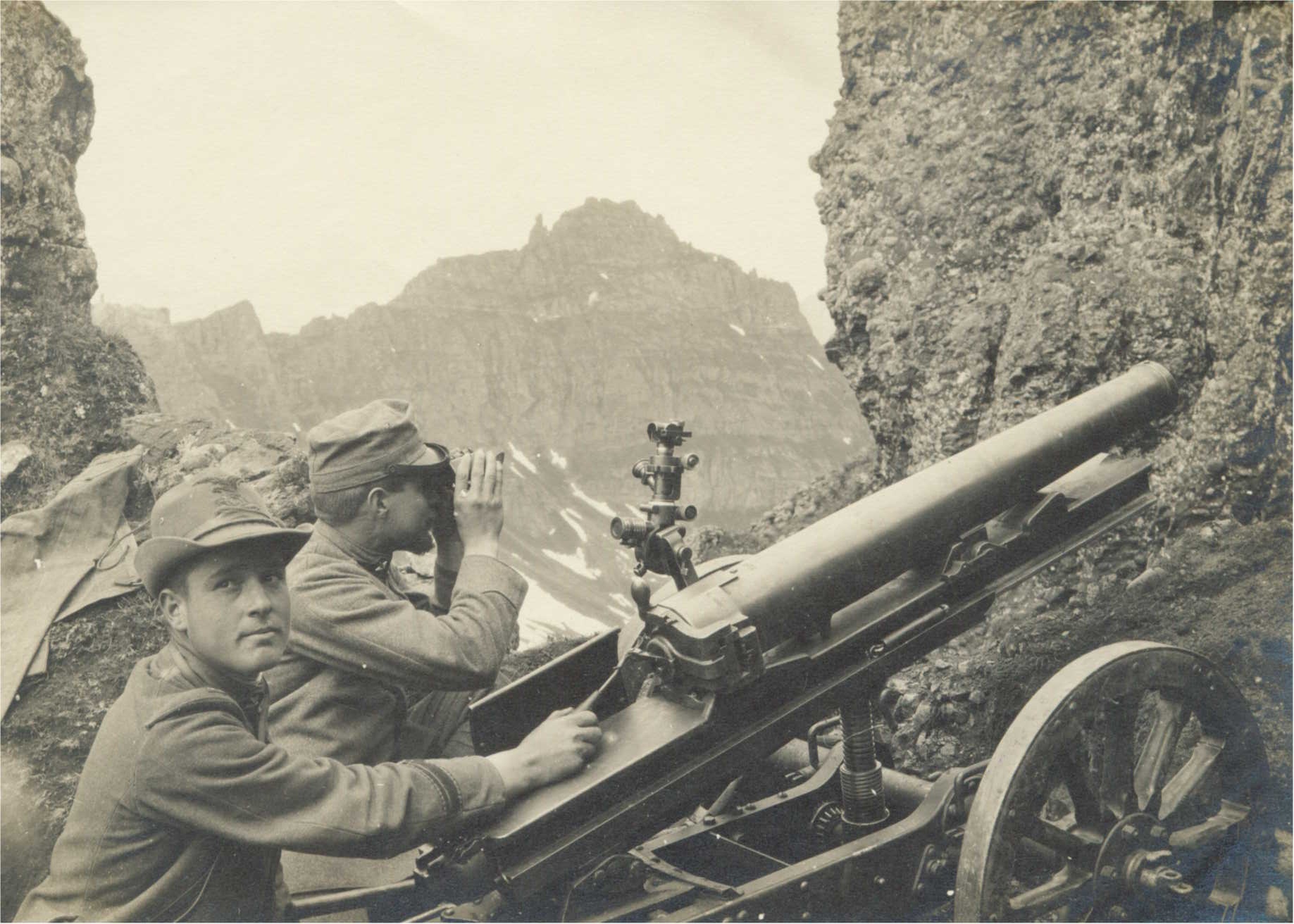
Italian mountain gun
| Field | Value | ||
|---|---|---|---|
| is_artillery | yes | ||
| image | [[Image:Canone 65-17 modello 13.jpg | 300px | Canone 65/17 modello 13 on display at the US Army Ordnance Museum in Aberdeen, MD]] |
| name | 65 mm mountain gun | ||
| type | Mountain artillery | ||
| origin | Kingdom of Italy | ||
| production_date | 1911–1940 | ||
| service | 1913-1945 | ||
| used_by | Kingdom of Italy | ||
| Kingdom of Albania | |||
| Nazi Germany | |||
| Ecuador | |||
| Kingdom of Romania | |||
| wars | World War I | ||
| Spanish Civil War | |||
| World War II | |||
| Ecuadorian–Peruvian War | |||
| cartridge | 65 x 172 mm R | ||
| cartridge_weight | 4.3 kg | ||
| caliber | 65 mm (2.55 in) | ||
| part_length | 1.1 m L/17.7 | ||
| carriage | Horse-drawn, two wheeled, box trail | ||
| elevation | -10° to +20° | ||
| traverse | 8° | ||
| weight | 560 kg (1,225 lb) Combat | ||
| velocity | 345 m/s (1,130 ft/s) | ||
| range | 6.8 km | ||
| number | unknown, 719 units in service June 1940 |
Kingdom of Albania Nazi Germany Ecuador Kingdom of Romania Spanish Civil War World War II Ecuadorian–Peruvian War |}}
The cannone da 65/17 modello 13 was an artillery piece developed by Italy for use with its mountain and infantry units. The designation means 65 mm calibre gun, barrel length 17 calibres, which entered service in 1913. The designation is often shortened to cannone da 65/17.
Description
A lightweight design, the 65 mm gun was designed for use in difficult terrain and extreme weather conditions. The barrel had a 17 calibre length, and was designed for firing low-trajectory shots. The carriage was likewise simple in nature, consisting of a single trailing arm and solid-rim spoked wheels for horse draft. The weapon could be broken-down into five loads for transport. A simple folding gun shield was also provided in 1935.
History
_(1944-10-01).png)
The 65 mm gun was first accepted into service with Italian mountain troops in 1913, and it served with them throughout World War I. It was used in the Fiat 2000 heavy tank which saw action in Libya. Replacements arrived in the 1920s and the gun was transferred to the regular infantry. It was well liked by the infantry due to its minimal weight and high reliability in adverse conditions. Despite its light calibre, it served through World War II with Italian forces as a close support weapon. It was effective also mounted on truck, particularly on captured Morris CS8 in North Africa, as anti-tank artillery. Guns captured by the Germans after the Italian defeat were given the designation 6.5 cm GebK 246(i).
Some were fielded by the Ecuadorian Army during the Ecuadorian–Peruvian War.

References
Sources
- Hogg, Ian; 2000; Twentieth Century Artillery; Amber Books, Ltd.;
References
- "48-57 MM CALIBRE CARTRIDGES".
- "CANNONE DA 65/17 MODELLO 13 - Quartermaster Section".
- "Cannone da 65/17 modello 13". Regio Esercito.
- Chamberlain, Peter. (1975). "Infantry, mountain, and airborne guns". Arco.
- Jowett, Philip. (28 Jun 2018). "Latin American Wars 1900–1941: "Banana Wars," Border Wars & Revolutions". Osprey Publishing.
This article was imported from Wikipedia and is available under the Creative Commons Attribution-ShareAlike 4.0 License. Content has been adapted to SurfDoc format. Original contributors can be found on the article history page.
Ask Mako anything about Cannone da 65/17 modello 13 — get instant answers, deeper analysis, and related topics.
Research with MakoFree with your Surf account
Create a free account to save articles, ask Mako questions, and organize your research.
Sign up freeThis content may have been generated or modified by AI. CloudSurf Software LLC is not responsible for the accuracy, completeness, or reliability of AI-generated content. Always verify important information from primary sources.
Report