From Surf Wiki (app.surf) — the open knowledge base
Cane (grass)
Genera Arundinaria and Arundo
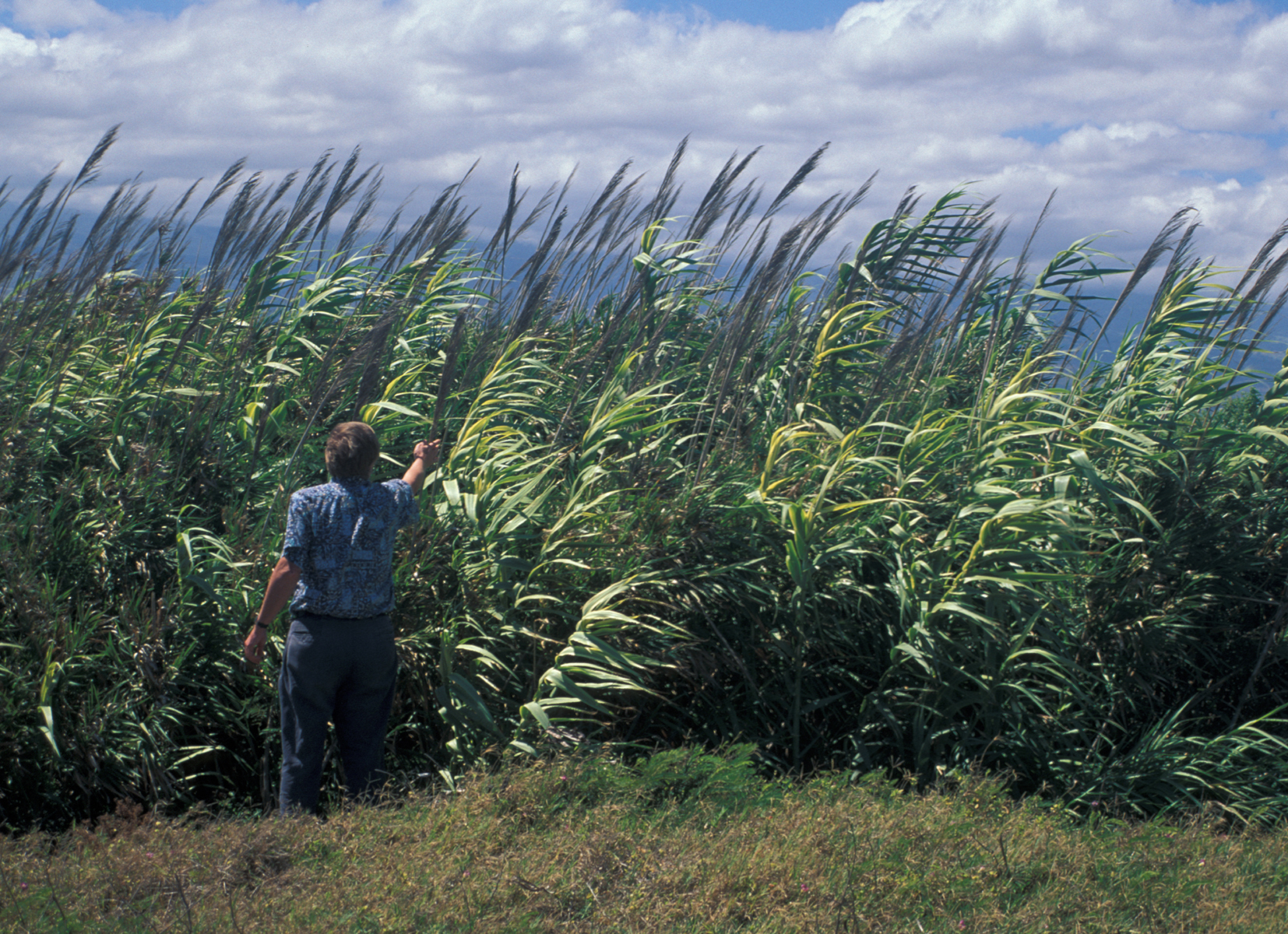
Genera Arundinaria and Arundo
Cane is any of various tall, perennial grasses with flexible, woody stalks from the genera Arundinaria, and Arundo.
Scientifically speaking, they are either of two genera from the family Poaceae. The genus Arundo is native from the Mediterranean Basin to the Far East. The genus Arundinaria is a bamboo (Bambuseae) found in the New World. Neither genus includes sugarcane (genus Saccharum, tribe Andropogoneae).
Cane commonly grows in large riparian stands known as canebrakes, found in toponyms throughout the Southern and Western United States; they are much like the tules (Schoenoplectus acutus) of California.
Depending on strength, cane can be fashioned for various purposes, including walking sticks, crutches, assistive canes, judicial or school canes, baskets, furniture, boats, roofs and wherever stiff, withy sticks can be put to good use.

Etymology
The English word cane derives , , , and .
Other uses
Cane is used for a variety of artistic and practical purposes, such as Native American baskets of North America. During the 18th and early 19th century, non-commissioned officers in some European armies could carry canes to discipline troops (when not in use, the cane was hooked to a cross-belt or a button). Cane is used to describe furniture made of wicker.
References
References
- [http://www.merriam-webster.com/dictionary/cane Merria-Webster definition]
This article was imported from Wikipedia and is available under the Creative Commons Attribution-ShareAlike 4.0 License. Content has been adapted to SurfDoc format. Original contributors can be found on the article history page.
Ask Mako anything about Cane (grass) — get instant answers, deeper analysis, and related topics.
Research with MakoFree with your Surf account
Create a free account to save articles, ask Mako questions, and organize your research.
Sign up freeThis content may have been generated or modified by AI. CloudSurf Software LLC is not responsible for the accuracy, completeness, or reliability of AI-generated content. Always verify important information from primary sources.
Report