From Surf Wiki (app.surf) — the open knowledge base
Camptodactyly
Permanent bending of a finger or toe
Permanent bending of a finger or toe
| Field | Value | |||||
|---|---|---|---|---|---|---|
| name | Camptodactyly | |||||
| image | Congenital-kamptodaktyly.jpg | |||||
| pronounce | kamp-to-dak-tee-lee | |||||
| field | Medical genetics | |||||
| symptoms | Permanent flexion of the proximal interphalangeal joints, although symptoms may vary in person; some people have very tight flexed fingers and other people have flexed fingers that straighten when pressed on | |||||
| complications | People with severe camptodactyly may have difficulty holding objects | |||||
| onset | There are congenital forms, adolescent-onset forms and acquired forms | |||||
| duration | Life-long | |||||
| treatment | Splinting, surgery, etc. | |||||
| frequency | 1% of the world population | |||||
| <ref>{{Cite web | url | https://www.chop.edu/conditions-diseases/camptodactyly | archive-url=https://web.archive.org/web/20210621112335/https://www.chop.edu/conditions-diseases/camptodactyly | archive-date=2021-06-21 | title=Camptodactyly | date=18 November 2016}} |
Camptodactyly is a medical condition that causes one or more digits (fingers or toes) to be permanently bent. It involves fixed flexion deformity of the proximal interphalangeal joints.
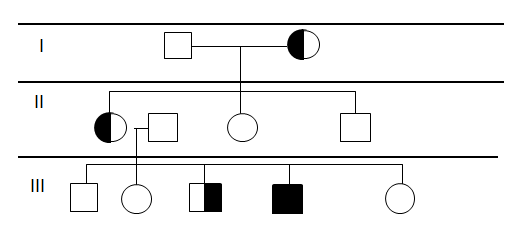
Camptodactyly can be caused by a genetic disorder. In that case, it is an autosomal dominant trait that is known for its incomplete genetic expressivity. This means that when a person has the genes for it, the condition may appear in both hands, one, or neither. A linkage scan proposed that the chromosomal locus of camptodactyly was 3q11.2-q13.12.
Causes
The specific cause of camptodactyly remains unknown, but there are a few deficiencies that lead to the condition. A deficient lumbrical muscle controlling the flexion of the fingers, and abnormalities of the flexor and extensor tendons.
A number of congenital syndromes may also cause camptodactyly:
- Jacobsen syndrome
- Beals syndrome
- Blau syndrome
- Freeman–Sheldon syndrome
- Cerebrohepatorenal syndrome
- Weaver syndrome
- Christianson syndrome
- Gordon syndrome
- Jaccoud arthropathy
- Lenz microphthalmia syndrome
- Marshall–Smith–Weaver syndrome
- Oculo-dento-digital syndrome
- Tel Hashomer camptodactyly syndrome
- Toriello–Carey syndrome
- Trisomy 13
- Stuve–Wiedemann syndrome
- Loeys–Dietz syndrome
- Fetal alcohol syndrome
- Fryns syndrome
- Marfan syndrome
- Carnio-carpo-tarsal dystrophy
Genetics
The pattern of inheritance is determined by the phenotypic expression of a gene—which is called expressivity. Camptodactyly can be passed on through generations in various levels of phenotypic expression, which include both or only one hand. This means that the genetic expressivity is incomplete. It can be inherited from either parent.
In most of its cases, camptodactyly occurs sporadically, but it has been found in several studies that it is inherited as an autosomal dominant condition.
Treatment

If a contracture is less than 30 degrees, it may not interfere with normal functioning. The common treatment is splinting and occupational therapy. Surgery is the last option for most cases as the result may not be satisfactory.
Etymology
The name is derived from the ancient Greek words καμπτός, kamptos (bent) and δάκτυλος, daktylos (finger).
References
References
- "Camptodactyly | Boston Children's Hospital".
- "Camptodactyly | Boston Children's Hospital".
- "Camptodactyly - Hand - Orthobullets".
- (18 November 2016). "Camptodactyly".
- (July 2004). "Distraction - A Minimally Invasive Technique for Treating Camptodactyly and Clinodactyly". Medical Journal, Armed Forces India.
- (February 2008). "Fifth finger camptodactyly maps to chromosome 3q11.2–q13.12 in a large German kindred.". [[European Journal of Human Genetics]].
- Kozin, Scott H.. (2004). "Hand Surgery". Lippincott Williams & Wilkins.
- (March 2009). "Comprehensive clinical and molecular assessment of 32 probands with congenital contractural arachnodactyly: Report of 14 novel mutations and review of the literature". [[Human Mutation]].
- (February 1986). "A case of Fryns syndrome". [[Journal of Medical Genetics]].
- (15 March 2012). "Familial Peripheric Polyneuropathy Plus Camptodactyly; Three Sisters". Türkiye Fiziksel Tıp ve Rehabilitasyon Dergisi.
- Cummings, Michael R.. (2011). "Human Heredity: Principles and Issues". Cengage Learning.
- (2013). "Camptodactyly Treatments".
- Goldfarb, Charles. (2012-03-27). "Congenital Hand and Arm Differences". [[Washington University in St. Louis]].
This article was imported from Wikipedia and is available under the Creative Commons Attribution-ShareAlike 4.0 License. Content has been adapted to SurfDoc format. Original contributors can be found on the article history page.
Ask Mako anything about Camptodactyly — get instant answers, deeper analysis, and related topics.
Research with MakoFree with your Surf account
Create a free account to save articles, ask Mako questions, and organize your research.
Sign up freeThis content may have been generated or modified by AI. CloudSurf Software LLC is not responsible for the accuracy, completeness, or reliability of AI-generated content. Always verify important information from primary sources.
Report