From Surf Wiki (app.surf) — the open knowledge base
Camp Kupugani
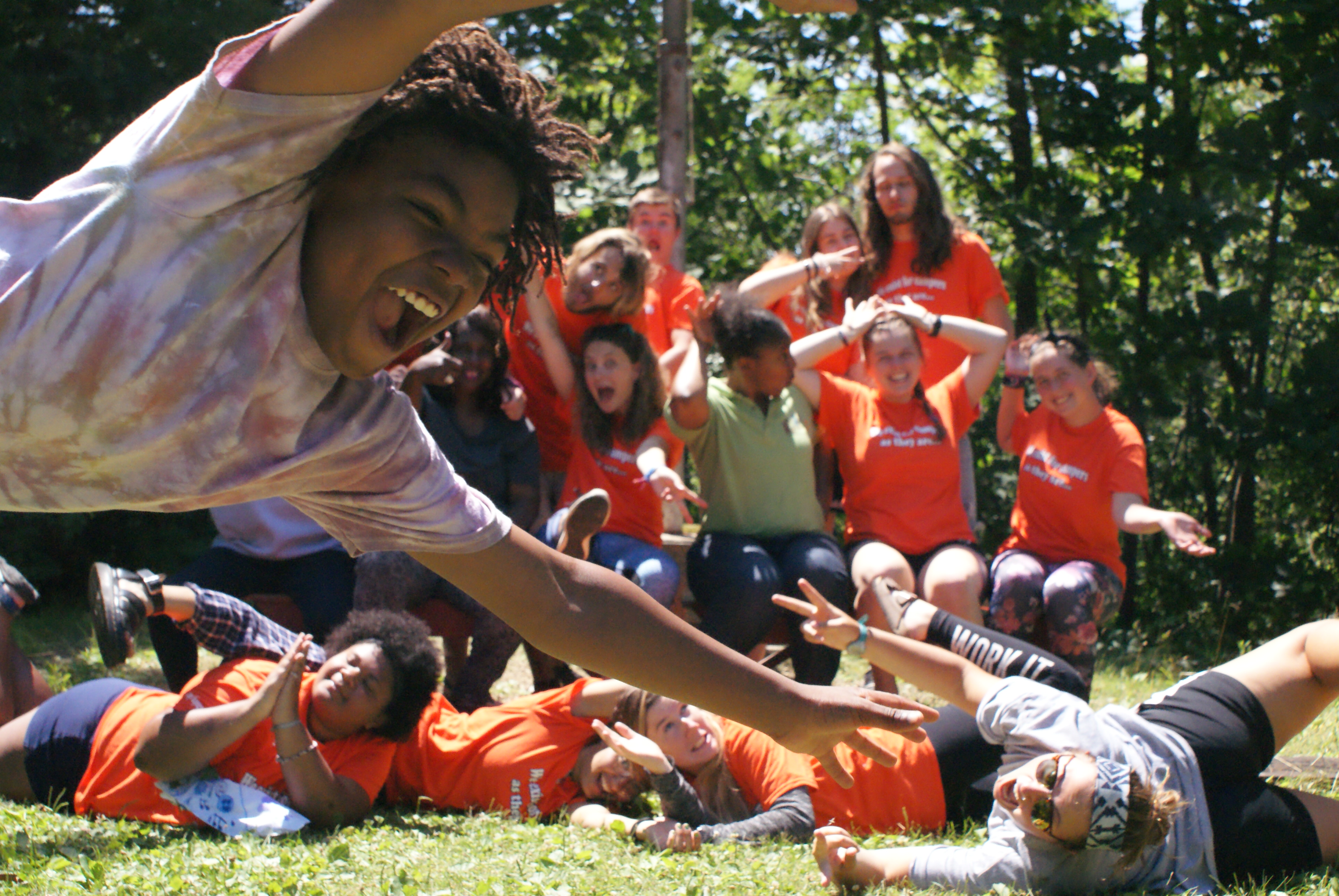
Camp Kupugani is a multicultural summer camp for young women and young men, in girls-only and blended sessions, with an emphasis on teaching them to recognize and eliminate stereotypes. "Kupugani" is a Zulu concept that means "To raise oneself up" It is located near Adeline, Illinois, and is the only private, residential summer camp facility in the United States under black ownership. It is also an American Camp Association member.
History
The camp land history of Camp Kupugani dates back to the 1800s. In April 1951, the Board of Directors for the 4-H Camp of Northwestern Illinois purchased an original parcel of 110 acres of Midwest timberland along the Leaf River from brothers Ben and Deed Sjoberg. Later donations brought the site to its present 126 acres. The camp was named White Eagle, in honor of the old White Eagle Mill. Built in 1837 and located on what is now camp property, today’s campgrounds contain remnants of the location's history, with the old mill forming the base of the dining hall fireplace.
Owner
The camp's owner and director is Kevin Gordon, the Canadian-born son of Jamaican immigrants. He has a degree in psychology from Harvard University and a law degree from the University of California, Berkeley. After college graduation, he continued working as an assistant camp director, traveled through Europe shortly after the fall of the Berlin Wall, traveled throughout Africa, and wrote a book chronicling his African adventures (titled Not Yet African). He has been involved with camping since 1990; before coming to Kupugani, he worked at camps in Wisconsin, Pennsylvania, and California. His wife Natasha Jackson is the food service manager.
Mission
Kupugani's mission operates based on six core values:
- Excellence ("Do your best")
- Empowerment ("Be your best")
- Community ("Show your best")
- Fun
- Safety
- Environment In addition, an important feature of the camp's philosophy is its multicultural education program, designed to allow children from varied cultures and backgrounds to form a cohesive community while having fun, being empowered, and learning critical social skills. In addition to traditional camp activities such as hiking, water activities, and sports, campers participate in team activities which focus on team-building and accessing different cultures as well as self-expression and self-esteem. Like most summer camps, it is "tech-free", with campers not allowed to use cell phones, computers, or iPods. Kupugani has been widely recognized in the media, including features in Ebony Magazine, on the Tavis Smiley Radio program, and on WCPT Chicago radio, as well as articles in "Afrique" and "Insight News".
Program
Camp Kupugani serves children age 7 to 15. It offers a 2-week girls only session, and 2- and 4-week "blended" sessions for all genders. The camp also offers a mother-daughter weekend and a parent-child weekend experience. It was founded as a girls' camp; sessions for boys were added in 2009, and the blended session piloted in 2016.
Activities
Camp Kupugani offers a variety of land, water, and adventure activities including:
- Rock Climbing
- Horse Riding
- Swimming
- Basketball
- Tennis
- Pickleball
- Spikeball
- River Walks
- Dam Jumping
- Lake Play
- Paddle Boarding
- GaGa
- Crate Stacking
- 9 Square In The Air
- Slacklining
- Frisbee Golf
- Hiking
- Challenge Hikes
- Night Hikes
- Mud Volleyball
- Sand Volleyball
- Arts and Crafts
- Canoeing
- Biking
- Ecology and Nature
- Soccer
- Archery
- Fishing
Membership
The camp draws its population from a wide range of children. In addition to campers from as far as Japan, Spain, and England, others have joined them from California, Texas, New Mexico, Louisiana, Georgia, and Wisconsin, in addition to children from the camp's region of Northwest Illinois. The campers' ethnic backgrounds are a mix: including Caucasian, Black/African-American, Hispanic/Latina, Asian, South Asian, and Biracial, including of Native American and Middle Eastern descent.
References
References
- Kahn Jr., E.J.. (1968). "The Separated People". W.W. Norton & Company Inc..
- Extensive research of the major camp associations—American Camp Association, Association of Independent Camps, Midwest Association of Independent Camps, and Western Association of Independent Camps—has revealed no private residential camp majority-owned and directed by persons of color. For a person of color to even direct—much less own—a residential camp is rare: a 2007 ACA nationwide study reveals that, of over 500 respondent accredited camps, less than 1% of directors are black, and 95% are Caucasian.
- "Camp History {{!}} Illinois Summer Camp {{!}} Camp Kupugani". Camp Kupugani.
- Talmadge, Ashley. "Drop-off day at summer camp: Are you "parent-ready"?". Calgary's Child.
- Feiler, Bruce. (July 19, 2013). "The Care-Package Wars". The New York Times.
- Kevin., Gordon. (1998). "Not yet African : a journal of discovery". Passeggiata Press.
- "Camp Directors". Camp Kupugani website.
- Henderson, Shirley. (August 2007). "Growing Up Green". Ebony.
- Talmadge, Ashley. "Going Tech-Free at Camp: Kids Unplug and Interesting Things Happen". Valley Parent Magazine.
- "Kupugani Multicultural Camp". Camp Kupugani website.
This article was imported from Wikipedia and is available under the Creative Commons Attribution-ShareAlike 4.0 License. Content has been adapted to SurfDoc format. Original contributors can be found on the article history page.
Ask Mako anything about Camp Kupugani — get instant answers, deeper analysis, and related topics.
Research with MakoFree with your Surf account
Create a free account to save articles, ask Mako questions, and organize your research.
Sign up freeThis content may have been generated or modified by AI. CloudSurf Software LLC is not responsible for the accuracy, completeness, or reliability of AI-generated content. Always verify important information from primary sources.
Report