From Surf Wiki (app.surf) — the open knowledge base
Camp Justice (Guantanamo)
American military court structure in Cuba

American military court structure in Cuba
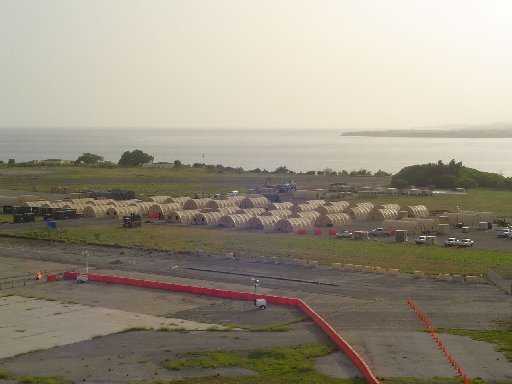
Camp Justice is the name given to the portion of the Guantanamo Bay Naval Base where the Guantanamo military commissions are held. |access-date=14 October 2007 |url-status=live |archive-url=https://web.archive.org/web/20120205134643/http://www.af.mil/news/story.asp?id=123070659 |archive-date=5 February 2012
It was named by TSgt Neil Felver of the 122 Civil Engineering Squadron in a name the camp contest. |url-status=bot: unknown
| access-date=14 October 2007 | archive-date=30 January 2015 | archive-url=https://web.archive.org/web/20150130225747/http://articles.baltimoresun.com/2007-10-14/news/0710140167_1_military-commissions-cuba-complex | url-status=live mirror Initially the complex was to be a permanent facility, costing over $100 million. The United States Congress overruled the Bush administration's plans. Now the camp will be a portable, temporary facility, costing approximately $10 million.
On 2 January 2008, Toronto Star reporter Michelle Shephard offered an account of the security precautions reporters go through before they can attend the hearings: |url-status=live
- Reporters were not allowed to bring in more than one pen;
- Female reporters were frisked if they wore underwire bras;
- Reporters were not allowed to bring in their traditional coil-ring notepads;
- The bus bringing reporters to the hearing room is checked for explosives before it leaves;
- 200 m from the hearing room reporters exit the bus, pass through metal detectors, and are sniffed by chemical detectors for signs of exposure to explosives;
- Only eight reporters are allowed into the hearing room—the remainder watch over closed circuit TV;
On 1 November 2008, David McFadden of the Associated Press stated the 100 tents erected to hold lawyers, reporters and observers for the military commissions were practically deserted when he and two other reporters covered Ali Hamza al-Bahlul's military commission in late October 2008. |url-status=dead
References
This article was imported from Wikipedia and is available under the Creative Commons Attribution-ShareAlike 4.0 License. Content has been adapted to SurfDoc format. Original contributors can be found on the article history page.
Ask Mako anything about Camp Justice (Guantanamo) — get instant answers, deeper analysis, and related topics.
Research with MakoFree with your Surf account
Create a free account to save articles, ask Mako questions, and organize your research.
Sign up freeThis content may have been generated or modified by AI. CloudSurf Software LLC is not responsible for the accuracy, completeness, or reliability of AI-generated content. Always verify important information from primary sources.
Report