From Surf Wiki (app.surf) — the open knowledge base
Callitrichidae
Family of New World monkeys
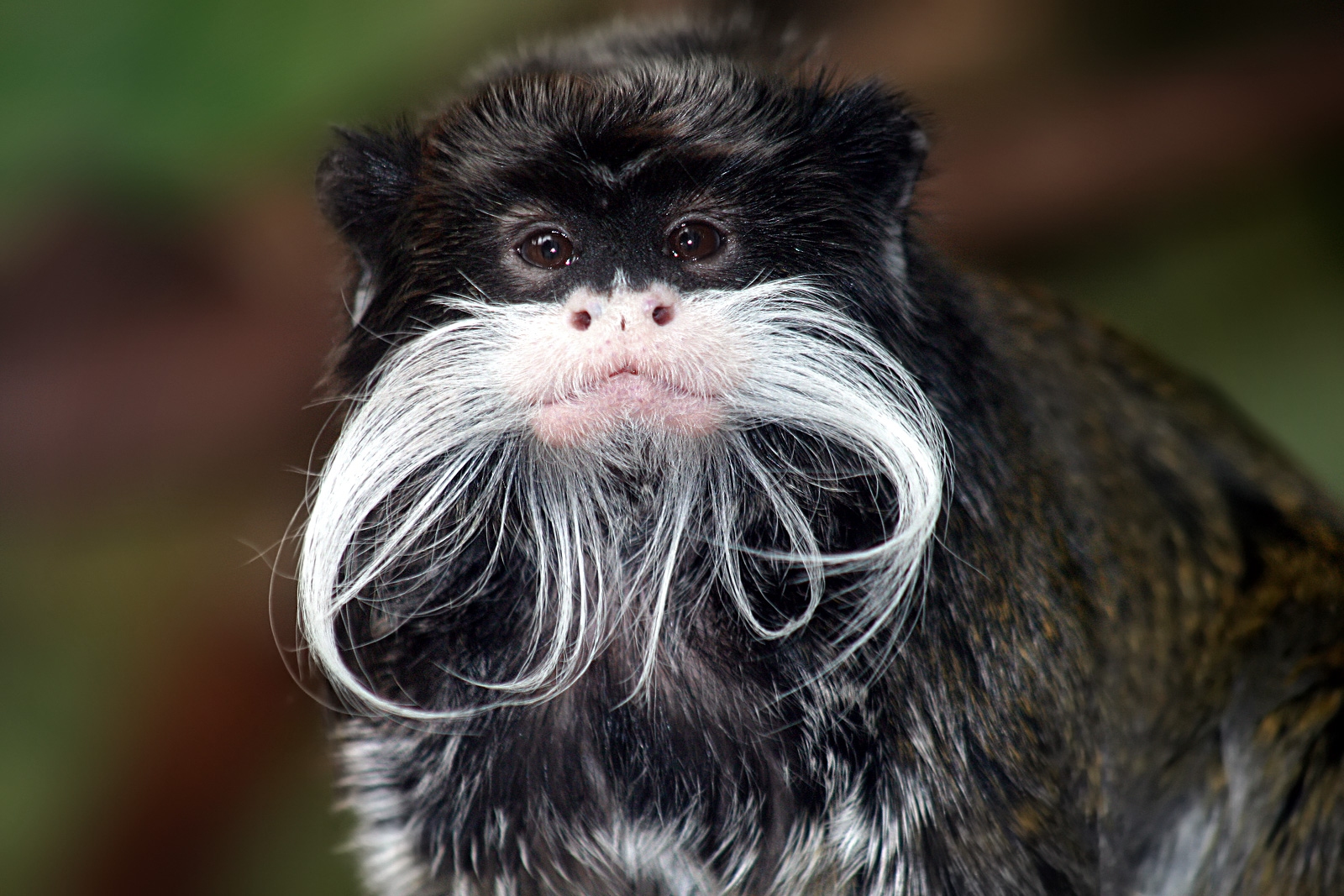
Family of New World monkeys
- Hapalidae Wagner, 1840
The Callitrichidae (also called Arctopitheci or Hapalidae) are a family of New World monkeys, including marmosets, tamarins, and lion tamarins. At times, this group of animals has been regarded as a subfamily, called the Callitrichinae, of the family Cebidae.
This taxon was traditionally thought to be a primitive lineage, from which all the larger-bodied platyrrhines evolved. However, some works argue that callitrichids are actually a dwarfed lineage.
Ancestral stem-callitrichids likely were "normal-sized" ceboids that were dwarfed through evolutionary time. This may exemplify a rare example of insular dwarfing in a mainland context, with the "islands" being formed by biogeographic barriers during arid climatic periods when forest distribution became patchy, and/or by the extensive river networks in the Amazon Basin.
All callitrichids are arboreal. They are the smallest of the simian primates. They eat insects, fruit, and the sap or gum from trees; occasionally, they take small vertebrates. The marmosets rely quite heavily on tree exudates, with some species (e.g. Callithrix jacchus and Cebuella pygmaea) considered obligate exudativores.
Species and subspecies list
Taxa included in the Callitrichidae are:
- Family Callitrichidae
- Genus Saguinus
- Subgenus Saguinus
- Golden-handed tamarin, Saguinus midas
- Western black tamarin, Saguinus niger
- Eastern black-handed tamarin, Saguinus ursulus
- Pied tamarin, Saguinus bicolor
- Martins's tamarin, Saguinus martinsi
- Saguinus martinsi martinsi
- Saguinus martinsi ochraceus
- White-footed tamarin, Saguinus leucopus
- Cottontop tamarin, Saguinus oedipus
- Geoffroy's tamarin, Saguinus geoffroyi
- Subgenus Tamarinus
- Moustached tamarin, Saguinus mystax
- Spix's moustached tamarin, Saguinus mystax mystax
- Red-capped moustached tamarin, Saguinus mystax pileatus
- White-rump moustached tamarin, Saguinus mystax pluto
- White-lipped tamarin, Saguinus labiatus
- Geoffroy's red-bellied tamarin, Saguinus labiatus labiatus
- Gray's red-bellied tamarin, Saguinus labiatus rufiventer
- Thomas's red-bellied tamarin, Saguinus labiatus thomasi
- Emperor tamarin, Saguinus imperator
- Black-chinned emperor tamarin, Saguinus imperator imperator
- Bearded emperor tamarin, Saguinus imperator subgrisescens
- Mottle-faced tamarin, Saguinus inustus
- Moustached tamarin, Saguinus mystax
- Subgenus Saguinus
- Genus Leontocebus
- Black-mantled tamarin, Leontocebus nigricollis
- Spix's black-mantle tamarin, Leontocebus nigricollis nigricollis
- Graells's tamarin, Leontocebus nigricollis graellsi
- Hernández-Camacho's black-mantle tamarin, Leontocebus nigricollis hernandezi
- Brown-mantled tamarin, Leontocebus fuscicollis
- Avila Pires' saddle-back tamarin, Leontocebus fuscicollis avilapiresi
- Spix's saddle-back tamarin, Leontocebus fuscicollis fuscicollis
- Mura's saddleback tamarin, Leontocebus fuscicollis mura
- Lako's saddleback tamarin, Leontocebus fuscicollis primitivus
- Andean saddle-back tamarin, Leontocebus leucogenys
- Lesson's saddle-back tamarin, Leontocebus fuscus
- Cruz Lima's saddle-back tamarin, Leontocebus cruzlimai
- Weddell's saddle-back tamarin, Leontocebus weddelli
- Weddell's tamarin, Leontocebus weddelli weddelli
- Crandall's saddle-back tamarin, Leontocebus weddelli crandalli
- White-mantled tamarin, Leontocebus weddelli melanoleucus
- Golden-mantled tamarin, Leontocebus tripartitus
- Illiger's saddle-back tamarin, Leontocebus illigeri
- Red-mantled saddle-back tamarin, Leontocebus lagonotus
- Geoffroy's saddle-back tamarin, Leontocebus nigrifrons
- Black-mantled tamarin, Leontocebus nigricollis
- Genus Leontopithecus
- Golden lion tamarin, Leontopithecus rosalia
- Golden-headed lion tamarin, Leontopithecus chrysomelas
- Black lion tamarin, Leontopithecus chrysopygus
- Superagui lion tamarin, Leontopithecus caissara
- Genus Patasola
- Patasola magdalenae
- Genus Micodon
- Micodon kiotensis
- Genus Callimico
- Goeldi's marmoset, Callimico goeldii
- Genus Mico
- Silvery marmoset, Mico argentatus
- Roosmalens' dwarf marmoset, Mico humilis
- White marmoset, Mico leucippe
- Black-tailed marmoset, Mico melanurus
- Schneider's marmoset, Mico schneideri
- Hershkovitz's marmoset, Mico intermedius
- Emilia's marmoset, Mico emiliae
- Black-headed marmoset, Mico nigriceps
- Marca's marmoset, Mico marcai
- Santarem marmoset, Mico humeralifer
- Gold-and-white marmoset, Mico chrysoleucos
- Maués marmoset, Mico mauesi
- Sateré marmoset, Mico saterei
- Rio Acarí marmoset, Mico acariensis
- Rondon's marmoset, Mico rondoni
- Munduruku marmoset, Mico munduruku
- Genus Cebuella
- Western pygmy marmoset, Cebuella pygmaea
- Eastern pygmy marmoset, Cebuella niveiventris
- Genus Callithrix
- Common marmoset, Callithrix jacchus
- Black-tufted marmoset, Callithrix penicillata
- Wied's marmoset, Callithrix kuhlii
- White-headed marmoset, Callithrix geoffroyi
- Buffy-tufted marmoset, Callithrix aurita
- Buffy-headed marmoset, Callithrix flaviceps
- Genus Saguinus
References
References
- {{MSW3 Groves
- (2009). "South American Primates: Comparative Perspectives in the Study of Behavior, Ecology, and Conservation". Springer.
- (2015). "Some nomenclatural notes regarding authorship and dates of New World monkeys (Primates: Platyrrhini)". Shernornia.
- Hershkovitz, P. Living New World Monkeys (Platyrrhini) with an Introduction to the Primates. University of Chicago 1977.
- (1980-01-01). "Callitrichids as phyletic dwarfs, and the place of the Callitrichidae in Platyrrhini". Primates.
- Naish, Darren. [http://blogs.scientificamerican.com/tetrapod-zoology/2012/11/27/marmosets-and-tamarins-dwarfed-monkeys-of-south-american-tropics/ Marmosets and tamarins: dwarfed monkeys of the South American tropics]. [[Scientific American]] November 27, 2012
- (1994). "Social implications of gummivory in marmosets". American Journal of Physical Anthropology.
- Sussman, R.W.. (2003). "Primate Ecology and Social Structure". Pearson Custom Publishing.
- (1988). "tamarin and marmoset mating systems: Unusual flexibility". Trends in Ecology and Evolution.
- Cleveland and Snowdon. Social development during the first twenty weeks in the cotton-top tamarin ('' Saguinus o. oedipus''). [[Animal Behaviour (journal). Animal Behaviour]] (1984) vol. 32 (2) pp. 432-444
- (2018). "Phenotypic evolution in marmoset and tamarin monkeys (Cebidae, Callitrichinae) and a revised genus-level classification". Molecular Phylogenetics and Evolution.
- Rylands, Anthony B.. (2016). "Taxonomic Review of the New World Tamarins (Primates: Callitrichidae)". Zoological Journal of the Linnean Society.
- (2009). "The Smallest Anthropoids: Developments in Primatology: Progress and Prospects". Springer.
- (2019). "Early Arrival and Climatically-Linked Geographic Expansion of New World Monkeys from Tiny African Ancestors". Systematic Biology.
- Sampaio. (April 2015). "Re-description and assessment of the taxonomic status of ''Saguinus fuscicollis cruzlimai'' Hershkovitz, 1966 (Primates, Callitrichinae)". Primates.
This article was imported from Wikipedia and is available under the Creative Commons Attribution-ShareAlike 4.0 License. Content has been adapted to SurfDoc format. Original contributors can be found on the article history page.
Ask Mako anything about Callitrichidae — get instant answers, deeper analysis, and related topics.
Research with MakoFree with your Surf account
Create a free account to save articles, ask Mako questions, and organize your research.
Sign up freeThis content may have been generated or modified by AI. CloudSurf Software LLC is not responsible for the accuracy, completeness, or reliability of AI-generated content. Always verify important information from primary sources.
Report