From Surf Wiki (app.surf) — the open knowledge base
Caligula (film)
1979 film by Tinto Brass
.jpg)
1979 film by Tinto Brass
| Field | Value | |||||||
|---|---|---|---|---|---|---|---|---|
| image | Caligulaposter.jpg | |||||||
| alt | A withered coin depicting the profile of Caligula has blood running down from the eyes. | |||||||
| caption | American theatrical release poster | |||||||
| director | Tinto Brass | |||||||
| writer | Gore Vidal | |||||||
| producer | {{plainlist | |||||||
| starring | {{plainlist | |||||||
| cinematography | Silvano Ippoliti | |||||||
| editing | {{plainlist | |||||||
| music | {{plainlist | |||||||
| * Bruno Nicolai (as Paul Clemente)<ref name | Hawes233 | |||||||
| studio | {{plainlist | |||||||
| distributor | {{plainlist | |||||||
| * Produzioni Atlas Consorziate (P.A.C.) (Italy)<ref>{{citation | title | Annuario del cinema italiano & audiovisivi | language=it | publisher=Centro di studi di cultura, promozione e difusione del cinema | page=59 | oclc=34869836 }} | ||
| * Analysis Film Releasing Corporation (United States)<ref>{{cite book | author | Anthony Slide | title=The New Historical Dictionary of the American Film Industry | url=https://books.google.com/books?id=KnzsAgAAQBAJ&pg=PA11 | date= 2014 | publisher=Routledge | isbn=978-1-135-92554-3 | page=11}} |
| released | ||||||||
| runtime | 156 minutes | |||||||
| country | {{plainlist | |||||||
| language | {{plainlist | |||||||
| budget | $17.5 million | |||||||
| gross | $10 million–$23.4 million |
- Bob Guccione
- Franco Rossellini
- Malcolm McDowell
- Teresa Ann Savoy
- Helen Mirren
- Peter O'Toole
- John Steiner
- Guido Mannari
- Paolo Bonacelli
- Leopoldo Trieste
- Giancarlo Badessi
- Mirella D'Angelo
- Anneka Di Lorenzo
- Lori Wagner
- Adriana Asti
- John Gielgud
- Nino Baragli
- The Production
- Bruno Nicolai (as Paul Clemente)
- Penthouse Films International
- Felix Cinematografica S.R.L.
- Produzioni Atlas Consorziate (P.A.C.) (Italy)
- Analysis Film Releasing Corporation (United States)
- Italy
- United States
- English
- Italian
Caligula () is a 1979 erotic historical drama film about the rise and fall of Roman Emperor Caligula. The film stars Malcolm McDowell in the title role, alongside Teresa Ann Savoy, Helen Mirren, Peter O'Toole, John Steiner, and John Gielgud.
Original screenwriter Gore Vidal and film director Tinto Brass both disavowed the extensive changes to their contributions, with Brass dismissed prior to editing. Financier/producer Bob Guccione, founder of Penthouse magazine, engaged Giancarlo Lui to film post-production scenes featuring hardcore sex, significantly altering the film's tone and style.
Initially released to Italian cinemas in 1979, then screened in the United States the following year, Caligula was met with legal issues and controversies over its violent and sexual content. Different abridged versions were released worldwide, while its uncut form remains banned in several countries. Despite a generally negative reception, the film has gained notoriety as a cult classic with significant merit for its political content and historical portrayal.
A 178-minute Ultimate Cut, approved by McDowell who always felt his performance was hindered in the original version, and consisting entirely of new archival footage not used for the previous theatrical release, premiered at the Cannes Film Festival in 2023, receiving more favourable reviews from critics.
Plot
Caligula is the young heir to the throne of his great-uncle, Emperor Tiberius. One morning, a blackbird flies into his room; Caligula considers this a bad omen. Shortly afterward, one of the heads of the Praetorian Guard, Naevius Sutorius Macro, tells Caligula that Tiberius demands his immediate presence at Capri, where the Emperor lives with his close friend Nerva, Caligula's dim-witted uncle Claudius, and Caligula's cousin (Tiberius's grandson) Gemellus. Fearing assassination, Caligula is afraid to leave, but his sister and lover Drusilla persuades him to go.
At Capri, Caligula finds that Tiberius has become depraved, showing signs of advanced venereal diseases and embittered with Rome and politics. Tiberius enjoys swimming with naked youths and watching degrading sex shows that include deformed people and animals; Caligula observes with fascination and horror. Tensions rise when Tiberius tries to poison Caligula in front of Gemellus. Nerva commits suicide and Caligula tries to kill Tiberius but loses his nerve. Proving his loyalty to Caligula, Macro kills Tiberius instead with Gemellus as a witness.
After Tiberius's death and burial, Caligula is proclaimed the new Emperor, then proclaims Drusilla as his equal, to the apparent disgust of the Roman Senate. Drusilla, fearful of Macro's influence, persuades Caligula to get rid of him. Caligula sets up a mock trial in which Gemellus is intimidated into testifying that Macro murdered Tiberius, then has Macro's wife Ennia banished from Rome. After Macro is executed in a gruesome public game, Caligula appoints Tiberius's former adviser Longinus as his personal assistant while pronouncing the docile Senator Chaerea as the new head of the Praetorian Guard.
Drusilla tries to find Caligula a wife among the priestesses of the goddess Isis, the cult they secretly practice. Caligula wants to marry Drusilla, but she insists they cannot marry because she is his sister. Instead, Caligula marries Caesonia, a priestess and notorious courtesan, after she bears him an heir. Drusilla reluctantly supports their marriage. Meanwhile, despite Caligula's popularity with the masses, the Senate expresses disapproval for what initially seem to be light eccentricities. Darker aspects of Caligula's personality emerge when he brutally rapes a virgin bride and her husband on their wedding day in a minor fit of jealousy and orders Gemellus's execution to provoke a reaction from Drusilla.
After discovering that Caesonia is pregnant, Caligula develops a severe fever. Drusilla nurses him back to health. Just as he fully recovers, Caesonia bears him a daughter, Julia Drusilla. During the celebration, Drusilla collapses with the same fever he had had. Soon afterward, Caligula receives another ill omen in the form of a blackbird. Despite his praying to Isis out of desperation, Drusilla dies from her fever. Initially unable to accept her death, Caligula has a nervous breakdown and rampages through the palace, destroying a statue of Isis while clutching Drusilla's body.
Now in a deep depression, Caligula walks the Roman streets disguised as a beggar; he causes a disturbance after watching an amateur performance mocking his relationship with Drusilla. After a brief stay in a city jail, Caligula proclaims himself a god and becomes determined to destroy the senatorial class, which he has come to loathe. The new reign he leads becomes a series of humiliations against the foundations of Rome. Senators' wives are forced to work in the service of the state as prostitutes, estates are confiscated, the old religion is desecrated, and the army is made to embark on a mock invasion of Britain. Unable to further tolerate his actions, Longinus conspires with Chaerea to assassinate Caligula.
Caligula enters his bedroom where a nervous Caesonia awaits him. Another blackbird appears but only Caesonia is frightened of it. The next morning, the two rehearse an Egyptian play. Claudius becomes suspicious of Chaerea and follows him to the event. Shortly afterward, Caligula and his family are attacked in a coup headed by Longinus and Chaerea. Caesonia and Julia are murdered, and Chaerea stabs Caligula in the stomach. With his final breath, the Emperor defiantly whimpers "I live!" as his and his family's bodies are thrown down the stadium's stairs. Claudius witnesses the entire ordeal and is horrified even after being proclaimed Emperor by the Praetorian Guard. The people of Rome, having grown accustomed to the overall chaos, clean the blood off the marble floors.
Cast
- Malcolm McDowell as Caligula
- Teresa Ann Savoy as Drusilla
- Guido Mannari as Macro
- Patrick Allen as Macro (English dub voice) (uncredited)
- John Gielgud as Nerva
- Peter O'Toole as Tiberius
- Giancarlo Badessi as Claudius
- Bruno Brive as Gemellus
- Adriana Asti as Ennia
- Leopoldo Trieste as Charicles
- Paolo Bonacelli as Cassius Chaerea
- Joss Ackland as Cassius Chaerea (English dub voice) (uncredited)
- John Steiner as Longinus
- Mirella D'Angelo as Livia
- Helen Mirren as Caesonia
- Richard Parets as Mnester
- Paula Mitchell as Subura Singer
- Osiride Pevarello as Giant
- Donato Placido as Proculus
- Anneka Di Lorenzo as Messalina
- Lori Wagner as Agrippina
- Valerie Rae Clark as Imperial Brothel Worker
- Susanne Saxon as Imperial Brothel Worker
- Jane Hargrave as Imperial Brothel Worker
- Carolyn Patsis as Imperial Brothel Worker
- Bonnie Dee Wilson as Imperial Brothel Worker
Production
Development
The men's magazine Penthouse had long been involved in film funding, helping invest in films made by other studios, including Chinatown, The Longest Yard and The Day of the Locust, but it had never produced a film on its own. The magazine's founder Bob Guccione wanted to produce an explicit adult film within a feature film narrative that had high production values; he decided to produce a film about the rise and fall of the Roman emperor Caligula. Development began under producer Franco Rossellini, the nephew of filmmaker Roberto Rossellini. A screenplay was written by Lina Wertmüller, but Guccione rejected Wertmüller's script and hired Gore Vidal to write a new screenplay. Vidal's script had a strong focus on homosexuality, leading Guccione to demand rewrites which toned down the gay content for wider audience appeal. Guccione was concerned that Vidal's script contained several gay sex scenes and only one scene of heterosexual sex, which was between Caligula and his sister Drusilla. Vidal was paid $200,000 for his screenplay, titled Gore Vidal's Caligula.
Elaborate sets were built by production designer Danilo Donati, who also designed the film's costumes, jewelry, hairstyles, wigs, and makeup. Several mainstream actors were cast, Guccione intending to make a film that he felt, like Citizen Kane, would be a landmark in cinematic history. Guccione offered directing duties to John Huston and Lina Wertmüller, both of whom rejected the film. After viewing scenes from the film Salon Kitty, Guccione agreed to have lunch with that film's director, Tinto Brass, believing Brass would be the ideal person to direct Caligula. Brass had a reputation for being difficult to deal with on film sets but Guccione thought the film's epic scope would "keep [Brass] in line" and that Brass understood the concept of the film enough to direct it. Brass described Vidal's screenplay as "the work of an ageing arteriosclerotic" and agreed to direct only if he was allowed to rewrite Vidal's screenplay. Brass's screenplay expanded the sexual content to include orgies, decorative phalluses, and much female nudity. Guccione said Brass's rewrites were done out of necessity to the film's visual narrative and did not alter the dialogue or content.
In an interview for Time magazine, Vidal said that in film production, directors were "parasites" and a film's author was its screenwriter; in response, Brass demanded Vidal's removal from the set and Guccione agreed. Guccione considered the film to be a "collective effort, involving the input of a great number of artists and craftsmen", and the director to be the leader of a "team effort". Vidal filed a contractual dispute over the film because of Brass's rewrites; Guccione said Vidal had demanded 10% of the film's profits, which Vidal said was not the case. Vidal's name was removed from the film's title; the credits were changed to state that the film was "adapted from a screenplay by Gore Vidal", crediting no official screenwriter. Guccione said, "Gore's work was basically done and Tinto's work was about to begin".
Themes
What shall it profit a man if he should gain the whole world and lose his own soul?
The film's primary theme is "absolute power corrupts absolutely". Guccione said this final draft was more violent than sexual, stating, "I maintain the film is actually anti-erotic ... in every one of its scenes you'll find a mixture of gore or violence or some other rather ugly things".
Casting
Orson Welles was initially offered $1 million to star as Tiberius, a figure which would have been his highest ever salary, but he refused on moral grounds when he read the script. Gore Vidal expressed disbelief that this could have ever been the case as he felt that Welles could not have portrayed Tiberius, but then recalled Kenneth Tynan remarking to him at the time that Welles was "upset" by the script. Renowned actors who did accept roles in the film included Malcolm McDowell, Helen Mirren, Peter O'Toole and Sir John Gielgud, with Maria Schneider cast as Caligula's doomed sister Drusilla. Schneider became uncomfortable with appearing nude and in sexual scenes, and left the production, to be replaced by Teresa Ann Savoy, with whom Brass had previously worked on Salon Kitty. Schneider had also apparently angered Brass by sewing up the open tunics she was supposed to wear on camera. Gielgud was also offered the role of Tiberius, which he declined, as he felt Vidal's script was "pornographic", but he later accepted the shorter role of Nerva. Director Tinto Brass cast his own acquaintances as senators and noblemen, including ex-convicts, thieves and anarchists. Guccione cast Penthouse Pets as female extras in sexual scenes.
Filming

Principal photography began in 1976 in Rome. McDowell got along well with Tinto Brass, while Peter O'Toole immediately disliked the director. John Gielgud and Helen Mirren were indifferent to Brass; they ultimately trusted his direction and focused on their own performances. O'Toole had stopped drinking alcohol before filming, but Guccione described O'Toole as being "strung out on something" and said the actor was not sober during the entire filming schedule.
Guccione later complained about McDowell's behaviour, calling the actor "shallow" and "stingy". According to Guccione, during the film's production, McDowell took members of the production to dinner at an expensive restaurant to celebrate England's win in a football match against the Italian team, and left the choreographer to pay for the meal, saying he had forgotten to bring enough money. Also according to Guccione, at the end of the production, McDowell gave his dresser a pendant bearing her name, but it was misspelled and she gave it back to him. McDowell offered her a signet ring, a prop from the film. She refused because it belonged to the production company.
Brass decided not to focus much on Danilo Donati's elaborate sets, and intentionally kept the Penthouse Pets in the background during sex scenes, sometimes not filming them at all. Guccione later said that Brass, apparently as a joke, would focus on "fat, ugly and wrinkled old women" and have them play the "sensual parts" intended for the Penthouse Pets. Brass and Guccione disagreed about the film's approach to sexual content; Guccione preferred unsimulated sexual content that Brass did not want to film.
Post-production
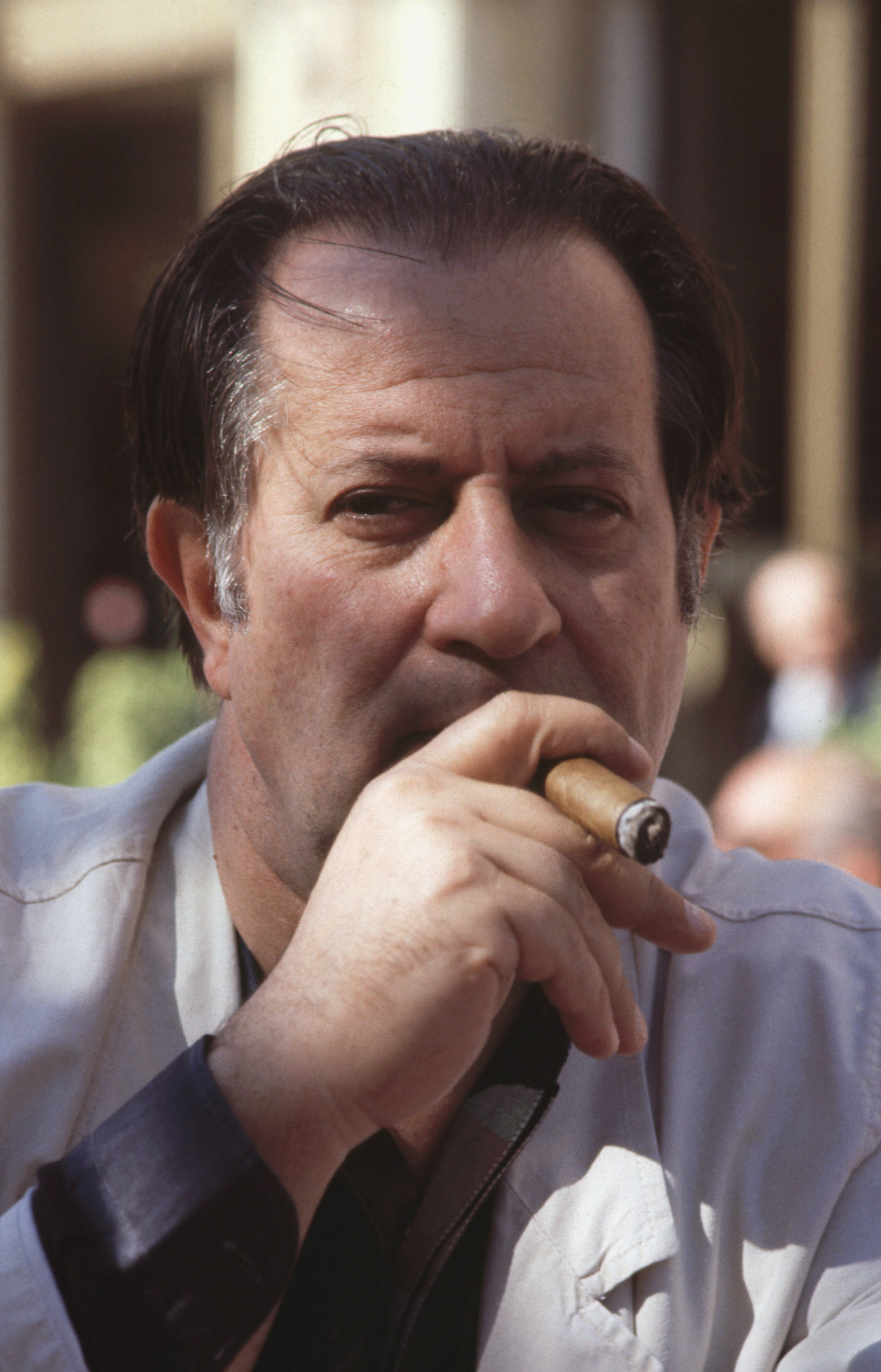
Filming concluded on 24 December 1976. Guccione said Brass shot enough film to "make the original version of Ben-Hur about 50 times over". Brass started editing the film but was not allowed to continue after he had edited approximately the first hour of it. His rough cut was disassembled, and the film was edited by several editors, changing its tone and structure significantly by removing and re-arranging many scenes, using different takes, a slower editing style, and music other than Brass intended.
A few weeks after filming had concluded, Guccione and Giancarlo Lui returned to Rome along with several Penthouse Pets. Guccione and Lui "hired a skeleton crew, snuck back into the studios at night, raided the prop room" and shot a number of hardcore sex scenes to be edited into the film.
Although there were a number of editors on the film, their names were not credited. Instead, the credit "Editing by the Production" is given during the opening credits.
As it was intended for an international release, the film was shot entirely in English. It was shot with sound, but there was so much noise at the studios that the main English-speaking actors had to re-record many of their lines later. However, as many of the supporting actors/actresses were Italian, their lines needed to be dubbed in English by other performers.
Peter O'Toole was reluctant to re-record his English dialogue; he avoided the film's producers, though they eventually tracked him down to Canada where they "dragged him in front of a mike" to record his dialogue. After production ended, O'Toole expressed his dislike of the film (although, according to Guccione, he had not even seen the rushes) and doubted that it would ever be released.
Caligula spent so much time in post-production that the film's co-producer Franco Rossellini feared that it would never be released. Rossellini then decided to make Caligula expensive sets and costumes profitable by using them in Messalina, Messalina!, a sex comedy directed by Bruno Corbucci. That film was released in Italy in 1977, two years before Caligula could be shown to the public. In some territories, it was released after Caligula and falsely marketed as its sequel. Anneka Di Lorenzo (as the title character) and Lori Wagner both reprised their roles from Caligula in Corbucci's film. Danilo Donati's sets and costumes were reused without his permission.
Soundtrack
- Motown Studios (Songs)
- Emmequattro Studios (Score)
- neoclassical
- pop
- disco The film was scored by Bruno Nicolai under the name Paul Clemente. According to Kristopher Spencer, the score "is gloriously dramatic, capturing both the decadent atmosphere of ancient Rome and the twisted tragedy of its true story". The album featured Nicolai's score and two versions—one in a disco style—of the love theme "We Are One", which did not appear in the film.
| headline = Side one | extra_column = Vocals | title1 = We Are One (Caligula Love Theme) | writer1 = Toni Biggs | extra1 = Lydia Van Huston | length1 = 3:18 | total_length = 3:18 | headline=Side two | extra_column = Vocals | title1 = We Are One (Caligula Love Theme Dance Version) | writer1 = Toni Biggs | extra1 = Lydia Van Huston | length1 = 4:33 | total_length = 4:33 | headline = Side three | title1 = Wood Sequence (Intro/Spartacus/Romeo & Juliet) | length1 = 4:20 | Paul Clemente]], Aram Khatchaturian, Sergei Prokofiev | title2 = Caligula & Ennia (Anfitrione) | length2 = 1:52 | writer2 = Paul Clemente | title3 = Caligula's Dance (Marziale) | length3 = 1:20 | writer3 = Paul Clemente | title4 = Drusilla's Bedroom (Spartacus) | writer4 = Aram Khatchaturian | length4 = 0:55 | title5 = Isis Pool (Oblio) | length5 = 4:15 | writer5 = Paul Clemente | title6 = Livia/Proculus Wedding (Movimento) | length6 = 3:37 | writer6 = Paul Clemente | title7 = Caesonia's Dance (Primitivo) | length7 = 1:25 | writer7 = Paul Clemente | total_length = 17:46 | headline = Side four | title1 = Drusilla's Death – Main Theme (Spartacus) | length1 = 5:48 | writer1 = Aram Khatchaturian | title2 = Orgy on Ship (Cinderella/Midnight Waltz) | length2 = 1:52 | writer2 = Sergei Prokofiev | title3 = Orgy on Ship – Part II (Orgia) | length3 = 2:28 | writer3 = Paul Clemente | title4 = Battle of Britain (Spartan War) | length4 = 1:26 | writer4 = John Leach | title5 = Play/Stadium (Equiziana) | length5 = 2:47 | writer5 = Paul Clemente | title6 = Caligula's Death (Romeo & Juliet) | length6 = 3:32 | writer6 = Sergei Prokofiev | title7 = Reprise (Spartacus [Main Theme]) | length7 = 0:45 | writer7 = Aram Khatchaturian | total_length = 19:07 |
|---|
Release
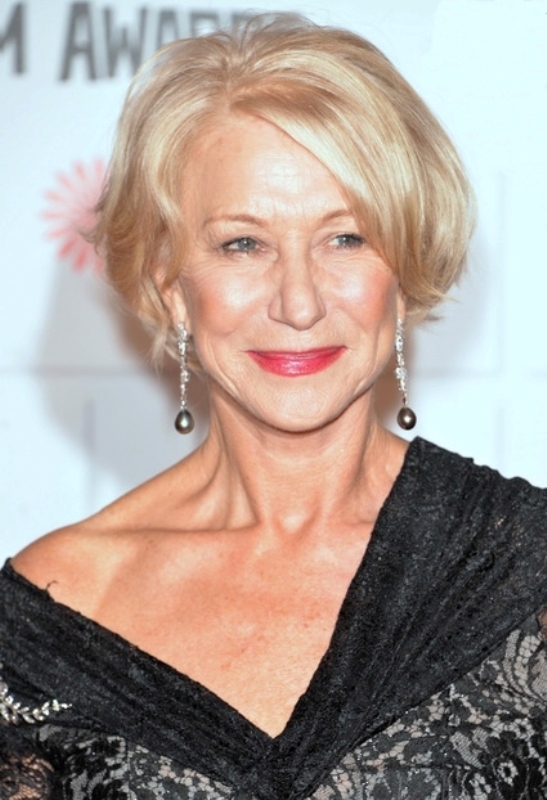
An edited version of the film had a limited run in a small town near Forlì, Italy before opening in Rome on Sunday, November 11, 1979. The film was confiscated by Italian police on November 15 with the Pubblico Ministero calling many scenes in the film "flagrantly obscene".
In the United States, Guccione refused to submit Caligula to the MPAA because he did not want the film to receive a ratingeven Xwhich he considered to be "demeaning". Instead, Guccione applied his own "Mature Audiences" rating to the film, instructing theater owners not to admit anyone under the age of 18.
Rather than leasing prints to exhibitors, the distributor rented theaters that specialized in foreign and art films for the purpose of screening Caligula exclusively in order to keep the film out of theaters that showed pornographic films.
Caligula grossed (equivalent to $ million in ) at the box office. The film was a financial success in France, Germany, Switzerland, Belgium, the Netherlands and Japan.
The script was adapted as a novelisation by William Johnston using the pseudonym William Howard.
Legal problems
In 1979, when Guccione tried to import the film's footage into the U.S., customs officials seized it. Federal officials did not declare the film to be obscene. When the film was released in New York City, the anti-pornography organization Morality in Media unsuccessfully filed a lawsuit against these federal officials.
In Boston, authorities seized the film. Penthouse won the case when a Boston Municipal Court ruled that Caligula had passed the Miller test and was not obscene. A Madison, Wisconsin, district attorney declined an anti-pornography crusader's request to prevent the release of Caligula on the basis that "the most offensive portions of the film are those explicitly depicting violent, and not sexual conduct, which is not in any way prohibited by the criminal law".
Atlanta prosecutors threatened legal action if the film was to be screened in the city, but experts testified in court on behalf of the film, and Atlanta, too, declared that the film was not obscene.
In 1981, Anneka Di Lorenzo, who played Messalina, sued Guccione, claiming sexual harassment. In 1990, after protracted litigation, a New York state court awarded her $60,000 in compensatory damages and $4 million in punitive damages. On appeal, the court vacated the award, ruling that punitive damages were not allowed by the law governing the case.
Contemporary reviews

Caligula received generally negative reviews. Roger Ebert gave it zero stars, calling it "sickening, utterly worthless, shameful trash". Ebert wrote: "In the two hours of this film that I saw, there were no scenes of joy, natural pleasure, or good sensual cheer. There was, instead, a nauseating excursion into base and sad fantasies." It was one of the few films Ebert ever walked out of—he walked out 2 hours into its 170-minute length after feeling "disgusted and unspeakably depressed". He and Gene Siskel selected the film as one of their "dogs of the year" in a 1980 episode of Sneak Previews. Hank Werba of Variety described the film as a "moral holocaust" in his review. Rex Reed called Caligula "a trough of rotten swill". Jay Scott, reviewing Caligula for The Globe and Mail, said, "Caligula doesn't really work on any level". Scott unfavourably compared Caligula with In the Realm of the Senses, describing the latter film as a better treatment of extreme sexuality. Scott's review went on to say "Rome would seem to be at least as fecund a territory for the cinematic exploration of sex, death and money, as pre-war Japan ... but what's missing from Caligula, which is rife with all three, is any connective tissue (also any point of view, any thought, any meaning)". Scott concluded his review by claiming the whole film's production was "a boondoggle of landmark proportions". New York critic David Denby described the film as "an infinitely degraded version of Fellini Satyricon". Tom Milne (Monthly Film Bulletin) stated that the film was "by no means so awesomely bad as most critics have been pleased to report—but pretty bad all the same" and found the film to be "notable chiefly for the accuracy with which it reflects [Caligula's] anonymity".
Legacy
Several films were released in the following years as attempts to cash in on Caligula reputation, including Caligula and Messalina (1981), directed by Bruno Mattei and Caligula... The Untold Story (1982), directed by Joe D'Amato. Like Caligula, D'Amato's film exists in several softcore and hardcore versions.
In 1985, the hardcore version of Caligula was broadcast in France on Canal+, making it the first film with unsimulated sex scenes ever shown on French television. The film, which had been broadcast as a test, became the starting point of Canal+'s tradition of showing one pornographic film at midnight every month.
Caligula continued to garner negative reception long after its release. Writers for The Hamilton Spectator and St. Louis Post-Dispatch said Caligula was one of the worst films they'd seen. Writing for The A.V. Club, Keith Phipps said, "As a one-of-a-kind marriage of the historical epic and the porn film ... Caligula deserves a look. But it might be better to let Guccione's savagely unpleasant folly fade into the century that spawned it".Keith Phipps (April 23, 2002) *Caligula *. The AV Club. Retrieved January 12, 2014.
Leslie Halliwell said Caligula was "a vile curiosity of interest chiefly to sado-masochists". Time Out London called it "a dreary shambles". Positive criticism of the film came from Moviehole reviewer Clint Morris, who awarded it 3 stars out of 5, calling it "[a] classic in the coolest sense of the word". New Times critic Gregory Weinkauf gave the film 3 out of 5, calling it "Kinda dumb and tacky, but at least it's a real movie". Arkansas Democrat-Gazette reviewer Philip Martin also gave the film 3 out of 5.
Retrospective recognition
Caligula has been described as a "cult classic" by William Hawes in a book about the film. Helen Mirren has defended her involvement in the making of Caligula and even described the final product of the film as "an irresistible mix of art and genitals".
In 2005, artist Francesco Vezzoli produced a fake trailer for an alleged remake called Gore Vidal's Caligula as a promotion for Versace's new line of accessories; the fake trailer featured Mirren as "the Empress Tiberius", Gerard Butler as Chaerea, Milla Jovovich as Drusilla, Courtney Love as Caligula and Karen Black as Agrippina the Elder, and an introduction by Gore Vidal. It was screened worldwide, including New York City's Whitney Museum of American Art's 2006 Whitney Biennial.
Leonardo DiCaprio has cited Caligula as an influence on his performance as Jordan Belfort in The Wolf of Wall Street. Francis Ford Coppola's film Megalopolis has been compared to Caligula.
2018: Proposed ''Director's Cut'' reconstruction
In 2018, the documentary film Mission: Caligula on Tinto Brass's original plans for Caligula was released. The preceding years, Alexander Tuschinski, the documentary's director, had researched the topic in his Bachelor's Thesis and had assisted in the rediscovery of the film's raw footage as well as Brass's 1970s workprint. At the premiere, it was announced that Kelly Holland, then-CEO of Penthouse, was interested in having Tuschinski complete the workprint in Brass's style, if possible, with Brass's participation. Ultimately, the project did not happen.
2023 ''Ultimate Cut'' reconstruction

Producer Thomas Negovan announced a reconstruction of the film in 2020, seeking to follow Gore Vidal's original screenplay (rather than the visions of either Brass or Guccione). Consisting of previously unreleased material, this 178-minute Ultimate Cut premiered at the 2023 Cannes Film Festival. Brass responded by taking legal action against Penthouse Films, saying: "After numerous and fruitless negotiations that have followed over the years, first with the Penthouse and then with other unclear individuals, to edit the material that I shot and which had been found in the Penthouse archives, a version has been created on which I did not take part and which I am convinced will not reflect my artistic vision. [...] The Cannes audience will therefore be misled by the arbitrary use of my name." McDowell responded positively to this version, writing on Instagram: "Because of the brilliant work of Thomas Negovan – one of my best performances has finally come to light after 47 years!"
In April 2024, Drafthouse Films acquired the Ultimate Cut for North American distribution, and released it theatrically in August 2024, followed by a streaming and 4K UHD Blu-ray release, the latter of which featured new interviews with McDowell and Negovan.
The Ultimate Cut received moderately positive reviews from critics.
Notes
References
References
- William Hawes. (2008). "Caligula and the Fight for Artistic Freedom: The Making, Marketing and Impact of the Bob Guccione Film". McFarland.
- Kristopher Spencer. (2008). "Film and Television Scores, 1950–1979: A Critical Survey by Genre". McFarland.
- "Annuario del cinema italiano & audiovisivi". Centro di studi di cultura, promozione e difusione del cinema.
- Anthony Slide. (2014). "The New Historical Dictionary of the American Film Industry". Routledge.
- William Hawes. (2008). "Caligula and the Fight for Artistic Freedom: The Making, Marketing and Impact of the Bob Guccione Film". McFarland.
- Donahue, Suzanne Mary. (1987). "American film distribution : the changing marketplace". UMI Research Press.
- "''Caligula'' box office at the-numbers.com". the-numbers.com.
- link. (2020-08-06 : Caligula)
- "Film Censorship: Caligula (1979)". Refused-Classification.com.
- Hawes, William. (2008). "Caligula and the Fight for Artistic Freedom: The Making, Marketing and Impact of the Bob Guccione Film". McFarland.
- Stephen Prince. (1980–1989). "A New Pot of Gold: Hollywood Under the Electronic Rainbow".
- "Caligula: The Ultimate Cut {{!}} Rotten Tomatoes".
- (2014). "The Encyclopaedia of Epic Films". Scarecrow Press.
- (March 26, 1979). "New York Magazine". New York Media, LLC.
- John Heidenry. (2002). "What Wild Ecstasy". Simon and Schuster.
- Ernest Volkman. (May 1980). "Bob Guccione Caligula Interview from Penthouse May 1980". [[Penthouse (magazine).
- (January 3, 1977). "Will the Real Caligula Stand Up?". Time (magazine).
- Michael Weldon. (1996). "The Psychotronic Video Guide To Film". St. Martin's Press.
- Stanley E. Porter. (2007). "Dictionary of Biblical Criticism and Interpretation". Routledge.
- (2014). "The Encyclopedia of Epic Films". Scarecrow Press.
- Brady, Frank (1990) ''Citizen Welles'', London: Hodder & Stoughton. ISBN 9780340513897. p. 563
- Vidal, Gore (1989) "Remembering Orson Welles", ''New York Review of Books'', June 1, 1989
- [http://www.rai.it/dl/RaiTV/programmi/media/ContentItem-43320f56-b289-4510-83e3-5f135e5521b5.html "Stracult Movie - Therese Ann Savoy"] {{Webarchive. link. (November 1, 2022 , ''Video Rai TV'' (July 31, 2012))
- William Hawes. (2008). "Caligula and the Fight for Artistic Freedom: The Making, Marketing and Impact of the Bob Guccione Film". McFarland.
- Thomas Vinciguerra. (September 6, 1999). "Porn Again". [[New York (magazine).
- Jeffrey Richards. (2008). "Hollywood's Ancient Worlds". A&C Black.
- "Analysis and reconstruction of Tinto Brass' intended version of Caligula (PDF, 15,2 MB, 106 pages)".
- The new [[unsimulated sex]] scenes included Penthouse pets [[Anneka Di Lorenzo]] and Lori Wagner, who appeared as supporting characters in Brass's original footage. Both performed a [[Lesbian erotica
- (February 27, 2023). "Caligula movie MMXX edit announcement - 1980 film / 2023 release".
- William Hawes. (2008). "Caligula and the Fight for Artistic Freedom: The Making, Marketing and Impact of the Bob Guccione Film". McFarland.
- (30 April 2011). "Cinema Italiano: The Complete Guide from Classics to Cult". I.B.Tauris, 2011, p. 288.
- (November 15, 1980). "Billboard". Nielsen Business Media, Inc..
- William Hawes. (2008). "Caligula and the Fight for Artistic Freedom: The Making, Marketing and Impact of the Bob Guccione Film". McFarland.
- (November 21, 1979). "'Caligula' Big In Rome Debut, At $59,950; 'Manhattan' 44G, 2d".
- (November 21, 1979). "Guccioni, Rossellini 'Caligula' Seized As 'Flagrantly Obscene'".
- John Heidenry. (2002). "What Wild Ecstasy". Simon and Schuster.
- William Hawes. (2008). "Caligula and the Fight for Artistic Freedom: The Making, Marketing and Impact of the Bob Guccione Film". McFarland.
- Stephen Prince. "A New Pot of Gold: Hollywood Under the Electronic Rainbow, 1980–1989".
- Stephen Vaughn. (2006). "Freedom and Entertainment: Rating the Movies in an Age of New Media". Cambridge University Press.
- (2014). "Brazilian National Cinema". Routledge.
- Joyce L. Vedral. (1990). "Uncle John's Third Bathroom Reader". St. Martin's Press.
- William Hawes. (2008). "Caligula and the Fight for Artistic Freedom: The Making, Marketing and Impact of the Bob Guccione Film". McFarland.
- David Welling. (2010). "Cinema Houston: From Nickelodeon to Megaplex". University of Texas Press.
- Spencer, David. (January–February 2010). "IAMTW's Grand Master Scribe Award, The ''Faust'', Goes to the Genre's Most Prolific Practitioner". International Association of Media Tie-in Writers.
- Stephen Vaughn. (2006). "Freedom and Entertainment: Rating the Movies in an Age of New Media". Cambridge University Press.
- Stephen Prince. (2002). "A New Pot of Gold: Hollywood Under the Electronic Rainbow, 1980–1989". University of California Press.
- Stephen Prince. (2002). "A New Pot of Gold: Hollywood Under the Electronic Rainbow, 1980–1989". University of California Press.
- "CALIGULA".
- "Marjorie Lee Thoreson A/K/A Anneka Dilorenzo, Appellant-Respondent, V. Penthouse International, Ltd. And Robert C. Guccione, Respondents-Appellants". law.cornell.edu.
- Roger Ebert. (September 22, 1980). "Caligula". [[Chicago Sun-Times]].
- "Siskel & Ebert org - Worst of 1980".
- Werba, Hank. (November 21, 1979). "Film Reviews: Caligula".
- "100 Most Controversial Films of All Time".
- Jay Scott, ''The Globe and Mail'', February 7, 1980.
- (February 25, 1980). "New York Magazine". New York Media, LLC.
- Milne, Tom. (1980). "Caligula". [[British Film Institute]].
- Grattarola, Franco; Napoli, Andrea (2014). Luce Rossa. La nascita e le prime fasi del cinema pornografico in Italia. Roma: Iacobelli Editore, pp. 278-280
- [https://www.leparisien.fr/societe/du-carre-blanc-au-film-porno-de-canal-une-breve-histoire-du-sexe-a-la-television-30-10-2021-C3ALWXK5GBDUJBTL3IHGKL4YYY.php Du carré blanc au film porno de Canal+, une brève histoire du sexe à la télévision] {{Webarchive. link. (June 1, 2022 , ''[[Le Parisien]]'', 30 October 2021)
- [https://www.liberation.fr/debats/2019/10/14/a-la-recherche-du-porno-perdu_1811200/ la recherche du porno perdu] {{Webarchive. link. (June 3, 2022 , ''[[Libération]]'', 14 October 2019)
- "Caligula (1979)". [[Rotten Tomatoes]].
- "Lowest:100 Really Bad Moments in 20th Century Entertainment". ''The Hamilton Spectator'', July 24, 1999 (p. W17).
- Joe Holleman, "Roman Warriors roam the big screen again". ''St. Louis Post-Dispatch'' May 5, 2000 (p. E1).
- ''Photoplay Magazine'', Volume 38, 1987 (p.38)
- (October 4, 2007). "Caligula (1979)". [[Time Out (magazine).
- Linda Yablonsky. (February 26, 2006). "'Caligula' Gives a Toga Party (but No One's Really Invited)". [[The New York Times]].
- (December 18, 2013). "Leonardo DiCaprio channelled Caligula for Wolf of Wall Street".
- Northrup, Ryan. (March 29, 2024). "'Unflinching in How Bats**t Crazy It Is': ''Megalopolis'' Early Reactions Tease Coppola's Truly Bizarre Epic".
- Kernes, Mark. "Penthouse Event Previews New Version of Classic Film 'Caligula'". [[AVN (magazine).
- "Episode 178: Caligula (1979)". [[The Projection Booth]].
- Tuschinski, Alexander. "Bachelor Thesis on Tuschinski's website.".
- "Special Report: Mission Caligula (Special guests: Kelly Holland, Alexander Tuschinski". [[The Projection Booth]].
- Pardon, Rhett. (February 27, 2018). "Penthouse Reveals Plans for New 'Caligula' Cut". [[XBIZ]].
- Boehme, Tim Caspar. (November 3, 2024). "Skandalfilm "Caligula" wieder im Kino - Der Kaiser ist nackt". [[Die Tageszeitung]].
- "Caligula MMXX - announcement on website for 2020 re-release.".
- Vivarelli, Nick. (May 18, 2023). "'Caligula' Director Tinto Brass Slams 'Caligula – The Ultimate Cut' Screening in Cannes, Says He Is Taking Legal Action Against Penthouse Films". Variety.
- (July 14, 2023). "IN 1976, BOB GUCCIONE, FOUNDER OF PENTHOUSE MAGAZINE AND ONE OF THE WEALTHIEST MEN IN AMERICA, FINANCED THE MOST EXPENSIVE INDEPENDENT FILM...".
- Wiseman, Andreas. (4 April 2024). "Drafthouse Films Acquires 'Caligula: The Ultimate Cut' For North American Release This Summer".
- "Caligula: The Ultimate Cut".
- "Caligula: The Ultimate Cut".
This article was imported from Wikipedia and is available under the Creative Commons Attribution-ShareAlike 4.0 License. Content has been adapted to SurfDoc format. Original contributors can be found on the article history page.
Ask Mako anything about Caligula (film) — get instant answers, deeper analysis, and related topics.
Research with MakoFree with your Surf account
Create a free account to save articles, ask Mako questions, and organize your research.
Sign up freeThis content may have been generated or modified by AI. CloudSurf Software LLC is not responsible for the accuracy, completeness, or reliability of AI-generated content. Always verify important information from primary sources.
Report