From Surf Wiki (app.surf) — the open knowledge base
Caguas, Puerto Rico
City and municipality in Puerto Rico

City and municipality in Puerto Rico
| Field | Value | ||||||||||||||||||||||
|---|---|---|---|---|---|---|---|---|---|---|---|---|---|---|---|---|---|---|---|---|---|---|---|
| name | Caguas | ||||||||||||||||||||||
| official_name | Municipio Autónomo de Caguas | ||||||||||||||||||||||
| native_name_lang | es | ||||||||||||||||||||||
| settlement_type | City and municipality | ||||||||||||||||||||||
| image_skyline | {{multiple image | ||||||||||||||||||||||
| total_width | 300 | ||||||||||||||||||||||
| border | infobox | ||||||||||||||||||||||
| perrow | 2/2/1 | ||||||||||||||||||||||
| caption_align | center | ||||||||||||||||||||||
| image2 | 171016-F-FH950-0052 (37544309370).jpg | ||||||||||||||||||||||
| caption2 | Caguas City Hall | ||||||||||||||||||||||
| image3 | Casa Alcaldia - Caguas Puerto Rico.jpg | ||||||||||||||||||||||
| caption3 | Old City Hall | ||||||||||||||||||||||
| image4 | Catedral Dulce Nombre de Jesus - Caguas Puerto Rico.jpg | ||||||||||||||||||||||
| caption4 | Caguas Cathedral | ||||||||||||||||||||||
| image5 | Carretera PR-1, Caguas, Puerto Rico (10).jpg | ||||||||||||||||||||||
| caption5 | PR-1 in | ||||||||||||||||||||||
| Caguas barrio-pueblo | |||||||||||||||||||||||
| caption6 | Taíno | ||||||||||||||||||||||
| Heritage Monument | |||||||||||||||||||||||
| image7 | Caguas view from San Luis AltoCUT.jpg | ||||||||||||||||||||||
| caption7 | Caguas from Altos de San Luis | ||||||||||||||||||||||
| image_flag | Flag of Caguas.svg | ||||||||||||||||||||||
| image_shield | Coat of arms of Caguas.svg | ||||||||||||||||||||||
| nicknames | "El Valle del Turabo" (Turabo Valley), "La Ciudad Criolla" (Creole City), "La Cuna de los Trovadores" (Cradle of Trovadores) | ||||||||||||||||||||||
| anthem | "Centro y Corazón de Puerto Rico" | ||||||||||||||||||||||
| mapframe | yes | ||||||||||||||||||||||
| mapframe-zoom | 9 | ||||||||||||||||||||||
| mapframe-point | none | ||||||||||||||||||||||
| coordinates | |||||||||||||||||||||||
| subdivision_type | Sovereign state | ||||||||||||||||||||||
| subdivision_name | United States | ||||||||||||||||||||||
| subdivision_type1 | Commonwealth | ||||||||||||||||||||||
| subdivision_name1 | Puerto Rico | ||||||||||||||||||||||
| established_title | Indigenous settlement | ||||||||||||||||||||||
| established_date | 100 BCE – 600 CE | ||||||||||||||||||||||
| established_title1 | European settlement | ||||||||||||||||||||||
| established_date1 | mid-16th century | ||||||||||||||||||||||
| established_title2 | Founded | ||||||||||||||||||||||
| established_date2 | January 1, 1775 | ||||||||||||||||||||||
| founder | Don Juan Mateo Delgado de Fonseca | ||||||||||||||||||||||
| parts_type | Barrios | ||||||||||||||||||||||
| parts | 11 barrios | ||||||||||||||||||||||
| p1 | Caguas barrio-pueblo | ||||||||||||||||||||||
| p2 | Bairoa | ||||||||||||||||||||||
| p3 | Beatriz | ||||||||||||||||||||||
| p4 | Borinquen | ||||||||||||||||||||||
| p5 | Cañabon | ||||||||||||||||||||||
| p6 | Cañaboncito | ||||||||||||||||||||||
| p7 | Río Cañas | ||||||||||||||||||||||
| p8 | San Antonio | ||||||||||||||||||||||
| p9 | San Salvador | ||||||||||||||||||||||
| p10 | Tomás de Castro | ||||||||||||||||||||||
| p11 | Turabo | ||||||||||||||||||||||
| named_for | Caguax | ||||||||||||||||||||||
| leader_party | PPD | ||||||||||||||||||||||
| leader_title | Mayor | ||||||||||||||||||||||
| leader_name | William Miranda Torres | ||||||||||||||||||||||
| leader_title1 | Senatorial dist. | ||||||||||||||||||||||
| leader_name1 | 7 - Humacao | ||||||||||||||||||||||
| leader_title2 | Representative dist. | ||||||||||||||||||||||
| leader_name2 | 31,32 | ||||||||||||||||||||||
| unit_pref | Imperial | ||||||||||||||||||||||
| area_total_km2 | 153.00 | ||||||||||||||||||||||
| area_total_sq_mi | 59.07 | ||||||||||||||||||||||
| area_land_km2 | 151.97 | ||||||||||||||||||||||
| area_land_sq_mi | 58.68 | ||||||||||||||||||||||
| area_water_km2 | 1.03 | ||||||||||||||||||||||
| area_water_sq_mi | 0.39 | ||||||||||||||||||||||
| area_water_percent | 0.006 | ||||||||||||||||||||||
| area_urban_km2 | 28.49 | ||||||||||||||||||||||
| area_urban_sq_mi | 11 | ||||||||||||||||||||||
| area_rural_km2 | 124.51 | ||||||||||||||||||||||
| area_rural_sq_mi | 48.07 | ||||||||||||||||||||||
| length_km | 22.02 | ||||||||||||||||||||||
| elevation_ft | 210.96 | ||||||||||||||||||||||
| elevation_min_m | 0 | ||||||||||||||||||||||
| elevation_min_ft | 0 | ||||||||||||||||||||||
| length_mi | 13.68 | ||||||||||||||||||||||
| width_km | 12.7 | ||||||||||||||||||||||
| width_mi | 7.89 | ||||||||||||||||||||||
| elevation_m | 64.3 | ||||||||||||||||||||||
| elevation_max_m | 885 | ||||||||||||||||||||||
| elevation_max_ft | 2903.54 | ||||||||||||||||||||||
| population_total | 127,244 | ||||||||||||||||||||||
| population_as_of | 2020 | ||||||||||||||||||||||
| population_density_km2 | auto | ||||||||||||||||||||||
| population_demonym | Cagüeño (masculine) | ||||||||||||||||||||||
| Cagüeña (feminine) | |||||||||||||||||||||||
| demographics_type1 | Ethnicity | ||||||||||||||||||||||
| demographics1_footnotes | (2000 Census) | ||||||||||||||||||||||
| demographics1_title1 | White | ||||||||||||||||||||||
| demographics1_info1 | 78.2% | ||||||||||||||||||||||
| demographics1_title2 | Black | ||||||||||||||||||||||
| demographics1_info2 | 7.42% | ||||||||||||||||||||||
| demographics1_title3 | American Indian/AN | ||||||||||||||||||||||
| demographics1_info3 | 0.1% | ||||||||||||||||||||||
| demographics1_title4 | Asian | ||||||||||||||||||||||
| demographics1_info4 | 0.3% | ||||||||||||||||||||||
| demographics1_title5 | Native Hawaiians/PI | ||||||||||||||||||||||
| demographics1_info5 | 14% | ||||||||||||||||||||||
| timezone1 | AST | ||||||||||||||||||||||
| utc_offset1 | −04:00 | ||||||||||||||||||||||
| postal_code_type | ZIP Codes | ||||||||||||||||||||||
| postal_code | 00725, 00726, 00727 | ||||||||||||||||||||||
| area_code | 787/939 | ||||||||||||||||||||||
| blank_name_sec1 | Major routes | ||||||||||||||||||||||
| blank_info_sec1 | [[File:PR primary 1.svg | 25px | link = Puerto Rico Highway 1]] [[File:PR primary 30.svg | 25px | link = Puerto Rico Highway 30]] [[File:PR urban primary 32.svg | 25px | link = Puerto Rico Highway 32]] [[File:PR urban primary 33.svg | 25px | link = Puerto Rico Highway 33]] [[File:PR urban primary 34.svg | 25px | link = Puerto Rico Highway 34]] [[File:PR urban primary 156.svg | 31px | link = Puerto Rico Highway 156]] [[File:PR urban primary 172.svg | 31px | link = Puerto Rico Highway 172]] [[File:PR urban primary 183.svg | 31px | link = Puerto Rico Highway 183]] [[File:PR urban primary 189.svg | 31px | link=Puerto Rico Highway 189]] [[File:PR urban primary 196.svg | 31px | link=Puerto Rico Highway 196]] [[File:Ellipse sign 175.svg | 31px | link=Puerto Rico Highway 175]] |
| [[File:Toll plate yellow.svg | 25px | link=Puerto Rico Highway 52]] | |||||||||||||||||||||
| [[File:PR primary 52.svg | 25px | link=Puerto Rico Highway 52]] | |||||||||||||||||||||
| website | caguas.gov.pr | ||||||||||||||||||||||
| population_rank | 5th in Puerto Rico |
Caguas barrio-pueblo Heritage Monument | mapframe-zoom = 9 | mapframe-point = none Cagüeña (feminine) Caguas (, ) is a city and municipality in central eastern Puerto Rico. Located in the eponymous Caguas Valley between the Sierra de Cayey and Sierra de Luquillo of the Central Mountain Range, it is bordered by San Juan and Trujillo Alto to the north, Gurabo and San Lorenzo to the west, Aguas Buenas, Cidra and Cayey to the east, and Patillas to the south. With a population of 127,244 as of the 2020 census, Caguas is the fifth most populated municipality in the archipelago and island and a principal city of the San Juan metropolitan area.
Since 2009, Caguas is the only municipality in Puerto Rico recognized as a Tree City USA by the Arbor Day Foundation.
Etymology and nicknames
Caguas, originally founded as San Sebastián del Piñal de Caguax, is named after the local Taino chieftain Caguax, who at the time of the Spanish arrival in 1493 was cacique of the yucayeque and region of Turabo. The name Caguax itself might be related to the Taino word for snail or slug: ‘cagua’, similar to other Arawakan and Cariban proper names such as Cagua in Venezuela (from the Cumanagoto word cahigua).
Caguas is nicknamed "Valley of the Turabo" (Valle del Turabo) in reference to the former cacicazgo and yucayeque led by Caguax. The Turabo River is also named after this geopolitical toponym. Other nicknames for Caguas include “the Criollo city” (La Ciudad Criolla) and “the Cradle of Trovadores” (La Cuna de los Trovadores). The city is often known as the “center and heart of Puerto Rico” (Centro y corazón de Puerto Rico) for its geographical location, and one of its municipal anthems bears the same. In recent years the municipality has also been referred to as “the new Caguas country” or “the new land of Caguas” (El nuevo país de Caguas) by the media and the former mayor William Miranda Marín.
History
The area of the Valley of Caguas was first settled by the Saladoid culture, an Arawak culture which originated in northern South America (today Venezuela), approximately between the years 100 BCE to 600 CE. Findings from the Cagüitas archaeological site (CS-2) indicate that the area was later inhabited by various pre-Taíno (Ostionoid) cultures which first developed agriculture in the valley, primarily the cultivation of cassava, and hunted now extinct species such as hutias.
As with the rest of Puerto Rico, the Taínos were the primary group living in the valley at the time of the Spanish arrival. The Spanish conquistadors further developed the agriculture in the valley, while also establishing mines in search of gold, silver and copper. Most of the native Taínos living in the area were either forced out or taken as slaves and moved to the Real Hacienda del Toa (in modern-day Toa Alta and Toa Baja). Most of the valley was later cleared of its original vegetation for the development of cattle farms such as Hato de Bairoa, Hato de Caguax and Hato de Gurabo.
Caguas was officially founded on January 1, 1775, as San Sebastián del Piñal de Caguax, with the name later being shortened and modernized to its current form. The site of the historic downtown area of Caguas and its central square dates to 1779. In 1820, the settlement was granted the title of Villa and it was granted city rights in 1894. Sugarcane was the primary crop during this time and important sugarcane plantations and refineries were those of Central Santa Juana (close to modern day Plaza Centro) and Central Santa Catalina (modern day Las Catalinas Mall). The Carretera Central, which is the first paved road to cross Puerto Rico from north to south connecting San Juan to Ponce, was built during the last two decades of the 19th century, made Caguas more accessible therefore causing the population of the town to grow even more.[[File:Caguas - Typical scene.jpg|left|thumb|Postcard from 1912 showing a typical street in Caguas at the beginning of the 20th century]]Puerto Rico was ceded by Spain in the aftermath of the Spanish–American War under the terms of the Treaty of Paris of 1898 and became a territory of the United States. In 1899, the United States Department of War conducted a census of Puerto Rico finding that the population of Caguas was 19,857.
The city grew considerably in size during the 1970s and quickly became an exurb of San Juan to the north due to its location. The region of Caguas became an important pharmaceuticals manufacturing center during this time. Pharmaceutical companies originally came to Puerto Rico in the late 1960s and 1970s to take advantage of the now-expired federal tax incentive known as Section 936. This incentive allowed U.S.-based manufacturers to send all profits from local plants to stateside parent plants without having to pay any federal taxes.
Although not typically seen as part of the colloquial Área Metro of San Juan (San Juan, Cataño, Bayamón, Guaynabo and Carolina), the municipality of Caguas is located in the census-based San Juan Metropolitan Area due to its role as a commuter town. The average commute time for residents of the municipality is 30.5 minutes. Caguas is the fourth most populous city in the San Juan Metropolitan region and the most populous city in Puerto Rico that is not located in a coastal area.
On August 7, 2002, Caguas was the site of the 2002 USAF Hercules air disaster, where all 10 military personnel on board lost their lives after an airplane carrying them struck a mountain in the south of the municipality.
Hurricane Maria on September 20, 2017, triggered numerous landslides in Caguas with its wind and rain. Rivers were breached causing flooding of low-lying areas, and infrastructure and homes were destroyed. The hurricane caused $90 million in damages in Caguas. More specifically, 40 homes were left without a roof and 30 were flooded in the Morales neighborhood. Escuela Segunda Unidad Diego Vázquez and the Centro Multiusos flooded as well.
Geography
The city and municipality of Caguas are located approximately 30 minutes from the coastline both on the east (Humacao) and the north (San Juan). It is east of Aguas Buenas and Cidra, north of Cayey, south of San Juan, and west of Gurabo and Trujillo Alto. It also shares borders with Guayama and Patillas via a five-point border at the summit of Cerro La Santa, with Cayey and San Lorenzo. This is the tallest point of the Sierra de Cayey, not to be confused with Montaña Santa (officially called Cerro de Nuestra Madre) which is another mountain in the same massif located on the boundary between the municipalities of Patillas and San Lorenzo. At this point there are two tall antennas which provide signal to Puerto Rico's principal TV stations such as WKAQ-TV and WAPA-TV. No road passes exactly at this point, and it can be approached nearby through Puerto Rico Highway 184.
Valle de Caguas
Main article: Caguas Valley

The city is located in one of the largest valleys in Puerto Rico, the Valle de Caguas or Caguas Valley (also known as Valle del Turabo or the Turabo Valley). Being located in a valley, Caguas has the distinction of being relatively flat except near the borders with all the mentioned municipalities except Gurabo. The valley is bordered by the Altos de La Mesa and San Luis ranges in the north, the Sierra de Luquillo on the northeast, the San Lorenzo batholith to the east, the Sierra de Cayey on the south and the main range of the Cordillera Central to the west.
This valley is fed mainly by the Grande de Loíza River, one of Puerto Rico's major rivers that feed into the Atlantic Ocean, and numerous tributaries such as the Cagüitas, along which the contemporary settlement of Caguas was built. The city's nickname Valle del Turabo comes from the Turabo River, which is another tributary that flows from the south. The Gurabo River, another major tributary, feeds into the Grande de Loíza at a region where the valley narrows into a rift valley that runs from west to east and ends in Humacao in the southeastern coast of the island.
As with other parts of Puerto Rico, the region of Caguas is susceptible to earthquakes. The municipality is located along the Great Northern Puerto Rico fault zone (GNPRfz) and in recent times the region experienced moderate size earthquakes in 1990 and 2010.
Water features
- The Río Grande de Loíza divides the municipality from Gurabo.
- Other rivers: Río Turabo, Río Cagüitas, Río Cañaboncito, Río Bairoa and Río Cañas.
Climate

The climate is classified as a tropical monsoon climate, meaning the daily mean temperature from month to month is never less than 64.4 °F, and there is a distinct wet and dry season. Rainfall is common in relative abundance throughout most of the year, although there is less rain than in the eastern coastal valleys. The land, however, is fertile and deep.
Barrios

Like all municipalities of Puerto Rico, Caguas is subdivided into barrios:
- Caguas barrio-pueblo
- Bairoa
- Beatriz
- Borinquen
- Cañabón
- Cañaboncito
- Río Cañas
- San Antonio
- San Salvador
- Tomás de Castro
- Turabo
Sectors
Barrios (which are, in contemporary times, roughly comparable to minor civil divisions) and subbarrios, are further subdivided into smaller areas called sectores (sectors in English). The types of sectores may vary, from normally sector to urbanización to reparto to barriada to residencial, among others.
Special Communities
Comunidades Especiales de Puerto Rico (Special Communities of Puerto Rico) are marginalized communities whose citizens are experiencing a certain amount of social exclusion. A map shows these communities occur in nearly every municipality of the commonwealth. Of the 742 places that were on the list in 2014, the following barrios, communities, sectors, or neighborhoods were in Caguas: Bairoa La 25, Morales neighborhood, Parcelas Viejas in Borinquén, Sector La Barra, and Comunidad La Quebrada in Río Cañas, Hoyo Frío in Las Carolinas, Lajitas, Las Carolinas, Los Muchos, Los Panes in Beatriz, and Savarona.
Tourism
Landmarks and places of interest
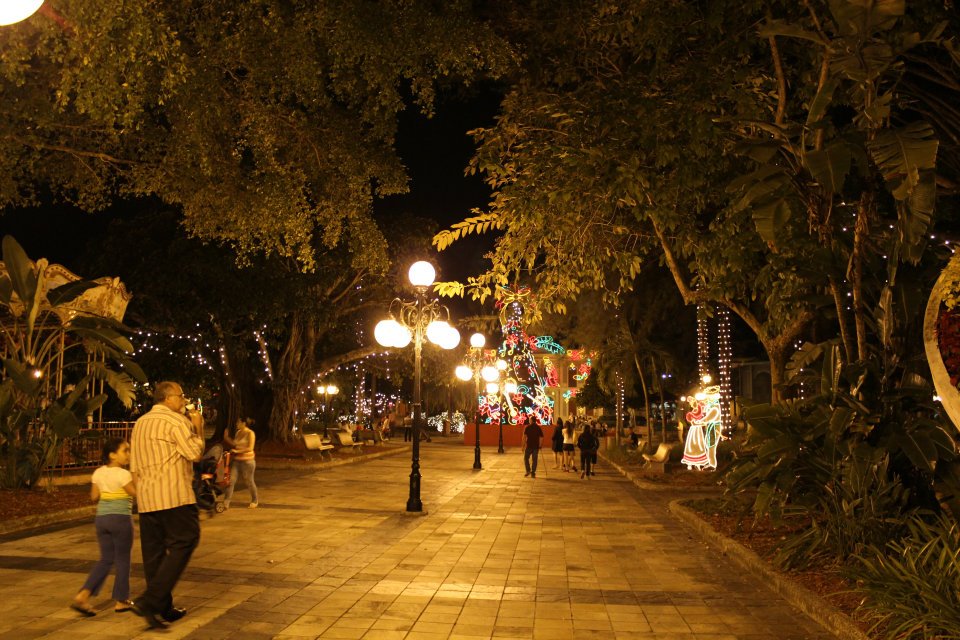
- Caguas City Hall (Alcaldia de Caguas, the city hall building)
- Primera Iglesia Bautista de Caguas
- Gautier Benítez High School
- Escuela Vocacional Aguayo Aldea
- Logia Union y Amparo #44
- Puente No. 6 or ()
- Carretera Central Other landscapes, landmarks and tourist attractions in Caguas include:
- Caguas Museum of Art
- Caguas Museum of Folk Arts
- Caguas Museum of History
- Caguas Tobacco Museum
- Dulce Nombre de Jesús Cathedral (Catedral de Caguas), the old city hall and other historical buildings at Plaza Palmer, the main town square.
- Hacienda Catalina Ruins, located in the area of Las Catalinas Mall
- Hacienda Country Club
- La Casa del Ajedrez (The House of Chess)
Parks and natural areas
- Aguas Buenas Cave and Caverns System Nature Reserve, an extensive cave system partially located in the municipality of Caguas.
- Bairoa River Natural Protected Area, protected riparian forest along the Bairoa River.
- Borinquen Valley Natural Area, 25 acres of protected forest located in barrio Borinquen.
- Caguas Real Nature Reserve, 60 acres of riparian forest along the Turabo River managed by the United States Fish & Wildlife Service.
- Caguas Regional Forest, a protected secondary forest and riparian ecosystem along the Turabo River.
- Carite State Forest and Reserve, one of the 20 units in the state forest system of Puerto Rico, partially located in Caguas.
- Cerro Borrás, formerly home to various recreational parks such as Moisty Park, currently preserved as a secondary forest.
- Chalets de Bairoa Natural Area, currently being developed as a preserved ecological corridor within the Valley of Caguas.
- Charco El Cantil, natural swimming pool located along the Turabo River.
- Finca Longo and Altos de San Luis, partially managed by the DRNA forest service and the municipality of Caguas.
- Jardín Botánico y Cultural William Miranda Marín (Botanical and Cultural Gardens), botanical garden and cultural institution containing the ruins of the Hacienda San José plantation and Taíno archaeological sites, located in barrio Cañabón.
- Jorge Sotomayor del Toro Protected Natural Area, a protected natural area located adjacent to the Carite Forest.
''Voy Turistiendo'' Campaign
To stimulate local tourism during the COVID-19 pandemic in Puerto Rico, the Puerto Rico Tourism Company launched the Voy Turistiendo (I'm Touring) campaign in 2021. The campaign featured a passport book with a page for each municipality. The Voy Turisteando Caguas passport page lists the Jardín Botánico William Miranda Marin, the Catedral Dulce Nombre de Jesús, the Plaza de Recreo Santiago R. Palmer and the Museo de Artes Populares as places of interest.
Culture
Festivals and events
Caguas celebrates its patron saint festival in July. The Fiestas Patronales de Nuestra Sra. del Carmen is a religious and cultural celebration that generally features parades, games, artisans, amusement rides, regional food, and live entertainment.
Other festivals and events include:
- Rosario Cantado a los Reyes – 4 January
- Three Kings Festival – 5 January
- Criolla Beatriz – February
- Criolla Borinquen Fair – March
- Criolla Cañabón Fair – April
- Felipe "La Voz" Rodríguez' Birthday – 8 May
- Al Fresco – Every last Friday of each month
- Cross Festival – 23–31 May
- Typical Criole Festival – 1–2 June
- Latin American Musical
Sports
The Criollos de Caguas baseball team is considered one of the greatest of all time in all of Latin America, having won 18 national Puerto Rico titles and 5 Caribbean World Series titles The team is a member of the Liga de Béisbol Profesional de Puerto Rico (LBPPR). Three of the first five Puerto Ricans that played Major League Baseball in the U.S. mainland, at one point in their careers played for the Criollos de Caguas (Luis Rodríguez Olmo, Victor Pellot Power, Roberto Clemente).
The Criollos de Caguas basketball team, founded in 1968 by Dr. Héctor "Tato" Dávila and Lcdo. Libertario Pérez Rodríguez (a lawyer), is a basketball team that did not enjoy as much success as their baseball counterparts. However, in the early 2000s, they showed a lot of progress by reaching the national playoffs various times. The team was a member of the BSN. In 2006, the team won its first BSN national basketball championship, defeating Flor Melendez and his Santurce Crabbers in five games.
Caguas is home to the Bairoa Gym, one of the most important boxing gyms in all Puerto Rico and a place where many local and visiting champions and otherwise notable boxers have trained at; such as boxing Welterweight Champion Miguel Cotto, his brother Jose Miguel, Alberto Mercado, Juan Carazo, Alfredo Escalera and others.
The Criollas de Caguas women's volleyball team has won 9 national Puerto Rico titles and has made it to the finals more than 15 times. The team is a member of the Liga de Voleibol Superior Femenino (LVSF).
The Criollos de Caguas FC soccer team is considered one of the most successful clubs in the island winning multiple tournaments and cups in Puerto Rican soccer including the National League Title in 2015.
Economy
In September 2005, city mayor William Miranda Marín levied the first municipal tax in Puerto Rico via city ordinance. Area merchants now charge a one cent tax for every dollar spent at all retail businesses. The tax has become known around the island as the "Willie Tax." It resulted in an estimated $500,000 monthly income for the city. However, the municipal tax was increased to 1.5% after the establishment of the 5.5% state tax, for a total of 7%, and the tax was declared illegal by the Puerto Rico's Supreme Court.
In 2006, Miranda Marín began calling Caguas "El Nuevo País de Caguas" ("The New Country of Caguas").
Agriculture
During the early part of the 20th century, Caguas hosted one of Puerto Rico's most important sugar manufacturers, which gave employment to thousands of Cagüeños.
Businesses and non-profits
Numerous businesses and important buildings have opened in Caguas since the 1970s, including the imposing 23-story Caguas Tower, its adjacent competitors Bonneville Apartments, and the 10-story Menonita Hospital. There are also several shopping centers:
- Plaza del Carmen Mall
- Plaza Centro Mall
- Las Catalinas Mall
- Los Prados Mall
- Bairoa Shopping Center
- Villa Blanca Mall
- Angora Shopping Center
- Plaza Degetau
- Plaza Caguitas
- Del Rio Shopping Center
- Metro Plaza (Caguas, Puerto Rico)
Urbe Apie is a non-profit founded in 2015 that has claimed and repurposed various abandoned properties in Caguas.
Demographics
|align-fn=center 1899 (shown as 1900) 1910-1930 1930-1950 1960-2000 2010 2020|2020=127244}} In 1899, the United States conducted its first census of Puerto Rico finding that the population of Caguas was 19,857.
In 2020, Caguas had a population of 127,244 compared to 142,893 in 2010. This shows an 11% decrease in the population in the municipality. The population density in 2020 was 2,200 /mi2. Hispanic or Latino of any race constitute 98.4% of the population of the municipality. There are also communities of Dominicans, Cubans and Colombians.
Government
All municipalities in Puerto Rico are administered by a mayor, elected every four years. The mayor of the city of Caguas were
1953 to 1969 - Angel Rivera PPD
1969 to 1973 - Miguel Hernandez Rodriguez (New Progressive Party (PNP))
1973 to 1977 - Angel O. Berrios Diaz (PPD)
1977 to 1981 - Miguel Hernandez Rodriguez (PNP)
1981 to 1997 - Angel O. Berrios Diaz (PPD)
1997 to 2010 - William Miranda Marín (PPD)
2010 to present - William Miranda Torres (PPD)
The city belongs to the Puerto Rico Senatorial district VII, which is represented by two Senators. In 2024, Wanda Soto Tolentino and Luis Daniel Colón La Santa were elected as District Senators.
Symbols
The municipio or municipality has an official flag and coat of arms.
Flag and coat of arms
The colors blue and gold were chosen for the shield, distinctive of the city of Caguas. The figures symbolize both the indigenous and Christian origins of the city.
The coat of arms consists of a shield with a blue field. Upon the field are two sets of three golden arrows, forming a cross of St. Andrew. Above the cross is a crown which represents Caguax, cacique of the Turabo Valley region at the time of the arrival of the Spanish conquerors. Arrows were used as a remembrance of the first Christian place of worship established in the region which was dedicated under the patronage of St. Sebastian. There are pineapples interspersed to reflect the native agriculture. A castellated wall surmounts the shield to show the city's having been granted status as a municipality by the Spanish Crown.
On the flag, the shield sits atop another blue field on which the cross of arrows motif is repeated.
Transportation


A "light interurban rail" system connecting Caguas to San Juan was in the planning stages and discarded due to lack of funding.
Caguas is served by one freeway, one tolled expressway and one main divided highway. Puerto Rico Highway 30 connects Caguas to the eastern part of the island. There is no freeway/expressway to the west, due mainly to the fact that there is no sufficient population west of Caguas to develop a new freeway or expressway; good access to the municipalities of Cidra (southwest) and Aguas Buenas (northwest) are possible via PR-172 and PR-156, respectively. Puerto Rico Highway 52 connects Caguas to the north (San Juan) and south (Cayey, Ponce). Puerto Rico Highway 1 is an alternate route to San Juan and Guaynabo with two lanes per direction; in south Caguas it becomes rural near Borinquen, therefore the only good access to Cayey is the expressway (PR-52) and a $1.00 toll has to be paid (only in the south direction). The only municipality bordering Caguas with a poor-access road is San Lorenzo, via PR-183; but good access to San Lorenzo is possible by entering Gurabo via PR-30, and then taking PR-203 south. Luis Muñoz Marín International Airport is about 35 minutes away by car.
There are 86 bridges in Caguas.
Education
High schools
- Colegio Católico Notre Dame
- Elohim Christian Academy
- New Generation Christian Academy (formerly CLA)
- Caguas Military Academy
- Colegio Bautista
- Colegio Católico San Juan Apóstol
- Academia Cristo de los Milagros
- Dr. Juan José Osuna High school
- José Gautier Benítez High school
- Escuela Libre de Música - Antonio S. Paoli
- Manuela Toro Morice High School
- Republic of Costa Rica Vocacional High School of Caguas
- Eloisa Pascual "Bairoa III" High School
- Rio Cañas High School
- Santa Rosa Superior School
- Thomas Alva Edison School
- Colegio San José Superior
- Escuela Secundaria Especializada en Ciencias, Matemáticas y Tecnología (CIMATEC)
- Caguas Private School (CPS)
- Academia Adventista Caguas
- BYPA
- Nuestra Escuela
- Caguas Learning Academy (CLA)
- Gerardo Sellés Solá High School
Higher education
- San Juan Bautista School of Medicine
- Huertas Junior College
- Instituto EDIC
- Columbia College
- Turabo University at Gurabo (Gurabo, Puerto Rico)
- Automeca Technical College
- Mech-Tech College
- NUC University
- Universidad Interamericana - Recinto de Caguas
- PPG Technical College
- Ivaem College
- EDP University
- FIT College
- Cambridge Technical Institute
- Liceo de Arte, Diseño y Comercio
- Servicio de Extensión Agrícola Caguas
Health care
- Hospital Pavia
- Menonita Caguas Regional Hospital
- San Juan Bautista Medical Center
- Corporacion SANOS
- Salus Services (previously HAS)
International relations
Twin towns – sister cities
- CRI Belén, Costa Rica
- ESP Santa Fe, Spain
Caguas is also twinned domestically with Hartford, Connecticut and Southbridge, Massachusetts.
Notable residents
Main article: People from Caguas, Puerto Rico
- Margot Arce de Vázquez, writer, co-founder of the Puerto Rican Academy of the Spanish Language
- Herman Badillo, lawyer and politician, U.S. House of Representatives from New York, 1971–1977
- Tony Bernazard, MLB baseball player and New York Mets executive
- Myraida Chaves, actress, popular game show host, and television and theater producer
- Ivonne Class, theater producer and sportscaster, director of the Centro de Bellas Artes de Caguas, 2021–present
- Ruth Noemí Colón, 66th Secretary of State of New York, 2010–2011
- Alex Cora, MLB baseball player and manager of the Boston Red Sox
- Joey Cora, MLB baseball player and coach for the Detroit Tigers
- Carlos Cotto, professional wrestler and boxer, also known as El Chicano and El Ilegal
- Henry Cotto, MLB and NPB baseball player and manager of the Arizona Complex League Giants
- Miguel Cotto, professional boxer and first Puerto Rican quadruple champion
- José Luis Dalmau, attorney and politician, 17th President of the Puerto Rico Senate, 2021–present
- Juan Dalmau, attorney and politician
- Abelardo Díaz Alfaro, academic and short story writer, author of Campo Alegre and Terrazo
- Lydia Echevarría, actress and convicted for plotting the murder of her husband
- Edwin Encarnación, MLB baseball player, three-time All-Star and coach for the Toronto Blue Jays
- Ramón Franco, film and television actor known for his roles in Tour of Duty (1987–1990) and Heartbreak Ridge (1986)
- Roque Gallart, television personality also known as Rocky the Kid
- José García Cosme, convicted criminal also known as Papo Cachete
- José Gautier Benítez, poet and writer of the Romantic era
- Guaynaa, rapper and singer
- Gilda Haddock, film and telenovela actress, dancer and gospel singer
- Jorge Haddock Acevedo, engineer and academic administrator, President of the University of Puerto Rico, 2018–2021
- Amri Hernández-Pellerano, electronics engineer and scientist
- Vilma G. Holland, painter
- Jose "Cha Cha" Jimenez, political activist and founder of the Young Lords Organization
- Francisco Lindor, MLB baseball player for the New York Mets
- Carlos Lozada, Vietnam War veteran and United States Army Medal of Honor recipient
- Johnny Lozada, actor, singer and television host, former member of Menudo
- Concha Meléndez, educator and writer, first woman to belong to the Puerto Rican Academy of Languages
- Wilnelia Merced, former actress and model, crowned Miss World 1975
- Florencio Morales Ramos, composer and musician (trovador) popularly known as El Cantor de la Montaña known for his song Que Bonita Bandera
- Janice Olivencia, professional golfer and first Puerto Rican woman to play in the U.S. Women's Open
- Danny Ortiz, MLB and LMB baseball player
- José Ignacio Quintón, pianist and composer of danzas such as El Coquí
- Francisco José Ramos, academic, philosopher and poet, author of the philosophical trilogy Aesthetics of Thought
- Edwin Ríos, MLB baseball player for the Cincinnati Reds
- Yacksel Ríos, MLB baseball player for the Oakland Athletics
- Carlos Manuel Rodríguez Santiago, first Puerto Rican and the first Caribbean-born layperson to be beatified
- Felipe Rodríguez, popular bolero singer popularly known as La Voz
- Jesús Rojas, professional boxer and WBA (Regular) featherweight champion
- Mercedes Solá, educator, writer, suffragist and women's rights activist
- Xcelencia, songwriter and musician
- Pilar Marie Victoriá, college volleyball player for the Texas Longhorns and the Arkansas Razorbacks
- Jessica Wild, drag queen and make-up artist, contestant on the second season of RuPaul's Drag Race and the eighth season of RuPaul's Drag Race All Stars
- Dean Zayas, academic, actor, director, playwright and writer, tenured at the University of Puerto Rico, Río Piedras Campus for more than 50 years
Gallery
File:Museo de Arte en Caguas, Puerto Rico.jpg|Caguas Museum of Art File:Centro Musical Criollo Jose Ignacio Quinton - Caguas Puerto Rico.jpg|José Ignacio Quintón Center for Criollo Music, former First Baptist Church of Caguas File:Carusel en la Plaza de Caguas.jpg|Carousel in Plaza de Caguas File:Caguas cathedral.jpg|Caguas Cathedral File:Jardines botanicos entrada.jpg|Entrance to the Botanical and Cultural Gardens File:Plaza de Recreo Santiago R. Palmer en Caguas, Puerto Rico.jpg|Main square for recreation, Plaza de Recreo Santiago R. Palmer in Caguas barrio-pueblo File:Solar Panels on Caguas, Puerto Rico Walmart.jpg|The Walmart in Caguas, Puerto Rico is one of five Walmart facilities on the island equipped with solar panels. File:Chimenea Antigua Hacienda Santa Catalina.jpg|Chimney at former sugar producing Hacienda Santa Catalina
References
References
- "Demographics/Ethnic U.S. 2000 census".
- "Puerto Rico Population Declined 11.8% From 2010 to 2020".
- (2019-05-03). "Caguas celebrates its Tree City recognition for the 10th consecutive time".
- [http://cuatro-pr.org/node/212 ''Florencio Morales Ramos: Ramito, “el Cantor de la Montaña”.''] {{Webarchive. link. (2017-11-07 David Morales. Our Country Music. Undated. Accessed 8 December 2018.)
- Alvarado, Lisandro. (2008). "Glosario de voces indígenas de Venezuela". Monte Ávila Editores Latinoamericana.
- Loukotka, Čestmír. (1968). "Classification of South American Indian languages". UCLA Latin American Center.
- (27 August 2016). "Los cognomentos de los 78 municipios de Puerto Rico [Nicknames of the 78 "municipios" of Puerto Rico]".
- "Caguas: Centro y Corazón de Puerto Rico".
- (2010-06-05). "Willie Miranda Marín, un boricua que soñó con "un nuevo país" (Biografía y vídeos)".
- admin_caguax. (2019-04-11). "Hon. William E. Miranda Torres, Alcalde".
- Katia Gil, de Lamadrid Pesant. (2012). "Caguas: Transformaciones territoriales desde el período colonial hasta 1952". Universidad del Turabo.
- "Memoria Viva: la Carretera Central de Puerto Rico".
- (1900). "Informe sobre el censo de Puerto Rico, 1899, United States. War Dept. Porto Rico Census Office". Imprenta del gobierno.
- (2020-02-13). "American FactFinder - Results".
- Samame, Juan Carlos. (July 3, 2019). "Historia".
- "Caguas, PR {{!}} Data USA".
- Ranter, Harro. "ASN Aircraft accident Lockheed MC-130H Hercules 90-0161 Caguas".
- "Preliminary Locations of Landslide Impacts from Hurricane Maria, Puerto Rico". USGS.
- "Preliminary Locations of Landslide Impacts from Hurricane Maria, Puerto Rico". USGS.
- (August 2025). "María, un nombre que no vamos a olvidar. María dejó en Caguas daños por más de $90 millones". El Nuevo Día.
- (2017-09-29). "Minuto a minuto: AEE restablece parcialmente la energía en el aeropuerto".
- (19 January 2017). "Orgullo y alegría en el Valle del Turabo".
- "Caguas Municipality". Fundación Puertorriqueña de las Humanidades (FPH).
- "M 4.7 - 1 km W of Juncos, Puerto Rico".
- "M 5.1 - 3 km W of Aguas Buenas, Puerto Rico".
- "CAGUAS, PUERTO RICO". [[University of North Carolina at Chapel Hill.
- Gwillim Law. (20 May 2015). "Administrative Subdivisions of Countries: A Comprehensive World Reference, 1900 through 1998". McFarland.
- "Map of Caguas at the Wayback Machine".
- "US Census Barrio-Pueblo definition". US Census.
- "P.L. 94-171 VTD/SLD Reference Map 000 (2010 Census): Caguas Municipio, PR". U.S. DEPARTMENT OF COMMERCE Economics and Statistics Administration U.S. Census Bureau.
- "P.L. 94-171 VTD/SLD Reference Map 001 (2010 Census): Caguas Municipio, PR". U.S. DEPARTMENT OF COMMERCE Economics and Statistics Administration U.S. Census Bureau.
- "P.L. 94-171 VTD/SLD Reference Map 002 (2010 Census): Caguas Municipio, PR". U.S. DEPARTMENT OF COMMERCE Economics and Statistics Administration U.S. Census Bureau.
- "Agencia: Oficina del Coordinador General para el Financiamiento Socioeconómico y la Autogestión (Proposed 2016 Budget)".
- (2014). "El vuelo de la esperanza: Proyecto de las Comunidades Especiales Puerto Rico, 1997-2004". San Juan, Puerto Rico Fundación Sila M. Calderón.
- "Leyes del 2001".
- (2014). "El vuelo de la esperanza:Proyecto de las Comunidades Especiales Puerto Rico, 1997-2004". San Juan, Puerto Rico Fundación Sila M. Calderón.
- (8 August 2011). "Comunidades Especiales de Puerto Rico".
- "Puerto Rico: Registro Nacional de Lugares Históricos". Government of Puerto Rico.
- Municipio Autónomo de Caguas. (2015). "REVISIÓN INTEGRAL DEL PLAN TERRITORIAL DEL MUNICIPIO AUTÓNOMO DE CAGUAS".
- (2021). "Pasaporte: Voy Turisteando". Compañia de Turismo de Puerto Rico.
- Parés Arroyo, Marga. (2017-10-14). "Hospitales de la montaña viven una odisea tras la tempestad [Hospitals in the mountain are living an odyssey after the hurricane]".
- (November 9, 2018). "Caguas, Puerto Rico: Squatter City".
- "Population and Housing Unit Estimates". United States Census Bureau.
- "Report of the Census of Porto Rico 1899". War Department Office Director Census of Porto Rico.
- "Table 3-Population of Municipalities: 1930 1920 and 1910". United States Census Bureau.
- "Table 4-Area and Population of Municipalities Urban and Rural: 1930 to 1950". United States Census Bureau.
- "Table 2 Population and Housing Units: 1960 to 2000". United States Census Bureau.
- (2010). "Puerto Rico:2010:population and housing unit counts.pdf". U.S. Dept. of Commerce Economics and Statistics Administration U.S. Census Bureau.
- "PUERTO RICO: 2020 Census".
- [https://elecciones2024.ceepur.org/Escrutinio_General_121/index.html#es/default/SENADORES_POR_DISTRITO_Humacao_VII.xmll Elecciones Generales 2024: Escrutinio General] {{Webarchive. link. (November 15, 2024 on CEEPUR)
- "Ley Núm. 70 de 2006 -Ley para disponer la oficialidad de la bandera y el escudo de los setenta y ocho (78) municipios.".
- (19 February 2020). "CAGUAS".
- "Caguas Bridges". US Dept. of Transportation.
- "Sister Cities International of Hartford". Find Glocal.
This article was imported from Wikipedia and is available under the Creative Commons Attribution-ShareAlike 4.0 License. Content has been adapted to SurfDoc format. Original contributors can be found on the article history page.
Ask Mako anything about Caguas, Puerto Rico — get instant answers, deeper analysis, and related topics.
Research with MakoFree with your Surf account
Create a free account to save articles, ask Mako questions, and organize your research.
Sign up freeThis content may have been generated or modified by AI. CloudSurf Software LLC is not responsible for the accuracy, completeness, or reliability of AI-generated content. Always verify important information from primary sources.
Report