From Surf Wiki (app.surf) — the open knowledge base
Caesar (title)
Imperial title in the Roman Empire
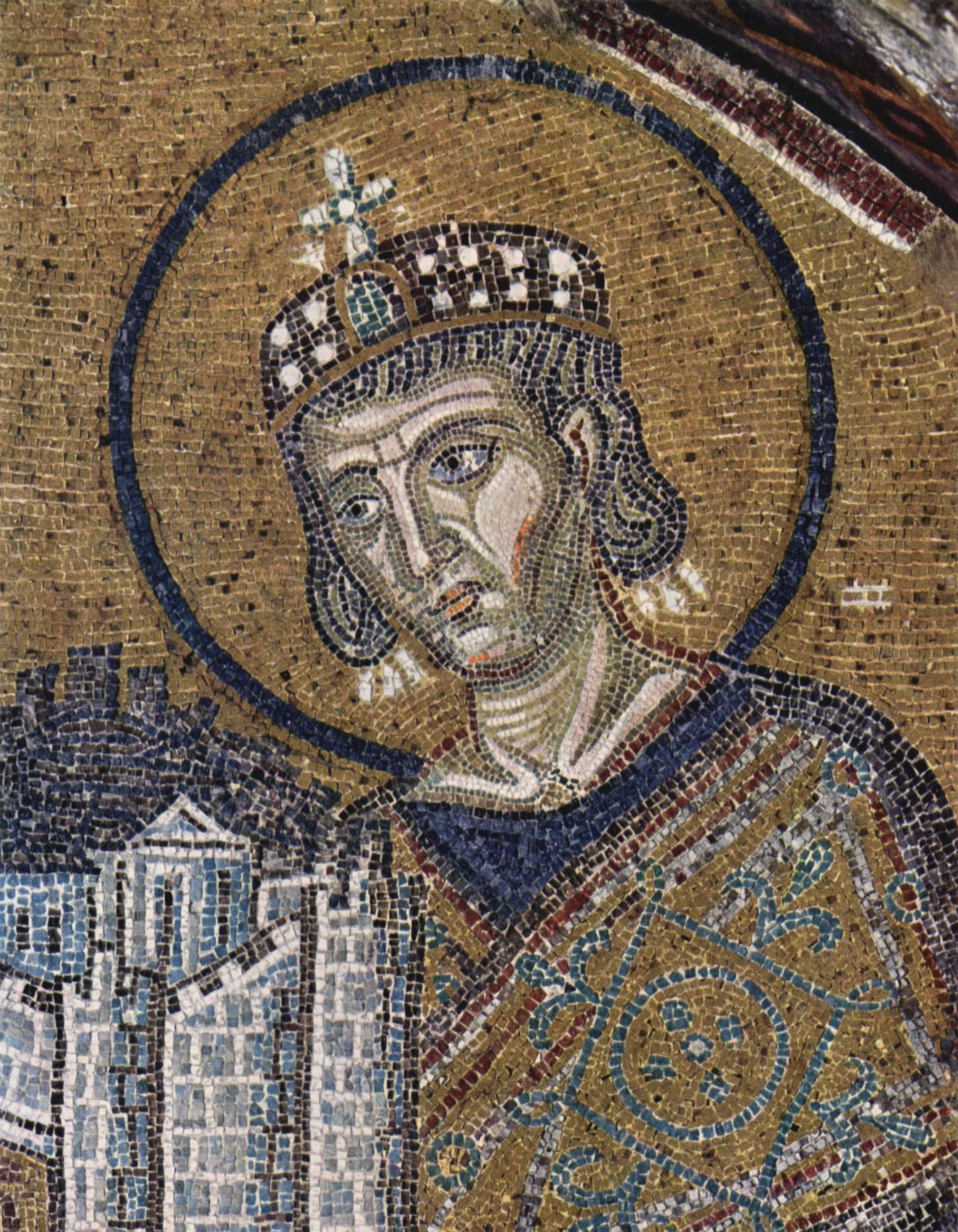
Imperial title in the Roman Empire
| Field | Value |
|---|---|
| name | Caesar |
| image | Retrato de Julio César (26724093101).jpg |
| caption | Sculpture depiction of Julius Caesar |
| pronunciation | |
| gender | Male |
| meaning | Short hair (disputed), nickname then title |
| region | Roman Republic |
| language | Latin |
| variant forms | |
| popularity | yes |
Caesar is a title of imperial character. It derives from the cognomen of Julius Caesar. The change from being a surname to a title used by the Roman emperors can be traced to AD 68, following the fall of the Julio-Claudian dynasty. When used on its own, the title denoted heirs apparent, who would later adopt the title Augustus on accession. The title remained an essential part of the style of the emperors, and became the word for "emperor" in some languages, such as German (Kaiser) and Slavic (Tsar).
Origins
The first known individual to bear the cognomen of "Caesar" was Sextus Julius Caesar, who is likewise believed to be the common ancestor of all subsequent Julii Caesares. Sextus's great-grandson was the dictator Gaius Julius Caesar, who seized control of the Roman Republic following his war against the Senate. He appointed himself as dictator perpetuo ('dictator in perpetuity'), a title he held for only about a month before he was assassinated in 44 BC. Julius Caesar's death did not lead to the restoration of the Republic, and instead led to the rise of the Second Triumvirate, which was made up of three generals, including Julius's adopted son Gaius Octavius.
Following Roman naming conventions, Octavius adopted the name of his adoptive father, thus also becoming "Gaius Julius Caesar", though he was often called "Octavianus" to avoid confusion. He styled himself simply as "Gaius Caesar" to emphasize his relationship with Julius Caesar. Eventually, distrust and jealousy between the triumvirs led to a lengthy civil war which ultimately ended with Octavius gaining control of the entire Roman world in 30 BC. In 27 BC, Octavius was given the honorific Augustus by the Senate, adopting the name of "Imperator Caesar Augustus". He had previously dropped all his names except for "Caesar", which he treated as a nomen, and had adopted the victory title imperator ('commander') as a new praenomen.
As a matter of course, Augustus's own adopted son and successor, Tiberius, followed his (step)father's example and bore the name "Caesar" following his adoption on 26 June 4 AD, restyling himself as "Tiberius Julius Caesar". Upon his own ascension to the throne, he styled himself as "Tiberius Caesar Augustus". The precedent was thus then set: the Emperor, styled as "Augustus", designated his successor by adopting him and giving him the name "Caesar".
The fourth emperor, Claudius (in full, "Tiberius Claudius Caesar Augustus"), was the first to assume the name without having been adopted by the previous emperor. However, he was at least a member of the Julio-Claudian dynasty, being the maternal great-nephew of Augustus on his mother's side, the nephew of Tiberius, and the uncle of Caligula (who was also called "Gaius Julius Caesar"). Claudius, in turn, adopted his stepson and grand-nephew Lucius Domitius Ahenobarbus, giving him the name "Caesar" in addition to his own nomen, "Claudius". His stepson thus became "Nero Claudius Caesar Augustus".
Dynastic title
The first emperor to assume both the position and name without any real claim was Galba, who took the throne under the name "Servius Galba Caesar Augustus" following the death of Nero in AD 68. Galba helped solidify "Caesar" as the title of the designated heir by giving it to his own adopted heir, Piso Licinianus. His reign did not last long, however, and he was soon killed by Otho, who became "Marcus Otho Caesar Augustus". Otho was then defeated by Vitellius, who became "Aulus Vitellius Germanicus Augustus", adopting the victory title "Germanicus" instead. Nevertheless, "Caesar" had become such an integral part of the imperial dignity that its place was immediately restored by Vespasian, who ended the civil war and established the Flavian dynasty in AD 69, ruling as "Imperator Caesar Vespasianus Augustus".
The placement of the name "Caesar" varied among the early emperors. It usually came right before the cognomen (Vespasian, Titus, Domitian, Trajan, Hadrian); a few placed it right after it (Galba, Otho, Nerva). The imperial formula was finally standardised during the reign of Antoninus Pius. Antoninus, born "Titus Aurelius Antoninus", became "Titus Aelius Caesar Antoninus" after his adoption but ruled as "Imperator Caesar Titus Aelius Hadrianus Antoninus Augustus Pius". The imperial formula thus became "Imperator Caesar [name] Augustus" for emperors. Heir-apparents added "Caesar" to their names, placing it after their cognomen. Caesars occasionally were given the honorific princeps iuventutis ("First among the Youth") and, starting with the 3rd century, nobilissimus ("Most Noble"). I
Later developments
Crisis of the Third Century
The popularity of using the title caesar to designate heirs-apparent increased throughout the third century. Many of the soldier-emperors during the Crisis of the Third Century attempted to strengthen their legitimacy by naming their sons as heirs with the title of caesar, namely Maximinus Thrax, Philip the Arab, Decius, Trebonianus Gallus, Gallienus and Carus. With the exception of Verus Maximus and Valerian II all of them were later either promoted to the rank of augustus within their father's lifetime (like Philip II) or succeeded as augusti after their father's death (Hostilian and Numerian). The same title would also be used in the Gallic Empire, which operated autonomously from the rest of the Roman Empire from 260 to 274, with the final Gallic emperor Tetricus I appointing his heir Tetricus II as caesar and his consular colleague.
Despite the best efforts of these emperors, however, the granting of this title does not seem to have made succession in this chaotic period any more stable. Almost all caesares would be killed before, or alongside, their fathers, or, at best, outlive them for a matter of months, as in the case of Hostilian. The sole caesar to successfully obtain the rank of augustus and rule for some time in his own right was Gordian III, and even he was heavily controlled by his court.
Tetrarchy and Diarchy
In 293, Diocletian established the Tetrarchy, a system of rule by two senior emperors and two junior colleagues. The two coequal senior emperors were styled identically to previous Emperors, as augustus (in plural, augusti). The two junior colleagues were styled identically to previous Emperors-designate, as nobilissimus caesar. Likewise, the junior colleagues retained the title caesar upon becoming full emperors. The caesares of this period are sometimes referred as "emperors", with the Tetrarchy being a "rule of four emperors", despite being clearly subordinate of the augusti and thus not actually sovereigns.
The Tetrarchy collapsed as soon as Diocletian stepped down in 305, resulting in a lengthy civil war. Constantine reunited the Empire in 324, after defeating the Eastern emperor Licinius. The tetrarchic division of power was abandoned, although the divisions of the praetorian prefectures were maintained. The title caesar continued to be used, but now merely as a ceremorial honorific for young heirs. Constantine had four caesares at the time of his death: his sons Constantius II, Constantine II, Constans and his nephew Dalmatius, with his eldest son Crispus having been executed in mysterious circumstances earlier in his reign. He would be succeeded only by his three sons, with Dalmatius dying in the summer of 337 in similarly murky circumstances. Constantius II himself would nominate as caesares his cousins Constantius Gallus and Julian in succession in the 350s, although he first executed Gallus and then found himself at war with Julian before his own death. After Julian's revolt of 360, the title fell out of imperial fashion for some time, with emperors preferring simply to elevate their sons directly to augustus, starting with Gratian in 367.
The title would be revived in 408 when Constantine III gave it to his son Constans II, and then in 424 when Theodosius II gave it to his nephew Valentinian III before successfully installing him upon the western throne as augustus in 425. Thereafter it would receive limited use in the Eastern Empire; for example, it was given to Leo II in 472 several months before his grandfather's death. In the Western Empire, Palladius, the son of emperor Petronius Maximus, became the last person bearing the title caesar in 455.
Byzantine Empire
Caesar or Kaisar (Καῖσαρ) remained a senior court title in the Eastern or Byzantine Empire. Originally, as in the classical Roman Empire, it was used for the heir apparent, and was first among the "awarded" dignities. From the reign of Theodosius I, however, most emperors chose to solidify the succession of their intended heirs by raising them to co-emperors, i.e. augustus. Hence the title was more frequently awarded to second- and third-born sons, or to close and influential relatives of the Emperor: for example, Alexios Mosele who was the son-in-law of Theophilos (ruled 829–842), Bardas who was the uncle and chief minister of Michael III (r. 842–867), and Nikephoros II (r. 963–969) who awarded the title to his father, Bardas Phokas. An exceptional case was the conferment of the dignity and its insignia to the Bulgarian khan Tervel by Justinian II (r. 685–695, 705–711) who had helped him regain his throne in 705. The title was awarded to the brother of Empress Maria of Alania, George II of Georgia in 1081. In this period, the epithet eutychestatos (εὐτυχεστάτος) 'most fortunate' was commonly attached to the title.
The office enjoyed extensive privileges, great prestige and power. When Alexios I Komnenos created the title of sebastokrator, kaisar became third in importance, and fourth after Manuel I Komnenos created the title of despot, which it remained until the end of the Empire. The feminine form was kaisarissa. It remained an office of great importance, usually awarded to imperial relations, as well as a few high-ranking and distinguished officials, and only rarely awarded to foreigners.
According to the Klētorologion of 899, the Byzantine caesars insignia were a crown without a cross, and the ceremony of a caesars creation (in this case dating to Constantine V), is included in De Ceremoniis I.43. The title remained the highest in the imperial hierarchy until the introduction of the sebastokratōr (a composite derived from sebastos and autokrator, the Greek equivalents of augustus and imperator) by Alexios I Komnenos (r. 1081–1118) and later of despotēs by Manuel I Komnenos (r. 1143–1180). The title remained in existence through the last centuries of the Empire. In the Palaiologan period, it was held by prominent nobles such as Alexios Strategopoulos, but from the 14th century, it was mostly awarded to rulers of the Balkans such as the princes of Vlachia, Serbia and Thessaly.
.png)
In the late Byzantine hierarchy, as recorded in the mid-14th century Book of Offices of pseudo-Kodinos, the rank continued to come after the sebastokratōr. Pseudo-Kodinos further records that the caesar was equal in precedence to the panhypersebastos, another creation of Alexios I, but that Emperor Michael VIII Palaiologos (r. 1259–1282) had raised his nephew Michael Tarchaneiotes to the rank of protovestiarios and decreed that to come after the caesar; while under Andronikos II Palaiologos (r. 1282–1328) the megas domestikos was raised to the same eminence, when it was awarded to the future emperor John VI Kantakouzenos (r. 1347–1354). According to pseudo-Kodinos, the caesars insignia under the Palaiologoi was a skiadion hat in red and gold, decorated with gold-wire embroideries, with a veil bearing the wearer's name and pendants identical to those of the despotēs and the sebastokratōr. He wore a red tunic (rouchon) similar to the emperor's (without certain decorations), and his shoes and stockings were blue, as were the accouterments of his horse; these were all identical to those of the sebastokratōr, but without the embroidered eagles of the latter. Pseudo-Kodinos writes that the particular forms of another form of hat, the domed skaranikon, and of the mantle, the tamparion, for the caesar were not known.
Ottoman Empire
Main article: Ottoman claim to Roman succession
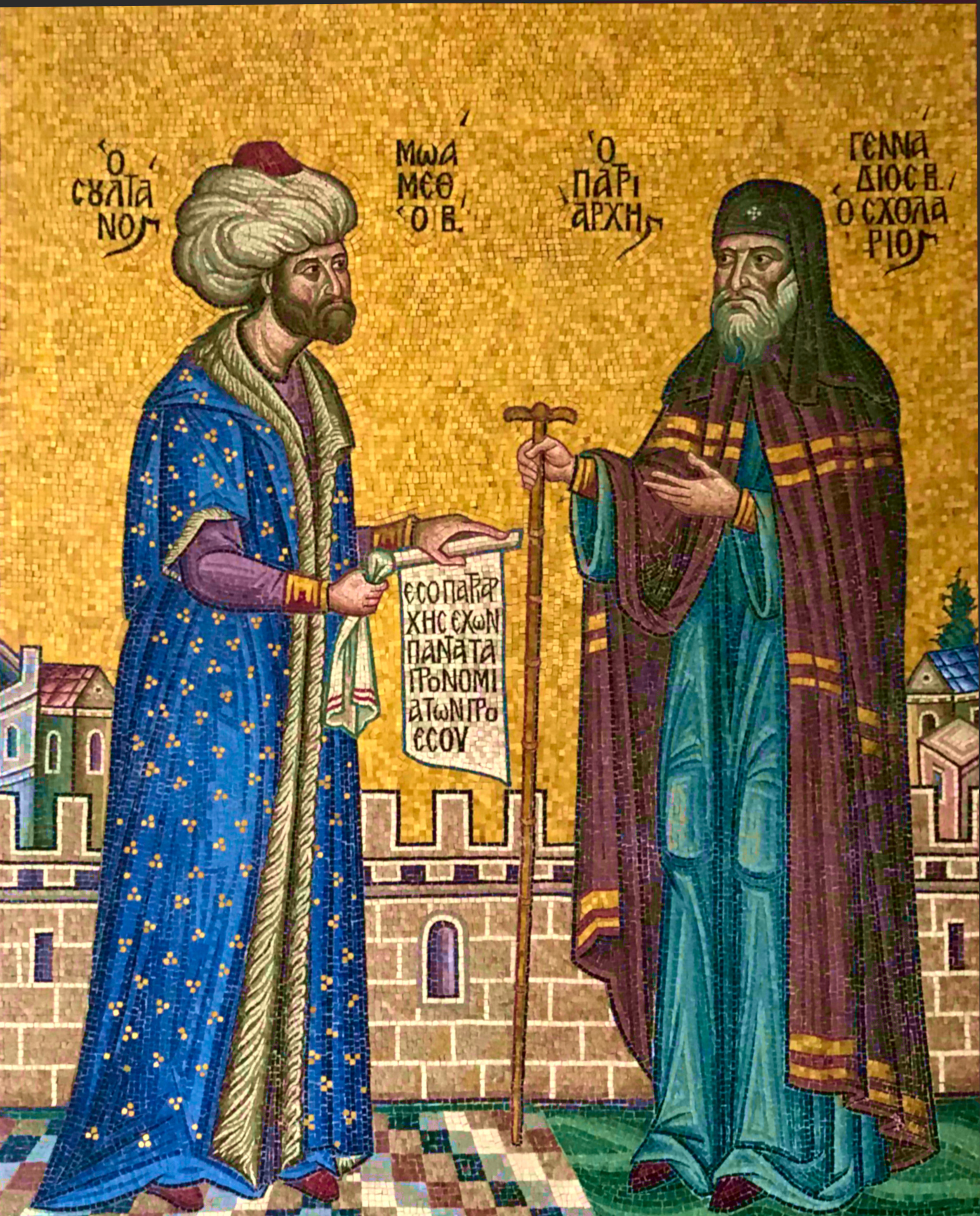
"Caesar" is the title officially used by the Sasanid Persians to refer to the Roman and Byzantine emperors. In the Middle East, the Persians and the Arabs continued to refer to the Roman and Byzantine emperors as "Caesar" (in Qaysar-i Rum, "Caesar of the Romans", from Middle Persian kēsar). Thus, following the conquest of Constantinople in 1453, the victorious Ottoman sultan Mehmed II became the first of the rulers of the Ottoman Empire to assume the title (in Kayser-i Rûm).
After the Fall of Constantinople, having conquered the Byzantine Empire, Mehmed took the title Kayser-i Rûm, claiming succession to the Roman imperium. His claim was that, by possession of the city, he was emperor, a new dynast by conquest, as had been done previously by the likes of Heraclius and Leo III. Contemporary scholar George of Trebizond wrote "the seat of the Roman Empire is Constantinople ... and he who is and remains Emperor of the Romans is also the Emperor of the whole world".
Gennadius II, a staunch antagonist of the West because of the Sack of Constantinople committed by the Western Catholics and theological controversies between the two Churches, had been enthroned the Ecumenical Patriarch of Constantinople-New Rome with all the ceremonial elements and ethnarch (or milletbashi) status by the Sultan himself in 1454. In turn, Gennadius II formally recognized Mehmed as successor to the throne. Mehmed also had a blood lineage to the Byzantine Imperial family; his predecessor, Sultan Orhan had married a Byzantine princess, and Mehmed may have claimed descent from John Tzelepes Komnenos. Ottoman sultans were not the only rulers to claim such a title, as there was the Holy Roman Empire in Western Europe, whose emperor, Frederick III, traced his titular lineage from Charlemagne who obtained the title of Roman Emperor when he was crowned by Pope Leo III in 800, although he was never recognized as such by the Byzantine Empire.
In diplomatic writings between the Ottomans and Austrians, the Ottoman bureaucracy was angered by their use of the Caesar title when the Ottomans saw themself as the true successors of Rome. When war broke out and peace negotiations were done, the Austrians (Holy Roman Empire) agreed to give up the use of the Caesar title according to Treaty of Constantinople (1533) (though they would continue to use it and the Roman imperial title until the collapse of the Holy Roman Empire in 1806). The Russians, who defined Moscow as the Third Rome, were similarly sanctioned by the Ottomans, who ordered the Crimean Khanate to raid Russia on numerous occasions. The Ottomans stopped claiming political superiority over the Holy Roman Empire with the Treaty of Zsitvatorok in 1606, and over the Russian Empire with the Treaty of Küçük Kaynarca in 1774, by diplomatically recognising the monarchs of these two countries as equals to the Ottoman Sultan for the first time.
List of holders
Note: Caesars who later became Augusti and thus emperors are highlighted in bold.
| Coin | Name | Acceded | Relinquished | Reason | Reigning Emperor | Relation | R. | |||||||
|---|---|---|---|---|---|---|---|---|---|---|---|---|---|---|
| Piso Licinianus | 10 January 69 | 15 January 69 | murdered | Galba | Adopted son | |||||||||
| [[File:Aureus of Titus as Caesar (obverse).jpg | 35x35px]] | Titus | 21 December 69 | 24 June 79 | succeeded as augustus | Vespasian | Son | |||||||
| [[File:Coin of Domitian as Caesar (obverse).jpg | 35x35px]] | Domitian | 21 December 69 | 14 September 81 | succeeded as augustus | Vespasian/Titus | Son/Brother | |||||||
| [[File:Domitia, denarius, cropped, AD 82-83, RIC II 153.jpg | 35x35px]] | Flavius | after AD 74 | before AD 83 (?) | died as a child | Domitian | Son | |||||||
| Trajan | Late October 97 | 28 January 98 | succeeded as augustus | Nerva | Adopted son | |||||||||
| [[File:INC-1843-a Ауреус Элий Вер цезарь ок. 137 г. (аверс).png | 36x36px]] | Lucius Aelius | June/August 136 | 1 January 138 | died of illness | Hadrian | Adopted son | |||||||
| Antoninus Pius | 25 February 138 | 10 July 138 | succeeded as augustus | Hadrian | Adopted son | |||||||||
| [[File:Aureus of Marcus Aurelius as Caesar.png | 35x35px]] | Marcus Aurelius | Late 139 | 7 March 161 | succeeded as augustus | Antoninus Pius | Son-in-law | |||||||
| [[File:Commodus und Annius Verus - Münzkabinett, Berlin - 5483208 (cropped).jpg | 35x35px]] | Annius Verus | 12 October 166 | 10 September 169 | died of a tumor | Marcus Aurelius/Lucius Verus | Son/Nephew | |||||||
| [[File:INC-2943-a Ауреус. Коммод, цезарь. Ок. 175—176 гг. (аверс).png | 35x35px]] | Commodus | 12 October 166 | Summer 177 | proclaimed augustus | Marcus Aurelius/Lucius Verus | Son/Nephew | |||||||
| [[File:Tetradrachm Pertinax Caesar (obverse).jpg | 36x36px]] | Pertinax Minor | January 193 | March 193 | title revoked | Pertinax | Son | |||||||
| [[File:Aureus-Clodius Albinus-RIC 0009b (obverse).jpg | 35x35px]] | Clodius Albinus | title revoked | Septimius Severus | – | |||||||||
| [[File:Julia Domna with Caracalla and Geta as Caesars.png | 35x35px]] | Caracalla | 4 April 196 | 28 January 198 | proclaimed augustus | Septimius Severus | Son | |||||||
| [[File:INC-1853-a Ауреус Гета ок. 200-202 гг. (аверс).png | 35x35px]] | Geta | 28 January 198 | October 209 | proclaimed augustus | Septimius Severus | Son/Brother | |||||||
| [[File:Macrino, aureo per diadoumeniano cesare, 217-18, 01.JPG | 35x35px]] | Diadumenian | April 217 | May 218 | proclaimed augustus | Macrinus | Son | |||||||
| [[File:Coin of Severus Alexander as Caesar (obverse).jpg | 35x35px]] | Severus Alexander | June 221 | 14 March 222 | succeeded as augustus | Elagabalus | Adopted son and cousin | |||||||
| Sallustius (?) | 227 | 227 | executed | Severus Alexander | Father-in-law | |||||||||
| [[File:Gaius Iulius Verus Maximus denarius 236 (obverse).jpg | 35x35px]] | Verus Maximus | January/May 236 | May/June 238 | murdered | Maximinus Thrax | Son | |||||||
| [[File:Denarius of Gordian III as Caesar (obverse).jpg | 35x35px]] | Gordian III | April/May 238 | August 238 | succeeded as augustus | Balbinus/Pupienus | – | |||||||
| [[File:Philip II Antoninianus.jpg | 35x35px]] | Philip II | August 244 | July/August 247 | proclaimed augustus | Philip the Arab | Son | |||||||
| [[File:Herennius Etruscus Coin Obverse with Crown.jpg | 35x35px]] | Herennius Etruscus | September 250 | May 251 | proclaimed augustus | Decius | Son | |||||||
| [[File:INC-2038-a Ауреус. Гостилиан. Ок. 251 г. (аверс).png | 35x35px]] | Hostilian | September 250 | June 251 | succeeded as augustus | Decius | Son | |||||||
| [[File:Volusian Caesar (obverse).jpg | 35x35px]] | Volusianus | July 251 | August 251 | proclaimed augustus | Trebonianus Gallus | Son | |||||||
| [[File:Antoninianus of Valerian II - cropped.jpg | 35x35px]] | Valerian II | September 256 | Summer 258 | murdered? | Valerian/Gallienus | Grandson/Son | |||||||
| [[File:Aureus Saloninus Caesar (obverse).jpg | 35x35px]] | Saloninus | June 258 | July 260 | proclaimed augustus | Valerian/Gallienus | Grandson/Son | |||||||
| [[File:Aureus of Carinus as Caesar (obverse).jpg | 35x35px]] | Carinus | November (?) 282 | Spring 283 | proclaimed augustus | Carus | Son | |||||||
| [[File:Numerian as Caesar (obverse).jpg | 35x35px]] | Numerian | November (?) 282 | July 283 | succeeded as augustus | Carus/Carinus | Son/Brother | |||||||
| Maximian (?) | 21 July (?) 285 | 1 April (?) 286 | succeeded as augustus | Diocletian (East) | – | |||||||||
| [[File:Replicated medallion of Constantius I (2) (obverse).png | 35x35px]] | Constantius I | 1 March 293 | 1 May 305 | succeeded as augustus | Maximian (West) | Son-in-law | |||||||
| [[File:Rare aureus of Galerius Caesar (obverse).jpg | 35x35px]] | Galerius | 21 March 293 | 1 May 305 | succeeded as augustus | Diocletian (East) | Son-in-law | |||||||
| [[File:Gold Aureus of Severus II (MANTIS).jpg | 35x35px]] | Severus II | 1 May 305 | August 306 | succeeded as augustus | Maximian (West) | – | |||||||
| [[File:Maximinus Caesar (obverse).jpg | 35x35px]] | Maximinus II | 1 May 305 | May (?) 310 | succeeded as augustus | Galerius (East) | Nephew | |||||||
| [[File:Aureus of Constantine I as Caesar.jpg | 35x35px]] | Constantine I | August 306 | May 310 | recognized as augustus | Galerius/Licinius (East) | Brothers-in-law | |||||||
| [[File:Licinius gold multiple CdM Beistegui 232.jpg | 35x35px]] | Licinius II | 1 March 317 | 19 September 324 | deposed | Licinius (East) | Son | |||||||
| [[File:INC-1822-a Солид Крисп цезарь ок. 317 г. (аверс).png | 35x35px]] | Crispus | 1 March 317 | March 326 | executed | Constantine I | Son | |||||||
| [[File:INC-2046-a Ауреус. Константин II. Ок. 337—340 гг. (аверс).png | 35x35px]] | Constantine II | 1 March 317 | 9 September 337 | succeeded as augustus | Constantine I | Son | |||||||
| [[File:Miliarensis of Constantius II, AD 327 (obverse).jpg | 35x35px]] | Constantius II | 8 November 324 | 9 September 337 | succeeded as augustus | Constantine I | Son | |||||||
| [[File:Constans as Caesar (obverse).jpg | 35x35px]] | Constans I | 25 December 333 | 9 September 337 | succeeded as augustus | Constantine I | Son | |||||||
| [[File:Delmatius Coin Abverse.jpg | 35x35px]] | Dalmatius | 18 September 335 | June/Aug. 337 | murdered | Constantine I | Nephew | |||||||
| [[File:Impero, decenzio, medaglione in bronzo (roma), 350-353.JPG | 35x35px]] | Decentius | July/August 350 | 18 August 353 | committed suicide | Magnentius (West) | Brother | |||||||
| [[File:INC-1825-a Солид Констанций Галл цезарь ок. 351-354 гг. (аверс).png | 35x35px]] | Constantius Gallus | 15 March 351 | Late 354 | executed | Constantius II | Half-cousin | |||||||
| [[File:Emperor Julian as Caesar (obverse).jpg | 35x35px]] | Julian II | 6 November 355 | 3 November 361 | succeeded as augustus | Constantius II | Cousin | |||||||
| [[File:Siliqua Constans II Arelate (obverse).jpg | 35x35px]] | Constans II | 408 | 409 / 410 | proclaimed augustus | Constantine III/Honorius (West) | Son/- | |||||||
| Valentinian III | 23 October 424 | 23 October 425 | proclaimed augustus | Theodosius II (East) | Half-cousin | |||||||||
| Palladius | 17 March 455 | 31 May 455 | executed by Avitus | Maximus (West) | Son | |||||||||
| Patricius | 470 | 471 | deposed or executed | Leo I (East) | Son-in-law | |||||||||
| Leo II | October 472 | 17 November 473 | proclaimed augustus | Leo I (East) | Son | |||||||||
| Marcus | 475 | 475 | proclaimed augustus | Basiliscus (East) | Son | {{sfn | PLRE | |||||||
| Basiliscus | 476 | 477 | executed | Zeno (East) | – | {{sfn | PLRE | |||||||
| Justinian I | 525 | 1 April 527 | proclaimed augustus | Justin I | Adopted son | |||||||||
| Tiberius II | 7 December 574 | 26 September 578 | proclaimed augustus | Justin II | Adopted son | |||||||||
| Germanus | 5 August 582 | by 11 August 582 | rejected the title | Tiberius II | Son-in-law | {{sfn | PLRE | |||||||
| Maurice | 5 August 582 | 13 August 582 | proclaimed augustus | Tiberius II | Son-in-law | {{sfn | PLRE | |||||||
| Theodosius | 587 | 26 March 590 | proclaimed augustus | Maurice | Son | {{sfn | PLRE | |||||||
| Heraclonas | 1 January 632 | 4 July 638 | proclaimed augustus | Heraclius | Son | |||||||||
| David Tiberius | 4 July 638 | November 641 | proclaimed augustus | Heraclius | Son | last1=Gonis | first1=Nikolaos | date=2008 | title=SB VI 8986 and Heraclius' Sons | journal=Zeitschrift für Papyrologie und Epigraphik | volume=166 | pages=199–202 | jstor=20476531}} | |
| Martinus | 4 July 638 (?) | November 641 | deposed | Heraclius | Son | |||||||||
| Constans II | c. February 641 | c. July 641 | title revoked (?), | |||||||||||
| later proclaimed augustus | Heraclius Constantine | Son | ||||||||||||
| Nikephoros and | 1 April 769 | 25 December 780 | title revoked | Constantine V | Sons | |||||||||
| Alexios Mosele | 831 | 842 | retired | Theophilos | Son-in-law | |||||||||
| Bardas | 22 April 862 | 22 April 866 | murdered | Michael III | Uncle | |||||||||
| Romanos I Lekapenos | 24 September 920 | 17 December 920 | proclaimed augustus | Constantine VII | Father-in-law | |||||||||
| Bardas Phokas the Elder | 963 | c. 968 | died | Nikephoros II Phokas | Father | |||||||||
| Romanos III Argyros | 9 November 1028 | 11 November 1028 | succeeded as augustus | Constantine VIII | Son-in-law | |||||||||
| Michael V Kalaphates | 1035 | 13 December 1041 | succeeded as augustus | Michael IV the Paphlagonian | Nephew and adopted son | |||||||||
| Isaac I Komnenos | c. 21 August 1057 | 30 August 1057 | crowned emperor | Michael VI Bringas | Adopted son (tentative) | |||||||||
| [[File:Seal of the Caesar John Doukas.jpg | 34x34px]] | *John Doukas* | c. 1060 | 1074 | proclaimed emperor (in opposition to Michael VII Doukas) | Constantine X Doukas | Brother |
Byzantine nobles
After Alexios I Komnenos (r. 1081 – 1118) created the new title of sebastokrator for his brother Isaac Komnenos, caesar fell to second in the court hierarchy of titles and ceased to be used to designate potential heirs of the emperor. Alexios' grandson Manuel I Komnenos (r. 1143 – 1180) further devalued the title after bestowing the title of despotes upon his son-in-law and heir Béla-Alexios, demoting caesar to third place where it would remain until the Fall of Constantinople nearly three hundred years later.
- Nikephoros Bryennios the Younger, named by his father-in-law Alexios I
- Nikephoros Melissenos, named in 1080 by Alexios I
- Isaac Komnenos, named in 1104 by his father Alexios I
- John Rogerios Dalassenos, named 1130 by his father-in-law John II
- Renier of Montferrat, named in 1180 by his father-in-law Manuel I
- John Kantakouzenos, named in 1186 by Isaac II
- Conrad of Montferrat, named in 1187 by his father-in-law Isaac II
- Manuel Maurozomes, named 1200 by Alexios III
- Leo Gabalas, named by Theodore I Laskaris (r. 1205–1221)
- Constantine Palaiologos, named in 1259 by his brother Michael VIII
- Alexios Strategopoulos, named in 1259 by Michael VIII
- Roger de Flor, leader of the Catalan Company, named in 1304 by Andronikos II
- John Palaiologos, named in 1326 by his uncle Andronikos II
Byzantine Vassals
A number of foreign rulers were given the title of caesar as recognition of the emperor's authority whilst continuing to remain independent rulers.
- Tervel, khan of the Bulgars, named in 705 by Justinian II
- George II of Georgia, named in 1081 by his brother-in-law Nikephoros III
- Hrelja, likely named by John VI Kantakouzenos (r. 1347–1354)
Foreign Rulers
; ;Serbian rulers
- Alexios Angelos Philanthropenos, named in 1373 by despot Thomas Preljubović
- Manuel Angelos Philanthropenos, named in 1390 by despot Esau de' Buondelmonti
- Grgur Golubić, named in 1347 by Stefan Uroš IV Dušan
- Vojihna, named in 1347 by Uroš IV
- Preljub, named in 1348–49 by Uroš IV
- Uglješa Vlatković, named by Uroš V
- Nikola Radonja, named by Uroš V
- Novak, named by Uroš V
; ;Ottoman rulers
- Mehmed II (r. 1451–1481) assumed title kayser-i Rûm following the conquest of Constantinople in 1452
- Bayezid II (r. 1481–1512) is addressed as kayser in contemporary sources
- Suleiman I (r. 1520–1566) called himself "Caesar of Rome" in the inscription of Bender, Moldova, dating from . In one of his poems, he also called himself "Roman caesar".
- See List of sultans of the Ottoman Empire; the title kayser continued to be used as late as the 18th century.
Notes
References
Bibliography
References
- ({{IPA. la. ˈkae̯.sar. lang [[English language. English]] {{abbr. pl.. Plural '''Caesars'''; [[Latin]] {{abbr. pl.. Plural {{lang. la. Caesares; in Greek: {{lang. grc. Καῖσαρ {{lang. grc-latn. Kaîsar)
- ''Dictionary of Greek and Roman Biography and Mythology'', vol. I, p. 537.
- Smith, William. (1870). "[[Dictionary of Greek and Roman Biography and Mythology]]". [[Little, Brown and Company]].
- Syme, Ronald. (1959). "Livy and Augustus". Harvard Studies in Classical Philology.
- Syme, Ronald. (1958). "Imperator Caesar: A Study in Nomenclature". Historia.
- Harriet I. Flower. (2006). "The Art of Forgetting: Disgrace & Oblivion in Roman Political Culture". Univ of North Carolina Press.
- Potter, David S.. (2008). "A Companion to the Roman Empire". John Wiley & Sons.
- McEvoy, Meaghan. (2013). "Child Emperor Rule in the Late Roman West, AD 367-455". OUP.
- Kent, John. (2018). "Roman Imperial Coinage. Volume X". Spink Books.
- Herrin, Judith. (2013). "Unrivalled Influence: Women and Empire in Byzantium". Princeton University Press.
- Choniates, Nicetas. (1984). "O City of Byzantium: Annals of Niketas Choniatēs". Wayne State University Press.
- {{langx. pal. [[wikt:𐭪𐭩𐭮𐭫𐭩. 𐭪𐭩𐭮𐭫𐭩]] kysly ([[Inscriptional Pahlavi]]), kysl ([[Book Pahlavi]]), transcribed as ''kēsar''
- (2019). "The Avar Siege of Constantinople in 626: History and Legend". Springer.
- (2009). "Archivum Ottomanicum". Mouton.
- (11 April 2016). "Living in the Ottoman Realm: Empire and Identity, 13th to 20th Centuries". Indiana University Press.
- Crowley, Roger. (2009). "Constantinople: The Last Great Siege, 1453". Faber & Faber.
- "Gennadios II Scholarios".
- Norwich, John Julius. (1995). "Byzantium:The Decline and Fall". Alfred A. Knopf.
- Halil, Inançik. (2017). "Kırım Hanlığı Tarihi Üzerine Araştırmalar 1441–1700: Seçme Eserleri – XI". Türkiye İş Bankası Kültür Yayınları.
- Harriet I. Flower. (2006). "The Art of Forgetting: Disgrace & Oblivion in Roman Political Culture". Univ of North Carolina Press.
- J. C., O'Neill. (1970). "The Theology of Acts in Its Historical Setting". S.P.C.K..
- Lindsay, Hugh. (2009). "Adoption in the Roman World".
- "Severus Alexander".
- "Alexander Severus (A.D. 222–235)".
- Omissi, Adrastos. (2018). "Emperors and Usurpers in the Later Roman Empire". [[Oxford University Press]].
- Croke, Brian. (2004). "The Imperial Reigns of Leo II". [[Byzantinische Zeitschrift]].
- [[Victor of Tunnuna]] ({{Circa 570), [https://www.dmgh.de/mgh_auct_ant_11/#page/196/mode/1up ''Chronica'' s.a. 525].
- Grierson, Philip. (1996). "Catalogue of the Byzantine Coins, Vol. 2". [[Dumbarton Oaks]].
- (2008). "SB VI 8986 and Heraclius' Sons". Zeitschrift für Papyrologie und Epigraphik.
- Zuckerman, Constantin (2010): "[http://www.academia.edu/2481312/ On the title and the office of the Byzantine basileus]." ''Travaux et Mémoires du Centre de recherche d'Histoire et Civilisation de Byzance'' '''16''': pp. 869–874.
- [[J. R. Martindale]] (2001), "[http://www.pbe.kcl.ac.uk/data/D56/F74.htm Nikephoros 5]". ''[[Prosopography of the Byzantine Empire]]''.
- Casale, Sinem Arcak. (2023). "Ottoman-Safavid Cultural Exchange, 1500–1639". University of Chicago Press.
- Dimitri Korobeinikov. (2021). "Medieval Worlds Comparative & Interdisciplinary Studies". Austrian Academy of Sciences Press.
- "Kayser قيصر Araplar’ın Roma ve Bizans imparatorları için kullandıkları unvan.".
- Kumar, Krishan. (2017). "Visions of Empire: How Five Imperial Regimes Shaped the World". Princeton University Press.
This article was imported from Wikipedia and is available under the Creative Commons Attribution-ShareAlike 4.0 License. Content has been adapted to SurfDoc format. Original contributors can be found on the article history page.
Ask Mako anything about Caesar (title) — get instant answers, deeper analysis, and related topics.
Research with MakoFree with your Surf account
Create a free account to save articles, ask Mako questions, and organize your research.
Sign up freeThis content may have been generated or modified by AI. CloudSurf Software LLC is not responsible for the accuracy, completeness, or reliability of AI-generated content. Always verify important information from primary sources.
Report